How we make this list: we compare pricing pages, product documentation and public user reviews. Ratings come from G2, Capterra or Trustpilot, with the date we checked them.
Direct answer
Proton Mail is the top pick for most people who want secure email with a free start and paid room to grow. It suits readers who need end to end encryption, custom domains on paid plans, and apps for daily use. Tuta Mail is the alternative for buyers who want subject line encryption and lower storage needs.
Key takeaways
- New users who want a free start should look at Proton Mail first, since the free plan lists 1 GB storage and 1 email address.
- Privacy focused readers who want encrypted subject lines should compare Tuta Mail, since its free plan lists 1 GB storage, 1 calendar, and 3 labels.
- Freelancers who need IMAP access should check StartMail Personal at $4.99 per month billed annually, with 20 GB storage and unlimited aliases.
- Budget buyers in Europe should check Posteo at 1 EUR per month, with 4 GB storage, 3 aliases included, and IMAP and POP3 access.
- Readers who need a custom domain at low cost should check mailbox.org Standard at €4 per month, with 20 GB mail storage and 50 custom domain aliases.
Quick comparison
| Tool | Best for | Starting price | Free plan |
|---|
 Proton Mail | Most people who want secure email | See website | Free plan with 1 GB storage, 1 user, and 1 email address; no credit card required |
 Tuta Mail | Encrypted subject lines and calendars | See website | Free plan with 1 GB storage, 1 calendar, and 3 labels |
 StartMail | IMAP users who want unlimited aliases | $4.99 per month, billed annually (Personal) | 7 day free trial; payment details needed at sign up |
 Mailfence | OpenPGP users who want documents too | 2.5 EUR per month (Base) | Free plan with 1 GB storage and no IMAP, SMTP, or POP access |
 Posteo | Low cost privacy mailbox in Germany | 1 EUR per month | None found on vendor page |
 mailbox.org | Custom domains with office tools | €1 per month (Light) | None found on vendor page |
 Hushmail | Personal encrypted mail with phone support | $59.99 per year (Personal Use) | None found on vendor page |
 Runbox | Norway hosted mail with custom domains | See website | None found on vendor page |
 Disroot | Free community run mailbox | Free | Free plan with 1 GB mailbox and 64 MB attachment limit |
 CTemplar | Anonymous sign up with OpenPGP | See website | Free plan by invitation; storage limit not stated on page opened |
Is your product missing or out of date?
We review this list regularly. Vendors can request a listing, send updated pricing or ask about featured placement.
The best secure email service
Secure email matters when messages hold contracts, health notes, or business plans that should stay private. A good service protects mail in transit, limits what the provider can read, and gives clear limits for storage, aliases, and domains. This list ranks tools by encryption model, free plan value, custom domain support, mail client access, and price clarity. Each pick is a live product with a working official site checked for this guide. Prices below use vendor plan names and billing terms.
Starting priceSee website
Free planFree plan with 1 GB storage, 1 user, and 1 email address; no credit card required
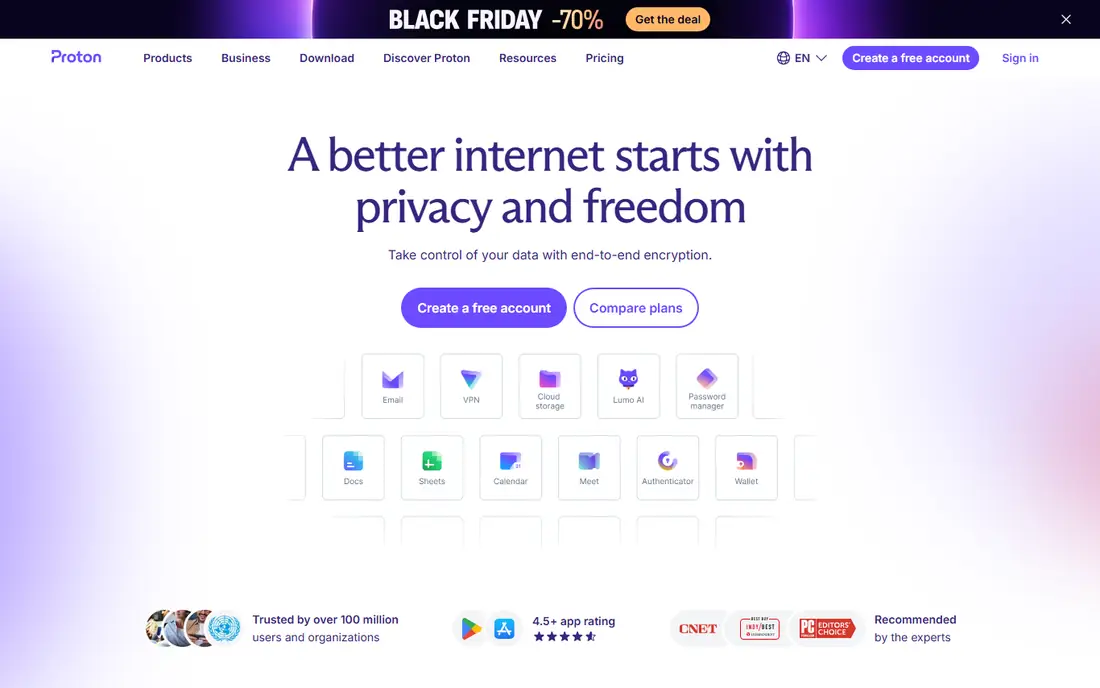
Proton Mail is an encrypted email service based in Switzerland, and the vendor states that mail uses end to end encryption and zero access encryption. The free plan lists 1 GB storage, 1 user, and 1 email address, with no credit card required. Mail Plus lists 15 GB storage, 10 extra email addresses, and support for 1 custom domain. Unlimited lists 500 GB storage and support for 3 custom domains. Paid plans also list priority or dedicated support by tier. It suits readers who want to start free and upgrade later.
The catch is the free plan is small, so heavy mail users will fill 1 GB fast and must pay for more space and a custom domain. Price numerals were not present in the vendor pricing text opened for this guide, so check the current price before you buy. Pick Proton Mail if you want a mainstream secure mailbox. Look elsewhere if you need IMAP access on a free plan.
What we like- End to end and zero access encryption stated by vendor
- Free plan with no credit card required
- Paid plans add custom domains and hide my email aliases
Watch out for- Free plan is limited to 1 GB storage and 1 email address
- Custom domain support needs a paid plan
#2
Tuta Mail
Best for: Encrypted subject lines and calendars
Visit tuta.com
Starting priceSee website
Free planFree plan with 1 GB storage, 1 calendar, and 3 labels
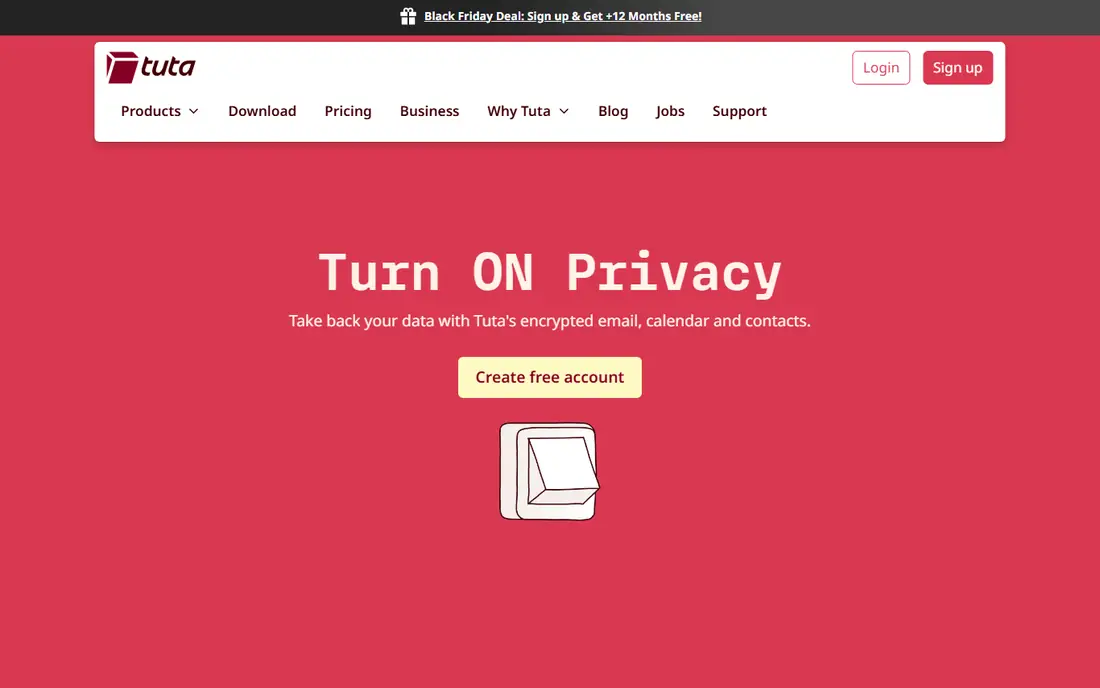
Tuta Mail is a German email service, formerly named Tutanota, with email, calendar, contacts, and drive services in one suite. The vendor states that the full mailbox, including subject lines, is end to end encrypted by default, and clients are open source. The free plan lists 1 GB storage, 1 calendar, and 3 labels. Revolutionary lists 20 GB storage, 15 extra email addresses, and 3 custom domains. Legend lists 500 GB storage and 10 custom domains. Paid plans also list unlimited calendars and labels. It suits readers who want subjects and calendars encrypted.
The catch is Tuta does not support IMAP, so you must use Tuta web, mobile, or desktop apps instead of Apple Mail, Outlook, or Thunderbird. That trade off protects the encryption model, but it removes client choice. Price numerals were not present in the vendor pricing text opened for this guide, so confirm the current price on the site. Pick Tuta if encrypted subjects matter most. Skip it if IMAP access is a must have.
What we like- End to end encryption covers subject lines by vendor statement
- Free plan includes encrypted calendar and address book
- Paid plans add custom domains and catch all support
Watch out for- No IMAP support, so third party mail clients cannot connect
- Free plan limits labels to 3 and storage to 1 GB
Starting price$4.99 per month, billed annually (Personal)
Free plan7 day free trial; payment details needed at sign up
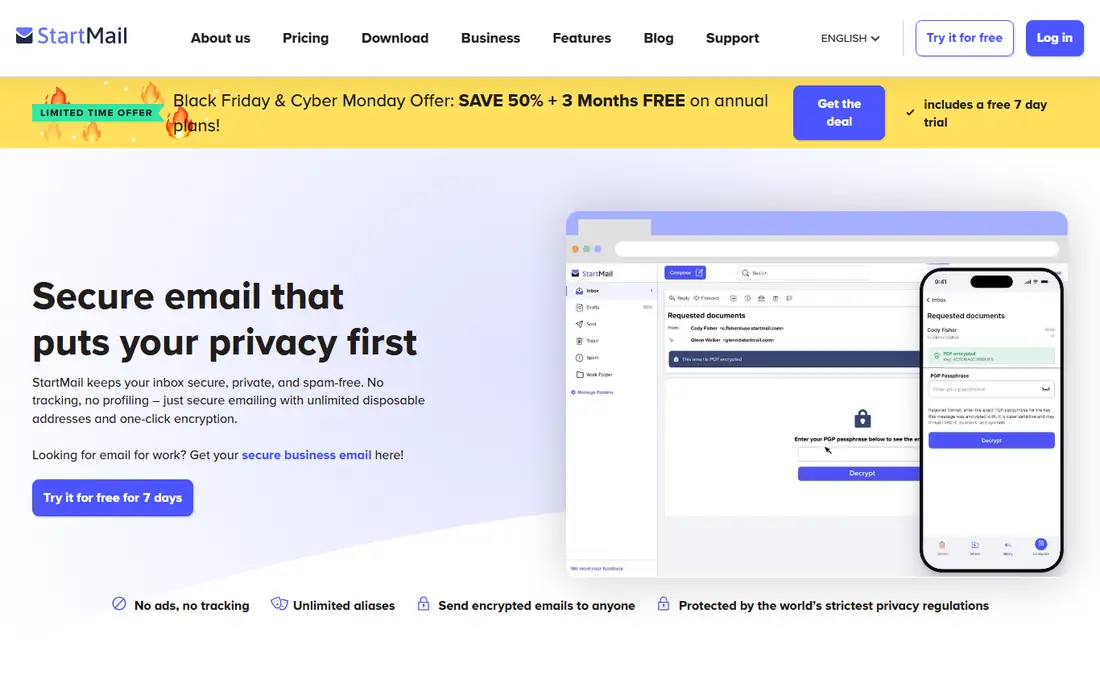
StartMail is a paid encrypted email service based in the Netherlands, with self hosted servers in the Netherlands. Personal lists $4.99 per month billed annually, renews at $59.88, and includes 20 GB storage, unlimited aliases, and one custom domain. Business lists $6.99 per month billed annually, renews at $83.88, and includes 30 GB storage and unlimited domains. The vendor states PGP encrypted email, password protected email, and IMAP access. Added accounts in group subscriptions cost 25 percent less per account. It suits users who want aliases and standard mail clients.
The catch is there is no free plan, and the 7 day trial asks for payment details at sign up. The first year promo price is lower than the renewal price, so budget for $59.88 on Personal after year one. Pick StartMail if unlimited aliases and IMAP access matter more than a free tier. Look elsewhere if you want a free mailbox.
What we like- Unlimited email aliases on Personal and Business
- IMAP and webmail access for common mail clients
- Servers in the Netherlands with GDPR statements by vendor
Watch out for- No free plan, only a 7 day trial
- Personal allows one custom domain, while unlimited domains need Business
Starting price2.5 EUR per month (Base)
Free planFree plan with 1 GB storage and no IMAP, SMTP, or POP access
Mailfence is a Belgian email service with encrypted mail, calendars, documents, contacts, and groups. The vendor states that servers are based in Belgium and only a valid Belgian court order can force data release. The free plan lists 1 GB storage with no IMAP, SMTP, or POP access. Base lists 2.5 EUR per month, 11 GB total storage, and 10 aliases, with no custom domain. Entry lists 3.5 EUR per month, 40 GB total storage, custom domains, and POP, IMAP, SMTP, and ActiveSync access. It suits OpenPGP users who want documents.
The catch is the low Base price does not include the features many buyers need, since custom domains and mail client access start at Entry. Free users also stay in web access without IMAP, SMTP, or POP. Pick Mailfence Entry if you want OpenPGP style mail with standard client access. Skip Base if you need your own domain on day one.
What we like- Free plan with 1 GB storage
- Entry adds custom domains and POP, IMAP, SMTP, and ActiveSync
- Belgian servers with court order statements by vendor
Watch out for- Base has no custom domain and no POP, IMAP, SMTP, or EAS access
- Free plan has no IMAP, SMTP, or POP access
Starting price1 EUR per month
Free planNone found on vendor page
Posteo is a German email service that lists email, calendar, address book, and notes for 1 EUR per month. The account lists 4 GB storage, upgradeable to 75 GB at 0.25 EUR per GB per month, with 3 aliases included. The vendor lists IMAP and POP3 access, two factor authentication, crypto mail storage, and end to end encryption with PGP or S/MIME in webmail. Servers are located in Germany, with no IP logging stated by the vendor. Three calendars are included in the account details. It suits cost focused privacy users.
The catch is Posteo has no free plan, and the low base price grows if you need more storage, aliases, or calendars. Custom domain use is not the focus of the plan page, so domain based business mail may fit better elsewhere. Pick Posteo if you want a simple paid mailbox in Germany. Look elsewhere if you need a free plan or large included storage.
What we like- One simple price at 1 EUR per month
- 4 GB storage with 3 aliases included
- IMAP and POP3 access with two factor authentication
Watch out for- No free plan found on vendor page
- Extra storage and aliases cost extra per month
Starting price€1 per month (Light)
Free planNone found on vendor page
mailbox.org is a German digital workspace with mail, drive, meet, and office tools. The vendor states data centers are located in Germany, with PGP and S/MIME support and BSI C5 and ISO 27001 certification statements. Light lists €1 per month, 2 GB mail storage, and 3 aliases at mailbox.org. Standard lists €4 per month, 20 GB mail storage, custom domain use, and 50 custom domain aliases. Premium lists €12 per month and 50 GB mail storage. Standard and Premium also list drive storage and meet tools. It suits users who want mail plus office tools.
The catch is the €1 Light plan is a basic mailbox, while custom domains and office tools sit on Standard and Premium. Buyers who only need encrypted mail may pay for drive and office features they never open. Pick mailbox.org Standard if you want a custom domain with office tools. Skip it if you want default end to end encryption without extra setup.
What we like- Light starts at €1 per month with 2 GB mail storage
- Standard adds custom domains and 50 custom domain aliases
- Data centers in Germany with GDPR statements by vendor
Watch out for- Light lists no custom domain use in the private plan details opened
- No free plan found on vendor page
Starting price$59.99 per year (Personal Use)
Free planNone found on vendor page
Hushmail for Personal Use is a paid encrypted email plan for individuals who send sensitive documents. The vendor lists OpenPGP encryption, 1 click encryption, encrypted replies, schedule send, unlimited aliases, and 15 GB of storage to start. It lists iPhone app access, POP and IMAP use with Apple Mail or Outlook, web access, and support via email and phone. Personal Use costs $59.99 per year, with a 60 day money back guarantee. Recipients can send encrypted replies through the service with a web link. It suits users who want human support.
The catch is Personal Use does not connect to a custom domain, so your address ends in a Hushmail domain, and it is not intended for healthcare professionals. Healthcare users need a healthcare plan with a BAA and archive. Pick Hushmail if phone support matters more than domain branding. Look elsewhere if you need your own domain or a free plan.
What we like- OpenPGP encryption with 1 click encryption stated by vendor
- 15 GB storage to start with unlimited aliases
- Support via email and phone with 60 day money back guarantee
Watch out for- Personal Use has no custom domain
- Personal Use is not for healthcare use and lacks BAA and archive features
Starting priceSee website
Free planNone found on vendor page
Runbox is an independent email provider based in Norway, founded in 2000, with servers hosted in Oslo. The vendor states no ads, no tracking, full disk encryption at rest, SSL and TLS encryption in transit, and two factor authentication. It lists custom domains, alias support, unlimited plus addressing, webmail, and POP, IMAP, and SMTP access. The service focuses on email only, without a large app suite. Webmail works with mail clients through IMAP syncing across desktop and mobile devices. It suits users who want Norway hosting, custom domains, and standard mail clients.
The catch is Runbox recommends added end to end encryption tools for maximum security, so it does not match Proton Mail or Tuta Mail on default encrypted mail. Price numerals were not present in the vendor text opened for this guide, so check current prices before you commit. Pick Runbox if jurisdiction and IMAP access matter most. Skip it if you want built in end to end encryption.
What we like- Servers in Norway with GDPR statements by vendor
- Custom domains, aliases, and plus addressing
- POP, IMAP, and SMTP support for mail clients
Watch out for- End to end encryption needs added tools by vendor statement
- Price numerals were not present in vendor text opened
Starting priceFree
Free planFree plan with 1 GB mailbox and 64 MB attachment limit
Disroot is a community run platform that relies on donations, with email as one service among cloud and chat tools. The vendor email page lists secure email for desktop clients or web interface, SSL communication with the mail server, and TLS for outgoing mail when supported. The free mailbox limit is 1 GB, with a 64 MB attachment limit, Roundcube webmail, and IMAP, SMTP, SMTPS, and POP settings. GPG encryption is supported through Mailvelope. Plus addressing routes sub addresses back to the main mailbox. It suits users who want a free mailbox with standard clients.
The catch is Disroot mail is not end to end encrypted by default for stored mail, so users must add GPG through Mailvelope or a mail client. Extra storage and custom domain linking depend on financial support, and support is community based. Pick Disroot if free access and open tools matter most. Skip it if you need large storage or default end to end encryption.
What we like- Free 1 GB mailbox with IMAP, SMTP, SMTPS, and POP access
- Roundcube webmail with filters and folders
- GPG encryption support through Mailvelope in webmail
Watch out for- Stored mail needs user encryption for end to end protection
- Custom domain linking is a donation perk, not a standard plan feature
Starting priceSee website
Free planFree plan by invitation; storage limit not stated on page opened
CTemplar is an open source secure email service that uses OpenPGP encryption, with zero knowledge password protection stated by the vendor. The vendor page states that account creation needs a username and password, with no phone verification, and that outgoing mail has IP data stripped from metadata and logs. It lists Android, iOS, and F-Droid apps plus web access. Mail to outside users can use an encryption password. The vendor also states zero data access for message content and attachments. It suits readers who value anonymous sign up and OpenPGP.
The catch is the free plan needs an invite code, so new users cannot always start at once, and outside recipients may get plain text unless you set an encryption password. Price numerals were not present in the vendor text opened for this guide, so confirm paid prices on the site. Pick CTemplar if anonymous sign up matters most. Skip it if you want instant free sign up.
What we like- OpenPGP encryption for messages and attachments stated by vendor
- Sign up needs username and password with no phone verification
- IP stripping from metadata and logs stated by vendor
Watch out for- Free plan needs an invite code
- Price numerals were not present in vendor text opened
Which secure email service should you choose first?
Choose by encryption model first, then by client access and domain needs. If you want the safest default for mail between users of the same service, Proton Mail and Tuta Mail lead this list, since both state end to end encryption and offer free plans with 1 GB storage. Tuta adds encrypted subject lines, while Proton adds 15 GB on Mail Plus and 500 GB on Unlimited. If you must use Outlook, Apple Mail, or Thunderbird, StartMail, Posteo, Mailfence Entry, and Runbox fit better because they list IMAP access. StartMail Personal costs $4.99 per month billed annually for 20 GB, Posteo costs 1 EUR per month for 4 GB, and Mailfence Entry costs 3.5 EUR per month. If cost is the main limit, start free, then pay only when storage or domains block daily work. Check renewal prices before the first paid term ends and before you move a full mailbox.
Can you use secure email with Outlook or Apple Mail?
Yes, but only some services on this list support standard mail clients. StartMail lists IMAP access for Apple Mail, Outlook, and Thunderbird. Posteo lists IMAP and POP3 access. Mailfence lists POP, IMAP, SMTP, and ActiveSync from Entry, not on Free or Base. Hushmail lists POP and IMAP use. Runbox and Disroot list IMAP access. Tuta Mail does not support IMAP, so you must use Tuta apps. Check Proton Mail client options on the vendor site before you plan a move.
What does secure email cost for a small team?
Team cost depends on seats, domains, and storage, so compare per user prices with the same billing term. StartMail Business lists $6.99 per month billed annually for 30 GB storage and unlimited domains. mailbox.org Standard lists €4 per month for 20 GB mail storage, while Premium lists €12 per month for 50 GB. Tuta business prices need a current check on the vendor site. For a five person team, multiply the per user price by five, then add domain and storage needs.
Do you need a custom domain for secure email?
No, a custom domain is not required, but it helps if you want an address you can keep when you change providers. Proton Mail Plus lists 1 custom domain, and Unlimited lists 3. Tuta Revolutionary lists 3 custom domains, and Legend lists 10. StartMail Personal allows one custom domain, while Business allows unlimited domains. Mailfence custom domains start at Entry. Hushmail Personal Use does not include a custom domain. If brand trust matters, pay for domain support from the start.
Frequently asked questions
What is the best secure email service for beginners?
Proton Mail is the best secure email service for most beginners, since the free plan needs no credit card and lists 1 GB storage with 1 email address. Paid plans add storage and custom domains. Tuta Mail also fits beginners who want encrypted subject lines and can use Tuta apps.
Is free secure email safe to use?
Free secure email can be safe when the vendor states end to end encryption and clear limits, as Proton Mail, Tuta Mail, and Mailfence do with 1 GB free storage. Free plans still limit storage and domains. Use a strong password and two factor authentication where offered.
Which secure email service works with a custom domain?
Proton Mail, Tuta Mail, StartMail, Mailfence Entry, mailbox.org Standard, and Runbox support custom domain use. Proton Mail Plus lists 1 custom domain, Tuta Revolutionary lists 3, and StartMail Business lists unlimited domains. Hushmail Personal Use and Mailfence Base do not include custom domain use.
Can secure email replace Gmail for work?
Secure email can replace Gmail for work if the plan covers storage, domains, and client access your team needs. StartMail Business lists 30 GB storage at $6.99 per month billed annually. mailbox.org Standard lists 20 GB at €4 per month. Test search and mobile apps before a full move.
What should you check before you pay for secure email?
Check the renewal price, storage limit, custom domain support, and IMAP access before you pay. StartMail Personal renews at $59.88 after a lower first year price. Posteo starts at 1 EUR per month for 4 GB. Confirm export options so you can leave later.
What to look for before you buy
First, check the encryption model and whether subject lines, calendars, and contacts are encrypted or only message bodies. Second, check client access, since IMAP support decides if Outlook, Apple Mail, or Thunderbird can connect. Third, check storage, aliases, and custom domain limits against your real mail volume for the next year. Fourth, check the renewal price and billing term, not only the first year promo price. Fifth, check export, recovery, and two factor authentication options, since lost passwords and locked mailboxes cause more harm than a small price gap.
How we chose
We built a candidate list of secure and privacy email services, removed dead or closed services, and kept live products with working official sites. Prices and plan limits were checked on vendor pages and official documentation for this guide, and See website is used where price numerals were not present in the vendor text opened. Strengths and weaknesses point to vendor stated features, limits, and access rules. No hands on testing is claimed, and no ratings or review counts are used.
Sources we checked (12)
- https://proton.me/l/mail-plans-private
- https://tuta.com/pricing
- https://www.startmail.com/pricing/
- https://blog.mailfence.com/mailfence-base-plan/
- https://posteo.de/en/site/featurelist
- https://mailbox.org/en/product/
- https://www.hushmail.com/plans/personal
- https://runbox.com/blog/2025/03/decentralized-email-for-maximum-privacy-and-security/
- https://runbox.com/about/
- https://disroot.org/services/email#storage
- https://disroot.org/
- https://ctemplar.com/how-to-send-encrypted-email-from-android/
Is your product missing or out of date?
We review this list regularly. Vendors can request a listing, send updated pricing or ask about featured placement.

Shihab Mia · Founder, Rankite
Shihab has 5+ years in B2B and SaaS SEO. He writes Rankite's software buying guides from pricing pages, documentation and public user reviews. More about Shihab.