How we make this list: we compare pricing pages, product documentation and public user reviews. Ratings come from G2, Capterra or Trustpilot, with the date we checked them.
Key takeaways
- RudderStack is warehouse-first and open source, with a free tier and paid plans from about $220 per month in some listings, though other sources cite higher entry prices.
- Segment at $120 per month for Team is the category default with 700-plus destinations and the strongest identity resolution.
- Warehouse-native tools like Hightouch and DinMo activate data already in your warehouse, while packaged CDPs like Tealium and mParticle bundle collection and activation.
- Model 2.5 to 3 times your current monthly users for year two before signing any MTU-based contract, since growth triples many CDP bills.
Quick comparison
| Tool | Best for | Starting price | Free plan |
|---|
 Segment | Developer-first teams, broadest ecosystem | $120 per month | Yes |
 Tealium | Enterprise compliance | $1,000 per month | No |
 mParticle | Scale plus AI prediction | See website | No |
 Hightouch | Composable warehouse activation | See website | No |
 DinMo | No-code warehouse activation | See website | No |
 Jitsu | Open-source event collection | $0 | Yes |
 Snowplow | Open-source behavioral data | $0 | Yes |
 BlueConic | Marketer-led teams | See website | No |
Is your product missing or out of date?
We review this list regularly. Vendors can request a listing, send updated pricing or ask about featured placement.
The best rudderstack alternatives
#1Segment
Best for: Developer-first teams, broadest ecosystem4.5/5 on
G2 (565 reviews, checked Oct 2026)
Visit segment.com
Starting price$120 per month
Free planYes
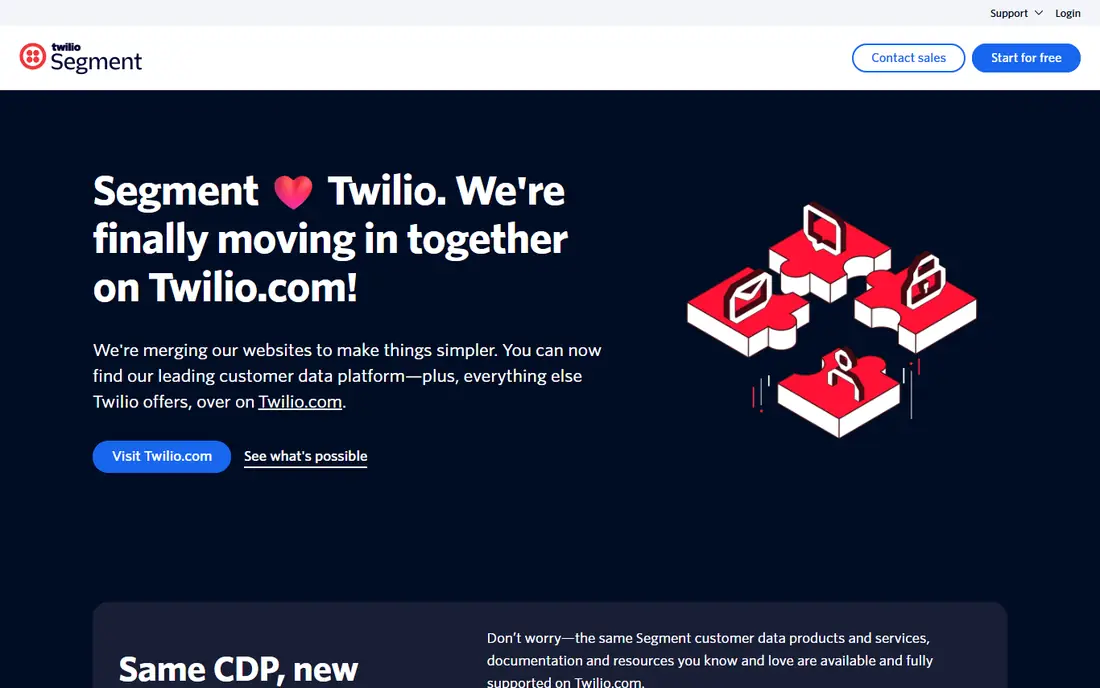
Segment has been the default CDP since the category formed, with the broadest integration ecosystem and the most mature event collection. Team starts at $120 per month for up to 10,000 monthly tracked users, with a free plan up to 1,000 visitors per month and 2 sources. Personas builds user traits and computed audiences on raw data, and identity resolution stitches cross-channel profiles better than RudderStack native tools.
The catch is growth math: Segment Business at 100,000 MTU runs about $7,200 per year on sticker but $12,000 to $25,000 all-in, and at 1 million MTU the bill reaches $55,000 to $90,000. For teams that want the safe choice with the broadest ecosystem, Segment remains the default, but model year-two volume before signing.
What we like- 700-plus destinations
- Mature identity resolution and Personas audiences
- Largest team familiarity
Watch out for- Year-one all-in costs run far above sticker at scale
- MTU pricing triples with growth
- Enterprise spend $50,000 to $500,000 per year
#2Tealium
Best for: Enterprise compliance4.3/5 on
G2 (478 reviews, checked Oct 2026)
Visit tealium.com
Starting price$1,000 per month
Free planNo
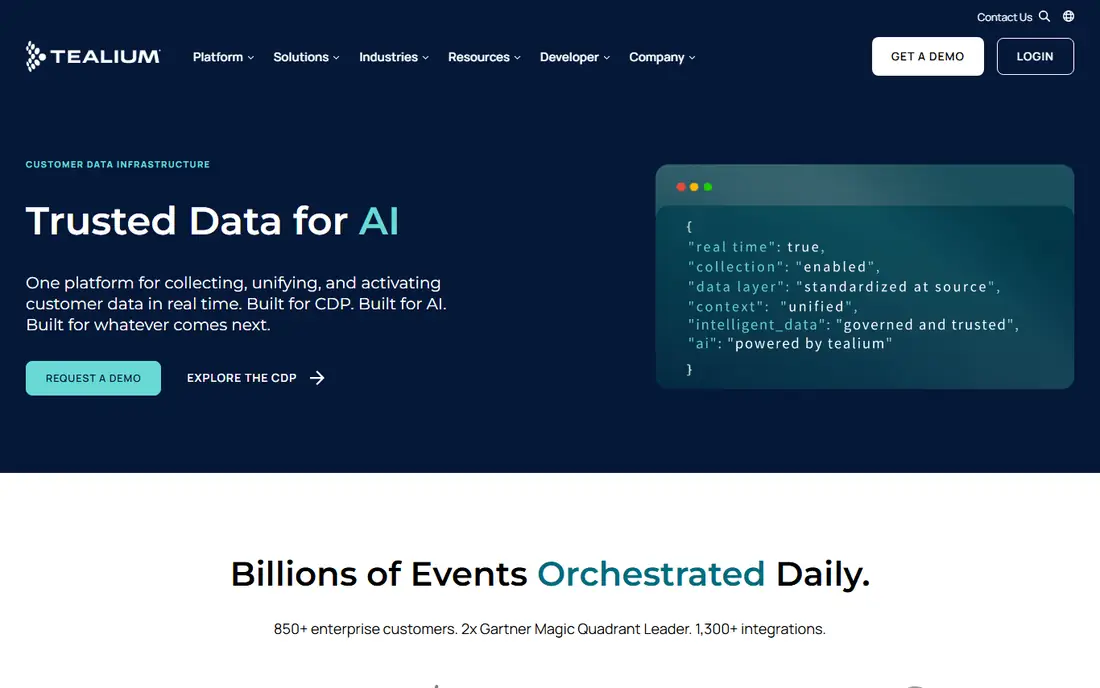
Tealium suits enterprises where compliance decides the purchase, with 1,300-plus integrations and a mature tag management heritage. Activation plans start at $1,000 per month, with mid-market all-in costs running $50,000 to $120,000 per year. For regulated industries that need governance, consent, and audit controls alongside data collection, Tealium is the safest enterprise bet.
Complexity and cost rule it out for small teams. For enterprise compliance-led CDP buying, Tealium leads.
What we like- 1,300-plus integrations
- Strongest enterprise compliance story
- Mature tag and data management
Watch out for- Activation from $1,000 per month
- Mid-market all-in costs $50,000 to $120,000 per year
- Enterprise complexity
#3mParticle
Best for: Scale plus AI prediction4.4/5 on
G2 (170 reviews, checked Oct 2026)
Visit mparticle.com
Starting priceSee website
Free planNo
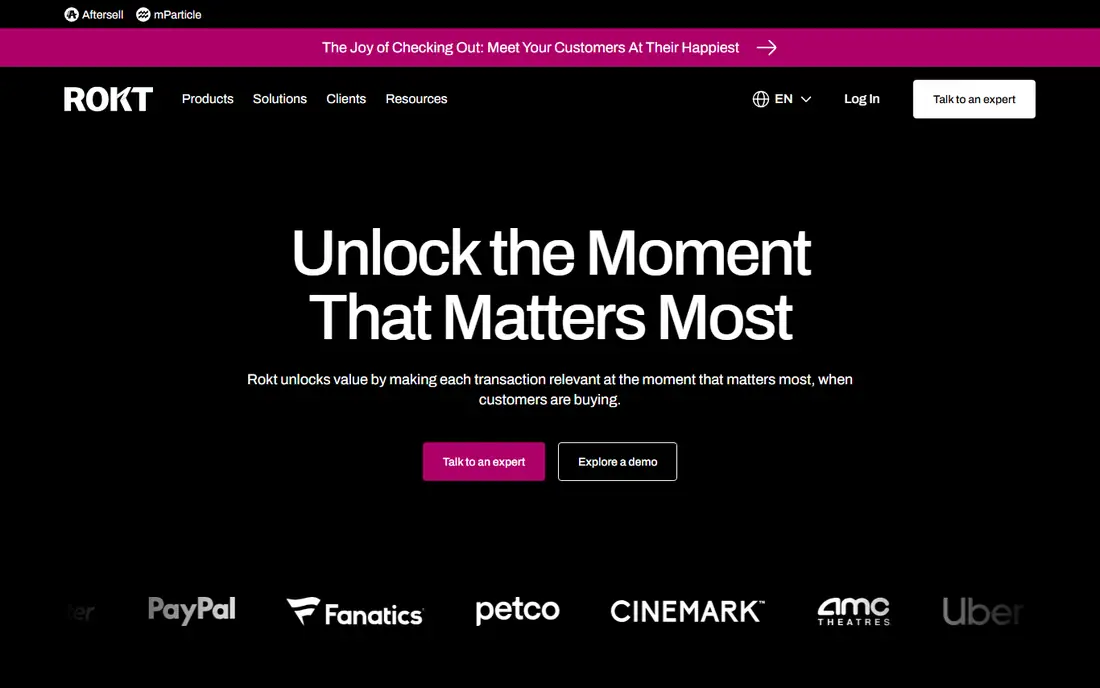
mParticle targets scale plus AI prediction, with value-based credits and a strong mobile data story for apps with millions of users. Enterprise all-in costs run $30,000 to $150,000 per year, with pricing behind a quote. For consumer apps and media companies at scale, mParticle handles high event volumes with prediction features that smaller CDPs lack.
Quote-based pricing and data-team requirements rule it out for small teams. For scaled consumer apps, mParticle is a top enterprise pick.
What we like- Value-based credits
- AI prediction features
- Strong mobile and scale story
Watch out for- Quote-based pricing
- Enterprise all-in costs $30,000 to $150,000 per year
- Needs data team resources
#4Hightouch
Best for: Composable warehouse activation4.6/5 on
G2 (421 reviews, checked Oct 2026)
Visit hightouch.com
Starting priceSee website
Free planNo
Hightouch is the composable CDP: it activates data already in your warehouse through reverse ETL, syncing audiences and traits to marketing tools without duplicating data into a separate CDP store. For teams with serious data infrastructure, this model keeps the warehouse as the source of truth and the CDP as a sync layer. Pricing is custom and demo-gated, with mid-size estimates of $18,000 to $30,000 per year.
It needs an existing warehouse, so teams without one gain nothing from the model. For warehouse-mature teams, Hightouch is the leading composable alternative to RudderStack.
What we like- Warehouse-native activation
- Reverse ETL from Snowflake, BigQuery, and Redshift
- No data duplication
Watch out for- Custom demo-gated pricing
- Mid-size all-in estimates $18,000 to $30,000 per year
- Needs an existing warehouse
Starting priceSee website
Free planNo
DinMo is a modular, warehouse-native CDP designed for business teams that want to activate warehouse data without technical skills. Marketers build audiences and personalize campaigns through a no-code interface, with native connections to Snowflake, BigQuery, and Redshift and no data duplication. Initial use cases can go live within a day, and modular pricing lets organizations select only the modules they need.
Pricing is custom, and DinMo is newer than Hightouch. For marketing teams that want warehouse activation without engineering tickets, DinMo is the most marketer-friendly composable pick.
What we like- No-code audience creation for business teams
- Native Snowflake, BigQuery, and Redshift connections
- Modular pricing
Watch out for- Custom pricing
- Newer vendor than Hightouch
- Needs an existing warehouse
Starting price$0
Free planYes
Jitsu offers open-source event collection with a self-host option, which suits developer teams that want RudderStack-style pipelines without vendor pricing. Events flow from websites, apps, and SaaS tools into warehouses and destinations, and self-hosting keeps data inside your own infrastructure. For teams with engineering resources that want free collection, Jitsu is the closest open-source alternative.
It needs engineering to run well, destinations run fewer than Segment, and the community is smaller. For open-source collection on a budget, Jitsu is a strong pick.
What we like- Free and open source
- Self-host option
- Event collection without vendor lock-in
Watch out for- Needs engineering to run
- Fewer destinations than Segment
- Smaller community
Starting price$0
Free planYes
Snowplow is the open-source behavioral data platform, capturing rich, structured event data for warehousing and modeling. Teams that want full control over event schemas and data quality choose Snowplow over packaged CDPs, and the warehouse-first model pairs naturally with activation tools like Hightouch. For product analytics teams that treat data quality as a first-class concern, Snowplow is the deepest open-source option.
Implementation is heavier than packaged CDPs, and operational overhead needs data engineering. For behavioral data depth with open-source control, Snowplow leads.
What we like- Free and open source
- Rich behavioral event data
- Warehouse-first modeling
Watch out for- Needs data engineering
- Implementation is heavier than packaged CDPs
- Operational overhead
Starting priceSee website
Free planNo
BlueConic suits marketer-led teams with no-code Listeners that collect first-party data without engineering, and unified profiles that marketers can segment directly. For B2C brands that want marketing autonomy over data, BlueConic offers the most marketer-friendly packaged CDP here. Trial access exists, but ongoing pricing is quote-based near $100,000 to $200,000 per year for enterprise deployments.
Developer depth runs below Segment and RudderStack, and the price rules out small teams. For marketer-led B2C teams at enterprise scale, BlueConic is a strong pick.
What we like- No-code Listeners for data collection
- Marketer-friendly profiles
- Strong for B2C brands
Watch out for- Quote-based pricing near $100,000 to $200,000 per year
- Enterprise focus
- Less developer depth
How we chose
We compared data models, identity resolution, destination counts, pricing transparency, and engineering requirements for each tool, then checked them against recent CDP comparisons with contract data from May 2026. Tools made the list only if teams can collect, unify, or activate customer data today with a published price or a widely reported pricing model. Where published figures conflicted across sources, we used the most recent verified figure and flagged the range. We also weighed model fit separately, since warehouse-native and packaged CDPs solve different problems despite similar marketing. We also checked data residency options, since regulated teams need to know where customer data lives before signing. Ask vendors about overage rates in writing before you sign, always.
Choose the model before the vendor
The first decision is warehouse-native versus packaged. Warehouse-native tools like RudderStack, Hightouch, and DinMo treat your warehouse as the source of truth and sync from there, which suits teams that already run Snowflake, BigQuery, or Redshift. Packaged CDPs like Segment, Tealium, mParticle, and BlueConic collect, unify, and activate in one platform, which suits teams without a warehouse or with marketer-led buying. Picking a packaged CDP when you already have a warehouse duplicates data, while picking a warehouse-native tool without a warehouse leaves you with nothing to activate.
The second decision is growth math. CDP pricing follows monthly tracked users or events, and buyers routinely model year-one volume without accounting for growth. A team at 200,000 monthly users that signs at that tier is often at 600,000 by month 14, and the bill triples. Model 2.5 to 3 times your current volume for the year-two scenario before signing any MTU-based contract, and ask vendors for the price at double and triple your current volume in writing. Also test identity resolution with your own messy data before committing. Vendor demos use clean sample data, while real customer data carries duplicates, shared emails, and partial profiles that break naive matching. Run a pilot with a real data sample and measure match rates before signing an annual contract.
Frequently asked questions
How does RudderStack itself price its platform?
RudderStack offers a free tier, with paid plans cited from $220 per month for Starter in some listings and $600 to $750 per month in others, so check the current pricing page. Growth plans run higher with custom enterprise pricing above that. RudderStack is open source and warehouse-native, with self-hosting available, but Audience Builder and Identity Resolution are premium features, and running it well needs advanced engineering skills.
Which RudderStack alternative is cheapest?
Jitsu and Snowplow are free and open source for self-hosted collection, though engineering time costs real money. Among hosted tools, Segment Team at $120 per month is the cheapest packaged entry. For warehouse teams, composable tools avoid a second data store, which can make them cheaper overall despite custom pricing. Open-source tools also avoid per-event fees entirely, which matters most at high volumes.
What is the difference between a CDP and reverse ETL?
A packaged CDP collects events, builds unified profiles, and activates audiences in one platform. Reverse ETL tools like Hightouch and DinMo sync data already in your warehouse out to marketing tools, without collecting or storing it separately. Warehouse-native CDPs combine both: RudderStack collects events and syncs warehouse data onward. Choose reverse ETL if your warehouse already holds clean customer data.
Should a small store under $2 million use a CDP?
No, for most stores under $2 million, Shopify segmentation plus Klaviyo covers the need, and CDPs add overhead until you run five or more marketing channels. CDPs pay once data flows across many tools and audiences need central governance. Below that scale, simpler tools win on cost and speed.
Can I switch CDPs without losing customer profiles?
Yes, export the customer file, reimport it into the new platform, and let it re-match, with 2 to 4 weeks typically needed for re-unification. Plan the migration around campaign calendars, since audiences built in the old CDP need rebuilding in the new one. Keep the old platform live during transition so campaigns never stop, and audit consent records during the move, since privacy compliance must survive the migration intact.
Sources we checked (8)
- https://www.segment.com
- https://www.tealium.com
- https://www.mparticle.com
- https://www.hightouch.com
- https://www.dinmo.com
- https://www.jitsu.com
- https://www.snowplow.io
- https://www.blueconic.com
Is your product missing or out of date?
We review this list regularly. Vendors can request a listing, send updated pricing or ask about featured placement.

Shihab Mia · Founder, Rankite
Shihab has 5+ years in B2B and SaaS SEO. He writes Rankite's software buying guides from pricing pages, documentation and public user reviews. More about Shihab.