How we make this list: we compare pricing pages, product documentation and public user reviews. Ratings come from G2, Capterra or Trustpilot, with the date we checked them.
Key takeaways
- RudderStack is the closest Segment replacement for engineering-led teams that want event collection and warehouse control.
- Hightouch suits teams that already have a clean warehouse and mainly need activation, not another event pipeline.
- mParticle and Tealium suit large consumer brands with mobile apps, real-time needs, and strict governance.
- Treasure Data and Amperity suit enterprises that unify online and offline customer records at scale.
- Jitsu, Simon Data, and BlueConic cover narrower needs: open source collection, lifecycle marketing, and ecommerce growth.
Quick comparison
| Tool | Best for | Starting price | Free plan |
|---|
 RudderStack | Engineering-led event pipelines | See website | Yes |
 mParticle | Mobile-first real-time CDP | See website | No |
 Tealium | Enterprise governance and tags | See website | No |
 Treasure Data | Enterprise unified profiles | See website | No |
 Hightouch | Warehouse-native activation | See website | Yes |
 Jitsu | Open source event collection | See website | Yes |
 Amperity | Identity resolution at scale | See website | No |
 Simon Data | Lifecycle marketing on live data | See website | No |
 BlueConic | Ecommerce customer growth | See website | No |
Is your product missing or out of date?
We review this list regularly. Vendors can request a listing, send updated pricing or ask about featured placement.
The best Segment alternatives for collecting, unifying, and activating customer data
#1RudderStack
Best for: Engineering-led event pipelines4.7/5 on
G2 (52 reviews, checked Oct 2026)
Visit rudderstack.com
Starting priceSee website
Free planYes
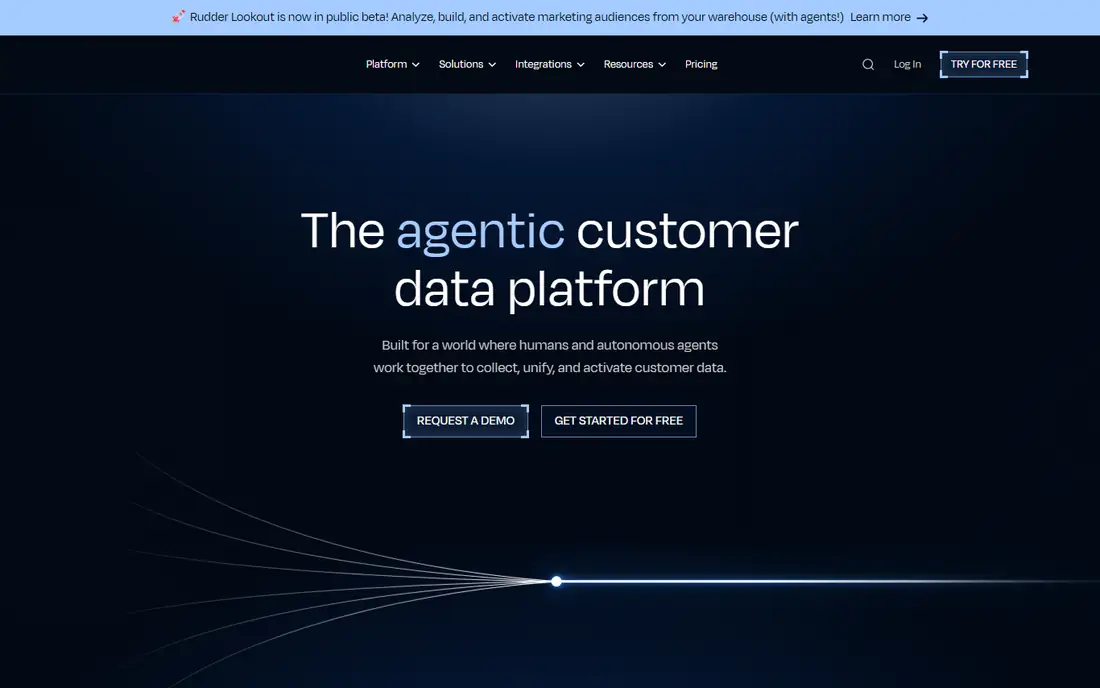
RudderStack is the most direct Segment replacement for data teams. It collects events from websites, apps, and servers, routes them to warehouses and business tools, and lets teams transform data in flight to clean, enrich, or mask fields. Profiles built in the warehouse unify identifiers into customer views without copying data into a separate CDP store. That warehouse-first design keeps data ownership with the team and fits companies that already invest in Snowflake, BigQuery, or Databricks.
The trade-off is marketing depth. RudderStack's audience and journey tools have grown, but marketing-led teams may still find mParticle or Simon Data easier for campaign work. Pricing is event-based on cloud plans, with a free tier and a self-hosted open source option. For engineering-led teams that want Segment-style routing with more control and lower cost, RudderStack is the default pick.
What we like- Open source core and self-hosting option
- Warehouse-first design
- Strong governance and transformations
Watch out for- Advanced segmentation is thinner than marketing-led CDPs
- Self-hosting needs operations effort
#2mParticle
Best for: Mobile-first real-time CDP4.4/5 on
G2 (170 reviews, checked Oct 2026)
Visit mparticle.com
Starting priceSee website
Free planNo
mParticle is built for consumer brands with mobile apps and high event volumes. Its SDKs collect web and mobile events, resolve identities in real time, and feed audiences to ad platforms, email tools, and personalization systems. Predictive audiences score churn risk, conversion likelihood, and lifetime value, so marketers can act before a customer leaves. Consent and governance controls help teams meet privacy rules across regions.
Pricing is custom and enterprise-scale, so small teams will find RudderStack or Hightouch more practical. Implementation also assumes a data team that can manage schemas and identity rules. For large consumer brands where mobile data and real-time activation drive revenue, mParticle remains one of the strongest Segment alternatives.
What we like- Strong mobile SDKs
- Real-time profiles and audiences
- Predictive audiences for churn and value
Watch out for- Enterprise pricing with no public entry tier
- Implementation needs data maturity
#3Tealium
Best for: Enterprise governance and tags4.3/5 on
G2 (478 reviews, checked Oct 2026)
Visit tealium.com
Starting priceSee website
Free planNo
Tealium combines tag management, event collection, identity resolution, and audience activation in one enterprise platform. Its integration library covers more than a thousand tools, and its consent rules govern which data reaches each destination. That governance matters for large companies with many brands, regions, and privacy requirements, where a single customer view must respect different consent rules by market.
Tealium is not a small-team tool. Pricing is custom, implementation can take months, and the platform rewards teams with dedicated data and marketing operations staff. For enterprises that need vendor-neutral integrations and strict data control, Tealium is a credible Segment replacement, especially when tag management is part of the same purchase.
What we like- Very large integration library
- Strong tag management
- Consent and governance controls
Watch out for- Enterprise pricing and longer implementation
- Heavier than needed for small teams
Starting priceSee website
Free planNo
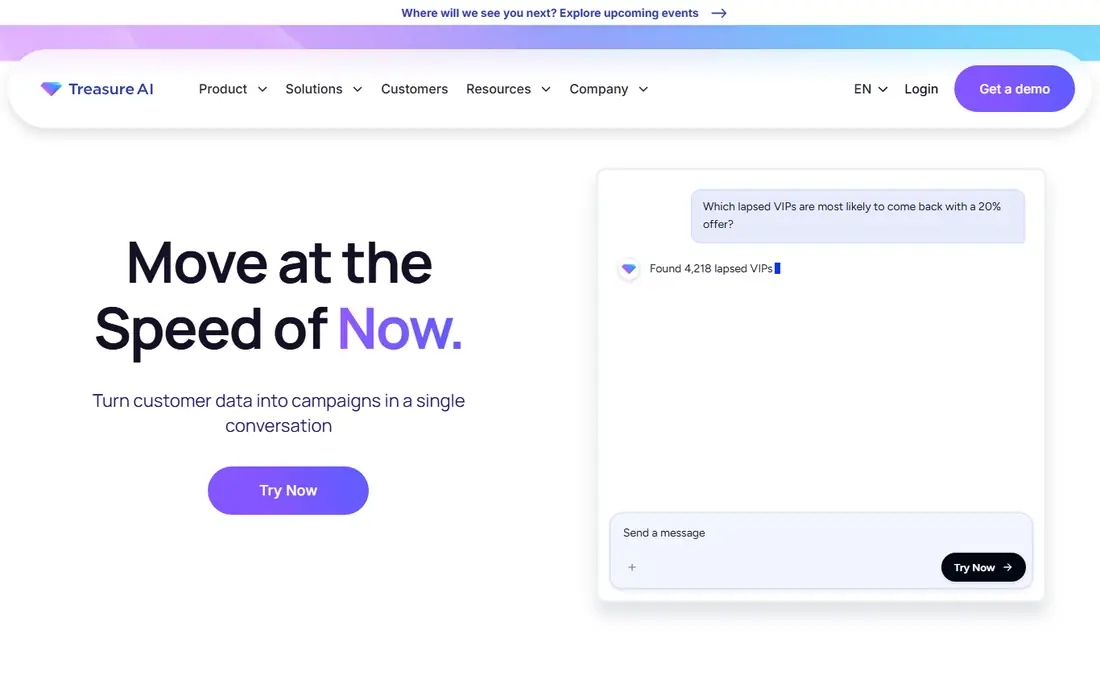
Treasure Data, now positioned as Treasure AI, unifies customer data from hundreds of sources into persistent profiles, then powers segmentation, journey orchestration, and personalization. It handles offline data well, such as point-of-sale, loyalty, and CRM records, alongside web and app behavior. That breadth suits retailers, automotive brands, and media companies with complex customer journeys across channels.
The platform is enterprise-focused, with custom pricing and implementation support to match. Teams without a data and marketing operations function may struggle to use its full depth. For large brands that need one governed customer view across online and offline touchpoints, Treasure Data is a strong Segment alternative.
What we like- Unifies many sources into persistent profiles
- Strong for offline and online data
- AI-assisted segmentation
Watch out for- Enterprise pricing and complexity
- Smaller teams may find it overbuilt
#5Hightouch
Best for: Warehouse-native activation4.6/5 on
G2 (421 reviews, checked Oct 2026)
Visit hightouch.com
Starting priceSee website
Free planYes
Hightouch flips the CDP model. Instead of copying customer data into a new database, it syncs audiences, traits, and events from your existing warehouse directly to marketing, sales, and ad tools. Marketers build audiences in a visual interface, data teams define models in SQL, and syncs run on a schedule or in real time. That approach keeps the warehouse as the single source of truth and avoids a second system to govern.
Hightouch only works well when the warehouse is already clean and modeled. Teams without a warehouse should start with RudderStack or Segment-style collection, then add Hightouch later. A free tier covers small sync volumes, which makes it easy to test one destination before committing. For warehouse-mature teams, Hightouch often replaces a traditional CDP entirely.
What we like- Activates warehouse data without a separate CDP store
- Broad destination library
- Marketer-friendly audiences
Watch out for- Requires a clean warehouse first
- Not an event collection tool on its own
Starting priceSee website
Free planYes
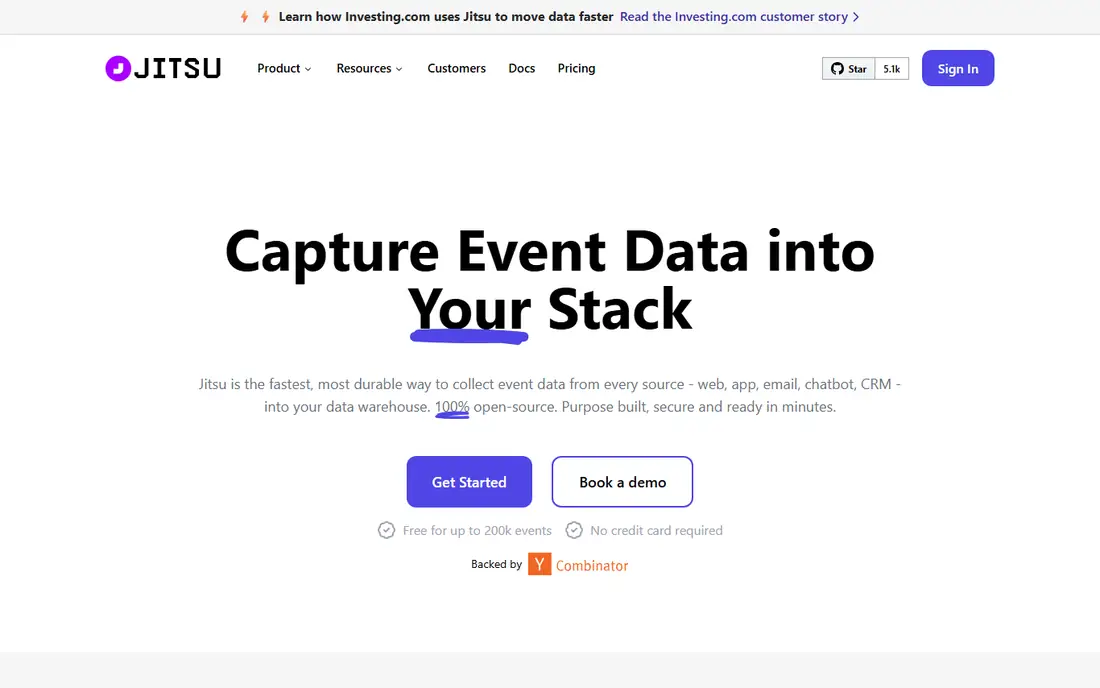
Jitsu is the simplest open source Segment replacement for event collection. Add a tag to a website or app, and events stream to your warehouse, such as Snowflake, BigQuery, Postgres, or its included ClickHouse option. Functions let developers filter, enrich, or reshape events before storage, and identity handling builds a basic identity graph as new identifiers appear. Setup takes minutes for a basic pipeline.
Jitsu does not try to be a full CDP. It lacks audience building, journey orchestration, and the destination breadth of larger platforms, so teams pair it with Hightouch or a warehouse-native activation tool for campaigns. For startups and data teams that mainly need reliable event collection into a warehouse at low cost, Jitsu is a practical choice.
What we like- Fully open source and self-hostable
- Simple tag-based setup
- Streams events to warehouses in real time
Watch out for- No built-in audience or journey tools
- Smaller destination library than RudderStack
#7Amperity
Best for: Identity resolution at scale4.4/5 on
G2 (53 reviews, checked Oct 2026)
Visit amperity.com
Starting priceSee website
Free planNo
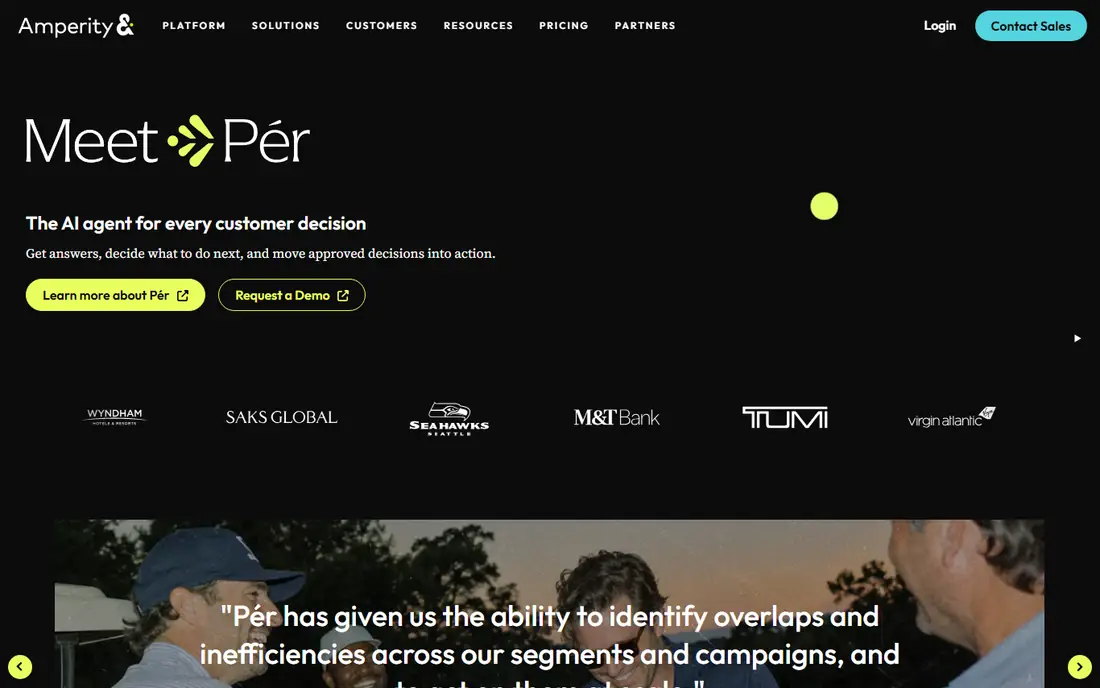
Amperity focuses on the hardest CDP problem: knowing which records belong to the same person. It resolves fragmented profiles across loyalty, ecommerce, in-store, and digital sources into a single customer view, then activates that view for personalization and AI use cases. Brands use it to find high-value customers hidden in duplicate records and to improve paid media targeting with cleaner audiences.
Amperity is an enterprise platform with custom pricing and a guided implementation. Small teams will not need its identity depth, and its cost reflects large-scale deployments. For retailers, hospitality brands, and other companies with messy offline and online data, Amperity's identity resolution justifies the investment where simpler CDPs fall short.
What we like- Strong identity resolution across fragmented records
- Trusted customer context for AI
- Enterprise scale
Watch out for- Enterprise pricing
- Implementation is a project, not a quick setup
Starting priceSee website
Free planNo
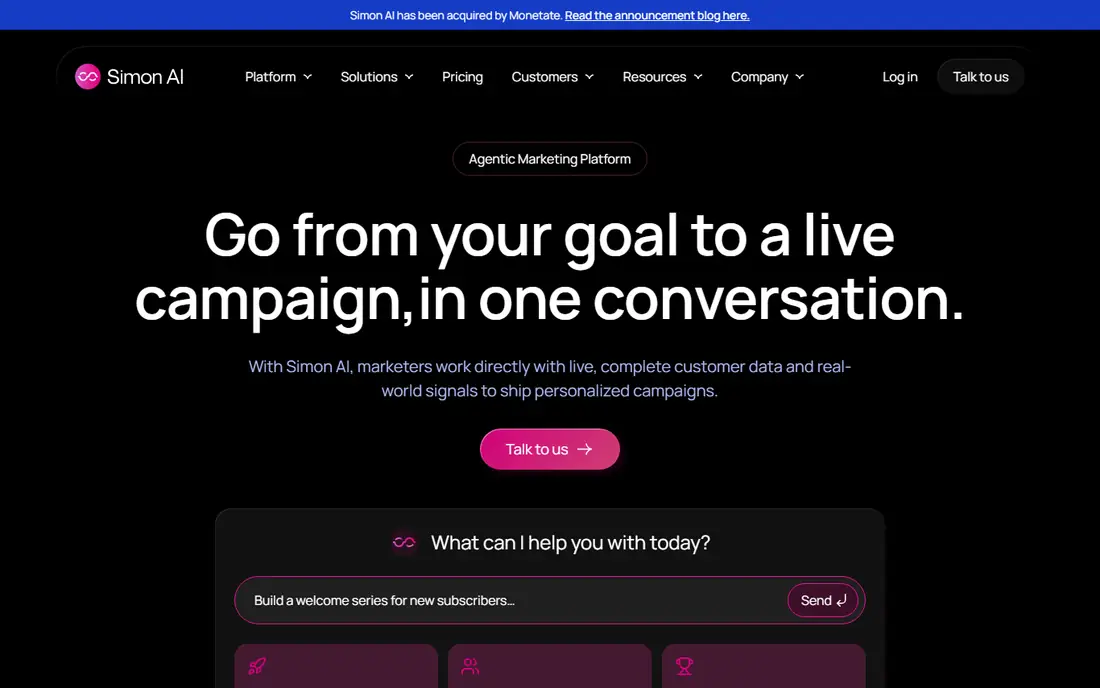
Simon Data, now Simon AI, gives marketers direct access to live customer data for campaigns. Teams build segments, launch journeys, and trigger messages based on behavior, purchase signals, and external context such as weather or local events, without waiting on data team tickets. Adaptive segments update as behavior changes, and AI tools help draft campaigns and spot opportunities.
Simon Data is a marketing platform first, not an event pipeline. Teams that need raw event routing to many destinations should pair it with RudderStack or use a fuller CDP. For lifecycle and growth teams that want to act on customer data quickly, Simon Data shortens the path from insight to campaign more than most CDPs in this list.
What we like- Marketer-friendly campaign building on live customer data
- Adaptive segments
- Strong lifecycle use cases
Watch out for- Pricing is quote-based
- Less suited to pure event pipeline work
#9BlueConic
Best for: Ecommerce customer growth4.1/5 on
G2 (19 reviews, checked Oct 2026)
Visit blueconic.com
Starting priceSee website
Free planNo
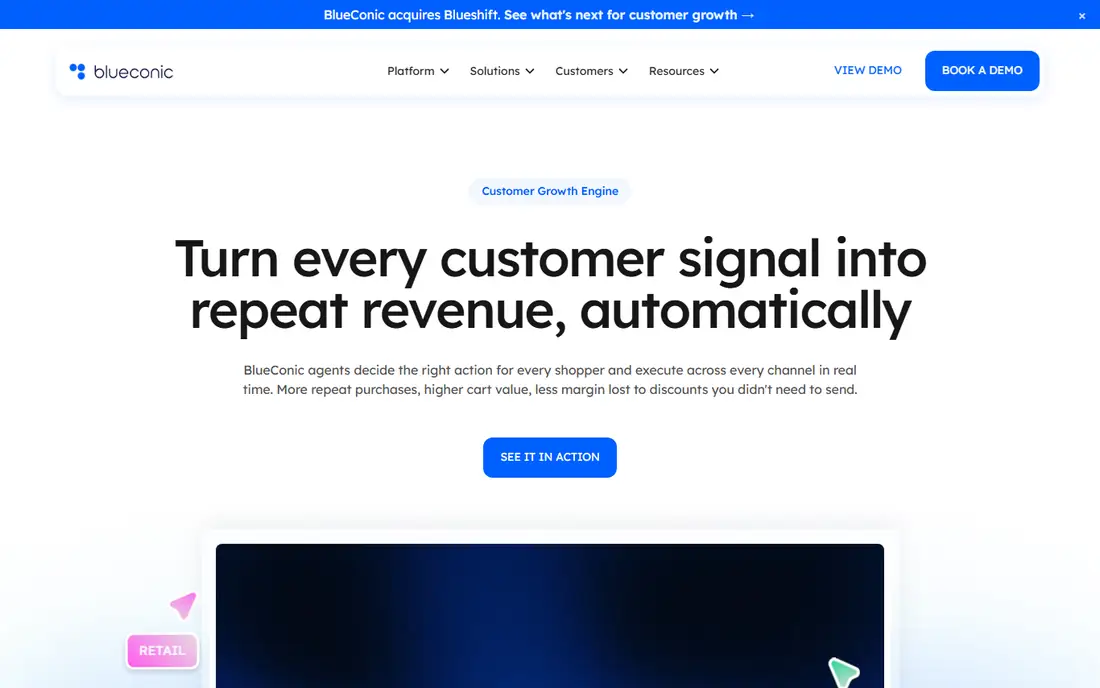
BlueConic is built for ecommerce brands that want growth without a large data team. It builds live customer profiles from browsing, purchase, and preference signals, then runs ready-to-launch growth plays for cart recovery, replenishment, acquisition, and retention. Marketers set guardrails such as discount ceilings and frequency caps, and the platform executes across email, ads, and onsite channels from one profile.
BlueConic can work from warehouse data, so teams do not always need to replace their existing stack. Its ecommerce focus means B2B companies with long sales cycles will find less fit. For consumer brands that want measurable ecommerce outcomes quickly, BlueConic is a focused Segment alternative that prioritizes revenue plays over generic data plumbing.
What we like- Real-time ecommerce profiles
- Ready-to-launch growth plays
- Works from warehouse or CDP data
Watch out for- Ecommerce focus limits fit for B2B
- Pricing is quote-based
How we chose
We compared vendor pricing pages, documentation, and public reviews on G2, Capterra, and Reddit, and we checked each vendor homepage to confirm the product still exists and accepts new customers. We favored tools that replace the core Segment jobs, meaning event collection, identity resolution, audience building, or warehouse activation, over narrow analytics or email tools. We also weighed pricing models, free plans, governance, and fit for engineering-led versus marketing-led teams, and we replaced tools whose homepages had moved to a different product.
Choosing the right Segment alternative
Start with where your data already lives
If you have a clean warehouse, Hightouch or Simon Data may be enough, with Jitsu or RudderStack for collection. If you have no warehouse, RudderStack, mParticle, or Tealium gives you collection plus profiles in one platform. That starting point avoids buying a CDP to solve a warehouse problem, or a warehouse tool to solve a collection problem.
Compare pricing on your actual volume
CDP pricing uses different units: events, tracked users, profiles, rows synced, or custom contracts. Model your monthly events, profiles, and destinations, then price each tool at that volume. A cheap entry tier can become expensive at scale, and an enterprise quote can be reasonable if it replaces several tools.
Test identity and activation, not just collection
Collection is the easy part. Test whether the tool resolves the same customer across devices, builds the audience you need, and syncs it to your ad or email tool on time. A pilot with one real audience, from source to campaign, reveals gaps that feature lists hide.
Frequently asked questions
What is the best overall Segment alternative?
RudderStack is the best overall replacement for most teams, thanks to Segment-style routing, warehouse control, and open source options. Hightouch is best for warehouse-mature teams, while mParticle is best for large mobile-first brands. The right pick depends on your warehouse, team skills, and volume.
Is there a free Segment alternative?
Yes, with limits. RudderStack, Hightouch, and Jitsu all offer free tiers or free self-hosted options for smaller volumes. These suit startups and pilots, while production workloads at scale need paid plans. Check event, row, and destination limits before relying on a free tier.
Do I need a CDP if I already have a data warehouse?
Not always. If your warehouse is clean and modeled, Hightouch can activate it directly without a traditional CDP. You may still need RudderStack or Jitsu for event collection into the warehouse. A full CDP adds value when you need real-time profiles, identity resolution, or governance that the warehouse alone does not provide.
How hard is it to migrate from Segment?
Migration effort depends on SDKs, destinations, and audience logic. Event collection migrates by swapping SDKs and validating schemas, which takes days to weeks. Audiences and journeys need rebuilding in the new tool, so run both platforms in parallel for at least one campaign cycle and export your Segment configuration first.
Which alternative is best for mobile apps?
mParticle is the strongest mobile-first pick, with mature SDKs, real-time profiles, and predictive audiences. RudderStack also supports mobile SDKs well for engineering-led teams. If mobile is only part of your stack, a general CDP such as RudderStack or Tealium may cover web and mobile together.
What is the difference between a CDP and reverse ETL?
A CDP collects events, builds profiles, and activates audiences from its own store. Reverse ETL, such as Hightouch, syncs data from your existing warehouse to business tools without a separate CDP store. Many teams now combine both: a collection tool feeds the warehouse, and reverse ETL activates it.
Sources we checked (9)
- https://www.rudderstack.com/pricing
- https://www.mparticle.com/pricing
- https://tealium.com/pricing
- https://www.treasuredata.com/pricing
- https://hightouch.com/pricing
- https://jitsu.com/pricing
- https://amperity.com/pricing
- https://www.simondata.com/pricing
- https://www.blueconic.com/pricing
Is your product missing or out of date?
We review this list regularly. Vendors can request a listing, send updated pricing or ask about featured placement.

Shihab Mia · Founder, Rankite
Shihab has 5+ years in B2B and SaaS SEO. He writes Rankite's software buying guides from pricing pages, documentation and public user reviews. More about Shihab.