How we make this list: we compare pricing pages, product documentation and public user reviews. Ratings come from G2, Capterra or Trustpilot, with the date we checked them.
Key takeaways
- Bluesky is the closest match to classic short-form posting, with custom feeds and a familiar timeline.
- Mastodon suits readers who want chronological posts and control over moderation through separate servers.
- Most alternatives are free to join, so the real cost is time spent rebuilding an audience, not a subscription.
- Smaller networks offer stronger privacy controls, but they usually have fewer people and fewer news sources.
- Pick one main network for posting and one secondary network for reading, rather than spreading posts across five apps at once.
Quick comparison
| Tool | Best for | Starting price | Free plan |
|---|
 Bluesky | Closest classic Twitter feel | Free | Yes |
 Mastodon | Chronological, ad-free feeds | Free | Yes |
 Hive Social | Visual, mobile-first posting | Free | Yes |
 Spoutible | Calmer short-form discussion | Free | Yes |
 Minds | Creator rewards and open posting | Free | Yes |
 MeWe | Private groups and pages | Free | Yes |
 CounterSocial | Privacy-focused discussion | Free | Yes |
 Substack | Writers building an audience | Free | Yes |
Is your product missing or out of date?
We review this list regularly. Vendors can request a listing, send updated pricing or ask about featured placement.
Starting priceFree
Free planYes
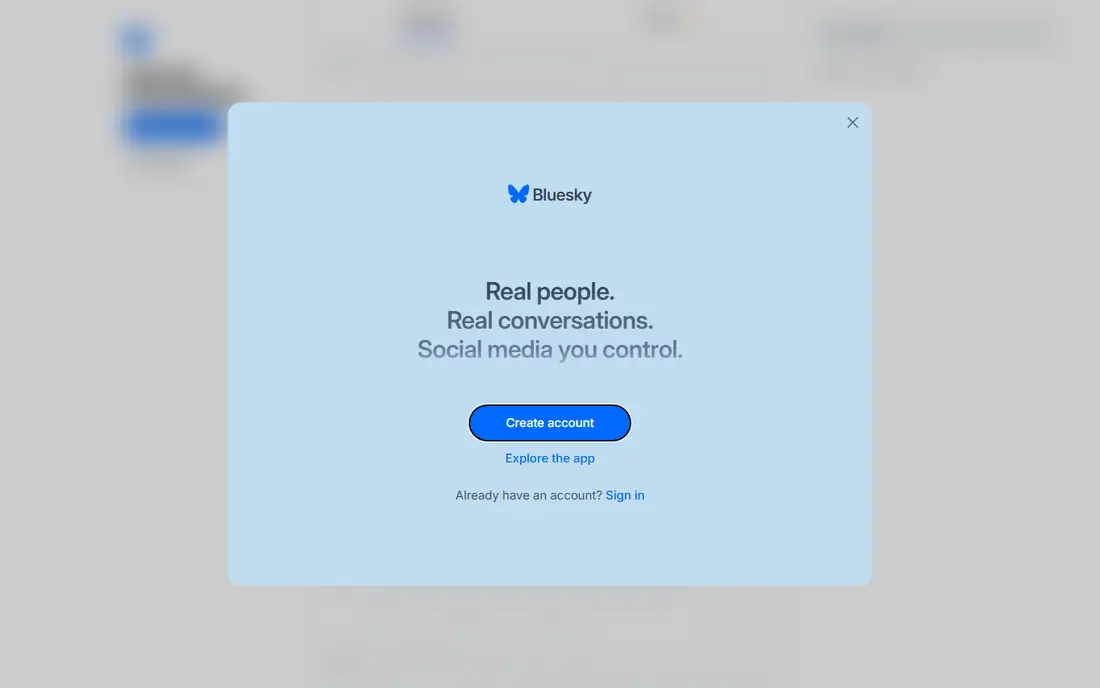
Bluesky feels familiar within minutes. Posts are short, replies sit in threads, and reposts and likes work in the way most former Twitter users expect. The default feed shows people you follow, while custom feeds let you follow topics, lists, or community-built streams without handing full control to one company feed.
The handle system is a practical difference. You can keep a standard handle, or set your own domain as your handle, which helps writers, small businesses, and creators keep a stable identity if they move apps later. Starter packs and lists also make the first week easier, because you can follow a curated group at once instead of searching one account at a time. The main drawback is reach. Bluesky has grown quickly, but it does not match the audience size of the largest social networks, so breaking news and niche professional topics can be thinner here.
What we like- Familiar short posts and replies
- Custom feeds and lists
- Account can use a personal domain as a handle
Watch out for- Smaller audience than large mainstream networks
- Some popular accounts are not present yet
Starting priceFree
Free planYes
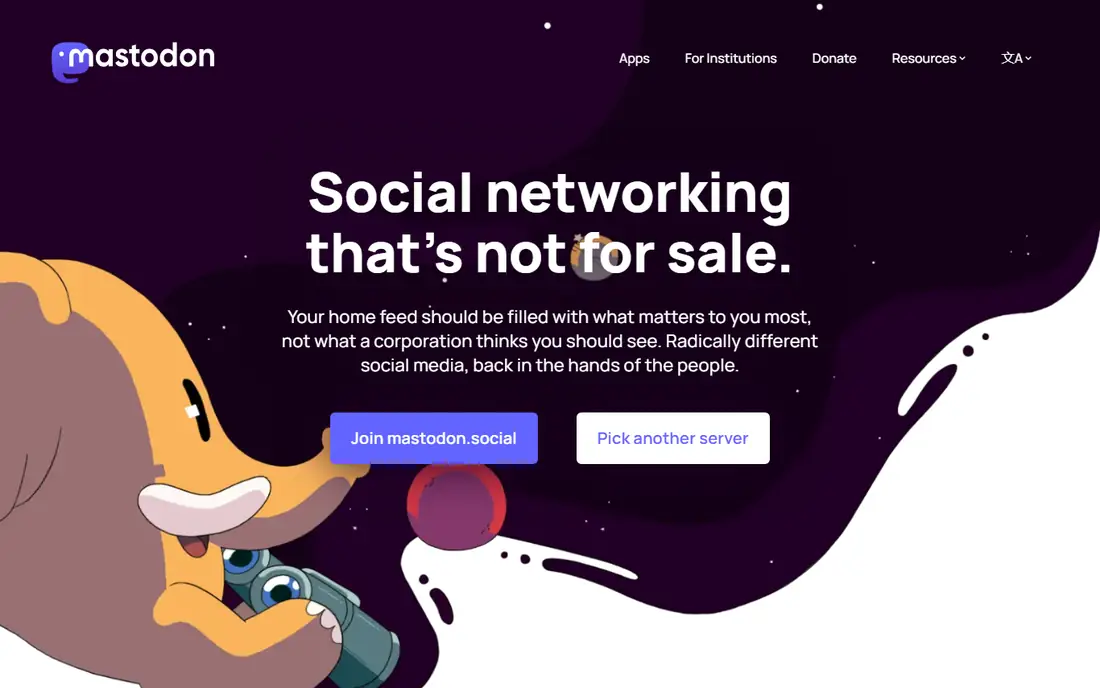
Mastodon is not one company site. It is free software run on many independent servers, called instances, that talk to each other. You join one server, and you can still follow and reply to people on other servers. That structure gives users more choice about moderation, because each server sets its own rules and can limit contact with servers it does not trust.
The reading experience is calmer than an algorithm-led feed. Posts from accounts you follow appear in chronological order, and there are no ads inserted by the core software. Content warnings, detailed image descriptions, and granular post visibility are built in, which suits communities that care about accessibility and consent. The trade-off is onboarding. New users must pick a server, learn terms such as federated timeline and local timeline, and accept that some servers may close or change rules over time. Once past that step, Mastodon works well as a daily reading and posting home.
What we like- No ads in the core software
- Chronological timeline by default
- Many independent servers with their own rules
Watch out for- Choosing a server takes extra thought
- Finding people across servers can feel confusing at first
Starting priceFree
Free planYes
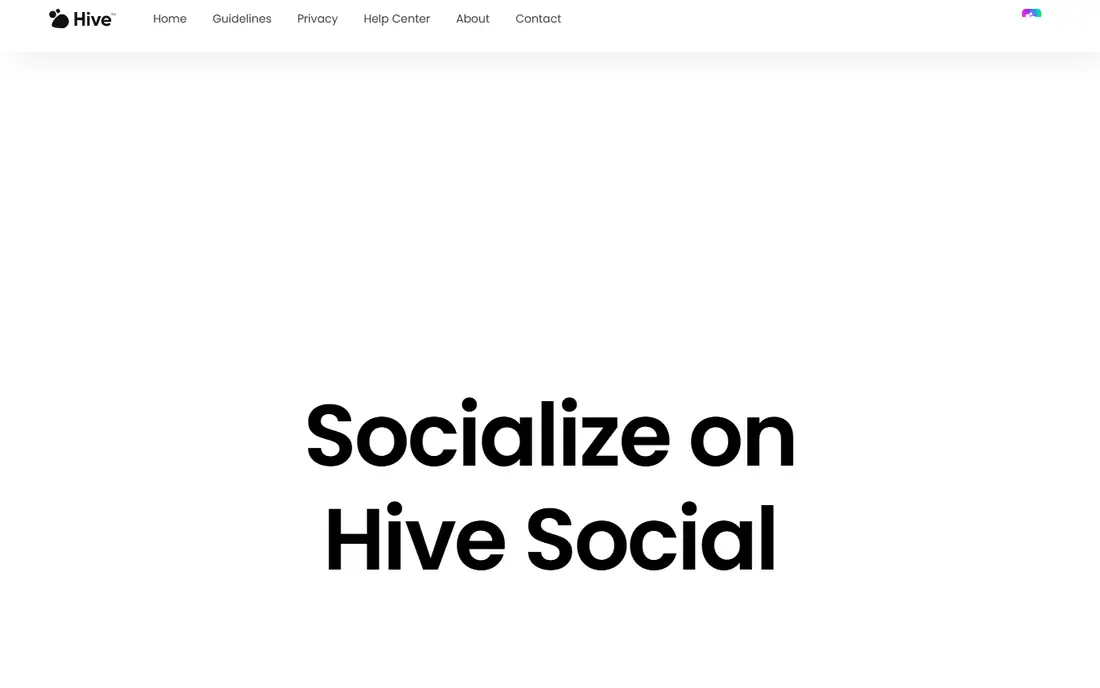
Hive Social presents itself as a mobile-first mix of short posts, photos, and profile customization. The app layout will feel familiar to anyone who used early social apps, with a main feed, a discover section, and profiles that allow more color and layout choice than a plain text timeline. For people who post photos alongside short updates, that visual emphasis is a real plus.
Hive works best as a casual, personal network rather than a news wire. Its community is smaller, so local news, live sports, and breaking business topics are less complete than on larger networks. Users who want a quieter feed and a more personal circle may prefer that size. Users who need instant coverage of every major story should keep a larger network alongside Hive, at least until its community grows.
What we like- Clean mobile layout with photos and text
- Profile customization options
- Chronological feed option
Watch out for- Smaller community than the leaders
- Some features have arrived more slowly than planned
Starting priceFree
Free planYes

Spoutible was built for people who left larger networks because the replies became hostile. Its rules and moderation tools focus on reducing abuse, spam, and impersonation, and the tone in many public threads reflects that choice. Posts support text, images, and polls, so it covers the basic short-form format without extra complexity.
The audience is the limiting factor. Spoutible is useful for discussion among people who already value a moderated space, but it is not the best first stop for live event coverage or for reaching a mass audience. It works well as a second network for conversation, especially for users who post opinions and want replies that stay civil. Check whether the communities you care about are active here before making it your only home.
What we like- Strong stance against harassment and spam
- Short posts with images and polls
- Straightforward web and mobile use
Watch out for- Smaller audience for niche topics
- Fewer third-party apps than larger networks
Starting priceFree
Free planYes
Minds combines short posts with longer blogs, images, groups, and video, so creators are not limited to one format. It also offers reward features that let engaged users earn tokens or support creators, which appeals to independent writers and video makers who want an alternative to ad-only income. Groups help smaller communities gather around a topic without relying on a single algorithmic feed.
That breadth is also the drawback. The interface carries more menus and choices than Bluesky or Spoutible, and the public feed mixes many topics and quality levels. New users should follow specific creators and groups quickly, rather than judging Minds by its open discovery feed alone. For creators who publish across formats and want direct support tools, Minds is worth a serious look.
What we like- Posts, blogs, images, and video in one place
- Creator reward options
- Open approach to content rules within the law
Watch out for- Content mix can feel uneven
- Interface has more options than a simple timeline app
Starting priceFree
Free planYes
MeWe is best understood as a group-first network. People join for private groups, pages, and chats around hobbies, local life, schools, and shared interests, rather than for a global public timeline. Posts can be shared with selected contacts or groups, which gives users clearer control over who sees family updates or community news.
Public discovery is not its strength. If your goal is to follow journalists, brands, and public figures in one open feed, Bluesky or Mastodon will serve you better. MeWe suits a different job: replacing a private Facebook group or a mailing list with a space that has no ads in its core experience. Paid extras exist for storage and some features, so check the pricing page before paying for an upgrade you may not need.
What we like- Groups, pages, and private chats in one app
- No ads in the core experience
- Privacy controls for posts and groups
Watch out for- Public discovery is weaker than on open networks
- Some premium features cost extra
Starting priceFree
Free planYes
CounterSocial takes a firm position on privacy and safety. Its homepage states that core functionality is free, that it does not rely on ads, and that it blocks tracking by third parties on outbound links. Extra tools include deepfake detection for uploaded content, identity-breach alerts, and fact-checking context for links. Those features matter most to users who worry about misinformation and account security.
The interface offers both a simple single-column mode and a multi-column dashboard mode. That choice helps, because the dashboard can feel busy on a first visit. Start in the simple mode, follow a few groups and topics, and switch later only if you want more columns. The community is smaller than the leaders on this list, so CounterSocial is best as a privacy-first discussion home, not as a sole source of breaking news.
What we like- No ads and no tracking in its stated model
- Deepfake and identity-breach tools
- Multiple layout modes, including a simple column view
Watch out for- Smaller community and a busier interface
- Some advanced features sit behind a paid Pro account
#8Substack
Best for: Writers building an audience4.3/5 on
G2 (17 reviews, checked Oct 2026)
Visit substack.com
Starting priceFree
Free planYes
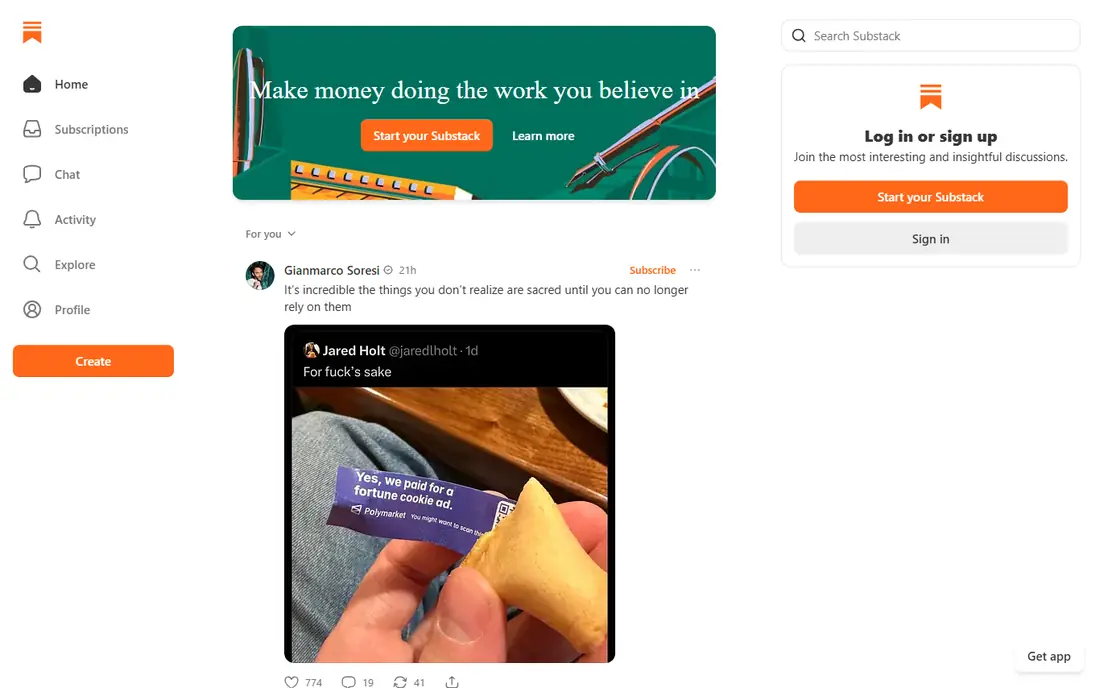
Substack is included here because many former Twitter users moved their short commentary and their longer writing to the same place. The Notes feature covers short posts, replies, and reposts, while newsletters and long articles give writers room to explain a topic properly. Readers can follow free publications, pay for selected writers, or simply read Notes without subscribing to everything.
Substack is not a like-for-like Twitter clone. Its strength is depth and direct audience ownership, not rapid-fire public debate across millions of accounts. Writers control their mailing list, which means an audience built here is less dependent on one feed algorithm. Readers who only want quick headlines may find Substack slower than Bluesky or Mastodon. Readers who want to follow a smaller set of trusted writers closely will get more value here.
What we like- Long posts and newsletters with subscriptions
- Notes feature for short updates
- Writers keep their mailing list and payments
Watch out for- Not a full replacement for a fast public timeline
- Best content often sits behind paid subscriptions
How we chose
We compared each network on fit for short-form posting, audience size, feed control, moderation approach, and cost. We checked vendor homepages, help pages, and public reviews on sites such as G2, Capterra, and Reddit, and we favored networks that exist today, accept new users, and offer a free way to start. We did not claim hands-on testing, and we did not rank a network higher only because it is large. A smaller network with clear moderation and a usable free plan can be the better pick for a specific reader.
What to check before you switch
Start with your must-follow list. Write down the accounts, topics, and local sources you actually read each day, then search for them on two or three networks before you commit. If most of them are missing, that network will feel empty no matter how good its features are. Also check how each network handles your data. Look for export options, account deletion steps, and whether you can move your handle or followers later.
Feed control matters more than it first appears. A chronological feed gives you every post from people you follow, but it can also bury good posts under volume. An algorithmic feed surfaces popular posts, but it may hide quiet accounts you value. The best setup is often a mix: a following feed for daily reading, plus lists or custom feeds for topics such as local news, work, or hobbies. Turn notifications on for only a few accounts at first, so a new network does not become another source of constant alerts.
Audience building takes longer on smaller networks. Post regularly, reply to others, and join groups or starter packs in your field. Cross-posting the same update to two networks can help during a transition, but tailor the first line and any images to each audience. Finally, keep your old account active for a short overlap period, with a pinned post pointing to your new handle, so followers can find you.
Frequently asked questions
Do I need to delete my old Twitter or X account to use an alternative?
No. Most people keep the old account while they build a new audience, then decide later whether to delete it, leave it dormant, or use it only for reading. A pinned post with your new handle helps followers move with you.
Which twitter alternative is closest to old Twitter?
Bluesky is the closest in everyday use, because its posts, replies, reposts, and lists work in a familiar way. Mastodon is close in format too, but its server structure takes more setup. If you want the simplest switch, start with Bluesky.
Are these alternatives really free?
Yes, each tool on this list offers a free plan for core posting and reading. Some offer paid extras, such as storage, verification features, or ad-free browsing. Check the vendor pricing page before paying, because the free plan covers daily use for most people.
Can I move my followers from Twitter to a new network?
There is no full, automatic follower transfer between independent networks. Some tools and starter packs help you find people you followed before, and a pinned post on your old profile helps followers find your new handle. Expect to rebuild part of your audience over weeks, not days.
Is Mastodon hard for beginners?
Mastodon takes a little more setup than a single-company app, because you choose a server first. Once you join, posting and following work in a familiar way. Joining a large general server, such as the flagship server listed on the Mastodon site, keeps the first step simple.
Which alternative is best for privacy?
Mastodon and CounterSocial stand out here, for different reasons. Mastodon has no ads in its core software and lets servers set their own moderation rules. CounterSocial states that it does not track users and does not rely on ads. Read each privacy policy before posting personal details anywhere.
Sources we checked (8)
- https://bsky.app
- https://joinmastodon.org
- https://www.hivesocial.app
- https://spoutible.com
- https://www.minds.com
- https://mewe.com
- https://counter.social
- https://substack.com
Is your product missing or out of date?
We review this list regularly. Vendors can request a listing, send updated pricing or ask about featured placement.

Shihab Mia · Founder, Rankite
Shihab has 5+ years in B2B and SaaS SEO. He writes Rankite's software buying guides from pricing pages, documentation and public user reviews. More about Shihab.