How we make this list: we compare pricing pages, product documentation and public user reviews. Ratings come from G2, Capterra or Trustpilot, with the date we checked them.
Key takeaways
- MailerLite and Moosend are the clearest cheaper Mailchimp alternatives for small lists, with simple editors and free or low-cost starting plans.
- Kit suits creators and newsletter writers, while Klaviyo and Omnisend suit online shops that need purchase-based email and SMS flows.
- ActiveCampaign and GetResponse suit teams that want deeper automation, scoring, and multi-step customer journeys.
- Constant Contact and Campaign Monitor suit small businesses and agencies that want guided templates, events, and simple reporting.
- Price in this category almost always rises with list size, so compare the cost at your current size and at double that size before you switch.
People leave Mailchimp for different reasons. Some find the price jumps sharply as a list grows. Others want stronger automation, better support for online shops, or a simpler editor for newsletters. A few want a tool built for creators, not for a general marketing team. There is no single best alternative, because an online shop, a local nonprofit, and a newsletter writer need different strengths.
This guide compares nine alternatives to Mailchimp across those use cases. It notes free plans, trial terms, automation depth, and the main limit of each tool. Prices in this category change with contact count and billing period, so several entries say See website. That is deliberate. Check the vendor pricing page with your exact list size before you commit, and test a migration with a small segment first.
Quick comparison
| Tool | Best for | Starting price | Free plan |
|---|
 MailerLite | Simple, low-cost email marketing | See website | Yes |
 Constant Contact | Small businesses and nonprofits | See website | Free trial |
 Kit | Creators and newsletters | See website | Yes |
 Klaviyo | Online shops and SMS | See website | Yes |
 ActiveCampaign | Advanced automation | See website | Free trial (14 days) |
 Campaign Monitor | Polished campaigns and agencies | See website | Free trial |
 Omnisend | Ecommerce email and SMS | See website | Yes |
 Moosend | Low-cost automation | See website | Free trial |
 GetResponse | Email, automation, and webinars | See website | Free trial (14 days) |
Is your product missing or out of date?
We review this list regularly. Vendors can request a listing, send updated pricing or ask about featured placement.
The best Mailchimp alternatives
#1MailerLite
Best for: Simple, low-cost email marketing4.6/5 on
G2 (1,114 reviews, checked Oct 2026)
Visit mailerlite.com
Starting priceSee website
Free planYes
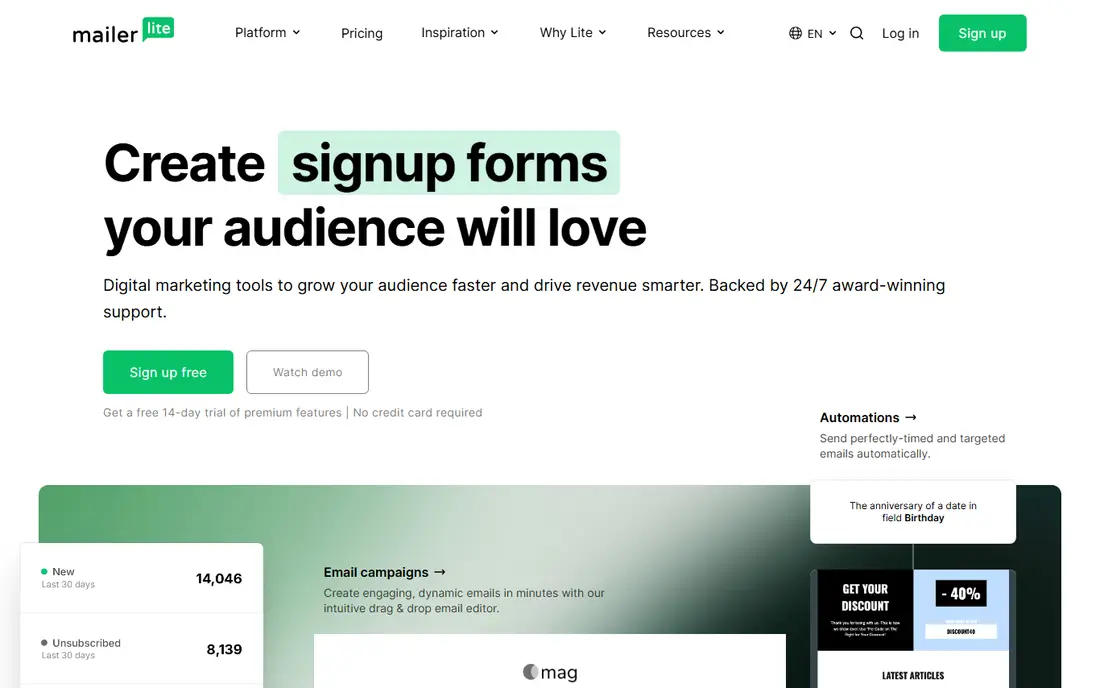
MailerLite is often the first stop for people who want Mailchimp without the complexity or the price jump. Its drag-and-drop editor is clear, its automation builder covers welcome series, re-engagement, and basic ecommerce triggers, and its landing pages and forms help a small business grow a list without a separate tool. For newsletters, announcements, and simple promotions, it does the job with little training.
The limit is depth. If you need deep purchase prediction, complex scoring, or a full CRM, MailerLite will feel thin compared with ActiveCampaign or Klaviyo. The free plan also caps subscribers and monthly sends, so a fast-growing list will need a paid plan sooner than expected. For a small team that sends regular campaigns and wants a calm interface, MailerLite is one of the best value alternatives.
What we like- Clean editor and automation builder
- Landing pages, forms, and websites included
- Responsive support
Watch out for- Advanced ecommerce and CRM features are lighter than Klaviyo or ActiveCampaign
- Free plan has subscriber and send limits
Starting priceSee website
Free planFree trial
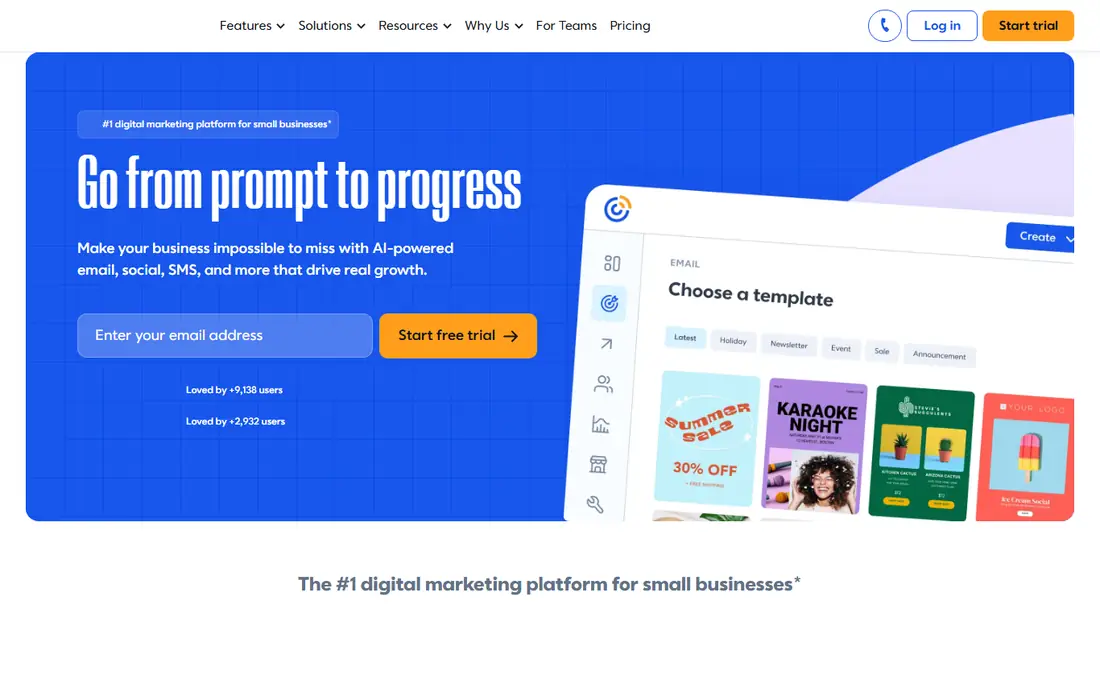
Constant Contact has long focused on small businesses, nonprofits, and franchises that need marketing help, not just software. Its templates, event registration, and social posting tools suit a local shop, a charity, or a community group that sends newsletters, event invites, and promotions. Support and onboarding are geared to users who do not have a marketing team.
That guidance comes at a price. Constant Contact is not usually the cheapest Mailchimp alternative at larger list sizes, and its automation, while improved, does not match ActiveCampaign for complex journeys. If you value a guided setup, event tools, and a team that understands small business marketing, it is worth the premium. If you only need bulk email at the lowest cost, MailerLite or Moosend will usually be cheaper.
What we like- Guided templates and event tools
- Social and SMS options on higher plans
- Support aimed at non-technical users
Watch out for- Price rises with list size
- Advanced automation is less deep than specialist tools
Starting priceSee website
Free planYes
Kit, formerly ConvertKit, is built for creators: writers, podcasters, coaches, and newsletter publishers. Its visual automation builder makes it easy to map a welcome sequence, a launch series, or a paid newsletter flow, and its landing pages and forms are designed to grow an audience from content. Creator recommendations and product sales help a solo creator turn readers into customers without adding several tools.
Kit is less suited to a retail shop that needs product recommendations, deep ecommerce reporting, or complex multi-channel campaigns. Its email design is functional rather than flashy, which suits text-led newsletters but may disappoint a brand that needs highly designed templates. For a creator-led business, Kit is one of the most focused Mailchimp alternatives available.
What we like- Visual automations and creator-focused growth tools
- Landing pages and digital product sales
- Free migration on paid plans
Watch out for- Design tools are simpler than a full marketing suite
- Pricing is based on active subscribers
#4Klaviyo
Best for: Online shops and SMS4.6/5 on
G2 (1,368 reviews, checked Oct 2026)
Visit klaviyo.com
Starting priceSee website
Free planYes
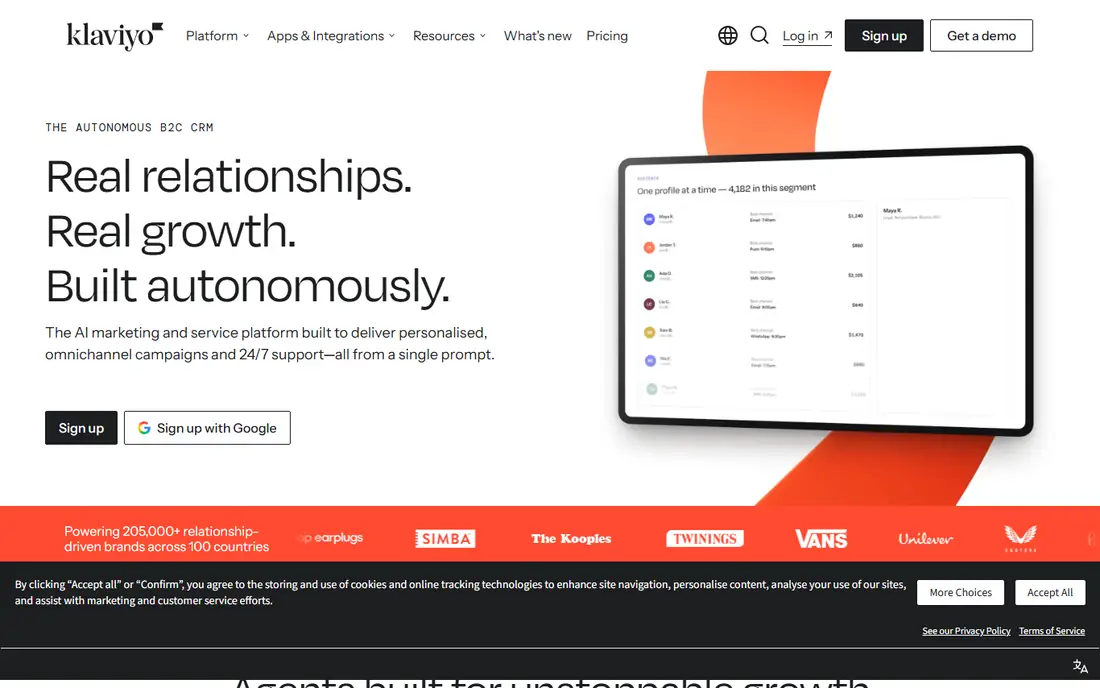
Klaviyo is the default alternative for many online shops, especially those on Shopify. It syncs order, product, and browsing data, so you can build segments based on what a customer bought, viewed, or left in a cart. Its flows for welcome, abandoned cart, post-purchase, and win-back are built for revenue, and SMS can sit beside email in the same automation. Reporting ties campaigns to orders, which helps a shop owner judge what actually sold.
That power has a cost. Klaviyo pricing scales with contacts, and SMS adds a separate charge, so a large list with frequent texts can become expensive. Setup also takes care, because the value comes from clean data and well-built flows, not from a single campaign. For a shop that lives on repeat orders, Klaviyo is often worth it. For a simple newsletter, it is more tool than you need.
What we like- Deep Shopify and ecommerce integrations
- Purchase-based segments and flows
- Email plus SMS in one platform
Watch out for- Cost can rise quickly with contacts and SMS use
- Setup takes time to get full value
Starting priceSee website
Free planFree trial (14 days)
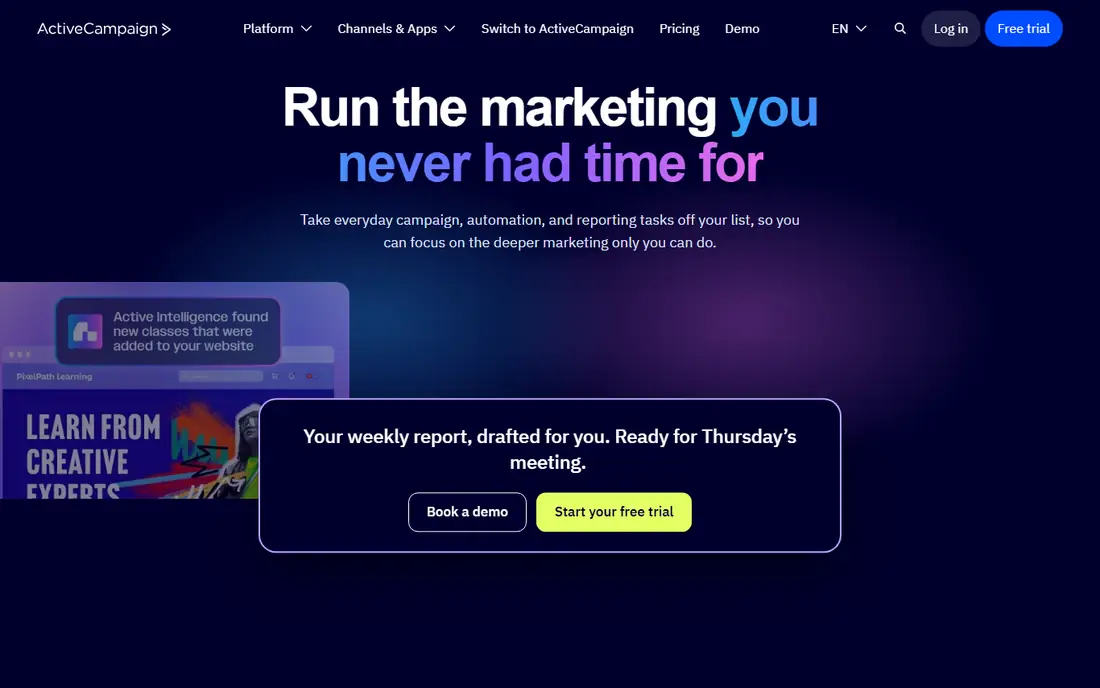
ActiveCampaign suits teams that want to build detailed customer journeys, not just send a weekly newsletter. Its automation builder supports branching, tagging, scoring, and conditional steps, and its CRM tools help a sales team follow up on leads from the same platform. Email, SMS, and site tracking can work together, so a contact who visits a pricing page can receive a different sequence than one who only reads a blog post.
The trade-off is complexity and cost. New users may need training or a specialist to build the first automations well, and plan tiers differ in automation depth, users, and support. Small businesses with simple needs may find ActiveCampaign more than they use. For a growing team that needs automation as a core sales and marketing engine, it is one of the strongest Mailchimp alternatives.
What we like- Deep automation, tagging, and scoring
- Email, SMS, and CRM in one system
- Strong integrations
Watch out for- Learning curve is steep
- Price and plan tiers need careful comparison
Starting priceSee website
Free planFree trial
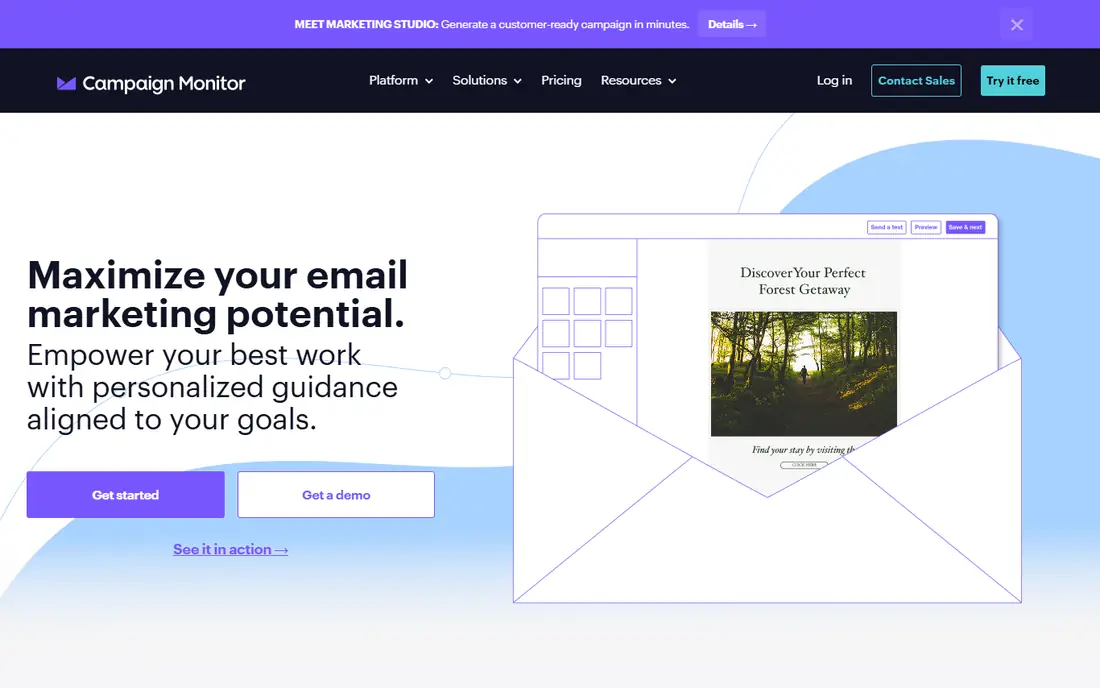
Campaign Monitor focuses on well-designed campaigns and clear reporting. Its template builder helps a team produce on-brand emails without design skills, and its visual journey designer makes automation less intimidating than a code-heavy builder. Benchmark reporting compares a campaign with industry figures, which helps a marketer explain results to a client or a manager.
Campaign Monitor is not the deepest ecommerce tool, and its price, like most in this list, rises with contacts. Agencies like its account management and template controls, while small teams like its polish. If your priority is beautiful, consistent campaigns and readable reports, Campaign Monitor is a strong alternative. If you need deep shop automation, Klaviyo or Omnisend will fit better.
What we like- Clean templates and visual journey builder
- Benchmark reporting
- Agency and multi-account options
Watch out for- Pricing is contact-based and can rise with list size
- Ecommerce depth is lighter than Klaviyo
#7Omnisend
Best for: Ecommerce email and SMS4.6/5 on
G2 (1,249 reviews, checked Oct 2026)
Visit omnisend.com
Starting priceSee website
Free planYes
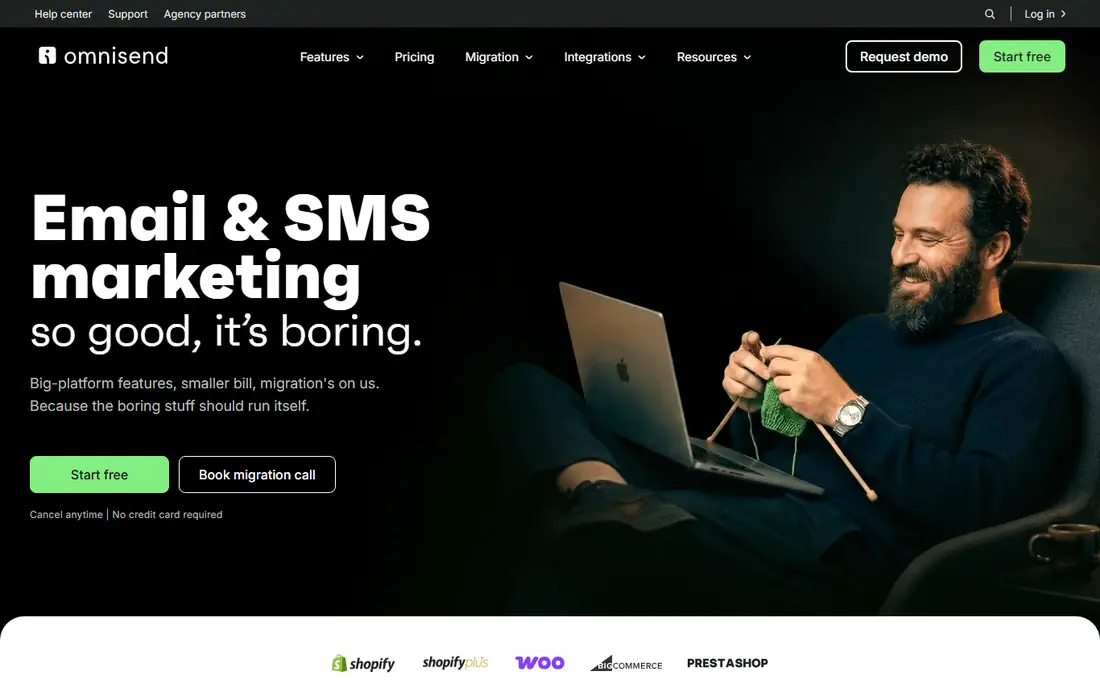
Omnisend is built for online shops that want email, SMS, and push notifications without stitching together several tools. Its pre-built flows cover welcome, abandoned cart, browse abandonment, order confirmation, and post-purchase follow-up, and its segmentation uses purchase and engagement data. Forms and popups help a shop capture emails and phone numbers at checkout and on product pages.
For a business that does not sell online, Omnisend is less compelling than MailerLite or Kit, because many of its strengths are ecommerce-specific. SMS pricing also needs attention, since frequent texts can raise the monthly bill quickly. For a Shopify, WooCommerce, or similar shop that wants a cheaper Klaviyo-style tool, Omnisend is one of the most direct Mailchimp alternatives to test.
What we like- Ecommerce flows for cart, browse, and post-purchase
- Email, SMS, and push in one place
- Free plan for small shops
Watch out for- Less suited to non-ecommerce newsletters
- SMS costs add up with volume
#8Moosend
Best for: Low-cost automation4.7/5 on
G2 (745 reviews, checked Oct 2026)
Visit moosend.com
Starting priceSee website
Free planFree trial
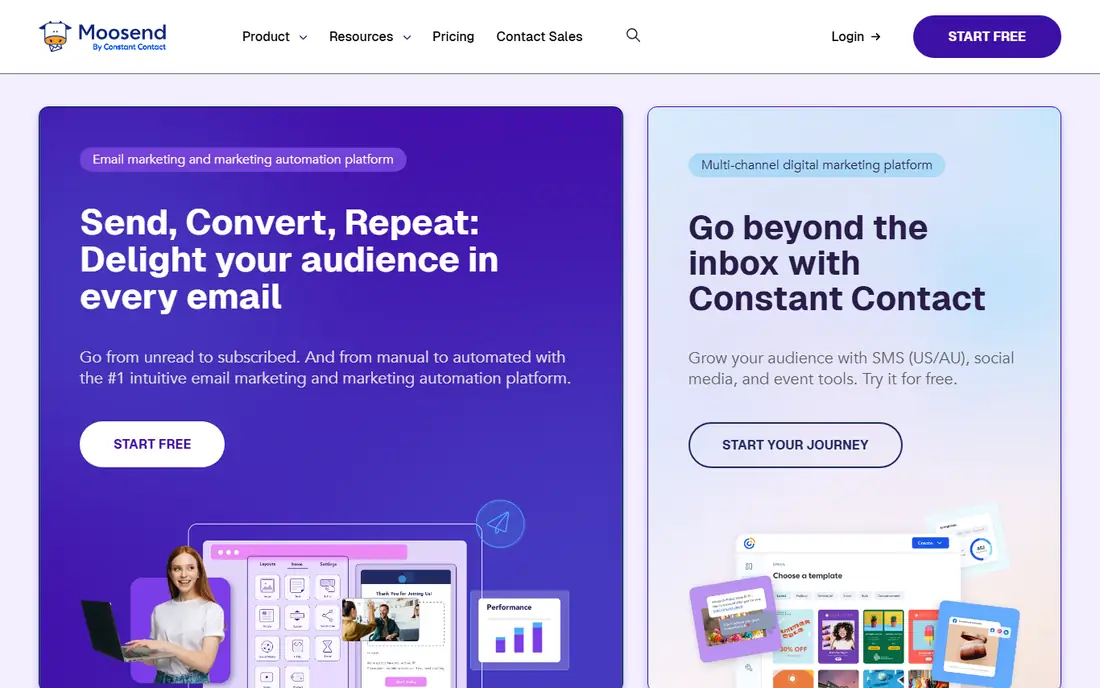
Moosend appeals to small businesses that want automation without a high monthly bill. Its editor, automation builder, landing pages, and forms cover the core email marketing job, and paid plans allow unlimited campaigns, which helps a team that sends often. The interface is straightforward, and the price at small list sizes is usually lower than Mailchimp and several rivals.
The library of templates and integrations is smaller than Mailchimp or ActiveCampaign, so a team with unusual tools should check integration support before migrating. Support is also less around-the-clock than some larger platforms. For a cost-conscious team that needs solid automation and does not need every integration, Moosend is a practical, cheaper Mailchimp alternative.
What we like- Unlimited campaigns on paid plans
- Automation, landing pages, and forms included
- Clear, low-cost pricing
Watch out for- Template and integration library is smaller than larger rivals
- Support hours are more limited than some competitors
#9GetResponse
Best for: Email, automation, and webinars4.3/5 on
G2 (1,143 reviews, checked Oct 2026)
Visit getresponse.com
Starting priceSee website
Free planFree trial (14 days)
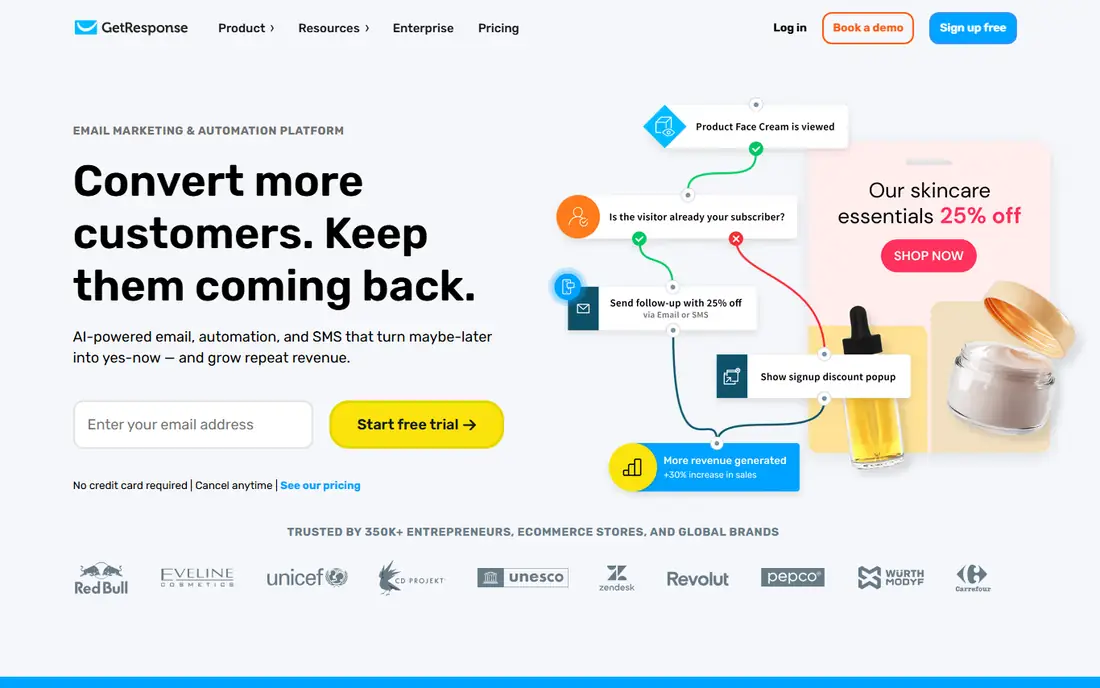
GetResponse is a broad platform for teams that want more than email. Alongside campaigns and automation, it offers landing pages, sales funnels, webinars, SMS, and web push, so a course creator or a small business can run a launch from one account. Its AI tools can suggest send times and content, and its reporting covers campaigns, funnels, and webinar attendance.
Breadth brings complexity. New users may need time to find the right plan, because webinar seats, automation depth, and ecommerce features vary by tier. A team that only sends a newsletter may find GetResponse larger than needed. For a business that runs webinars, funnels, and email together, it can replace several subscriptions, which may offset a higher headline price.
What we like- Email, automation, landing pages, funnels, and webinars in one platform
- AI send-time and content tools
- Many integrations
Watch out for- Interface has many features to learn
- Plan tiers differ in webinar and automation limits
How we chose
We checked vendor homepages and pricing pages, feature documentation, and public feedback, and we favored tools that cover a clear use case, whether that is low cost, creator newsletters, ecommerce, or advanced automation. We weighed free plans and trials, automation depth, segmentation, integrations, deliverability tools, and how pricing scales with list size. We did not rank on a single feature, because a cheap plan that cannot automate a welcome series is not a real alternative for most teams.
How to switch without losing subscribers
Export and clean before you move
Export your list, segments, tags, and suppression lists from Mailchimp, and remove hard bounces and long-term inactive contacts before you import. A clean list improves deliverability on any new platform. Keep a backup of the export, and do not delete the old account until the new platform has sent successfully for at least a few weeks.
Test deliverability with a small segment
Set up domain authentication, including SPF, DKIM, and DMARC where the new platform supports it, and send first to your most engaged subscribers. Watch open, click, bounce, and spam complaint rates, and check if your domain or IP needs warming. Rebuild key automations, such as welcome and abandoned cart flows, before you turn off the old ones.
Compare total cost at two list sizes
A plan that looks cheap at 1,000 contacts can become expensive at 10,000, especially when SMS, extra users, or premium features are added. Price each shortlisted tool at your current size and at double that size, and include any migration, template, or training cost. A slightly higher monthly price can be worth it if it saves hours of manual work each week.
Frequently asked questions
What is the best Mailchimp alternative for small businesses?
MailerLite and Moosend are the best low-cost starting points for small businesses, with simple editors and automation at a lower price than Mailchimp at many list sizes. Constant Contact suits small businesses that want guided templates, events, and support. Test a free plan or trial with your real list size before you decide.
What is the best alternative to Mailchimp for ecommerce?
Klaviyo is the strongest ecommerce choice for shops that need deep purchase data, segments, and SMS flows, especially on Shopify. Omnisend is a strong, often cheaper ecommerce alternative with similar flows for cart and post-purchase messages. Choose Klaviyo for depth and reporting, and Omnisend when budget and simplicity matter more.
Are there free Mailchimp alternatives?
Yes. MailerLite, Kit, Klaviyo, and Omnisend all offer free plans, with limits on subscribers, sends, or features. Free plans suit a new list or a small newsletter, but a growing business will usually need a paid plan for automation, support, and higher send limits. Check the free plan cap before you migrate a large list.
Is it hard to switch from Mailchimp?
Most platforms offer import tools for subscribers, tags, and segments, and some offer free migration help on paid plans. The harder work is rebuilding templates and automations, setting up domain authentication, and warming a new sending domain. Plan for a few weeks of overlap, and keep Mailchimp running until the new platform proves deliverability.
Do Mailchimp alternatives include SMS?
Klaviyo, Omnisend, ActiveCampaign, Constant Contact, and GetResponse offer SMS on some plans, while MailerLite and Kit focus mainly on email. SMS usually costs extra, based on messages sent or credits used, and it needs separate consent from subscribers. If SMS matters, price it separately and check which countries are supported.
Which Mailchimp alternative is cheapest?
Moosend and MailerLite are usually among the cheapest at small list sizes, but the cheapest tool depends on your contact count, send volume, and if you need SMS or advanced automation. Compare total cost at your actual list size, not just the headline starting price, and watch for price jumps at the next contact tier.
Sources we checked (9)
- https://www.mailerlite.com/
- https://www.constantcontact.com/
- https://kit.com/
- https://www.klaviyo.com/
- https://www.activecampaign.com/
- https://www.campaignmonitor.com/
- https://omnisend.com/
- https://www.moosend.com/
- https://www.getresponse.com/
Is your product missing or out of date?
We review this list regularly. Vendors can request a listing, send updated pricing or ask about featured placement.

Shihab Mia · Founder, Rankite
Shihab has 5+ years in B2B and SaaS SEO. He writes Rankite's software buying guides from pricing pages, documentation and public user reviews. More about Shihab.