How we make this list: we compare pricing pages, product documentation and public user reviews. Rankite is independent; if a vendor ever pays for a featured spot, that listing is clearly labeled Partner.
Key takeaways
- Price the list you will have in a year, not today: Mailchimp ($13/mo at 500 contacts) climbs to about $75 at 5,000, while Brevo ($9/mo for 5,000 emails) bills on volume, not list size.
- Free plans shrank in 2026: Mailchimp now allows 250 contacts and 500 sends, MailerLite 250 subscribers and 2,500 emails; Brevo's free tier (300 emails/day, 100k contacts) is the most generous.
- Brevo and MailerLite give non-technical owners the most for the least money; Constant Contact wins when you want phone support; Kit serves creators specifically.
- If you email infrequently, Brevo's send-based pricing beats every contact-based plan; if you email weekly, contact-based plans from MailerLite or Moosend usually win.
Quick comparison
| Tool | Best for | Starting price | Free plan |
|---|
 Mailchimp Mailchimp | Owners who want a familiar all-in-one suite | Free (Essentials from $13/month for 500 contacts) | Yes |
 Brevo Brevo | Large lists that you email infrequently | Free (Starter from $9/month for 5,000 emails) | Yes |
 MailerLite MailerLite | Simple newsletters done well on a budget | Free (from $12/month for 500 subscribers) | Yes |
 Constant Contact Constant Contact | Owners who want human support | From $12/month (500 contacts) | No (30-day free trial) |
 Kit Kit | Creators selling newsletters, courses and digital products | Free (Creator from $33/month for 1,000 subscribers) | Yes |
 ActiveCampaign ActiveCampaign | Small teams that need serious automation | From $15/month (Starter, 1,000 contacts) | No (14-day free trial) |
 GetResponse GetResponse | Businesses that want email plus webinars and funnels | From $19/month (1,000 contacts) | Yes |
 AWeber AWeber | Solo owners who want email without surprises | Free (from $15/month for 500 subscribers) | Yes |
 Moosend Moosend | Straightforward campaigns at a flat low price | From $9/month (500 contacts) | No (30-day free trial) |
Is your product missing or out of date?
We review this list regularly. Vendors can request a listing, send updated pricing or ask about featured placement.
The best email software for small business
Your email list is the only audience you truly own. Social algorithms change; the list stays. But email pricing is a maze of contacts, sends, tasks and tiers, and the cheapest tool at 500 subscribers is rarely the cheapest at 5,000. Nine platforms, priced at the list sizes small businesses actually hit.
Starting priceFree (Essentials from $13/month for 500 contacts)
Free planYes
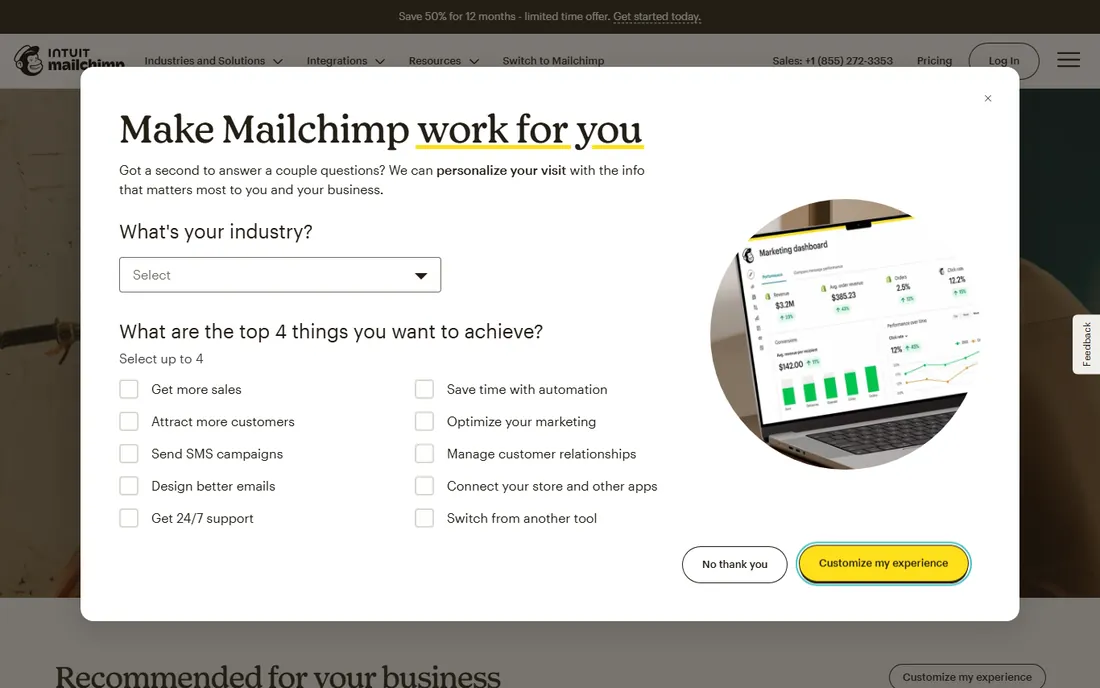
Mailchimp remains the default recommendation because everything connects to it. The Essentials plan starts at $13 a month for 500 contacts, Standard at $20 adds multi-step automation, and the template library plus landing page builder cover the basics well. For a business sending straightforward campaigns, it works.
The 2026 reality check: the free plan now allows 250 contacts and 500 emails a month with a daily cap, and automation requires a paid plan. At 5,000 contacts, Essentials runs about $75 a month. Mailchimp is worth it if you want the mature suite and the integrations; if price is the priority, Brevo and MailerLite cost less at every list size.
What we like- Most recognized name with the widest integration ecosystem
- Mature templates, landing pages and basic automation
- Generous send allowance relative to contacts on paid tiers
Watch out for- Free plan cut to 250 contacts and 500 sends in 2026 with no free automation
- Pricing climbs steeply with list size
- Unsubscribed contacts count toward billing until archived
Starting priceFree (Starter from $9/month for 5,000 emails)
Free planYes
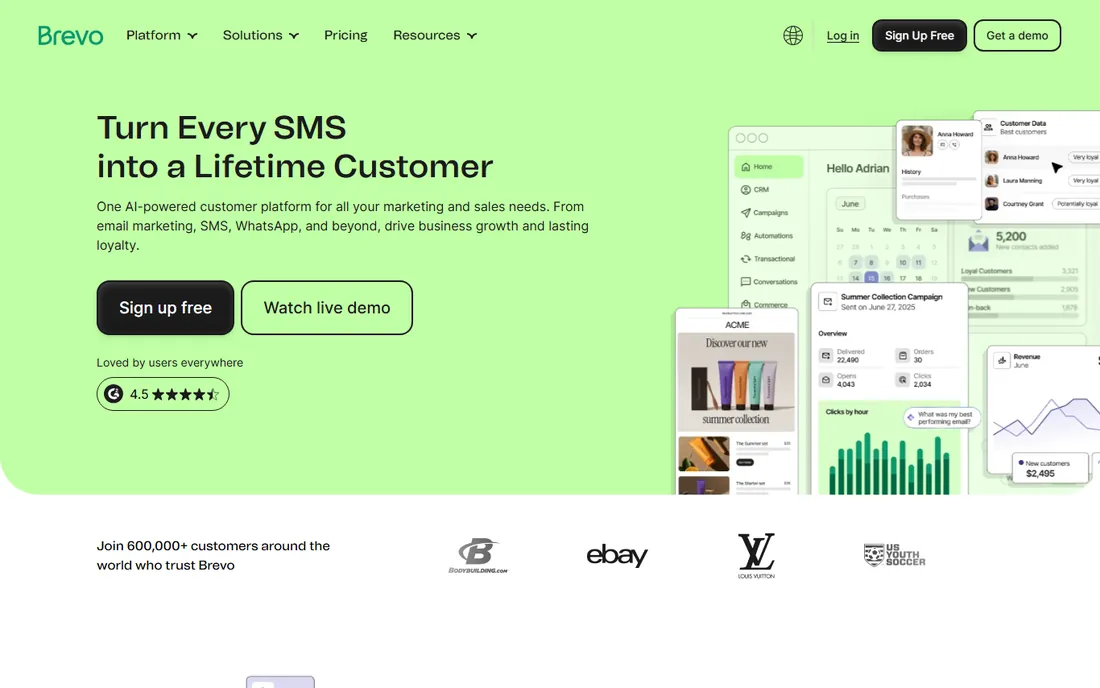
Brevo's pricing model is its superpower for the right sender. Because you pay per email sent rather than per contact stored, a business with a big list and a monthly newsletter pays $9 a month for 5,000 emails while contact-based competitors charge for all 50,000 subscribers. The free plan's 300 emails a day covers many small businesses entirely.
The trade-offs are real but minor: automation depth lags the specialists, and branding removal costs extra. For local shops, nonprofits and anyone emailing less than weekly, Brevo is usually the cheapest credible option. High-frequency senders should compare the per-email math against MailerLite's contact-based tiers.
What we like- Bills on email volume, not contacts, so a 50,000-person list emailed monthly stays cheap
- Free tier allows 300 emails a day with up to 100,000 contacts
- Transactional email included on every plan
Watch out for- Automation is thinner than ActiveCampaign
- The logo sits in your footer unless you pay to remove it
- Contact-based senders may find the model confusing
Starting priceFree (from $12/month for 500 subscribers)
Free planYes
MailerLite is the tool reviewers recommend to friends starting a newsletter. The editor is simple, the automation builder is visual, and emails land in inboxes reliably. Paid plans start at $12 a month for 500 subscribers, scaling to about $32 at 5,000, which undercuts Mailchimp at every step.
It is deliberately lean: no CRM, no SMS, limited advanced segmentation. For a small business sending newsletters and simple automations, that leanness is a virtue. For teams needing lifecycle marketing or sales pipelines, ActiveCampaign or HubSpot fit better. The free plan covers 250 subscribers, enough to validate the channel before paying.
What we like- Cleanest interface in the category for non-technical owners
- Strong deliverability reputation
- Automation included even on the free plan (limited)
Watch out for- Free tier is small at 250 subscribers and 2,500 emails
- Lean feature set by design, so advanced segmentation is limited
- No built-in CRM
Starting priceFrom $12/month (500 contacts)
Free planNo (30-day free trial)
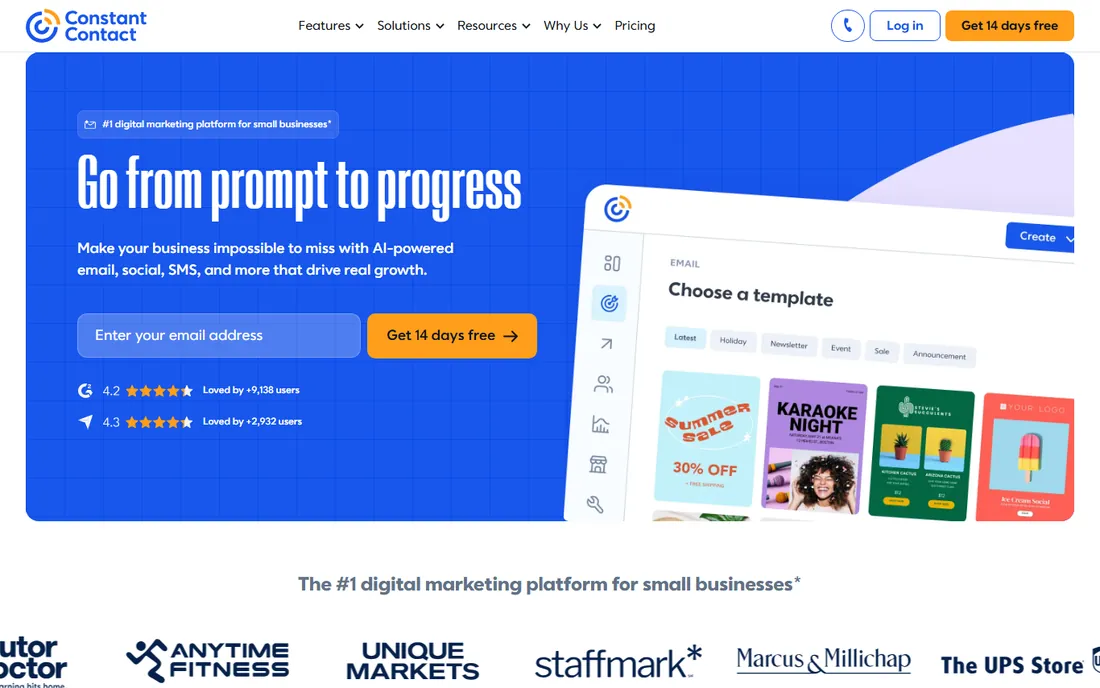
Constant Contact's pitch is the phone number. When the newsletter will not send at 9 p.m. before a launch, a human answers. That support, plus solid deliverability and event marketing features, keeps it popular with local businesses, nonprofits and associations. Plans start at $12 a month for 500 contacts.
There is no free tier, only a trial, and the automation will not impress anyone coming from ActiveCampaign. But for owners who value a support call over a feature checklist, it is the right trade. Price it against Mailchimp Essentials at your list size; the support is the tiebreaker.
What we like- Real phone support, a genuine differentiator for non-technical owners
- Strong deliverability
- Event marketing and social tools beyond email
Watch out for- No permanent free plan
- Automation is basic compared with ActiveCampaign
- Pricing at scale is unremarkable
#5
Kit
Best for: Creators selling newsletters, courses and digital products
Visit kit.com
Starting priceFree (Creator from $33/month for 1,000 subscribers)
Free planYes
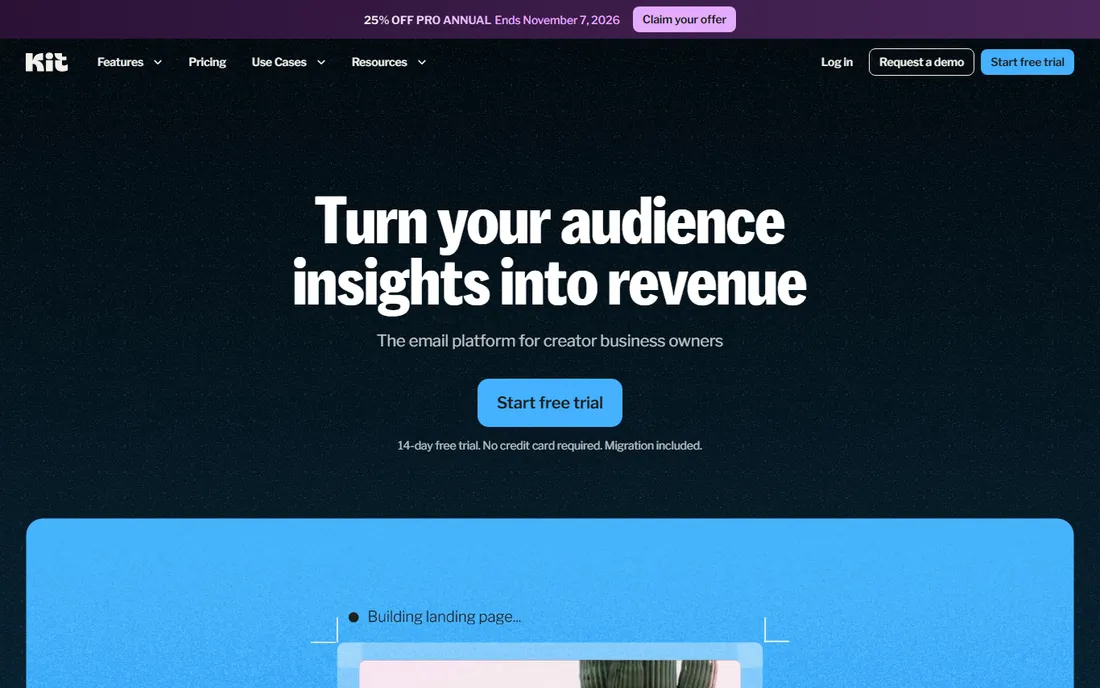
Kit, formerly ConvertKit, is the creator's email tool. The free Newsletter plan lets creators reach up to 10,000 subscribers with unlimited broadcasts, which no general platform matches. Paid Creator plans from $33 a month for 1,000 subscribers add automation sequences, and the commerce features sell digital products directly.
It is a poor fit outside the creator world: no ecommerce depth, no CRM complexity. But for bloggers, course sellers and newsletter writers, the free tier alone can carry a real business. Standard small businesses sending promotions and announcements will find MailerLite or Brevo cheaper and better matched.
What we like- Most generous free plan for broadcasting: up to 10,000 subscribers with unlimited broadcasts
- Built for creator monetization with commerce features
- Simple, focused toolset
Watch out for- Pricier than general tools once paid
- Not built for ecommerce or complex CRM workflows
- Overkill for standard business campaigns
Starting priceFrom $15/month (Starter, 1,000 contacts)
Free planNo (14-day free trial)
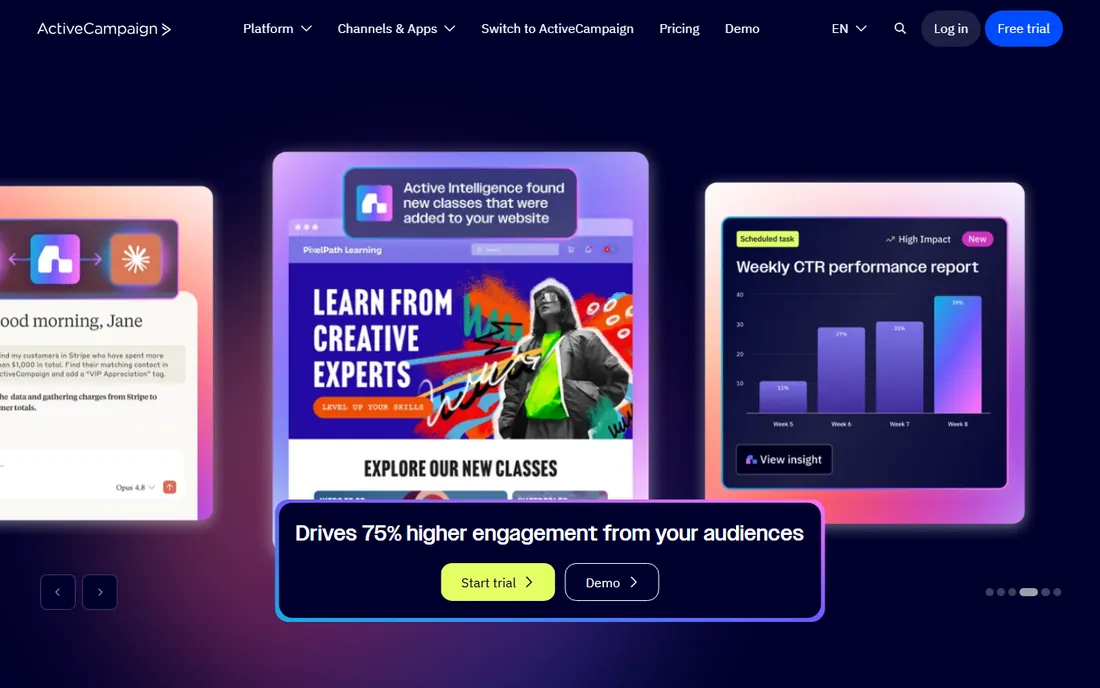
ActiveCampaign is where small businesses go when Mailchimp's automation runs out. The visual automation builder handles multi-branch sequences, site tracking triggers, lead scoring and CRM pipelines that the simpler tools cannot touch. Starter begins at $15 a month for 1,000 contacts, which is remarkable value for the depth.
The honest catch is fit. If you send a monthly newsletter, this is a sports car for grocery runs: the learning curve and the price buy capability you will not use. But for businesses where email drives revenue, abandoned carts, onboarding sequences, re-engagement campaigns, ActiveCampaign is the cheapest way to run real marketing automation.
What we like- Deepest automation in the SMB tier with visual workflows and conditional logic
- Built-in CRM with sales pipeline
- Strong segmentation and personalization
Watch out for- No free plan
- The power brings a learning curve
- You pay for depth even if you only send newsletters
Starting priceFrom $19/month (1,000 contacts)
Free planYes
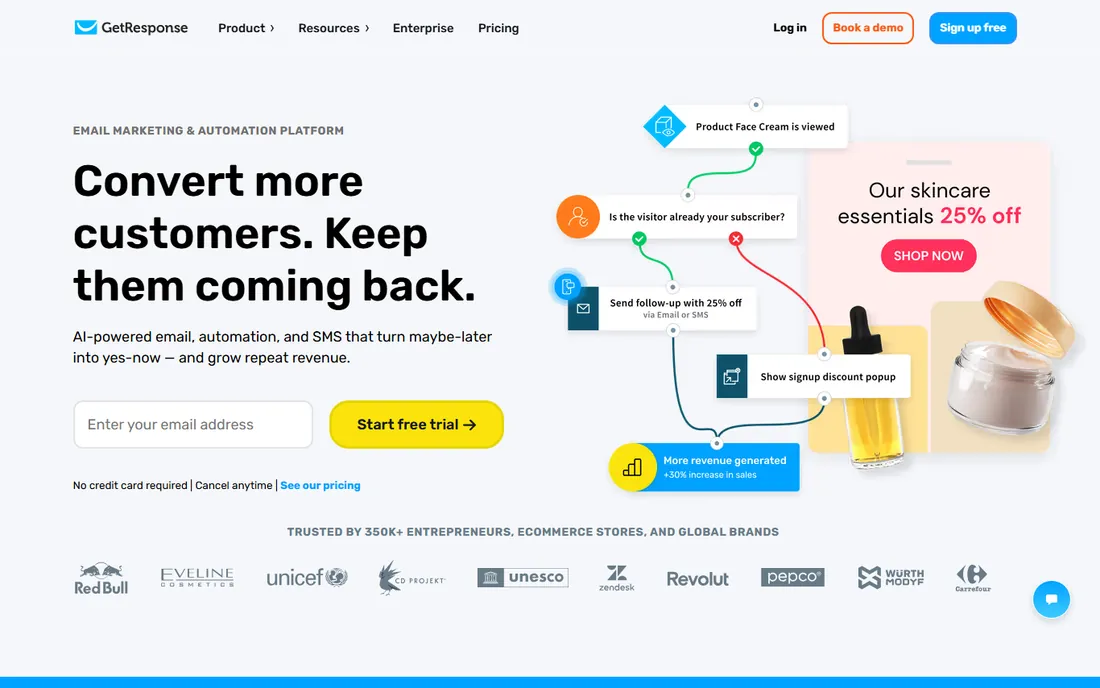
GetResponse bundles what others sell separately: email marketing, a webinar platform, landing pages and conversion funnels. For course creators and coaches who run live webinars to sell, that bundle replaces two subscriptions. Plans start at $19 a month for 1,000 contacts.
The platform tries to do a lot, and the interface shows it. Ecommerce brands will find Klaviyo deeper. But for the webinar-led business, the math is compelling: email plus webinars for less than a standalone webinar tool costs. Confirm the attendee limits on your tier before committing to a launch schedule.
What we like- Webinar hosting built into the platform, unique in this list
- Conversion funnels and landing pages included
- Solid automation at a mid-range price
Watch out for- Interface feels busier than MailerLite
- Webinar limits apply on lower tiers
- Ecommerce features lag Klaviyo
#8
AWeber
Best for: Solo owners who want email without surprises
Visit aweber.com
Starting priceFree (from $15/month for 500 subscribers)
Free planYes
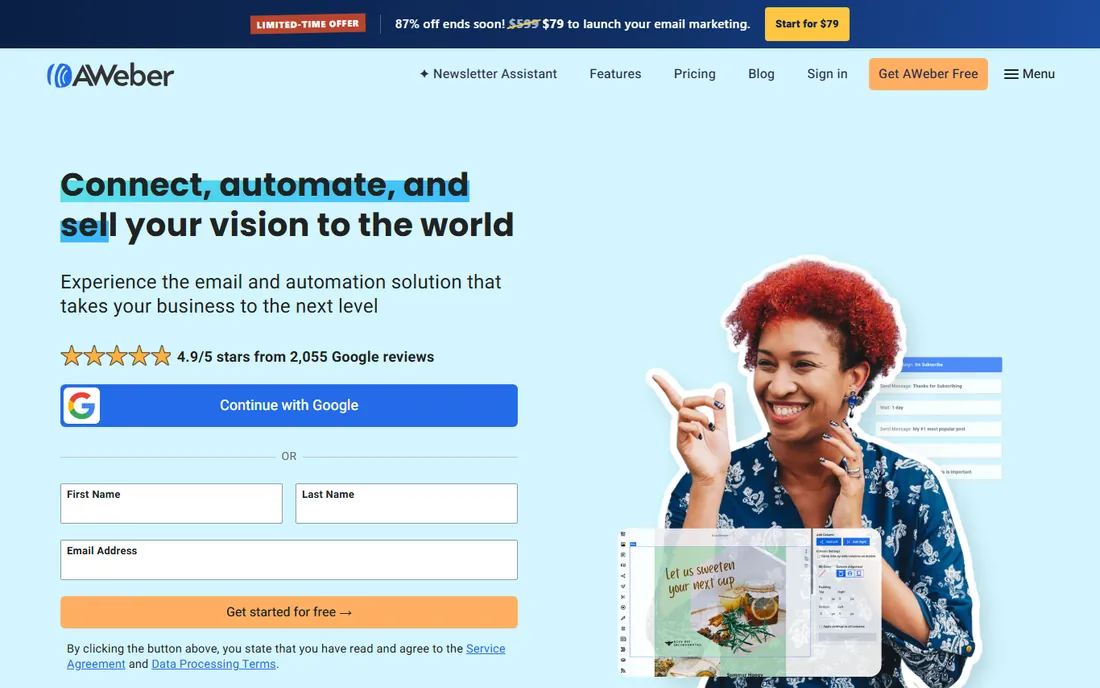
AWeber has sent small business email for over two decades, and it shows in deliverability and reliability. The free plan covers 500 subscribers, paid plans start at $15 a month, and nothing about the pricing surprises you. For a solo owner sending a newsletter and simple autoresponders, it just works.
It will not win feature comparisons: automation is basic, the builder is dated, and the company moves slowly. But "boring and reliable" is a legitimate strategy for email. Owners who were burned by a platform migration or a surprise bill often land here and stay.
What we like- Long track record with excellent deliverability
- Simple, predictable pricing
- Free plan covers 500 subscribers for starters
Watch out for- Automation is basic
- The interface feels dated next to MailerLite
- Innovation pace is slow
Starting priceFrom $9/month (500 contacts)
Free planNo (30-day free trial)
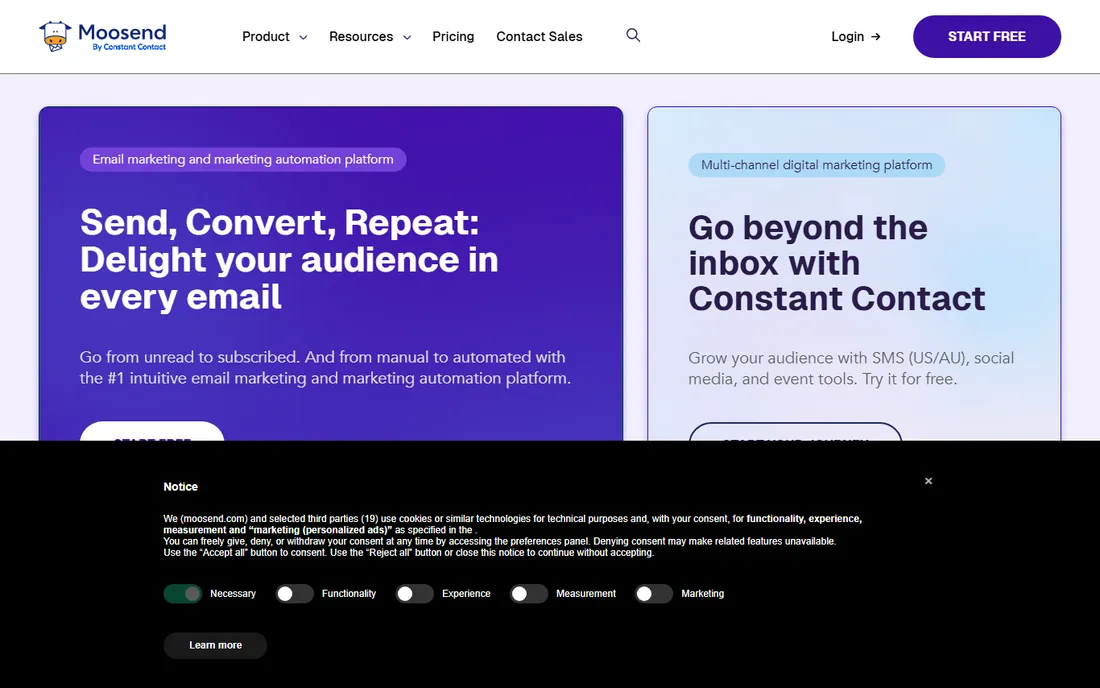
Moosend is the quiet value pick: $9 a month for 500 contacts with automation and unlimited emails, undercutting nearly everyone. The editor is clean, the automation builder covers the essentials, and reviewers rate it highly for ease of use.
Note the 2026 change: the old free plan is gone, replaced by a 30-day trial. The integration catalog is smaller than Mailchimp's. For businesses that missed the free-plan era everywhere else, Moosend's paid entry remains one of the cheapest ways to send real campaigns with automation.
What we like- Among the lowest entry prices with solid automation included
- Unlimited emails on paid plans
- Clean editor that non-technical users learn fast
Watch out for- No permanent free plan since 2026, only a 30-day trial
- Smaller integration ecosystem than Mailchimp
Price the list you will have in a year
Email pricing punishes growth differently on each model. Contact-based tools (Mailchimp, MailerLite, Constant Contact) charge more as your list grows whether you email or not. Send-based tools (Brevo) charge for what you send, so a dormant list costs nothing. Task-based tools are rare here but watch for them. Before choosing, project your list at 12 months: take your current subscribers, add your realistic monthly growth, and price that number on each finalist. A tool that is $13 today and $75 in a year changes the decision. Also check what counts as a contact: Mailchimp bills unsubscribed and non-subscribed contacts until you archive them, which inflates the real bill. The cheapest plan today is rarely the cheapest plan at scale.
Deliverability: the feature nobody demos
No vendor demo shows you the spam folder, but inbox placement decides whether email marketing works at all. Three things matter more than the platform's marketing claims. First, authenticate your domain: set up SPF, DKIM and DMARC before sending anything, on every platform. Second, warm up gradually: a new account blasting 10,000 cold emails triggers spam filters regardless of vendor. Third, watch your list hygiene: remove hard bounces and chronic non-openers, because mailbox providers judge your sender reputation on engagement. All nine tools here have solid deliverability reputations; the differences come from your practices, not their servers. A dedicated IP helps only at high volumes, typically 100,000-plus emails a month, so ignore it until then.
How we chose
We built this list from vendor pricing pages, product documentation and 2026 email marketing comparisons, checked in October 2026. A tool made the cut only if it is actively sold today and serves US small businesses sending marketing email. Prices reflect published vendor rates verified in September and October 2026: Mailchimp's $13, Brevo's $9, MailerLite's $12, Constant Contact's $12, Kit's $33, ActiveCampaign's $15, GetResponse's $19, AWeber's $15 and Moosend's $9 entry points. Free plan limits reflect the 2026 cuts both Mailchimp and MailerLite made. We did not run hands-on trials. The trade-offs reflect consistent reviewer feedback and the documented billing models.
Frequently asked questions
What is the best email marketing software for a small business?
There is no single winner. Brevo or MailerLite give non-technical owners the most for the least money. Mailchimp suits those wanting a mature all-in-one suite. Constant Contact suits owners who want phone support. Kit serves creators, and ActiveCampaign serves businesses where automation drives revenue. Match the tool to how you sell, not to a generic ranking.
How much does email marketing software cost?
Entry plans run $9 to $19 a month: Brevo $9, Moosend $9, MailerLite $12, Constant Contact $12, Mailchimp $13, AWeber $15, ActiveCampaign $15, GetResponse $19. Costs scale with list size on contact-based plans: Mailchimp reaches about $75 a month at 5,000 contacts. Free plans cover 250 to 500 subscribers on most platforms.
Is there really a free email marketing plan?
Yes, with shrinking limits. Brevo's free tier is the most generous: 300 emails a day with up to 100,000 contacts. MailerLite and Mailchimp allow 250 subscribers or contacts with a few thousand monthly sends. Kit's free plan covers up to 10,000 subscribers for broadcasts. Constant Contact, ActiveCampaign and Moosend offer trials, not permanent free plans.
Should we pay per contact or per email sent?
Pay per contact if you email frequently: weekly senders get more value from MailerLite or Moosend's flat contact pricing. Pay per email sent if your list is large but you email monthly or less: Brevo's volume model will cost a fraction. Calculate both at your actual send frequency before deciding.
How many emails should a small business send?
One to four campaigns a month is the sustainable range for most small businesses, plus automated welcome and abandoned-cart sequences where relevant. Consistency beats frequency: a monthly newsletter sent for a year outperforms a weekly blast abandoned after a month. Watch unsubscribe rates; a spike means you are sending too much or to the wrong people.
Can we switch email platforms later?
Yes, and it is routine: export your contacts, rebuild key automations, warm up the new sender domain gradually. The pain points are historical data (campaign stats do not transfer) and automation rebuilds (complex ActiveCampaign workflows take real work to recreate). Keep your list clean and your automations documented, and migration stays manageable.
Sources we checked (10)
- https://dreamlit.ai/blog/best-email-marketing-small-business
- https://www.sendx.io/blog/email-marketing-software-comparison
- https://brandclickx.com/best-bulk-email-services/
- https://www.omnisend.com/blog/mailerlite-alternatives/
- https://www.mailerlite.com/blog/mailchimp-alternatives?referrer=fm
- https://www.smashingapps.com/best-free-email-marketing-tools/
- https://omidsaffari.com/blog/mailchimp-alternatives
- https://solodevstack.com/blog/brevo-vs-mailchimp-solo-developers
- http://omnisend.com/blog/brevo-alternatives/
- https://www.engagebay.com/blog/mailerlite-alternatives/
Is your product missing or out of date?
We review this list regularly. Vendors can request a listing, send updated pricing or ask about featured placement.

Shihab Mia · Founder, Rankite
Shihab has spent more than a decade helping SaaS and e-commerce brands grow through search. He writes Rankite's software buying guides from pricing pages, documentation and public user reviews. More about Shihab.