How we make this list: we compare pricing pages, product documentation and public user reviews. Rankite is independent; if a vendor ever pays for a featured spot, that listing is clearly labeled Partner.
Key takeaways
- SurveyMonkey ($39/month) and Qualtrics (custom quote) lead on research depth, while Typeform ($25/month) leads on completion rates with its conversational format.
- Google Forms is completely free and handles most simple surveys, so do not pay for software until you need logic, branding or serious analysis.
- Jotform ($34/month), SurveySparrow ($19/month) and Zoho Survey ($7.42/month) all offer free tiers, making this one of the easiest categories to try before buying.
- Response limits, not features, are what force upgrades: check how many responses each plan allows before you commit to a platform.
Quick comparison
| Tool | Best for | Starting price | Free plan |
|---|
 SurveyMonkey SurveyMonkey | Market research with deep analysis | $39/month (Advantage plan) | Yes |
 Typeform Typeform | Conversational surveys with high completion | $25/month (Basic plan, annual billing) | Yes |
 Google Forms Google Forms | Simple free surveys | $0 | Yes |
 Qualtrics Qualtrics | Enterprise experience management | See website (custom quote) | No |
 Jotform Jotform | Form-heavy surveys with templates | $34/month (Bronze plan, annual billing) | Yes |
 SurveySparrow SurveySparrow | Conversational CX and NPS surveys | $19/month (Basic plan) | Yes |
 Alchemer Alchemer | Complex logic and research-grade surveys | $55/user/month (Collaborator plan) | Free trial |
 Formstack Formstack | Regulated industries needing compliant forms | $50/month (Forms plan) | Free trial |
 Zoho Survey Zoho Survey | Budget surveys inside the Zoho ecosystem | $7.42/month (Basic plan, annual billing) | Yes |
Is your product missing or out of date?
We review this list regularly. Vendors can request a listing, send updated pricing or ask about featured placement.
The best survey software
A marketing manager launches a new feature on Monday. By Wednesday her boss asks the question every product team dreads: "What do customers actually think?" She needs a survey out by Thursday, a hundred responses by Friday, and a chart she can put in the Monday deck. She opens a blank document, stares at it, and realizes she has no idea which tool to use, how to avoid biased questions, or whether the free option will cut her off at forty responses.
That scramble is what the best survey software prevents. These platforms build the questions, distribute the survey by email, link, QR code or embed, collect the responses, and turn them into charts and exports without a spreadsheet in sight. The nine below are the strongest options in 2026, from free basics to enterprise research platforms.
Starting price$39/month (Advantage plan)
Free planYes
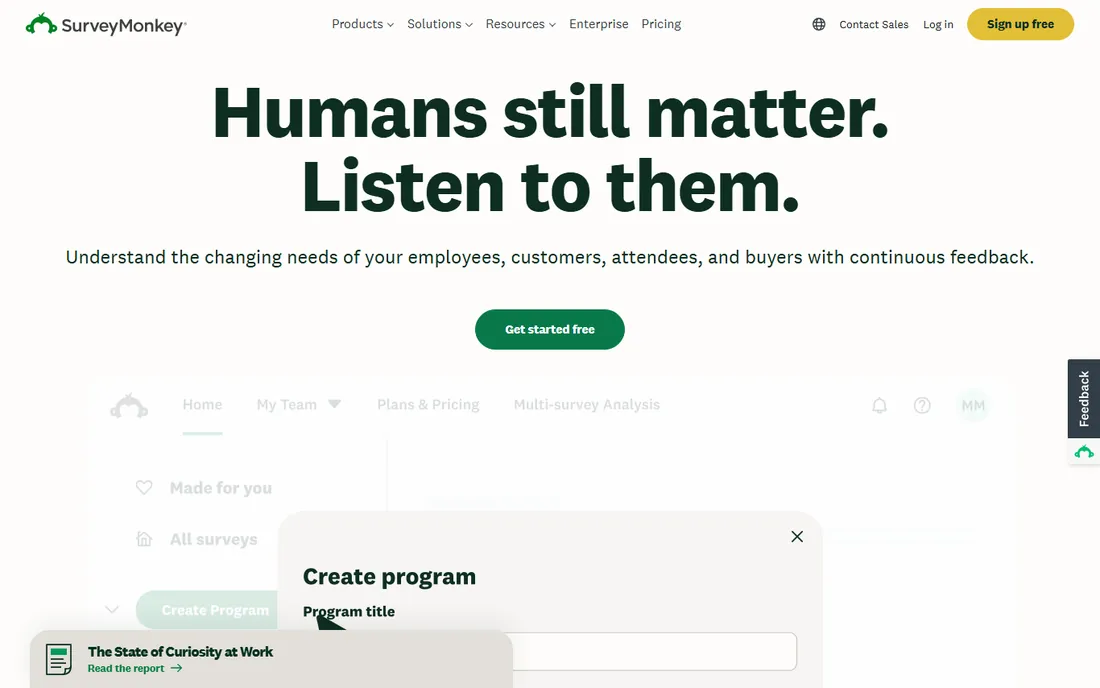
SurveyMonkey is the name most people mean when they say "survey tool," and its strength is analytical depth. Beyond building questions, it offers survey methodology guidance, benchmark data to compare your results against industry norms, and analysis tools (sentiment analysis, word clouds, crosstabs) that go well past basic bar charts. For market research, brand tracking and employee engagement at scale, it remains the safe enterprise pick.
The honest catch is the pricing ladder. The free plan caps you at 10 questions and a small number of responses, Advantage at $39 a month unlocks the real product for individuals, and teams quickly land on Team or Enterprise pricing that runs into the hundreds. Competitors now match most of its building features for less. You pay SurveyMonkey for the analysis layer and the benchmarks, so make sure you will actually use them.
What we like- Deepest analysis toolkit among mainstream tools with benchmarking data
- Huge template and question bank built from millions of surveys
- Strong brand recognition that lifts response rates
Watch out for- Free plan is tightly limited on questions and responses
- Pricing climbs steeply to Team and Enterprise tiers
- Interface feels dated next to newer rivals
Starting price$25/month (Basic plan, annual billing)
Free planYes
Typeform reinvented the survey as a conversation. Instead of a wall of questions, respondents get one elegant question at a time, which consistently produces higher completion rates than traditional forms. For customer feedback, lead qualification, quizzes and anything where the respondent's goodwill is limited, that format advantage is real and measurable.
The tradeoff is analytical. Typeform is a beautiful collection tool with thinner analysis than SurveyMonkey or Alchemer, and the response caps on Basic and Plus plans mean a successful survey can push you into an upgrade mid-campaign. Basic at $25 a month on annual billing is fair for the design quality. Just budget for the tier your actual response volume needs, not the one you start on.
What we like- One-question-at-a-time format measurably lifts completion rates
- Beautiful design that makes surveys feel like conversations
- Strong integrations with Slack, Mailchimp and CRMs
Watch out for- Response limits on lower tiers force upgrades fast
- Less analytical depth than SurveyMonkey or Alchemer
- Per-response pricing pressure on high-volume use
Starting price$0
Free planYes
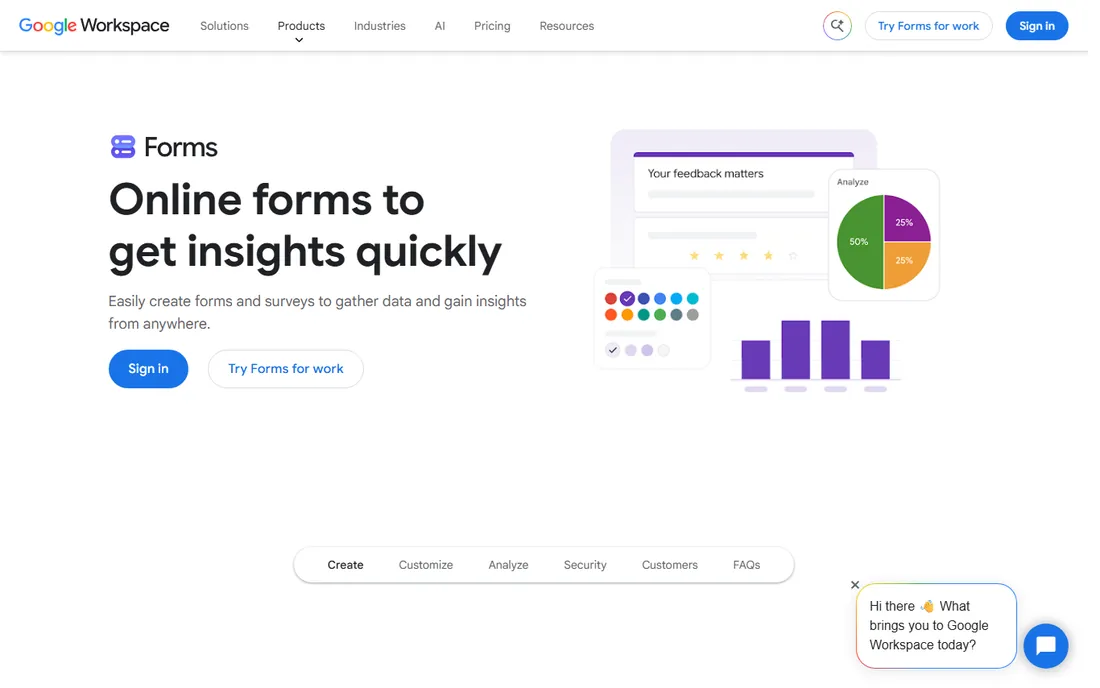
Google Forms is the right answer more often than the survey industry admits. It is free, unlimited, and instantly familiar: build questions in minutes, share a link, watch responses land in a spreadsheet. For internal polls, event RSVPs, simple customer feedback and classroom quizzes, it does the job with zero cost and zero learning curve.
The limits are real but narrow. Branching logic is basic, design customization is nearly nonexistent, and there is no sentiment analysis or benchmarking. The moment you need skip logic based on answers, custom branding or serious analysis, you have outgrown it. Until then, Google Forms is not the cheap option; it is the smart one.
What we like- Completely free with unlimited surveys and responses
- Responses flow straight into Google Sheets
- Everyone already knows how to use it
Watch out for- No real logic or branching depth
- Branding options are minimal
- Analysis is basic charts only
Starting priceSee website (custom quote)
Free planNo
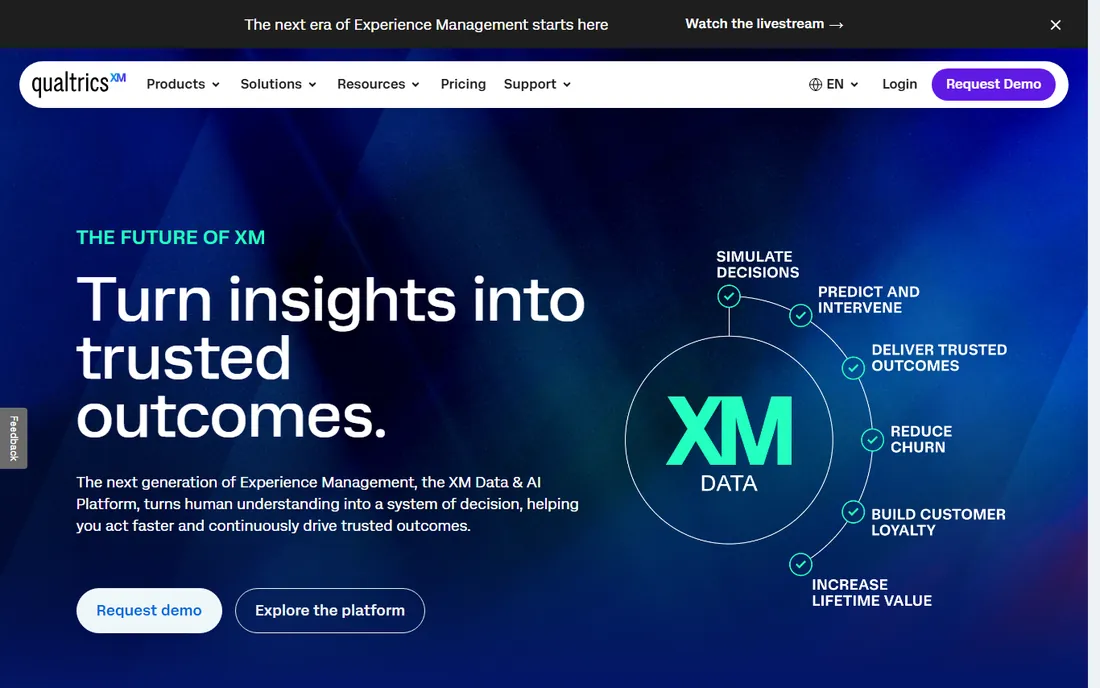
Qualtrics is what universities, Fortune 500 research teams and serious CX programs run. It handles methodologies the other tools cannot touch: conjoint analysis, MaxDiff, driver analysis, and text analytics across millions of responses. The XM platform unifies customer, employee, product and brand experience data, which is why enterprises standardize on it.
The honest catch is everything around the software. Pricing is custom and enterprise-grade, the learning curve assumes research training, and a simple NPS survey on Qualtrics is like using a laboratory to boil water. If your organization runs continuous research programs with dedicated staff, nothing else matches it. If you need a survey by Thursday, pick anything else on this list.
What we like- Most powerful research methodology toolkit in the category
- Experience management across customers, employees and brand in one platform
- Advanced stats (conjoint, MaxDiff, text analytics)
Watch out for- Quote-only pricing aimed at enterprise budgets
- Complexity requires trained researchers
- Overkill for simple feedback collection
Starting price$34/month (Bronze plan, annual billing)
Free planYes
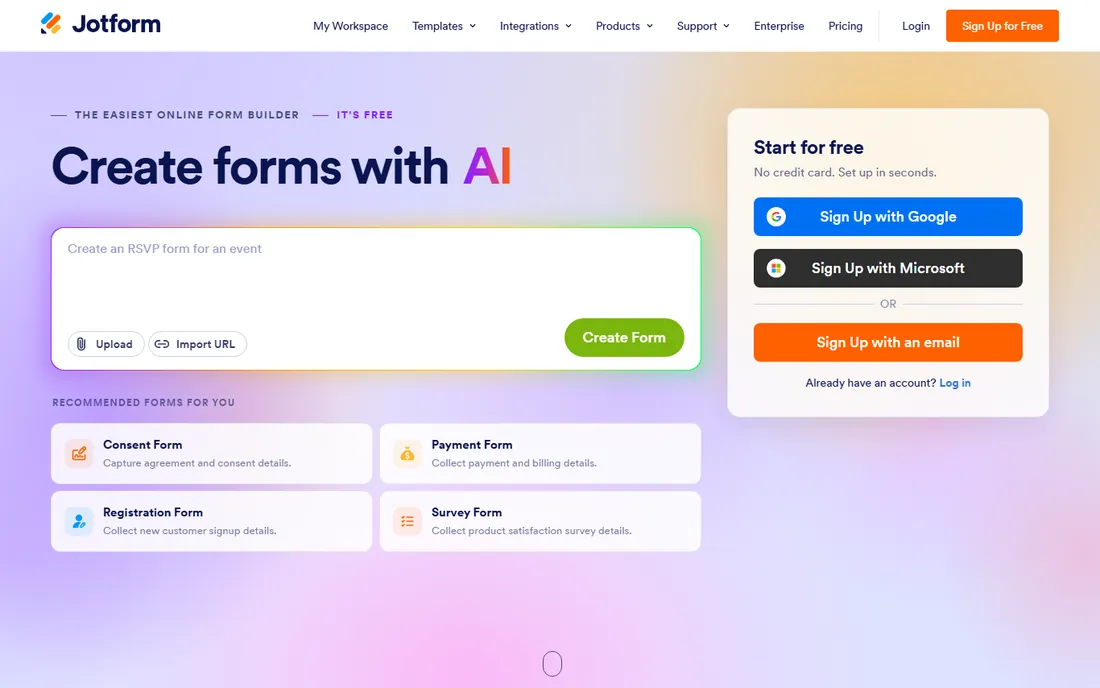
Jotform is the Swiss army knife of this list. With over 20,000 templates, widgets for everything from e-signatures to appointment slots, payment integrations and conditional logic, it handles surveys that are really application forms, registrations, evaluations or order forms in disguise. The free plan covers light use, and Bronze at $34 a month on annual billing opens up serious volume.
The tradeoff is focus. Jotform is a form builder that does surveys, not a survey platform, so the analysis and reporting are thinner than SurveyMonkey or Alchemer. The interface tries to do everything and shows it. But when your "survey" needs file uploads, payments, approvals or offline collection, Jotform does things the pure survey tools cannot.
What we like- 20,000+ templates covering nearly every use case
- Powerful widgets, conditional logic and payment collection
- Offline mobile forms for field data collection
Watch out for- Interface packs in a lot and can overwhelm
- Submission limits drive the pricing tiers
- Survey-specific analysis is thinner than SurveyMonkey's
Starting price$19/month (Basic plan)
Free planYes
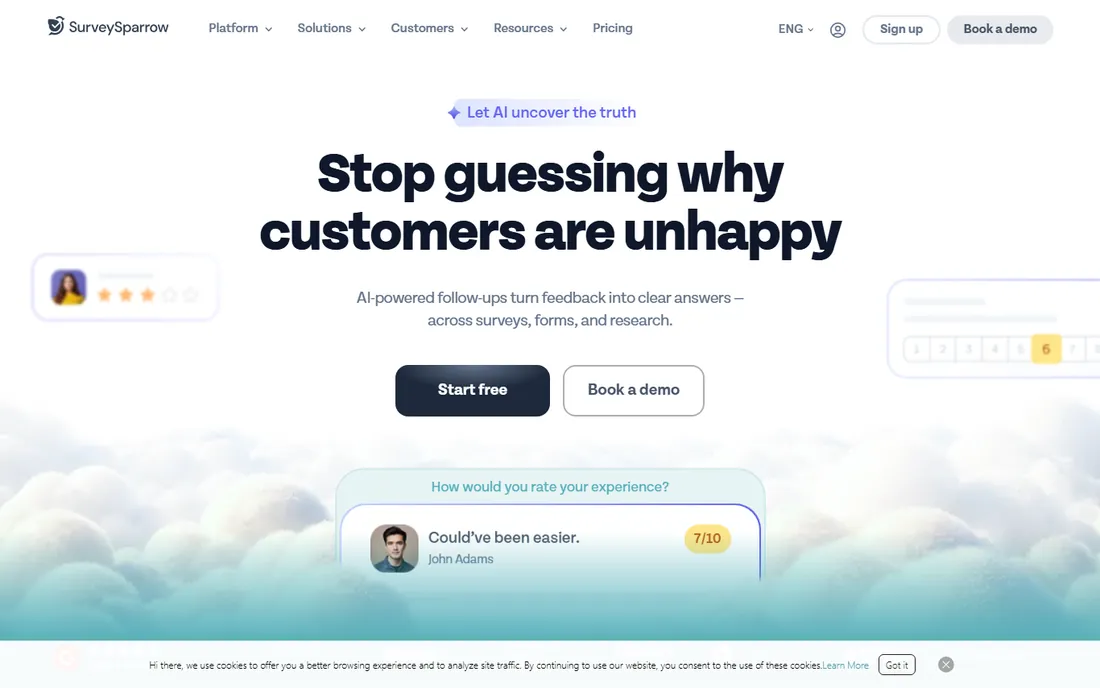
SurveySparrow takes the conversational format Typeform popularized and aims it squarely at customer experience. Chat-style surveys, NPS and CSAT templates, audience management and an offline app for field collection make it a natural pick for CX teams, agencies and anyone running recurring satisfaction programs. Basic at $19 a month is one of the cheapest paid entries here, and the free plan is genuinely usable.
The honest catch is the response-based pricing. Costs scale with the number of responses you collect, so a viral survey can get expensive, and the serious CX suite features live on tiers far above Basic. For steady, moderate-volume feedback programs, the value is excellent. For massive one-off research, a flat-rate tool may cost less.
What we like- Chat-like survey format with strong completion rates
- Generous free tier for getting started
- NPS, CSAT and offline survey support built in
Watch out for- Pricing is response-based, so costs scale with volume
- Advanced CX features sit on expensive tiers
- Smaller template library than Jotform
Starting price$55/user/month (Collaborator plan)
Free planFree trial
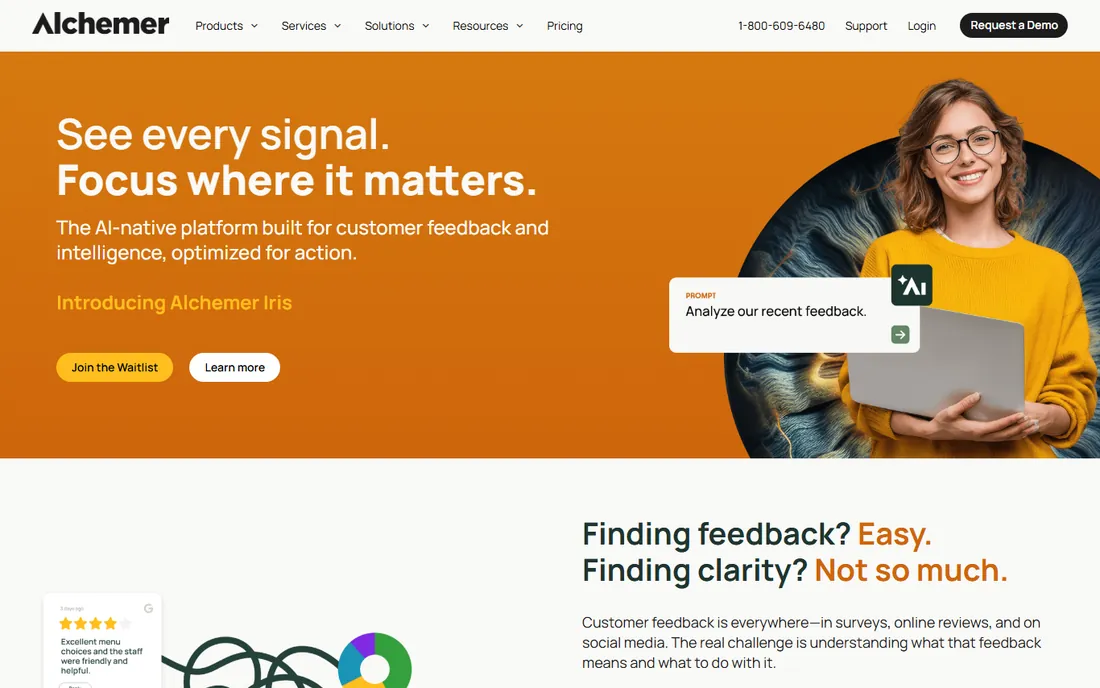
Alchemer, formerly SurveyGizmo, is the tool researchers pick when SurveyMonkey is not quite enough and Qualtrics is too much. Its logic engine handles complex branching, piping, quotas and panel management that mainstream tools cannot, and the reporting is built to feed business intelligence workflows rather than just make charts. HIPAA compliance on standard tiers makes it a fit for healthcare research.
The tradeoff is price and polish. At $55 per user per month, a five-person research team is paying real money, and the interface is functional rather than delightful. For straightforward feedback, cheaper tools do the job. For complex research designs with demanding logic, Alchemer is the sweet spot between mainstream and enterprise.
What we like- Most powerful survey logic and piping in the mainstream tier
- Custom reporting and data routing for BI workflows
- HIPAA compliance available on standard tiers
Watch out for- Per-user pricing adds up for teams
- Interface prioritizes power over beauty
- Overkill for simple questionnaires
Starting price$50/month (Forms plan)
Free planFree trial
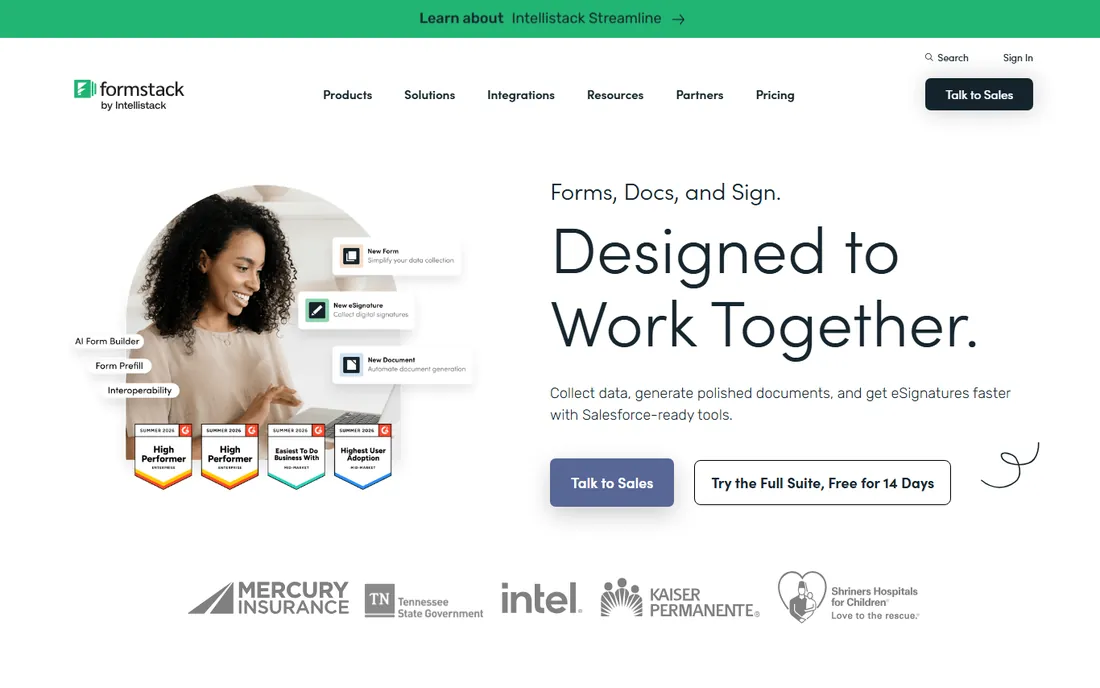
Formstack earns its place on compliance. Healthcare, finance and government teams use it because it offers HIPAA-compliant data collection with proper BAAs, audit trails and workflow automation (approvals, routing, conditional steps) that pure survey tools lack. The Salesforce integration is deep, and the platform extends into documents and e-signatures.
The honest catch is that Formstack is a workflow platform that collects data, not a survey analysis tool. Reporting is basic, there is no free tier, and the full value comes from combining Forms with its other products. If compliance and workflow are your constraints, it is the right pick. If you want to analyze sentiment across ten thousand responses, look elsewhere.
What we like- HIPAA-compliant forms with a signed BAA
- Workflow automation with approvals and routing
- Strong Salesforce and systems integrations
Watch out for- No free plan
- Pricing climbs with add-on products
- Survey analysis is basic compared to research tools
#9
Zoho Survey
Best for: Budget surveys inside the Zoho ecosystem
Visit zoho.com
Starting price$7.42/month (Basic plan, annual billing)
Free planYes
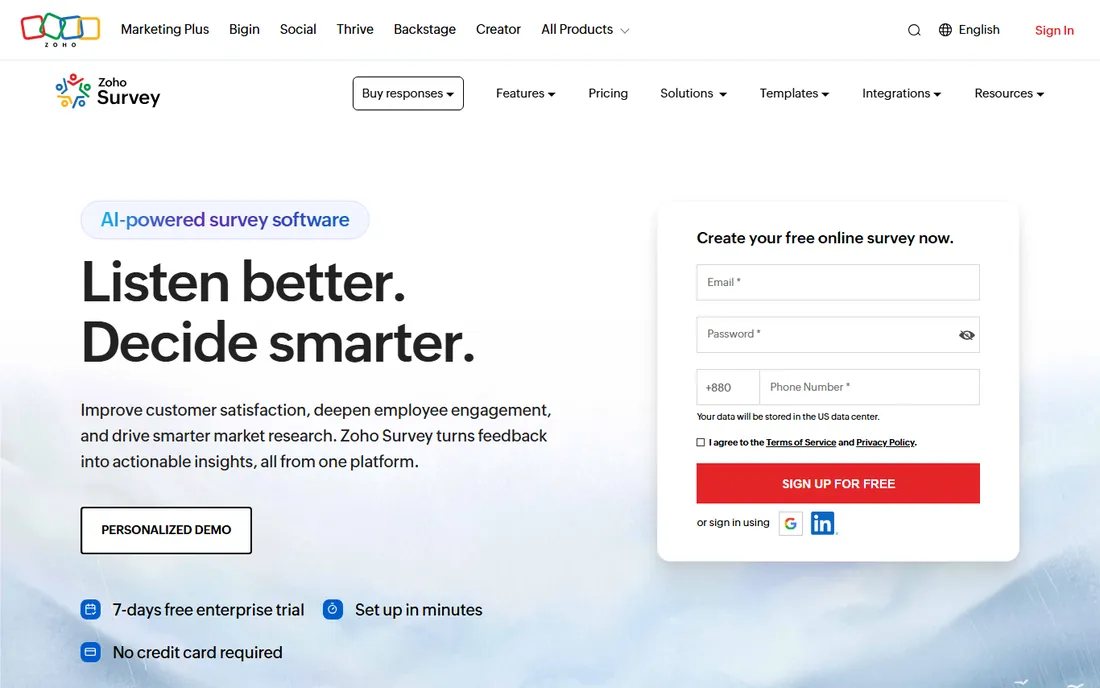
Zoho Survey is the budget champion here without feeling like a compromise. The free plan covers unlimited surveys with 100 responses each, and Basic at $7.42 a month on annual billing is less than a coffee. Paid tiers add logic, branding, multilingual surveys and integrations, with Plus at $25 and Pro at $35 still undercutting every mainstream rival.
The limits are modest: response caps on lower tiers, simpler analysis than the research tools, and the integrations shine brightest inside Zoho's own suite. For Zoho users, it is a no-brainer. For everyone else, it is still the cheapest way to run professional surveys with logic and branding, and the price gap to the next competitor is large enough to notice.
What we like- Cheapest paid tier in this list by a wide margin
- Unlimited surveys on all plans
- Native integration with Zoho CRM, Campaigns and Analytics
Watch out for- Basic plan caps responses at 12,000 a year
- Analysis tools are simpler than SurveyMonkey's
- Best value requires the Zoho ecosystem
Start with the job, because "survey software" covers four different ones. Quick feedback and polls want Google Forms, Microsoft Forms or Zoho Survey: fast, cheap, done. Customer experience programs with NPS and CSAT want SurveySparrow, Typeform or Qualtrics depending on scale. Market research with real methodology wants SurveyMonkey, Alchemer or Qualtrics. Data collection that is really a form (applications, registrations, orders) wants Jotform or Formstack.
Then check distribution. How will the survey reach people: email list, website embed, QR code at a location, or in-app? Not every tool does every channel well, and offline collection matters enormously for field research. A beautiful survey nobody can open on a phone in a store is a failed survey.
Finally, count responses before you buy. Nearly every paid tier here is gated on response volume, and the free tiers are designed to run out right when your survey succeeds. Estimate your realistic response count, add 50%, and buy the tier that covers it. The cheapest plan that fits your volume beats the fanciest plan that does not.
How this ranking was assembled
This ranking was built from vendor pricing pages, published plan comparisons and review data from G2, Capterra, TrustRadius and practitioner discussions, with prices verified in October 2026. Zoho Survey's figures come from its own pricing page; Qualtrics does not publish pricing, so it is listed as custom quote. Every tool here is an active product sold today.
No hands-on testing was involved and no vendor paid for placement. The selection weights survey-building power, distribution options, analysis depth, pricing transparency and the generosity of free tiers. Both research-grade platforms and simple feedback tools are included because "best" depends entirely on whether you are running a brand tracker or asking ten customers what they thought.
The response-limit trap
The pricing page shows you features; the trap is in the response counts. Free tiers commonly allow 40 to 100 responses per survey, and entry paid tiers cap annual responses in the low thousands. A survey that goes viral internally, or a customer list bigger than you estimated, can blow through a year's allowance in a week, and overage policies range from gentle warnings to hard cutoffs.
Before committing, find the response limit for your tier in writing and check what happens when you exceed it. If you run recurring surveys (monthly NPS, quarterly engagement), multiply one survey's responses by the number of runs per year and buy for the annual total. And keep a free backup (Google Forms costs nothing) for the overflow survey you did not plan.
Frequently asked questions
What is the best free survey software?
Google Forms is the best fully free option, with unlimited surveys and responses. Zoho Survey's free plan (unlimited surveys, 100 responses each) and SurveySparrow's free tier are strong runners-up. Jotform and Typeform also offer free plans with tighter limits. Start free and only pay when you hit a limit that matters.
How much does survey software cost?
It ranges from free (Google Forms) to custom enterprise quotes (Qualtrics). Mainstream paid plans run $7 to $55 a month: Zoho Survey from $7.42, SurveySparrow from $19, Typeform from $25, Jotform from $34, SurveyMonkey from $39, Formstack from $50, and Alchemer from $55 per user. Response volume, not features, usually decides which tier you need.
What is the difference between SurveyMonkey and Typeform?
SurveyMonkey is built for research depth: methodology tools, benchmarks and analysis. Typeform is built for respondent experience: conversational one-question flows that lift completion rates. Choose SurveyMonkey when the analysis matters most, Typeform when getting people to finish matters most.
Can I do NPS surveys with these tools?
Yes. SurveySparrow, Qualtrics, SurveyMonkey, Alchemer and Zoho Survey all have dedicated NPS question types with score calculation and trend tracking. For a serious ongoing NPS program, prioritize the tools with CX features (distributions, alerts, closed-loop workflows) rather than just the question type.
Do I need HIPAA-compliant survey software?
Only if you collect protected health information. Alchemer offers HIPAA compliance on standard tiers, and Formstack and Qualtrics cover it on compliant plans with a signed BAA. For general customer feedback with no health data, HIPAA compliance is unnecessary and you should not pay extra for it.
How many responses do I need for reliable results?
It depends on the decision, not a magic number. For directional feedback ("do customers like the new packaging?"), 100 to 200 responses is usually enough. For publishable market research, you need proper sampling and typically 400+ responses. More important than the count is who responds: a biased sample of 1,000 tells you less than a representative sample of 200.
Sources we checked (10)
- http://www.jotform.com/blog/best-surveymonkey-alternatives/
- https://typelessform.com/blog/best-typeform-alternatives-2026/
- https://competitors.app/competitors/survey-and-feedback-tools/survey-monkey-alternatives/
- https://subrupt.com/best/surveymonkey-alternatives
- https://surveysparrow.com/blog/top-surveygizmo-alternatives/
- https://www.capterra.com/compare/72549-168823/Alchemer-vs-SurveySparrow
- https://www.trustradius.com/products/surveysparrow/pricing
- https://www.saasworthy.com/product/surveysparrow/pricing
- https://www.zoho.com/survey/pricing.html?src=zblog-header
- https://github.com/formester/formester-site/blob/HEAD/content/blog/surveysparrow-alternatives.md
Is your product missing or out of date?
We review this list regularly. Vendors can request a listing, send updated pricing or ask about featured placement.

Shihab Mia · Founder, Rankite
Shihab has spent more than a decade helping SaaS and e-commerce brands grow through search. He writes Rankite's software buying guides from pricing pages, documentation and public user reviews. More about Shihab.