How we make this list: we compare pricing pages, product documentation and public user reviews. Rankite is independent; if a vendor ever pays for a featured spot, that listing is clearly labeled Partner.
Key takeaways
- Twilio and Sinch are the developer-first choices with global SMS reach.
- Brevo and SendPulse bundle email and SMS in one dashboard at startup-friendly prices.
- Postmark-style deliverability matters more than features for critical emails like password resets.
- Plivo and ClickSend compete on straightforward per-message pricing.
- Every provider below offers a free tier or trial credits to test deliverability.
What counts as transactional messaging
Transactional messages are the ones your product sends because something happened: password resets, order confirmations, two-factor codes, appointment reminders, shipping alerts. They are not marketing campaigns, and they are judged differently. A promotional email can wait; a login code cannot.
That urgency shapes what matters in a provider. Deliverability and speed come first, then come APIs that developers enjoy using, then come analytics that prove messages arrived. Handling both email and SMS in one platform simplifies billing and failover, which is why this comparison only includes providers that do both.
Pricing is usually pay-as-you-go per message, with volume discounts as you scale. The comparisons below note the model and where free tiers exist.
Quick comparison
| Tool | Best for | Starting price | Free plan |
|---|
 Twilio Twilio | Developers needing global scale and reliability | See website | Yes, trial credits available |
 Brevo Brevo | Startups wanting email plus SMS in one dashboard | See website | Yes, free plan available |
 Bird (formerly MessageBird) Bird (formerly MessageBird) | Omnichannel messaging programs at scale | See website | Trial available |
 Plivo Plivo | Teams that want simple per-message pricing | See website | Yes, trial credits available |
 Sinch Sinch | Enterprise messaging programs with compliance needs | See website | Trial available |
 ClickSend ClickSend | SMBs wanting simple, self-serve messaging | See website | Trial available |
 SendPulse SendPulse | Multichannel messaging on a tight budget | See website | Yes, free plan available |
 Textmagic Textmagic | Teams needing an easy SMS-first dashboard | See website | Trial available |
Is your product missing or out of date?
We review this list regularly. Vendors can request a listing, send updated pricing or ask about featured placement.
How we chose
We selected providers with production-grade email and SMS APIs, published deliverability practices, and a track record of serving both startups and enterprises. We favored platforms with clear documentation, SDKs in major languages, and status pages that show real uptime history.
We weighed pricing transparency, since per-message costs vary by destination country and add up fast. We also checked for delivery analytics, webhook support, and compliance features like opt-out handling, because transactional messaging still has to respect the rules. Vendor claims were checked against pricing and documentation pages.
#1
Twilio
Best for: Developers needing global scale and reliability
Visit twilio.com
Starting priceSee website
Free planYes, trial credits available
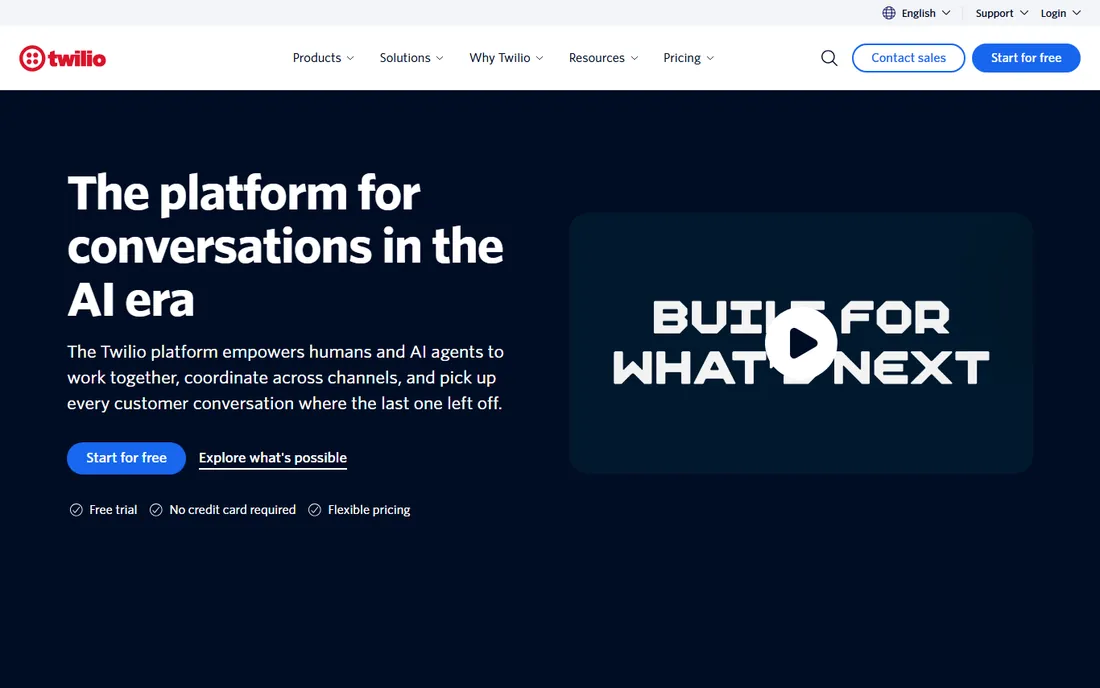
Twilio is the default choice for programmatic messaging. Its SMS API reaches carriers worldwide, and SendGrid, which Twilio owns, handles the email side with dedicated IPs and deliverability tooling for high-volume senders.
Developers like the consistency: one account, one set of credentials, and similar patterns across SMS, voice, and email. Debugging tools show exactly what happened to each message, which shortens the time to fix delivery problems.
Costs are pure pay-as-you-go, so a spike in verification codes shows up directly on the bill. Model your expected volume by destination country before committing, since international SMS rates vary widely.
What we like- Massive global carrier network
- Excellent docs and SDKs
- Strong deliverability tooling
- Huge ecosystem of add-ons
Watch out for- Pricing adds up at scale
- The console can overwhelm beginners
- Support tiers cost extra
#2
Brevo
Best for: Startups wanting email plus SMS in one dashboard
Visit brevo.com
Starting priceSee website
Free planYes, free plan available
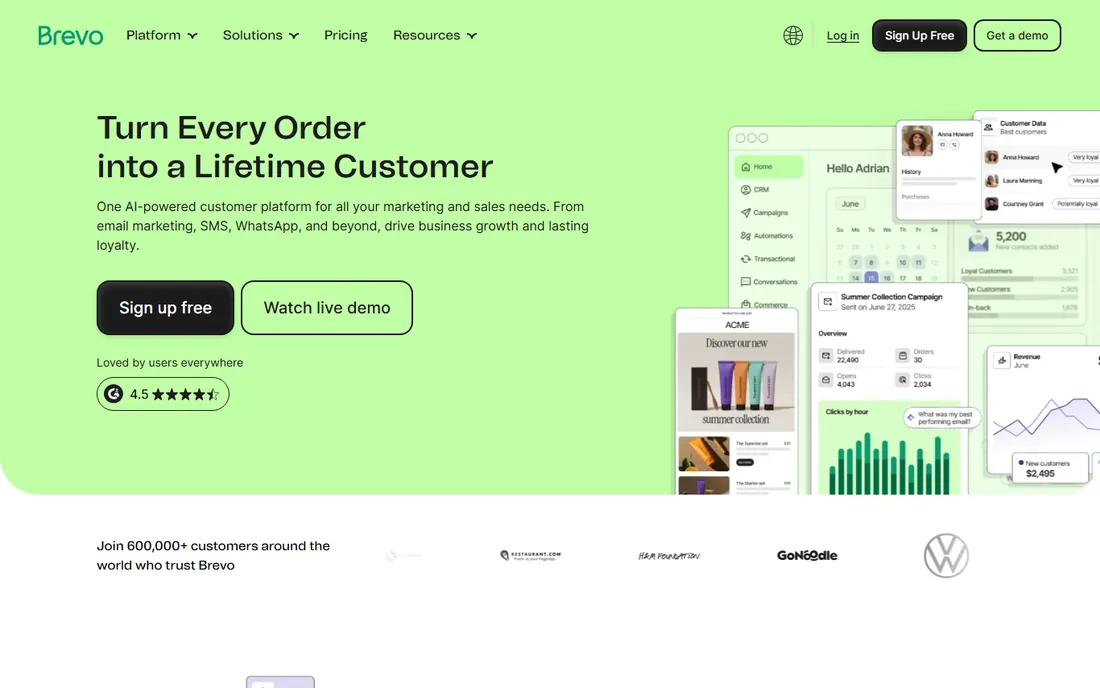
Brevo bundles transactional email, SMS, and marketing automation in a single platform with pricing that startups can afford. The free plan includes a daily sending allowance that is enough to run a small product's transactional mail.
The dashboard is friendlier than developer-first consoles, which helps small teams without dedicated messaging engineers. Templates, contact management, and automation workflows live alongside the API, so marketing and product teams can share one tool.
Heavy API users may miss Twilio-level debugging and carrier options. But for teams sending thousands rather than millions of messages, Brevo's simplicity and price are hard to beat.
What we like- Generous free tier
- Email and SMS in one interface
- Marketing automation included
- Straightforward pricing
Watch out for- API is less deep than Twilio
- Enterprise features trail specialists
- SMS coverage varies by country
#3
Bird (formerly MessageBird)
Best for: Omnichannel messaging programs at scale
Visit bird.com
Starting priceSee website
Free planTrial available

Bird, formerly MessageBird, offers messaging APIs across SMS, email, WhatsApp, and voice, aimed at companies running customer communication at global scale. Its carrier relationships give it solid delivery rates across Europe, Asia, and Latin America.
The platform adds contact management and conversation threading, so support and marketing teams can work from the same message history developers send through the API. That omnichannel story is the main reason to pick Bird over a pure SMS vendor.
Pricing for serious volume is negotiated, so get a quote early and compare it against Twilio and Sinch on your actual destination mix.
What we like- Strong international SMS footprint
- Omnichannel APIs beyond email and SMS
- CRM-like features built in
- Good for global enterprises
Watch out for- Pricing is quote-based at scale
- The rebrand from MessageBird confuses some buyers
- Smaller community than Twilio
#4
Plivo
Best for: Teams that want simple per-message pricing
Visit plivo.com
Starting priceSee website
Free planYes, trial credits available
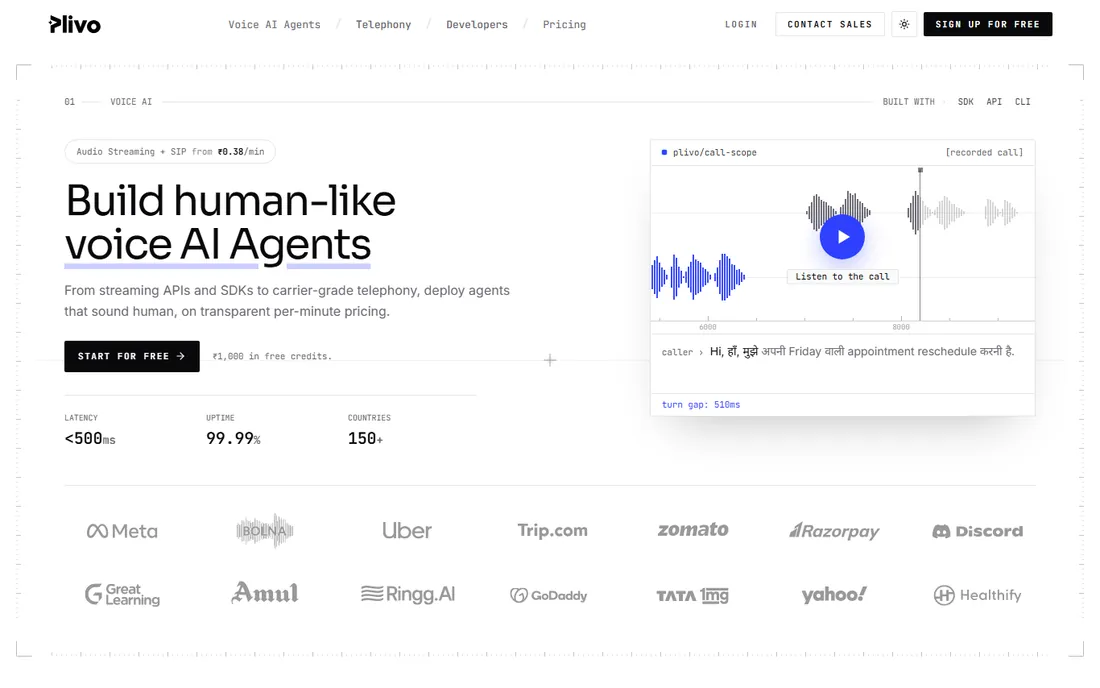
Plivo positions itself as the straightforward alternative to Twilio: reliable SMS and voice APIs with transparent pricing and no surprises. Trial credits let developers test real delivery before adding a card.
The API covers the essentials, sending, receiving, delivery receipts, and number management, without the sprawling product surface of bigger platforms. Support has a good reputation for actually answering technical questions.
If you need exotic channels or deep CRM integrations you may outgrow it, but for transactional SMS and voice at fair prices, Plivo is a strong value pick.
What we like- Clear, competitive per-message rates
- Solid global SMS coverage
- Good API docs
- Responsive support
Watch out for- Smaller ecosystem than Twilio
- Fewer value-added features
- Brand recognition lags the leaders
#5
Sinch
Best for: Enterprise messaging programs with compliance needs
Visit sinch.com
Starting priceSee website
Free planTrial available
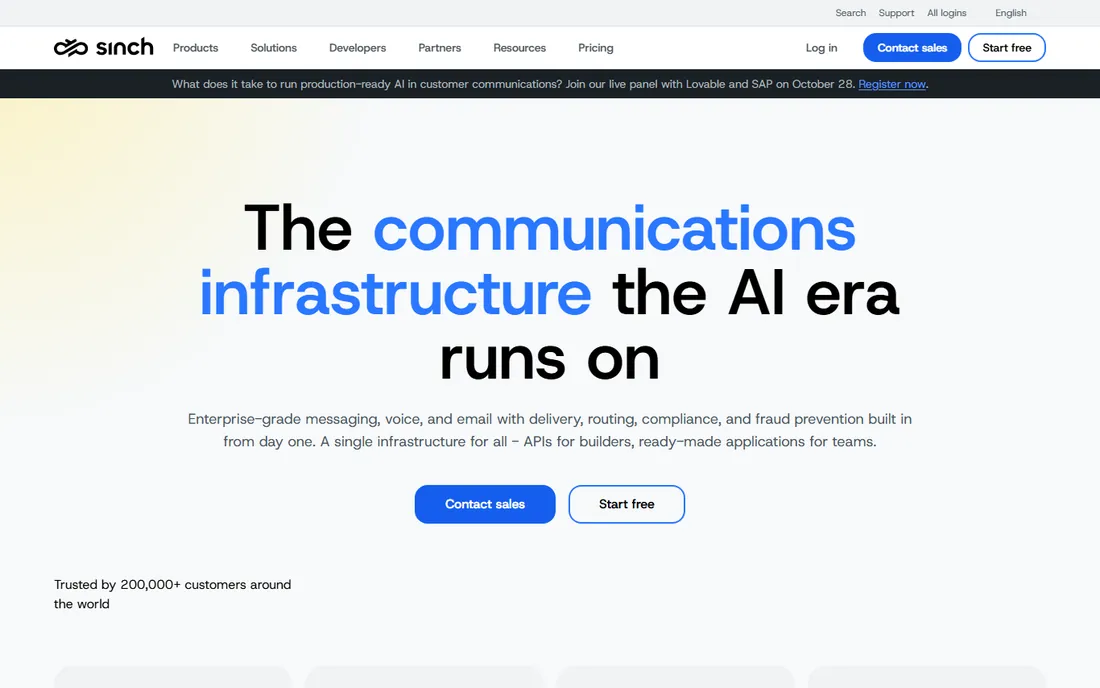
Sinch is a major CPaaS provider with deep carrier connectivity and a strong position in verification traffic like one-time passcodes. Its acquisition of Mailjet gives it a credible email arm to pair with its SMS strength.
Enterprises choose Sinch for reliability guarantees, compliance support, and account teams that help with number registration and sender compliance across countries. That matters when regulations differ per market.
Small teams will find the sales-led process slow compared to self-serve rivals. Sinch earns its place when message delivery is business-critical and you want a vendor that treats it that way.
What we like- Enterprise-grade global reach
- Strong in verification and 2FA use cases
- Good compliance tooling
- Owns Mailjet for email
Watch out for- Enterprise sales process
- Pricing not transparent
- Overkill for small senders
Starting priceSee website
Free planTrial available
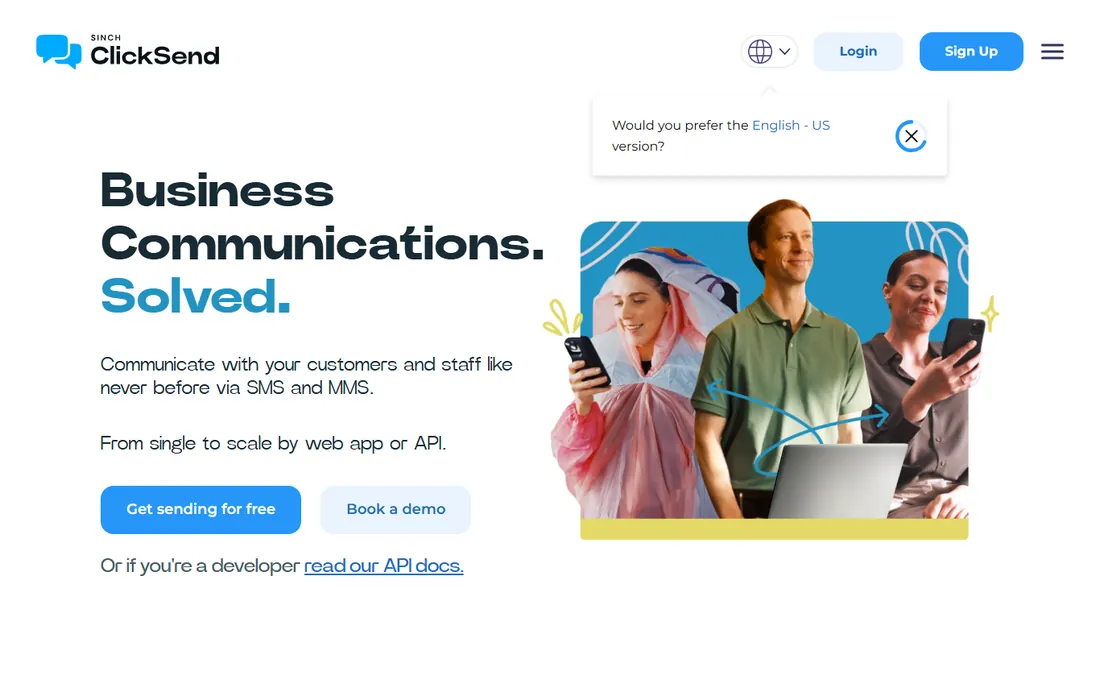
ClickSend keeps things simple: an approachable dashboard, clear per-message pricing, and APIs that cover SMS, email, and a few extra channels. Small businesses can be sending within an hour without talking to sales.
The platform suits teams that need transactional messages plus occasional campaigns from one place. Features like dedicated numbers, sender IDs, and delivery reports cover the common requirements without fuss.
Developers building complex routing logic may want Twilio or Plivo instead. For everyone else, ClickSend's lack of friction is the selling point.
What we like- Easy dashboard for non-developers
- Pay-as-you-go with no contracts
- Email and SMS plus other channels
- Quick setup
Watch out for- API depth trails developer platforms
- Advanced routing features limited
- Support is good but not 24/7 on all plans
Starting priceSee website
Free planYes, free plan available

SendPulse packs email, SMS, web push, and chatbots into one low-cost platform. The free plan is genuinely usable, and paid plans stay cheap as volume grows, which makes it popular with startups and small agencies.
The automation builder lets you chain messages across channels, so a cart abandonment flow can try email, then SMS, then a chatbot message. For the price, the feature list is impressive.
The trade-off is deliverability polish. High-stakes transactional mail deserves a provider with dedicated deliverability teams, so treat SendPulse as a budget multichannel option rather than a mission-critical email backbone.
What we like- Very affordable pricing
- Email, SMS, chatbots, and push in one tool
- Generous free tier
- Decent automation builder
Watch out for- Deliverability reputation trails top-tier providers
- Interface feels busy
- Advanced API features limited
Starting priceSee website
Free planTrial available
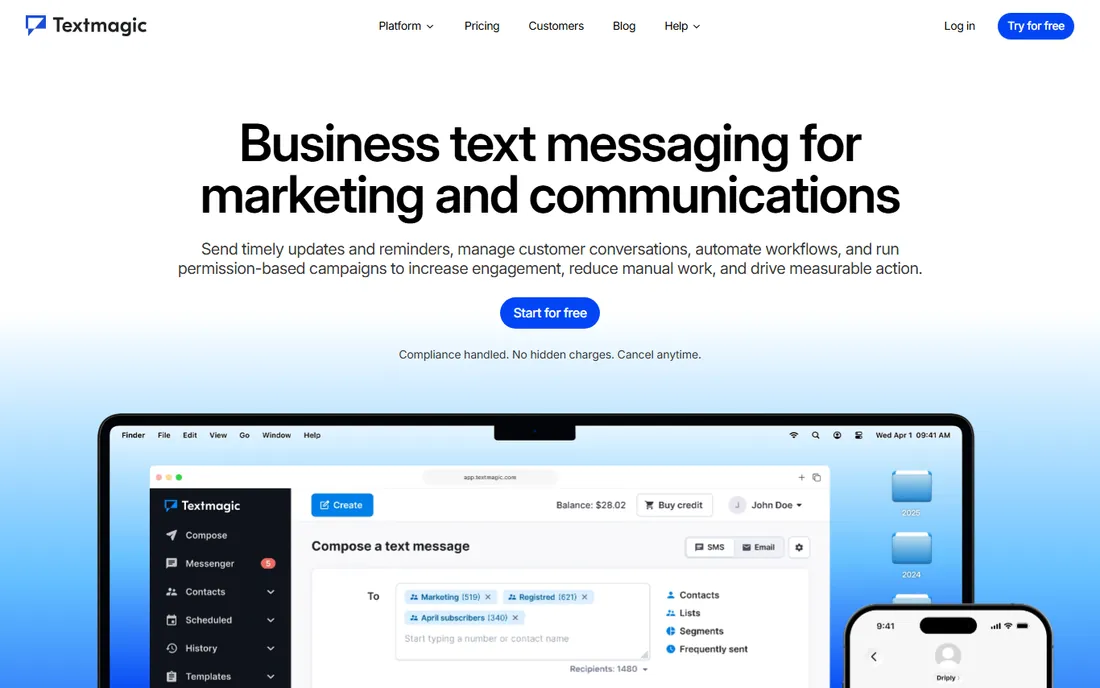
Textmagic is an SMS platform with email capabilities attached, designed for teams that want to send texts without learning telecom jargon. The web dashboard handles contacts, templates, scheduling, and two-way conversations cleanly.
Features like the email-to-SMS gateway let non-technical staff trigger texts from their inbox, which is handy for alerts and reminders. Pricing is pay-as-you-go with no monthly commitment.
It is not the choice for developers building messaging into an app at scale. It is the choice for operations teams that need reliable SMS this week with minimal setup.
What we like- Very easy to use
- Good for teams new to SMS
- Email-to-SMS gateway
- Reasonable pay-as-you-go pricing
Watch out for- SMS-first, email is secondary
- Fewer developer features
- Not built for massive scale
Picking a transactional messaging provider
Start with deliverability requirements. If a delayed password reset costs you customers, pick a provider with dedicated IPs, strong sender reputation tooling, and a status page you trust. Twilio, Sinch, and Plivo lead here.
Then compare true cost on your destination mix, not headline rates. International SMS pricing varies enormously, so run your actual country volumes through each pricing page. Finally, test before you commit: every provider above offers trial credits or a free tier, and a week of real traffic tells you more than any sales deck.
Mistakes to avoid with transactional messaging
The costliest mistake is treating deliverability as someone else's problem. Shared IPs, unauthenticated domains, and sloppy list hygiene land password resets in spam folders, and users blame your product, not your provider. Set up SPF, DKIM, and DMARC properly, move to dedicated IPs at volume, and monitor sender reputation the way you monitor revenue, because the two are connected.
Second, having no failover plan. Providers have outages, and a down SMS gateway during a verification-code surge is a genuine crisis. Build your code against an abstraction that lets you switch providers, keep a warm backup configured for critical paths, and test the switchover before you need it. The teams that survive outages are the ones who rehearsed.
Third, ignoring international differences. SMS regulations, sender ID rules, and pricing vary enormously by country. What works in the United States can be illegal, blocked, or ruinously expensive in India, Germany, or Brazil. Research each market's rules during expansion planning, not after the complaints and fines arrive.
Fourth, mixing marketing and transactional streams. Sending promotions from the same domain and IP as password resets puts critical mail at the mercy of campaign engagement metrics. Separate the streams with different subdomains and dedicated IPs, so a poorly received campaign never blocks a login code.
Finally, neglecting the message content itself. Transactional messages should be short, scannable, and actionable, with the essential information first. Test how codes, links, and buttons render across email clients and devices. A beautiful template that hides the verification code below the fold fails at its only job.
Frequently asked questions
What is the difference between transactional and marketing email?
Transactional email is triggered by a user action, like a purchase or password reset, and is expected by the recipient. Marketing email is promotional and sent to lists. Transactional messages get higher engagement and different legal treatment.
Do I need separate providers for email and SMS?
Not necessarily. All eight platforms above handle both, which simplifies billing and lets you build failover logic, like sending an SMS when an email bounces. Separate specialists can make sense at very large scale.
How much does transactional messaging cost?
Email typically costs a fraction of a cent per message, while SMS ranges from under a cent to several cents depending on the destination country. Most providers are pay-as-you-go with volume discounts.
How do I improve SMS deliverability?
Register your sender IDs or numbers where required, keep messages concise, honor opt-outs promptly, and monitor delivery receipts. For critical codes, use a provider with direct carrier connections.
Can I switch providers later without downtime?
Yes, if you plan for it. Abstract the provider behind your own interface, warm up new sending domains and IPs gradually, and run both providers in parallel during the transition.
Sources we checked (0)
Is your product missing or out of date?
We review this list regularly. Vendors can request a listing, send updated pricing or ask about featured placement.

Shihab Mia · Founder, Rankite
Shihab has spent more than a decade helping SaaS and e-commerce brands grow through search. He writes Rankite's software buying guides from pricing pages, documentation and public user reviews. More about Shihab.