How we make this list: we compare pricing pages, product documentation and public user reviews. Rankite is independent; if a vendor ever pays for a featured spot, that listing is clearly labeled Partner.
Key takeaways
- Zoom Webinars and Webex suit teams already on those meeting platforms.
- GoTo Webinar remains the reliable classic for professional webinars.
- Demio and BigMarker are the marketer-friendly choices for engagement.
- Livestorm offers a generous free tier for getting started.
- WebinarJam and ON24 serve high-energy sales and enterprise event needs.
Webinar platforms do more than video calls: registration pages, reminders, polls, Q&A, handouts, and the analytics that show who attended and for how long. Marketing teams run them for lead generation; training teams run them for education; sales teams run them for demos.
The comparison below covers the established players and the modern challengers, with notes on attendee limits, engagement features, and pricing models. Most offer trials; the real test is running a live session with your actual audience size.
How we chose
We selected platforms with real webinar products and organizations running live events on them. We looked for registration and promotion tools, engagement features, and reliable delivery at scale.
We covered meeting-platform webinars, dedicated webinar tools, and enterprise event platforms because buyers come from all three directions. We weighed ease of use for hosts, attendee experience, and analytics quality. Vendor claims were checked against documentation and pricing pages.

#1
Zoom Webinars
Best for: Teams already running on Zoom
Visit zoom.com
Starting priceSee website
Free planTrial available
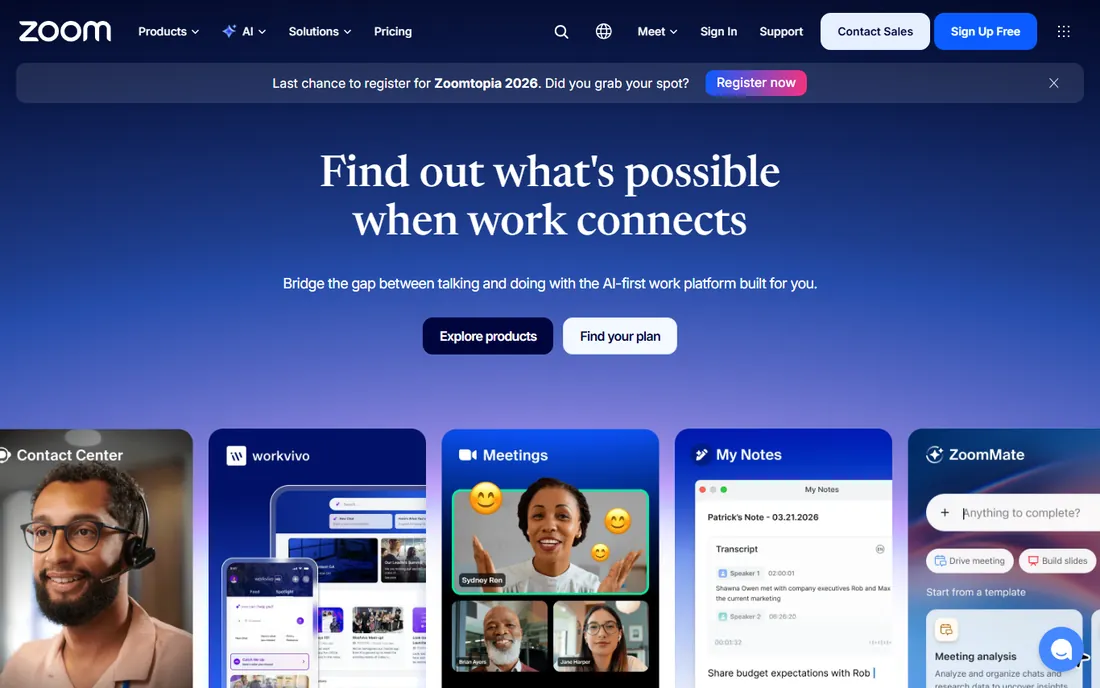
Zoom Webinars extends the platform everyone knows into structured events: registration, practice sessions, polls, Q&A, and post-event analytics. Attendees join without learning anything new, which boosts show-up rates.
Scale is proven, with large events running smoothly. Integration with Zoom's meetings, phone, and events products suits organizations standardizing on one vendor.
The webinar add-on costs extra on top of meeting licenses, and branding options are limited. For Zoom shops, the familiarity outweighs those limits.
What we like- Familiar to every attendee
- Reliable at scale
- Good engagement features
- Integrates with Zoom ecosystem
Watch out for- Webinar license costs extra
- Branding limited
- The meeting feel persists

#2
GoTo Webinar
Best for: Reliable, professional webinar delivery
Visit goto.com
Starting priceSee website
Free planTrial available
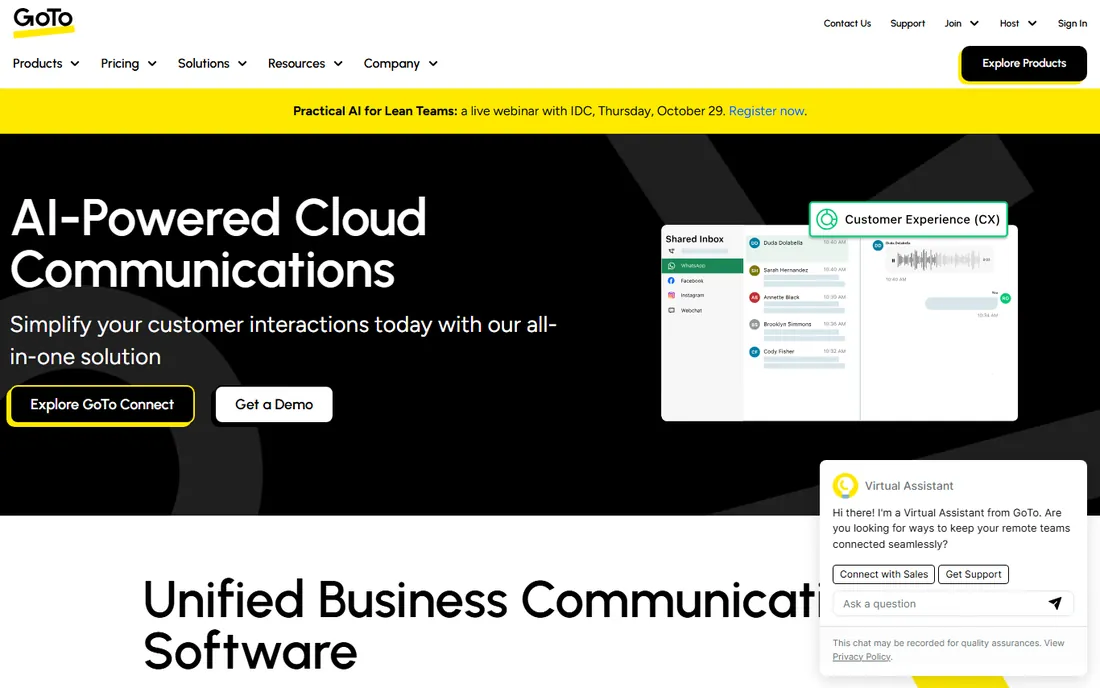
GoTo Webinar, now under GoTo, has run professional webinars for over a decade. The reliability is the reputation: events start on time, audio works, and recordings process cleanly.
Analytics cover attendance, engagement, and drop-off, with integrations pushing data to CRMs and marketing automation. The hosting workflow is straightforward for regular webinar producers.
Newer rivals feel more modern and engaging. But when the webinar absolutely must work, GoTo's track record comforts risk-averse teams.
What we like- Long track record
- Reliable delivery
- Good analytics
- Straightforward hosting
Watch out for- Interface dated
- Engagement features trail newer rivals
- Pricing per organizer
Starting priceSee website
Free planTrial available
Webex Webinars serves enterprises running large, secure virtual events on Cisco's platform. Global scale, translation features, and compliance certifications suit regulated industries and multinational audiences.
Integration with the Webex suite means meetings, webinars, and events share administration. The reliability at very large attendee counts is proven.
Smaller teams find it heavyweight. For enterprise event programs on Webex, it is the natural choice.
What we like- Enterprise security and scale
- Good for global events
- Integrates with Webex suite
- Reliable
Watch out for- Best inside Webex ecosystem
- Interface corporate
- Pricing is quote-based at scale

#4
Demio
Best for: Marketers wanting engaging, no-download webinars
Visit demio.com
Starting priceSee website
Free planTrial available
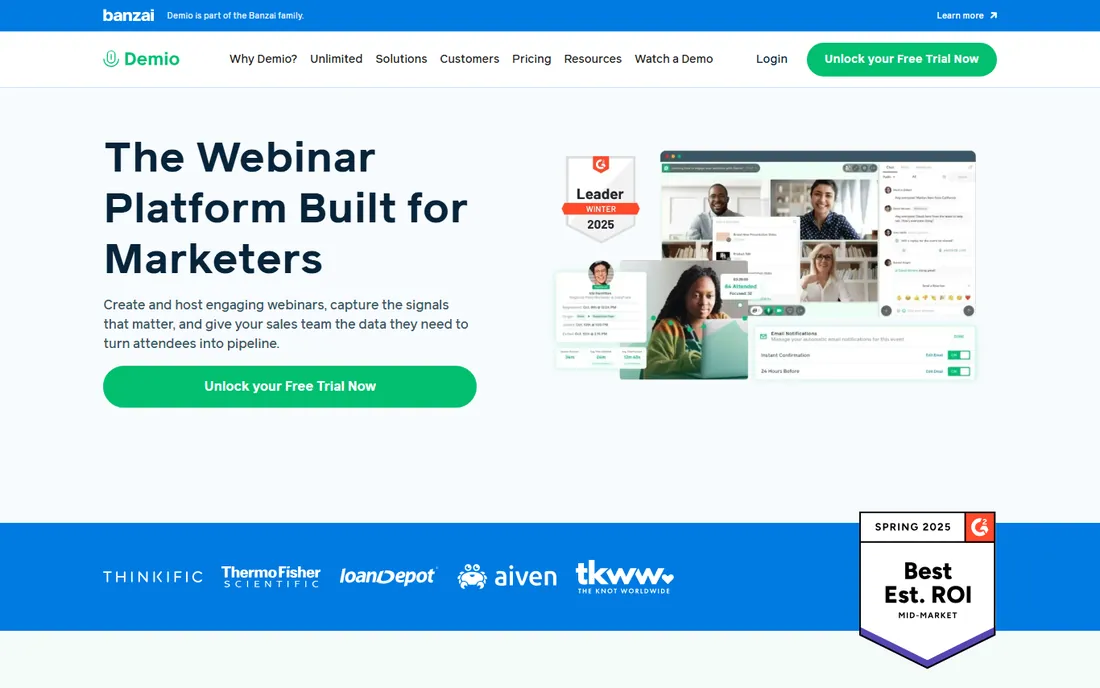
Demio built its name on webinars that feel modern: browser-based attendance with no downloads, elegant registration pages, and engagement features like polls, handouts, and featured actions that keep audiences involved.
Marketers like the integrations with email platforms and CRMs, and the automated webinar features run evergreen funnels. Hosts consistently praise the ease of running events.
Large-scale enterprise needs exceed it. For marketing webinars that convert, Demio is the friendliest choice.
What we like- Beautiful no-download experience
- Great engagement tools
- Easy for hosts
- Good marketing integrations
Watch out for- Attendee limits on lower tiers
- Pricing climbs with scale
- Fewer enterprise features
Starting priceSee website
Free planTrial available
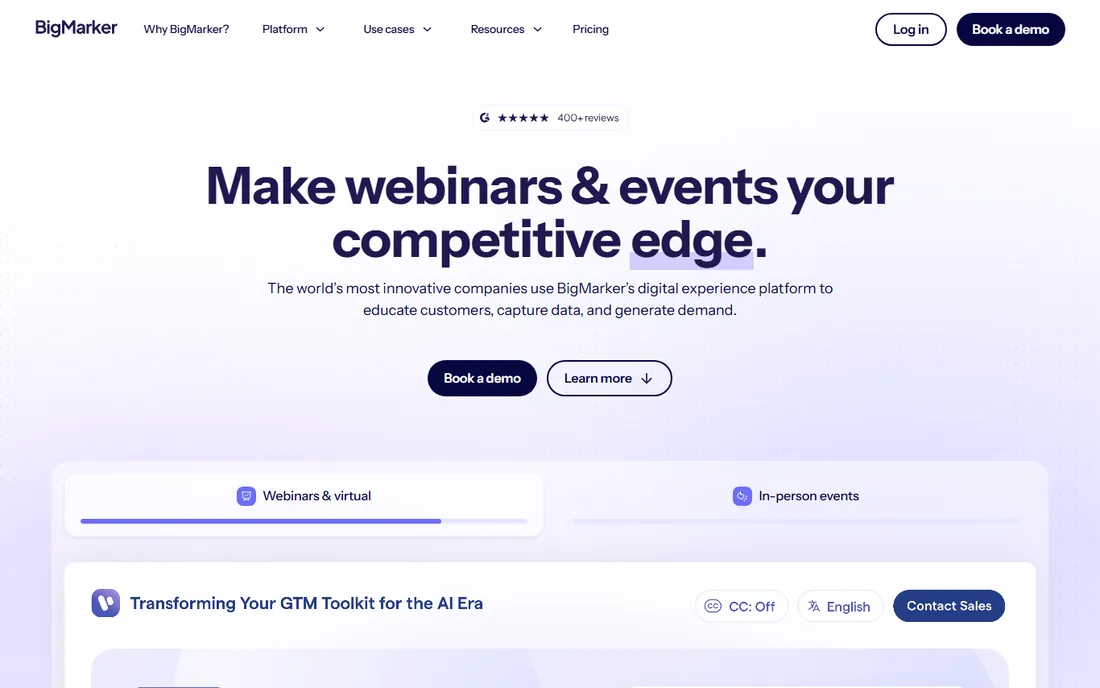
BigMarker offers deep customization: branded webinar rooms, custom registration flows, and automation that nurtures attendees before and after. The white-label options suit agencies and enterprises protecting their brand.
Beyond live webinars, it handles on-demand, evergreen, and series formats in one platform. The versatility covers most event marketing needs.
The flexibility demands setup effort. For teams that want webinars to look and feel like their brand, BigMarker delivers.
What we like- Highly customizable
- Good automation
- White-label options
- Versatile event types
Watch out for- Customization needs effort
- Pricing is quote-based
- Interface busy
Starting priceSee website
Free planYes, free plan available
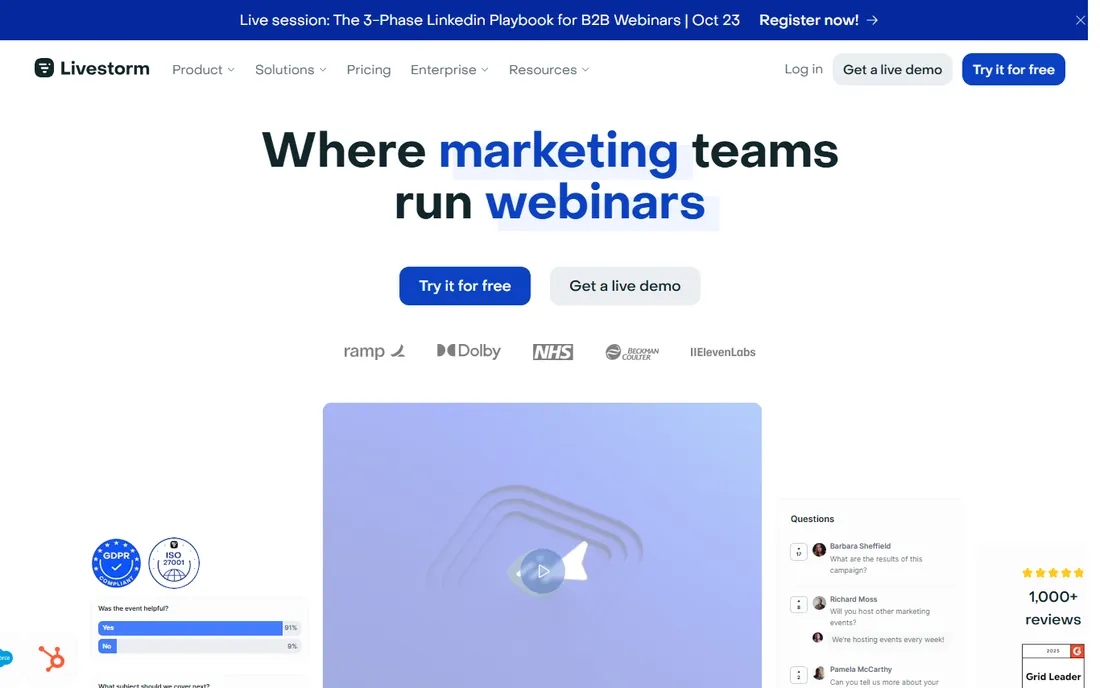
Livestorm's free plan lets teams run real webinars without paying: browser-based events with registration, polls, and chat. It is the easiest way to start webinar marketing.
Paid tiers add capacity, customization, and integrations while keeping the approachable experience. European buyers appreciate the GDPR-conscious positioning.
Heavy webinar programs will outgrow the free limits. As the starting point, Livestorm removes every excuse not to try webinars.
What we like- Generous free tier
- Browser-based
- Good engagement features
- Easy to use
Watch out for- Free tier limits attendees and duration
- Advanced features need paid tiers
- Smaller ecosystem
Starting priceSee website
Free planTrial available
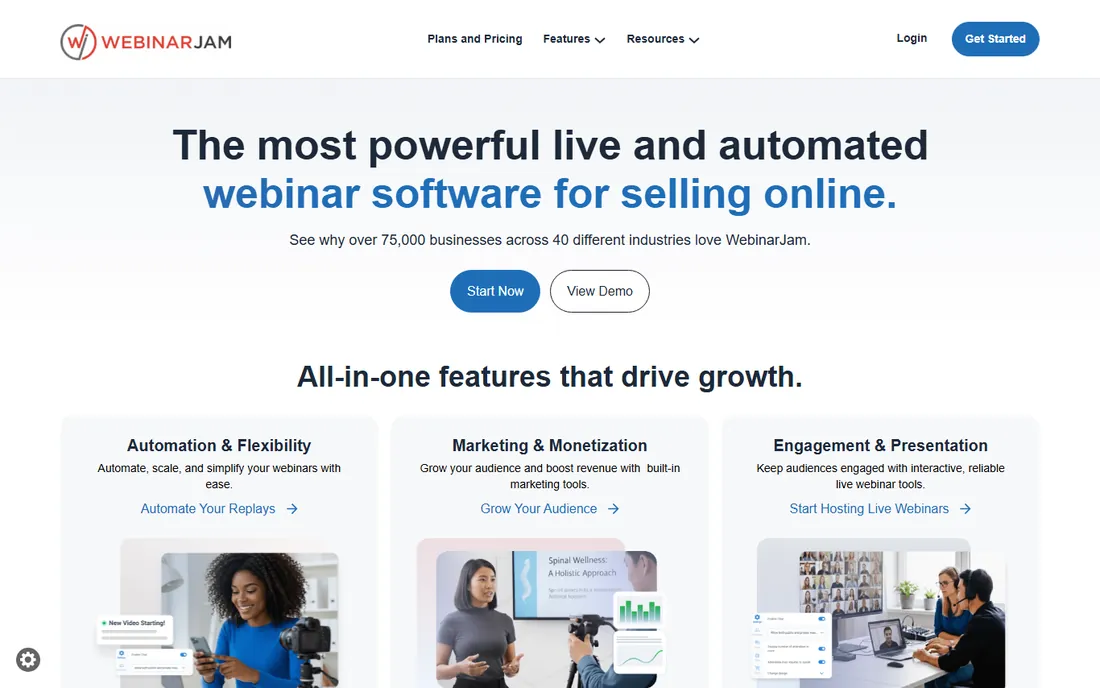
WebinarJam is built for webinars that sell: countdown timers, live offers, attendee spotlights, and urgency features that direct-response marketers love. The annual pricing is affordable next to enterprise tools.
The community of users shares tactics actively, which helps newcomers. For product launches and sales webinars, the feature set matches the playbook.
Corporate and training buyers may find the aesthetic too salesy. For high-energy marketing events, it is purpose-built.
What we like- Built for selling
- Good urgency features
- Affordable annual pricing
- Active user community
Watch out for- Interface dated
- The hype aesthetic is not for everyone
- Support mixed

#8
ON24
Best for: Enterprise webinar and virtual event programs
Visit on24.com
Starting priceSee website
Free planNo, demo available
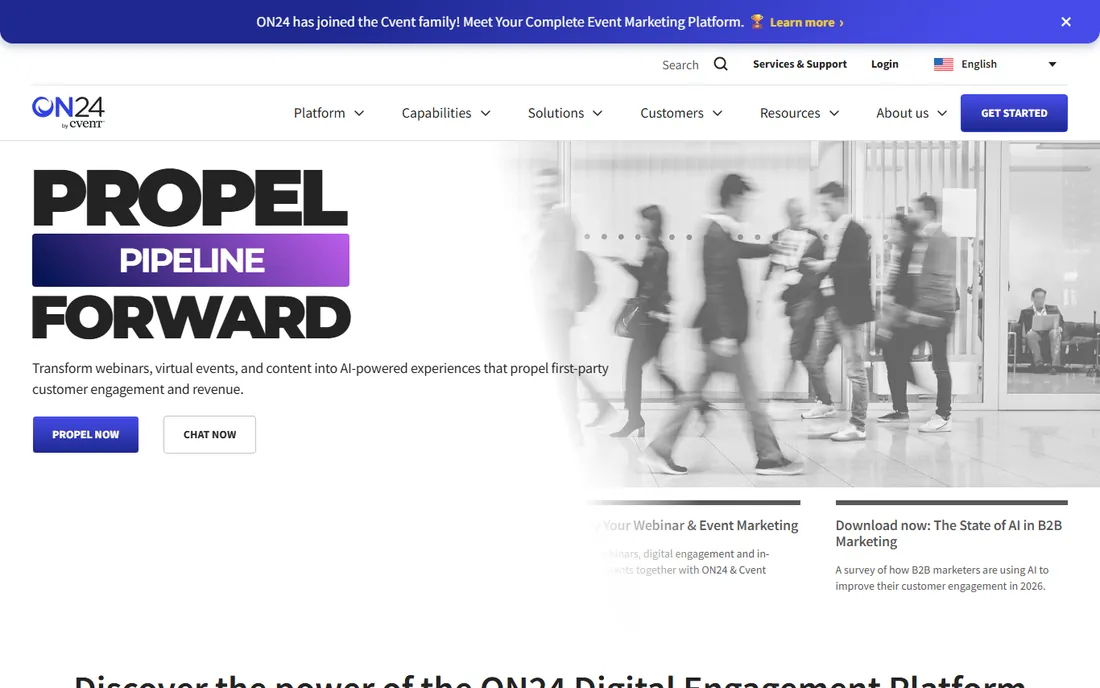
ON24 serves enterprise demand generation with webinars as data engines: engagement scoring, content analytics, and integrations that feed marketing automation with rich behavioral data. Large B2B marketers run always-on programs on it.
The analytics go beyond attendance to measure content engagement minute by minute. Personalization features tailor follow-up to what each attendee actually watched.
Pricing and complexity reflect the enterprise positioning. For serious webinar-driven pipeline, ON24 is the platform.
What we like- Deep engagement analytics
- Enterprise-grade
- Good for demand generation
- Proven at scale
Watch out for- Enterprise pricing
- Complex
- Overkill for simple webinars
Quick comparison
| Tool | Best for | Starting price | Free plan |
|---|
| Zoom Webinars | Teams already running on Zoom | See website | Trial available |
| GoTo Webinar | Reliable, professional webinar delivery | See website | Trial available |
 Webex Webinars Webex Webinars | Enterprises on Cisco Webex | See website | Trial available |
| Demio | Marketers wanting engaging, no-download webinars | See website | Trial available |
 BigMarker BigMarker | Customizable webinar experiences | See website | Trial available |
 Livestorm Livestorm | Getting started with generous free webinars | See website | Yes, free plan available |
 WebinarJam WebinarJam | High-energy sales and marketing webinars | See website | Trial available |
| ON24 | Enterprise webinar and virtual event programs | See website | No, demo available |
Is your product missing or out of date?
We review this list regularly. Vendors can request a listing, send updated pricing or ask about featured placement.
Start with your existing stack: Zoom, Webex, and GoTo shops should evaluate their native webinar options first for the integration and familiarity. Marketing-led teams should trial Demio and BigMarker for engagement. New programs should start on Livestorm's free tier.
Run a real event during the trial, including registration, reminders, and follow-up, because the attendee journey matters as much as the live room. Check CRM integration early; webinar data that does not reach sales is wasted.
Webinar mistakes that kill attendance
The biggest killer is the boring invitation. Generic titles and feature-list descriptions do not earn registrations. Promise a specific outcome, name the audience precisely, and make the value obvious in one sentence. Registration pages convert on clarity, not completeness.
Second, neglecting reminders. Most registrants intend to attend and forget. Send confirmation immediately, a reminder the day before, and another an hour before go-live. Each reminder measurably lifts attendance, and the sequence takes minutes to configure.
Third, starting late or with technical fumbling. The first two minutes set the tone; fumbling with audio while attendees wait destroys credibility. Rehearse with the actual setup, join early, and open with energy. Professionalism is mostly preparation.
Fourth, presenting slides instead of engaging humans. Webinars that are just narrated decks lose audiences fast. Use polls, Q&A, chat prompts, and live demonstrations every ten minutes. Attention is earned continuously, not granted at registration.
Finally, wasting the follow-up. The real value of a webinar is what happens after: segmented follow-up based on engagement, with the recording for absentees and next steps for the interested. Plan the follow-up before the event, not after. Attendance is the beginning of the funnel, not the end.
Frequently asked questions
How many attendees can these platforms handle?
From hundreds on basic tiers to tens of thousands on enterprise plans. Confirm the attendee limit at your tier, since pricing often scales with capacity.
Do attendees need to install software?
Most modern platforms are browser-based. Zoom and Webex attendees may prefer the app but can join via browser. No-download options maximize attendance.
What is the difference between live and automated webinars?
Live webinars happen in real time with host interaction. Automated webinars play recordings on schedule with simulated live features, useful for evergreen lead generation.
How do webinars generate leads?
Registration captures contact details, engagement data scores interest, and integrations push everything to your CRM and marketing automation for follow-up.
How much do webinar platforms cost?
From free tiers through roughly $50 to $100 monthly for small teams to enterprise contracts in the tens of thousands annually. Attendee limits and features drive the price.
What is a good registration-to-attendance rate for webinars?
Thirty to forty percent is typical for B2B webinars, with excellent programs reaching fifty percent through strong reminder sequences and audience targeting. If your rate sits below twenty percent, fix the reminders and the registration-to-event gap before blaming content. On-demand viewing extends total reach significantly; many programs get as many views after the event as during it. Track both live and on-demand, and optimize the full funnel rather than the live number alone.
How long should a B2B webinar be?
Thirty to forty-five minutes of content plus fifteen minutes of Q&A hits the sweet spot for most B2B audiences. Shorter respects busy schedules and holds attention; the Q&A often delivers the most value. Ninety-minute deep dives work for training but not for marketing. Whatever the length, front-load the value: state the takeaways in the first five minutes so late joiners and skimmers still get something. Ending on time builds trust for the next invitation.
Should we gate webinar recordings behind registration forms?
It depends on the goal. Gating captures leads but cuts viewership significantly; ungated recordings maximize reach and help existing customers. Many programs do both: gate the live event and the first weeks of replay, then ungate older recordings as evergreen content. Segment the follow-up by viewing behavior so sales focuses on engaged viewers. Test both approaches with your audience and let the data decide.
Promote the recording as actively as the live event, since on-demand viewers often convert at similar rates with less effort.
Archive every webinar with searchable chapters, turning each event into lasting content that keeps working.
Sources we checked (0)
Is your product missing or out of date?
We review this list regularly. Vendors can request a listing, send updated pricing or ask about featured placement.

Shihab Mia · Founder, Rankite
Shihab has spent more than a decade helping SaaS and e-commerce brands grow through search. He writes Rankite's software buying guides from pricing pages, documentation and public user reviews. More about Shihab.