How we make this list: we compare pricing pages, product documentation and public user reviews. Rankite is independent; if a vendor ever pays for a featured spot, that listing is clearly labeled Partner.
Key takeaways
- Granicus is the full-suite option, covering communications, engagement, and digital services for governments of every size.
- GoVocal and PublicInput focus on structured public input: projects, surveys, and comment collection built for how agencies actually consult.
- Citizen Space and MetroQuest specialize in structured consultations and visual surveys for plans and infrastructure projects.
- ThoughtExchange and Zencity use AI to make sense of thousands of open-ended responses, so staff spend less time reading and more time acting.
- Polco brings survey science to local government, with benchmarking against other communities.
The town hall moved online, and it is not moving back
A city council used to learn what residents thought from whoever showed up on a Tuesday night. That crowd skewed older, louder, and whiter than the community it claimed to represent. Then agencies started running engagement online and discovered something: participation multiplied, the demographics broadened, and the loudest voice in the room stopped setting the agenda. The pandemic forced the shift, but the numbers kept it. Digital engagement is now the default channel for public input in most US local governments.
Citizen engagement software is the category that grew up around that shift. These platforms let agencies publish a project, collect surveys and ideas, host virtual meetings, and report back on what they heard, all in one place. The best ones handle the unglamorous parts too: moderation, accessibility, multilingual support, and an audit trail that proves the input was genuine when a decision gets challenged.
We compared eight platforms used by cities, counties, and agencies. The right one depends on what you are asking residents about, how many of them you need to reach, and whether you need the full digital-services suite or a focused engagement tool.
Quick comparison
| Tool | Best for | Starting price | Free plan |
|---|
 Granicus Granicus | Full government digital services suite | See website | No |
 GoVocal GoVocal | Community projects and ideation | See website | No |
 PublicInput PublicInput | Public meetings and comment collection | See website | No |
 Citizen Space Citizen Space | Formal public consultations | See website | No |
 ThoughtExchange ThoughtExchange | Large-scale open-ended discussion | See website | Free trial |
 Zencity Zencity | AI analysis of community feedback | See website | No |
 Polco Polco | Scientific civic surveys and benchmarking | See website | No |
 MetroQuest MetroQuest | Visual surveys for plans and projects | See website | No |
Is your product missing or out of date?
We review this list regularly. Vendors can request a listing, send updated pricing or ask about featured placement.
The best citizen engagement software in 2026
Starting priceSee website
Free planNo
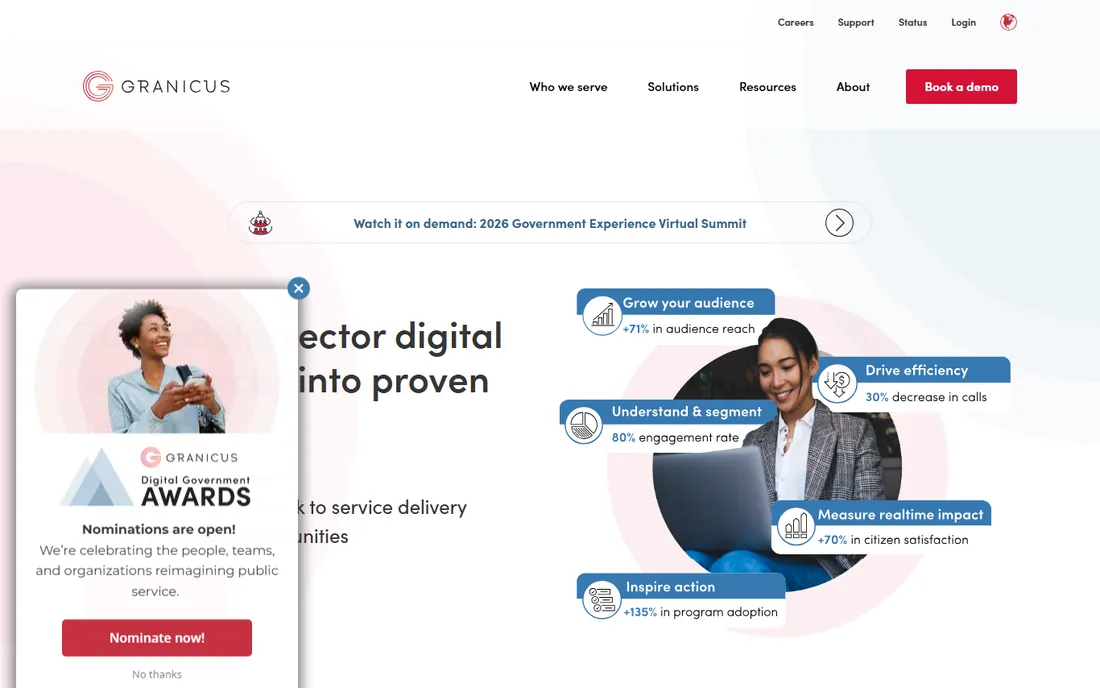
Granicus is the company most local governments already know, usually through govDelivery, its digital communications product that sends the email and text updates residents actually read. Around that core, Granicus built an engagement layer for surveys, public input, and virtual meetings, plus permitting, licensing, and records products. For an agency that wants one vendor across communications and engagement, nobody else covers as much ground.
The trade-off of that breadth is complexity. Granicus sells through a consultative process, pricing is quoted, and rolling it out across departments takes real project management. But the payoff is a resident experience that connects: someone gets a text about a road project, clicks through to an engagement page, submits input, and later receives the decision notice. Few vendors can close that loop end to end.
What we like- Broadest product range in govtech, Trusted by thousands of public agencies, Combines communications with engagement, Strong compliance and security posture
Watch out for- Quote-based pricing, Can be more platform than small towns need, Implementation takes planning
Starting priceSee website
Free planNo
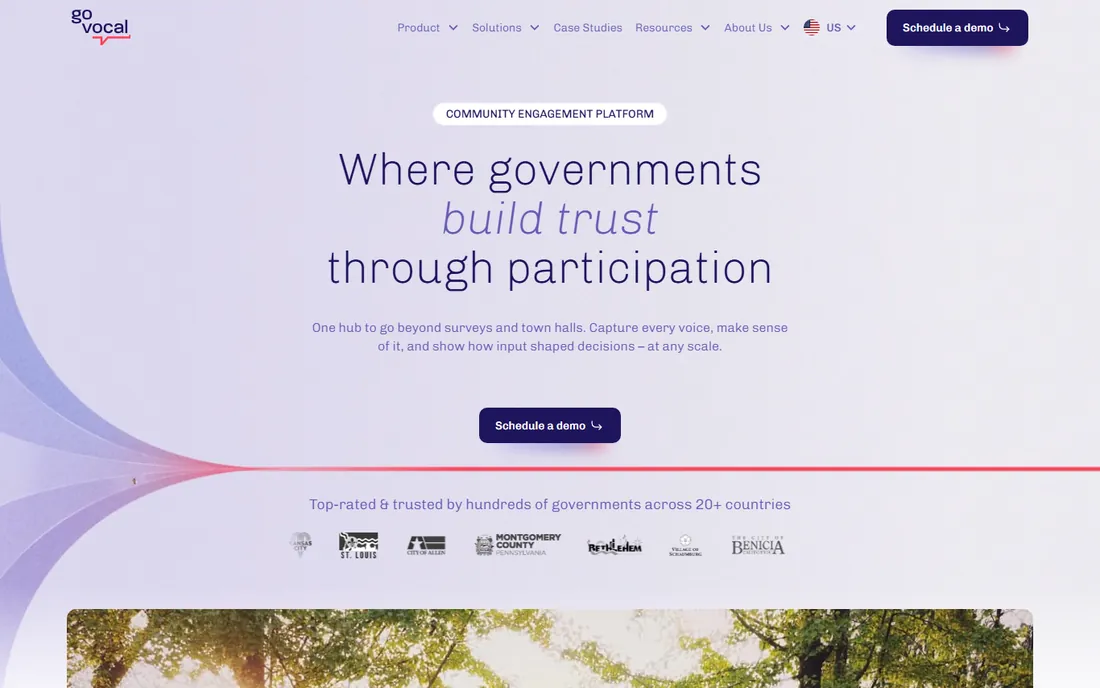
GoVocal started in Belgium and spread across European cities before pushing into North America, and the product shows that civic DNA. You create a project page, choose participation methods like ideas, surveys, voting, or budgeting, and residents engage through an interface that feels closer to a modern web app than a government form. The templates cover the standard municipal use cases, from comprehensive plans to park designs.
Multilingual support is a genuine strength, important for diverse communities where English-only engagement quietly excludes people. The company ships updates frequently and listens to its government users. The downsides are the usual ones for the category: no public pricing, and analytics depth varies by tier. For cities that want engagement to feel inviting rather than bureaucratic, GoVocal is a strong pick.
What we like- Clean, modern participation interface, Flexible project templates, Good multilingual support, Active product development
Watch out for- Pricing not published, Smaller US footprint than competitors, Advanced analytics cost extra
Starting priceSee website
Free planNo

PublicInput comes from the world of public hearings and comment periods, and it is organized around that workflow. Agencies post projects, collect comments through surveys and open forums, run virtual public meetings with registration and speaking queues, and build a contact list of residents who want to stay involved. The reporting is designed for what staff actually produce: summaries for council packets and the public record.
This is less a community-building platform than a compliance-friendly input machine, and for many agencies that is exactly the job. When a transportation department must document public input for a federally funded project, PublicInput gives them the structure and the paper trail. It is not the flashiest product here, but it understands the regulatory reality of public engagement better than most.
What we like- Purpose-built for public comment periods, Handles virtual and hybrid meetings well, Contact database of engaged residents, Reporting built for staff workflows
Watch out for- Interface less modern than newer rivals, Pricing by quote, Focused on input more than dialogue
Starting priceSee website
Free planNo
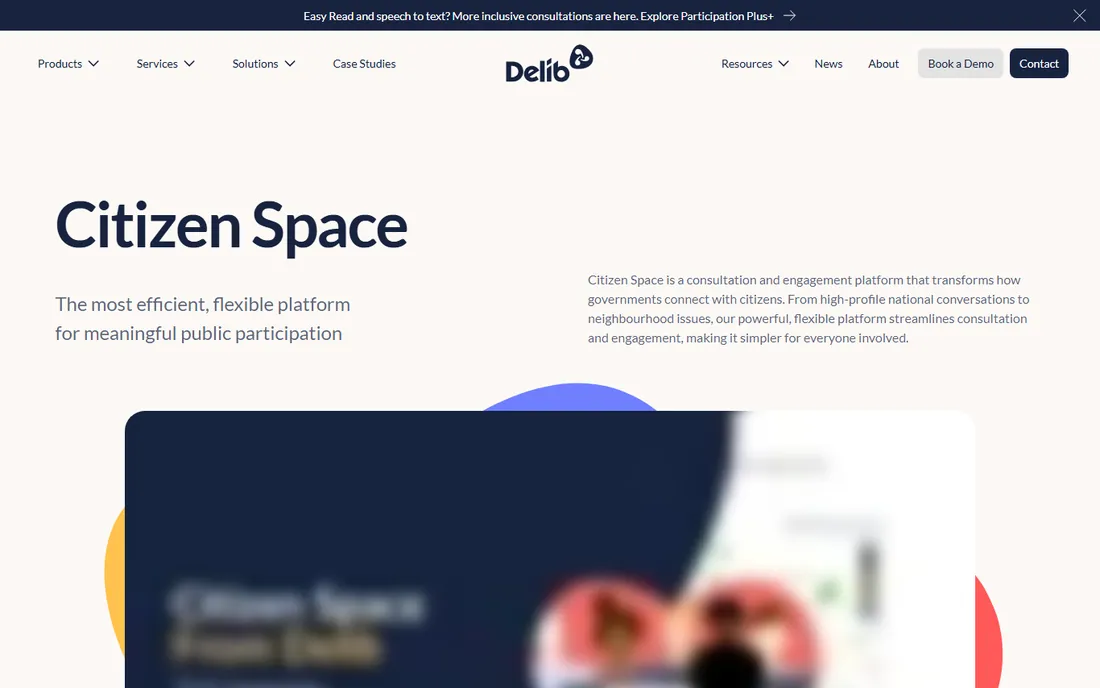
Citizen Space by Delib is the workhorse of formal public consultation, used across UK government departments, councils, and agencies running thousands of consultations. It structures the process properly: background information, structured questions, document libraries, and response analysis that produces the reports decision-makers need. When a consultation carries legal weight and the process must be defensible, this is the tool built for that job.
The analysis side is the strength. Responses can be coded, themed, and exported in formats that feed directly into decision documents and published reports. It is less about ongoing community dialogue and more about running consultations correctly, with accessibility and data handling suited to the public sector. For agencies where the consultation itself must stand up to scrutiny, Citizen Space has the deepest pedigree here.
What we like- Built for official consultations, Strong response analysis and reporting, Widely used across UK government, Good accessibility compliance
Watch out for- Less visual than newer rivals, Pricing by quote, Consultation-focused rather than ongoing dialogue
Starting priceSee website
Free planFree trial
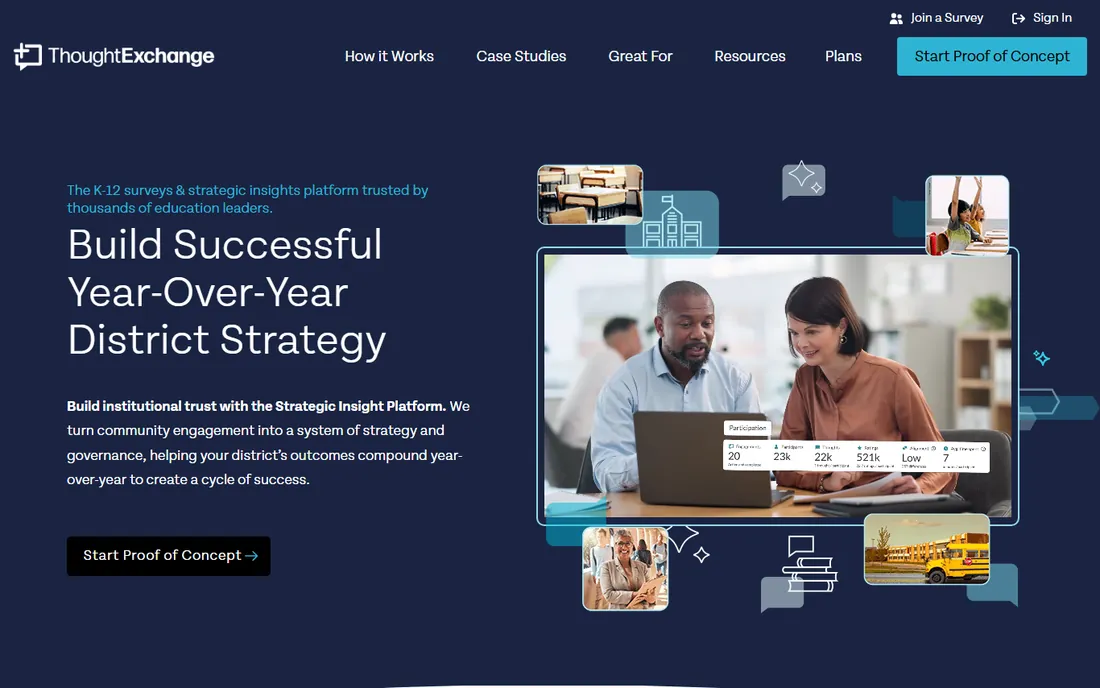
ThoughtExchange solves the hardest problem in public engagement: what do you do with 10,000 open-ended answers? Participants share thoughts in their own words, then rate the thoughts of others. AI groups similar ideas into themes, and leaders see which themes have the broadest support, not just the most vocal supporters. It is part survey, part facilitated discussion, at a scale no meeting room can hold.
The method is used by school districts, cities, and companies alike, which speaks to its flexibility. At small scale the machinery can feel like overkill, but when you need genuine input from a whole community, nothing else processes open text this well. A free trial lets you test the experience before committing, a rarity in this category.
What we like- Handles tens of thousands of participants, AI groups similar thoughts automatically, Participants rate each other's ideas, Works for government, education, and enterprise
Watch out for- Pricing not published, Can feel impersonal at small scale, Results need skilled interpretation
Starting priceSee website
Free planNo
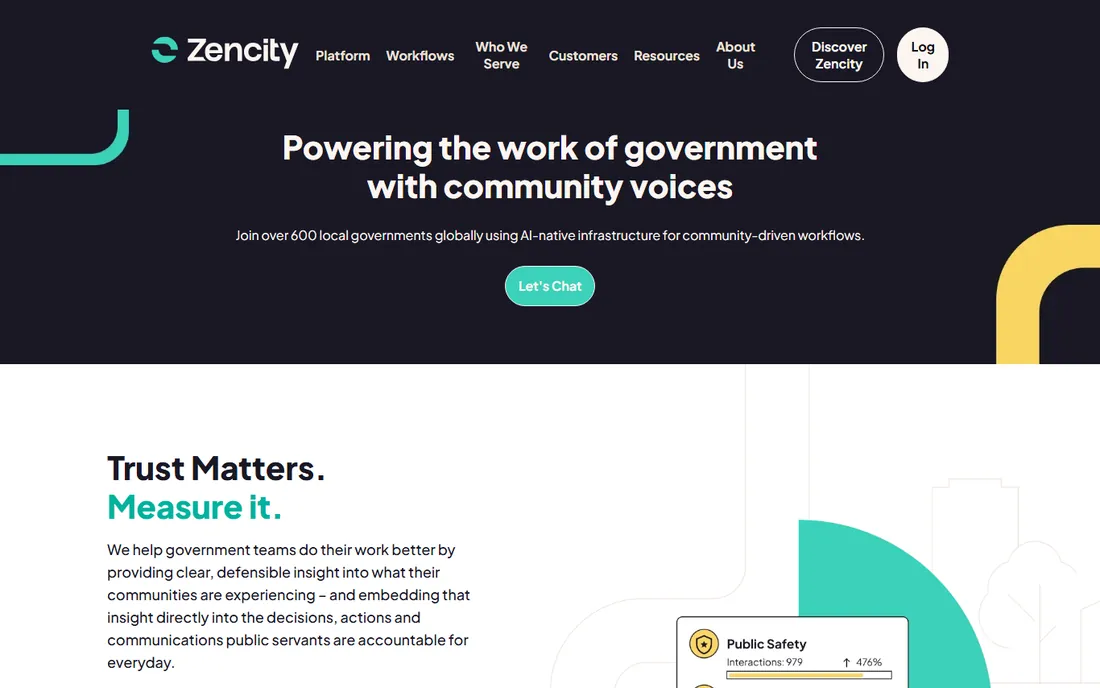
Zencity starts from a different premise: residents are already telling you what they think, in 311 requests, social media, and survey responses. Its AI reads all of it and turns the noise into trends a city manager can act on. Instead of launching another survey, you get an ongoing read on what the community cares about, benchmarked against similar cities.
The company also offers survey tools, but the analytics engine is the core. For agencies drowning in unstructured feedback and short on analysts, Zencity converts a pile of comments into priorities. Setup is faster than the big suites, since much of the data already exists. The limitation is that it listens more than it convenes: pair it with a participation tool if you also need the public-facing project pages.
What we like- AI reads surveys, social media, and 311 data, Benchmarks sentiment against similar cities, Purpose-built for local government, Fast setup
Watch out for- Quote-based pricing, Dependent on data quality, Less of a participation front-end
Starting priceSee website
Free planNo
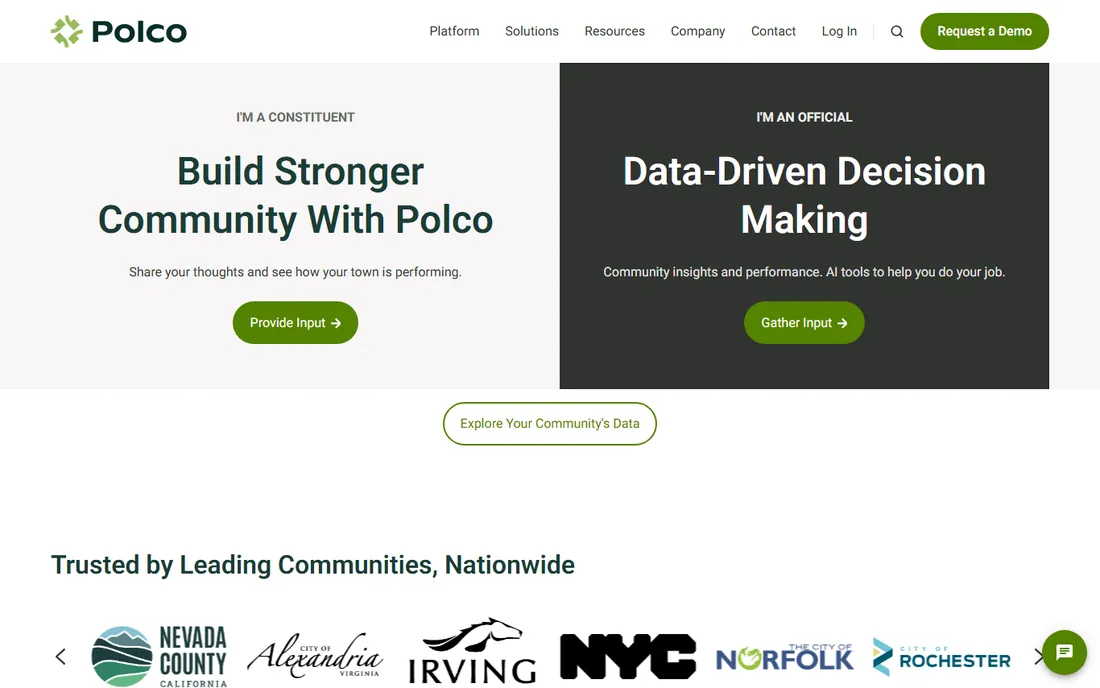
Polco grew out of civic survey science, and it shows in the product's seriousness about methodology. Its National Community Survey and related instruments are designed to produce results a council can trust and a critic cannot easily dismiss. Just as valuable is the benchmarking: you can see how your residents' satisfaction compares with hundreds of similar communities, which turns abstract scores into a story.
The platform has added engagement features over time, but surveys remain the heart. If your city manager needs defensible data for strategic planning, or your council wants to know whether satisfaction is actually slipping, Polco is the most rigorous option here. It is slower and less flashy than idea-collection tools, because good survey research cannot be rushed.
What we like- Survey methodology you can defend, Benchmark data from hundreds of communities, National research partnerships, Trusted by city managers
Watch out for- Less visual than newer platforms, Pricing by quote, Surveys take time to field properly
Starting priceSee website
Free planNo
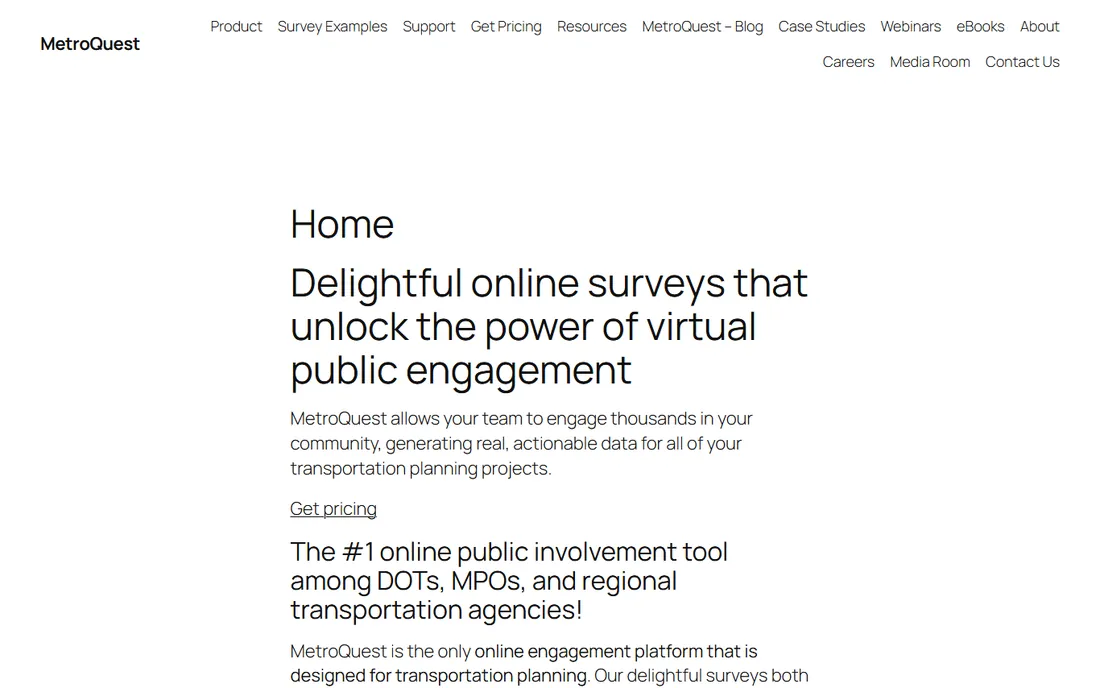
MetroQuest makes surveys people actually finish. Instead of long forms, participants react to images, rank priorities visually, and explore scenarios, all in a mobile-friendly flow designed for planning and transportation projects. Agencies use it for comprehensive plans, corridor studies, and transit proposals, where showing options visually produces better input than describing them in text.
The results side is equally polished: reports and presentations that communicate findings to councils and the public without a data-science degree. The focus is narrow, which is both the strength and the limit. If your engagement centers on plans, projects, and infrastructure choices, MetroQuest will outperform generic survey tools. If you need year-round community dialogue, look at GoVocal or Granicus instead.
What we like- Highly visual, engaging survey design, Built for planning and transportation projects, Strong results presentations, Good mobile experience
Watch out for- Niche focus on planning use cases, Pricing by quote, Smaller company
How we chose
We focused on platforms built specifically for public-sector engagement, not generic survey tools repurposed for government. Every product here is used by real cities, counties, or agencies, and each one handles the public-sector requirements that consumer tools ignore: accessibility standards, public-records considerations, moderation, and multilingual access. We looked for breadth of participation methods, quality of reporting, and evidence of genuine adoption rather than marketing claims.
We deliberately included different philosophies: the full suite (Granicus), the participation front-end (GoVocal), the regulatory workhorse (PublicInput), the consultation specialist (Citizen Space), the AI discussion platform (ThoughtExchange), the listening engine (Zencity), the survey scientist (Polco), and the visual planning tool (MetroQuest). Most agencies will not need all eight; the point of the range is to show which approach fits which job.
What to ask before you buy
Start with the decision you need input for. A comprehensive plan, a budget vote, and a park redesign are different engagement problems, and the tool should match the question. Then ask who you need to hear from. If equity of voice matters, and it should, prioritize platforms with multilingual support, mobile-first design, and accessibility baked in, because the residents you most need to reach are the least likely to attend a meeting.
Ask vendors how they handle moderation and misinformation, what the public record looks like, and how you export the data when a council member asks for it. Ask for references from agencies your size, not just the flagship customers on the website. And check the pricing model against your reality: per-project pricing suits occasional engagement, while an annual platform makes sense if you consult continuously. The cheapest option that nobody uses is the most expensive mistake.
Frequently asked questions
What is citizen engagement software?
It is software that helps governments consult the public online: publishing projects, collecting surveys and ideas, hosting virtual meetings, and reporting results. It replaces or supplements in-person town halls with digital participation.
How is this different from SurveyMonkey or Google Forms?
Public-sector engagement tools add moderation, accessibility compliance, multilingual support, public-records handling, and reporting designed for council packets. Generic survey tools were not built for the legal and equity requirements of government consultation.
Do these platforms work for small towns?
Yes, though the full suites can be overkill. Smaller agencies often do well with focused tools like Citizen Space for consultations or Polco for surveys, and most vendors offer scaled-down tiers even when pricing is quoted.
How do you get residents to actually participate?
Promote through the channels residents already use: utility bill inserts, text messages, social media, and community partners. Keep surveys short, show the visual options, and always report back on what you heard, because people participate when they believe it matters.
Can online engagement replace public hearings?
It supplements them but rarely replaces them legally. Many jurisdictions still require formal hearings for certain decisions. The best practice is hybrid: digital input for breadth, in-person or virtual hearings for the formal record.
Sources we checked (8)
- https://granicus.com/
- https://www.govocal.com/
- https://publicinput.com/
- https://www.delib.net/citizen-space
- https://thoughtexchange.com/
- https://www.zencity.io/
- https://info.polco.us/
- https://metroquest.com/
Is your product missing or out of date?
We review this list regularly. Vendors can request a listing, send updated pricing or ask about featured placement.

Shihab Mia · Founder, Rankite
Shihab has spent more than a decade helping SaaS and e-commerce brands grow through search. He writes Rankite's software buying guides from pricing pages, documentation and public user reviews. More about Shihab.