How we make this list: we compare pricing pages, product documentation and public user reviews. Rankite is independent; if a vendor ever pays for a featured spot, that listing is clearly labeled Partner.
Key takeaways
- OpenGov and Euna (Bonfire) lead for state and local procurement modernization.
- PlanetBids is the specialist for public agency eProcurement and bid management.
- Ivalua and Jaggaer serve large public sector source-to-pay programs.
- Deltek GovWin, SOVRA, and GovSpend help vendors and agencies navigate government markets.
- Expect demos and quotes; public sector procurement cycles are long.
How government procurement differs from commercial buying
Government procurement operates under rules commercial buying never faces: open competition requirements, public bid postings, protest procedures, and audit trails that must satisfy taxpayers and oversight bodies. The software has to encode those rules, not just streamline purchasing.
For agencies, the jobs are solicitation creation, vendor management, bid evaluation, and contract compliance. For vendors selling to government, the jobs are finding opportunities, tracking bids, and managing the capture process. The platforms below serve both sides.
Pricing is quote-based and procurement cycles are long, often running through formal RFPs. Demos and peer references from similar agencies matter more than feature lists.
How we chose
We selected platforms with real public sector customers and products built for government procurement rules. We looked for solicitation management, vendor portals, evaluation workflows, and audit-ready records.
We covered both agency-side eProcurement and vendor-side opportunity intelligence because the topic spans both. We weighed public sector track record, compliance features, and implementation support. Vendor claims were checked against product documentation.

#1
OpenGov Procurement
Best for: State and local agencies modernizing procurement
Visit opengov.com
Starting priceSee website
Free planNo, demo available
OpenGov builds software exclusively for government, and its procurement module covers the full cycle from solicitation drafting through evaluation to contract management. Templates and workflows reflect how public agencies actually buy.
The vendor portal gives suppliers a clean place to find opportunities and submit bids, which increases competition. With thousands of agencies on the platform, the network effects help both sides.
It is not for commercial procurement, and pricing requires a conversation. For US state and local agencies, it is the modern standard.
What we like- Built exclusively for government
- Solicitation to contract workflow
- Good vendor portal
- Strong agency network
Watch out for- Government-only focus
- Pricing is quote-based
- Customization has limits
Starting priceSee website
Free planNo, demo available
Bonfire, now part of Euna Solutions, made its name on bid evaluation: structured scoring, sealed bidding, and defensible award decisions that survive protests. Agencies running complex, high-value solicitations rely on it.
The platform enforces process discipline, questionnaires, requirements matrices, and evaluation criteria that keep every bid comparable. Audit trails document every step for oversight.
As part of Euna's broader public sector suite, it now connects to budgeting and other agency functions. For evaluation rigor, it remains the specialist pick.
What we like- Excellent evaluation workflows
- Strong compliance controls
- Good for complex solicitations
- Part of the Euna public sector suite
Watch out for- The Bonfire rebrand needs noting
- Pricing is quote-based
- Best for formal procurement shops
Starting priceSee website
Free planNo, demo available
PlanetBids' PB System is a long-standing eProcurement platform for public agencies, covering vendor registration, bid notification, document distribution, and bid tabulation. Thousands of agencies have run procurements on it.
Supplier outreach tools help agencies expand their vendor pools, including diversity and small business goals. The feature set is comprehensive for traditional public procurement workflows.
The interface shows its age compared to OpenGov and Euna. But for agencies that want proven, complete eProcurement, the track record counts.
What we like- Comprehensive bid and vendor management
- Strong agency adoption
- Good outreach tools
- Proven over decades
Watch out for- Interface feels dated
- Pricing is quote-based
- Innovation pace moderate
Starting priceSee website
Free planNo, demo available
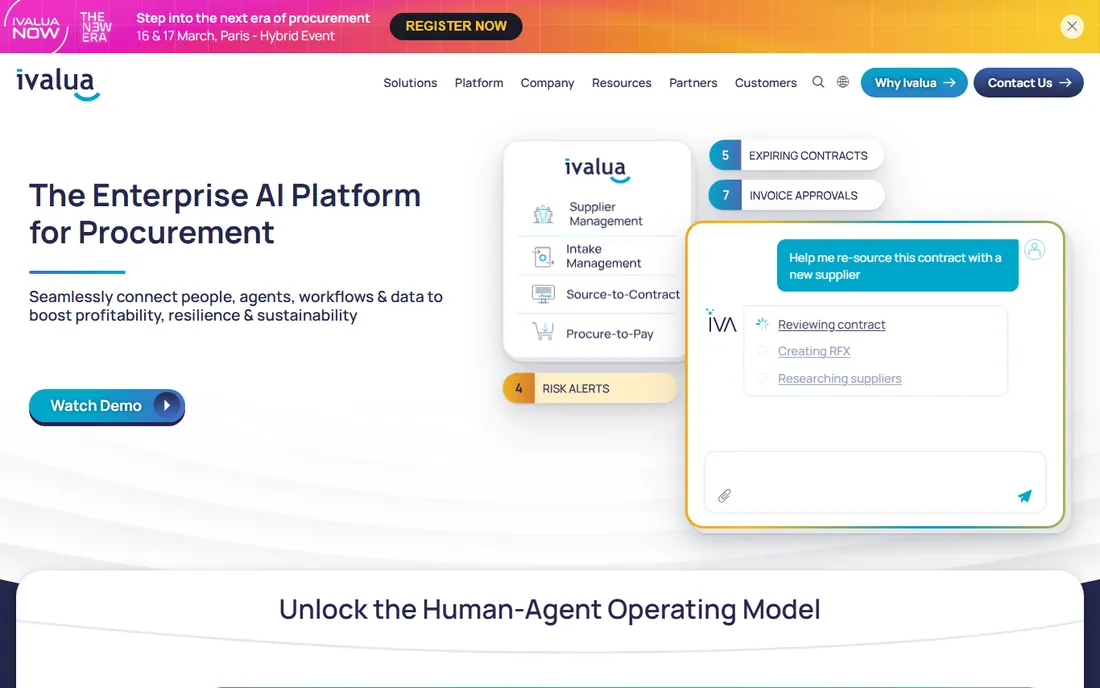
Ivalua serves large public sector organizations running full source-to-pay: sourcing, contracts, supplier management, and procure-to-pay in one configurable platform. Its flexibility handles the varied requirements of big government bodies.
Public sector references include major agencies managing complex, regulated spend. The configurability that enterprises value applies equally to government-specific workflows.
This is enterprise software with enterprise cost and timelines. For large-scale public procurement transformation, Ivalua belongs on the shortlist.
What we like- Deep source-to-pay functionality
- Highly configurable
- Strong for complex organizations
- Good public sector references
Watch out for- Enterprise pricing
- Implementation is significant
- Needs skilled administrators

#5
Jaggaer
Best for: Public sector and education procurement at scale
Visit jaggaer.com
Starting priceSee website
Free planNo, demo available
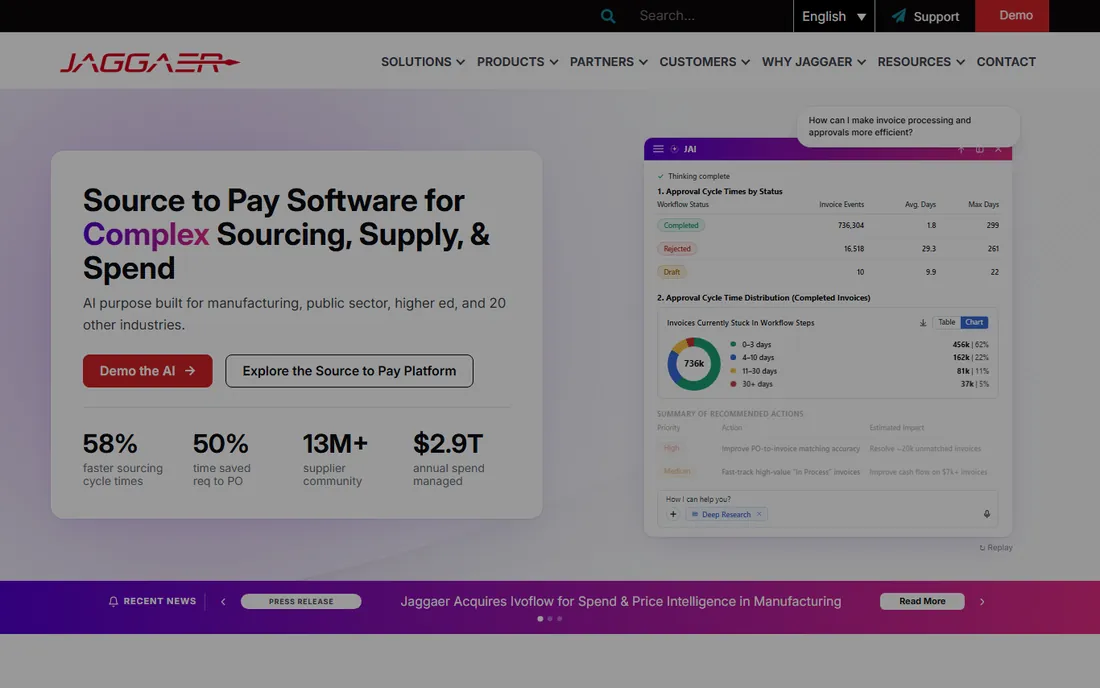
Jaggaer has deep roots in public sector and higher education procurement, with a comprehensive suite covering sourcing, contracts, and supplier management. Universities and government bodies run significant spend through it.
The supplier management capabilities suit organizations with large, diverse vendor bases and compliance requirements. Decades of deployments mean the edge cases are handled.
Newer rivals feel more modern, and pricing is enterprise-grade. For institutions already in the Jaggaer ecosystem, the depth is the reason to stay.
What we like- Strong in higher education and public sector
- Comprehensive suite
- Good supplier management
- Long track record
Watch out for- Enterprise pricing
- Interface less modern
- Implementation takes time

#6
Deltek GovWin
Best for: Vendors pursuing government contracts
Visit deltek.com
Starting priceSee website
Free planNo, demo available
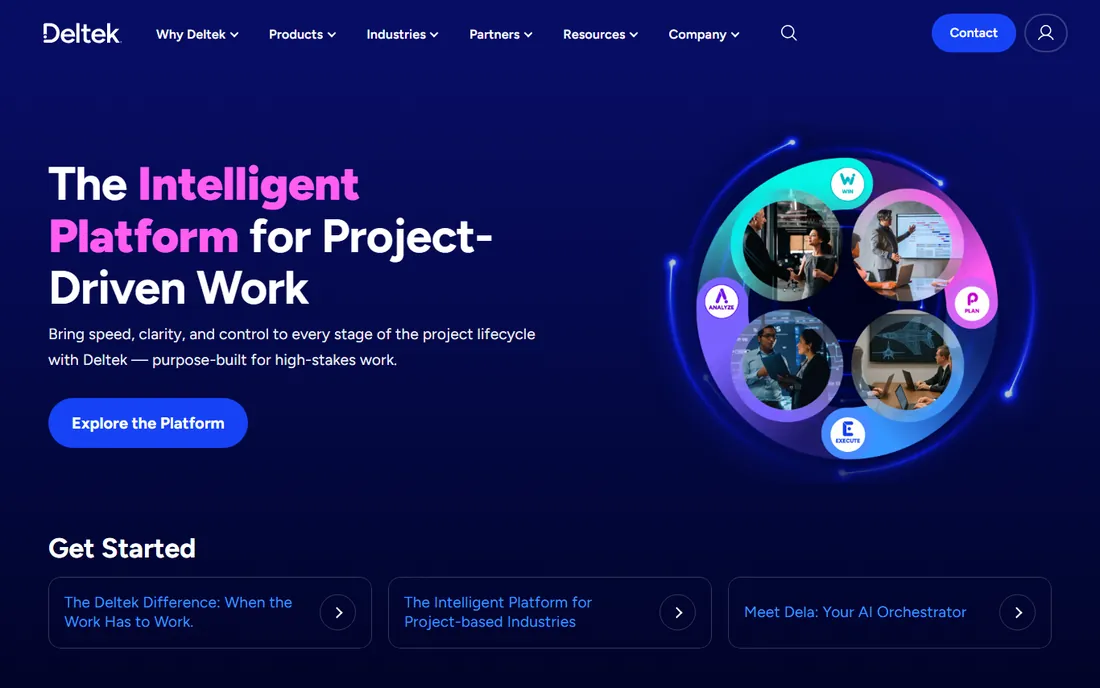
GovWin IQ is the standard intelligence platform for companies selling to government: opportunity tracking, agency spending analysis, and capture management for federal, state, and local pursuits. Business development teams plan their pipelines around it.
Analyst support helps contractors interpret opportunities and position bids. The data depth on federal spending is unmatched.
It is priced for companies committed to the government market, and smaller vendors should weigh the cost against their pipeline. For serious GovCon business development, it is close to essential.
What we like- Deep federal, state, and local opportunity data
- Capture management tools
- Strong analyst support
- Industry standard
Watch out for- Expensive
- Data quality varies by segment
- Best for serious government contractors
Starting priceSee website
Free planNo, demo available
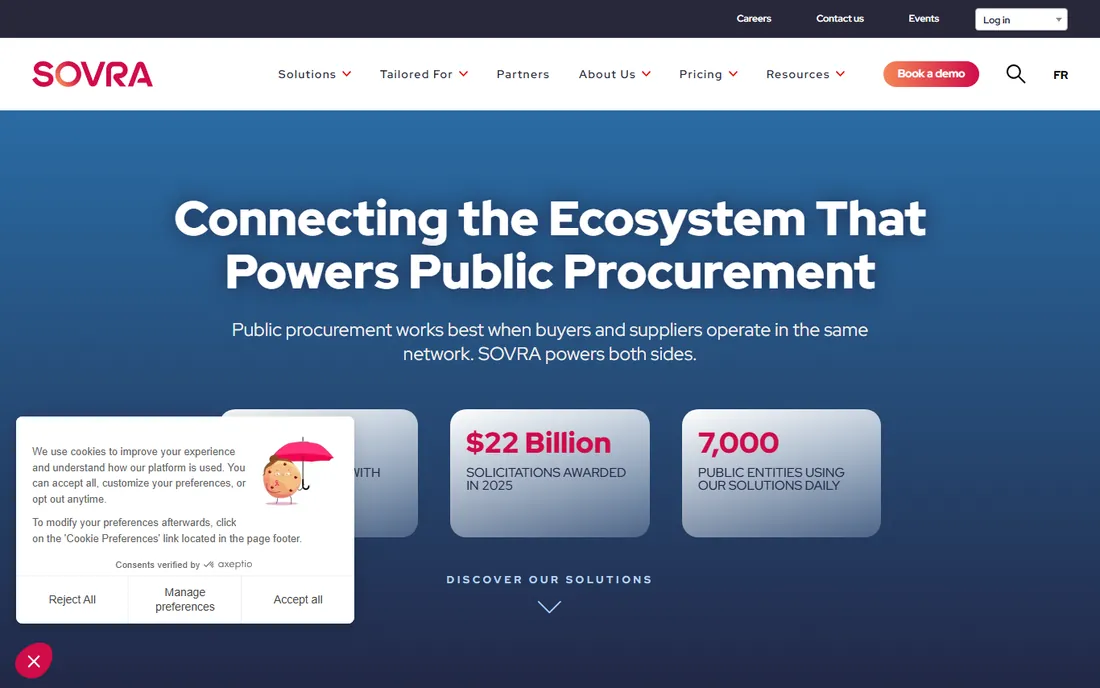
SOVRA offers government procurement software with a modern interface and workflows designed for public sector buying. Solicitation creation, vendor management, and evaluation are handled cleanly.
As a newer entrant, it appeals to agencies that find legacy platforms dated but do not need enterprise-suite scale. The product focus is squarely on making procurement staff productive.
Buyers should do normal diligence on a smaller vendor, including financial stability and support capacity. For modern public procurement without legacy baggage, SOVRA is worth a look.
What we like- Modern interface
- Built for public sector workflows
- Good solicitation management
- Growing agency base
Watch out for- Smaller vendor
- Track record shorter than leaders
- Ecosystem limited
Starting priceSee website
Free planNo, demo available
GovSpend provides intelligence on government purchasing: who bought what, from whom, and for how much. Vendors use it for competitive intelligence and opportunity identification; agencies use it for price benchmarking.
The spending data helps both sides understand the market before a solicitation even posts. For vendors, knowing an agency's buying history shapes better bids.
It does not run procurements, so pair it with an eProcurement platform. As intelligence, it is a valuable complement to GovWin or agency-side tools.
What we like- Comprehensive spending data
- Good for competitive intelligence
- Useful for vendors and agencies
- Regular data updates
Watch out for- Intelligence only, not procurement workflow
- Pricing is quote-based
- Data depth varies by jurisdiction
Quick comparison
| Tool | Best for | Starting price | Free plan |
|---|
| OpenGov Procurement | State and local agencies modernizing procurement | See website | No, demo available |
 Euna Solutions (formerly Bonfire) Euna Solutions (formerly Bonfire) | Agencies wanting rigorous bid evaluation | See website | No, demo available |
 PlanetBids PlanetBids | Public agencies needing full eProcurement | See website | No, demo available |
 Ivalua Ivalua | Large public sector source-to-pay programs | See website | No, demo available |
| Jaggaer | Public sector and education procurement at scale | See website | No, demo available |
| Deltek GovWin | Vendors pursuing government contracts | See website | No, demo available |
 SOVRA SOVRA | Public sector procurement with modern UX | See website | No, demo available |
 GovSpend GovSpend | Market intelligence on government spending | See website | No, demo available |
Is your product missing or out of date?
We review this list regularly. Vendors can request a listing, send updated pricing or ask about featured placement.
How agencies evaluate procurement software
Start with your procurement rules, not features. The software must encode your jurisdiction's competition, protest, and audit requirements, so bring your actual solicitation templates to the demo and watch vendors run them.
Talk to peer agencies of similar size running the platform, because implementation quality varies more than brochures suggest. Budget for change management: the technology is rarely the hard part; getting buyers and vendors to adopt new processes is.
Public sector buying pitfalls
The classic pitfall is writing requirements around a preferred vendor. When the RFP describes one product's features, competition suffers and protests follow. Write requirements around outcomes and mandatory compliance rules, evaluate genuinely, and document the decision. Fair process protects the award.
Second, underestimating change management. Procurement staff who have run paper processes for decades need training, support, and time. Involve buyers early, celebrate early wins, and keep parallel processes only as long as truly needed. The technology is rarely what fails; adoption is.
Third, neglecting the vendor side of the portal. A system that is painful for suppliers reduces competition and raises prices. Test the vendor experience yourself: registration, bid submission, and notifications. Every friction point costs you bidders.
Fourth, forgetting about data migration and integration. Vendor records, contract histories, and spend data must move cleanly, and finance system integration determines whether the platform delivers its promised efficiency. Budget for both explicitly rather than discovering them mid-project.
Finally, skipping the pilot. Run a real procurement end to end with a willing department before the full rollout. The pilot surfaces the workflow gaps, training needs, and configuration fixes that no demo reveals. Fix them small before scaling them large.
Frequently asked questions
What is eProcurement for government?
Electronic procurement adapted to public sector rules: posting solicitations publicly, receiving bids electronically, evaluating transparently, and maintaining audit trails that satisfy oversight requirements.
How long does government software procurement take?
Often six to eighteen months from requirements to contract, given RFP processes and approvals. Plan accordingly and use the time for thorough evaluation.
Can small vendors compete using these platforms?
The platforms are designed to increase competition, with free vendor registration and electronic submission lowering barriers. Intelligence tools like GovWin and GovSpend help small vendors find opportunities.
What is the difference between OpenGov and PlanetBids?
Both serve public agencies, but OpenGov is the newer cloud-native suite built exclusively for government across multiple functions, while PlanetBids is the long-standing eProcurement specialist. Many agencies evaluate both.
Do these tools handle cooperative purchasing?
Most agency-side platforms support piggybacking and cooperative contracts to varying degrees. Confirm the specific cooperative programs you use with each vendor.
What is cooperative purchasing and do these tools support it?
Cooperative purchasing lets agencies buy through contracts competitively awarded by another public entity, saving the time and cost of running their own solicitation. Most agency-side platforms support piggybacking on cooperative contracts to varying degrees, with workflows for documenting the eligibility. If your agency relies heavily on cooperatives like OMNIA or Sourcewell, confirm the specific programs and the compliance documentation each vendor handles. The feature matters more in practice than brochures suggest.
How do bid protests work with electronic procurement?
The protest rules come from your jurisdiction's procurement law, not the software, but the platform determines how defensible your process is. Electronic systems create the audit trail that decides protests: sealed bids, timestamped submissions, documented evaluation scoring, and complete communication logs. When evaluating platforms, ask vendors to show exactly what evidence the system produces for a protested award. Agencies that can reconstruct every step usually prevail; those with gaps do not.
Sources we checked (0)
Is your product missing or out of date?
We review this list regularly. Vendors can request a listing, send updated pricing or ask about featured placement.

Shihab Mia · Founder, Rankite
Shihab has spent more than a decade helping SaaS and e-commerce brands grow through search. He writes Rankite's software buying guides from pricing pages, documentation and public user reviews. More about Shihab.