How we make this list: we compare pricing pages, product documentation and public user reviews. Rankite is independent; if a vendor ever pays for a featured spot, that listing is clearly labeled Partner.
Key takeaways
- QuickBooks Online remains the default for US small businesses, with the broadest integration ecosystem and accountant support.
- Xero suits growing teams with unlimited users and strong bank reconciliation.
- Zoho Books and Wave are the value picks: Zoho has a real free plan, Wave is free to start.
- FreshBooks is the best fit for service businesses that live on invoicing and billable time.
- Sage Intacct and NetSuite are the mid-market graduation: multi-entity, audit-ready, and built for finance teams.
Quick comparison
| Tool | Best for | Starting price | Free plan |
|---|
 QuickBooks Online QuickBooks Online | US small businesses, all-around | See website | No |
 Xero Xero | Growing teams, unlimited users | $25/month | No |
 Zoho Books Zoho Books | Value with automation and inventory | Free | Yes |
 FreshBooks FreshBooks | Service businesses and invoicing | See website | No |
 Wave Wave | Solopreneurs and tiny businesses | Free | Yes |
 Sage Intacct Sage Intacct | Mid-market multi-entity accounting | See website | No |
 Oracle NetSuite Oracle NetSuite | ERP plus financials for scaling firms | See website | Free trial (3 days) |
 Odoo Odoo | Open-source ERP with accounting | See website | Yes (Community edition) |
Is your product missing or out of date?
We review this list regularly. Vendors can request a listing, send updated pricing or ask about featured placement.
The top finance software
Starting priceSee website
Free planNo
QuickBooks Online is the default answer for a reason. Invoicing, expense tracking, bank reconciliation, inventory, payroll, sales tax, and lending all live in one platform, with over 800 integrations and a network of accountants who already know the product. Intuit's AI features draft invoices, automate recurring tasks, and forecast from your live data.
The trade-off is cost: tiers run from basic bookkeeping to full advanced reporting, and growing companies feel each step up. Still, for a US small business that wants the safest pick with the most help available, QuickBooks is hard to argue against.
What we like- Broadest integration ecosystem of any small-business tool
- Nearly every US accountant knows it
- AI-assisted bookkeeping and forecasting
Watch out for- Price tiers climb as you grow
- Support quality draws mixed reviews
Starting price$25/month
Free planNo
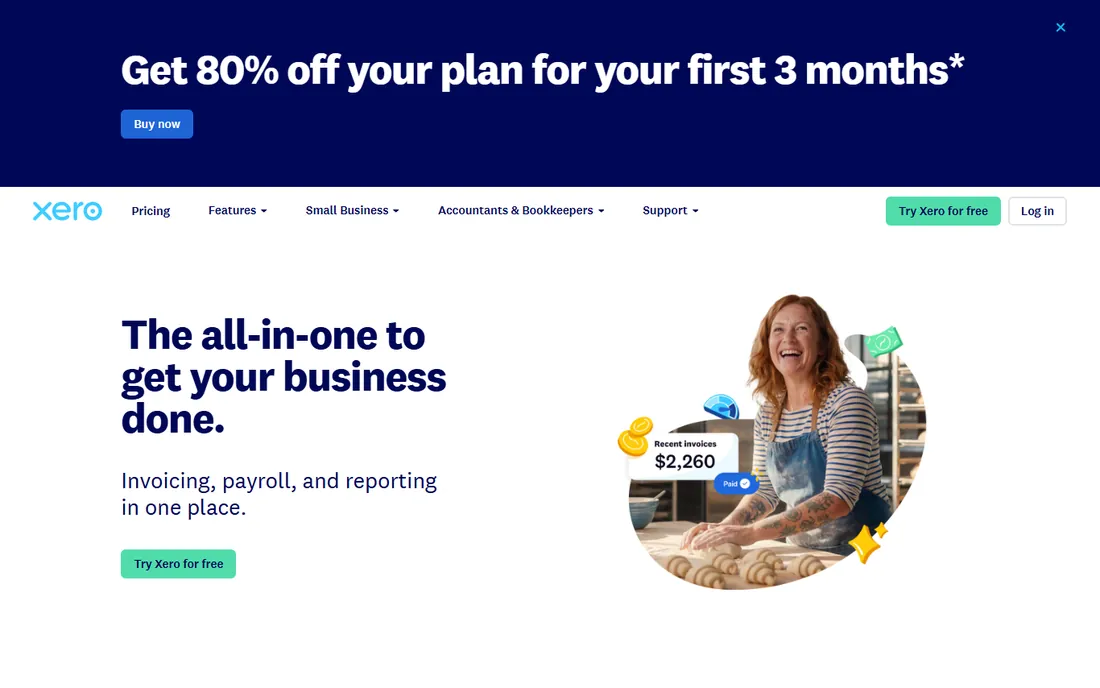
Xero is the leading QuickBooks alternative, and its headline advantage is simple: unlimited users on every plan, so your bookkeeper, accountant, and team all get access without per-seat fees. The Early plan starts at $25 per month with invoicing, bill tracking, bank reconciliation, and document capture.
Xero's AI agent JAX automates routine tasks and answers cash-flow questions in plain language. For US businesses it covers sales tax, 1099s, and W-9s. Growing companies that expect several people in the books will find Xero's pricing model noticeably friendlier than QuickBooks'.
What we like- Unlimited users on every plan
- Strong bank reconciliation and smart document capture
- Clean, modern interface
Watch out for- Payroll is US-focused and tiered
- Inventory is lighter than QuickBooks
#3
Zoho Books
Best for: Value with automation and inventory
Visit zoho.com
Starting priceFree
Free planYes
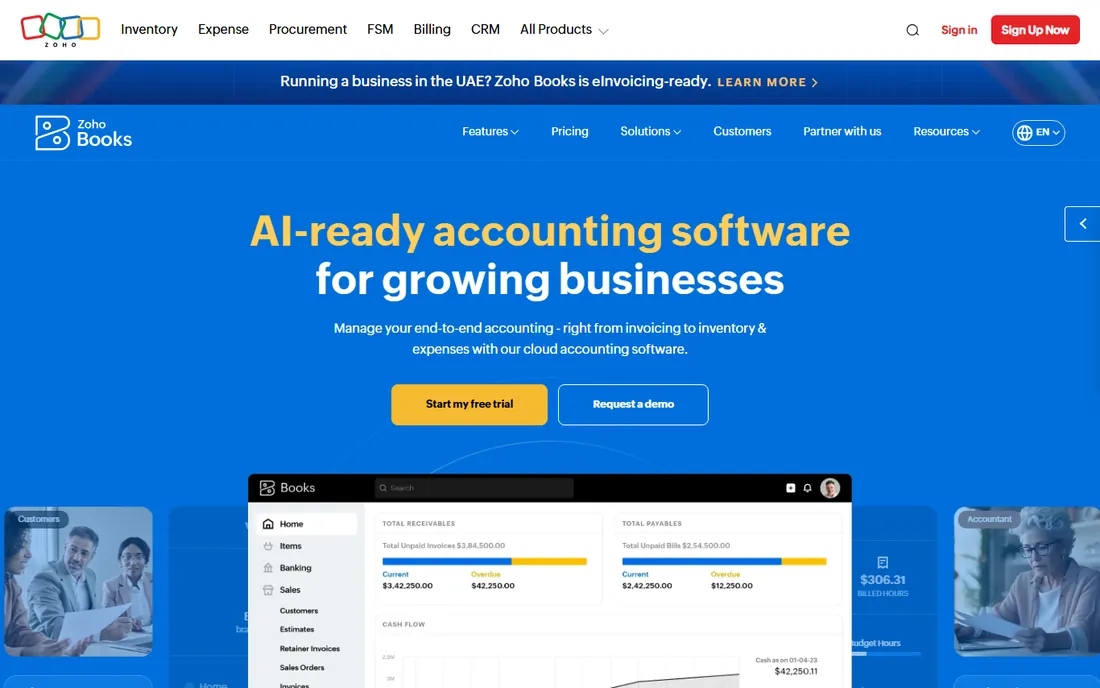
Zoho Books is the value champion. The free plan covers solopreneurs and micro businesses at $0, and paid plans start at $15 per organization per month billed annually, far under QuickBooks and Xero. You get invoicing, banking, inventory, projects with timesheets, automation workflows, and multi-currency.
It is part of the broader Zoho suite, so businesses already using Zoho CRM or Zoho Inventory get extra mileage. For a small company that wants full accounting features at a fraction of the market price, Zoho Books is the smartest buy in this list.
What we like- Genuine free plan for solopreneurs
- Standard starts at just $15/org/month
- Deep automation and inventory
Watch out for- Best value when paired with other Zoho apps
- Interface has a learning curve
Starting priceSee website
Free planNo
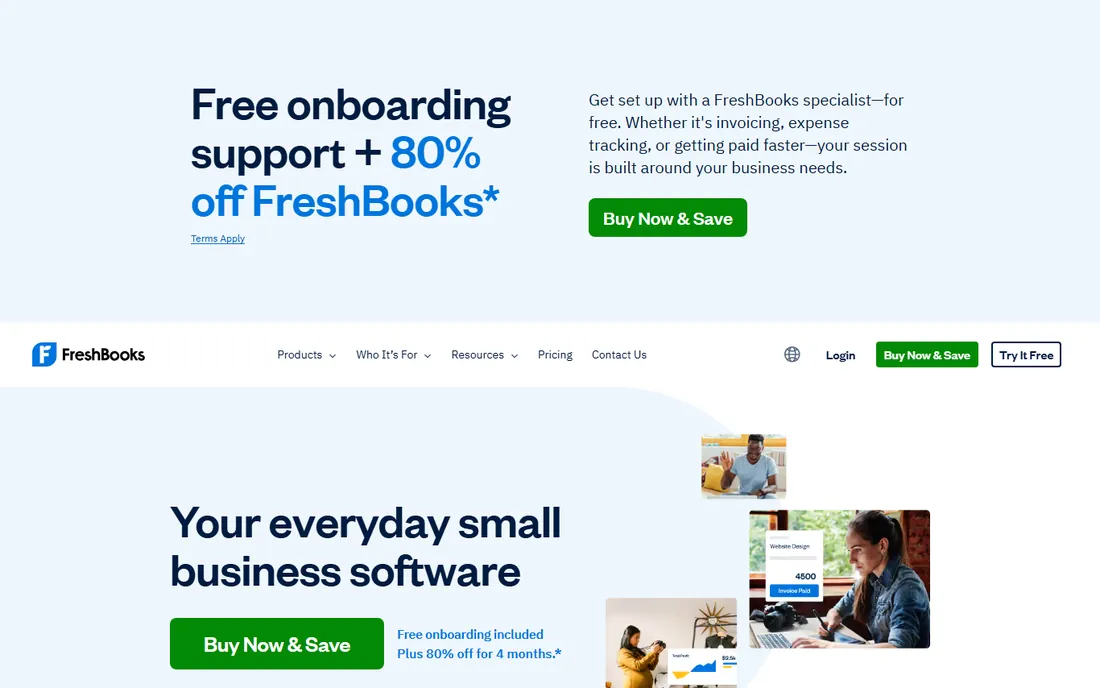
FreshBooks is built for people who bill for their time. Invoicing is its superpower: professional templates, automatic payment reminders, online payments, and time tracking that flows straight into invoices. Service businesses, freelancers, and agencies run their whole billing workflow here.
It has grown into fuller accounting with expenses, reports, and double-entry foundations, but companies with inventory or complex accounting will outgrow it. Pricing starts low with promotional first-year rates, though the current list price is not on the homepage. If invoices are your lifeblood, start here.
What we like- Best-in-class invoicing and payment reminders
- Time tracking and project tools
- Friendly for non-accountants
Watch out for- Full accounting features lag QuickBooks
- Pricing details require the pricing page
Starting priceFree
Free planYes
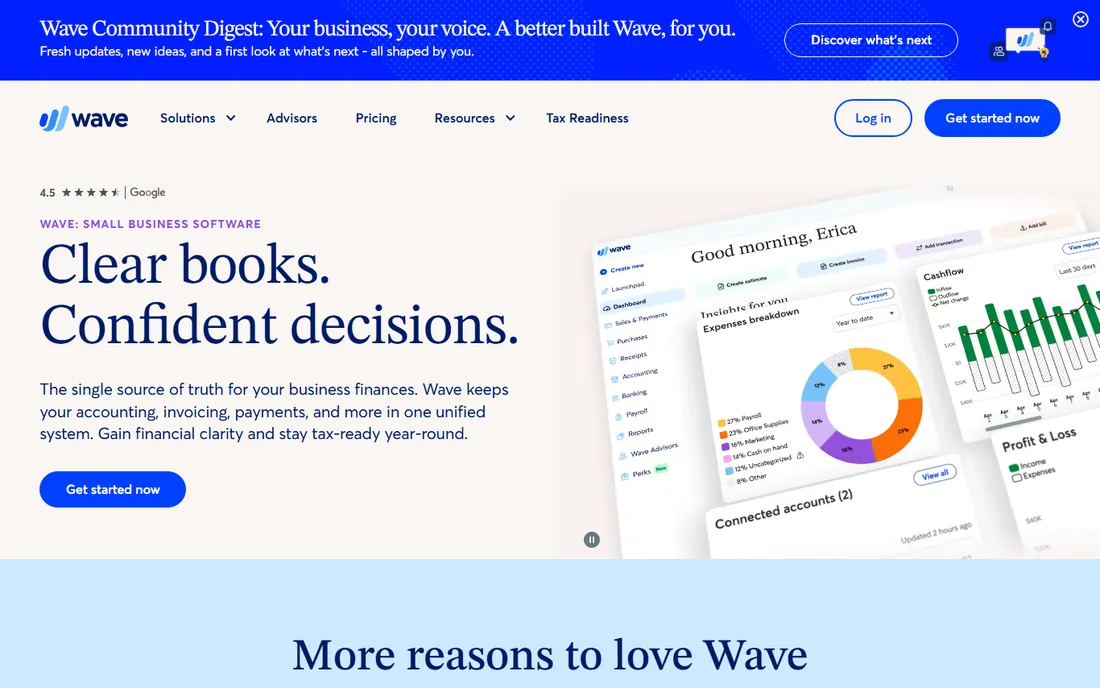
Wave gives small businesses a real free start: accounting, invoicing, and receipts at no cost, with a clean interface designed for owners rather than accountants. Over 300,000 small businesses use it, and its in-house team offers bookkeeping and payroll help when you need a human.
The catch is scale. Wave fits freelancers, solopreneurs, and very small businesses; companies with inventory, complex payroll, or multiple entities will need to graduate. But for money management at the smallest scale, free is a hard price to beat.
What we like- Free accounting and invoicing to start
- Genuinely easy for non-bookkeepers
- In-house bookkeeping help available
Watch out for- Limited for businesses with employees or inventory
- Advanced features cost extra
#6
Sage Intacct
Best for: Mid-market multi-entity accounting
Visit sage.com
Starting priceSee website
Free planNo
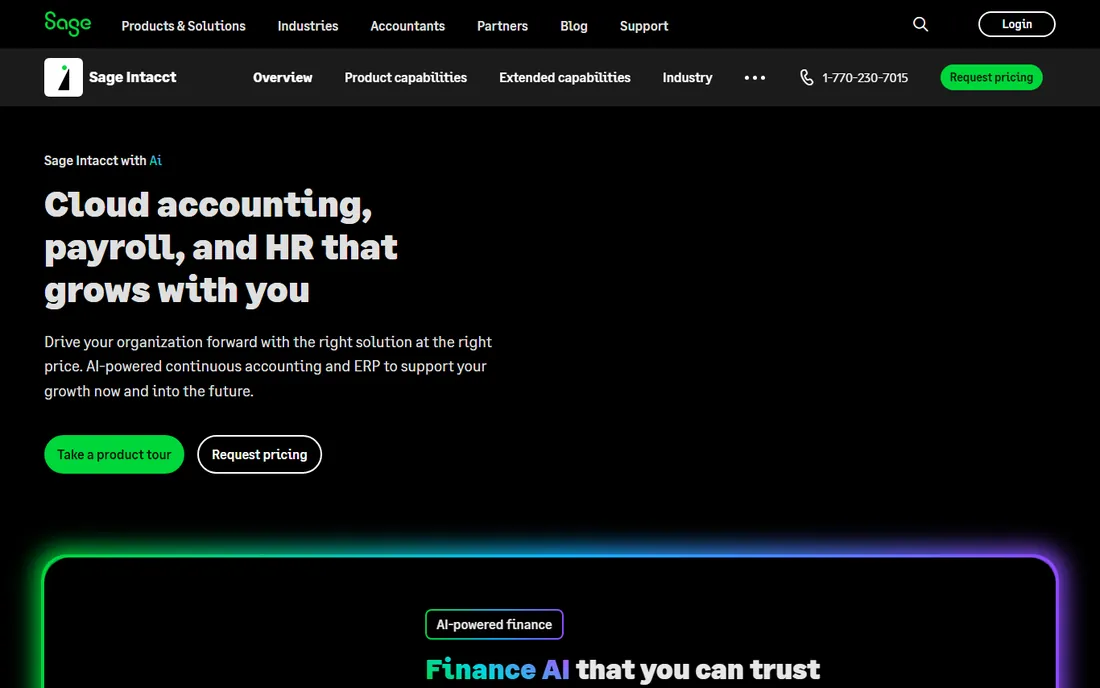
Sage Intacct is the first tool on this list built for finance teams rather than owners. It targets growing organizations, typically 20-plus employees, with dimensional accounting, continuous multi-entity consolidation, and controls that keep auditors happy. Built-in AI agents help with the close, AP automation, anomaly detection, and variance analysis.
Pricing is tailored and quoted, and implementations run three to six months, so this is a considered purchase, not a signup. Companies graduating from QuickBooks or Xero because of entity complexity, compliance needs, or reporting depth usually land here or at NetSuite.
What we like- Dimensional chart of accounts and multi-entity consolidation
- AI finance agents for close and AP
- Strong audit controls
Watch out for- Custom pricing only
- Implementation typically takes months
Starting priceSee website
Free planFree trial (3 days)
NetSuite is the ERP end of this list: accounting plus inventory, order management, CRM, and ecommerce in one system. It suits product-centric and global companies that have outgrown standalone accounting and want one source of truth. Oracle's AI features run across the suite for forecasting, automation, and conversational search.
A free 3-day test drive is available, but pricing is custom and implementations are substantial. For mid-market companies where finance, operations, and sales need to share one system, NetSuite is the category leader.
What we like- Full ERP: financials, CRM, ecommerce, inventory in one suite
- Strong for product and global companies
- AI built across the suite
Watch out for- Custom pricing, enterprise-grade cost
- Implementation is a real project
Starting priceSee website
Free planYes (Community edition)
Odoo is the open-source path to ERP. The Community edition is fully free, covering accounting, CRM, inventory, point of sale, and project management with source code you own and data in standard PostgreSQL. The Enterprise edition adds apps and services at a single per-user price with no usage-based fees.
For technically capable small and mid-size companies, Odoo delivers ERP breadth at a fraction of NetSuite's cost. The accounting module is less deep than dedicated mid-market tools, but as an integrated business suite for the price, nothing else here competes.
What we like- Community edition is 100% free and open source
- Huge app ecosystem
- Single per-user price for Enterprise
Watch out for- Accounting module is simpler than Sage Intacct
- Self-hosting Community takes technical effort
How we chose
We reviewed vendor product and pricing pages, documentation, and public reviews on G2, Capterra, and Reddit, plus industry comparisons from business software publications. We selected tools that serve small to mid-size US businesses across the finance spectrum, from bookkeeping to mid-market ERP, and every tool had to be currently available with a working website. We did not claim hands-on testing.
Buying advice for finance software
Match the tool to your complexity, not your ambition. A ten-person services firm does not need multi-entity consolidation; it needs clean invoicing and reconciled books, which QuickBooks, Xero, or Zoho Books deliver. Buying NetSuite too early means paying for implementation and features you will not use for years.
Watch the per-user math. Xero's unlimited users and Odoo's single per-user price favor team access; QuickBooks and NetSuite get expensive as seats and modules add up. Model three years of cost, not just year one.
And talk to your accountant before you buy. The best software for money management is the one your bookkeeper can actually use well. QuickBooks and Xero have the deepest accountant networks in the US, which is a practical advantage no feature list captures. A thirty-minute conversation with your CPA about which tools they support can save you months of friction after purchase.
When to graduate from small-business accounting to mid-market finance
The jump from QuickBooks or Xero to Sage Intacct or NetSuite usually comes from one of four triggers: multiple legal entities that need consolidated reporting, audit or compliance requirements your current tool cannot satisfy, inventory and operations complexity that needs ERP, or a finance team that has outgrown manual close processes. If none of those apply, you are not ready, and the mid-market tools will slow you down more than they help. When two or more apply, start evaluating; implementations take months, so begin before the pain becomes urgent.
Frequently asked questions
What is finance software?
Finance software manages a company's money: accounting, invoicing, expenses, payroll, reporting, and often inventory and financial planning. For small businesses it means bookkeeping tools like QuickBooks; for larger companies it means ERP systems like NetSuite that run finance plus operations.
Which finance software is best for a small business?
QuickBooks Online is the most popular all-around choice for US small businesses. Xero is the best alternative for growing teams thanks to unlimited users. Zoho Books and Wave are the best budget options, with free plans that cover the basics.
Is there really free finance software?
Yes. Wave offers free accounting and invoicing, Zoho Books has a free plan for solopreneurs, and Odoo's Community edition is free open-source ERP. Free plans cover core bookkeeping; expect to pay for payroll, advanced inventory, or multi-user features.
When should a company move from QuickBooks to NetSuite or Sage Intacct?
Common triggers are multiple entities needing consolidation, audit requirements, complex inventory or manufacturing, and a finance team outgrowing manual processes. Most companies make the move between $5M and $50M in revenue, though complexity matters more than size.
Do I need an accountant if I use finance software?
Software automates bookkeeping, but it does not replace professional judgment on taxes, compliance, or financial strategy. Most small businesses still benefit from an accountant or bookkeeper, and tools like QuickBooks and Xero make it easy to grant them access.
Sources we checked (8)
- https://quickbooks.intuit.com/
- https://www.xero.com/
- https://www.zoho.com/books/
- https://www.freshbooks.com/
- https://www.waveapps.com/
- https://www.sage.com/en-us/sage-business-cloud/intacct-m1/
- https://netsuite.com/
- https://www.odoo.com/
Is your product missing or out of date?
We review this list regularly. Vendors can request a listing, send updated pricing or ask about featured placement.

Shihab Mia · Founder, Rankite
Shihab has spent more than a decade helping SaaS and e-commerce brands grow through search. He writes Rankite's software buying guides from pricing pages, documentation and public user reviews. More about Shihab.