How we make this list: we compare pricing pages, product documentation and public user reviews. Rankite is independent; if a vendor ever pays for a featured spot, that listing is clearly labeled Partner.
Key takeaways
- QuickBooks Online at $38 per month is the US small business standard and the default your accountant knows.
- Xero suits growing teams with unlimited users on every plan; verify current pricing after its October 2026 increase.
- Wave is genuinely free for core bookkeeping; Zoho Books is free under $50K revenue, then $20 per month.
- FreshBooks at $23 per month fits freelancers and service businesses that live in invoices.
- Sage Intacct and Oracle NetSuite serve mid-market and enterprise GL needs with quote-based pricing.
Quick comparison
| Tool | Best for | Starting price | Free plan |
|---|
 QuickBooks Online QuickBooks Online | US small businesses and their accountants | $38 per month | Yes |
 Xero Xero | growing businesses with multiple users | See website | No |
 FreshBooks FreshBooks | freelancers billing by time and project | $23 per month | Free trial |
 Wave Wave | brand-new businesses with zero budget | Free | Yes |
 Zoho Books Zoho Books | maximum accounting per dollar | Free | Yes |
 AccountEdge AccountEdge | desktop loyalists replacing QuickBooks Desktop | $20 per month | Free trial |
 Sage Intacct Sage Intacct | mid-market companies outgrowing SMB accounting | See website | No |
 Oracle NetSuite Oracle NetSuite | complex operations needing full ERP | See website | No |
Is your product missing or out of date?
We review this list regularly. Vendors can request a listing, send updated pricing or ask about featured placement.
The best general ledger software
Starting price$38 per month
Free planYes
QuickBooks Online is the market standard for US small business accounting, and that status is its biggest feature. Your accountant knows it, your bookkeeper knows it, and most integrations support it first. The Simple Start plan at $38 per month covers invoicing, expense tracking, and basic reports for one user, with Essentials at $75 and Plus at $115 adding bill pay, multi-currency, inventory, and more users.
The general ledger itself is full double-entry with strong reporting: profit and loss, balance sheet, cash flow, and customizable management reports. Bank feeds automate transaction import, and the AI-assisted categorization has improved meaningfully.
The cost curve is the complaint. By the time a growing business needs Plus or Advanced at $275 per month, alternatives cost half as much. QuickBooks earns its premium through ubiquity and accountant compatibility, not through being the best value. If your CPA works in QuickBooks, that compatibility is usually worth the price.
What we like- The standard most US accountants work in daily
- Deep reporting and inventory on higher tiers
- Huge app and integration ecosystem
Watch out for- Price climbs steeply across tiers
- Per-user fees multiply with team size
#2
Xero
Best for: growing businesses with multiple users
Visit xero.com
Starting priceSee website
Free planNo
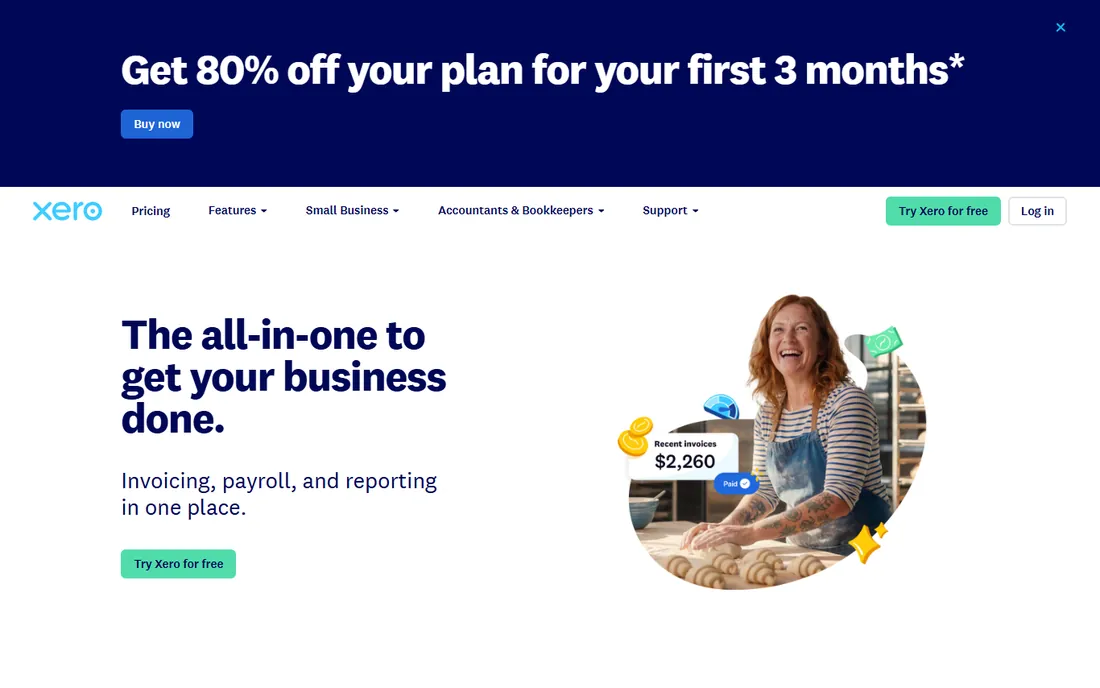
Xero is the strongest QuickBooks alternative for growing businesses, and its unlimited-user policy is the headline. Every plan includes unlimited users, so a ten-person team pays the same subscription as a solo founder, which saves hundreds per month compared to QuickBooks' per-seat pricing. Bank reconciliation is genuinely best in class, with smart matching rules that cut monthly close time.
The app ecosystem exceeds 1,000 integrations, covering payroll, inventory, CRM, and industry tools. Multi-currency support comes standard on higher tiers, and the interface is cleaner than QuickBooks for non-accountants.
The pricing caveat is real: Xero announced a price increase effective October 2026, so the widely quoted $25 Early plan figure may no longer hold. Check the current pricing page before budgeting. For teams that need broad access without per-seat penalties, Xero remains the value leader among paid options.
What we like- Unlimited users on every plan
- Excellent bank reconciliation
- 1,000-plus app integrations
Watch out for- No free plan
- Announced a price increase effective October 2026, verify current rates
Starting price$23 per month
Free planFree trial
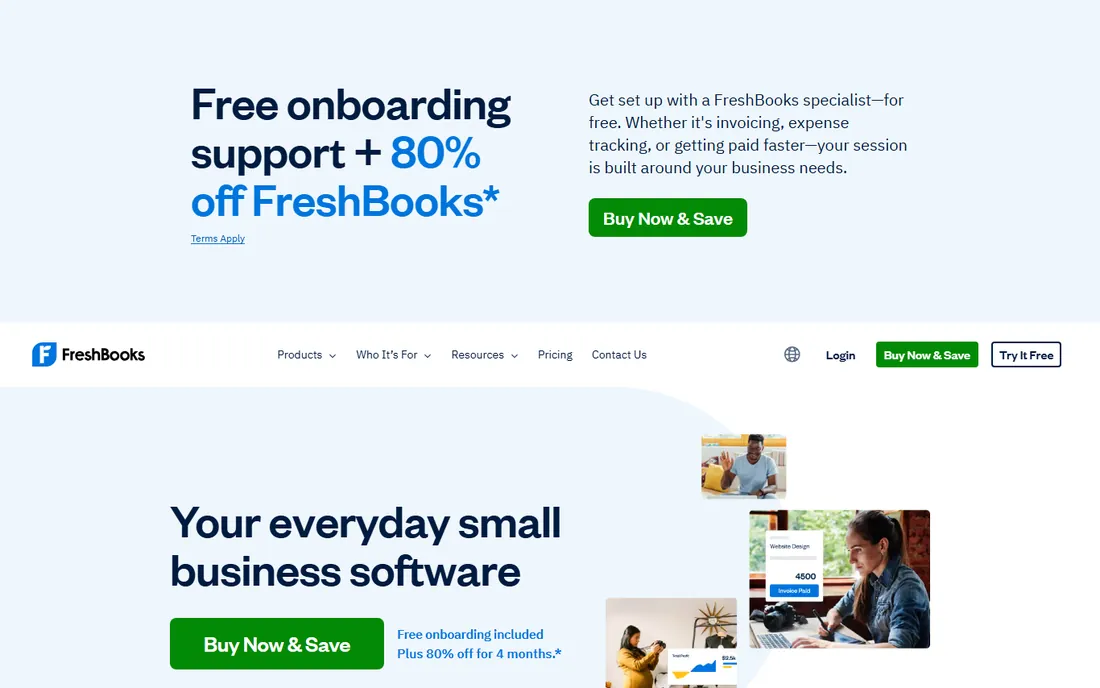
FreshBooks is built for service businesses that live in invoices. Time tracking flows into invoices, invoices flow into client portals, and clients pay online with less friction than any competitor manages. The Lite plan at $23 per month covers up to five clients, with Plus at $33 and Premium at $60 adding capacity and features.
For freelancers, consultants, and agencies, the general ledger mostly needs to record what was billed and what was spent, and FreshBooks handles that with minimal accounting knowledge. Project profitability tracking shows which clients actually make money.
The limitation is accounting depth. Inventory is weak, and true double-entry accounting only appears on the Premium tier. Businesses with complex books should look at QuickBooks or Xero. But for service firms whose finances are invoices plus expenses, FreshBooks is the most pleasant tool in the category.
What we like- Beautiful invoicing clients actually pay faster
- Time tracking and project billing built in
- Simple enough for non-accountants
Watch out for- Weak inventory management
- Double-entry accounting only on the top tier
Starting priceFree
Free planYes
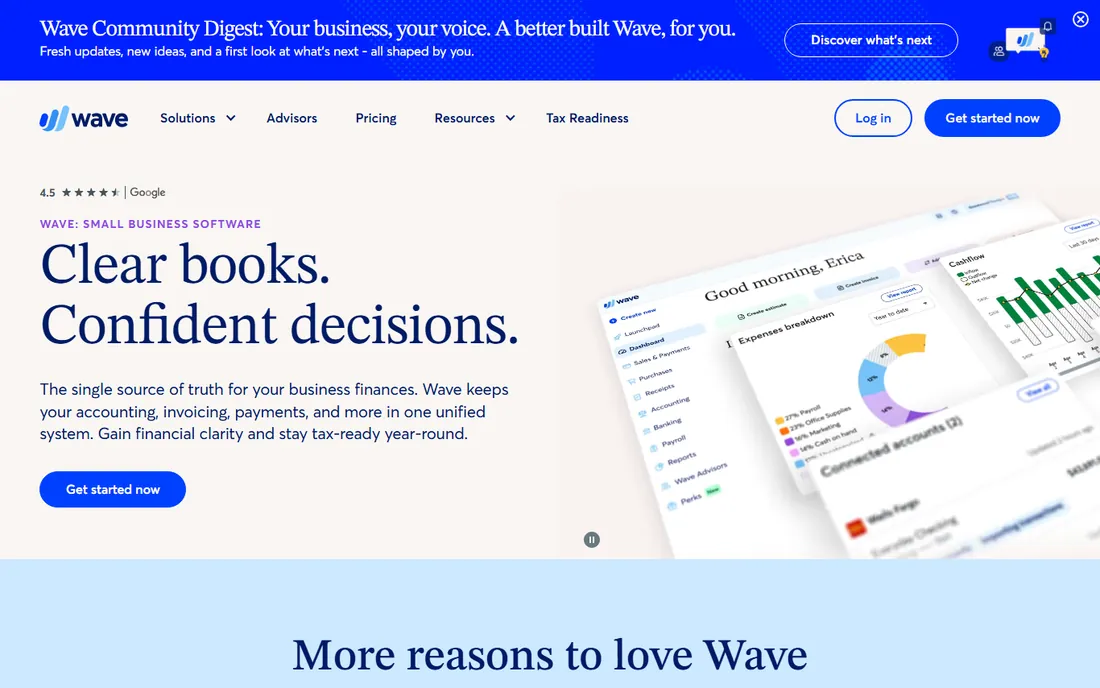
Wave is the only real accounting platform that is free for core use: invoicing, expense tracking, receipts, and double-entry bookkeeping cost nothing. For solopreneurs and brand-new businesses, that removes the last excuse for running finances in a spreadsheet. The Pro plan at $16 per month adds extras, and payroll and payment processing are paid add-ons.
The general ledger is proper double-entry, not a toy, and the reports cover the basics a small business needs. Bank connections import transactions, and the mobile app handles invoicing on the go.
The tradeoffs are support speed and depth: no inventory management, limited advanced reporting, and help that can be slow when you need it. Wave is the starter home of accounting software, excellent until your business outgrows it, at which point Xero or QuickBooks await.
What we like- Core accounting genuinely free
- Unlimited invoices, estimates, and bills
- Simple enough for first-time founders
Watch out for- No inventory
- Support is slow
- Paid add-ons for payroll and payments
Starting priceFree
Free planYes
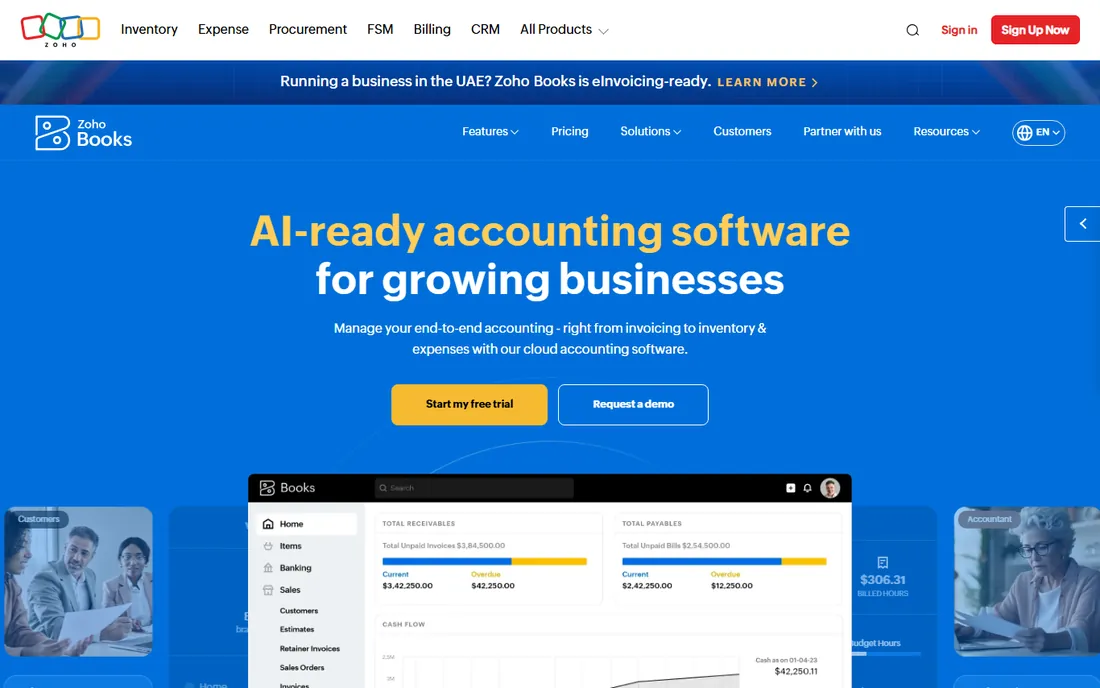
Zoho Books gives away more accounting than anyone: free for businesses with under $50,000 in annual revenue, including 1,000 invoices per year. Paid plans start at $20 per month for the Standard tier with inventory, sales orders, and five users. Few platforms match that price-to-feature ratio.
The general ledger includes workflow automation, multi-currency, project tracking on higher tiers, and integrations across the Zoho suite, CRM, inventory, expenses, and payroll. For businesses already in the Zoho ecosystem, the connected suite is a genuine advantage.
The interface carries the cost of the breadth: more menus, more settings, more learning than FreshBooks or Wave. But for budget-conscious businesses that want real accounting depth without real accounting prices, Zoho Books is the value champion.
What we like- Free for businesses under $50K revenue
- Paid from $20 per month
- Automation and multi-currency that cost more elsewhere
Watch out for- Interface can feel cluttered
- Best value inside the Zoho ecosystem
Starting price$20 per month
Free planFree trial
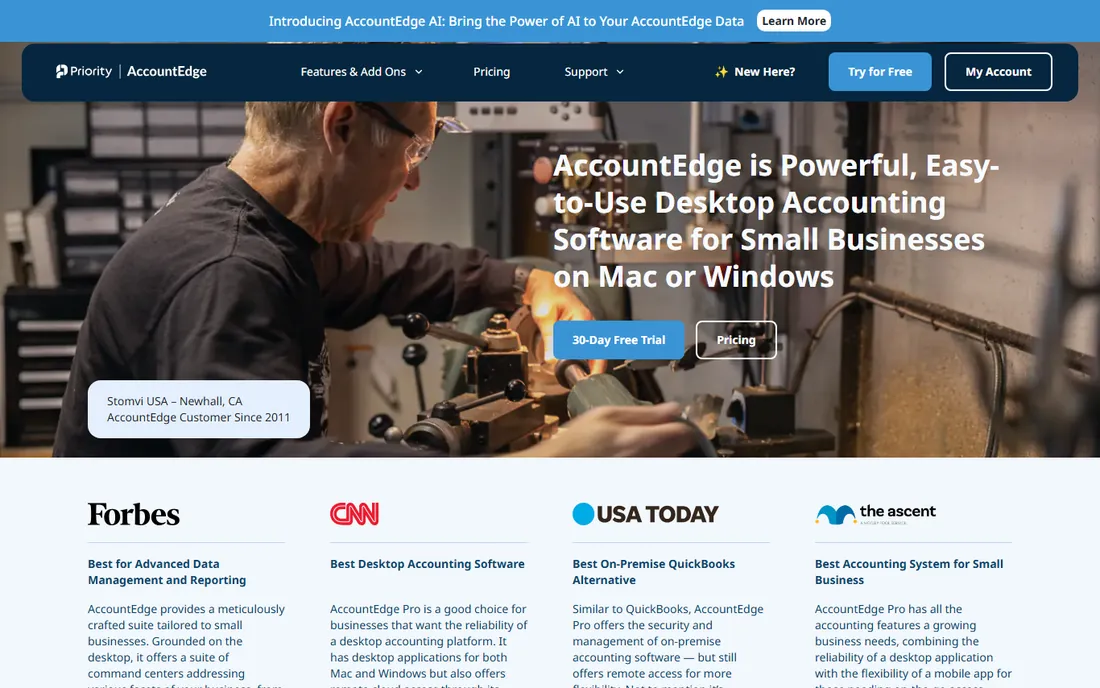
AccountEdge is the refuge for businesses that do not want their books in someone else's cloud. Desktop software with local data, it offers full double-entry accounting, payroll, inventory, and time billing, with transaction-level document attachments keeping receipts linked to posted entries. At around $20 per month, it undercuts the cloud leaders.
The natural audience is QuickBooks Desktop refugees: businesses comfortable with desktop workflows that want a maintained product without forced cloud migration. Month-end exports are consistent and the feature set covers everything a small business ledger needs.
The cloud story is the weakness: remote access and web features are add-ons rather than native, and the third-party ecosystem is small. For businesses that value data control and desktop speed over anywhere-access, AccountEdge remains a solid, honest choice.
What we like- True desktop software with local data control
- Transaction-level document attachments
- Familiar to QuickBooks Desktop migrants
Watch out for- Cloud features are add-ons, not native
- Smaller ecosystem than cloud leaders
#7
Sage Intacct
Best for: mid-market companies outgrowing SMB accounting
Visit sage.com
Starting priceSee website
Free planNo
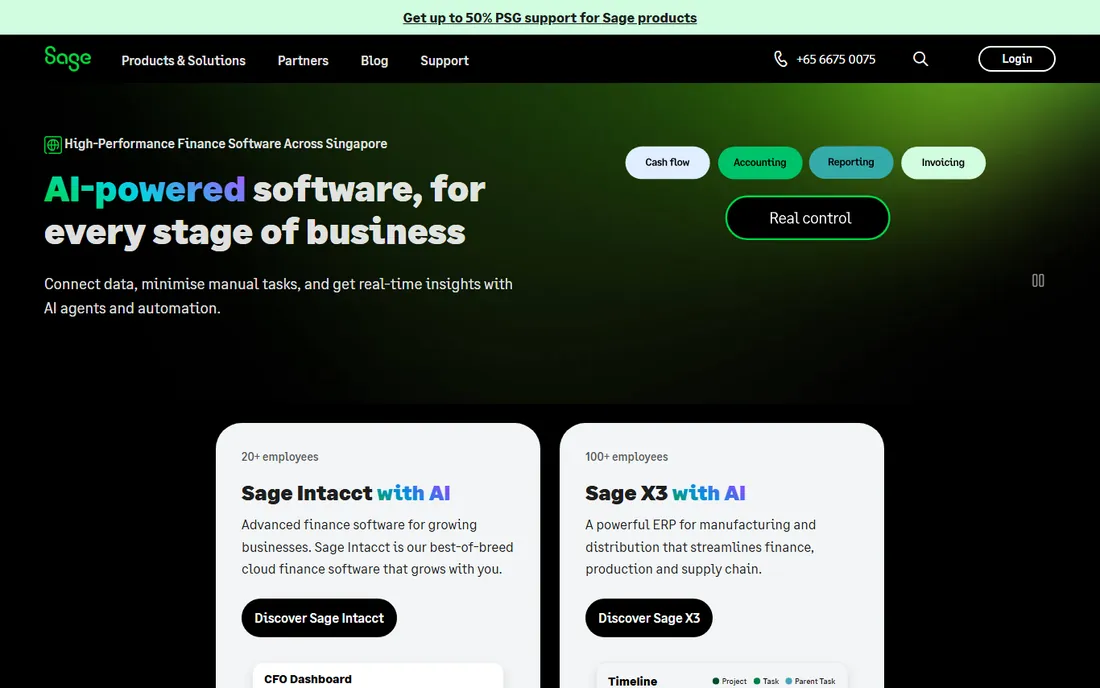
Sage Intacct is the step up when QuickBooks or Xero start breaking. Its dimensional general ledger tags every transaction with dimensions like department, location, and project, producing real-time reports and multi-entity consolidation without spreadsheet gymnastics. Mid-market finance teams get compliance-grade controls, audit trails, and approval workflows.
The platform is built for complexity: multiple entities, multiple currencies, intercompany transactions, and revenue recognition rules that SMB tools handle poorly or not at all. Finance teams that have outgrown their starter system usually land on Intacct or NetSuite.
Pricing is quote-based and enterprise-grade, with implementation typically requiring professional services. This is not a tool you self-serve on a Friday afternoon. Buy it when your current system's workarounds cost more than the upgrade.
What we like- Dimensional GL built for multi-entity and compliance
- Real-time consolidation
- Strong financial controls and audit trails
Watch out for- Quote-based enterprise pricing
- Implementation needs professional help
Starting priceSee website
Free planNo
Oracle NetSuite is the full ERP whose general ledger module serves complex, fast-growing companies. Multi-subsidiary consolidation, global currency support, and reliable data uploads from multiple source systems make it the choice for businesses whose operations span entities and countries. The GL does not stand alone: inventory, CRM, ecommerce, and HR share one database.
That integration is the point. When the business needs one system where a sale flows to fulfillment to the ledger without re-entry, NetSuite delivers. Mid-market companies that have stitched together five tools usually consolidate here.
The cost is enterprise in every sense: quote-based licensing, implementation measured in months, and a learning curve that demands training. NetSuite is a long-term investment for companies with genuine complexity, not an upgrade for the curious.
What we like- Full ERP with GL as one module among many
- Multi-subsidiary consolidation
- Scales to global enterprise
Watch out for- Steep learning curve
- Enterprise pricing with long implementations
How we chose
We compared general ledger and accounting platforms on ledger depth, reporting quality, bank reconciliation, invoicing, multi-user pricing fairness, and fit for US small to mid-size businesses. We checked each vendor's pricing page and current 2026 pricing roundups, read accountant and owner reviews on G2, Capterra, and Reddit, and weighed total cost of ownership including per-user fees. We did not run hands-on bookkeeping trials; prices were verified against vendor pages or roundups current as of October 2026.
Your accountant's preference matters more than the feature list
Here is the uncomfortable truth about accounting software: the best platform is often the one your accountant already uses. A CPA who works in QuickBooks daily will close your books faster and cheaper than one learning your preferred alternative, and that efficiency compounds every month and every tax season.
Before buying, ask your accountant or bookkeeper what they recommend and why. If they have a strong preference, weight it heavily; the switching cost is not just your learning curve but theirs. If you do not have an accountant yet, pick the platform most accountants in your industry use, which in the US usually means QuickBooks. The feature differences between the top platforms are smaller than the cost of fighting your accountant's workflow.
How to choose GL software that survives your next three years of growth
Map your complexity honestly. One entity, one currency, under fifty employees: QuickBooks, Xero, or Zoho Books will serve you for years. Multiple entities, multiple currencies, or complex revenue recognition: start evaluating Sage Intacct or NetSuite now, because migrating mid-growth is painful.
Price the third year, not the first. Promotional discounts expire, per-user fees multiply with hiring, and the tier you actually need is usually one above the entry plan. A $38 starter plan that becomes $275 at the tier with the features you need is not a $38 decision. Finally, test the migration path: export your data from the trial before you commit, and confirm your accountant can work in the system. The cheapest accounting software is the one you do not have to replace in eighteen months.
Frequently asked questions
What is general ledger software?
General ledger software is the core of accounting: a double-entry system recording every financial transaction, organized by accounts, that produces the profit and loss statement, balance sheet, and cash flow statement. In practice, the term covers full accounting platforms like QuickBooks and Xero, since the GL is one module among invoicing, banking, and reporting.
What is the best free general ledger software?
Wave offers the most complete free accounting with proper double-entry bookkeeping, invoicing, and expense tracking. Zoho Books is free for businesses under $50,000 in annual revenue with more features than Wave. Both are genuine free tiers, not trials, suitable for very small businesses.
How much does accounting software cost?
Small business plans run $20 to $115 per month: Zoho Books from $20, FreshBooks from $23, QuickBooks Online from $38, Xero's current pricing to be verified after its October 2026 increase. Mid-market platforms like Sage Intacct and NetSuite are quote-based, typically thousands per month with implementation fees.
Should I choose QuickBooks or Xero?
Choose QuickBooks if your US accountant works in it and you want the standard ecosystem. Choose Xero if you have multiple users, since unlimited users on every plan saves significant money over QuickBooks' per-seat pricing, and you prefer cleaner bank reconciliation. Both handle small business accounting well; the decision usually comes down to your accountant and team size.
When do I need Sage Intacct or NetSuite instead?
When your current system needs workarounds: multiple entities consolidated in spreadsheets, multi-currency handled manually, or revenue recognition tracked outside the ledger. If month-end close takes weeks or your chart of accounts has become unmanageable, the mid-market platforms earn their cost. Most businesses under $10M in revenue do not need them yet.
Can I switch accounting software mid-year?
Yes, but time it carefully. The cleanest switch is at fiscal year-end with opening balances carried over. Mid-year switches require migrating all year-to-date transactions for accurate reporting, which most platforms and accountants can handle but which adds cost and risk. Never switch during tax season.
Sources we checked (5)
- https://ramp.com/blog/general-ledger-software
- https://www.spotsaas.com/blog/best-quickbooks-alternatives-2026
- https://adtools.org/buyers-guide/quickbooks-online-vs-xero-vs-freshbooks-vs-zoho-books-accounting-buyer-s-guide
- https://www.business-software.com/blog/quickbooks-alternatives-on-premise-and-cloud-accounting-solutions/amp/
- https://www.techrepublic.com/article/quickbooks-online-reviews/
Is your product missing or out of date?
We review this list regularly. Vendors can request a listing, send updated pricing or ask about featured placement.

Shihab Mia · Founder, Rankite
Shihab has spent more than a decade helping SaaS and e-commerce brands grow through search. He writes Rankite's software buying guides from pricing pages, documentation and public user reviews. More about Shihab.