How we make this list: we compare pricing pages, product documentation and public user reviews. Rankite is independent; if a vendor ever pays for a featured spot, that listing is clearly labeled Partner.
Key takeaways
- QuickBooks Online, Xero, and Zoho Books are accounting-first tools with solid built-in inventory, starting at $15 to $38 per month.
- Cin7, Fishbowl, and Unleashed are inventory-first platforms that sync with your accounting software, starting at $229 to $349 per month.
- NetSuite and Sage Intacct suit larger operations that need inventory inside a full ERP.
- If you manufacture or assemble products, prioritize tools with bills of materials and work orders.
- Match the tool to your complexity: simple stock tracking needs far less than multi-warehouse, multi-channel operations.
Quick comparison
| Tool | Best for | Starting price | Free plan |
|---|
 QuickBooks Online QuickBooks Online | Small businesses needing accounting plus inventory | $38 per month (Simple Start) | Free trial (30 days) |
 Xero Xero | Growing businesses with clean inventory tracking | $25 per month (Early) | Free trial |
 Zoho Books Zoho Books | Budget-friendly accounting with inventory | $15 per month (Standard, billed annually) | Yes |
 Cin7 Cin7 | Multichannel sellers with complex stock | $349 per month (billed annually) | Free trial |
 Fishbowl Fishbowl | Manufacturers using QuickBooks or Xero | $229 per month (Essentials, 2 users, billed annually) | No |
 Unleashed Unleashed | Product businesses wanting clarity and control | See website | Free trial (14 days) |
 NetSuite NetSuite | Mid-size companies needing ERP depth | See website | No |
 Sage Intacct Sage Intacct | Finance-led companies with inventory needs | See website | No |
Is your product missing or out of date?
We review this list regularly. Vendors can request a listing, send updated pricing or ask about featured placement.
The best accounting software for inventory management
Starting price$38 per month (Simple Start)
Free planFree trial (30 days)
QuickBooks Online is where most American small businesses keep their books, and its inventory features cover the common cases. Plus and Advanced plans track quantities on hand, set reorder points, manage purchase orders, and calculate cost of goods sold automatically. Simple Start at $38 per month handles the accounting, but inventory tracking starts at Plus.
The ecosystem is the real advantage. Thousands of apps extend QuickBooks into barcode scanning, advanced warehousing, and manufacturing, so you can start simple and bolt on capability as you grow. Your accountant already knows it, which shortens every conversation about the numbers.
The honest catch is depth. QuickBooks inventory suits businesses with straightforward stock: buy, store, sell. If you manufacture, run multiple warehouses, or sell across many channels, you will outgrow it and need a specialist like Fishbowl or Cin7 that syncs back to QuickBooks.
What we like- The default small-business accounting standard
- Inventory tracking built into Plus and Advanced
- Huge app ecosystem
Watch out for- Real inventory features need the Plus plan at $65 per month
- Inventory depth is basic compared to specialists
#2
Xero
Best for: Growing businesses with clean inventory tracking
Visit xero.com
Starting price$25 per month (Early)
Free planFree trial
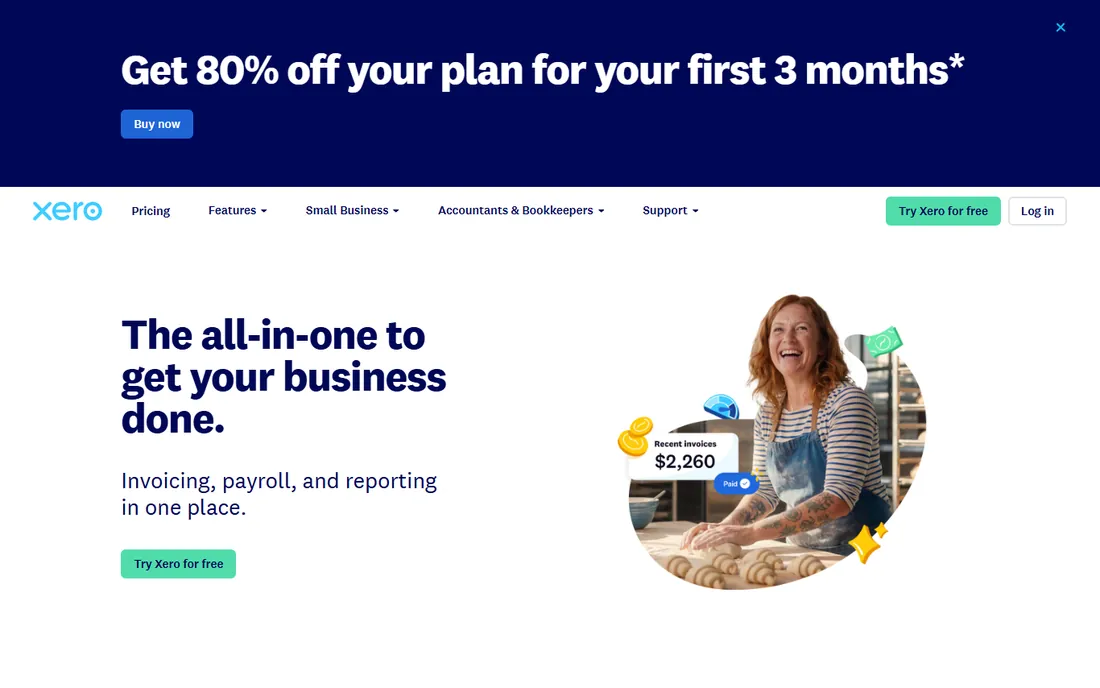
Xero brings inventory tracking to businesses that want accounting software without the clutter. Every plan includes inventory items with purchase and sale tracking, and the interface is widely considered the easiest to learn in this category. Early starts at $25 per month, with Growing and Established tiers adding multi-currency and deeper features.
What stands out is how painless the basics feel. Creating inventory items, tracking quantities, and seeing stock values on the balance sheet takes minutes to learn. The integration marketplace connects to inventory specialists like Cin7, Unleashed, and DEAR when you need more, with two-way sync keeping the books right.
The tradeoff is ceiling. Xero's built-in inventory is simpler than QuickBooks Plus, and growing product businesses usually pair it with a dedicated inventory app. Think of Xero as the accounting foundation with inventory included, not the inventory system itself.
What we like- Clean, modern interface
- Inventory tracking in every plan
- Strong integration marketplace
Watch out for- Inventory features are simpler than QuickBooks Plus
- Payroll costs extra in the US
#3
Zoho Books
Best for: Budget-friendly accounting with inventory
Visit zoho.com
Starting price$15 per month (Standard, billed annually)
Free planYes
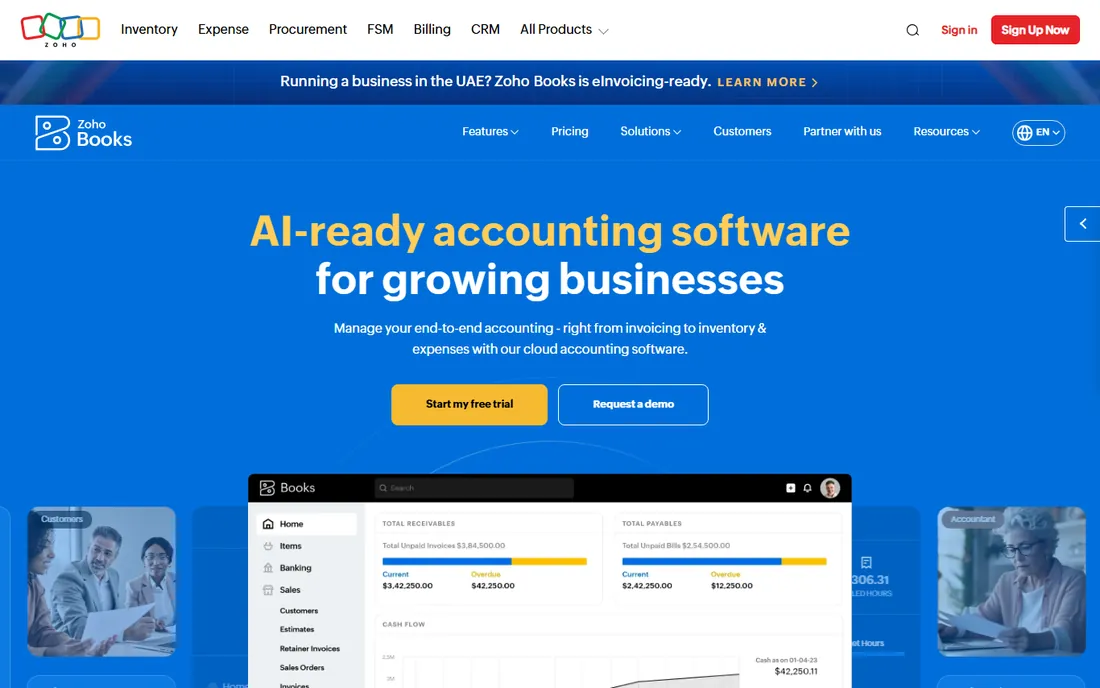
Zoho Books gives you the most accounting per dollar on this list. Standard at $15 per month on annual billing includes inventory management with item tracking, purchase orders, and warehouse management basics, and a free plan covers businesses under $50,000 in revenue. For Zoho suite users, the integration is a bonus.
The inventory features punch above the price. You can track stock across multiple warehouses, set reorder levels, manage drop shipments, and generate inventory valuation reports. Vendor credits, price lists, and batch tracking arrive in the Professional tier at $40 per month.
The honest catch is ecosystem size. Fewer third-party inventory apps and fewer accountants specialize in Zoho Books than in QuickBooks or Xero. But if your needs are moderate and your budget is tight, the value is unmatched.
What we like- Lowest price with real inventory features
- Free plan for small businesses
- Integrates with the Zoho suite
Watch out for- Smaller app ecosystem than QuickBooks or Xero
- Advanced inventory needs the Professional plan
#4
Cin7
Best for: Multichannel sellers with complex stock
Visit cin7.com
Starting price$349 per month (billed annually)
Free planFree trial
Cin7 approaches from the inventory side and syncs to your accounting. It is built for product sellers whose stock lives across Amazon, Shopify, warehouses, and 3PLs, keeping every location accurate from one dashboard. Pricing starts at $349 per month, with a free trial available.
The depth is the point. Manufacturing with bills of materials, B2B portals, point of sale, built-in EDI for trading with major retailers, and 3PL automation all live in the platform. Accounting integrations with QuickBooks, Xero, and others keep the financials in sync without manual posting.
The tradeoff is cost and complexity. At $349 per month and up, Cin7 is an investment, and teams report a real learning curve. For sellers whose inventory has outgrown their accounting software's built-in features, it is the most complete next step.
What we like- 700+ integrations with channels and 3PLs
- Built-in EDI
- Strong manufacturing and B2B features
Watch out for- Expensive for small operations
- Learning curve for new teams
Starting price$229 per month (Essentials, 2 users, billed annually)
Free planNo
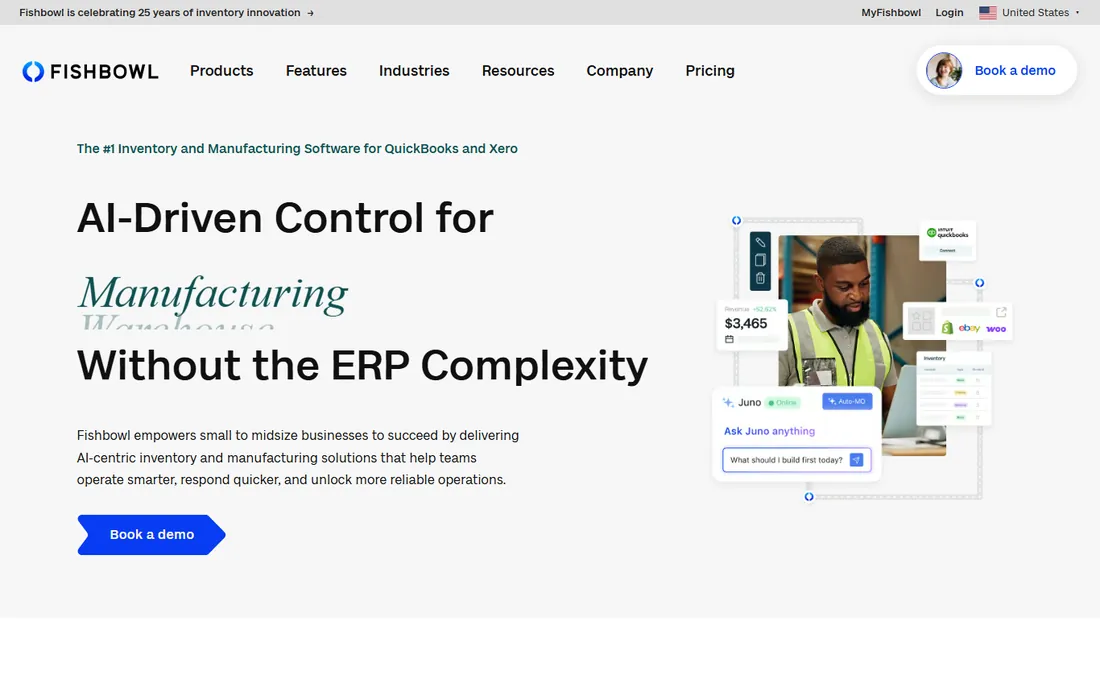
Fishbowl is the inventory and manufacturing system for businesses anchored on QuickBooks or Xero. It handles the stock, the production, and the warehouse work, then posts everything to your accounting software automatically. Essentials starts at $229 per month for two users on annual billing.
Manufacturing is where Fishbowl earns its keep. Bills of materials, work orders, part tracking through assembly, and now AI-assisted planning and replenishment give production businesses real control. The Fishbowl GO mobile app brings barcode receiving, picking, and shipping to the floor.
The honest catch is that there is no free trial, only demos, and an implementation package is required. For manufacturers and distributors who live in QuickBooks, the tight integration makes Fishbowl the natural inventory layer.
What we like- Deepest QuickBooks integration available
- Manufacturing with BOMs and work orders
- AI-assisted replenishment
Watch out for- No free trial
- Advanced warehouse features need the higher Advanced tier
Starting priceSee website
Free planFree trial (14 days)

Unleashed is inventory management software built for product businesses that want control without complexity. It covers stock across unlimited warehouses, purchase orders, manufacturing with digital bills of materials, B2B sales portals, and demand forecasting, all with an interface reviewers consistently call easy to learn. A 14-day free trial needs no credit card.
Support is a genuine differentiator. Unleashed claims the highest-rated support in the inventory software industry, and its 4.8 out of 5 rating across over 1,200 reviews backs that up. For teams without an inventory specialist on staff, responsive help matters more than a longer feature list.
The tradeoff is transparency and cost structure. Pricing is not published on the homepage, and the Business Intelligence module and some advanced features cost extra. For growing product businesses that value clarity and support, Unleashed is a strong fit.
What we like- Very easy to learn
- Excellent customer support ratings
- Strong forecasting and batch tracking
Watch out for- Pricing not published
- Advanced features cost extra
Starting priceSee website
Free planNo
NetSuite, owned by Oracle, puts accounting and inventory inside one ERP. The inventory management covers demand planning, multi-location tracking, lot and serial control, and warehouse management with directed picking, while the financial side handles everything from billing to consolidated reporting across subsidiaries. Pricing is quote-only.
The advantage is unity. When accounting, inventory, orders, and purchasing live in one system, there is nothing to sync and nothing to reconcile. Growing companies that have stitched together separate tools often move to NetSuite to end the integration tax.
The honest catch is scale. NetSuite is built for mid-size companies and up, and implementation is a real project with real consulting costs. Small businesses will find it oversized. For companies outgrowing QuickBooks plus add-ons, it is the classic next step.
What we like- Full ERP with deep inventory and warehouse management
- Multi-location and multi-subsidiary support
- Strong financial controls
Watch out for- Quote-only pricing
- Implementation is a major project
#8
Sage Intacct
Best for: Finance-led companies with inventory needs
Visit sage.com
Starting priceSee website
Free planNo
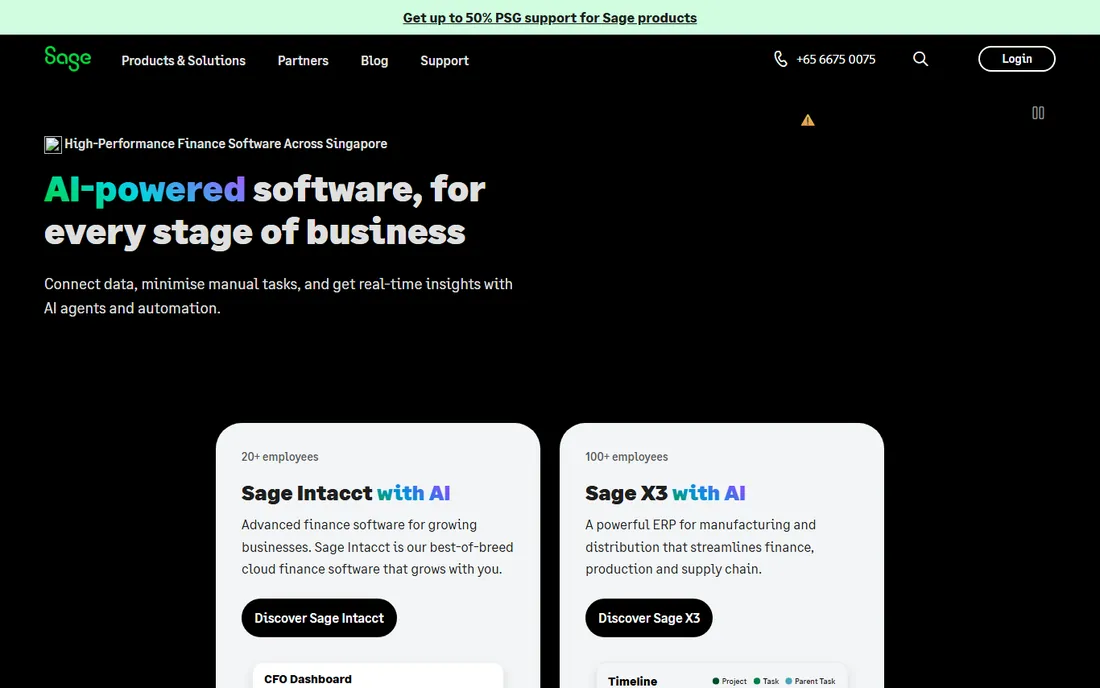
Sage Intacct is cloud financial management with real inventory capability. It suits finance-led companies that need proper accounting controls, multi-entity consolidation, and audit trails, plus inventory tracking, order management, and purchasing in the same system. Pricing is quote-only.
The financial depth is the differentiator. Dimensional chart of accounts, automated consolidations, and revenue recognition features go well beyond small-business accounting, while the inventory side handles stock, costs, and fulfillment workflows. Companies with complex financial structures get both halves in one place.
The tradeoff is orientation. Intacct is designed for finance teams first, and warehouse staff may find it less floor-friendly than inventory-first tools. For companies where the CFO drives the software decision and inventory must roll up cleanly, it fits well.
What we like- Best-in-class financial management
- Strong multi-entity support
- Good inventory and order management
Watch out for- Quote-only pricing
- Finance-first design can feel heavy for warehouse teams
How we chose
We looked for software that genuinely combines accounting and inventory management, from either direction. We checked current pricing on vendor homepages, read documentation for inventory depth like BOMs, multi-warehouse tracking, and landed costs, and weighed public reviews from G2, Capterra, and Reddit. We favored tools a small or mid-size business can actually buy and deploy.
What to check before you buy accounting software with inventory
Decide which side drives your business. If accounting complexity leads and inventory is straightforward, start with QuickBooks, Xero, or Zoho Books. If inventory complexity leads and accounting just needs to stay accurate, start with Cin7, Fishbowl, or Unleashed and sync to your ledger.
Check the manufacturing question. If you assemble, kit, or produce anything, you need bills of materials, work orders, and component costing. Many accounting tools with inventory skip manufacturing entirely, so verify before you commit.
Verify the sync, not just the integration logo. Two-way, real-time sync between inventory and accounting prevents the month-end reconciliation trap. Ask how often data posts, what happens when a sync fails, and whether inventory valuations match the general ledger exactly.
Count warehouses and channels honestly. Multi-location tracking, channel-specific stock, and 3PL connections are where simple tools break down. Map your locations and sales channels against each product's limits before you buy.
When to add a dedicated inventory system to your accounting
Most businesses start with their accounting software's built-in inventory and add a specialist later. The signal is usually pain: stock counts that never match, oversells on marketplaces, or purchasing done by gut feel. When the accounting inventory features feel like a constraint rather than a help, it is time.
The dedicated system does not replace your accounting. Cin7, Fishbowl, and Unleashed all sync with QuickBooks, Xero, or NetSuite, so finance keeps its system of record while operations gets proper tools. The integration is the product as much as the features.
Budget for the overlap period. Running both systems during migration means double entry for a few weeks and training for the team. Plan the cutover deliberately rather than flipping a switch, and keep the old stock counts until the new system proves itself.
Frequently asked questions
Can QuickBooks handle inventory management?
Yes, for straightforward needs. QuickBooks Online Plus and Advanced track quantities, reorder points, purchase orders, and cost of goods sold. Businesses with manufacturing, multiple warehouses, or complex channel selling usually add a dedicated inventory system like Fishbowl or Cin7 that syncs with QuickBooks.
What is the cheapest accounting software with inventory?
Zoho Books at $15 per month on annual billing, with a free plan for businesses under $50,000 in revenue. Xero Early at $25 per month is the next step up. Both include real inventory tracking, though with less depth than dedicated inventory platforms.
Do I need separate inventory software if I use NetSuite?
Usually not. NetSuite includes deep inventory management, demand planning, and warehouse management in the same ERP as its accounting. Companies on NetSuite rarely need a separate inventory system unless they have very specialized warehouse automation requirements.
How does inventory sync with accounting software work?
The inventory system records every stock movement, purchase, sale, and adjustment, then posts the financial impact to the accounting ledger as journal entries. Good integrations do this automatically and in both directions, so inventory valuations always match the balance sheet.
What is landed cost and why does it matter?
Landed cost is the true cost of getting a product into your warehouse: purchase price plus freight, duties, insurance, and handling. Tools with landed cost tracking allocate these expenses to each unit, giving you accurate margins. Without it, profitable-looking products can quietly lose money.
Should manufacturers use QuickBooks or Fishbowl?
Use both. Fishbowl handles manufacturing with bills of materials, work orders, and shop floor tracking, then syncs everything to QuickBooks for accounting. QuickBooks alone lacks real manufacturing depth, and Fishbowl alone is not an accounting system.
Sources we checked (8)
- https://quickbooks.intuit.com/
- https://www.xero.com/
- https://www.zoho.com/books/
- https://www.cin7.com/
- https://fishbowlinventory.com/
- https://www.unleashedsoftware.com/
- https://www.netsuite.com/
- https://sage.com/
Is your product missing or out of date?
We review this list regularly. Vendors can request a listing, send updated pricing or ask about featured placement.

Shihab Mia · Founder, Rankite
Shihab has spent more than a decade helping SaaS and e-commerce brands grow through search. He writes Rankite's software buying guides from pricing pages, documentation and public user reviews. More about Shihab.