How we make this list: we compare pricing pages, product documentation and public user reviews. Rankite is independent; if a vendor ever pays for a featured spot, that listing is clearly labeled Partner.
Key takeaways
- Workday Adaptive Planning is the best all-rounder for mid-size companies that want planning without a massive implementation.
- Vena is the pick for Excel-first finance teams that refuse to give up spreadsheets but need governance around them.
- Anaplan and OneStream serve larger, more complex organizations, with connected planning and deep consolidation respectively.
- Almost no EPM vendor publishes pricing; expect quote-based deals and budget for implementation on top of licenses.
- Datarails and Pigment are the fastest to deploy, with time-to-value measured in weeks rather than months.
Quick comparison
| Tool | Best for | Starting price | Free plan |
|---|
 Workday Adaptive Planning Workday Adaptive Planning | mid-size companies wanting planning without massive implementation | See website | No |
 Anaplan Anaplan | large enterprises needing connected planning at scale | See website | No |
 Vena Vena | finance teams that live in Excel | See website | No |
 Planful Planful | mid-market teams balancing planning, close, and consolidation | See website | No |
 OneStream OneStream | complex multi-entity consolidation and reporting | See website | No |
 Prophix Prophix | growing organizations wanting all-in-one CPM simplicity | See website | No |
 Pigment Pigment | high-growth companies needing flexible visual modeling | See website | No |
 Datarails Datarails | small finance teams that will not leave Excel | See website | No |
Is your product missing or out of date?
We review this list regularly. Vendors can request a listing, send updated pricing or ask about featured placement.
The best EPM software
#1
Workday Adaptive Planning
Best for: mid-size companies wanting planning without massive implementation
Visit workday.com
Starting priceSee website
Free planNo

Workday Adaptive Planning earns its best-overall reputation by doing the core job well: budgeting, forecasting, and what-if scenarios that finance teams can actually run themselves. You can model expense, workforce, and revenue scenarios and see the company-wide impact immediately, then adjust the working budget as actuals come in rather than being locked to a fixed annual plan. For a mid-size company outgrowing spreadsheet budgets, that flexibility is the whole value proposition.
The platform integrates with leading ERP and financial systems to feed real-time data into rolling forecasts, with data imports that run on a schedule or on demand. Dashboards and reports update from the same forecast data, so the numbers the CFO sees match the numbers the planners built. Reviewers consistently rate it well for usability, which matters because planning software only works if budget owners outside finance will use it.
The honest caveats are pricing opacity and depth. There are no public pricing tiers, so you will negotiate a quote, and reviewers note it is not the cheapest option for smaller teams. Advanced customization and some reporting flexibility trail competitors like Anaplan. But for a mid-size business that wants reliable planning without hiring an army of consultants, it is the safest pick on this list.
What we like- Strong budgeting, forecasting, and scenario modeling across industries
- Integrates with major ERPs for rolling forecasts
- User-friendly interface reviewers consistently praise
Watch out for- Quote-based pricing with no public tiers
- Advanced customization and reporting flexibility lag some rivals
#2
Anaplan
Best for: large enterprises needing connected planning at scale
Visit anaplan.com
Starting priceSee website
Free planNo
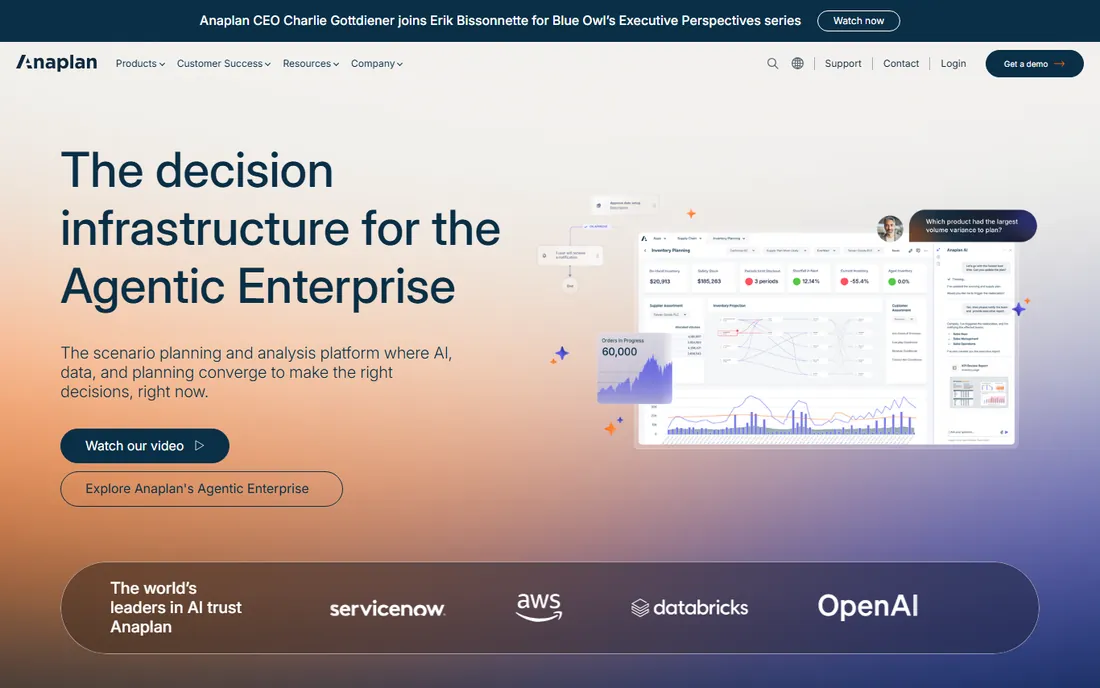
Anaplan is the heavyweight of connected planning. Its in-memory Hyperblock engine crunches large multidimensional models in real time, which means a change to a sales assumption ripples through headcount, capacity, and P&L plans instantly. For enterprises running integrated business planning across departments, that connected model is something spreadsheet-based tools cannot replicate.
The platform has moved aggressively into AI with forecasting agents and co-modeling assistants that help build and maintain the complex models Anaplan is known for. Reviewers give it the highest ratings in the category for advanced modeling and scenario planning, and it scales to the largest global deployments without breaking.
The price of that power is complexity. Implementations commonly run three to six months and need experienced model builders, either in-house or consultants. For a mid-size company with straightforward budgeting, Anaplan is more engine than you need at a higher cost than you should pay. Buy it when your planning genuinely spans multiple functions and your model builders are ready for it.
What we like- Hyperblock engine handles massive real-time models
- Connects planning across finance, sales, HR, and operations
- Strong AI forecasting features
Watch out for- Implementation typically takes 3 to 6 months
- Overkill and overpriced for simple budgeting needs
Starting priceSee website
Free planNo
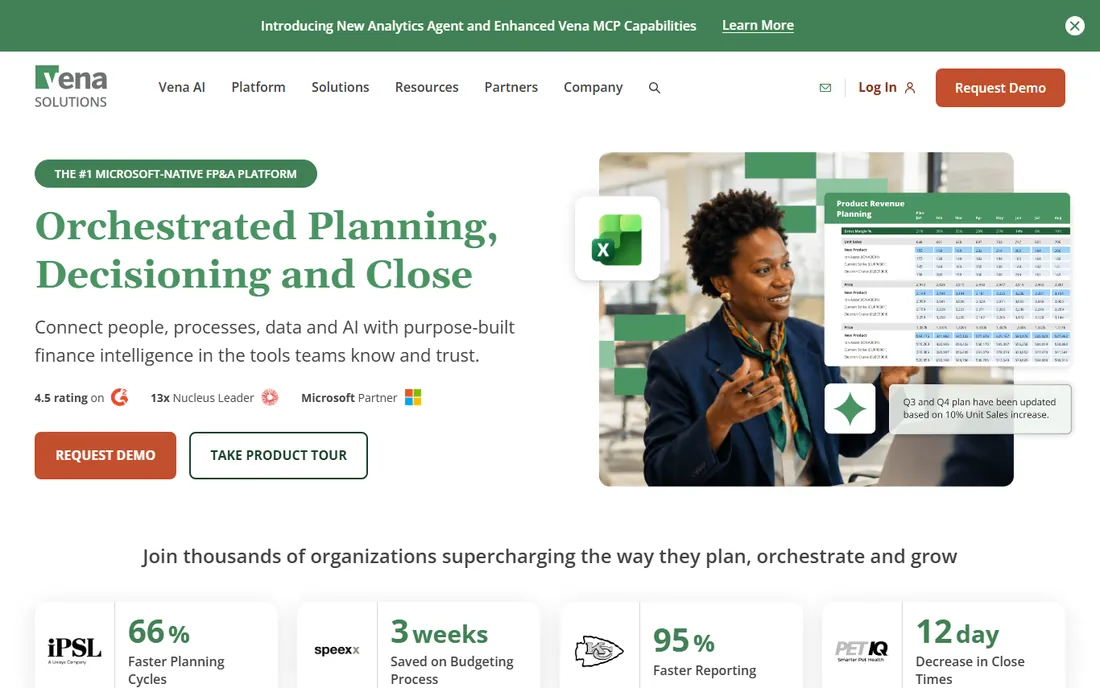
Vena's pitch is simple: keep Excel, lose the chaos. Finance teams work in the spreadsheet interface they already know, while Vena adds the governance Excel lacks: centralized data, version control, audit trails, and approval workflows. For teams that have tried to rip Excel out and failed, this is the pragmatic path to controlled planning.
Reviewers consistently highlight ease of use and Excel compatibility as Vena's standout strengths, and the automation covers the full budgeting and forecasting cycle without forcing users into an unfamiliar modeling language. The Vena Copilot AI assistant adds analysis help on top. Time-to-value runs one to three months, which is fast for this category.
The tradeoff is ceiling. Because everything flows through Excel, Vena is less suited to the massive multidimensional models that Anaplan handles natively, and its AI capabilities are less ambitious than Pigment's agent-based approach. For mid-market finance teams that want better planning without retraining everyone, though, Vena's Excel-native design is a genuine advantage, not a compromise.
What we like- Native Excel interface means near-zero learning curve
- Governed workflows add audit trails and version control
- Strong automation for budgeting and reporting
Watch out for- Excel dependency can limit advanced modeling
- AI features trail the newest AI-native platforms
#4
Planful
Best for: mid-market teams balancing planning, close, and consolidation
Visit planful.com
Starting priceSee website
Free planNo
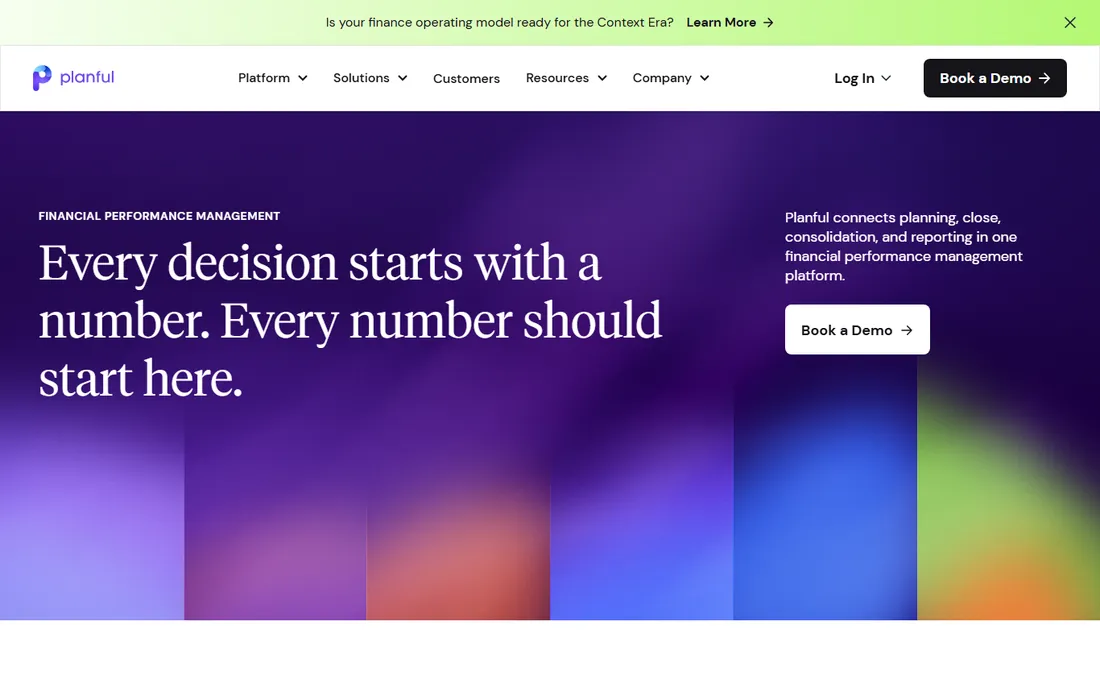
Planful targets the mid-market finance team that needs more than budgeting but is not ready for an enterprise EPM deployment. The platform covers financial planning, consolidation, and close management in one place, with continuous planning features that keep forecasts current instead of rebuilding them quarterly. Implementation typically runs one to three months.
Reviewers praise its ease of use and dynamic reporting, and the Planful Predict AI features add forecasting assistance without requiring data science skills. For a company doing its first real consolidation or trying to shorten its close cycle alongside better planning, having both in one vendor simplifies both the purchase and the integration.
Where Planful steps back is at the extremes. It does not match Anaplan for cross-functional connected modeling or OneStream for complex multi-entity statutory consolidation. It is a mid-market platform priced and scoped for mid-market needs, which is exactly right for its audience and exactly wrong for anyone outside it.
What we like- Combines planning, consolidation, and close in one platform
- Continuous planning with rolling forecasts
- Well-regarded ease of use
Watch out for- Less depth in connected enterprise-wide modeling than Anaplan
- Pricing is quote-based
Starting priceSee website
Free planNo
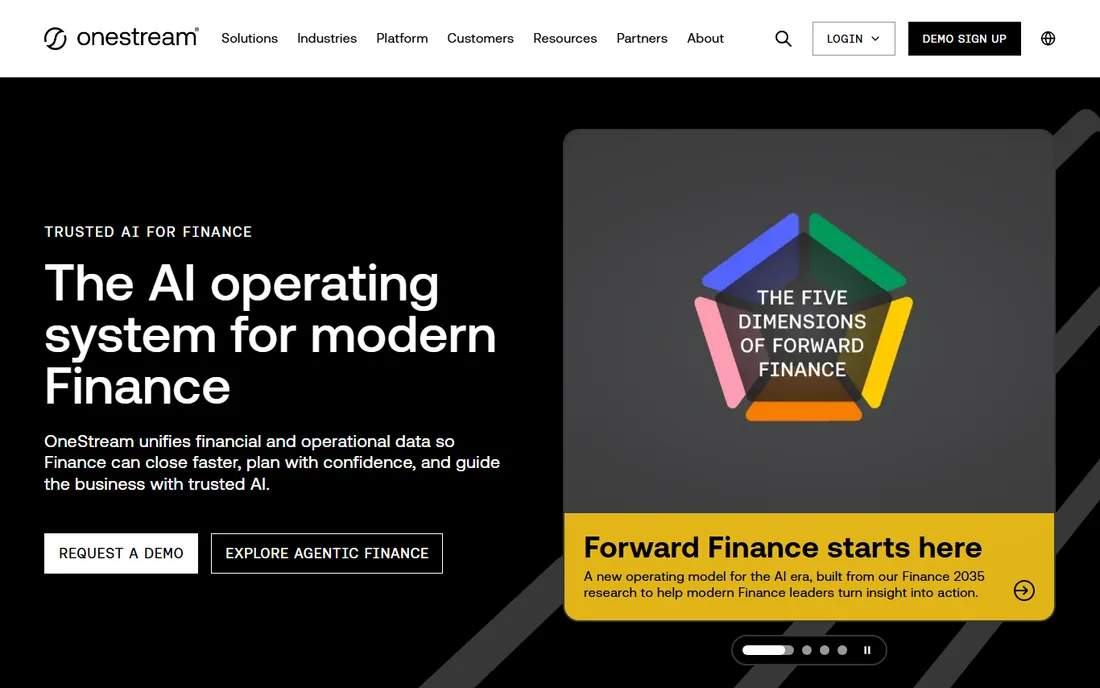
OneStream built its reputation on a single insight: planning, consolidation, and financial close should share one platform and one data model, not three disconnected tools. For organizations with complex entity structures, multiple charts of accounts, and serious statutory reporting requirements, that unified architecture eliminates the reconciliation work that eats close cycles.
The platform's consolidation depth is its signature strength. Multi-currency translation, intercompany eliminations, and complex ownership calculations run in the same environment as the planning models, and the Sensible ML and embedded AI features add forecasting on top. Reviewers rate it highly for meeting complex enterprise requirements.
The honest cost is enterprise everything: implementation timelines of three to six months, consultant-heavy deployments, and pricing to match. OneStream is not a mid-market tool and does not pretend to be. Buy it when your consolidation complexity is the problem, because that is the problem it was built to solve better than anyone.
What we like- Unified platform for planning, consolidation, and close with no data silos
- Strongest statutory and management reporting
- Handles complex ownership structures
Watch out for- Enterprise-grade implementation measured in months
- Pricing reflects its enterprise positioning
#6
Prophix
Best for: growing organizations wanting all-in-one CPM simplicity
Visit prophix.com
Starting priceSee website
Free planNo
Prophix positions itself as the all-in-one CPM for organizations that have outgrown spreadsheets but do not need Anaplan-grade modeling. Budgeting, forecasting, reporting, financial close, and consolidation come in a single suite with heavy automation, so small finance teams can run processes that used to need more headcount. Implementation runs two to four months.
Reviewers highlight ease of use and customer support as differentiators, which matters in a category where vendors are often accused of disappearing after the sale. The AI virtual financial analyst features add a modern layer to the classic CPM workflow without complicating it.
The limitation is flexibility at the edges. Finance teams with highly unusual modeling requirements will hit the platform's boundaries sooner than they would with Anaplan or Pigment, and the partner ecosystem is smaller. For the mainstream mid-market use case, budgeting, forecasting, close, Prophix covers it with less fuss than most rivals.
What we like- Automation-driven budgeting, reporting, and close in one suite
- Strong customer support reputation
- Easier to adopt than enterprise EPM platforms
Watch out for- Less flexible for highly complex custom models
- Smaller ecosystem than the biggest vendors
#7
Pigment
Best for: high-growth companies needing flexible visual modeling
Visit pigment.com
Starting priceSee website
Free planNo
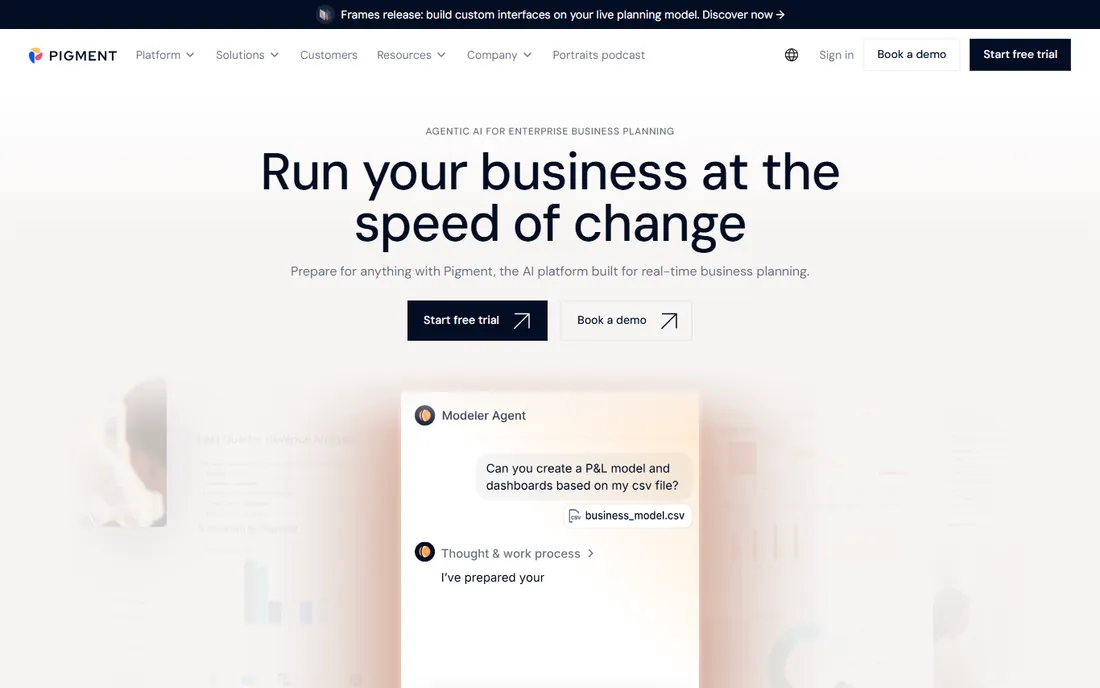
Pigment is the modern challenger, built around visual, collaborative planning with AI agents that help model, analyze, and plan. The interface is deliberately approachable: planners build multidimensional models through visual workflows rather than code-like formulas, which shortens the learning curve for business users outside finance. Reviewers rate it among the highest in the category for usability.
The AI-native design is more than marketing. Modeler, Analyst, and Planner agents assist with building scenarios, explaining variances, and running forecasts, which compresses the time from purchase to value. Deployments typically land in one to three months, fast for EPM, and the platform suits high-growth companies whose planning needs change quarterly.
The caveat is maturity. Pigment is younger than the incumbents, with fewer large-scale reference deployments and less depth in statutory consolidation. For planning and forecasting at a growing company, it is one of the most appealing options available. For complex group consolidation, the established vendors still lead.
What we like- Visual multidimensional modeling that non-technical planners grasp quickly
- AI agents for modeling, analysis, and planning
- Fast one-to-three-month deployment
Watch out for- Younger platform with a smaller track record than incumbents
- Enterprise consolidation depth still maturing
Starting priceSee website
Free planNo
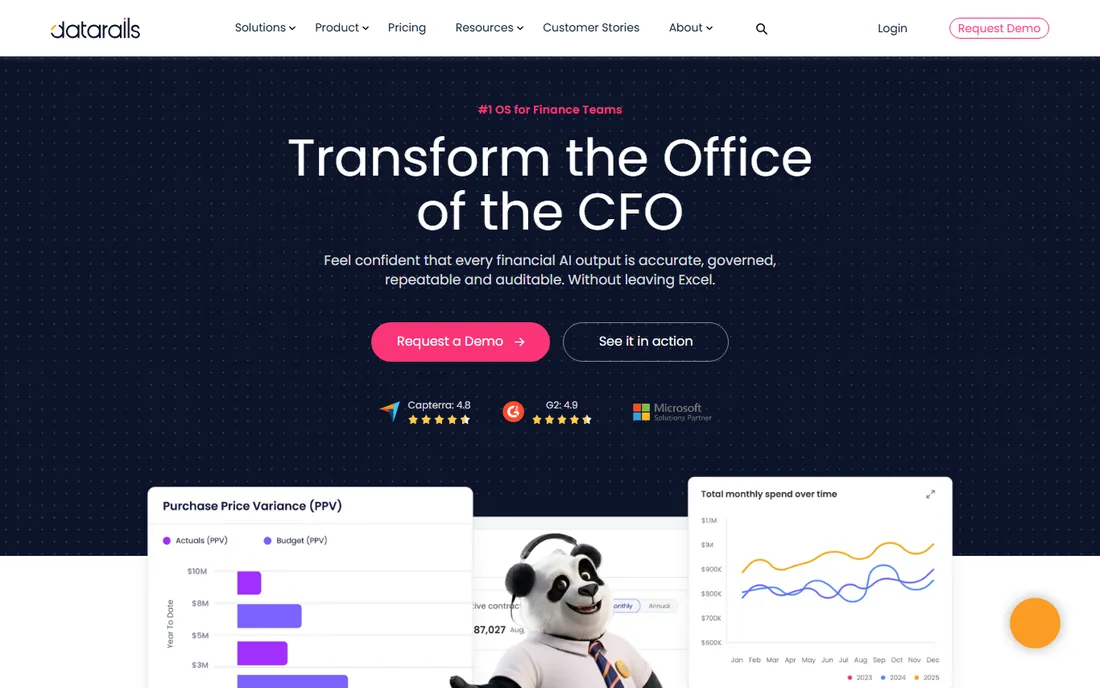
Datarails takes the Excel-preservation strategy even further than Vena: your team keeps working in spreadsheets while Datarails automates the consolidation, version control, and reporting behind the scenes. For a small finance team of two to five people, that means better numbers without changing how anyone works, and deployment can land in two to four weeks.
The FP&A Genius AI features add automated insights and AI-generated reports on top of the consolidated data, which gives small teams analytical output they could not produce manually. It is explicitly positioned for small finance teams, and the pricing and packaging reflect that.
The boundary is scale. Datarails is not a multidimensional modeling engine, and finance operations with complex allocations, multi-entity consolidation, or cross-functional planning will outgrow it. Think of it as the best possible version of spreadsheet finance, not as a replacement for a true EPM platform. For its target audience, that is exactly the right product.
What we like- Keeps Excel as the interface with automated data consolidation behind it
- Fastest deployment here at two to four weeks
- AI reporting features included
Watch out for- Not a full multidimensional modeling platform
- Best suited to smaller, less complex finance operations
How we chose
We evaluated platforms that cover the EPM core: budgeting, forecasting, financial consolidation, and reporting, with an eye toward fit for small and mid-size company economics alongside enterprise depth. We reviewed vendor documentation, G2 and Capterra ratings, Reddit finance community discussions, and current analyst-style roundups, weighing planning flexibility, consolidation strength, Excel integration, AI capabilities, implementation timelines, and realistic total cost. We did not run hands-on trials. EPM vendors rarely publish pricing, so we state that plainly rather than inventing numbers, and recommend confirming quotes directly.
Why EPM projects fail
Most failed EPM projects do not fail on software. They fail because the company bought a modeling engine when it needed a process: no agreement on who owns the forecast, no clean chart of accounts, no definition of done for the budget cycle. The software then gets blamed for automating a broken process faster.
The fix is unglamorous. Before you evaluate vendors, document your current planning process end to end: who submits what, when, in which format, and who approves it. Clean up the chart of accounts and the data feeds first. Then buy the simplest platform that runs that process with governance, not the most impressive demo. A successful Vena or Datarails deployment beats a failed Anaplan deployment every time, and the difference is almost never the software.
Start with your consolidation needs, because they dictate the shortlist. Multi-entity statutory consolidation points to OneStream or CCH Tagetik. Pure planning and forecasting opens the wider field: Workday Adaptive, Anaplan, Vena, Planful, Prophix, Pigment. Excel-first teams should shortlist Vena and Datarails and skip the platforms that require learning a new modeling language.
Treat implementation as part of the price, not an afterthought. In this category, services often match or exceed first-year license costs, and timelines range from two weeks (Datarails) to six months (Anaplan, OneStream). Get implementation estimates in writing from the vendor and from an independent partner, and ask for two reference customers at your company size, not just logo slides. Finally, negotiate the renewal cap now. EPM contracts renew, usage grows, and the price you accept in year three was decided in the year-one negotiation.
Frequently asked questions
What is EPM software?
EPM, enterprise performance management, software helps companies plan, budget, forecast, consolidate financials, and report on performance. It replaces the emailed-spreadsheet budget process with a governed system: one set of data, controlled workflows, audit trails, and scenario modeling. It is also called CPM, corporate performance management; the terms describe the same category.
What is the difference between EPM and CPM?
There is no meaningful difference. CPM, corporate performance management, was the original term; EPM, enterprise performance management, is the newer name popularized by analysts. Vendors use them interchangeably, and a buyer's shortlist should include both labels when researching.
How much does EPM software cost?
Most vendors do not publish pricing, which tells you something about the price range. Mid-market platforms typically start in the tens of thousands per year, while enterprise deployments with implementation commonly reach six figures annually. Always budget for implementation services on top of licenses, and get both quoted in writing.
Do I still need EPM if my team loves Excel?
Possibly not a full platform. If the pain is version chaos and manual consolidation rather than modeling complexity, Excel-native tools like Vena and Datarails add governance without changing how your team works. You need a true EPM platform when the models themselves exceed what spreadsheets handle: multi-entity consolidation, driver-based planning across departments, or real-time scenario analysis.
How long does EPM implementation take?
It ranges from two to four weeks for Excel-automation tools like Datarails, to one to three months for mid-market platforms like Planful, Vena, and Pigment, to three to six months for enterprise platforms like Anaplan and OneStream. Data readiness is the usual bottleneck; clean chart of accounts and reliable data feeds shorten every timeline.
Which EPM is best for a mid-size company?
Workday Adaptive Planning and Planful are the safest mid-market picks, with Vena best for Excel-first teams and Pigment best for high-growth companies that want modern AI-assisted planning. Prophix suits teams wanting an all-in-one suite with strong support. Shortlist two, run a proof of concept with your real data, and decide on fit, not feature checklists.
Sources we checked (5)
- https://softwareconnect.com/roundups/best-epm-software/
- https://www.g2.com/products/onestream-unified-epm/competitors/alternatives
- https://www.g2.com/products/adaptive-insights-business-planning-cloud/competitors/alternatives
- https://www.getaleph.com/answers/workday-adaptive-planning-alternatives-fpa-software
- https://thebossmagazine.com/post/modern-cfos-guide-to-fpa-software-2026/
Is your product missing or out of date?
We review this list regularly. Vendors can request a listing, send updated pricing or ask about featured placement.

Shihab Mia · Founder, Rankite
Shihab has spent more than a decade helping SaaS and e-commerce brands grow through search. He writes Rankite's software buying guides from pricing pages, documentation and public user reviews. More about Shihab.