How we make this list: we compare pricing pages, product documentation and public user reviews. Rankite is independent; if a vendor ever pays for a featured spot, that listing is clearly labeled Partner.
Key takeaways
- Agentic AI is the 2026 theme: Anaplan, Pigment, OneStream, and Prophix all repositioned around AI agents that plan, forecast, and reconcile with less human effort.
- The category consolidated around unified platforms: OneStream and Prophix One combine close, planning, and reporting in one system instead of stitched-together point tools.
- Excel loyalty split the market: Vena and Datarails keep finance teams in Excel with governed data underneath, while Anaplan, Pigment, and OneStream offer native modeling environments.
- Pricing is universally enterprise and quote-based; expect six-figure annual contracts for the large platforms and mid-five-figures for the Excel-native options.
Quick comparison
| Tool | Best for | Starting price | Free plan |
|---|
 Anaplan Anaplan | enterprise scenario planning at scale | See website | No |
 OneStream OneStream | unified close, planning, and reporting | See website | No |
 Pigment Pigment | agentic AI business planning | See website | No |
 Workday Adaptive Planning Workday Adaptive Planning | planning inside the Workday ecosystem | See website | No |
 Vena Vena | Excel-native FP&A for Microsoft shops | See website | No |
 Datarails Datarails | governed AI-ready data without leaving Excel | See website | No |
 Prophix Prophix | autonomous finance for the mid-market | See website | No |
Is your product missing or out of date?
We review this list regularly. Vendors can request a listing, send updated pricing or ask about featured placement.
The best cpm software
Starting priceSee website
Free planNo
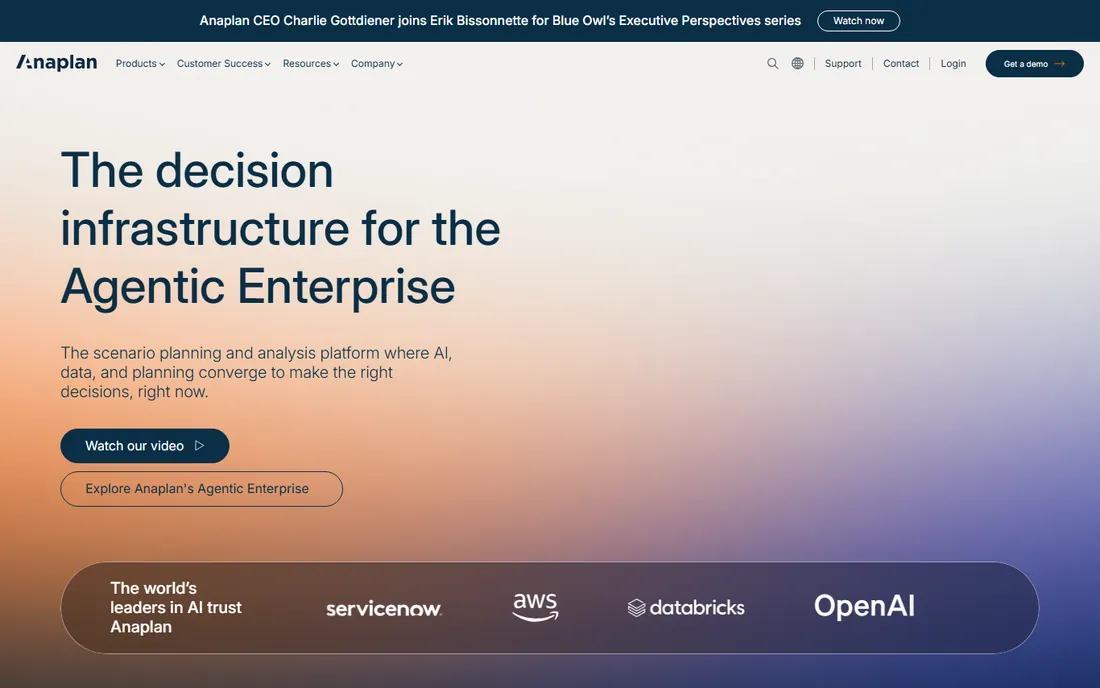
Anaplan is the heavyweight of corporate performance management, now repositioned as the decision infrastructure for what it calls the Agentic Enterprise. The platform unites scenario planning and analysis across finance, supply chain, sales, HR, and retail, with AI, data, and planning converging in one environment. Its Polaris calculation engine pairs probabilistic AI with deterministic calculations for answers that are both intelligent and auditable.
The 2026 story is agents: role-based AI agents that analyze variances, update plans, and surface decisions in real time, all grounded in Anaplan's business data ontology. With customers including NVIDIA, AWS, Google, and OpenAI, it is the choice of companies planning at massive complexity.
The honest catch is that Anaplan is an enterprise commitment: significant license costs, implementation projects measured in months, and a need for trained model builders. It is overkill for mid-market FP&A. For large enterprises running connected planning across functions, it remains the benchmark.
What we like- The most powerful connected planning platform
- New agentic AI with auditable answers
- Trusted by 48 percent of the Fortune 50
Watch out for- Enterprise pricing and implementation
- Requires dedicated model builders to reach full potential
Starting priceSee website
Free planNo
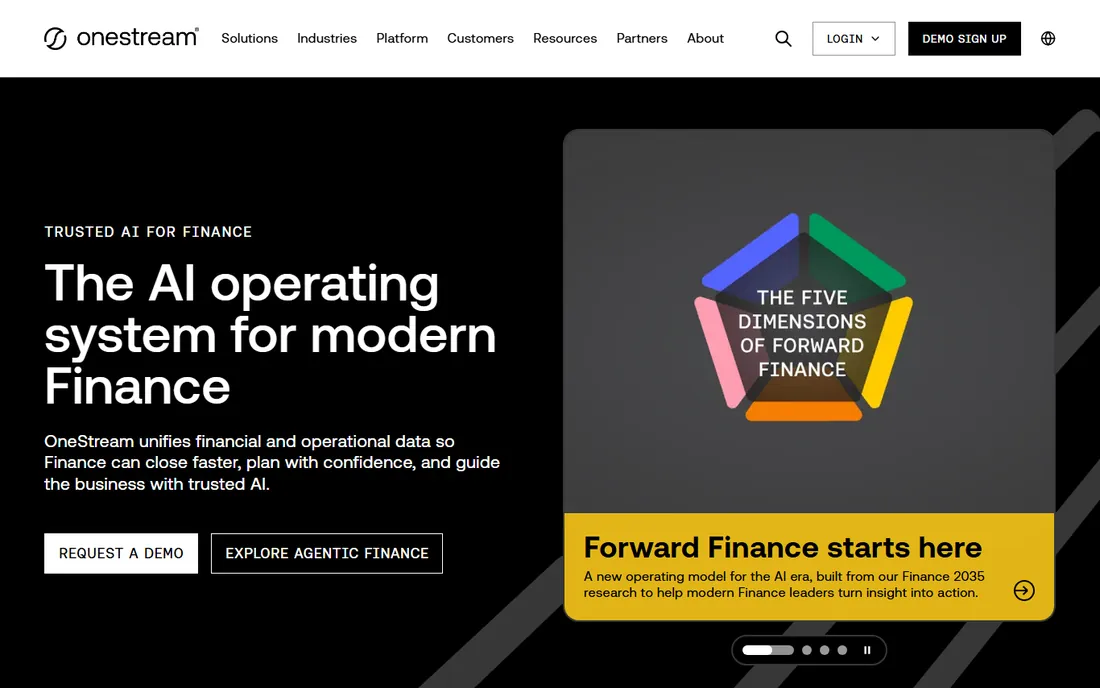
OneStream calls itself the AI operating system for modern finance, and the architecture backs the claim: financial close, planning, reporting, ESG, and operational data unified in one extensible platform with AI agents embedded in every workflow. Trusted by over 1,900 finance teams including 18 percent of the Fortune 500, it is the leading Hyperion replacement.
The 2026 platform emphasizes trusted AI: native finance agents for forecasting, reconciliation, anomaly detection, and decision support, all governed with auditability and role-based access. Gartner named it a Leader in financial planning and in financial close and consolidation, a rare double.
The trade-off is the enterprise reality: long sales cycles, significant investment, and a migration project for teams leaving legacy systems. CPM Express shortens the start for focused use cases. For large finance organizations wanting one governed platform instead of stitched point solutions, OneStream is the default shortlist.
What we like- Close, planning, reporting, and ESG in one unified platform
- Named a Gartner Leader across EPM categories
- CPM Express offers a faster start
Watch out for- Enterprise sales cycle and pricing
- Replacing legacy Hyperion takes a real project
Starting priceSee website
Free planNo
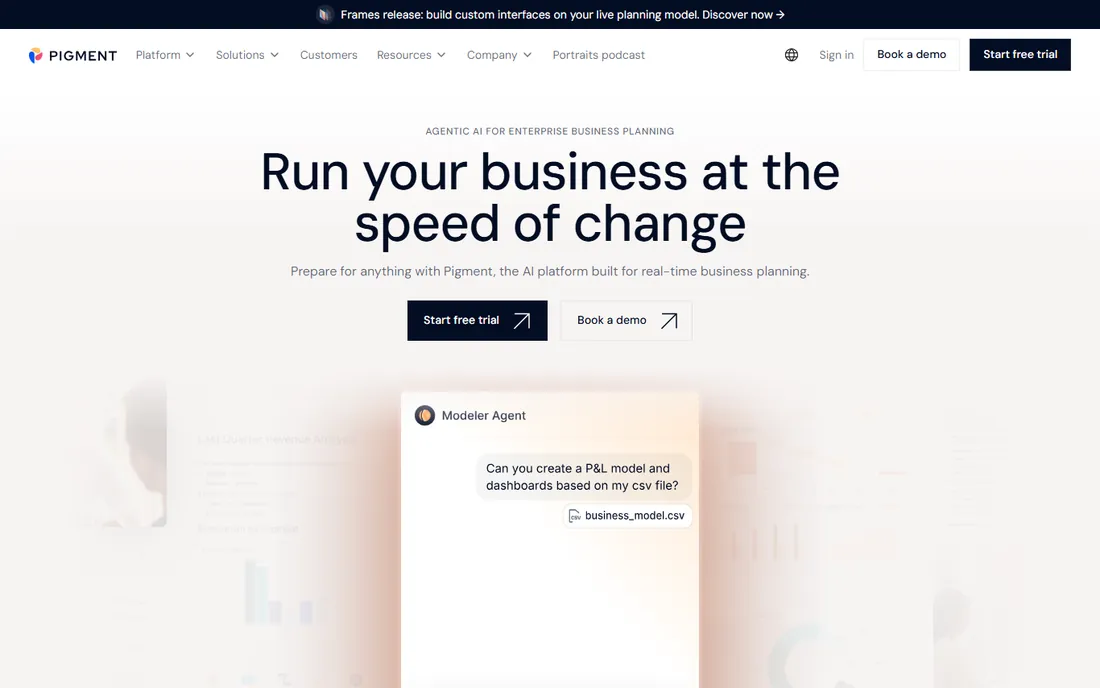
Pigment is the modern challenger built for the AI era. Its agents operate directly inside the planning environment, using governed data, live models, and business logic to support decisions in real time. The new FRAMES release lets teams build custom interfaces on the live planning model by describing what they need. Customers include Anthropic, Uber, Figma, and ServiceNow.
The platform covers FP&A and consolidation, supply chain, sales, and HR planning in one place, with a patent-pending Graphite engine for rapid iteration and an MCP server connecting planning data directly to AI systems like Claude. The interface is the most modern in the category, which drives fast adoption.
The honest catch is maturity in financial close. Pigment's strength is planning and analysis; deep consolidation and statutory reporting lag the specialists. Pricing is quote-based. For tech-forward companies that want planning software their teams will actually enjoy, Pigment is the most exciting option.
What we like- AI agents work directly inside the planning model
- Beloved by tech companies like Anthropic and Figma
- Fast, flexible modeling with a modern interface
Watch out for- Younger than Anaplan and OneStream with less close-and-consolidation depth
- Enterprise pricing without public numbers
#4
Workday Adaptive Planning
Best for: planning inside the Workday ecosystem
Visit workday.com
Starting priceSee website
Free planNo
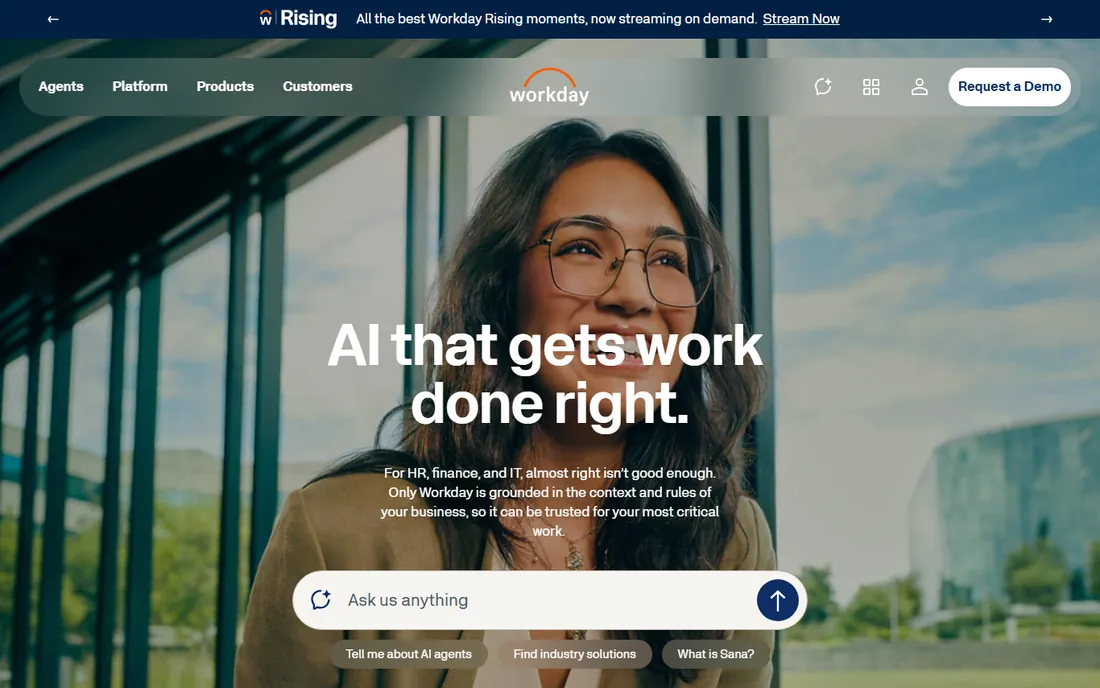
Workday Adaptive Planning is the planning component of the Workday enterprise platform, and its 2026 pitch is AI that does not guess: grounded in the business's context and rules, with clear audit trails and agents that act within security guardrails. For the office of the CFO already on Workday, planning inherits workforce, financial, and operational data natively.
The platform story matters: planning connected to HR and finance on one system, with Sana orchestrating agents across modules. Workday GO brings simplified packages to midsize businesses that previously found Workday out of reach.
The trade-off is ecosystem gravity. Adaptive Planning shines brightest inside a Workday deployment; bought standalone, it competes with more focused planning tools. For Workday customers, it is the natural planning choice; for others, evaluate it against best-of-breed alternatives.
What we like- Native connection to Workday HCM and Financials
- Trusted enterprise AI with audit trails
- Workday GO packages simplify midsize adoption
Watch out for- Best value requires the broader Workday platform
- Standalone planning buyers have better options
Starting priceSee website
Free planNo
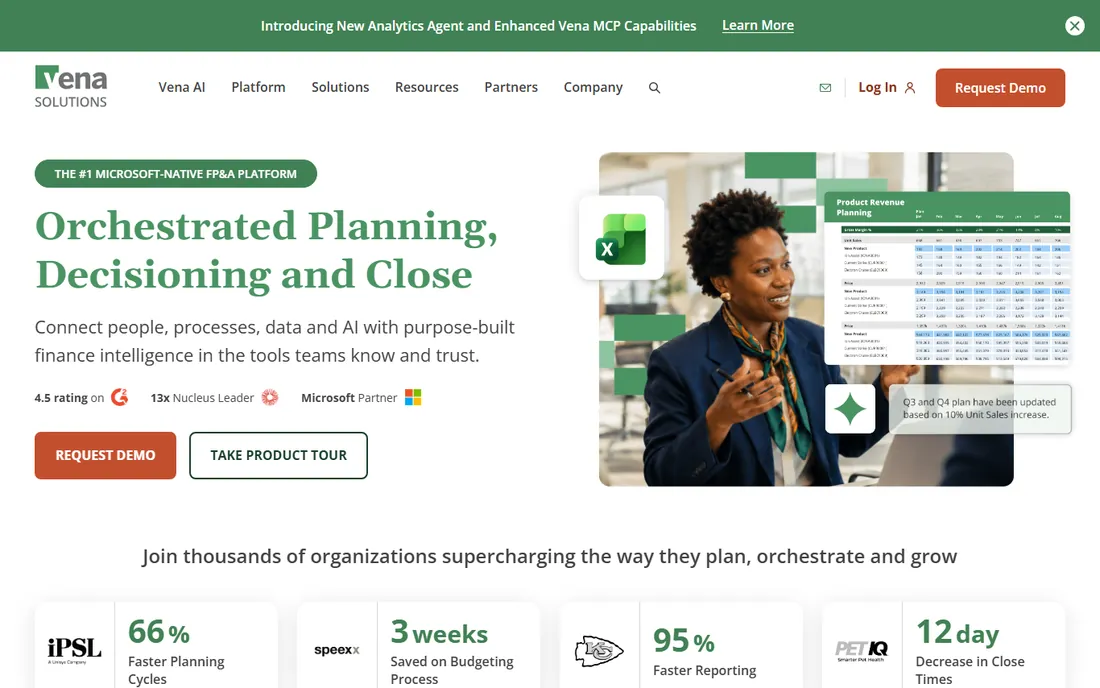
Vena's insight is that 87 percent of companies with other FP&A software end up using Excel anyway, so it built the platform inside Excel itself. Vena CubeFLEX, an OLAP database designed for Excel, provides the governed single source of truth while finance teams model scenarios, flex drivers, and adjust top-down or bottom-up in the interface they know.
The 2026 platform adds purpose-built AI agents for planning, reporting, scenario analysis, and analytics, with insights surfaced in Microsoft Teams and Excel. Native Power BI dashboards and PowerPoint integration complete the Microsoft-native story.
The honest catch is philosophical: teams wanting to escape spreadsheets will not find liberation here. But for the vast majority of finance teams that live in Excel, Vena removes the chaos (version control, broken links, manual consolidation) while keeping the flexibility. For Microsoft-centric finance teams, it is the pragmatic choice.
What we like- Planning happens inside real Excel with a governed OLAP cube behind it
- Deep Microsoft 365 integration including Teams and Power BI
- AI agents for planning and reporting
Watch out for- Excel-native means inheriting Excel's limits
- Less suited to non-Microsoft environments
Starting priceSee website
Free planNo
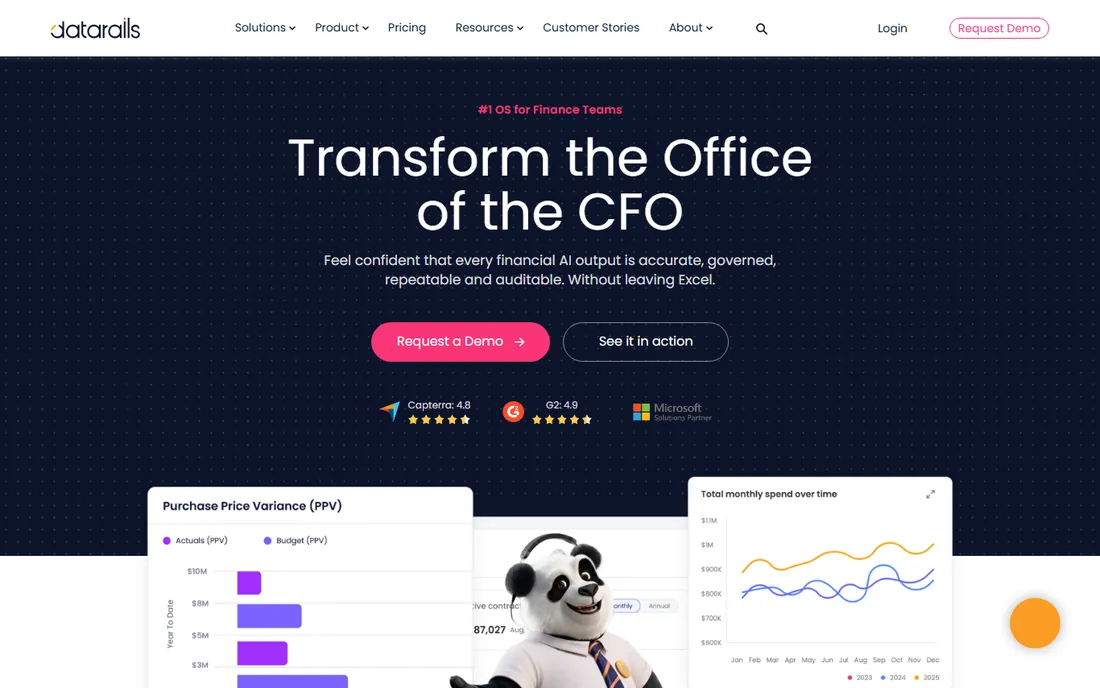
Datarails takes a different path to the same destination: instead of a new planning environment, it provides FinanceOS, a governed operating layer that connects live data from 600-plus sources into the Excel models finance already trusts. Version control, audit trails, permissions, and centralized business logic fix spreadsheet chaos without changing how the team works.
The 2026 differentiator is AI trust: the FinanceOS AI Connector feeds governed financial data to leading AI tools, so every AI output is accurate, repeatable, and auditable. With 2,000-plus companies on board and top ratings on G2 and Capterra, the approach resonates with CFOs who want AI without the risk.
The trade-off is scope. Datarails is a data and workflow layer, not a full CPM suite with deep modeling and consolidation. Teams needing complex driver-based planning will want more. For finance teams that refuse to leave Excel but need governance and AI-ready data, it is purpose-built.
What we like- FinanceOS creates a governed, auditable data layer under existing Excel models
- AI connector feeds trusted data to any AI tool
- 600-plus integrations with no IT required
Watch out for- It enhances Excel rather than replacing it
- Smaller planning depth than full CPM suites
Starting priceSee website
Free planNo
Prophix positions Prophix One as the first autonomous finance platform for the mid-market, connecting every finance workflow from plan to close. Financial planning and analysis, close and consolidation, and reporting and analytics run on one unified, governed, auditable platform, with AI agents making budget collection and reconciliations hands-off.
The consolidation depth stands out: out-of-the-box models handling multi-currency, multi-lingual, and multi-GAAP requirements, with AI-powered matching that reconciles GL and intercompany balances automatically. AI-generated variance insights explain what happened, why, and what to do next.
The honest catch is that Prophix deliberately serves the mid-market, so the most complex global enterprises may need more. But that focus is also the strength: enterprise-grade finance automation without enterprise implementation timelines. For mid-size companies outgrowing spreadsheets, Prophix is the most complete single-vendor answer.
What we like- Unified platform from plan to close built for mid-market complexity
- AI agents automate budget collection and reconciliations
- Strong consolidation with multi-currency and multi-GAAP
Watch out for- Less brand recognition than the enterprise giants
- Mid-market focus means less extreme-scale planning
How we chose
We compared corporate performance management platforms serving mid-market to enterprise finance teams in 2026, using current vendor homepages and product announcements. We weighted planning and forecasting depth, close and consolidation capability, AI and agent features, Excel strategy, integration breadth, and analyst recognition. We included both unified platforms and Excel-native approaches. We did not claim hands-on testing; all facts come from vendor-published material.
What to check before you commit
Start with the Excel question, because it divides the market. If your team will never leave spreadsheets, shortlist Vena and Datarails. If you want a governed modeling environment, evaluate Anaplan, Pigment, OneStream, and Prophix.
Scope the implementation honestly
CPM implementations fail more often from scope than from software. Define which processes go live first: budgeting, forecasting, consolidation, or reporting. OneStream's CPM Express and phased approaches exist because big-bang rollouts are risky. Get the timeline and resource requirements in the contract.
Verify the close, not just the plan
Demos love planning scenarios; the close is where finance lives. If consolidation matters, test multi-entity, multi-currency close with your chart of accounts during evaluation. OneStream and Prophix lead here; planning-first tools may disappoint.
Price three years, not one
Enterprise CPM contracts include licenses, implementation, training, and support, with renewals that rarely go down. Model the three-year total including headcount for administration. The Excel-native options typically cost less to own than the full platforms.
The autonomous finance era
The 2026 repositioning across this category tells the story: Anaplan's Agentic Enterprise, Pigment's planning agents, OneStream's AI operating system, Prophix's autonomous finance, Datarails' governed AI layer. The direction is finance software that does more of the work itself, with humans governing rather than grinding. Buyers should evaluate each vendor's AI on their real close and forecast cycles, because the autonomy gap between marketing and production is where implementations succeed or fail.
Frequently asked questions
What is the best CPM software?
Anaplan leads for large-scale connected planning, OneStream for unified close and planning, Pigment for modern AI-native planning, and Vena or Datarails for Excel-centric teams. Workday Adaptive Planning suits Workday customers, and Prophix serves the mid-market.
How much does CPM software cost?
Pricing is quote-based and enterprise-scale. Expect mid-five-figure annual contracts for Excel-native tools and six figures for full platforms like Anaplan and OneStream, plus implementation costs. Always model three-year total cost.
What is the difference between CPM and EPM?
The terms are largely interchangeable. CPM (corporate performance management) and EPM (enterprise performance management) both describe software for planning, budgeting, forecasting, consolidation, and reporting. Vendors use whichever term their market prefers.
Can CPM software replace Excel?
It depends on the tool. Anaplan, Pigment, OneStream, and Prophix offer native modeling environments designed to replace spreadsheet planning. Vena and Datarails take the opposite approach, keeping Excel as the interface with governance underneath.
How long does CPM implementation take?
Focused deployments can go live in weeks (OneStream's CPM Express targets this), while enterprise-wide rollouts take months. The timeline depends on process scope, data complexity, and entity count more than on the software itself.
Do I need CPM software or just better FP&A processes?
If budgeting takes weeks, forecasts are stale on arrival, and the close depends on spreadsheet heroics, software helps. But CPM tools amplify process discipline; they do not create it. Fix the planning calendar and ownership first, then buy the platform.
Sources we checked (7)
- https://www.anaplan.com/
- https://onestream.com/
- https://pigment.com/
- https://workday.com/
- https://www.venasolutions.com/
- https://www.datarails.com/
- https://prophix.com/
Is your product missing or out of date?
We review this list regularly. Vendors can request a listing, send updated pricing or ask about featured placement.

Shihab Mia · Founder, Rankite
Shihab has spent more than a decade helping SaaS and e-commerce brands grow through search. He writes Rankite's software buying guides from pricing pages, documentation and public user reviews. More about Shihab.