How we make this list: we compare pricing pages, product documentation and public user reviews. Rankite is independent; if a vendor ever pays for a featured spot, that listing is clearly labeled Partner.
Key takeaways
- Enterprise suites (Workday, SAP SuccessFactors, Oracle) win on depth and global payroll, but pricing is custom quote only and implementations run long.
- Mid-market picks like BambooHR, Rippling, and ADP Workforce Now publish entry pricing, so you can budget before the first sales call.
- If payroll accuracy is the pain point, Paycom and Dayforce are the specialist names most often discussed in public reviews.
- Zoho People starts near $1 per user per month, the lowest entry point on this list, but payroll and benefits run through separate Zoho apps.
- There is no free HCM tier worth the name; most vendors offer demos, not free plans, so treat the sales cycle as part of the cost.
Quick comparison
| Tool | Best for | Starting price | Free plan |
|---|
 Workday HCM Workday HCM | large companies wanting one finance and HR suite | See website (custom quote) | No |
 SAP SuccessFactors SAP SuccessFactors | global enterprises with complex HR processes | See website (custom quote) | No |
 Oracle Fusion Cloud HCM Oracle Fusion Cloud HCM | companies already running Oracle ERP | See website (custom quote) | No |
 UKG Pro UKG Pro | workforce management at enterprise scale | See website (custom quote) | No |
 ADP Workforce Now ADP Workforce Now | growing US businesses needing payroll plus HR | From $69/month | No |
 Dayforce Dayforce | continuous payroll calculation and time tracking | See website (custom quote) | No |
 BambooHR BambooHR | small and mid-size companies wanting simple HR | From $8/user/month | Free trial (7 days) |
 Rippling Rippling | tech-forward teams unifying HR, IT, and finance | From $10/user/month | Free trial |
 Paycom Paycom | single-database HR and payroll automation | See website (custom quote) | No |
 Zoho People Zoho People | budget-conscious small teams in the Zoho ecosystem | From $1/user/month | Free trial (30 days) |
Is your product missing or out of date?
We review this list regularly. Vendors can request a listing, send updated pricing or ask about featured placement.
The best HCM software
Choosing the wrong HCM system is one of the most expensive mistakes a mid-size company can make. Payroll errors anger employees, botched benefits enrollment creates legal exposure, and a failed implementation burns six figures in consulting fees before you run a single pay cycle. Worse, you are locked in. Migrating HR data mid-year is painful enough that most companies stick with a bad choice far longer than they should.
#1
Workday HCM
Best for: large companies wanting one finance and HR suite
Visit workday.com
Starting priceSee website (custom quote)
Free planNo
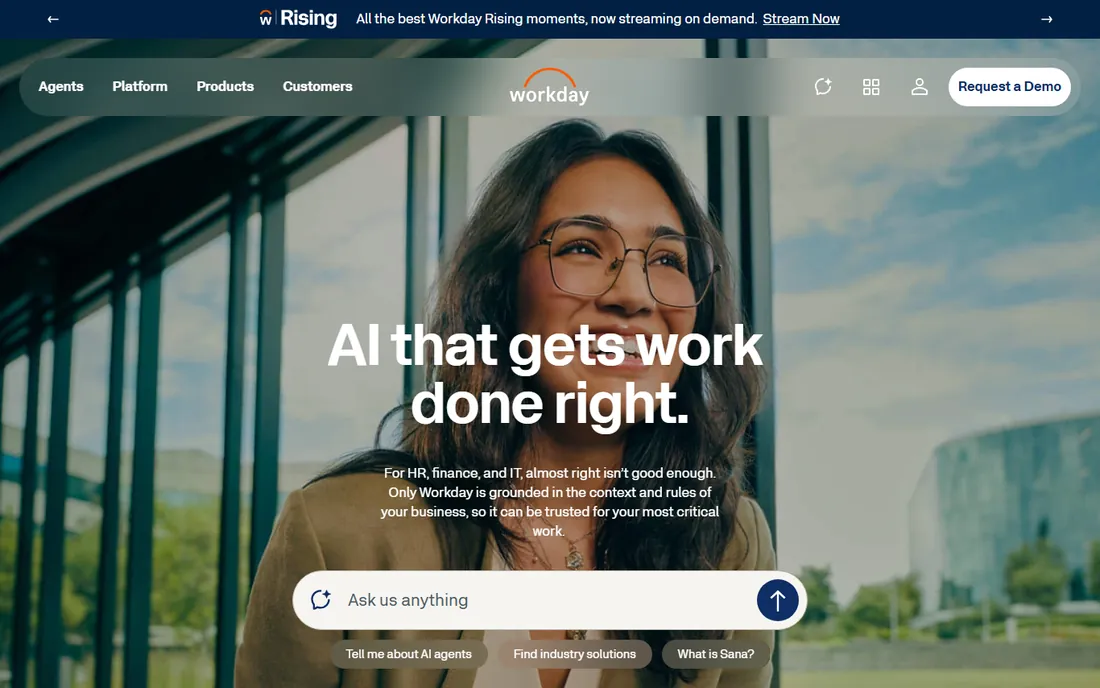
Workday HCM is the default shortlist entry for large organizations. Its signature strength is that HR and financial data live in one system, so headcount planning and actuals stay consistent without reconciliation work. For companies above a few thousand employees, that unified model is genuinely hard to replace with point solutions.
The honest catch is cost and complexity. There is no published pricing, and total cost of ownership includes the implementation, which typically involves consulting partners. Smaller companies regularly find it oversized. If you have under a few hundred employees, you are paying for machinery you will never use.
What we like- Unified HR and finance data model
- Strong global payroll coverage
- Well-established enterprise support ecosystem
Watch out for- Custom pricing only, which makes budgeting hard
- Implementations are long and consulting-heavy
#2
SAP SuccessFactors
Best for: global enterprises with complex HR processes
Visit sap.com
Starting priceSee website (custom quote)
Free planNo
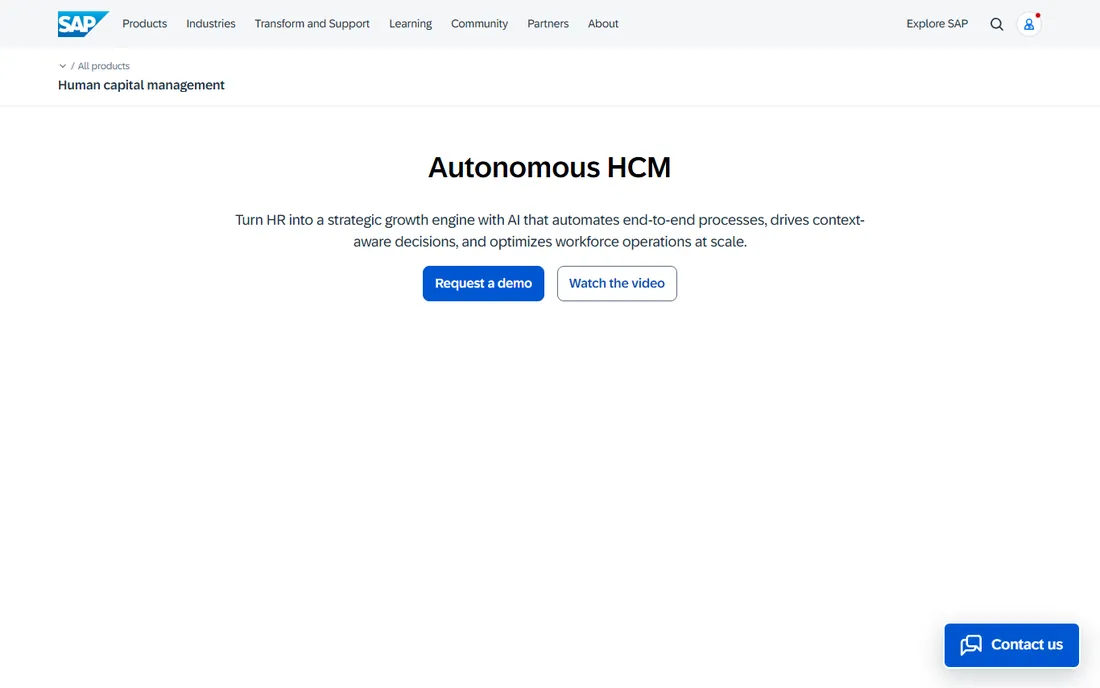
SAP SuccessFactors remains a heavyweight in talent management. Its recruiting, performance, and succession modules are among the most configurable in the industry, which matters when HR processes differ by country. Companies already running SAP ERP get data continuity that is difficult to match.
That depth comes with a steeper learning curve. Administrators and end users both report that configuration takes real expertise, and upgrades to the platform are ongoing projects rather than background events. Consider it when you have dedicated HRIT staff; without that, the complexity can outweigh the features.
What we like- Deep talent management and succession tools
- Broad localization for global deployments
- Tight integration with SAP ERP
Watch out for- Interface complexity draws regular criticism
- Pricing is quote-based and hard to compare
#3
Oracle Fusion Cloud HCM
Best for: companies already running Oracle ERP
Visit oracle.com
Starting priceSee website (custom quote)
Free planNo
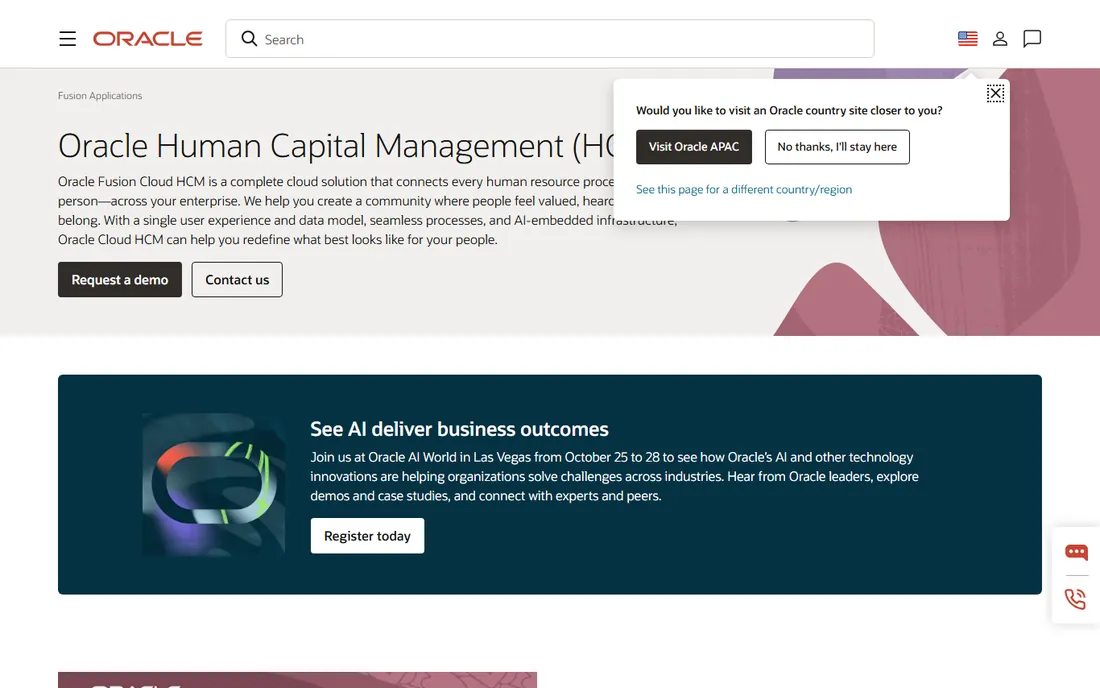
Oracle Fusion Cloud HCM makes the most sense when your back office already runs on Oracle. The data flows between finance, supply chain, and HR remove a layer of integration work, and Oracle has invested heavily in embedded analytics for workforce planning. The recruiting and talent modules are competitive with any enterprise suite.
Outside the Oracle ecosystem the case is thinner. Pricing is custom, and you should expect a sales-led evaluation with a long proof of concept. Independent mid-market companies without Oracle ERP should compare it carefully against lighter options before committing to the platform.
What we like- Strong analytics and AI-assisted HR features
- Integrates naturally with Oracle financials
- Broad module coverage from hire to retire
Watch out for- Custom pricing with no published baseline
- Best value lands inside the Oracle ecosystem
#4
UKG Pro
Best for: workforce management at enterprise scale
Visit ukg.com
Starting priceSee website (custom quote)
Free planNo
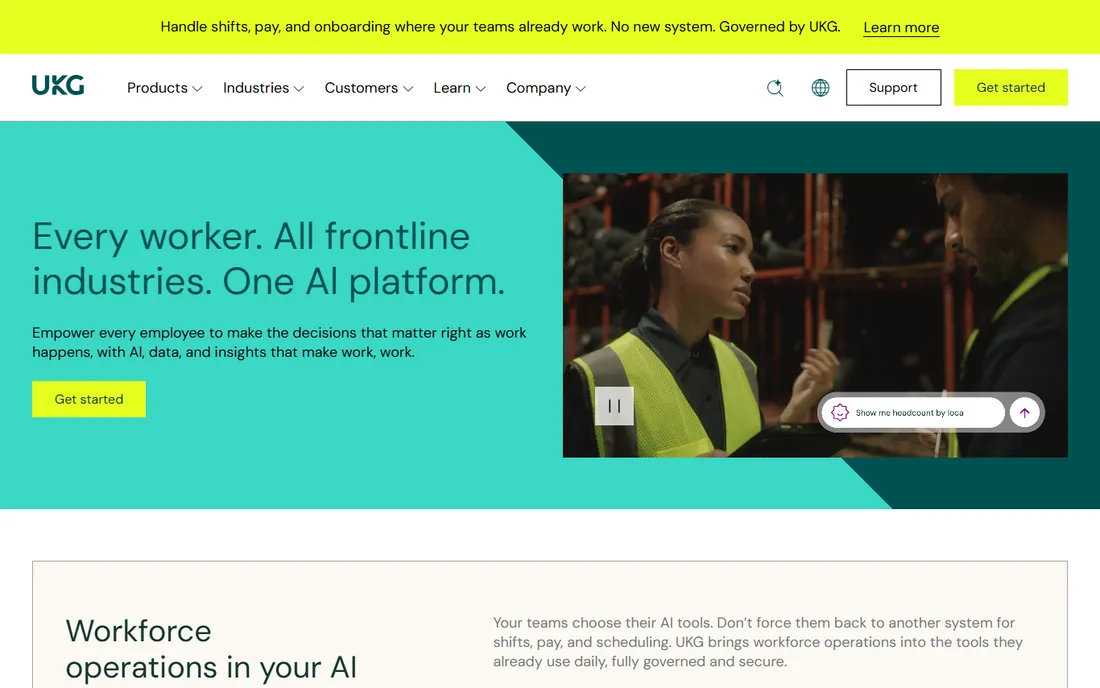
UKG Pro, formed from the merger of Kronos and Ultimate Software, dominates in organizations with large hourly and shift-based workforces. Its workforce management capabilities, scheduling, time clocks, and attendance rules, remain a reference point for retail, healthcare, and manufacturing. Benefits and payroll administration are well supported.
The platform carries some legacy weight. Parts of the interface feel older than competitors built in the cloud-native era, and pricing transparency is limited. For desk-heavy knowledge businesses the scheduling strength matters less, so weigh your workforce mix before putting it at the top of the list.
What we like- Strong time, attendance, and scheduling for hourly workforces
- Long track record in large enterprise deployments
- Solid benefits administration
Watch out for- Pricing is entirely quote-based
- Suite can feel dated next to newer competitors
#5
ADP Workforce Now
Best for: growing US businesses needing payroll plus HR
Visit adp.com
Starting priceFrom $69/month
Free planNo
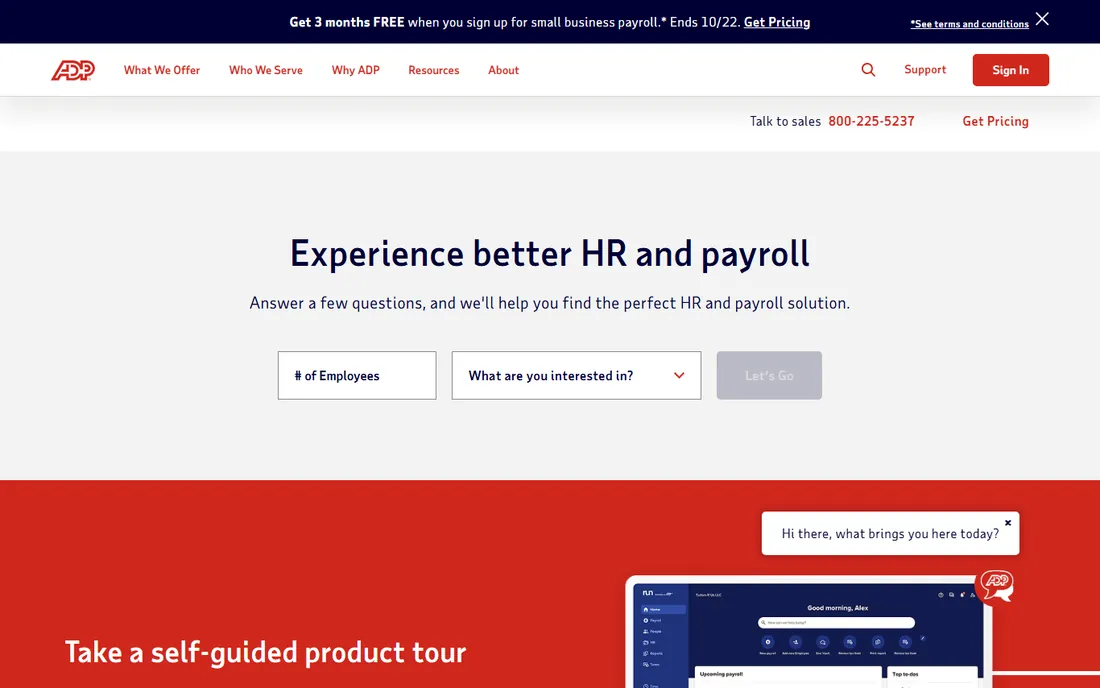
ADP Workforce Now is the safe pick for US companies that want payroll they can trust and HR modules they can add over time. ADP files taxes for an enormous share of American employers, so compliance handling is genuinely its home turf. Entry pricing starts around $69 per month for basic payroll, which makes initial budgeting easy.
As you add HR, time, and talent modules, the price climbs and quotes become more customized. Some buyers report pressure to add modules during sales calls. Go in with a written list of what you need, negotiate the full package price, and the platform serves growing companies well for years.
What we like- Payroll compliance expertise backed by decades of tax filing
- Scalable modules from basic payroll to full HCM
- Large support organization
Watch out for- Entry price covers basic payroll, real HCM costs more
- Reviews often cite upselling during the sales process
Starting priceSee website (custom quote)
Free planNo
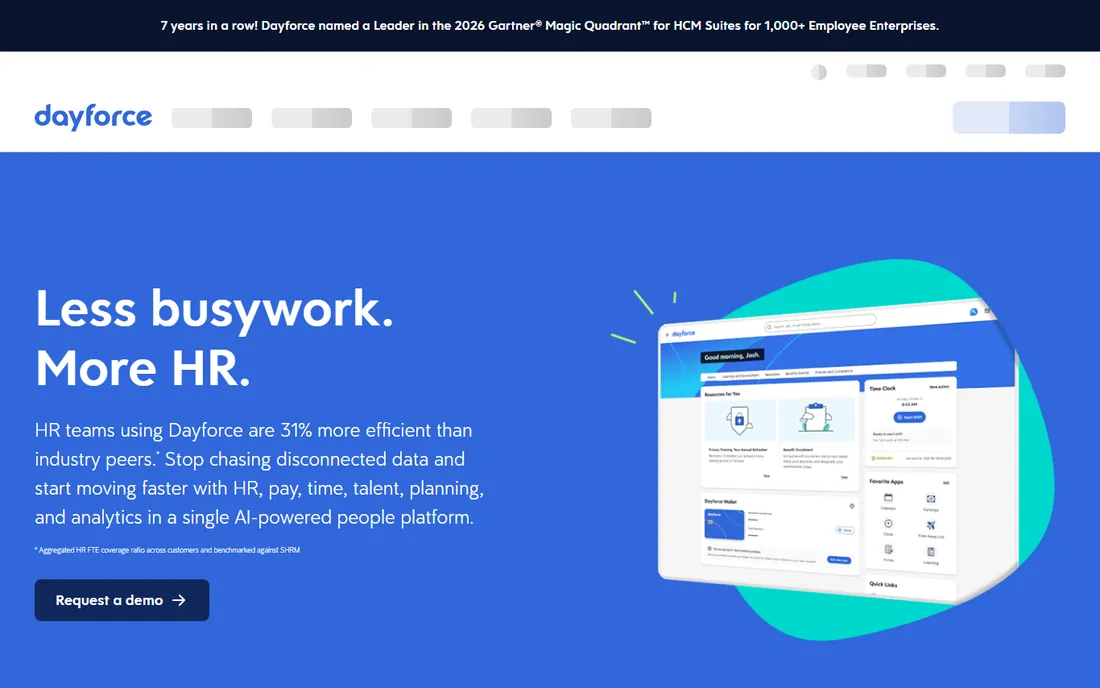
Dayforce, formerly Ceridian, built its reputation on a single idea: payroll should calculate continuously rather than in batch at the end of the period. That means discrepancies surface and get fixed while there is still time, which payroll teams appreciate after living through last-minute scrambles. HR, benefits, talent, and workforce management run on the same platform.
It is an enterprise-grade purchase in every sense, including the sales process. Pricing is custom and implementations are projects, not plug-and-play setups. Mid-market companies with complex pay rules, shift differentials, or multi-state operations get the most from it.
What we like- Continuous payroll calculation catches errors before payday
- Strong time and attendance alongside pay
- Global payroll coverage in 200+ countries
Watch out for- No published pricing
- Implementation requires significant planning
Starting priceFrom $8/user/month
Free planFree trial (7 days)
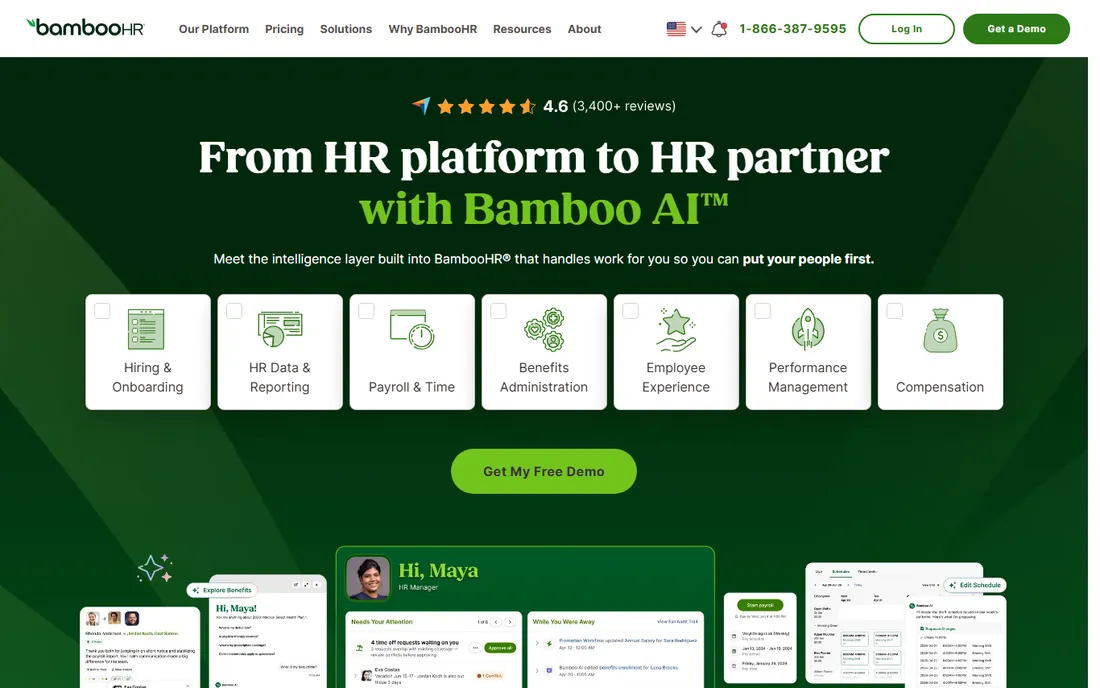
BambooHR is the friendliest HRIS on this list for small and mid-size companies. Employee records, onboarding, time off, and performance reviews all work in a clean interface that does not require an HRIT administrator. Pricing starts around $8 per user per month, and a 7-day free trial lets you evaluate before talking to sales.
The tradeoff is depth. Native payroll exists as an add-on, and companies with complex pay structures often pair BambooHR with a dedicated payroll provider. Reporting is good for headcount basics but thinner than enterprise analytics. For teams that want HR software people actually use, it is a strong default.
What we like- Easy interface that HR generalists learn quickly
- Solid onboarding and performance tools
- Transparent starting pricing
Watch out for- Payroll is an add-on rather than a native strength
- Advanced analytics lag behind enterprise suites
Starting priceFrom $10/user/month
Free planFree trial
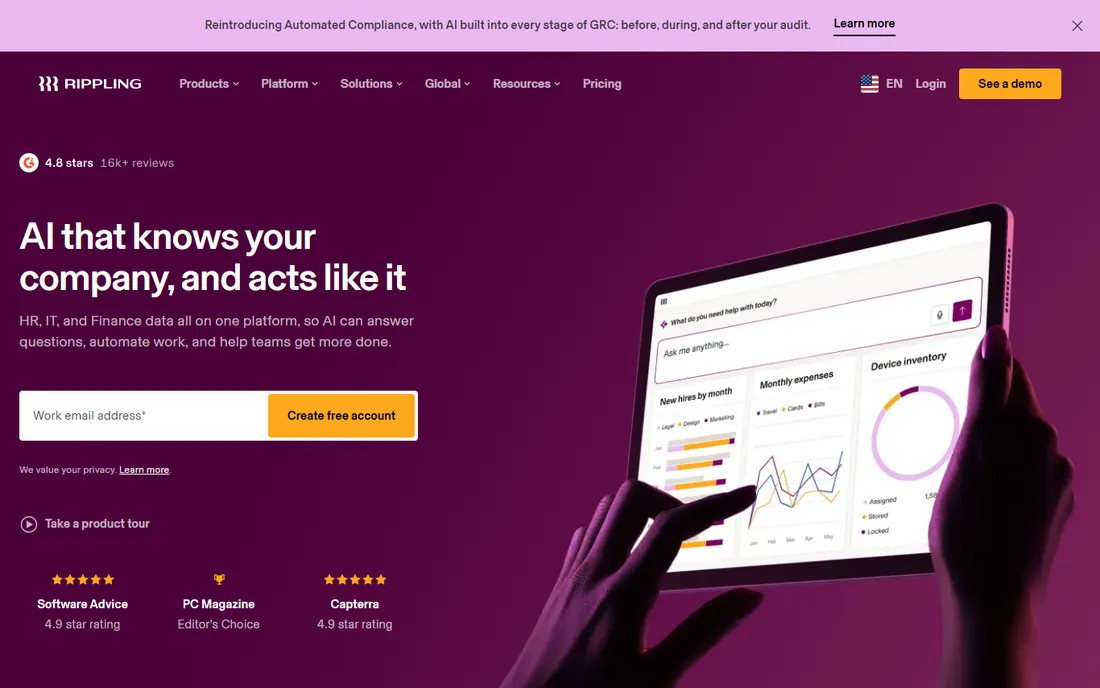
Rippling takes a different angle from traditional HCM suites. Instead of HR alone, it unifies HR, IT device and app provisioning, and finance workflows, so onboarding a new hire can create their payroll record, order their laptop, and set up their accounts in one automated flow. Pricing starts around $10 per user per month for core modules.
The catch is that the price reflects a base configuration. Each additional product area adds to the bill, and the full vision gets expensive at scale. Companies with strong IT operations teams love the automation depth; companies that only need HR may find simpler options cheaper.
What we like- Automates HR, IT provisioning, and finance in one workflow
- 600+ integrations
- Global payroll in 100+ countries
Watch out for- Modular pricing means costs rise as you add apps
- Newer platform with less enterprise track record
Starting priceSee website (custom quote)
Free planNo
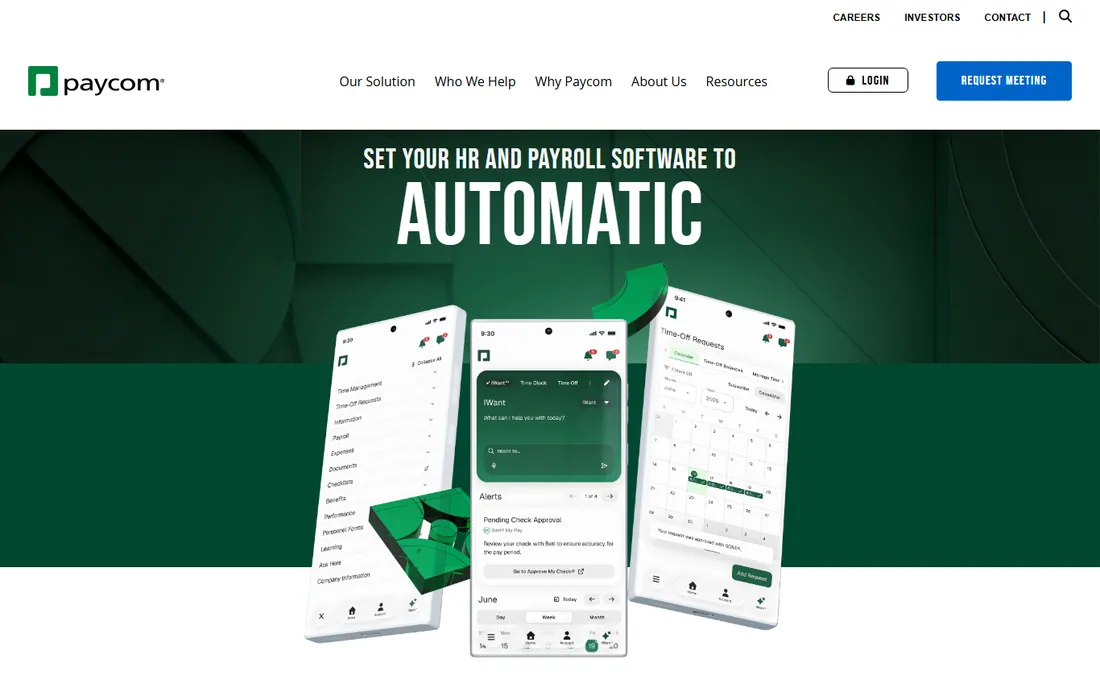
Paycom's pitch is architectural: one database for HR and payroll, with employees entering and verifying their own data. Its Beti feature lets employees review their paycheck before it runs, which cuts the correction cycle that plagues many payroll teams. Automation extends to time-off decisions and compliance workflows.
Like other enterprise HCM vendors, Paycom does not publish pricing, so budgeting requires the sales process. The breadth of automation is a strength for mid-size and large companies but can feel like overkill for small teams. Companies struggling specifically with payroll accuracy should put it high on the demo list.
What we like- Truly single database means no duplicate data entry
- Employee self-service payroll review reduces errors
- Strong automation for time off
Watch out for- No published pricing
- Feature depth can overwhelm small teams
#10
Zoho People
Best for: budget-conscious small teams in the Zoho ecosystem
Visit zoho.com
Starting priceFrom $1/user/month
Free planFree trial (30 days)
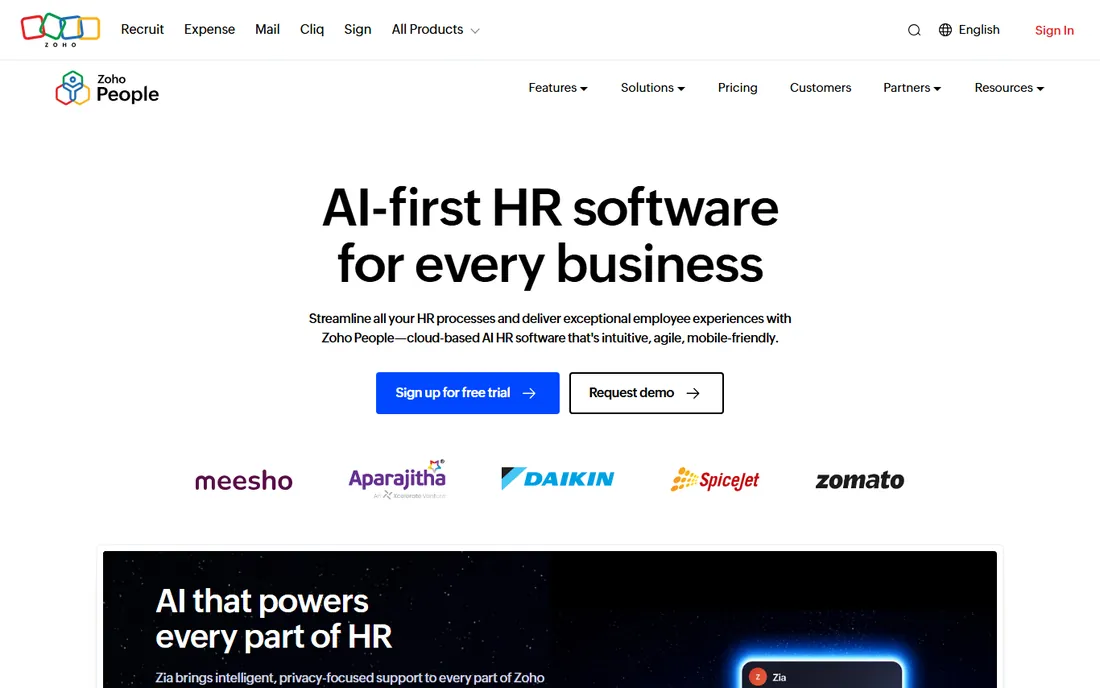
Zoho People is the value play. Starting around $1 per user per month for core HR, it covers employee records, time and attendance, leave, and performance at a price no competitor touches. The 30-day free trial applies to all plans, and integration with Zoho Recruit, Zoho Payroll, and Zoho Expense makes it a natural fit for companies already in the Zoho world.
Payroll and benefits live in separate Zoho apps rather than natively in People, which adds some friction. The platform also targets small and mid-size businesses, so enterprises with complex global requirements will outgrow it. For lean teams watching every dollar, it is hard to beat.
What we like- Lowest entry price on this list
- Generous 30-day trial on all plans
- Integrates with the wider Zoho app suite
Watch out for- Payroll runs through separate Zoho Payroll app
- Less suited to very large or complex organizations
How we chose
We compared the ten most widely deployed HCM platforms serving US small and mid-size businesses, drawing on vendor pricing pages, product documentation, and public buyer discussions on G2, Capterra, and Reddit. We prioritized pricing transparency, payroll accuracy, breadth of HR modules, integration options, and fit for different company sizes. No vendor paid for placement, and nothing here is based on hands-on product testing.
What to check before you sign an HCM contract
HCM purchases fail more often from process mistakes than from bad software. Start by listing the modules you need in year one, payroll, benefits, time tracking, recruiting, performance, and get pricing for exactly that bundle. Vendors that only quote custom pricing should still give you a per-employee-per-month range early; if they refuse, treat that as information.
Ask about implementation separately from the license. Who configures the system, how long it takes, and what it costs are three different questions, and the answers often surprise buyers. Request two or three reference customers in your industry and size band, then ask them what broke during rollout.
Finally, read the data migration terms. Export formats, historical payroll records, and contract exit terms matter most when you need them. A vendor that makes leaving easy is usually also confident about keeping you.
HCM vs. HRIS vs. payroll software: which do you actually need?
HCM is the full suite: HR, payroll, benefits, talent, and workforce management in one system. An HRIS covers core HR records and processes but may leave payroll to a specialist. Standalone payroll software does one job, paying people correctly and filing taxes, and does it well.
Most companies under 100 employees do fine with payroll software plus a light HRIS. The full HCM suite earns its cost when you run multi-state payroll, manage benefits enrollment internally, or need structured recruiting and performance processes. Buying the suite before you need it means paying enterprise prices for features that sit unused.
Frequently asked questions
How much does HCM software cost?
Entry pricing ranges from about $1 per user per month for Zoho People to around $8 to $10 per user per month for BambooHR and Rippling. Enterprise suites like Workday, SAP SuccessFactors, Oracle, UKG, Dayforce, and Paycom use custom quotes, and total cost including implementation often runs into six figures annually for mid-size companies.
What is the difference between HCM and HRIS?
HCM is the broader term, covering HR, payroll, benefits, talent management, and workforce planning in one suite. HRIS usually refers to the core HR record-keeping system, which may or may not include payroll. In practice, vendors use the terms loosely, so compare module lists rather than labels.
Which HCM software is best for small businesses?
BambooHR and Zoho People are the most small-business-friendly options here, with published entry pricing and short trials. Rippling works well for tech-forward small teams that also want IT automation. ADP Workforce Now suits small US businesses that prioritize payroll compliance.
Does HCM software handle payroll taxes?
Most platforms on this list handle payroll tax calculation and filing, either natively or through integrated payroll modules. ADP has the deepest tax-filing track record in the US. Always confirm that tax filing is included in your quote rather than assuming it, since some vendors price it as an add-on.
How long does HCM implementation take?
For mid-market platforms like BambooHR or Rippling, expect weeks. For enterprise suites like Workday, SAP SuccessFactors, or Oracle, implementations commonly run several months and involve consulting partners. Ask vendors for a written timeline with milestones before signing.
Can I switch HCM vendors mid-year?
You can, but it is painful. Payroll history, benefits enrollment, and tax records must migrate cleanly, and many companies time the switch to January to align with the tax year. Get the new vendor's migration plan and data export format in writing during evaluation.
Sources we checked (10)
- https://www.workday.com
- https://www.sap.com/products/human-resources-hcm.html
- https://www.oracle.com/human-capital-management
- https://www.ukg.com
- https://www.adp.com
- https://dayforce.com
- https://www.bamboohr.com
- https://www.rippling.com
- https://paycom.com
- https://www.zoho.com/people/
Is your product missing or out of date?
We review this list regularly. Vendors can request a listing, send updated pricing or ask about featured placement.

Shihab Mia · Founder, Rankite
Shihab has spent more than a decade helping SaaS and e-commerce brands grow through search. He writes Rankite's software buying guides from pricing pages, documentation and public user reviews. More about Shihab.