How we make this list: we compare pricing pages, product documentation and public user reviews. Rankite is independent; if a vendor ever pays for a featured spot, that listing is clearly labeled Partner.
Key takeaways
- Zola, The Knot, Joy, and Honeyfund are completely free to use, which makes them hard to beat for budget-minded couples.
- Riley & Grey is the only paid-first option here, with publishing at $39 per month or $299 per year, and it positions itself as the premium design pick.
- Joy and Honeyfund stand out for zero-fee or low-fee cash funds, while Minted is the natural choice if you want your paper invitations to match your site.
- WedSites gives the most hands-on design control with its drag-and-drop builder, and eWedding is the value pick for features like text RSVPs and payment alerts.
Quick comparison
| Tool | Best for | Starting price | Free plan |
|---|
 Zola Zola | all-in-one registry, website, and planning | Free | Yes |
 The Knot The Knot | website inside a full planning platform | Free | Yes |
 Joy Joy | free tools with smart RSVP and hotel blocks | Free | Yes |
 Riley & Grey Riley & Grey | premium design-first wedding websites | From $39/month | Free trial |
 Minted Minted | artist-designed sites with matching stationery | See website | Yes |
 WedSites WedSites | drag-and-drop customization | From $39 one-time | No |
 Honeyfund Honeyfund | cash and honeymoon registries with a built-in site | Free | Yes |
 eWedding eWedding | budget features like text RSVPs and alerts | See website | Yes |
Is your product missing or out of date?
We review this list regularly. Vendors can request a listing, send updated pricing or ask about featured placement.
#1
Zola
Best for: all-in-one registry, website, and planning
Visit zola.com
Starting priceFree
Free planYes
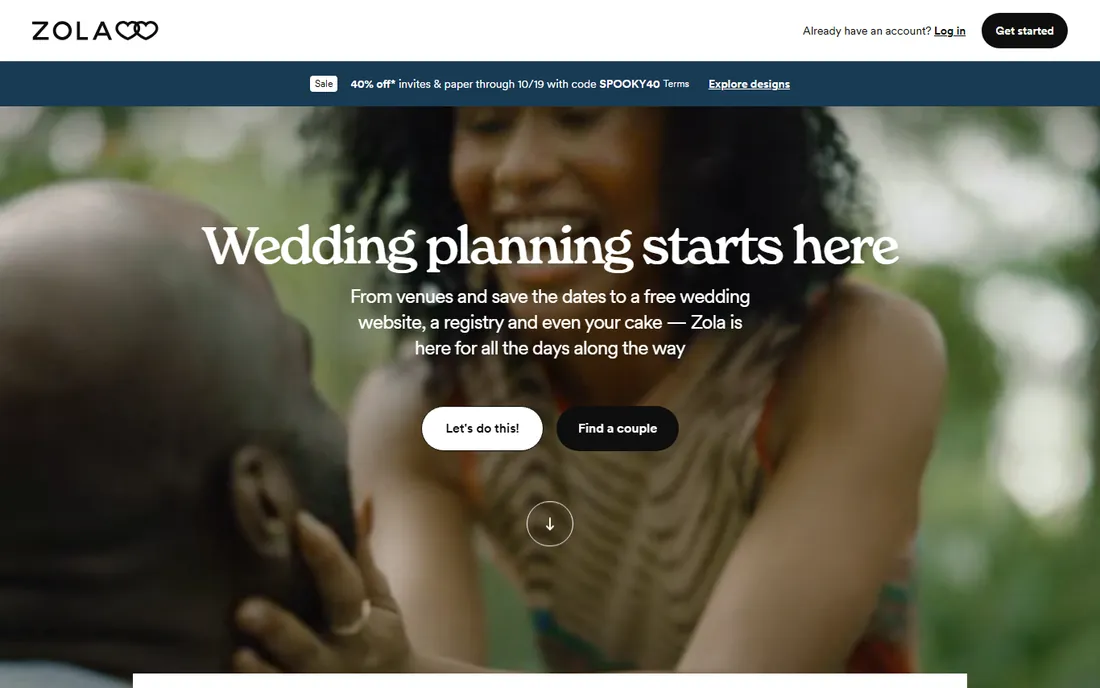
Zola started as a registry company and grew into the most complete free wedding hub. You get a wedding website, a full registry with cash funds and experiences, guest list tools, and a checklist, all inside one account and all free. The site also sells invitations and day-of paper, so couples who want everything under one brand can stay put.
The honest catch is that the design catalog, while clean, is not as wide as a stationery-first brand like Minted. Zola also leans on its own product ecosystem for paper goods, which is convenient but not always the cheapest route. Still, for couples who want the site, the registry, and the planning tools without paying a cent, Zola is the strongest package deal in this roundup.
What we like- Wedding website, registry, and planning tools in one free account
- Sells matching invitations, stationery, and signage
- Expert advisors available by chat or email
Watch out for- Design templates are polished but limited in variety
- Some planning features push toward Zola's own products
Starting priceFree
Free planYes
The Knot treats the wedding website as one piece of a much bigger planning machine. Alongside the site you get a budget tracker, checklists, a guest list manager, and one of the largest wedding vendor directories in the US, with the company claiming more than 30 million couples planned through the platform and close to 175,000 vendors listed.
That breadth is exactly what some couples want and exactly what others find cluttered. The site builder itself is solid but not especially flexible, and the templates have a traditional feel that may not suit couples chasing a modern look. If your priority is having planning tools and vendor search in the same place as your website, The Knot earns its spot.
What we like- Free wedding website with a huge planning toolkit around it
- Massive vendor directory backed by millions of couple reviews
- Popular planning app with checklists and budget tools
Watch out for- The platform promotes its vendor marketplace heavily
- Templates skew traditional and feel less modern than design-first rivals
Starting priceFree
Free planYes

Joy is the rare platform where almost everything is genuinely free. The website builder, the Smart RSVP system that lets you ask any question and track every answer, the registry with zero-fee cash funds, and a free mobile app all come at no cost. Two features stand out: discounted hotel room blocks for guests that require no credit card from you, and a magic link you can share so guests enter their own mailing addresses straight into your guest list.
The trade-off is a smaller design catalog and a leaner registry than the biggest names. Couples who want a unique visual identity may find the template options thin. But for features per dollar, which here means features for zero dollars, Joy is hard to argue with.
What we like- Genuinely free website, registry with zero-fee cash funds, and Smart RSVP
- Hotel room blocks that save guests up to 30 percent with no credit card from you
- Magic link collects guest addresses for you
Watch out for- Fewer design templates than paid rivals
- Registry selection is smaller than Zola or The Knot
Starting priceFrom $39/month
Free planFree trial
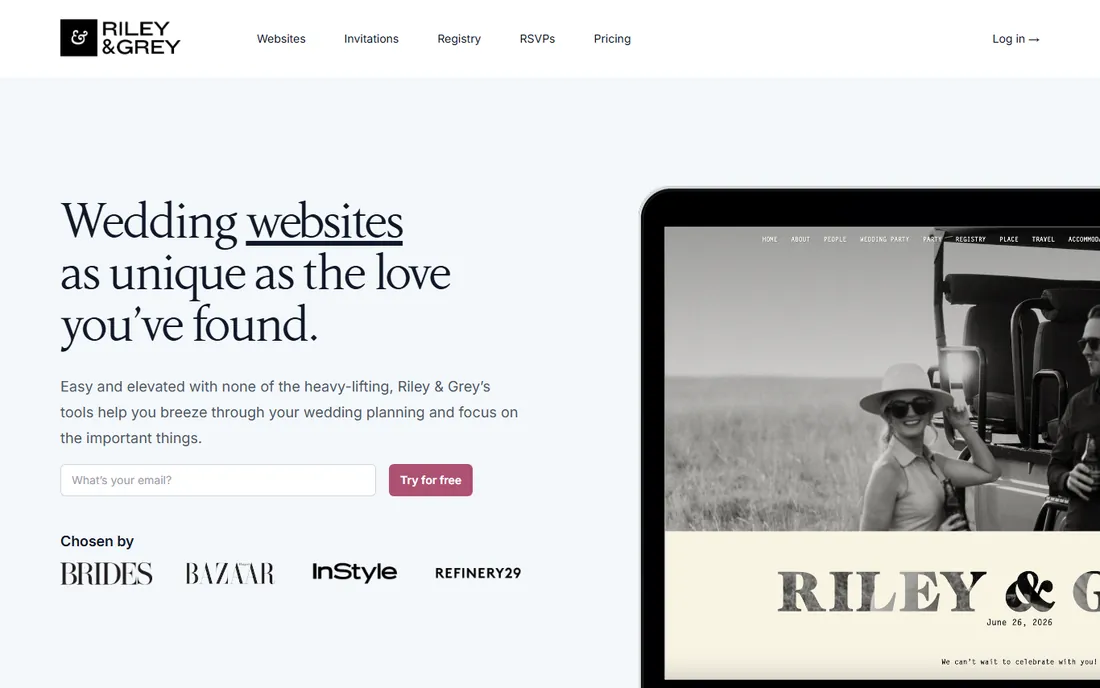
For couples who care about how the site looks above all else, Riley & Grey is the design-first option. Its templates draw on fashion and interior design, and the site reads like a boutique brand rather than a free template farm. Every membership includes a custom domain name, coordinating digital invitations and print-ready files, a cash gift registry, and RSVP tools with fine-grained control over which guests see which events.
Here is the catch: designing the site is free, but publishing it costs $39 per month or $299 for a 12-month membership, with a $39 one-time reserve plan available if you only want to hold your domain and design for now. That makes it the most expensive platform on this list. If the look of your wedding site matters as much as the wedding itself, the price may feel justified. If not, the free options above cover the same basics.
What we like- Fashion-inspired designs that look genuinely custom
- Custom domain name included with membership
- Coordinated digital and print-ready invitations
- Strong RSVP and guest management with per-event privacy controls
Watch out for- You must pay to publish the site, so it is the priciest option here
- Design variety is limited by its curated, invite-only catalog
#5
Minted
Best for: artist-designed sites with matching stationery
Visit minted.com
Starting priceSee website
Free planYes
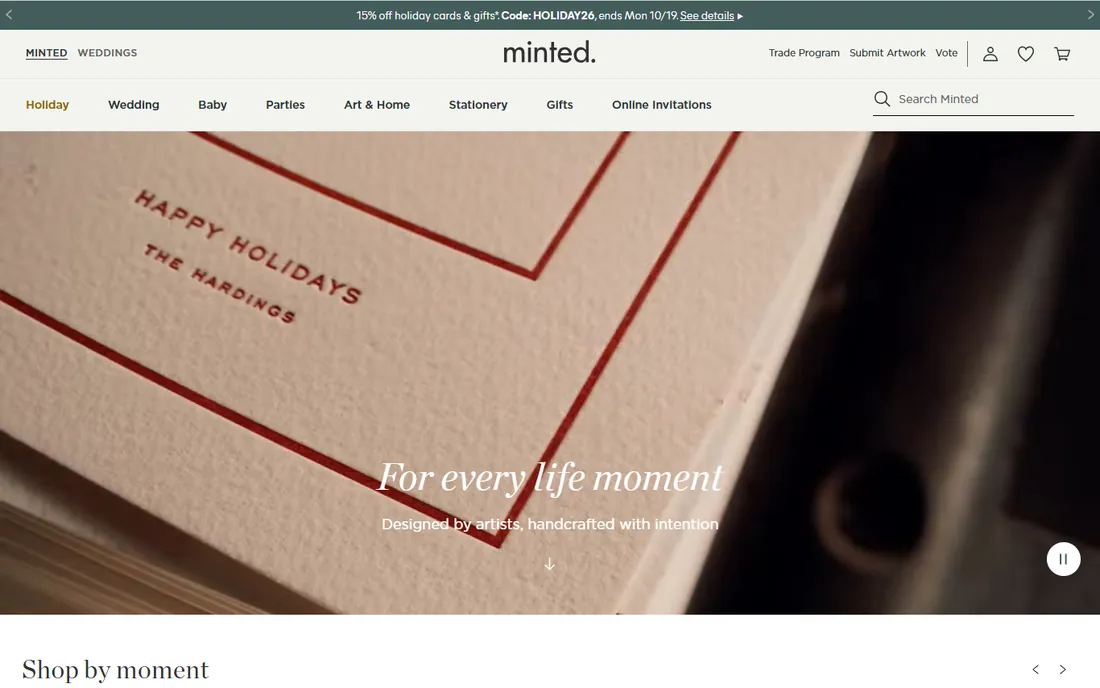
Minted comes from the stationery world, and that shows. Its wedding websites use designs from independent artists, so the look is closer to a bespoke invitation suite than a software template. Couples who order Minted invitations can match their site to their paper exactly, and the company offers premium printing techniques for the physical pieces.
The website itself is not Minted's strongest product on its own. The free tier covers the basics, but premium designs cost extra, and you cannot reshape the layout as freely as with WedSites. Minted belongs on this list for couples whose stationery vision leads the whole project: if the invitations matter most, the website that matches them is a natural bonus.
What we like- Wedding website designs from independent artists, not generic templates
- Paper invitations and stationery coordinate exactly with the site
- Premium printing options like letterpress and foil-press
Watch out for- The free website tier is basic, and premium designs cost extra
- Customization is narrower than a true drag-and-drop builder
Starting priceFrom $39 one-time
Free planNo
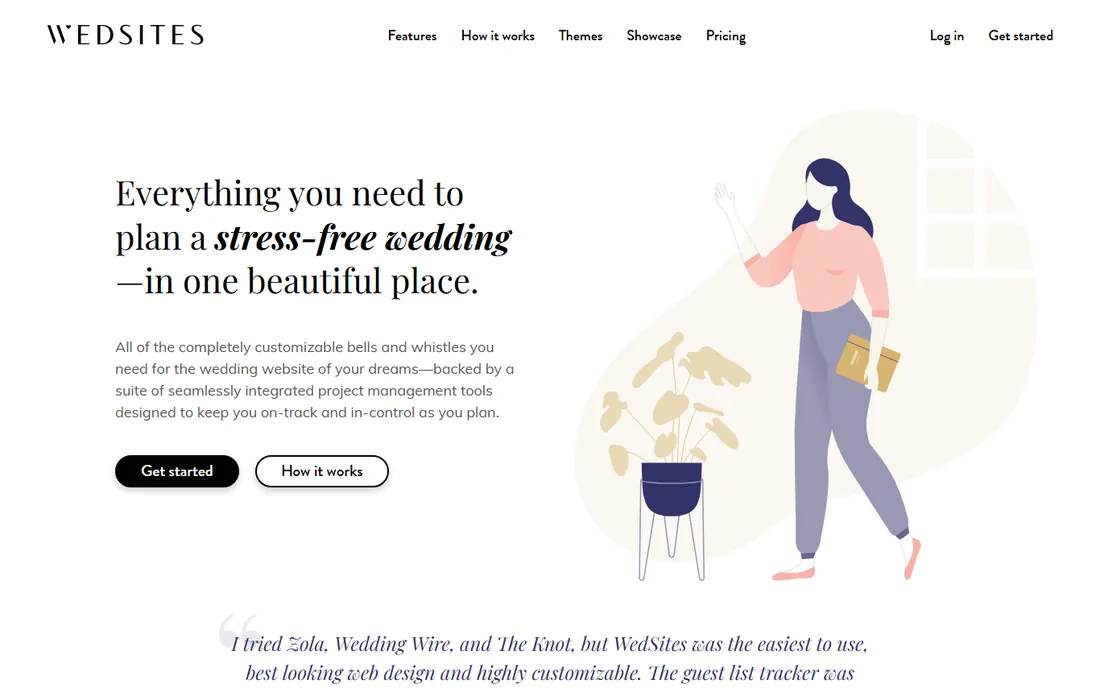
WedSites gives you the most control over how your site actually looks. The drag-and-drop builder lets you move content blocks around, adjust widths, and build a layout that does not feel like every other wedding site. Around the builder sits a real planner: a personalized checklist with deadlines, a budget tracker with payment reminders, a seating chart, and vendor tools.
The price listed on its site is $39 one-time, which is reasonable but still more than the genuinely free platforms. WedSites also lacks the huge user base of The Knot or Zola, so finding reviews and real examples takes more digging. Pick it if design control matters to you more than a free price tag.
What we like- True drag-and-drop builder with unusual layout control
- Built-in planner with checklist, budget calculator, and seating chart
- Guest communication tied to the guest list
Watch out for- No free published tier, so it costs more than the free alternatives
- Smaller user community and fewer third-party reviews
Starting priceFree
Free planYes
Honeyfund approaches the wedding website from the registry side. The core product is the cash registry, built around honeymoon funds, home down payments, and other savings goals, with a one-page wedding website, RSVP, and guest management included for free. If guests give through the Honeyfund Prepaid Mastercard or gift cards, redemption carries no fees; PayPal, Venmo, and bank transfers add a small processing fee.
The website itself is simpler than the builders above. One page covers the essentials, which suits couples who want a clean landing page for their story and fund links rather than a deep site with photo galleries and sub-pages. For honeymoon-focused couples, though, having the registry and the site in one free package is a clean fit.
What we like- Free to set up with a one-page wedding website and RSVP built in
- Honeymoon and cash funds with fee-free redemption options
- 70-plus website templates aimed at travel-minded couples
Watch out for- The site is really a one-page design, not a full multi-page builder
- Cashing out through PayPal, Venmo, or bank transfer carries a small processing fee
Starting priceSee website
Free planYes
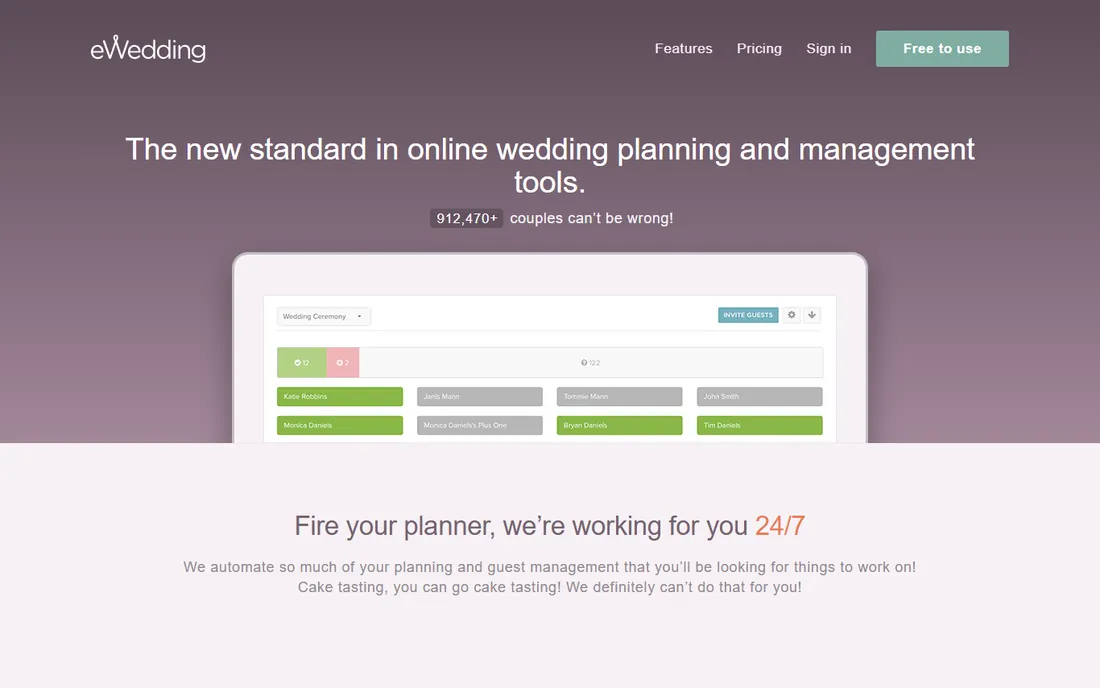
eWedding is the value pick for couples who want premium-style features without the premium price. The standout is its Total RSVP system, which can notify you by text the moment a guest responds, alongside unlimited events, a honeymoon and cash registry, custom domains with matching email addresses, and budget and payment alerts that track deposits and due dates.
The visual side is where it shows its age. The theme catalog works but lacks the polish of Zola, Joy, or Riley & Grey, and getting full access requires a paid plan. Still, eWedding's homepage says it has served more than 900,000 couples, which suggests plenty of people are happy with a functional site that just works. It is a practical choice when features matter more than fashion.
What we like- Free to start with unlimited RSVPs and events on paid tiers
- Total RSVP system with text notifications when guests respond
- Custom domain and email addresses included
Watch out for- Themes look dated next to newer builders
- Premium features sit behind a paid plan that narrows the price gap with rivals
How we chose
We compared each platform's pricing page, feature lists, and documentation, then checked them against public reviews on sites like G2, Capterra, and wedding forums, plus real-couple feedback on Reddit. We weighted honest pricing, RSVP and guest management depth, registry fees, custom domain support, and privacy controls, and we favored platforms that stay useful for couples with typical guest counts rather than luxury-planning outfits. We did not test any of these tools hands-on, and we never treat vendor marketing claims as verified facts.
The website itself takes an afternoon to build. The decisions around it are what matter, so run through these before you pick one.
RSVP flexibility
Check whether the RSVP form lets you add custom questions, such as meal choices or song requests, and whether it can handle multiple events with separate guest lists. Some platforms let you control exactly which guests see which events, which is a lifesaver for couples hosting a rehearsal dinner plus a wedding.
Registry fees and cash funds
This is where the money hides. Cash funds are now standard, but redemption fees differ: some platforms offer fee-free payouts through prepaid cards or gift cards while charging for PayPal or bank transfers. Read the fine print before you promise guests a smooth experience.
Custom domain and privacy
A custom domain makes the site feel finished and is easier to print on invitations. Also check privacy controls: password protection, hiding the site from search engines, and letting guests look themselves up by name instead of browsing a public guest list.
Matching stationery and long-term cost
If you plan to send paper invitations, a platform that coordinates its designs with print, like Minted or Riley & Grey, saves real design time. And remember the timeline: a site you publish a year before the wedding and keep up for months after should be priced accordingly, which is where the free platforms pull ahead.
One site your guests will actually open
Here is a quiet truth about wedding websites: guests mostly open them twice, once when the invitation arrives and once the week before the wedding. So the features that earn their keep are the boring ones, clear directions, hotel and parking details, dress code, and a working RSVP form.
Pick the platform that makes those basics effortless, and treat everything else, photo galleries, our-story timelines, registry wish lists, as a bonus. The couples who are happiest with their choice are usually the ones who picked the simplest tool that covered their must-haves, not the one with the longest feature list.
Frequently asked questions
Are wedding websites really free?
Mostly yes, with asterisks. Zola, The Knot, Joy, and Honeyfund let you build and publish a wedding website at no cost, and Joy's cash funds carry zero fees. The paid exceptions are Riley & Grey, which charges to publish, and WedSites, which sells a one-time plan. Custom domains are included with some platforms and cost extra with others, so check that detail.
Can I use my own domain name?
On most platforms, yes. Riley & Grey includes a custom domain with every membership, eWedding offers custom domains on its paid plans, and Zola and others let you connect a domain you already own. A custom domain is worth having if you plan to print the URL on physical invitations.
Do I still need paper invitations if I have a wedding website?
Many couples now send digital save-the-dates and invitations through platforms like Joy or Riley & Grey and skip paper entirely. Others send paper for the ceremony and use the site for logistics. If paper matters to you, Minted and Riley & Grey offer coordinated designs so the print and the site match.
How do cash registries work, and what are the fees?
You create funds for goals like a honeymoon, home down payment, or experiences, and guests contribute any amount. Joy advertises zero-fee cash funds, while Honeyfund is free to set up with fee-free redemption through its prepaid card or gift cards and a small fee for PayPal, Venmo, or bank transfers. Always confirm the current fee schedule before sharing your registry.
Can I keep my wedding website private?
Yes on most platforms. Look for password protection, the option to block search engines, and guest lookup by name instead of a public directory. Riley & Grey and Joy both offer solid privacy controls, including per-event visibility settings so different guests see different details.
How far in advance should I launch my wedding website?
Six to nine months before the wedding is the common window, which is early enough to share with save-the-dates and late enough that details are settled. Destination weddings and weddings with many out-of-town guests benefit from going live earlier, since guests need travel and hotel information sooner.
Sources we checked (8)
- https://www.theknot.com/
- https://www.zola.com/
- https://withjoy.com/
- https://www.rileygrey.com/
- https://www.minted.com/
- https://wedsites.com/
- https://honeyfund.com/
- https://ewedding.com/
Is your product missing or out of date?
We review this list regularly. Vendors can request a listing, send updated pricing or ask about featured placement.

Shihab Mia · Founder, Rankite
Shihab has spent more than a decade helping SaaS and e-commerce brands grow through search. He writes Rankite's software buying guides from pricing pages, documentation and public user reviews. More about Shihab.