How we make this list: we compare pricing pages, product documentation and public user reviews. Rankite is independent; if a vendor ever pays for a featured spot, that listing is clearly labeled Partner.
Key takeaways
- EnergyCAP is the specialist for utility bill management and auditing, with pricing that scales by the number of meters you track.
- Schneider Electric and GridPoint serve large building portfolios, with Schneider's EcoStruxure Resource Advisor covering energy, water, waste, and ESG data.
- Stem's AI platform, Athena, is now called PowerTrack Optimizer, and pairs with battery storage for peak-shaving and market participation.
- Measurabl is the only option here with a free tier, aimed at real estate teams tracking ESG performance across portfolios.
Quick comparison
| Tool | Best for | Starting price | Free plan |
|---|
 EnergyCAP EnergyCAP | utility bill auditing and accounting | See website | No |
 Schneider Electric Schneider Electric | enterprise energy and sustainability data | See website | No |
 GridPoint GridPoint | multi-site building energy optimization | See website | Free trial |
 Spacewell Energy Spacewell Energy | AI-driven building energy monitoring | See website | No |
 Stem Stem | battery storage plus AI optimization | See website | No |
 Enel X Enel X | demand response and energy services | See website | No |
 Uplight Uplight | utility customer energy programs | See website | No |
 Measurabl Measurabl | real estate ESG and building performance | See website | Yes |
Is your product missing or out of date?
We review this list regularly. Vendors can request a listing, send updated pricing or ask about featured placement.
The best energy management software
Starting priceSee website
Free planNo
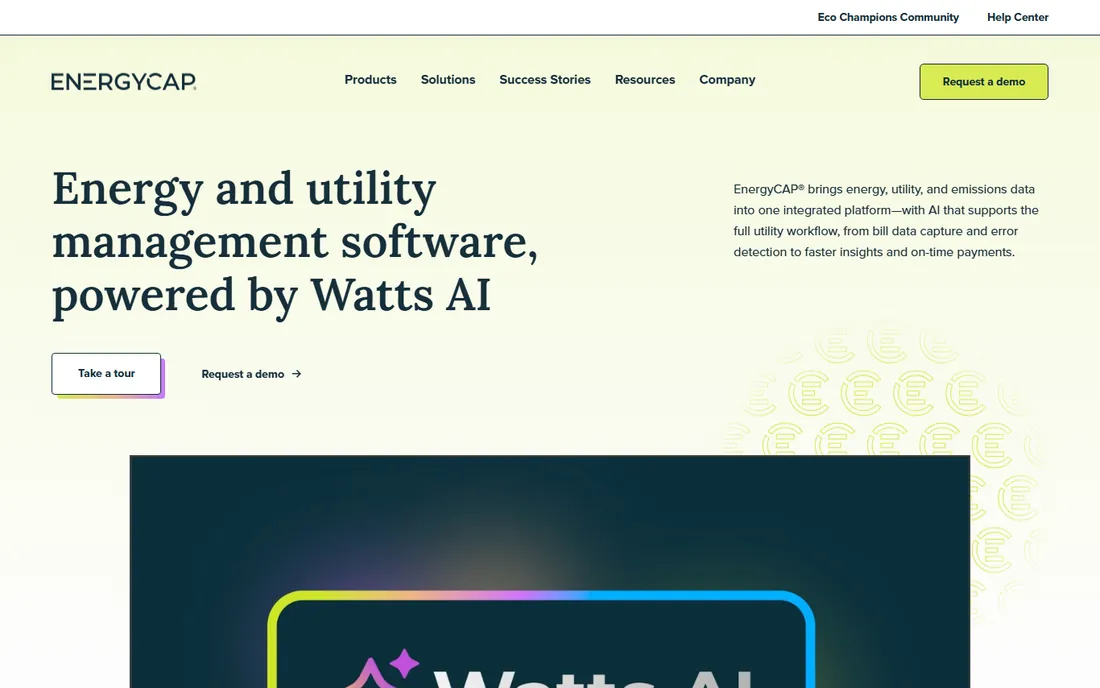
EnergyCAP is the finance-first answer to energy management. Instead of starting with equipment, it starts with utility bills: automated data capture, error detection, bill auditing, approvals, and payment, then layers on benchmarking, interval data analysis, emissions tracking, and chargebacks. The company says customers catch billing errors in about one in five bills and typically save at least 10 percent annually on utility spend.
The honest catch is that this is enterprise software with enterprise sales. Pricing scales by meter count but is only available through a quote, and the platform's finance orientation means facility teams may find it less intuitive than operations-first tools. If your biggest energy problem is thousands of bills and nobody auditing them, EnergyCAP is the specialist.
What we like- Deep utility bill capture, validation, auditing, and payment workflows
- Pricing scales with the number of meters tracked
- Trusted by governments, universities, and healthcare systems
Watch out for- Pricing is quote-based with no public tiers
- The interface feels data-heavy and finance-oriented rather than operational
#2
Schneider Electric
Best for: enterprise energy and sustainability data
Visit se.com
Starting priceSee website
Free planNo
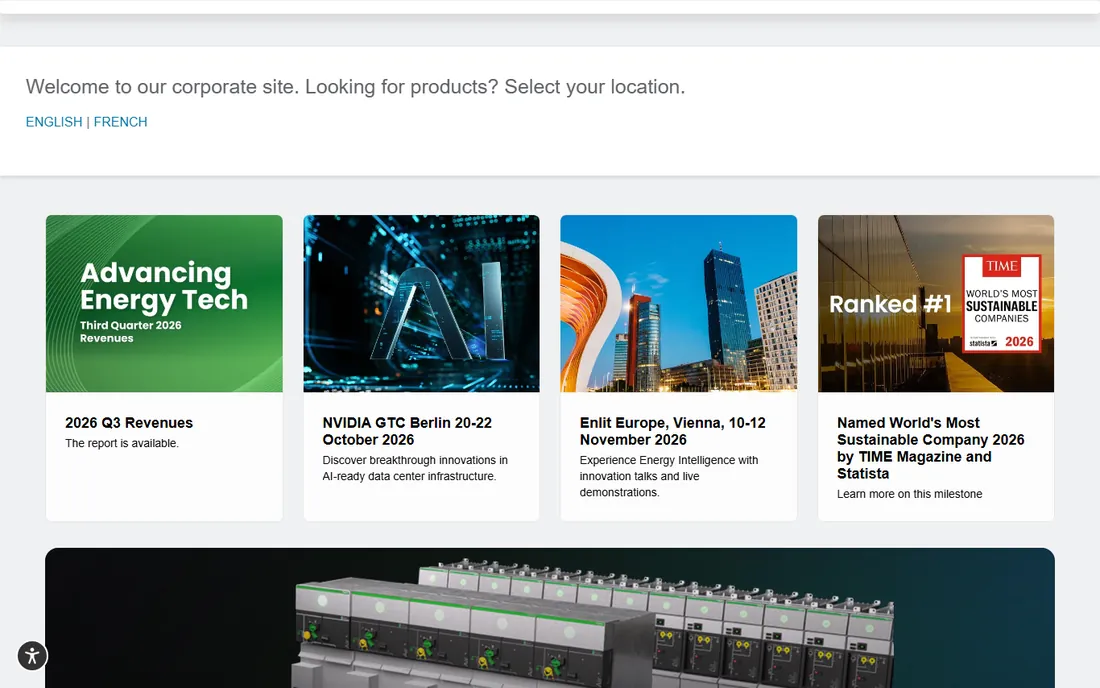
Schneider Electric pairs its energy management software with one of the largest sustainability advisory businesses in the world. The core platform, EcoStruxure Resource Advisor, aggregates cross-enterprise energy and sustainability data into a single cloud dashboard, with AI helping to validate bills, track budgets, benchmark facilities, and report carbon across scopes.
The honest catch is the audience. This is software for companies with portfolios, procurement teams, and ESG reporting obligations, not for a small business watching one electric meter. Pricing is quote-based and the sales process is consultative. For enterprises that want one vendor for data, analytics, and advisory, Schneider is the safe, established choice.
What we like- EcoStruxure Resource Advisor centralizes energy, water, waste, and ESG data in one cloud platform
- 400-plus data streams with AI-assisted analytics
- Global advisory services alongside the software
Watch out for- Clearly built for large enterprises, not small businesses
- Pricing and packaging require a direct conversation
Starting priceSee website
Free planFree trial

GridPoint sits between the bill-focused tools and the AI-only optimizers. Its platform combines asset-level submetering, intelligent HVAC control, and energy management software with professional services, and it claims deployments in more than 18,000 commercial buildings with up to 30 percent energy savings. The anomaly detection flags failing equipment before it becomes a crisis, which matters for retailers and restaurant chains with hundreds of identical sites.
The honest catch is the commitment. GridPoint typically involves hardware at your sites, so this is not a sign-up-and-go SaaS trial, although the company does offer a three-month pilot program. Pricing is quote-based. For multi-site operators who want both visibility and automated control, it is one of the most complete options.
What we like- Combines submetering, HVAC control, and demand response in one platform
- Automated anomaly detection and equipment-level analytics
- Three-month pilot program to test before committing
Watch out for- Hardware installation is part of the package, so onboarding takes time
- Pricing is quote-based and aimed at chains with many sites
Starting priceSee website
Free planNo
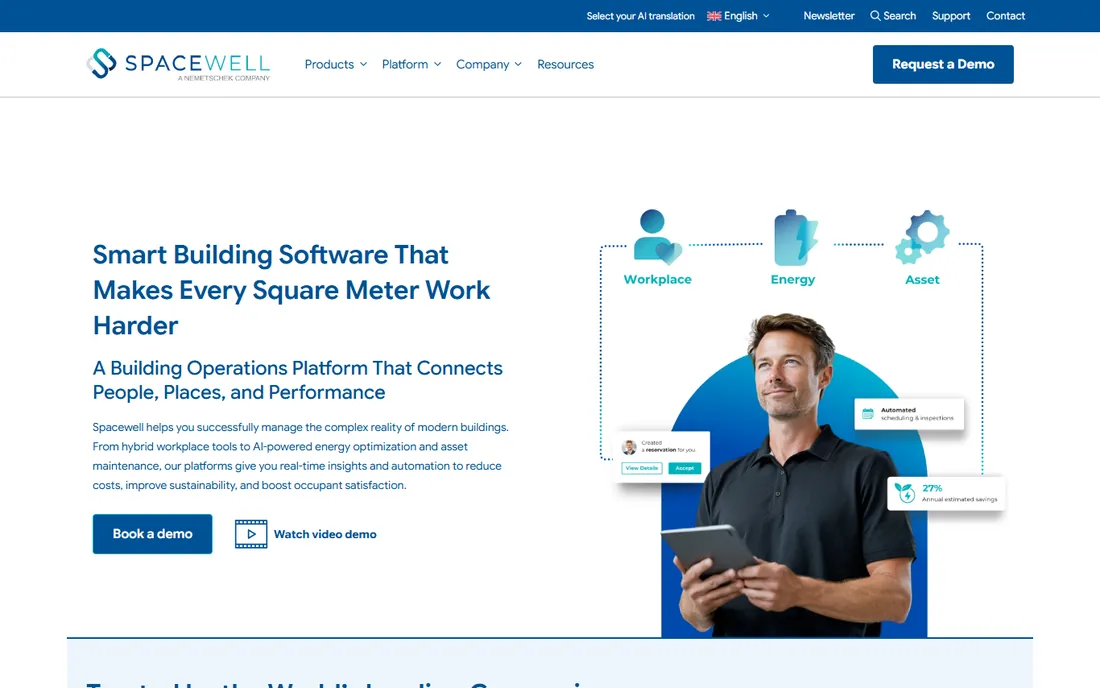
Spacewell Energy is the current name for the platform formerly known as Dexma, the Barcelona-born energy intelligence software that joined Spacewell and the Nemetschek Group. It monitors real-time energy consumption across building portfolios, detects inefficiencies with AI, and benchmarks performance site to site, aimed at lowering bills and hitting climate targets.
The honest catch is packaging. Spacewell sells a smart building suite covering workplace, energy, and asset management, so buyers focused purely on energy should confirm they can buy the energy module on its own terms. Pricing is quote-based. For European portfolio owners especially, it is a well-established, well-supported choice.
What we like- AI-powered anomaly detection and benchmarking across building portfolios
- Part of a broader smart building suite covering workplace and assets
- Dexma's energy platform now under the Spacewell and Nemetschek umbrella
Watch out for- Pricing is not published
- The energy product sits inside a larger platform that may be more than smaller teams need
Starting priceSee website
Free planNo
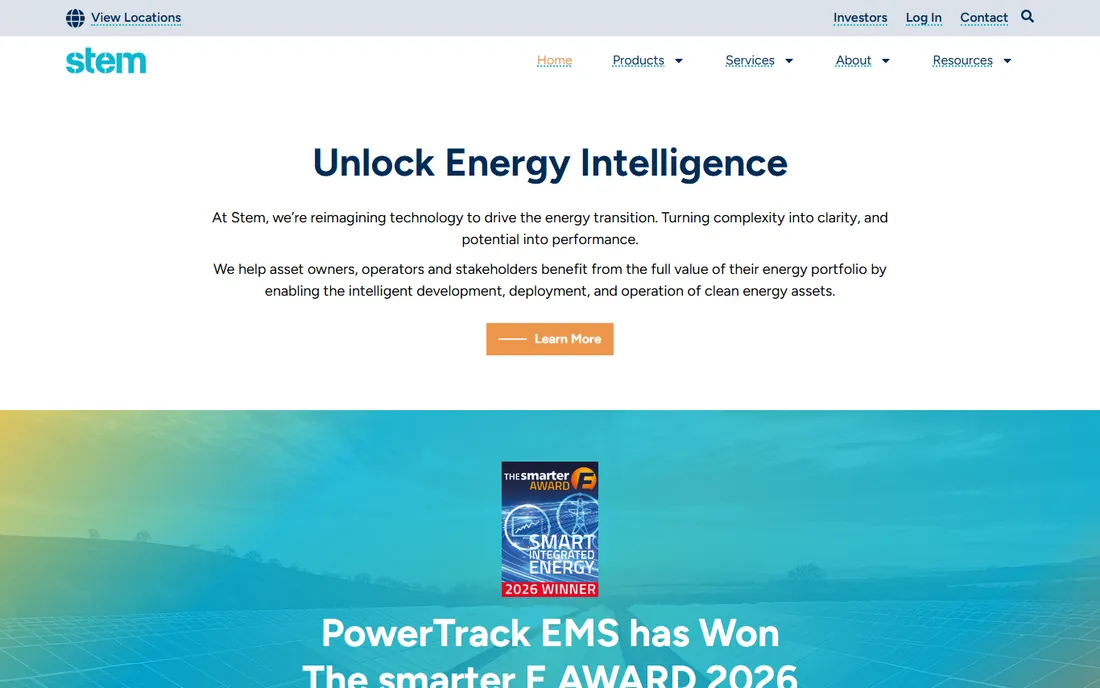
Stem pairs its AI software with battery storage and solar to cut peak demand charges and earn revenue from energy markets. Its long-running AI platform Athena has been renamed PowerTrack Optimizer, while the PowerTrack suite handles monitoring, diagnostics, and performance reporting for solar and storage assets. The pitch is automatic: charge when power is cheap, discharge at peaks, and let the software handle the timing.
The honest catch is the use case. Stem shines for organizations with storage, solar, or EV charging assets to optimize, not for teams whose main need is auditing utility bills. It is enterprise software with enterprise pricing. If you are investing in batteries or already have them, Stem's software is the brains worth evaluating.
What we like- AI platform optimizes battery storage, solar, and grid interaction automatically
- PowerTrack suite for solar and storage asset monitoring
- Serves asset owners in more than 50 countries
Watch out for- It is built around clean energy assets, so pure bill management is not its strength
- Enterprise-grade pricing and sales process
Starting priceSee website
Free planNo
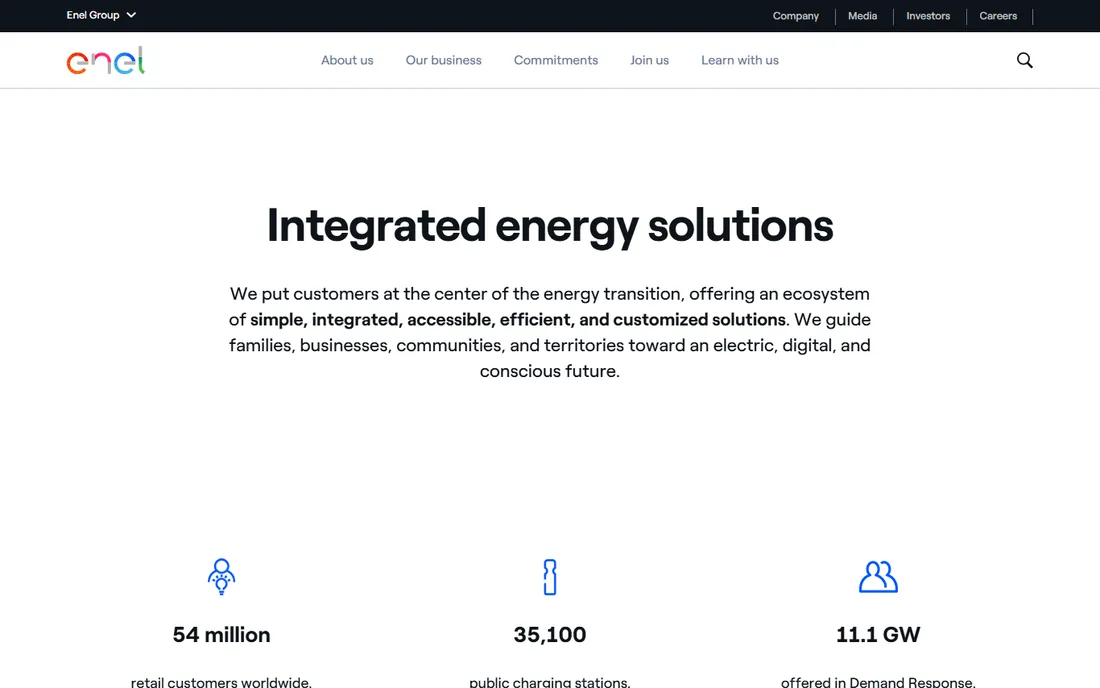
Enel X, the Enel Group's energy services division, is less a software product and more an energy partner with software inside. Its demand response business, built partly on the former EnerNOC, lets businesses earn money by reducing consumption when the grid is stressed, and the company reports 11.1 GW offered in demand response worldwide. Around that sit efficiency services, energy supply, storage, and e-mobility offerings.
The honest catch is the model. You are buying into programs and services, not downloading a dashboard, so the experience is consultative and contract-based. For businesses that want to turn their flexibility into revenue rather than just track kilowatt-hours, Enel X's scale is the draw.
What we like- One of the world's largest demand response portfolios at 11.1 GW
- Integrated energy services from efficiency to e-mobility
- Global reach through the Enel Group
Watch out for- It is a services business as much as a software platform
- Less of a self-serve product than the SaaS tools on this list
Starting priceSee website
Free planNo
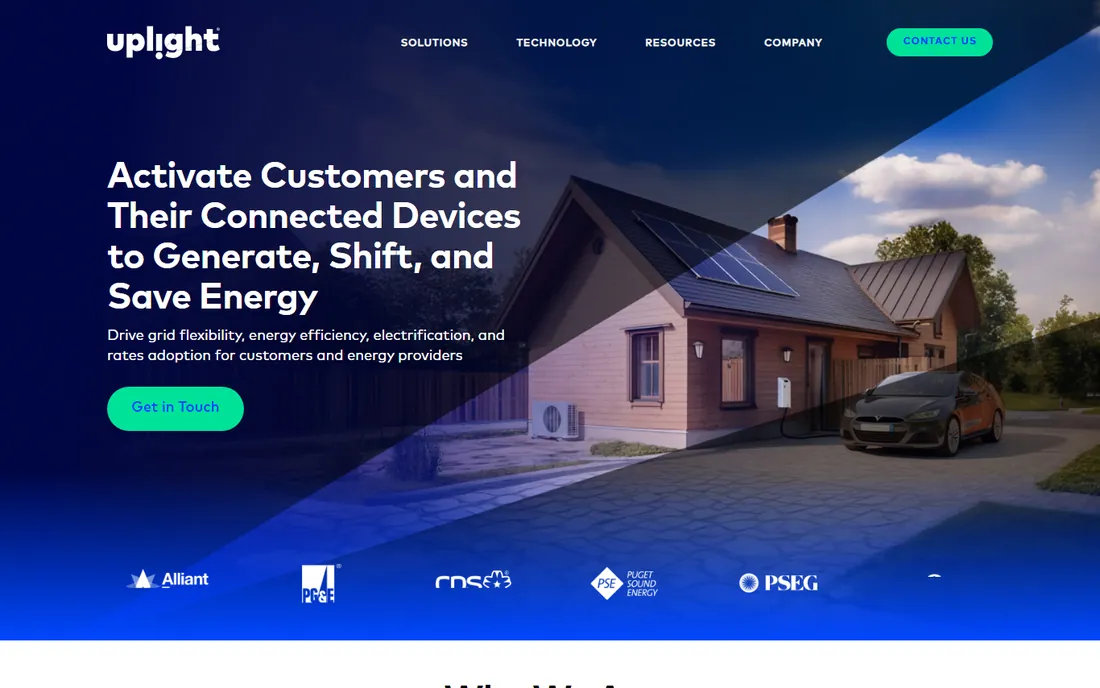
Uplight is the odd one out in a useful way: it sells to utilities, not to the businesses consuming energy. Its platform helps more than 80 electric and gas utilities run energy efficiency programs, demand response, rate coaching, and customer marketplaces, with 8.5 GW under management and hundreds of millions of annual customer touchpoints.
The honest catch is obvious from that description. If you are a business looking to manage your own buildings, Uplight is not your vendor. It earns its place on this list because utility-run programs, rebates, thermostats, and demand response payments, are often the cheapest energy savings available, and Uplight is the software running many of them.
What we like- Purpose-built for utilities running customer energy programs
- Demand management, rates engagement, and energy efficiency in one Demand Stack
- 8.5 GW under management
Watch out for- Sold to utilities and energy providers, not directly to businesses managing their own energy
- Enterprise contracts only
Starting priceSee website
Free planYes
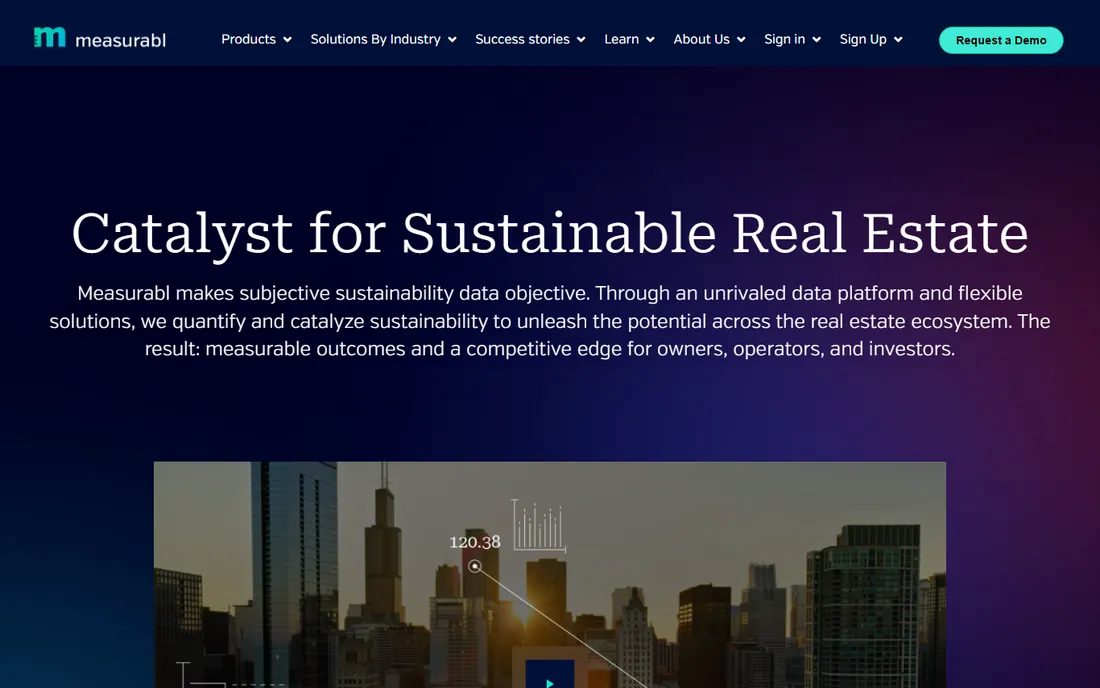
Measurabl is the ESG data platform for commercial real estate. Owners, operators, and investors use it to measure, manage, and report sustainability performance across portfolios, with benchmarking against a global dataset of buildings and support for frameworks like GRESB and CDP. The company claims more than 1,000 organizations and billions of square feet tracked.
The honest catch is scope. Measurabl will not control your HVAC or audit your bills at the line-item level; it is built for reporting, benchmarking, and disclosure. The free tier makes it the easiest starting point on this list for a real estate team that needs to answer the question of how its buildings perform. For that job, nothing else here is as focused.
What we like- Free tier for getting started with building performance tracking
- Purpose-built for real estate ESG reporting across large portfolios
- Benchmarks against a large global building dataset
Watch out for- It is ESG and reporting-first, not an operations or controls platform
- The free tier covers basics, with advanced features paid
How we chose
We reviewed each vendor's product pages, documentation, and pricing materials, then cross-checked with public reviews on G2, Capterra, and industry sources, plus the FeaturedCustomers Summer 2026 energy management report. We weighted product maturity, the breadth of the platform, transparency of pricing, and fit for organizations managing real energy costs rather than just reporting them. We did not test any of these tools hands-on, and pricing in this category is almost entirely quote-based, so we verified only what vendors publish.
What to check before you buy energy management software
This is a category where a wrong fit costs six figures and a year. Run through these checks before signing anything.
Start with your actual problem
Bill auditing, building automation, demand response revenue, and ESG reporting are different products. EnergyCAP and Measurabl serve the finance and reporting side, GridPoint and Spacewell Energy serve operations, Stem and Enel X serve assets and markets. Buying the wrong type means paying for features you will never open.
Ask how pricing scales
Most vendors price per meter, per site, or per building, and none publish a simple price list. Get the full schedule in writing: implementation fees, hardware costs, per-site fees, and what happens when you add locations. A pilot program, like GridPoint's three-month trial, is worth more than any demo.
Check the data you will need to feed it
Every platform is only as good as its data. Ask what meter data, bill history, and interval data you need to provide, how long onboarding takes, and whether the vendor handles the integration. Tools that need interval meters at every site have a longer runway than bill-based tools.
Plan for who runs it
These platforms need owners. Assign someone to review the alerts, chase the anomalies, and act on the recommendations, or the savings stay theoretical. The best software in this category pays for itself through the actions it triggers, not the dashboards it renders.
The AI shift in energy management
The notable change this year is how much of the work AI now does unattended. Bill auditing that used to need an analyst, anomaly detection that used to need a building engineer, and battery dispatch that used to need a trader are increasingly automated. The platforms winning evaluations are the ones that turn data into actions, approved chargebacks, dispatched batteries, adjusted setpoints, without waiting for a human to log in. When you demo these tools, ask what happens automatically and what still needs your team.
Frequently asked questions
How much does energy management software cost?
Almost every vendor in this category prices by quote, usually per meter, per site, or per building, plus implementation and sometimes hardware. Third-party sources suggest smaller deployments can start in the low thousands per year, while enterprise portfolios run far higher. Get a written quote based on your actual site count before budgeting.
What is the difference between energy management and utility bill management?
Utility bill management focuses on the financial side: capturing bills, auditing for errors, approving payments, and allocating costs. Energy management is broader, covering real-time monitoring, equipment control, and optimization. Tools like EnergyCAP start with bills; tools like GridPoint start with buildings.
Can energy management software really cut costs?
The mechanisms are real: catching billing errors, shifting usage off peak rates, automating HVAC schedules, and participating in demand response. Vendors report savings in the 10 to 30 percent range, and GridPoint cites up to 30 percent. Actual results depend on your starting point and whether someone acts on the findings.
Do I need new meters or hardware?
It depends on the platform. Bill-based tools like EnergyCAP and Measurabl work from the data you already have. Operations platforms like GridPoint typically install submeters and controls at your sites. Ask during the pilot what hardware is required and who pays for it.
What is demand response and should my business care?
Demand response pays you to reduce electricity use when the grid is stressed. Providers like Enel X and Uplight-powered utilities aggregate that flexibility and share the revenue. If your business can shift or briefly curtail load, it is one of the few energy programs that pays rather than costs.
How long does implementation take?
Bill-based platforms can onboard in weeks once data flows. Hardware-dependent rollouts across many sites take months. Ask every vendor for a realistic timeline tied to a reference customer with a similar portfolio size, and get the pilot terms in writing.
Sources we checked (8)
- https://www.energycap.com/
- https://www.se.com/
- https://www.gridpoint.com/
- https://spacewell.com/
- https://stem.com/
- https://corporate.enelx.com/
- https://uplight.com/
- https://www.measurabl.com/
Is your product missing or out of date?
We review this list regularly. Vendors can request a listing, send updated pricing or ask about featured placement.

Shihab Mia · Founder, Rankite
Shihab has spent more than a decade helping SaaS and e-commerce brands grow through search. He writes Rankite's software buying guides from pricing pages, documentation and public user reviews. More about Shihab.