How we make this list: we compare pricing pages, product documentation and public user reviews. Rankite is independent; if a vendor ever pays for a featured spot, that listing is clearly labeled Partner.
Key takeaways
- Cartesia is the latency leader for real-time voice, with a genuine free tier and paid plans starting at $5 per month.
- Bland and Retell AI run production AI phone agents, with Retell publishing per-minute pricing from $0.07 per minute and $10 in free signup credits.
- WellSaid Labs and Speechify serve content teams that need natural-sounding narration and voiceovers at scale.
- Resemble AI has pivoted to deepfake detection and watermarking, and Hume AI now focuses on testing voice AI quality, both reflect how the category matured in 2026.
Quick comparison
| Tool | Best for | Starting price | Free plan |
|---|
 Cartesia Cartesia | real-time TTS for voice agents | From $5 per month | Yes |
 Bland Bland | enterprise AI phone agents | See website | No |
 Retell AI Retell AI | production AI call center agents | From $0.07 per minute | Yes |
 Vapi Vapi | developer-built voice agents | See website | No |
 Hume AI Hume AI | voice AI testing and evaluation | See website | No |
 WellSaid Labs WellSaid Labs | enterprise-quality voiceovers | From $19 per month | Free trial |
 Speechify Speechify | AI narration and voiceovers | See website | Yes |
 Resemble AI Resemble AI | voice deepfake detection | See website | Free trial |
Is your product missing or out of date?
We review this list regularly. Vendors can request a listing, send updated pricing or ask about featured placement.
The best voice AI software
Starting priceFrom $5 per month
Free planYes
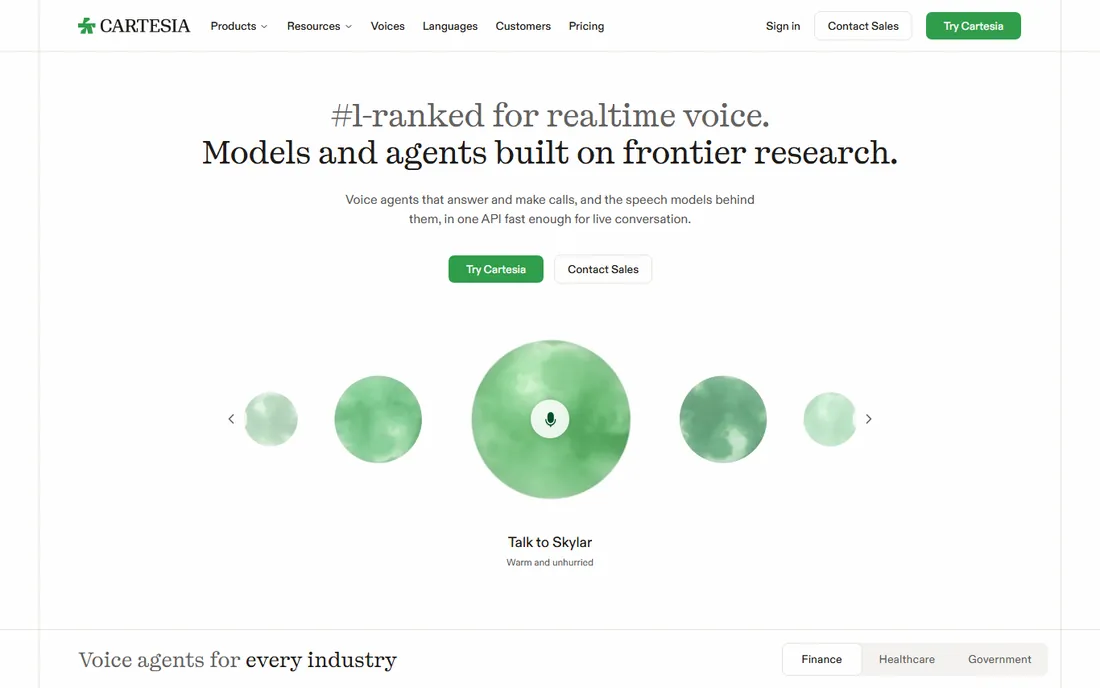
Cartesia is the specialist for the moment between "the user stops talking" and "the voice answers." Built on state space model research by its founding team, its Sonic models stream speech with roughly 90 milliseconds to first audio, which is what makes AI phone agents feel natural instead of laggy. The Line agent platform adds telephony, call recording, and latency metrics, so the whole loop runs on Cartesia infrastructure.
The honest catch is the license split. The free tier is generous for prototyping, 20,000 credits plus a small agent budget, but it is non-commercial, so shipping anything real requires the $5 per month Pro plan. And if you need polished narration for video rather than live conversation, content-focused tools will serve you better. For voice agents, though, Cartesia is the developer favorite.
What we like- Time-to-first-audio around 90 milliseconds, ideal for live conversation
- Genuine free tier with 20,000 monthly credits for prototyping
- Instant voice cloning from a short audio sample
Watch out for- The free tier does not allow commercial use
- Smaller voice library than the big content-focused platforms
Starting priceSee website
Free planNo
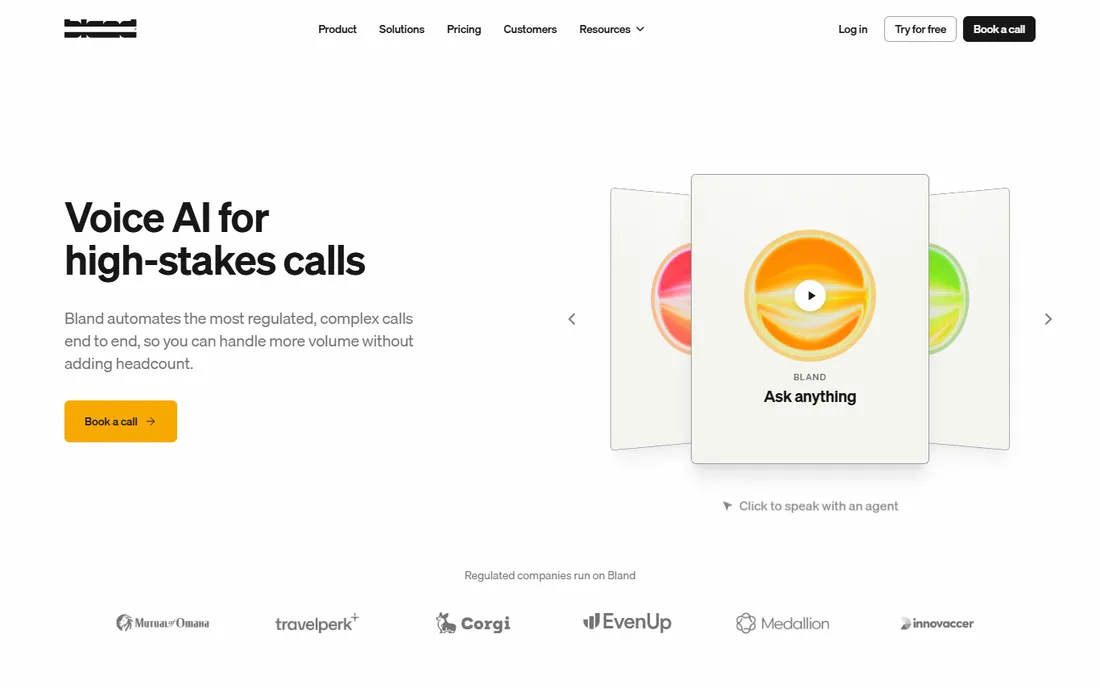
Bland sells to companies where a phone call cannot go wrong: banks, healthcare providers, insurers. Unlike platforms that stitch together third-party speech and language models, Bland runs every layer on its own infrastructure, which means no outside model change can silently break your calls and customer data never trains someone else's model. Agents handle IVR replacement, appointment scheduling, payments, and overflow coverage across more than 40 languages.
The honest catch is that this is enterprise software with enterprise sales. Pricing is usage-based and contracted by volume, so small teams will find the voice-agent platforms with self-serve pricing more accessible. For regulated businesses deploying at scale, Bland's full-stack control and compliance posture are the differentiators.
What we like- Owns the full voice stack, speech to text, language model, and speech synthesis, on its own infrastructure
- Built for regulated industries with SOC 2, HIPAA, and PCI compliance
- One per-minute rate with no per-token or per-feature charges
Watch out for- Enterprise positioning and quote-based pricing
- Overkill for small businesses that just need a voiceover tool
Starting priceFrom $0.07 per minute
Free planYes
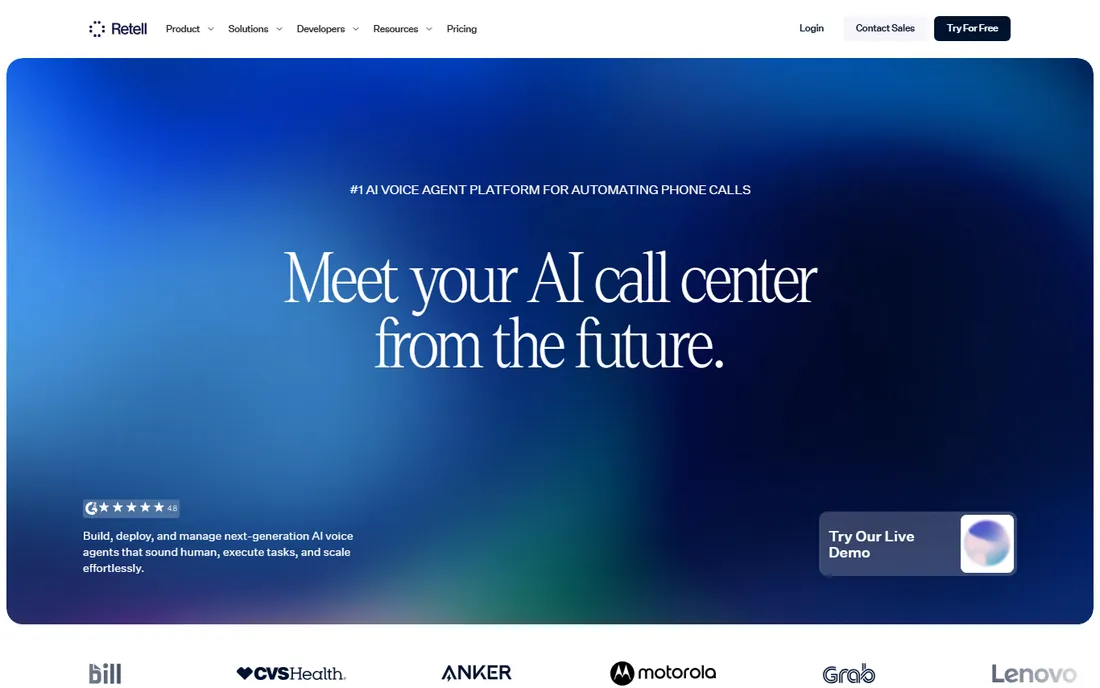
Retell AI is the production-ready voice agent platform with the most transparent pricing in the category. Voice agents cost between $0.07 and $0.31 per minute depending on models and voices, with no annual contract, and new accounts get $10 in free credits to build, simulate, and run live test calls. The platform handles natural turn-taking, mid-sentence interruptions, human handoffs, outbound campaigns, and CRM write-back.
The honest catch is scope. Retell gives you the machinery, your team designs the conversation, integrates the systems, and owns the compliance. Its own FAQ is refreshingly direct that outbound calling is regulated and compliance depends on how you use the platform. For teams with the technical chops, it is one of the fastest paths from idea to a working AI call center.
What we like- Published per-minute pricing from $0.07 with no annual contract
- $10 in free credits at signup with full platform access
- Strong workflow accuracy scores in independent benchmarks
Watch out for- You still supply the use case, scripting, and integrations, it is a platform, not a managed service
- Per-minute costs add up at high volume
Starting priceSee website
Free planNo
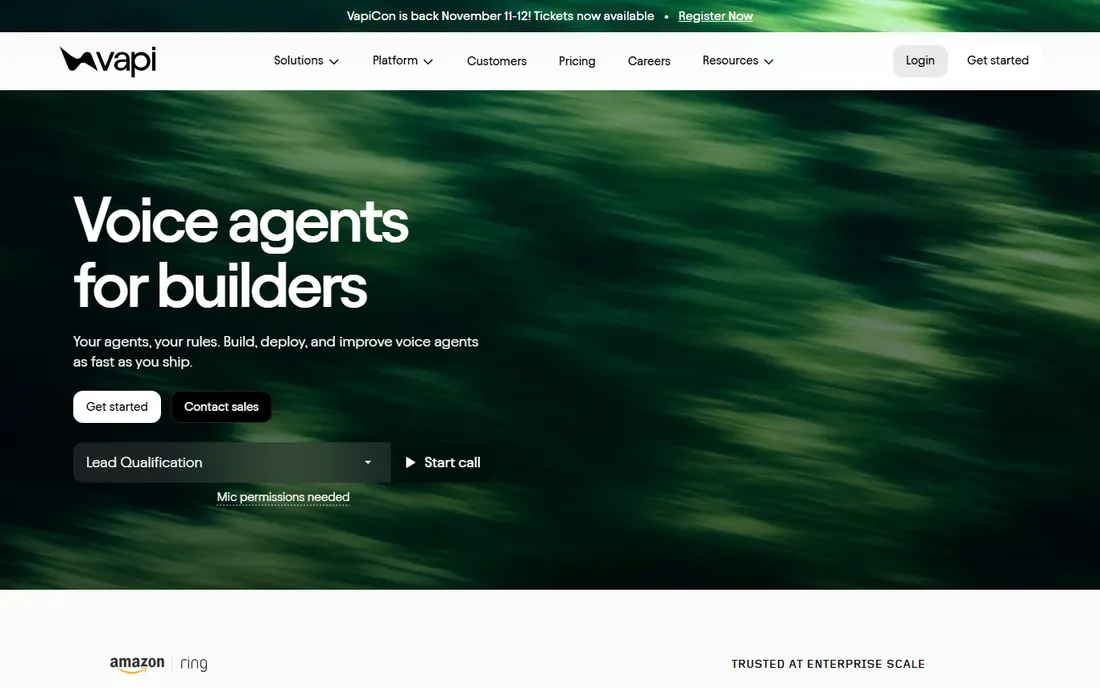
Vapi pitches itself as voice agents for builders, and the platform shows it. Configuration covers voice, conversation flow, telephony, and integrations in one place, with real-time monitoring and enterprise features like SSO, guardrails, and reserved capacity. The company reports over a billion calls supported and cites Ring as a customer running 100 percent of inbound volume through Vapi agents.
The honest catch is positioning. This is infrastructure for teams that ship software, not a turnkey product for a small business owner. Non-technical buyers should look at the no-code agent platforms instead. For developers, Vapi's control over conversation logic and fast deployment cycle are the appeal.
What we like- Built explicitly for builders with fast iteration from prompt to production
- Sub-500ms average latency with enterprise scaling
- SOC 2, HIPAA, and PCI compliance with guardrails against hallucinations
Watch out for- Pricing details are not published on the site
- Squarely aimed at developers, so non-technical teams will need help
#5
Hume AI
Best for: voice AI testing and evaluation
Visit hume.ai
Starting priceSee website
Free planNo
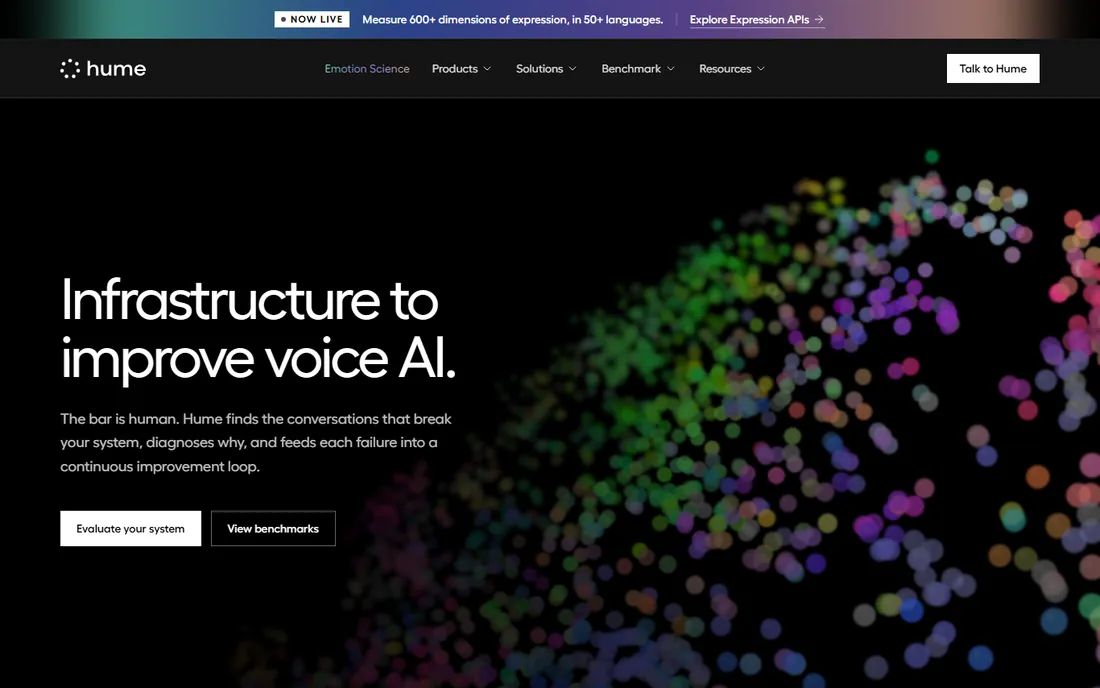
Hume AI shows how the category matured: the company now sells the infrastructure to test voice AI rather than voice models themselves. Its VoiceEQ platform turns real-world use cases into evaluation suites, stress-tests agents, diagnoses failures, and validates improvements. The insight driving it is that a task can succeed while the conversation fails, humans judge voice on timing, tone, interruption, and expression.
The honest catch is that Hume will not generate a single voiceover for you. It belongs in this list because every team deploying voice agents eventually needs to know whether they are actually good, and Hume measures what transcripts miss. If you are building or buying voice AI, budget for evaluation too.
What we like- Measures voice AI on timing, tone, and expression, not just transcripts
- VoiceEQ generates targeted evaluation suites from real conversation data
- Human-feedback infrastructure grounds scores in real judgment
Watch out for- It is a testing platform, not a voice generator or agent builder
- Pricing and packaging are aimed at AI teams, not casual users
Starting priceFrom $19 per month
Free planFree trial
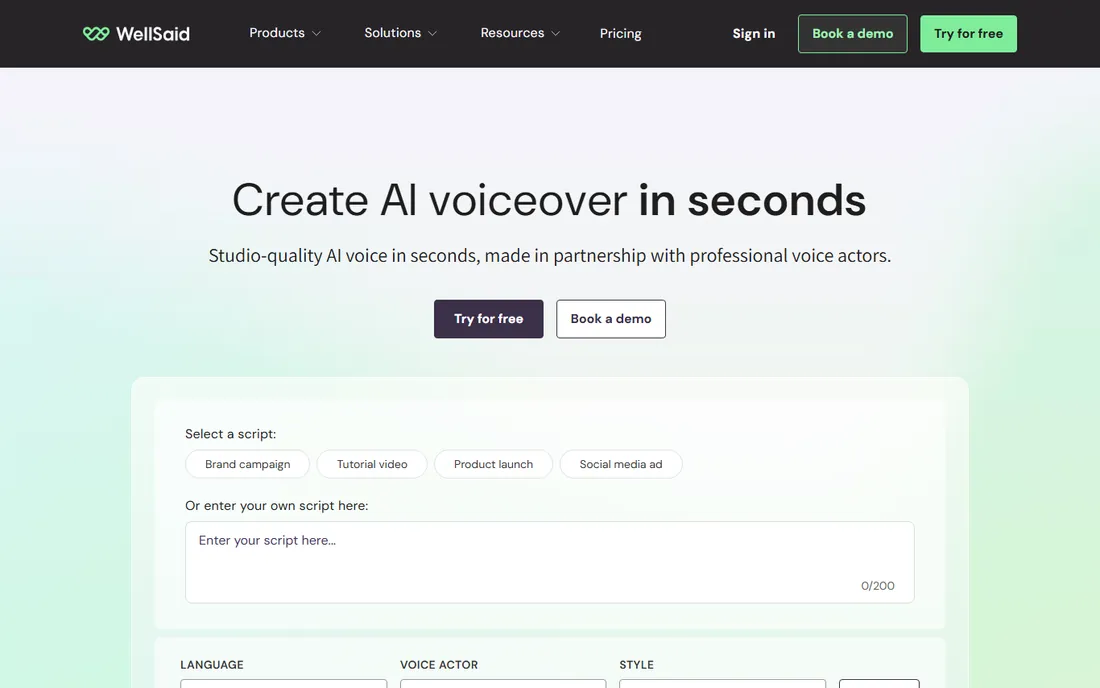
WellSaid Labs targets the unglamorous but valuable job of professional audio: training modules, product videos, commercials, and e-learning narration that needs to sound consistent every time. Its studio gives word-level control over emphasis and pronunciation, which is what separates it from tools that just read text aloud. The company offers a free trial so teams can test voice quality before committing.
The honest catch is focus and price. WellSaid is English-first and priced for businesses, starting around $19 per month for paid tiers, so casual creators get better value from consumer apps. For teams replacing paid voice actors or producing content at scale, the consistency and control justify it.
What we like- Word-level control over pitch, pacing, and pronunciation
- Consistent, professional English voices trusted by large companies
- API available for embedding voice generation in products
Watch out for- English-first, so multilingual needs go elsewhere
- Paid plans cost more than consumer-grade TTS apps
Starting priceSee website
Free planYes
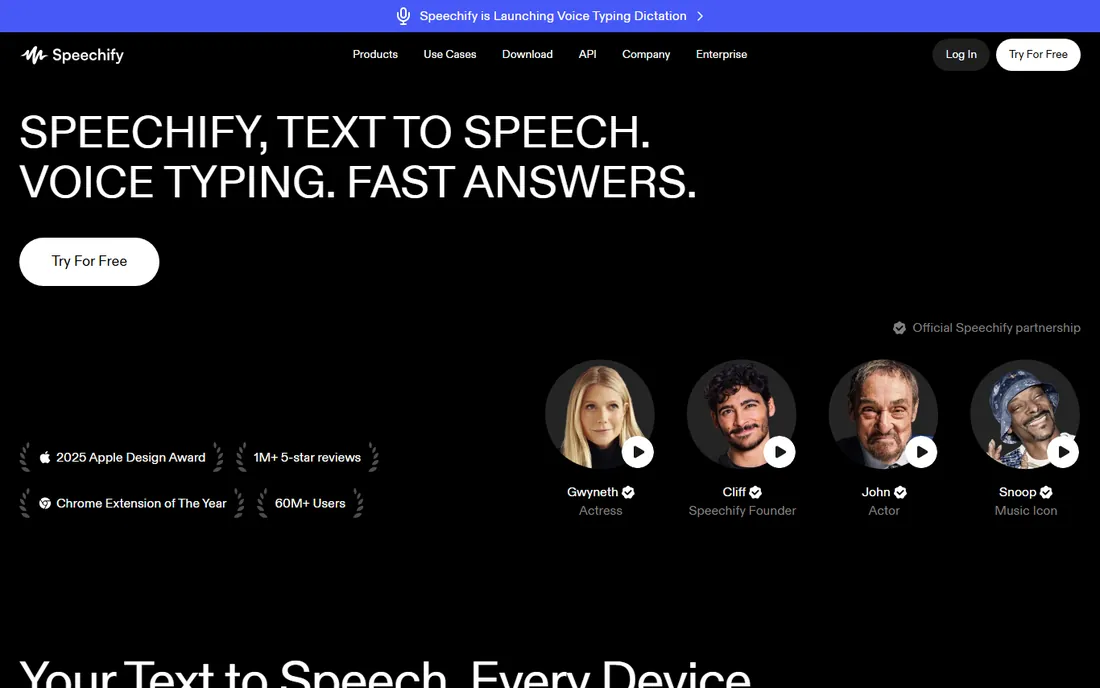
Speechify grew from text-to-speech reading into a broader AI voice platform covering narration, voiceovers, dubbing, and an API. The free Limited plan makes it easy to evaluate, and the paid tiers add the hours, voices, and commercial rights that production work needs. It is one of the few tools here that serves both individual listeners and content teams.
The honest catch is the funnel. The free tier is genuinely useful for testing, but real projects, long-form narration, or team workflows will push you into paid plans quickly. Check the current pricing page against your expected monthly minutes before committing.
What we like- Free Limited plan lets you start without paying
- Strong at narration, audiobooks, and accessibility use cases
- Large voice library with cloning available
Watch out for- Free plan caps keep serious use behind the paid tiers
- Premium pricing adds up for teams
Starting priceSee website
Free planFree trial
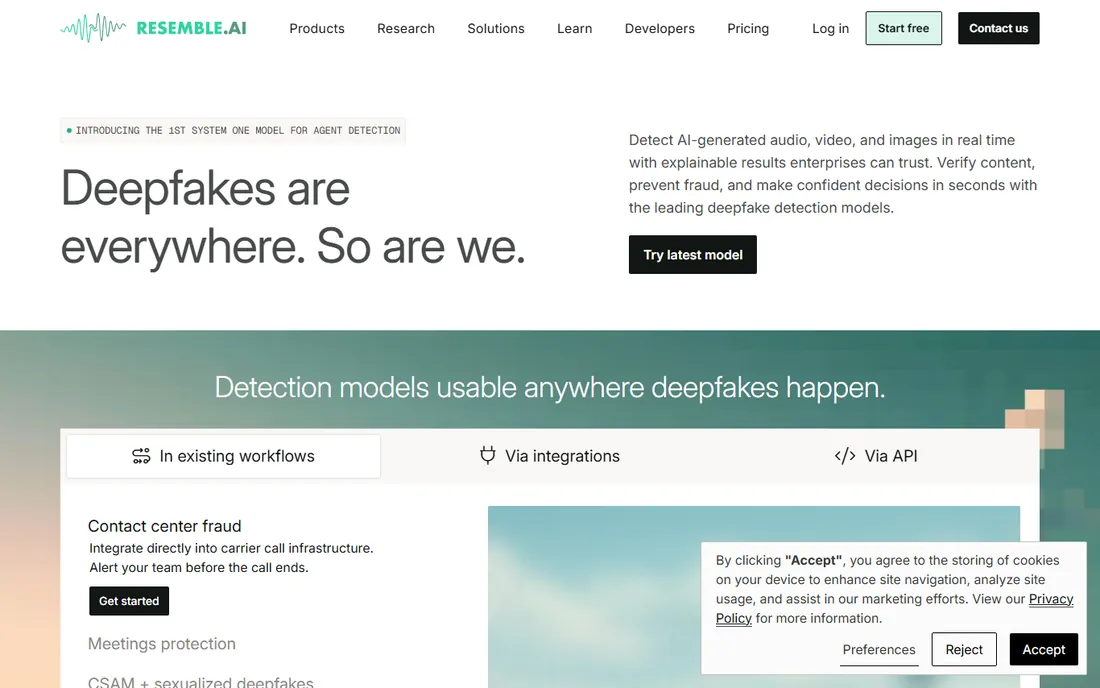
Resemble AI tells the story of the year in one company. The former voice-cloning platform has pivoted to the other side of the problem: detecting deepfakes and watermarking AI-generated media for enterprises. Its detection models cover audio, image, and video with deterministic scores, aimed at contact-center fraud, meeting protection, and brand safety, and the company cites strong benchmark results.
The honest catch is expectations. If you remember Resemble as a voice-cloning tool, that product is history, the homepage now leads with detection. The open-source Chatterbox models remain for self-hosting. For anyone deploying voice AI, the safety layer Resemble now sells is worth understanding, because cloned-voice fraud grew fast in 2026.
What we like- Enterprise deepfake detection across audio, video, and images with explainable results
- Watermarking for AI Act compliance
- SOC 2, HIPAA, and GDPR-aligned deployments including air-gapped
Watch out for- No longer a consumer TTS or cloning product, the site now leads with detection
- Enterprise pricing with no public tiers
How we chose
We reviewed each vendor's product pages, documentation, and pricing materials, then cross-checked with public reviews on G2, Capterra, and developer communities, plus recent hands-on comparisons of voice platforms published in 2026. We weighted production readiness, latency for real-time use, pricing transparency, and fit for business buyers rather than hobbyists. We did not test any of these tools hands-on, and several pricing pages change frequently, so we verified prices against the most current sources available and marked anything unverifiable as "See website."
What to check before you buy voice AI software
Voice AI spans very different products, and the wrong pick wastes months. Run through these checks first.
Match the tool to the job
Real-time phone agents, studio voiceovers, API text-to-speech, and deepfake detection are different products. Cartesia, Bland, Retell, and Vapi build voices that talk back; WellSaid and Speechify produce finished audio; Hume and Resemble test and secure the output. Write down your actual use case before comparing features.
Test latency yourself
For anything conversational, milliseconds decide whether callers stay or hang up. Run the vendor's live demo, call it from a real phone, and count the gap between your last word and the agent's first. Independent benchmarks help, but your network and use case are the real test.
Read the commercial license terms
Free tiers and trials in this space often exclude commercial use. Cartesia's free plan, for example, is non-commercial, and several platforms reserve voice cloning for paid tiers. Confirm who owns the generated audio and whether you can use it in paid products before you build on a platform.
Budget for compliance
AI voice is regulated. Outbound calling in the US requires prior consent, some states require disclosing the automated caller, and call recording rules vary by state. Enterprise platforms carry SOC 2 and HIPAA certifications, but compliance depends on how you use the tool, not just which tool you buy.
The split that defined voice AI in 2026
The most important development this year was the category dividing into builders and checkers. The builder side converged on a standard stack: speech to text, language model, text to speech, telephony, orchestration, with latency as the headline metric. The checker side grew just as fast: evaluation platforms measuring conversational quality and detection tools fighting voice fraud. Expect buyers to start demanding both, an agent that sounds human and the tooling to prove it behaves.
Frequently asked questions
What is the difference between voice AI software and an AI voice generator?
AI voice generator usually means text-to-speech: type text, get audio. Voice AI software is broader: it includes real-time voice agents that hold phone conversations, voice cloning, APIs developers build on, and now evaluation and detection tools. The right choice depends on whether you need finished audio or a voice that talks back.
How much does voice AI software cost?
It varies widely. Developer TTS APIs like Cartesia start around $5 per month, voice agent platforms like Retell charge per minute from about $0.07, and enterprise agent platforms like Bland and Vapi are quote-based. Consumer narration tools sit in between. Almost always, the free tier or trial is non-commercial, so budget for a paid plan before launch.
Can AI voice agents really replace a call center?
They can handle the repetitive, high-volume work: appointment booking, order status, lead qualification, IVR replacement. Most deployments run hybrid, with agents taking routine volume and handing complex calls to humans with full context. Fully replacing a call center is possible but usually happens gradually.
Is it legal to use AI voice agents for business calls?
In the US it is legal but regulated. Outbound calling requires prior consent under the TCPA, the FCC has ruled AI-generated voices in robocalls fall under existing robocall restrictions, and several states require disclosure that the caller is automated. Check the rules for your state and use case before launching.
What happened to Resemble AI's voice cloning?
Resemble AI pivoted in 2026 from voice generation to deepfake detection and watermarking for enterprises. Its open-source Chatterbox models remain available for self-hosted voice cloning. If you need a cloning platform now, look at Cartesia or the cloning features built into editors like Descript.
Do I need voice AI evaluation software?
If you are deploying voice agents to real customers, yes, eventually. Transcripts tell you what was said, not whether the conversation felt natural or handled interruptions well. Platforms like Hume's VoiceEQ measure timing, tone, and expression so you can catch failures before customers do.
Sources we checked (9)
- https://cartesia.ai/
- https://bland.ai/
- https://www.retellai.com/
- https://vapi.ai/
- https://www.hume.ai/
- https://wellsaidlabs.com/
- https://speechify.com/
- https://www.resemble.ai/
- https://dev.to/stimlau/6-best-elevenlabs-alternatives-in-2026-verified-with-pricing-3m4l
Is your product missing or out of date?
We review this list regularly. Vendors can request a listing, send updated pricing or ask about featured placement.

Shihab Mia · Founder, Rankite
Shihab has spent more than a decade helping SaaS and e-commerce brands grow through search. He writes Rankite's software buying guides from pricing pages, documentation and public user reviews. More about Shihab.