How we make this list: we compare pricing pages, product documentation and public user reviews. Rankite is independent; if a vendor ever pays for a featured spot, that listing is clearly labeled Partner.
Key takeaways
- Veeam remains the default pick for virtualized environments, while Rubrik and Cohesity lead the newer data-security-and-recovery category built around ransomware.
- Commvault and Veritas NetBackup still dominate the largest and most complex estates, where nothing else handles the same mix of legacy and cloud workloads.
- Pricing is almost entirely quote-based at this level, so plan on a guided sales process rather than a self-serve checkout.
- Zerto is the specialist for continuous replication and near-zero RPO, and Nakivo is the value option for mid-size shops that find the big suites overkill.
Quick comparison
| Tool | Best for | Starting price | Free plan |
|---|
 Veeam Veeam | Virtualized and hybrid cloud environments | See website | Free trial |
 Rubrik Rubrik | Ransomware recovery and data security posture | See website | No |
 Commvault Commvault | Large estates with mixed legacy and cloud workloads | See website | Free trial |
 Cohesity Cohesity | Consolidated backup and data management | See website | No |
 Veritas NetBackup Veritas NetBackup | Very large enterprises with legacy infrastructure | See website | No |
 Acronis Acronis | Backup with integrated cybersecurity | See website | Free trial |
 Zerto Zerto | Continuous replication with near-zero data loss | See website | Free trial |
 Arcserve Arcserve | Mid-market unified backup and DR | See website | Free trial |
 NAKIVO NAKIVO | Cost-effective backup for SMB and mid-market | See website | Free trial |
 N-able Cove N-able Cove | Backup delivered through MSPs | See website | Free trial |
Is your product missing or out of date?
We review this list regularly. Vendors can request a listing, send updated pricing or ask about featured placement.
The top 10 backup software for enterprise
#1
Veeam
Best for: Virtualized and hybrid cloud environments
Visit veeam.com
Starting priceSee website
Free planFree trial
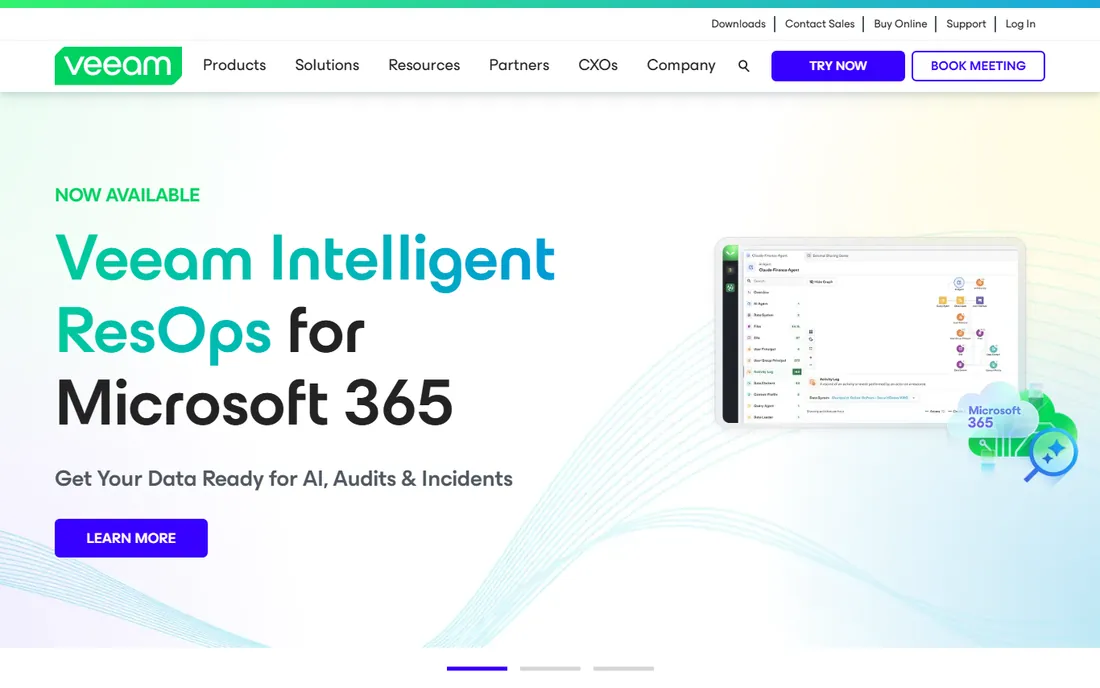
Veeam earned its position one VMware administrator at a time. Its backup and replication platform covers virtual machines, physical servers, cloud workloads and Microsoft 365 data with the kind of instant VM recovery that made its name. The console is well understood by IT teams, which means hiring admins who already know the product is easy.
The catch is licensing. Veeam moved to subscription licensing, and figuring out which edition covers your exact mix of workloads takes a spreadsheet. Costs also climb as you add advanced ransomware detection and cloud features. Still, for organizations running serious virtualization, it is the reference point every other vendor gets compared against.
What we like- Mature backup for VMware, Hyper-V and physical servers
- Strong instant-recovery options
- Large partner and MSP ecosystem
Watch out for- Licensing has grown more complex over the years
- Advanced features often need higher tiers
#2
Rubrik
Best for: Ransomware recovery and data security posture
Visit rubrik.com
Starting priceSee website
Free planNo
Rubrik sells recovery, not just backup. Its platform keeps immutable copies of your data and watches for ransomware patterns, so when an attack hits you can identify the last clean copy and restore fast. That security-first framing is why it has won so many enterprise deals in the last few years, and its IPO put it firmly in the top tier.
The price reflects that positioning. Small and mid-size companies often find Rubrik overkill for basic backup needs. But if your board asks how fast you can recover from ransomware, and your current answer is a shrug, Rubrik is built to give you a confident one.
What we like- Immutable backups designed around ransomware scenarios
- Strong anomaly detection
- Policy-based management that scales
Watch out for- Premium pricing
- Less appeal if you only need straightforward file-level backup
Starting priceSee website
Free planFree trial
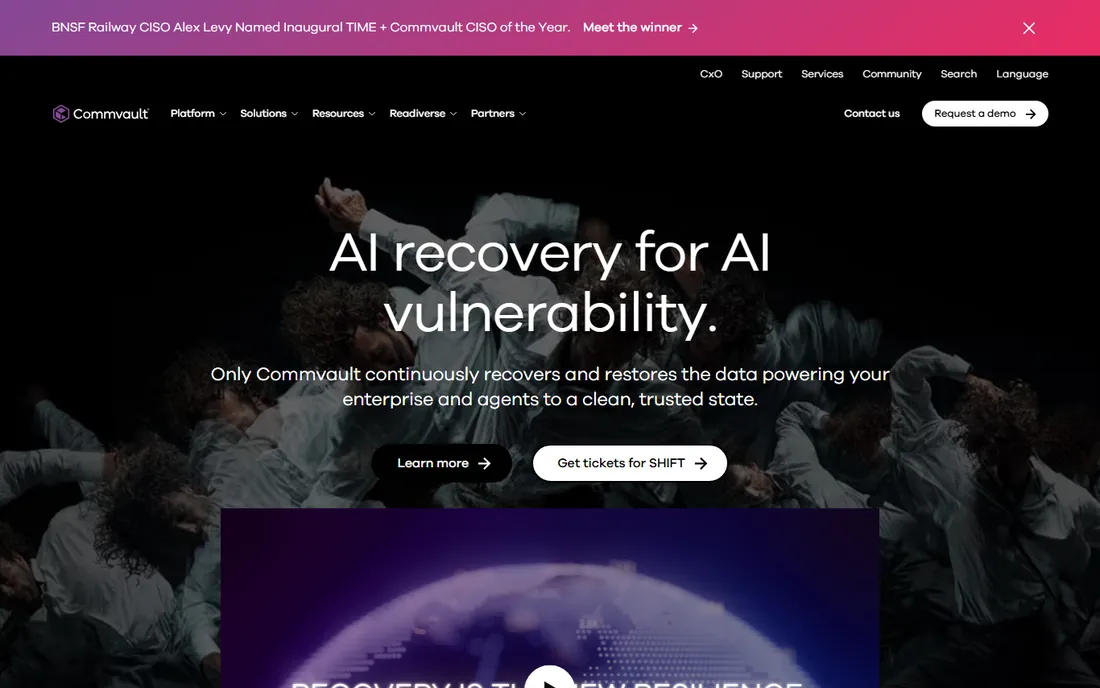
Commvault is the veteran that refuses to fade. Where newer vendors cover the common workloads well, Commvault covers everything: legacy databases, mainframes, NAS, containers, SaaS apps and multi-cloud. Enterprises with twenty years of accumulated infrastructure tend to find that only Commvault protects all of it.
That breadth comes with complexity. Deployments are projects, not afternoon installs, and the product has a reputation for needing trained administrators. The company has modernized its cloud and SaaS offerings considerably. If your environment is genuinely heterogeneous, the shortlist starts here.
What we like- Broadest workload coverage in the industry
- Strong for databases, mainframes and exotic systems
- Mature cloud and SaaS protection
Watch out for- Historically complex to deploy and manage
- Pricing needs a guided quote
Starting priceSee website
Free planNo
Cohesity takes the converged-infrastructure approach to data protection: one platform for backup, disaster recovery, file and object services, and data security. The pitch is that you stop buying separate point products and manage secondary data in one place. Its ransomware recovery tooling, including clean-room recovery, is genuinely strong.
Evaluating it takes time because the platform does so much. Pricing is quote-based and aimed squarely at mid-market and enterprise. For organizations consolidating vendors, though, Cohesity's one-platform story is compelling.
What we like- Converged platform covering backup, disaster recovery and file services
- Strong ransomware recovery workflows
- Good cloud economics
Watch out for- Platform breadth can mean longer evaluations
- Quote-based pricing
#5
Veritas NetBackup
Best for: Very large enterprises with legacy infrastructure
Visit veritas.com
Starting priceSee website
Free planNo
Veritas NetBackup has protected the world's largest data centers for decades, and it still does. If you run Oracle, SAP, or sprawling Unix estates alongside modern cloud workloads, NetBackup's coverage is unmatched. The appliance line gives you turnkey deployments when you want backup as hardware.
Nobody picks NetBackup for its beauty. The architecture is old, the licensing takes study, and newer vendors demo better. But at true enterprise scale, with workloads that younger products simply do not support, NetBackup remains the safe enterprise choice.
What we like- Proven at enormous scale
- Deep coverage of enterprise databases and applications
- Strong appliance options
Watch out for- Interface and architecture feel dated
- Licensing is complex
Starting priceSee website
Free planFree trial
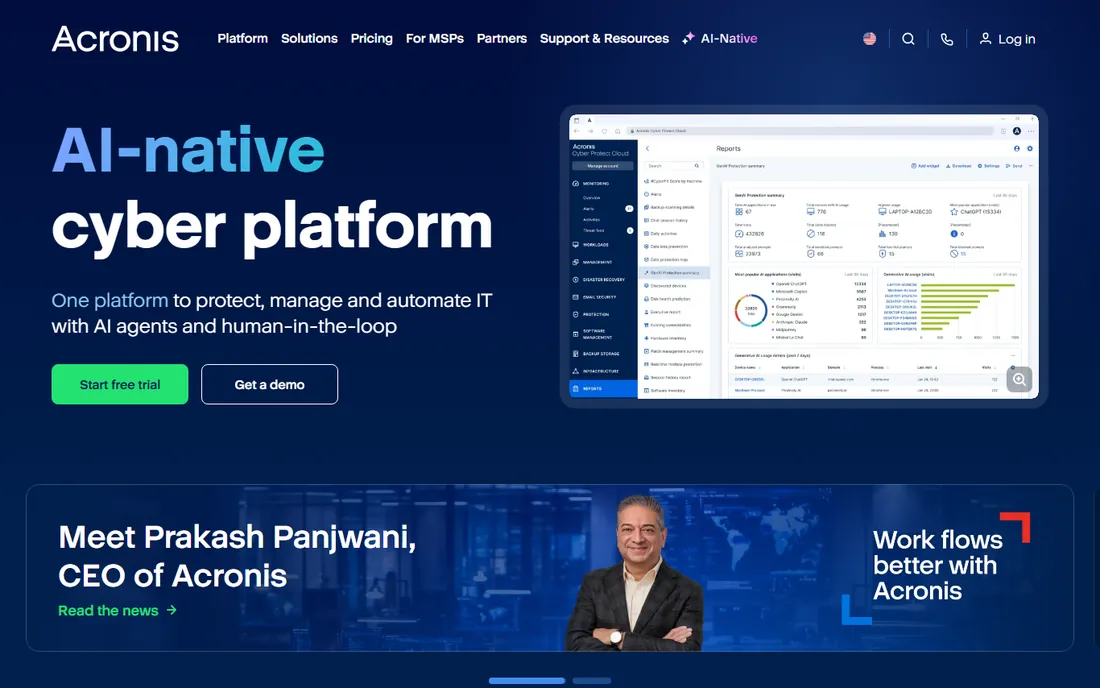
Acronis bundles cyber protection with backup, arguing that recovery and security belong in one agent. For mid-size companies and MSPs, that bundling simplifies life: one console, one agent, one bill. The product covers workstations, servers, virtual machines and Microsoft 365.
Specialists will tell you the backup is not as deep as Veeam's and the security is not as deep as a dedicated EDR. That is fair. But for organizations that want one practical tool instead of three best-of-breed products to integrate, Acronis hits a sweet spot.
What we like- Backup plus anti-malware and endpoint protection in one agent
- Good for MSPs and mid-market
- Straightforward pricing tiers
Watch out for- Jack-of-all-trades depth is thinner than specialists
- Enterprise management lags the big suites
#7
Zerto
Best for: Continuous replication with near-zero data loss
Visit zerto.com
Starting priceSee website
Free planFree trial
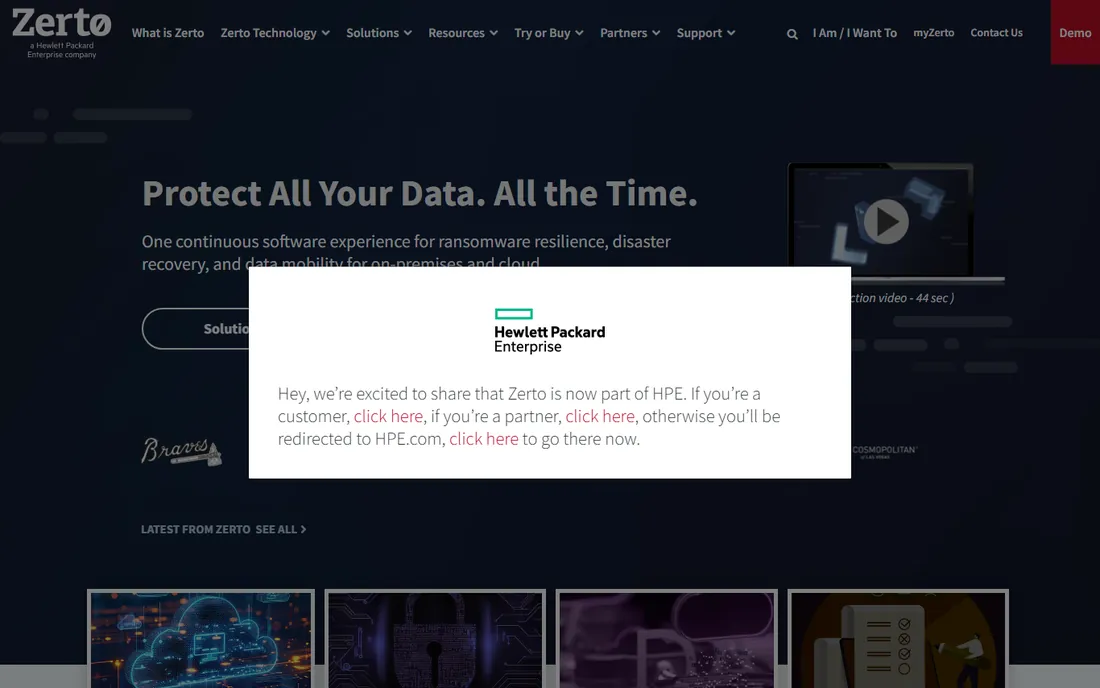
Zerto is the disaster recovery specialist. Its continuous data protection journals every change, so you can rewind to seconds before an outage or ransomware event instead of restoring last night's backup. For organizations where minutes of data loss cost real money, that capability is the whole point.
It is not a general backup archive product, and HPE's acquisition folded it into a larger portfolio. But as a replication engine inside a broader data protection strategy, especially for VMware and cloud DR, Zerto is excellent at its job.
What we like- Journal-based replication with seconds-level RPO
- Excellent for disaster recovery between sites
- Now part of HPE
Watch out for- Focused on replication rather than long-term backup
- Pricing reflects enterprise DR budgets
Starting priceSee website
Free planFree trial
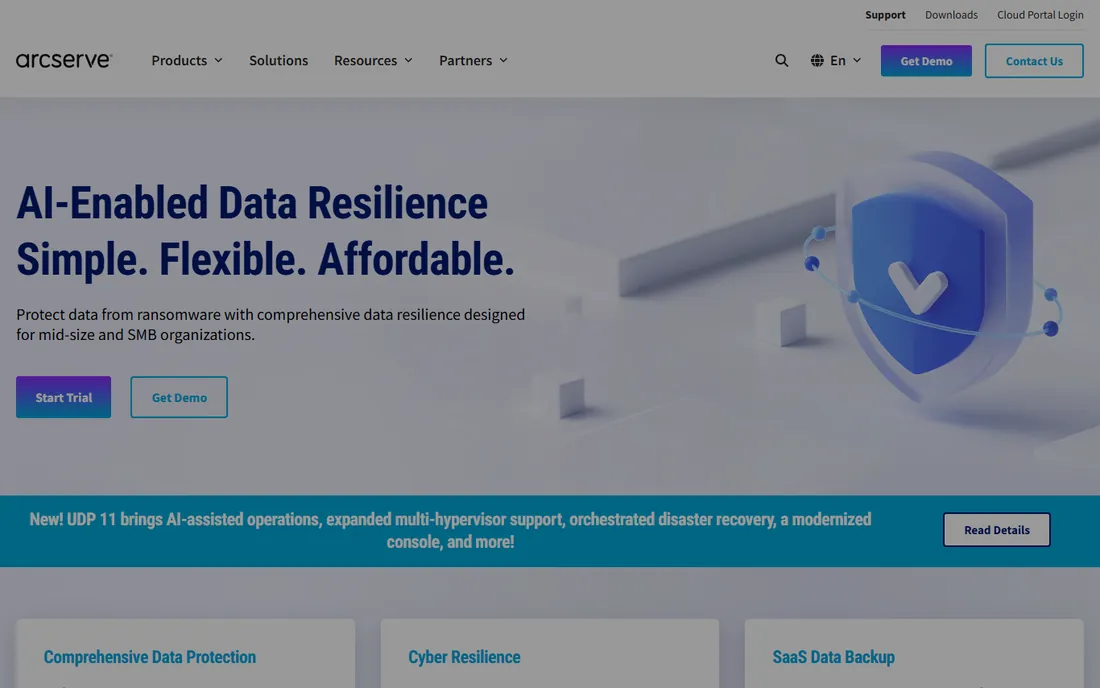
Arcserve targets the mid-market that finds Commvault overwhelming and consumer tools inadequate. Its unified data protection platform covers on-premises, cloud and SaaS workloads with disaster recovery built in, and the appliances make deployment straightforward for lean IT teams.
The ecosystem is smaller than Veeam's or Commvault's, which matters when you need third-party integrations or local partners. But for a mid-size company that wants one vendor for backup and DR without enterprise complexity, Arcserve deserves a look.
What we like- Unified backup, DR and ransomware protection
- Simpler to run than the big suites
- Decent appliance options
Watch out for- Smaller ecosystem and partner network
- Less innovation visibility than top-tier rivals
#9
NAKIVO
Best for: Cost-effective backup for SMB and mid-market
Visit nakivo.com
Starting priceSee website
Free planFree trial
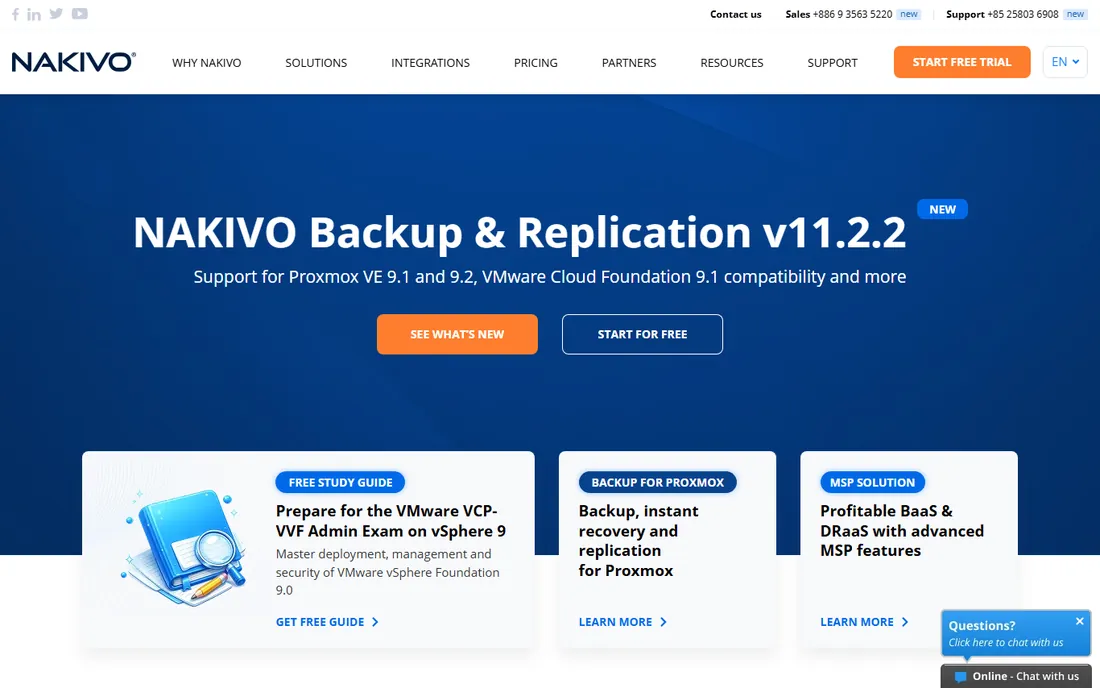
NAKIVO is the value play. It backs up virtual, physical, cloud and Microsoft 365 workloads at prices that undercut the big names significantly, with both subscription and perpetual licensing. Deployment is lightweight, and the product is refreshingly straightforward.
You give up the advanced anomaly detection, clean-room recovery and massive scalability of the premium tier. For many mid-size organizations, that is a fine trade. If your needs are solid backup and recovery without the security-theater upsell, NAKIVO stretches the budget furthest.
What we like- Affordable perpetual and subscription licensing
- Lightweight deployment
- Covers VMware, Hyper-V, cloud and M365
Watch out for- Lacks the advanced ransomware tooling of premium rivals
- Smaller support organization
Starting priceSee website
Free planFree trial
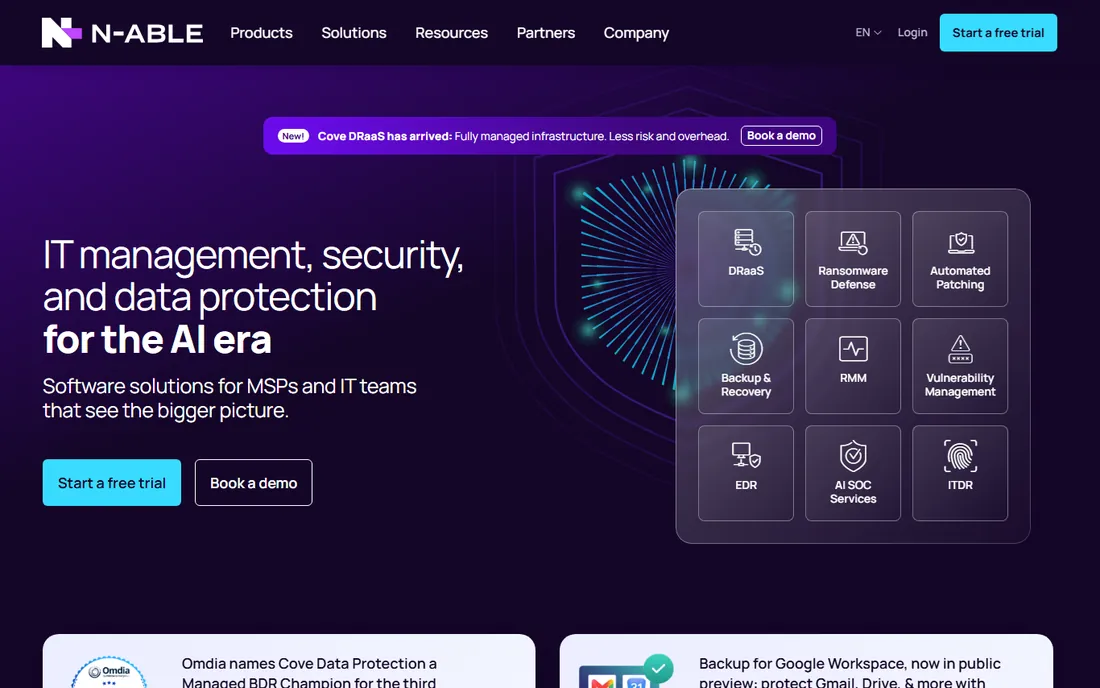
Cove Data Protection is built for managed service providers. Its cloud-first design backs up servers, workstations and Microsoft 365 with efficient incremental-forever technology, and the multi-tenant console lets an MSP manage hundreds of clients. Pricing per device or per gigabyte fits the MSP business model.
If you are an enterprise with an in-house team, Cove is probably not your product. But most small and mid-size businesses buy backup through an MSP anyway, and when they do, there is a good chance Cove is running underneath.
What we like- Cloud-first architecture built for MSP multi-tenancy
- True delta backup keeps storage costs down
- Per-device pricing MSPs understand
Watch out for- Sold primarily through MSPs, not direct
- Less suited to large in-house IT teams
RPO, RTO and what actually matters in an enterprise backup decision
Two numbers drive every serious backup evaluation. Recovery point objective (RPO) is how much data you can afford to lose, measured in time. Recovery time objective (RTO) is how fast you must be back online. A file server might tolerate a 24-hour RPO; a trading system needs seconds.
Match the tool to the numbers. Continuous replication tools like Zerto serve near-zero RPO needs. Traditional backup suites serve daily or hourly RPOs at lower cost. Buying Zerto-grade replication for a file share is wasted money; relying on nightly backups for a revenue-critical database is a career risk. Write your RPO and RTO targets down before the first demo, and make every vendor show how they meet them.
How we chose
We evaluated vendors on workload coverage, recovery capabilities, ransomware-specific features, scalability, and fit for different enterprise sizes. We verified each vendor's current homepage and product positioning, reviewed public analyst coverage and user reviews on G2 and peer forums, and checked for recent acquisitions that change what you are actually buying. We did not perform live backup or restore testing.
Frequently asked questions
How much does enterprise backup software cost?
Almost all enterprise backup is quote-based. Mid-size deployments typically run from a few thousand to tens of thousands per year; large enterprises commonly spend six figures annually. Ask whether pricing is per workload, per terabyte or per socket, and what counts as a billable unit.
Should we back up Microsoft 365 and SaaS data?
Yes. Microsoft and Google protect their infrastructure, not your data against deletion, ransomware or departing-employee sabotage. Most vendors on this list now include M365 and Google Workspace backup; confirm retention policies and restore granularity.
What is immutable backup and do we need it?
Immutable backups cannot be altered or deleted for a set period, which stops ransomware from encrypting your backups too. If ransomware recovery is a board-level concern, immutability is close to mandatory. Rubrik, Cohesity and most modern platforms offer it.
Can one product cover backup and disaster recovery?
Increasingly, yes. Suites like Veeam, Commvault and Cohesity include replication and DR orchestration, while Zerto specializes in it. Decide your RPO and RTO first, then check whether a single platform meets both or whether you need a dedicated DR tool alongside backup.
Is tape dead?
No. Tape remains the cheapest air-gapped archive for massive data volumes and long retention. Modern backup software still supports tape libraries; it just is not the primary recovery tier anymore.
How do we test that backups actually work?
Schedule automated recovery verification and run full restore drills quarterly at minimum. Several platforms on this list include automated verification and clean-room recovery features. An untested backup is a hope, not a plan.
Sources we checked (10)
- https://www.veeam.com/
- https://www.rubrik.com/
- https://www.commvault.com/
- https://www.cohesity.com/
- https://www.veritas.com/
- https://www.acronis.com/
- https://www.zerto.com/
- https://www.arcserve.com/
- https://www.nakivo.com/
- https://www.n-able.com/
Is your product missing or out of date?
We review this list regularly. Vendors can request a listing, send updated pricing or ask about featured placement.

Shihab Mia · Founder, Rankite
Shihab has spent more than a decade helping SaaS and e-commerce brands grow through search. He writes Rankite's software buying guides from pricing pages, documentation and public user reviews. More about Shihab.