How we make this list: we compare pricing pages, product documentation and public user reviews. Rankite is independent; if a vendor ever pays for a featured spot, that listing is clearly labeled Partner.
Key takeaways
- Homecare Homebase is the Medicare home health standard, with the deepest OASIS and billing workflows.
- WellSky offers the broadest post-acute portfolio for enterprises running home health alongside hospice and other services.
- AlayaCare is the modern cloud alternative with the best mobile experience for field clinicians.
- KanTime and Axxess give growing agencies modern software without enterprise weight, while HHAeXchange dominates Medicaid EVV.
Quick comparison
| Tool | Best for | Starting price | Free plan |
|---|
 Homecare Homebase Homecare Homebase | Medicare-certified home health agencies | See website | No |
 WellSky WellSky | Health systems and large post-acute providers | See website | No |
 AlayaCare AlayaCare | Agencies wanting modern cloud software | See website | No |
 AxisCare AxisCare | Growing home care agencies | See website | Free trial |
 KanTime KanTime | All-in-one for ambitious agencies | See website | No |
 HHAeXchange HHAeXchange | Medicaid home care and EVV compliance | See website | No |
 Axxess Axxess | Agencies wanting a fresh modern platform | See website | No |
 DeVero DeVero | Small agencies needing simplicity | See website | Free trial |
 Brightree Brightree | Home medical equipment providers | See website | No |
 MatrixCare MatrixCare | Senior care across settings | See website | No |
Is your product missing or out of date?
We review this list regularly. Vendors can request a listing, send updated pricing or ask about featured placement.
The top home health software
#1
Homecare Homebase
Best for: Medicare-certified home health agencies
Visit hchb.com
Starting priceSee website
Free planNo
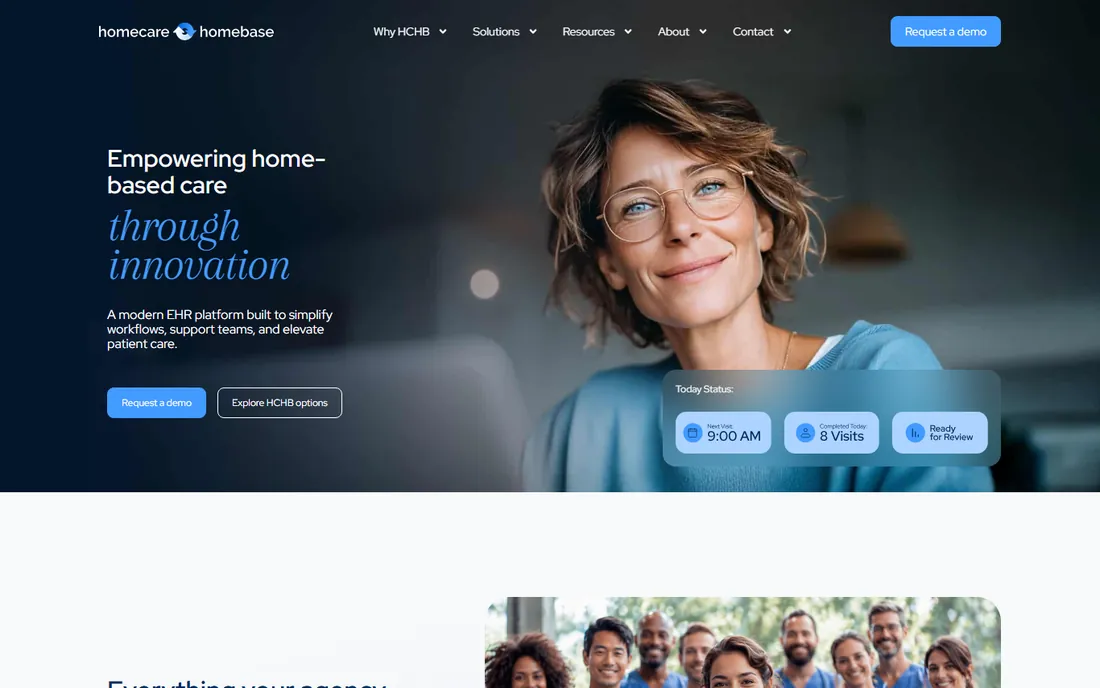
Homecare Homebase is the system Medicare home health agencies measure against: OASIS documentation, physician orders, visit management, billing and compliance built specifically for the Medicare world. The user community is enormous, which means answers and best practices are easy to find.
The Medicare depth is also the limit; private-duty-only agencies pay for workflows they never use. But for certified home health, it remains the category standard.
What we like- Deepest Medicare workflows
- Excellent OASIS and billing
- Huge user community
Watch out for- Enterprise pricing
- Medicare focus less relevant for pure private duty
Starting priceSee website
Free planNo
WellSky covers the post-acute continuum: home health, hospice, private duty, and the analytics across them. Health systems and large providers standardize here to run every service line on connected software.
Small agencies will find it oversized. But enterprises wanting one vendor across post-acute care will find WellSky's breadth unmatched.
What we like- Broadest post-acute portfolio
- Home health, hospice and more
- Enterprise scale
Watch out for- Enterprise sales and implementation
- Can overwhelm small agencies
Starting priceSee website
Free planNo
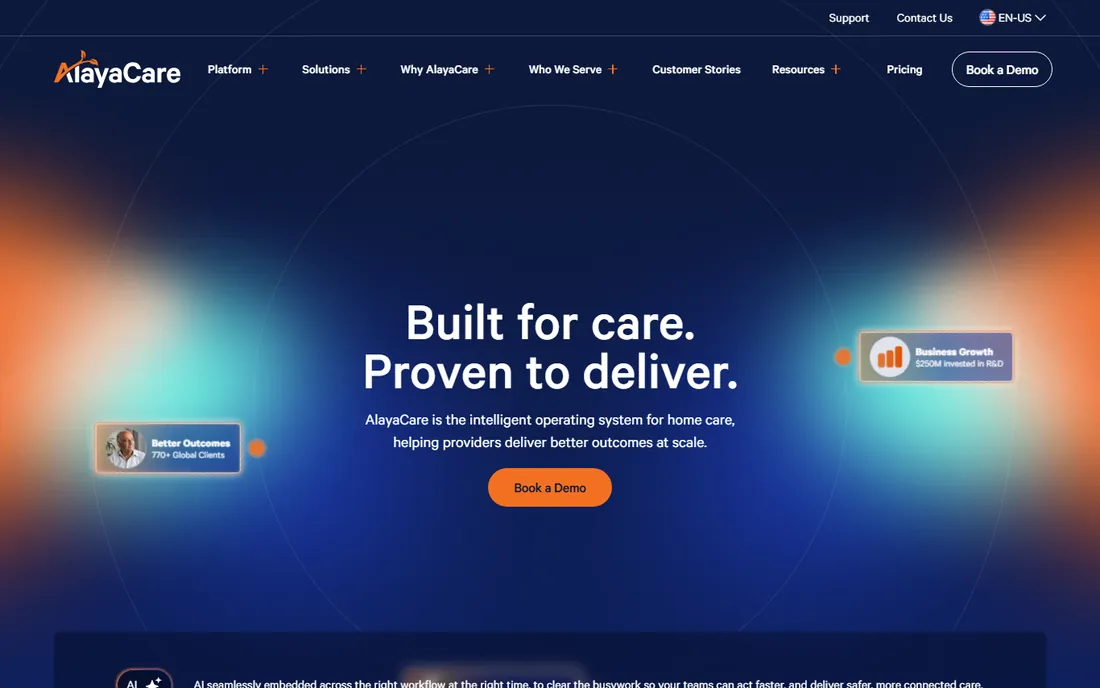
AlayaCare brings consumer-grade design to home care software: scheduling, clinical documentation, billing and family portals in a cloud platform with mobile apps field staff actually use. Agencies struggling with clinician adoption of legacy tools find the difference dramatic.
The investment matches the modernity. But for agencies competing for caregivers in tight labor markets, software clinicians enjoy is a recruiting advantage.
What we like- Modern interface clinicians like
- Strong mobile apps
- Good family engagement
Watch out for- Premium pricing
- Implementation needs planning
Starting priceSee website
Free planFree trial
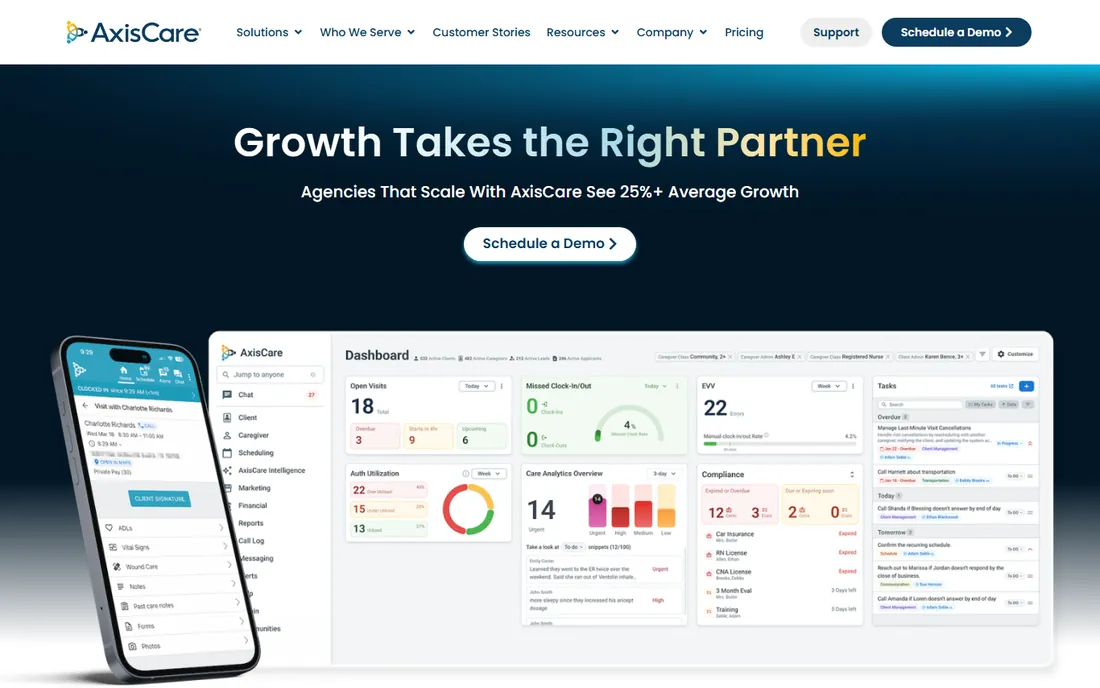
AxisCare serves the growing agency well: scheduling, EVV, billing, caregiver management and reporting in a package new agencies learn quickly. The pricing respects small-business budgets, and the free trial lets owners test with real operations.
Multi-state enterprises need more. But for the typical agency scaling from startup to mid-size, AxisCare grows alongside without drama.
What we like- Affordable and approachable
- Covers scheduling through billing
- Quick to learn
Watch out for- Less depth than enterprise platforms
- Fewer complex integrations
Starting priceSee website
Free planNo
KanTime built a modern all-in-one home health platform: clinical documentation, scheduling, billing, HR and business intelligence in a contemporary interface. Growing agencies get enterprise-ish capability without enterprise software's age.
The track record is shorter than Homecare Homebase's. But agencies choosing between legacy depth and modern usability increasingly pick KanTime's middle path.
What we like- Modern all-in-one platform
- Good clinical and business features
- Strong support reputation
Watch out for- Newer than entrenched rivals
- Pricing is mid-market
Starting priceSee website
Free planNo
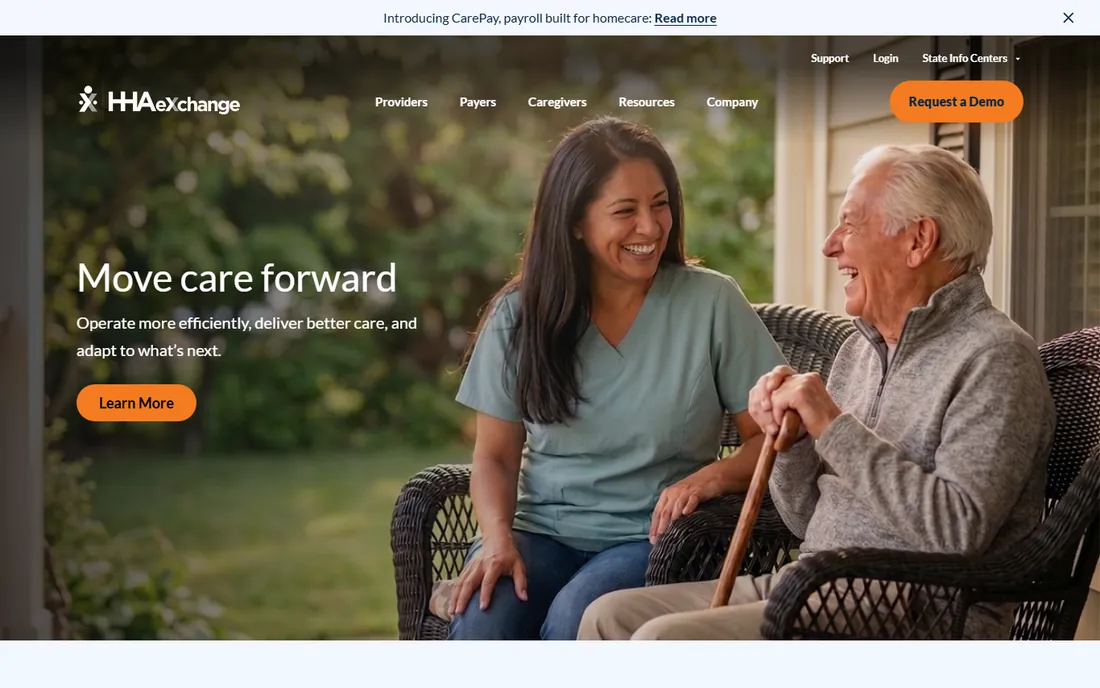
HHAeXchange dominates Medicaid home care: EVV, plan of care, authorization management and billing connected directly to payers and state programs. In states where it is mandated, it is the system.
Medicare-focused agencies get less value. But for Medicaid business, the payer connectivity is the product, and nobody connects deeper.
What we like- Dominant in Medicaid managed care
- Deep payer integrations
- EVV plus billing
Watch out for- Compliance-first experience
- Less for pure Medicare agencies
Starting priceSee website
Free planNo
Axxess is the modern challenger: home health software with an interface that feels current, covering clinical, operational and revenue cycle needs. Agencies frustrated by dated incumbents find it refreshingly usable.
References matter given the shorter history. But the momentum is real, and modern usability is a legitimate competitive edge in caregiver retention.
What we like- Clean modern interface
- Solid home health workflows
- Growing fast
Watch out for- Younger than category leaders
- Verify state-specific depth
Starting priceSee website
Free planFree trial
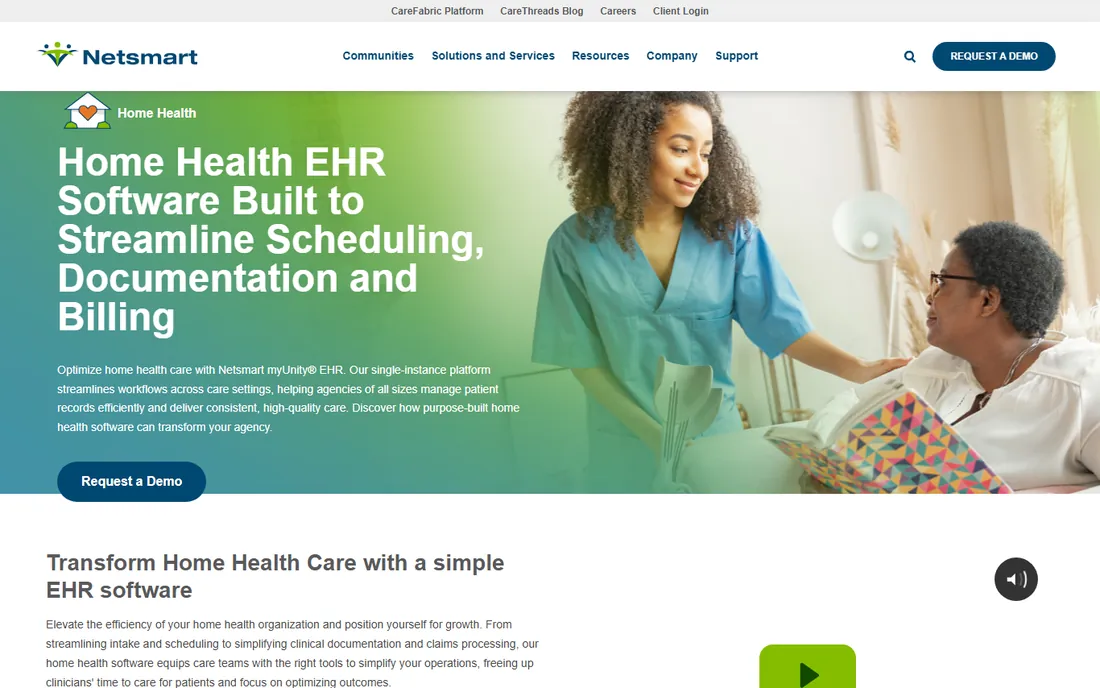
DeVero keeps home health software simple: documentation, scheduling and billing that small agencies master quickly. The free trial and friendly pricing lower every barrier.
Complex multi-service operations need more. But agencies that found the big platforms intimidating will get running on DeVero in days, not months.
What we like- Easy to learn
- Affordable
- Clean documentation
Watch out for- Limited for complex operations
- Smaller feature set
Starting priceSee website
Free planNo
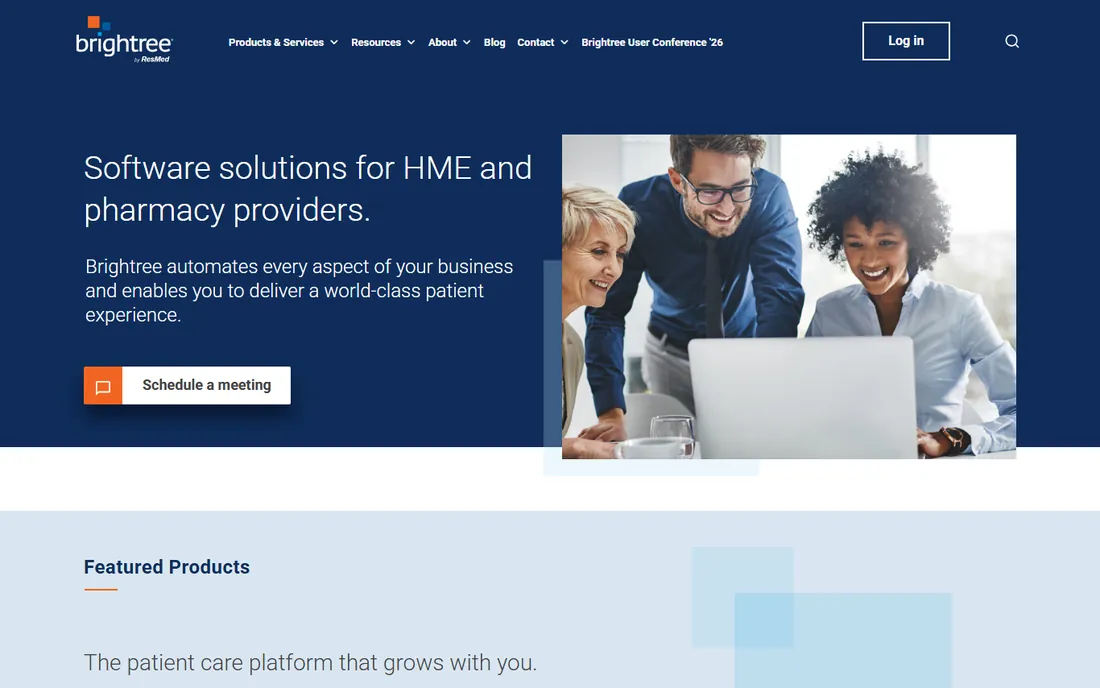
Brightree (now part of ResMed) built its name in home medical equipment: DME billing, inventory, delivery and compliance. Providers combining equipment with home health services get both sides managed.
Pure home health nursing agencies will find the clinical depth thinner. But HME providers are its home turf, and the billing expertise shows.
What we like- Deep HME/DME workflows
- Now broader post-acute
- Strong billing for equipment
Watch out for- HME heritage shows
- Less home health nursing depth
Starting priceSee website
Free planNo
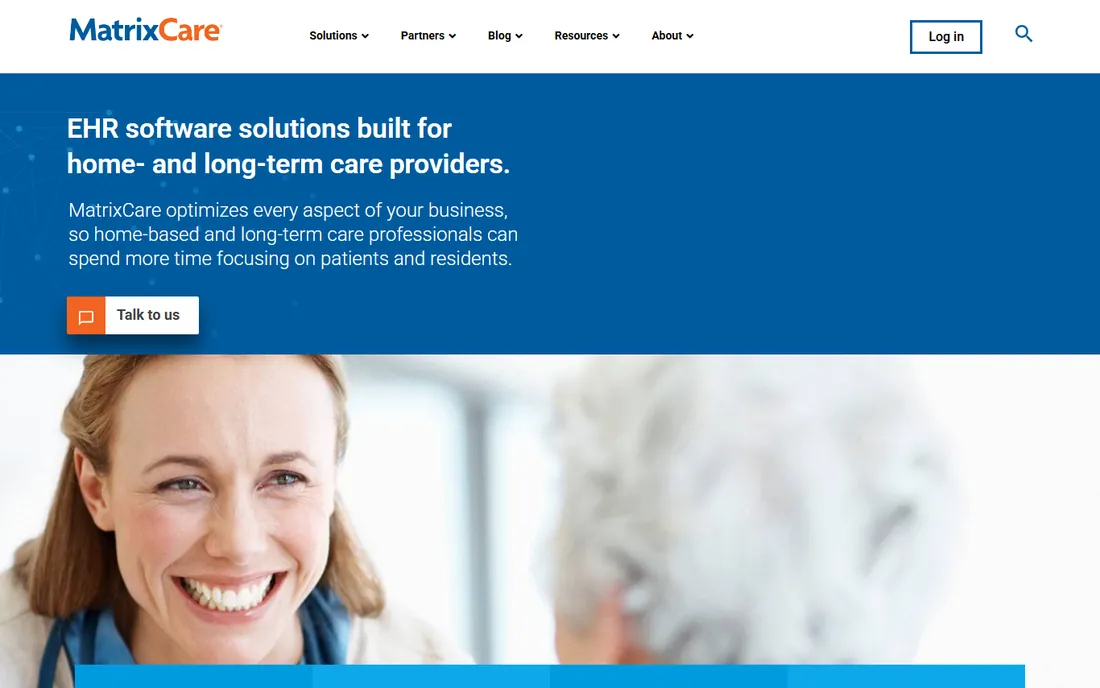
MatrixCare (now part of ResMed) serves senior care across settings: home health, hospice, senior living and private duty. Organizations operating across the continuum get connected software rather than point solutions.
Pure home health agencies may find the breadth distracting. But senior care enterprises will value the continuum view.
What we like- Covers the senior care continuum
- Strong in senior living
- Enterprise proven
Watch out for- Broad focus dilutes home health specificity
- Enterprise sales process
Medicare versus Medicaid versus private pay
Home health software follows the money. Medicare agencies need OASIS, physician orders and RAP billing: Homecare Homebase territory. Medicaid agencies need EVV and payer connectivity: HHAeXchange territory. Private-pay agencies need scheduling, family communication and simple billing: AlayaCare, AxisCare or KanTime.
Many agencies blend revenue streams, which complicates the choice. Map your actual payer mix before evaluating, and weight the workflows matching your dominant revenue highest.
How we chose
We compared platforms on clinical documentation, scheduling, billing accuracy, EVV compliance, payer integrations, mobile experience and pricing models. We verified each vendor's homepage and current positioning, reviewed agency feedback on home care forums and review sites, and distinguished Medicare, Medicaid and private-pay fit. We did not operate live agencies on these platforms.
Caregiver retention and the software connection
Home care's existential problem is not software; it is keeping caregivers. Turnover rates in home care routinely exceed 60 percent annually, and every departure costs thousands in recruiting and training. The software cannot fix wages, but it removes the daily frictions that push good caregivers out.
Scheduling fairness matters enormously. Caregivers quit over chaotic schedules, last-minute changes and unpaid gaps between visits as much as over pay. Software with fair, transparent scheduling, adequate travel time between visits and easy shift-swapping directly addresses the complaints that drive turnover. Ask candidates about their scheduling experience, not just their features.
Pay accuracy is trust. Nothing destroys morale faster than a wrong paycheck. EVV-verified hours feeding directly into payroll, with caregivers able to see their own hours in the app, eliminates the disputes that poison the relationship. If your current process involves caregivers chasing timesheet corrections, that is a retention problem wearing a payroll costume.
Communication closes the loop. Caregivers who feel informed, who get visit details in advance, who can reach a supervisor quickly, who see their feedback acknowledged, stay longer. The mobile app is the primary relationship channel for a distributed workforce; its quality is a management quality signal.
Finally, use the data to spot trouble early. Declining visit acceptance rates, increasing call-offs, dropping documentation quality: these patterns precede resignations by weeks. Managers who intervene early, with conversation not punishment, save the caregivers worth saving. The software surfaces the signals; leadership still has to act.
Home health software mistakes to avoid
The costliest is choosing on price instead of billing fit. A cheap system that mishandles your payer mix costs far more in denied claims and rework than the premium option earns in subscription savings. Since revenue flows through billing, evaluate the revenue cycle features as carefully as the clinical ones.
Second is underestimating implementation. Data migration, workflow configuration, payer setup and staff training take months for real agencies, not the weeks the sales team suggests. Plan the timeline honestly, run parallel systems during transition, and do not schedule go-live during your busiest season.
Third is neglecting the field experience. Office staff evaluate software at desks; caregivers live in the mobile app in patients' homes with imperfect connectivity. Test the app on real devices in real conditions, including offline scenarios, before committing. An app caregivers hate produces documentation gaps that become compliance findings.
Fourth is the training shortcut. A single group webinar does not prepare schedulers, billers and clinicians for daily use. Role-based training, super-users in each function, and accessible refreshers during the first quarter determine whether the system gets used properly or merely tolerated.
Finally, ignoring the reports until survey time. Quality measures, hospitalization rates and documentation compliance should be monitored continuously, not discovered during audit preparation. Set up the dashboards at implementation and review them monthly; the agencies that do are never surprised.
Frequently asked questions
What is home health software?
Software managing home health operations: scheduling visits, clinical documentation (including OASIS), physician orders, billing, payroll, compliance and often EVV.
How much does it cost?
Typically priced per user or per patient census, ranging from affordable small-agency tools to enterprise contracts. Always model your census and user count.
Do we need different software for hospice?
Many vendors (WellSky, MatrixCare, Axxess) cover both home health and hospice. Agencies running both benefit from unified software; single-service agencies can choose specialists.
What is OASIS and why does it matter?
The Outcome and Assessment Information Set is Medicare's required patient assessment. Accurate OASIS documentation drives reimbursement and quality ratings. Good software guides clinicians through it.
How do we handle EVV requirements?
Most home health platforms include EVV or integrate with state systems. In mandated states, confirm your platform connects to the required aggregator before signing.
Can we switch vendors?
Yes, with planning: migrate patient records, rebuild workflows and retrain staff. Time the switch for census lows, and verify data export options before you need them.
What should we budget for implementation?
Beyond the subscription, budget for data migration, training time, temporary parallel-system costs and possible consulting. A realistic rule is 50 to 100 percent of the first year's subscription for implementation services, and it is money well spent.
Sources we checked (10)
- https://www.hchb.com/
- https://wellsky.com/
- https://www.alayacare.com/
- https://www.axiscare.com/
- https://www.kantime.com/
- https://www.hhaexchange.com/
- https://www.axxess.com/
- https://www.devero.com/
- https://www.brightree.com/
- https://www.matrixcare.com/
Is your product missing or out of date?
We review this list regularly. Vendors can request a listing, send updated pricing or ask about featured placement.

Shihab Mia · Founder, Rankite
Shihab has spent more than a decade helping SaaS and e-commerce brands grow through search. He writes Rankite's software buying guides from pricing pages, documentation and public user reviews. More about Shihab.