How we make this list: we compare pricing pages, product documentation and public user reviews. Rankite is independent; if a vendor ever pays for a featured spot, that listing is clearly labeled Partner.
Key takeaways
- Enterprise LIMS (LabWare, STARLIMS, LabVantage) are six-figure commitments with multi-month implementations: buy them for regulated high-volume labs, not for a 5-person research team.
- Biotech R&D teams should shortlist Benchling (free academic tier), SciNote and Labguru: researcher-friendly tools built for experiments, not QC workflows.
- Testing and cannabis labs get the fastest fit from QBench and CloudLIMS: no-code configuration with instrument integrations, live in weeks rather than months.
- Small labs can start free: LabCollector's Startup pack (3 users), SciNote's free plan and Scispot's trial all precede the sales conversation.
Quick comparison
| Tool | Best for | Starting price | Free plan |
|---|
 LabWare LIMS LabWare LIMS | Large pharma, manufacturing QC and regulated labs | See website (enterprise quote-based; no public pricing) | No (no free plan or public trial found) |
 STARLIMS STARLIMS | Clinical, pharma and manufacturing labs needing an informatics suite | See website (quote-based enterprise; no public per-user rate) | No (no free plan or public trial found) |
 LabVantage LabVantage | Mid-size to enterprise labs phasing investment across modules | See website (quote-based; modular pricing by users and modules) | No (no free plan or public trial found) |
 Benchling Benchling | Biotech and pharma R&D teams doing molecular biology | See website (commercial plans quote-based; free academic tier) | Yes (free academic plan: Notebook and Molecular Biology modules) |
 SciNote SciNote | Research teams needing structured experiments with compliance options | See website (Essential, Validated and Platinum tiers quote-based) | Yes (free plan available; verify limits on vendor page) |
 CloudLIMS CloudLIMS | Biobanks, clinical diagnostic and cannabis testing labs | See website (tiered per-user; third-party figures unverified on vendor page) | No (no free trial; a free FreeLIMS edition for single users reported, unverified) |
 QBench QBench | Analytical, environmental and cannabis labs wanting fast no-code LIMS | See website (per-user tiers; third-party figures unverified on vendor page) | No (no free plan or trial reported) |
 Labguru Labguru | Academic and biotech research labs | See website (pricing scoped with the customer; no public list price) | No (free trial reported by third parties, unverified) |
 LabCollector LabCollector | Small to mid-size labs wanting affordable modular lab management | See website (modular packs; third-party figures unverified on vendor page) | Yes (free Startup pack for up to 3 users with 1,000 records, per third-party reviews) |
 Scispot Scispot | Biotech startups and modern labs wanting lab automation | See website (no public pricing; contact vendor) | No (free trial reported by TrustRadius; free version reported, unverified) |
Is your product missing or out of date?
We review this list regularly. Vendors can request a listing, send updated pricing or ask about featured placement.
The best laboratory management software
Enterprise LIMS implementations are six-figure commitments. A 5-person research lab can run on a free tier. Both are called laboratory management software, and buying the wrong tier wastes either money or months. A LIMS tracks samples from receipt to result, manages instruments and inventory, and keeps the audit trail regulators demand. These ten platforms cover the range from academic benches to pharma QC.
#1
LabWare LIMS
Best for: Large pharma, manufacturing QC and regulated labs
Visit labware.com
Starting priceSee website (enterprise quote-based; no public pricing)
Free planNo (no free plan or public trial found)
LabWare is the enterprise LIMS the industry measures against. Deep configurability handles high sample volumes and intricate testing protocols, with modules spanning LIMS, electronic lab notebooks, lab execution systems and instrument integration. In FDA-regulated pharma and manufacturing QC, the track record is the argument: decades of validated deployments.
The commitment matches the capability. Licensing, implementation and validation services make it a six-figure commitment, with multi-month implementations run by vendor consultants under enterprise license agreements. Small labs should not be here. If you run regulated high-volume testing and need a platform that has seen every audit, LabWare is the default enterprise answer.
What we like- Long-established enterprise LIMS with deep configurability
- Broad modules: LIMS, ELN, LES and instrument integration
- Strong track record in regulated pharma and manufacturing
Watch out for- Enterprise pricing and implementation out of reach for small labs
- Long implementations needing vendor professional services
#2
STARLIMS
Best for: Clinical, pharma and manufacturing labs needing an informatics suite
Visit starlims.com
Starting priceSee website (quote-based enterprise; no public per-user rate)
Free planNo (no free plan or public trial found)
STARLIMS sells the suite, not the module. Sample management, scientific data management, electronic notebooks and analytics run under one roof, which suits clinical, pharma and manufacturing labs that want integrated informatics rather than a point LIMS with integrations. Cloud-hosted or on-premise deployment covers both IT postures.
The economics are enterprise throughout. Implementation and validation services, which are non-negotiable in regulated environments, form a large share of total cost, with multi-month deployments and training quoted separately. Pricing is scoped by users, modules and deployment on annual or multi-year terms. Confirm 21 CFR Part 11, HIPAA and ISO 17025 specifics on starlims.com before shortlisting.
What we like- Unified lab informatics platform: LIMS, SDMS, ELN and analytics
- Strong compliance tooling for FDA and HIPAA-regulated work
- Flexible cloud or on-premise deployment
Watch out for- Quote-only pricing with significant implementation and validation costs
- Better suited to mid-to-large enterprises than small labs
#3
LabVantage
Best for: Mid-size to enterprise labs phasing investment across modules
Visit labvantage.com
Starting priceSee website (quote-based; modular pricing by users and modules)
Free planNo (no free plan or public trial found)
LabVantage's modular structure is its pitch: start with sample management, add the electronic notebook or quality management later, without replatforming. For a lab that knows it will grow into a full informatics suite but cannot fund it all in year one, phasing the investment has real appeal. The web-based platform configures to diverse lab types.
The phasing only delays the bill. A fully integrated suite costs comparably to other enterprise platforms once modules stack, and implementation services add substantially to the first-year investment. Pricing is quote-based per users and modules on annual subscription. If your roadmap clearly runs from LIMS to ELN to QMS, the modular path is sensible. If you need everything now, compare the all-in number against LabWare and STARLIMS directly.
What we like- Modular platform: start with core LIMS and expand over time
- Covers LIMS, ELN, SDMS and quality management extensions
- Web-based with configurable workflows
Watch out for- Stacked modules reach enterprise-level costs quickly
- Implementation services add substantially to year one
Starting priceSee website (commercial plans quote-based; free academic tier)
Free planYes (free academic plan: Notebook and Molecular Biology modules)
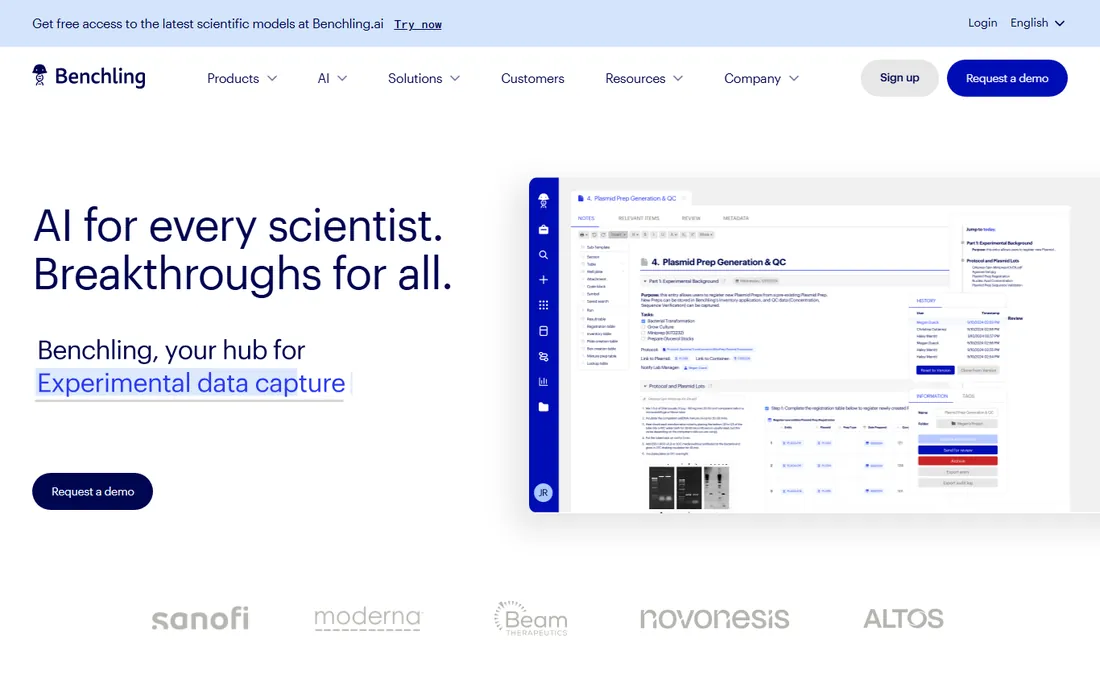
Benchling is the R&D platform biotech runs on. The molecular biology toolkit (sequence design, CRISPR, plasmid mapping) is best-in-class, wrapped in a modern interface with registry, inventory and ELN modules that scale from startup to large pharma. For teams doing molecular biology at scale, nothing else feels purpose-built.
The free academic tier is genuinely useful for universities but excludes inventory and registry, and commercial pricing is enterprise-grade and opaque (third-party reports cite thousands per user per year, unverified). Non-biology workflows need process changes to fit. Implementation ranges from weeks for small teams to months for enterprise with validation. If your lab does molecular biology, evaluate Benchling first. If it does analytical testing, look at QBench instead.
What we like- Best-in-class molecular biology tools: sequence design, CRISPR, plasmid mapping
- Modern interface with strong collaboration
- Scales from startups to large pharma
Watch out for- Commercial pricing is high and quote-only
- Adapting it to non-biology workflows needs process changes
#5
SciNote
Best for: Research teams needing structured experiments with compliance options
Visit scinote.net
Starting priceSee website (Essential, Validated and Platinum tiers quote-based)
Free planYes (free plan available; verify limits on vendor page)
SciNote organizes research the way researchers think: projects break into experiments, experiments into tasks, with visualized workflows and centralized searchable records. Protocol and inventory management sit alongside the notebook, and the Validated plan targets FDA 21 CFR Part 11 compliance for regulated work. Adoption across biotech, pharma, academia and government agencies gives it broad validation.
The jump from the free tier to quote-priced plans is the budgeting question: the Validated plan for regulated work is a separate conversation with sales. Setup is cloud-based and relatively quick, days to weeks. Confirm the current validation package on scinote.net before committing regulated work to it. For research teams that need structure plus a compliance path, it is the most balanced option here.
What we like- Intuitive electronic lab notebook with protocol and inventory management
- Validated plan targets 21 CFR Part 11 compliance needs
- Trusted across biotech, pharma, academia and government
Watch out for- Paid pricing is quote-only
- UI takes time to master and updates frequently
#6
CloudLIMS
Best for: Biobanks, clinical diagnostic and cannabis testing labs
Visit cloudlims.com
Starting priceSee website (tiered per-user; third-party figures unverified on vendor page)
Free planNo (no free trial; a free FreeLIMS edition for single users reported, unverified)
CloudLIMS ships domain-specific editions rather than a generic platform. Biobanks get sample lifecycle management with storage location mapping and chain of custody; clinical labs get diagnostic workflows; cannabis labs get testing-specific configurations. The compliance feature set (audit trails, validated electronic signatures, HIPAA support) is core, not an add-on, and users praise the support team for customization help.
Evaluation runs through demos and sales conversations: there is no free trial, which slows comparison shopping. Per-user pricing favors larger teams; small labs pay a premium per seat. Setup involves vendor-assisted configuration over weeks. Confirm current certifications and pricing on cloudlims.com. If your lab type matches one of its editions, the preconfigured fit saves months of customization.
What we like- Purpose-built editions for biobanks, clinical, cannabis and analytical testing labs
- Strong compliance features: audit trail, validated e-signatures, HIPAA support
- Responsive support praised for customization help
Watch out for- No free trial, so evaluation depends on demos
- Per-user pricing is steep for very small teams at low seat counts
#7
QBench
Best for: Analytical, environmental and cannabis labs wanting fast no-code LIMS
Visit qbench.com
Starting priceSee website (per-user tiers; third-party figures unverified on vendor page)
Free planNo (no free plan or trial reported)
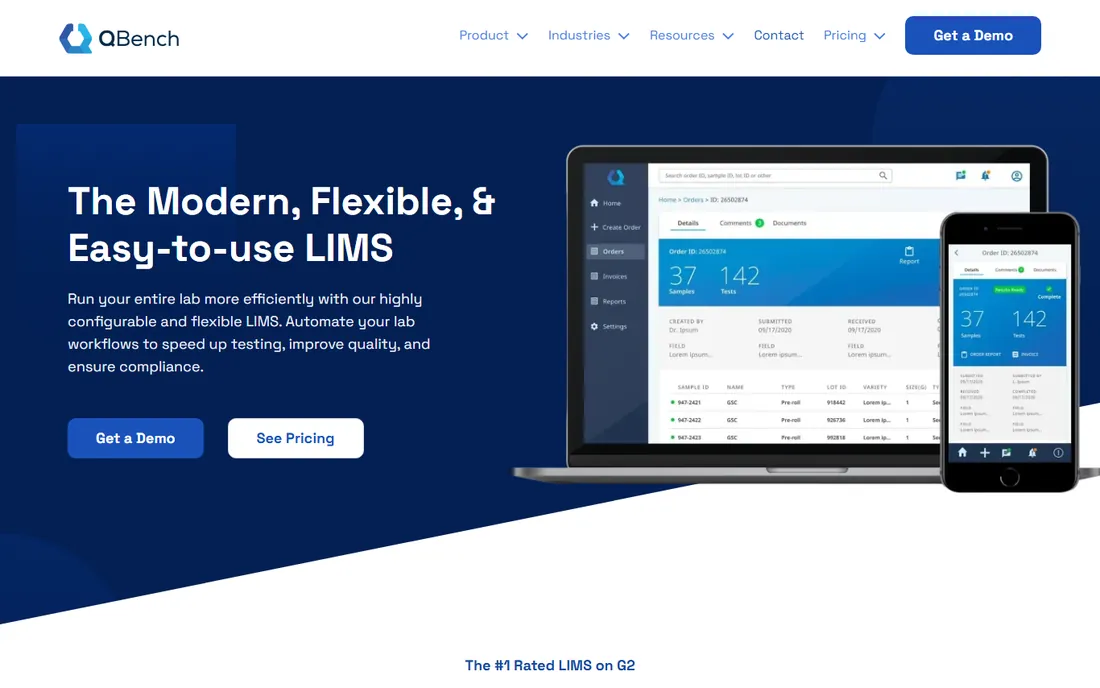
QBench is the no-code LIMS for labs that cannot wait a year. Analytical, environmental and cannabis testing labs configure sample workflows without developers, connect instruments that feed results automatically, and run a customer portal plus a built-in quality management module. File parsers and a full API attack the manual data entry that eats technician time. Implementation is marketed as fast for the category, typically weeks.
The price point sits above lightweight tools on a per-user monthly basis, though volume discounts apply, and the dense interface with many tabs can overwhelm new users. Third-party pricing figures are unverified on the vendor page, so confirm current tiers. If you need a real LIMS live this quarter rather than next year, QBench's configurability-to-speed ratio is the argument.
What we like- Highly configurable no-code LIMS with fast implementation for its class
- Strong instrument integrations, customer portal and built-in QMS module
- File parsers and a full API cut manual data entry
Watch out for- Per-user pricing is high versus simpler lab tools
- Dense interface can overwhelm new users
Starting priceSee website (pricing scoped with the customer; no public list price)
Free planNo (free trial reported by third parties, unverified)
Labguru feels built by lab people. Protocol templates, experiment pages and inventory with reorder levels serve the daily research workflow, combining ELN, LIMS and inventory management in one researcher-friendly platform. Academic and biotech research labs adopt it quickly, and the customer service draws consistent praise.
Pricing is sales-led with no public numbers, so budget planning starts with a discovery call, and the platform's heart is research rather than high-throughput QC. Setup is relatively quick for a LIMS, weeks rather than months. Confirm 21 CFR Part 11 and compliance specifics on labguru.com if regulated work is in scope. For a research lab that wants the notebook, the samples and the freezer inventory in one place, it fits naturally.
What we like- Combines ELN, LIMS and inventory management in one researcher-friendly platform
- Highly customizable protocol templates and experiment workflows
- Responsive customer service frequently praised
Watch out for- Quote-based pricing with no public tiers
- Best for research labs, less depth for high-throughput QC
#9
LabCollector
Best for: Small to mid-size labs wanting affordable modular lab management
Visit labcollector.com
Starting priceSee website (modular packs; third-party figures unverified on vendor page)
Free planYes (free Startup pack for up to 3 users with 1,000 records, per third-party reviews)
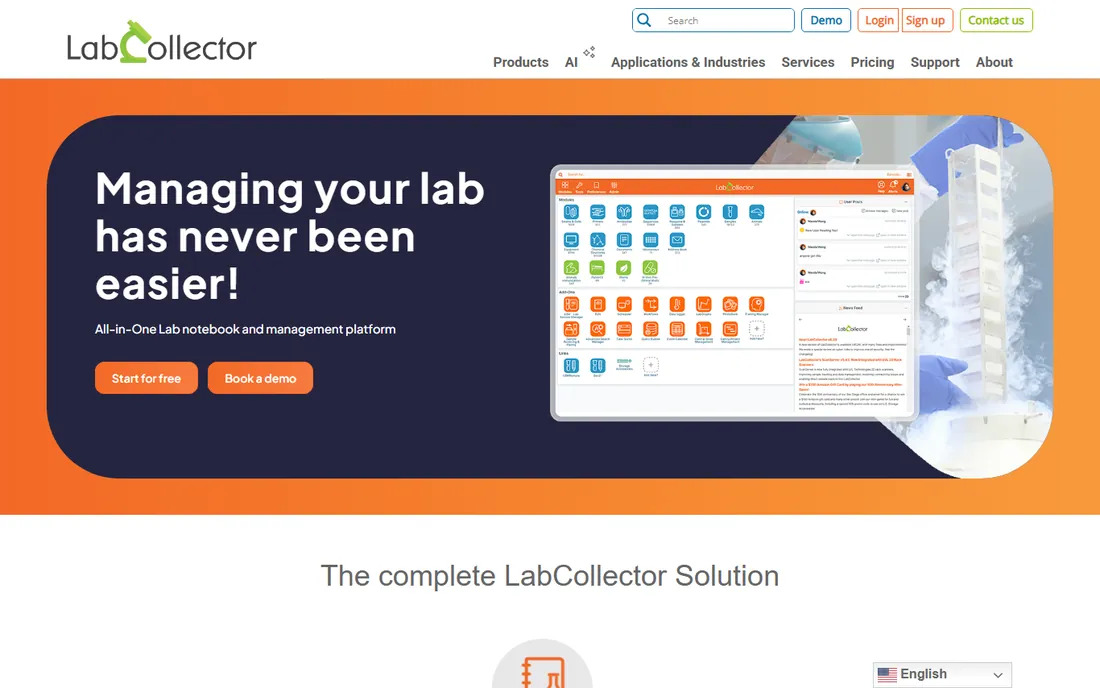
LabCollector is the budget-conscious lab's LIMS. Start free with the Startup pack (3 users, 1,000 records), add only the modules you need (inventory, ELN, LIMS packs), and choose self-hosted with a one-time license or cloud subscription. Data ownership appeals to labs that want their records on their servers. The Industry plan adds 21 CFR Part 11 and GLP features for regulated work.
The a la carte model makes total cost hard to predict until you scope every module and add-on, so get the full quote before comparing. The interface shows its age next to Benchling or Scispot. Confirm current pack pricing and compliance features on labcollector.com, since third-party figures are unverified. For a small lab that needs real LIMS function at a fraction of enterprise prices, the modular path works.
What we like- Modular system: buy only the inventory, ELN or LIMS packs you need
- Self-hosted or cloud options with one-time license model
- 21 CFR Part 11 and GLP features on the Industry plan
Watch out for- A la carte pricing gets complicated as add-ons accumulate
- Interface feels dated next to cloud-native competitors
#10
Scispot
Best for: Biotech startups and modern labs wanting lab automation
Visit scispot.com
Starting priceSee website (no public pricing; contact vendor)
Free planNo (free trial reported by TrustRadius; free version reported, unverified)
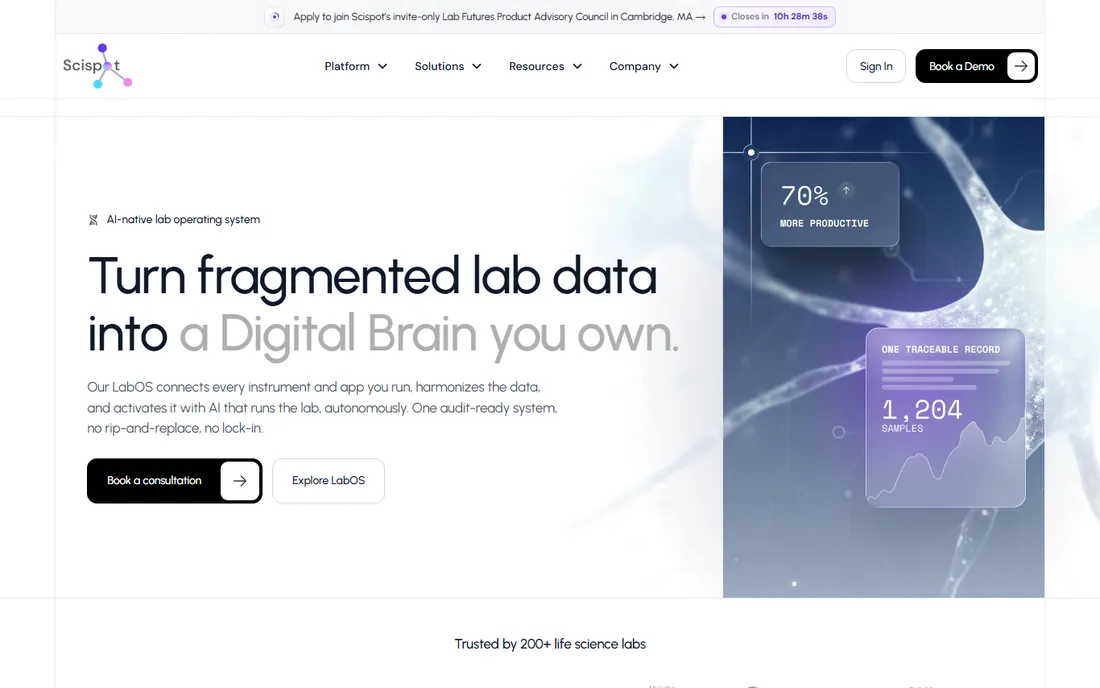
Scispot is the automation layer for modern biotech. Rather than a traditional LIMS, it connects instruments, ELN functions and data workflows through no-code automation and strong APIs, reducing the manual data handling that slows labs down. Labsheets and workflow automation suit teams building integrated data pipelines. Users note a supportive team that tailors the platform to lab needs.
The youth shows. Founded in 2020, the track record is smaller than incumbents, pricing is entirely sales-led with no public information, and enterprise buyers should diligence support SLAs and the roadmap. Setup is collaborative with the vendor team over weeks. Confirm compliance coverage for regulated work directly before committing. For a biotech startup that thinks in integrations and automation rather than sample queues, Scispot is the modern answer.
What we like- Modern no-code lab automation platform connecting instruments and data
- Strong API and integration focus for biotech data workflows
- Supportive team noted for tailoring the platform
Watch out for- Young company (founded 2020) with a smaller track record
- No public pricing or detailed plan information
Match the LIMS to the lab, not the brochure
LIMS buying goes wrong when labs shop features instead of fit. The segmentation that matters: regulated high-volume testing (pharma QC, clinical diagnostics) needs LabWare, STARLIMS or LabVantage with validation services and 21 CFR Part 11. Biotech R&D needs Benchling, SciNote or Labguru, built around experiments rather than sample queues. Testing labs (analytical, environmental, cannabis) need QBench or CloudLIMS, configured fast with instrument integrations. Small labs with simple needs need LabCollector or Scispot, affordable and live in weeks.
Crossing those lines wastes money or months. A research lab buying LabWare pays for validation it will never use. A QC lab buying Benchling gets beautiful notebooks and no sample chain of custody. Name your lab type, your regulatory burden and your sample volume first. Then shortlist within the segment. The best LIMS is the one built for your lab's actual job.
Compliance is a conversation, not a checkbox
Every vendor here mentions 21 CFR Part 11, HIPAA or ISO 17025 somewhere. Treat those mentions as the start of a conversation, not a certification. Part 11 compliance depends on how you configure and validate the system, not just the software: audit trails, electronic signatures, access controls and validation documentation all need to be in place and documented. A vendor's "Part 11 ready" claim means the features exist; your quality team still has to qualify them.
During evaluation, ask for the validation package: what documentation the vendor provides, what IQ/OQ/PQ support looks like, and which customers have passed audits with the system. Ask where data is hosted and who can access it. Ask about change control for cloud updates, because a vendor pushing weekly releases into a validated environment is a problem. The vendors with genuine regulated-lab practices (LabWare, STARLIMS, CloudLIMS, QBench) will answer fluently. Evasion is your signal to walk away.
How we chose
We started with the searches lab managers actually run: laboratory management software, LIMS software, lab information management system and electronic lab notebook. For each candidate we opened the vendor's own pricing page, checked plan structures against public reviews on G2 and Capterra and practitioner discussion on Reddit, and compared feature lists, compliance positioning and lab-type fit. Where a price could not be verified on the vendor's page we wrote "See website" instead of guessing. The shortlist mixes enterprise LIMS with research-friendly platforms and modern automation tools, because a pharma QC lab and a biotech startup are not managing the same lab.
Frequently asked questions
What is a LIMS?
A Laboratory Information Management System tracks samples through the lab: receipt and accessioning, testing workflows, results, storage locations and chain of custody, with the audit trail regulators require. Modern LIMS platforms add instrument integration, inventory management and electronic notebooks. It is the system of record for what was tested, by whom, when, and with what result.
How much does LIMS software cost?
Small-lab tools run free to a few hundred dollars a month: LabCollector's free Startup pack, SciNote's free plan, and per-user SaaS tiers in the low hundreds. Midmarket platforms (QBench, CloudLIMS) are quote-based per user, typically thousands annually. Enterprise LIMS (LabWare, STARLIMS, LabVantage) are six-figure commitments including implementation and validation. Almost nobody publishes prices, so every serious evaluation includes a scoping call.
What is 21 CFR Part 11, and do I need it?
The FDA regulation governing electronic records and signatures in pharma and related industries. If your lab's data supports FDA submissions or regulated manufacturing, you need Part 11 controls: audit trails, validated electronic signatures, access controls and documented validation. Research labs without regulatory submissions generally do not. Confirm the vendor's validation package and your quality team's requirements before assuming compliance.
LIMS vs. ELN: what is the difference?
A LIMS manages samples and lab operations: tracking, testing workflows, instruments, inventory and compliance. An ELN (electronic lab notebook) documents experiments: protocols, observations, results and collaboration. Research labs often need the ELN first (Benchling, SciNote); testing labs need the LIMS first (QBench, CloudLIMS, LabWare). Many platforms now combine both, which suits labs doing research and testing.
How long does LIMS implementation take?
Cloud research tools (Benchling, SciNote, Labguru, Scispot) deploy in weeks. Configurable midmarket LIMS (QBench, CloudLIMS, LabCollector) take weeks to a couple of months with vendor assistance. Enterprise LIMS (LabWare, STARLIMS, LabVantage) run multi-month implementations with professional services plus validation time. Data migration and workflow configuration, not software installation, set the timeline.
Can a small lab use enterprise LIMS features affordably?
Usually not directly, but the midmarket has closed the gap. QBench and CloudLIMS offer audit trails, e-signatures and instrument integrations at a fraction of enterprise prices. LabCollector's Industry plan adds Part 11 and GLP features modularly. The expensive part of enterprise LIMS is rarely the license alone; it is implementation and validation services. Buy the compliance features you need, not the enterprise brand.
Sources we checked (12)
- https://www.labware.com/
- https://www.starlims.com/
- https://www.labvantage.com/
- https://www.benchling.com/
- https://www.scinote.net/
- https://www.cloudlims.com/
- https://www.qbench.com/
- https://www.labguru.com/
- https://www.labcollector.com/
- https://www.scispot.com/
- https://www.g2.com/categories/laboratory-information-management-system-lims
- https://www.capterra.com/laboratory-information-system-software/
Is your product missing or out of date?
We review this list regularly. Vendors can request a listing, send updated pricing or ask about featured placement.

Shihab Mia · Founder, Rankite
Shihab has spent more than a decade helping SaaS and e-commerce brands grow through search. He writes Rankite's software buying guides from pricing pages, documentation and public user reviews. More about Shihab.