How we make this list: we compare pricing pages, product documentation and public user reviews. Rankite is independent; if a vendor ever pays for a featured spot, that listing is clearly labeled Partner.
Key takeaways
- IntakeQ is the most focused pick for small practices at $49.90 a month, with HIPAA-compliant forms, e-signatures and a free trial.
- Phreesia and NexHealth serve larger practices that need intake wired into check-in, payments and scheduling, from $250 and $350 a month.
- Jotform's Gold plan at $99 a month billed annually is the cheapest way to get HIPAA-compliant general forms with a BAA.
- Formstack starts at $99 a month with stronger workflow automation, though full HIPAA features sit on the higher tiers.
- SimplePractice and Weave bundle intake into broader practice systems at $49 and from $199 a month, so dedicated intake tools are not always needed.
Quick comparison
| Tool | Best for | Starting price | Free plan |
|---|
 IntakeQ IntakeQ | small practices that need intake without a full platform | $49.90/month (Forms Only) | Free trial |
 Phreesia Phreesia | larger practices and health systems digitizing check-in | From $250/month (quote-based) | No |
 NexHealth NexHealth | practices that want intake synced with real-time scheduling | From $350/month | No |
 Jotform Jotform | HIPAA forms without buying a clinical platform | $99/month (Gold, billed annually) | Yes |
 Formstack Formstack | intake with document generation and workflow automation | $99/month (Forms plan) | Free trial (14 days) |
 SimplePractice SimplePractice | mental health practices that get intake built in | $49/month (Starter plan) | Free trial (30 days) |
 Weave Weave | digital forms bundled with patient communications | From $199/month per location | No |
 Tebra Tebra | independent practices that want intake plus growth tools | See website | No |
Is your product missing or out of date?
We review this list regularly. Vendors can request a listing, send updated pricing or ask about featured placement.
The best patient intake software
Practices buy patient intake software for two different jobs. The first wants intake as part of a bigger clinical workflow: forms that trigger from appointments, feed insurance verification, sync into the EHR and connect to payments and reminders without staff retyping anything. The second just needs to stop handing out clipboards: HIPAA-compliant digital forms that patients complete on their phones before they arrive.
The first buyer belongs with Phreesia, NexHealth, SimplePractice, Weave or Tebra, which wire intake into scheduling, check-in and billing. The second is better served by IntakeQ, Jotform or Formstack, which do forms exceptionally well and cost far less. Paying $350 a month for a platform when a $50 form tool solves the problem is the most common mistake in this category.
Prices run from $49.90 to $350 a month, and the right choice depends entirely on whether you need intake alone or intake as part of a system.
#1
IntakeQ
Best for: small practices that need intake without a full platform
Visit intakeq.com
Starting price$49.90/month (Forms Only)
Free planFree trial
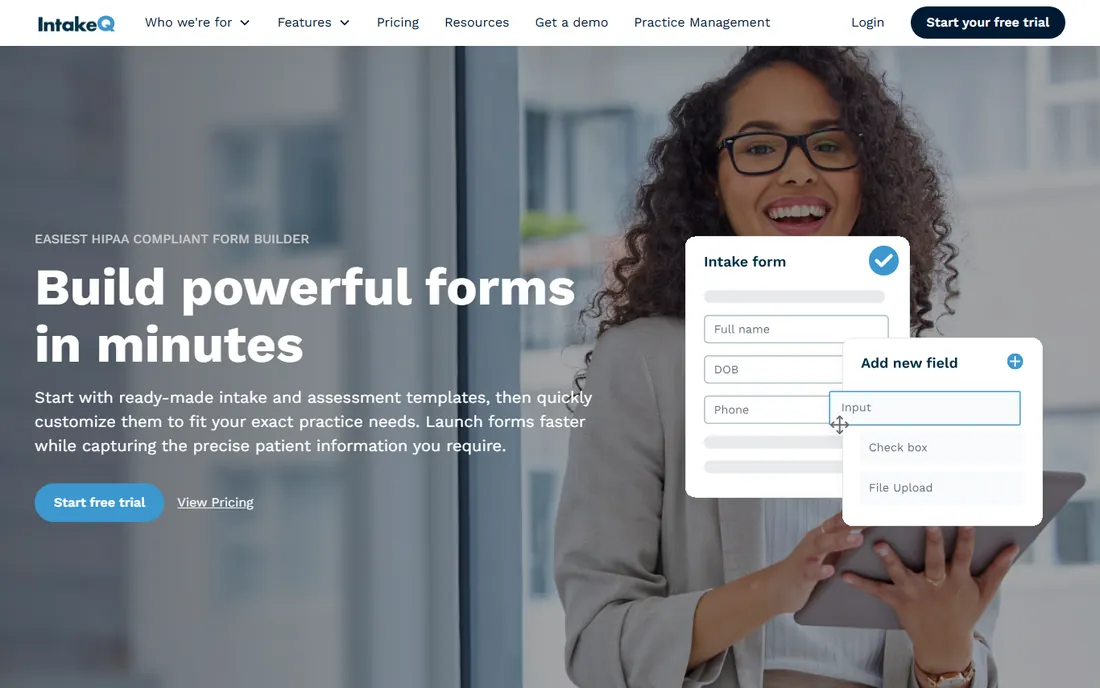
IntakeQ does one thing and does it well: getting patient information into your practice before the visit. The Forms Only plan at $49.90 a month covers unlimited form templates, branded custom forms, client and provider e-signatures, form reminders, secure document sharing and a HIPAA business associate agreement. A $29.90 low-volume tier exists for practices with ten or fewer submissions a month.
The Practice Management tier at $79.90 adds appointment management, a booking widget, a secure client portal and payments, which tempts buyers into scope creep. But most small practices should start with Forms Only. It is the cleanest intake-first product on this list and the natural pick when clipboards are the actual problem.
What we like- Purpose-built for patient intake with branded forms and e-signatures
- HIPAA BAA included
- Free trial to test with real forms
Watch out for- Low-volume tiers cap monthly submissions
- Appointment and practice features cost more
#2
Phreesia
Best for: larger practices and health systems digitizing check-in
Visit phreesia.com
Starting priceFrom $250/month (quote-based)
Free planNo

Phreesia turns intake into the first step of a digital front door: patients complete forms on mobile, insurance eligibility is verified automatically, and copays are collected before or during check-in. Pricing is quote-based, reported from around $250 a month for smaller deployments, and the platform is proven across hospitals, specialty clinics and large groups.
Small practices should not be here; the sales process and implementation are built for organizations with real patient volume. But when intake paperwork, eligibility checks and front-desk bottlenecks are the operational problem, Phreesia is the most established name in the category.
What we like- Intake feeds insurance verification and payment collection automatically
- Proven at health-system scale
- Strong analytics on patient flow
Watch out for- Quote-based pricing with an enterprise sales process
- Far more platform than a small practice needs
#3
NexHealth
Best for: practices that want intake synced with real-time scheduling
Visit nexhealth.com
Starting priceFrom $350/month
Free planNo

NexHealth's digital forms live inside a patient experience platform that syncs with your EHR in real time, so a completed intake form, a booked appointment and a collected payment all update the same record without staff intervention. Pricing starts around $350 a month, with implementation typically $500 to $3,000 extra.
Reviewers call the pricing moderate to high, but practices with heavy no-show and intake friction find the recovered time pays for it. It suits single and multi-location practices that want intake as part of a premium patient experience, not a standalone form tool.
What we like- Digital forms sync in real time with major EHR systems
- Intake connects to scheduling, reminders, messaging and payments
- Strong no-show reduction
Watch out for- Highest entry price on this list
- Implementation and integration fees add to year one
Starting price$99/month (Gold, billed annually)
Free planYes
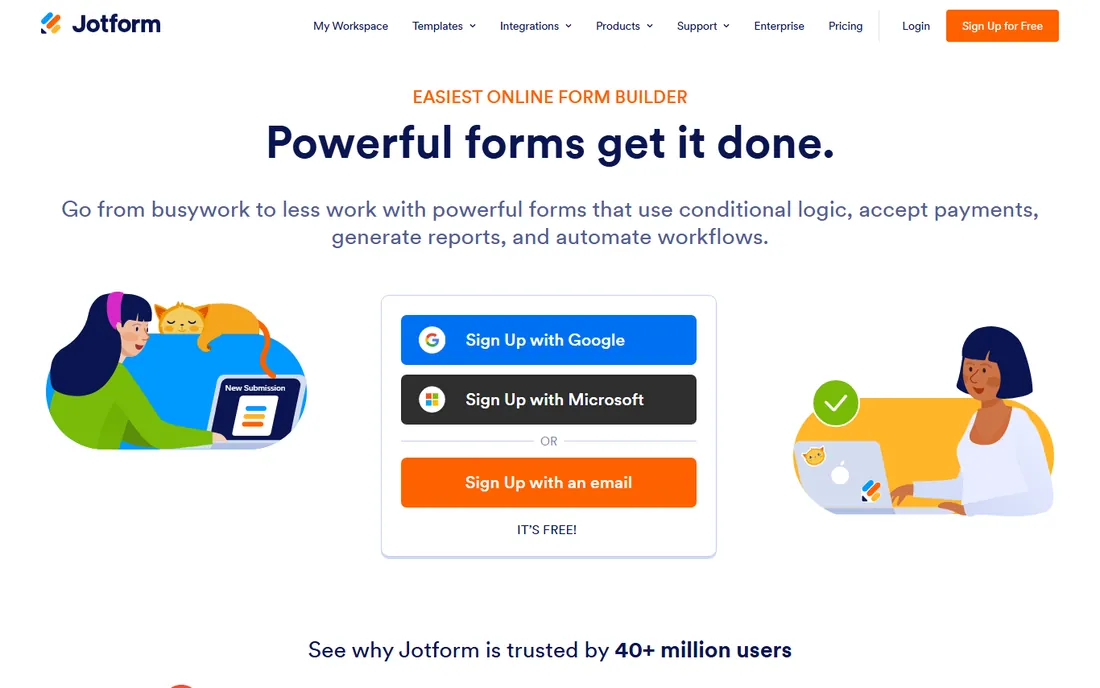
Jotform is the generalist form builder that many practices adopt for intake: thousands of healthcare templates, conditional logic, e-signatures, payment fields and a builder anyone can use. The catch is compliance: Bronze at $39 and Silver at $49 do not include HIPAA features, so the cheapest compliant plan is Gold at $99 a month on annual billing ($129 monthly), which brings the BAA, encrypted storage and access controls.
Form data does not flow into your EHR natively; expect Zapier or webhook work to close that loop. For practices that need compliant forms fast and cheap, especially ones already running Zapier workflows, Jotform is the pragmatic pick.
What we like- Huge template library and drag-and-drop builder
- 150 plus integrations with CRMs and payment processors
- Free Starter plan for non-clinical use
Watch out for- HIPAA features only start on the $99 Gold plan
- Form data must be routed to your EHR manually or via Zapier
#5
Formstack
Best for: intake with document generation and workflow automation
Visit formstack.com
Starting price$99/month (Forms plan)
Free planFree trial (14 days)
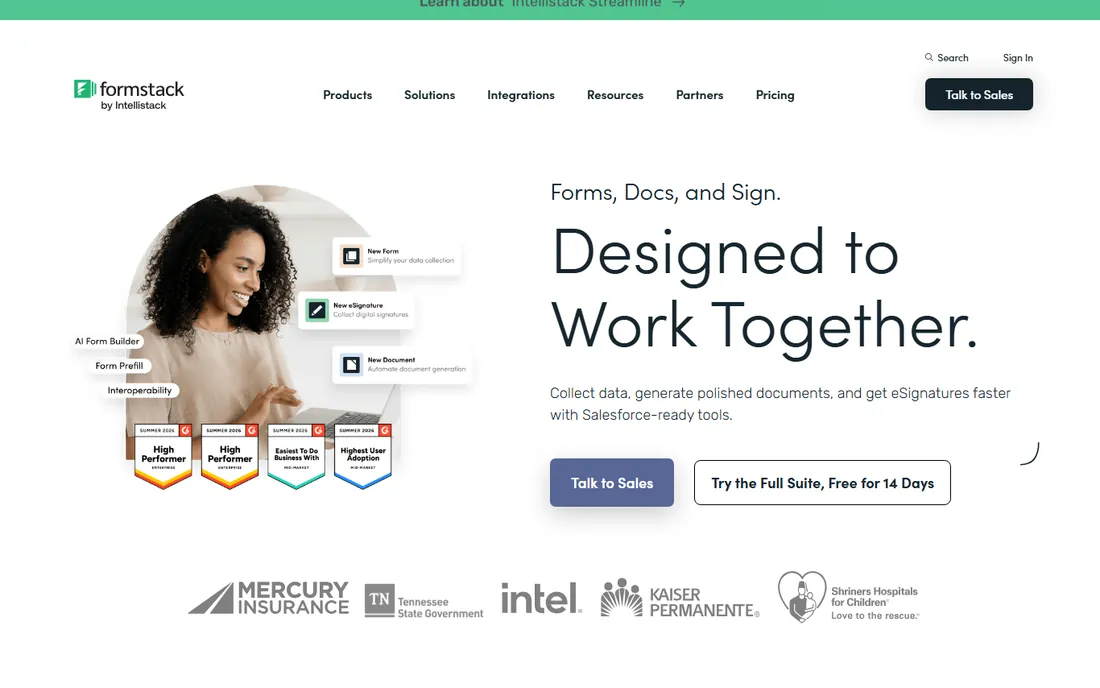
Formstack goes beyond form collection: submitted intake data can flow into generated documents, e-signature workflows and multi-step approvals without third-party automation. The Forms plan at $99 a month covers 25 forms with 1,000 submissions per form, while the Suite plan at $299 adds documents and e-signatures for three users.
Healthcare buyers should confirm which compliance features their tier includes, since the deepest HIPAA controls sit on custom Enterprise plans. It fits practices whose intake process has real workflow complexity: consent packets, multi-party signatures and documents that must generate themselves.
What we like- Forms connect natively to documents, e-signatures and approval workflows
- Strong conditional logic
- Built for regulated industries
Watch out for- Full HIPAA and advanced compliance features sit on higher tiers
- $99 entry is steep for forms alone
Starting price$49/month (Starter plan)
Free planFree trial (30 days)
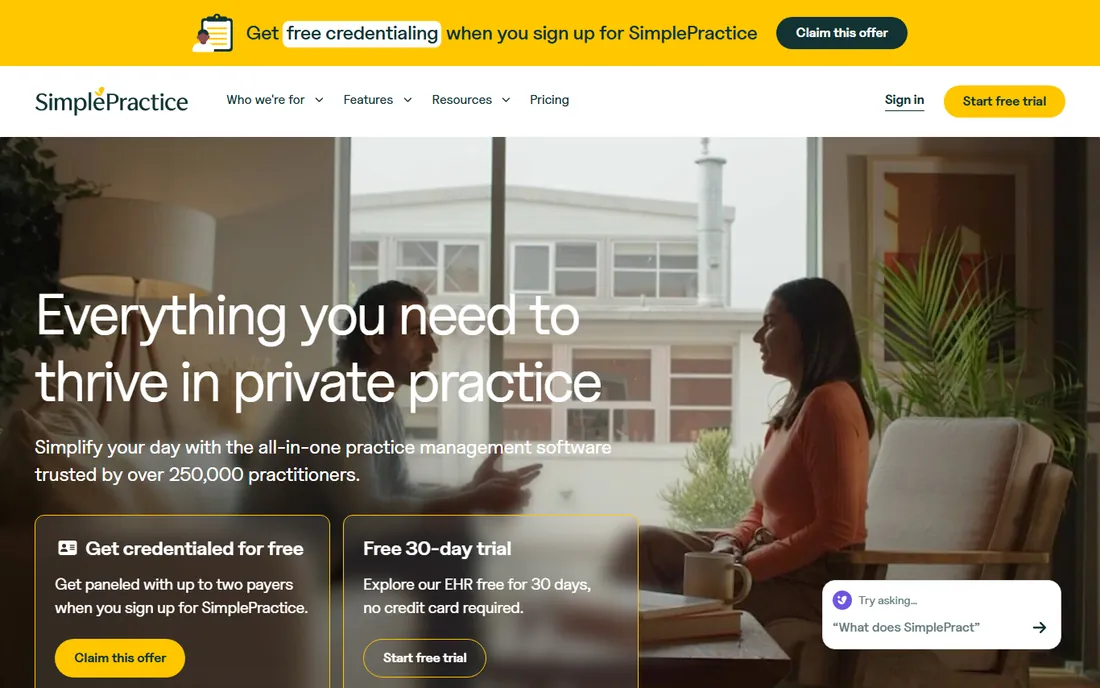
SimplePractice includes intake forms, a client portal and secure document sharing as standard, which means many mental health practices never need a separate intake tool. The Starter plan at $49 a month covers scheduling, intake, telehealth and a client portal, while Essential at $79 and Plus at $99 add insurance claims and group scheduling.
Therapists should budget the add-ons: AI notes run $35 per clinician a month and e-prescribing $49 plus setup. If your practice already runs on SimplePractice, its built-in intake beats bolting on a separate tool; if you need intake only, IntakeQ costs the same and stays focused.
What we like- Intake forms, client portal and secure messaging in one subscription
- Telehealth and billing included
- 30-day free trial
Watch out for- Add-ons for AI notes and e-prescribing raise the real cost
- US-only
Starting priceFrom $199/month per location
Free planNo
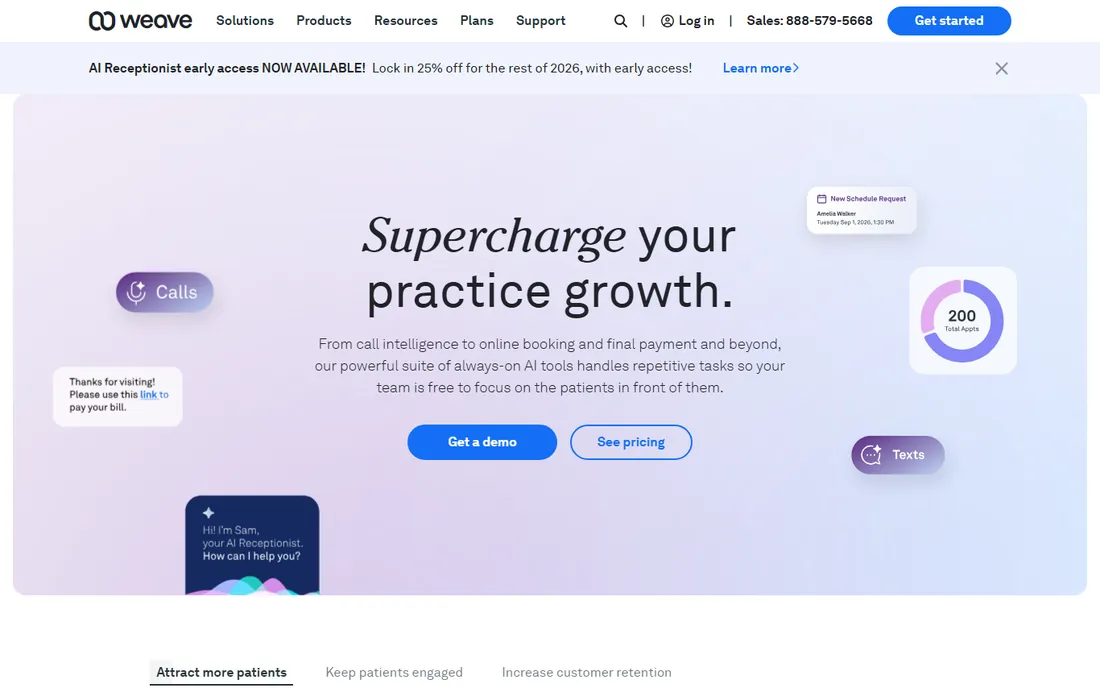
Weave bundles digital intake forms with the communication tools a practice uses around them: appointment reminders, two-way texting, online scheduling and payments, all synced with major practice management systems. Starting around $199 a month per location, it replaces several separate subscriptions.
The buying experience is the complaint: annual contracts, a setup fee around $750 and add-ons that push year-one costs well above the headline. It makes sense when the bundle replaces your phone system, texting service and forms tool together; as an intake-only purchase it is overpriced.
What we like- Digital forms sit beside VoIP phones, two-way texting and payments
- Strong dental integrations
- Review generation built in
Watch out for- Quote-heavy sales with annual contracts and a setup fee near $750
- Per-location pricing adds up fast
#8
Tebra
Best for: independent practices that want intake plus growth tools
Visit tebra.com
Starting priceSee website
Free planNo

Tebra, formed from the Kareo and PatientPop merger, sells independent practices an operating platform that includes digital intake and check-in alongside EHR, billing, online scheduling and reputation management. The pitch is one vendor for the administrative stack instead of five.
Pricing is not published, so budget only after a quote, and the platform's breadth is wasted on a practice that just needs forms. But independents looking to modernize intake, billing and marketing together should put Tebra on the shortlist.
What we like- Intake and digital check-in alongside EHR, billing and reputation management
- Built for independent practices
- Strong onboarding support
Watch out for- No published pricing
- Platform breadth can overwhelm practices that need intake only
How we built this shortlist
We gathered pricing from vendor pricing pages and independent pricing guides checked in September and October 2026, including Jotform's and Formstack's published plan pages and third-party audits of IntakeQ's tiers. We required HIPAA compliance with a BAA path for every pick and real patient-intake functionality: digital forms, consent or e-signature support, and patient-facing completion. Practice platforms were included only where intake is a genuine strength. No hands-on testing is claimed; the ranking rests on published plans, documented features and aggregated buyer reviews.
What to check before you commit
Decide whether you need intake alone or intake as part of a system. If clipboards are the problem, compare IntakeQ, Jotform and Formstack on form limits, e-signature needs and EHR routing. If front-desk bottlenecks are the problem, evaluate Phreesia, NexHealth and Tebra on integration depth with your specific EHR, because intake that does not sync cleanly creates more work than it saves.
Confirm the HIPAA details in writing: a signed BAA, encrypted storage and access controls, not just a marketing claim. Check form submission limits against your real monthly volume, since overage fees and forced upgrades hide in the fine print. Test the patient experience on a phone before signing; most patients complete intake on mobile, and a clumsy mobile form kills completion rates. Finally, ask how completed forms reach your clinical record and who builds that connection.
The pricing models explained
Dedicated intake tools are the cheapest path: IntakeQ at $49.90, Jotform Gold at $99 billed annually, Formstack Forms at $99. Intake bundled into practice platforms runs higher because you pay for the platform: SimplePractice at $49 for mental health, Weave from $199 per location, Phreesia from $250, NexHealth from $350. Tebra does not publish pricing. Watch submission limits, SMS reminder credits and EHR integration fees, which sit outside most subscriptions.
Frequently asked questions
What is the best patient intake software for a small practice?
IntakeQ at $49.90 a month is the best intake-first pick for small practices, with HIPAA-compliant forms, e-signatures and a free trial. Jotform Gold at $99 a month billed annually is the cheapest general form builder with a HIPAA BAA. Mental health practices should also consider SimplePractice's built-in intake at $49 a month.
How much does patient intake software cost?
Dedicated intake tools cost $50 to $100 a month. Intake bundled into patient experience platforms runs $199 to $350 a month per location or practice. Add form submission overages, SMS credits and EHR integration fees, which can add substantially to the monthly total.
Is patient intake software HIPAA compliant?
Every tool on this list offers HIPAA compliance with a signed business associate agreement, though Jotform requires the Gold plan for HIPAA features. Confirm the BAA is in place before collecting any patient data, and check where data is stored if your state has specific requirements.
Can patients complete intake forms on their phones?
Yes, mobile-friendly intake is standard across the category. Patients receive a link by text or email and complete forms on their own devices before the visit. Completion rates are highest when forms are short, mobile-optimized and sent 24 to 48 hours before the appointment.
How does intake software connect to my EHR?
Platform tools like Phreesia, NexHealth and Tebra sync completed forms into your EHR automatically. Standalone form builders like Jotform and Formstack route data via integrations, Zapier or webhooks, which may need setup work. IntakeQ exports to PDF, CSV and Dropbox. Confirm the connection path for your specific EHR before buying.
Sources we checked (8)
- https://www.saasworthy.com/product/intakeq
- https://www.softwareworld.co/software/intakeq-reviews/
- https://sourceForge.net/software/product/IntakeQ/
- https://pabau.com/blog/9-best-healthcare-forms-software/
- https://www.growform.co/jotform-review/
- https://paperform.co/form-builders/airtable-forms-vs-formstack/
- http://forms.app/en/blog/best-formstack-alternatives
- https://www.selecthub.com/patient-engagement-software/nexhealth-vs-phreesia/
Is your product missing or out of date?
We review this list regularly. Vendors can request a listing, send updated pricing or ask about featured placement.

Shihab Mia · Founder, Rankite
Shihab has spent more than a decade helping SaaS and e-commerce brands grow through search. He writes Rankite's software buying guides from pricing pages, documentation and public user reviews. More about Shihab.