How we make this list: we compare pricing pages, product documentation and public user reviews. Rankite is independent; if a vendor ever pays for a featured spot, that listing is clearly labeled Partner.
Key takeaways
- Salesforce Health Cloud is the enterprise standard at around $350 per user per month, but implementation typically costs $50,000 to $200,000 on top.
- HubSpot only becomes HIPAA-eligible on Enterprise tiers at about $150 per user per month, so the free CRM is not an option for patient data.
- Zoho CRM at $14 per user per month is the cheapest path to a HIPAA-capable CRM, with compliance features on its upper tiers.
- Insightly includes HIPAA compliance from $29 per user per month with implementation measured in weeks, not months.
- A signed BAA matters more than any marketing claim: no BAA, no HIPAA compliance, regardless of what the feature page says.
Quick comparison
| Tool | Best for | Starting price | Free plan |
|---|
 Salesforce Health Cloud Salesforce Health Cloud | Hospital systems and large networks | $350 per user/month (Enterprise) | No |
 HubSpot CRM HubSpot CRM | Patient acquisition and marketing | $150 per user/month (Enterprise tier with HIPAA) | Free trial |
 Zoho CRM Zoho CRM | Budget-conscious clinics | $14 per user/month (HIPAA features on upper tiers) | Free trial |
 Insightly Insightly | Multi-location practices | $29 per user/month | Free trial |
 GoHighLevel GoHighLevel | Telehealth and small practices | $97/month (Starter; HIPAA add-on extra) | Free trial |
 ActiveCampaign ActiveCampaign | Automation-heavy intake workflows | See website | Free trial |
 Keap Keap | Small healthcare practices | See website | Free trial |
 Microsoft Cloud for Healthcare Microsoft Cloud for Healthcare | Hospital systems on Microsoft | See website | No |
 Zendesk Zendesk | Multi-channel patient communication | See website | Free trial |
Is your product missing or out of date?
We review this list regularly. Vendors can request a listing, send updated pricing or ask about featured placement.
The best best hipaa compliant crm software
Will this vendor sign a Business Associate Agreement? That single question filters the CRM market for healthcare faster than any feature comparison. HIPAA does not certify software, and no vendor is "HIPAA certified" in any official sense. What matters is whether the vendor will sign a BAA, encrypt protected health information, maintain audit logs, and give you the administrative controls the law requires.
The second question is what the CRM is actually for. A hospital network needs care coordination, EHR integration, and population health analytics. A dental practice needs appointment reminders, review management, and recall campaigns. A telehealth startup needs intake automation and secure messaging. The tools below span that range, from enterprise care platforms to marketing CRMs with HIPAA-eligible tiers.
Prices reflect the tier that actually includes HIPAA features, which is often not the vendor's cheapest plan. That distinction is the most expensive mistake buyers make in this category, so every entry below is explicit about which tier the compliance features require.
Starting price$350 per user/month (Enterprise)
Free planNo
Salesforce Health Cloud remains the reference platform for enterprise healthcare CRM. It builds a unified patient timeline combining appointments, medications, lab results, claims, and communications, with care plan management, referral workflows, and predictive analytics for risk stratification. Integration with EHR systems through HL7 and FHIR standards is mature.
The Enterprise edition lists around $325 to $350 per user per month, with Unlimited at $525 and AI-enhanced editions higher still. Those license costs are only the beginning: implementation typically runs $50,000 to over $200,000, and analysts estimate the three-year total cost for a 50-user deployment above $450,000. This is infrastructure, not software.
The honest assessment is that Health Cloud is the right tool for hospital systems and large networks with dedicated Salesforce administrators, and the wrong tool for everyone else. Smaller organizations should not buy it hoping to grow into it. The complexity and cost only make sense at genuine enterprise scale.
What we like- True 360-degree patient view with EHR integration
- Deep customization
- Massive partner ecosystem
Watch out for- Implementation runs $50,000 to $200,000
- Three-year cost for 50 users can exceed $450,000
- Requires technical staff
Starting price$150 per user/month (Enterprise tier with HIPAA)
Free planFree trial
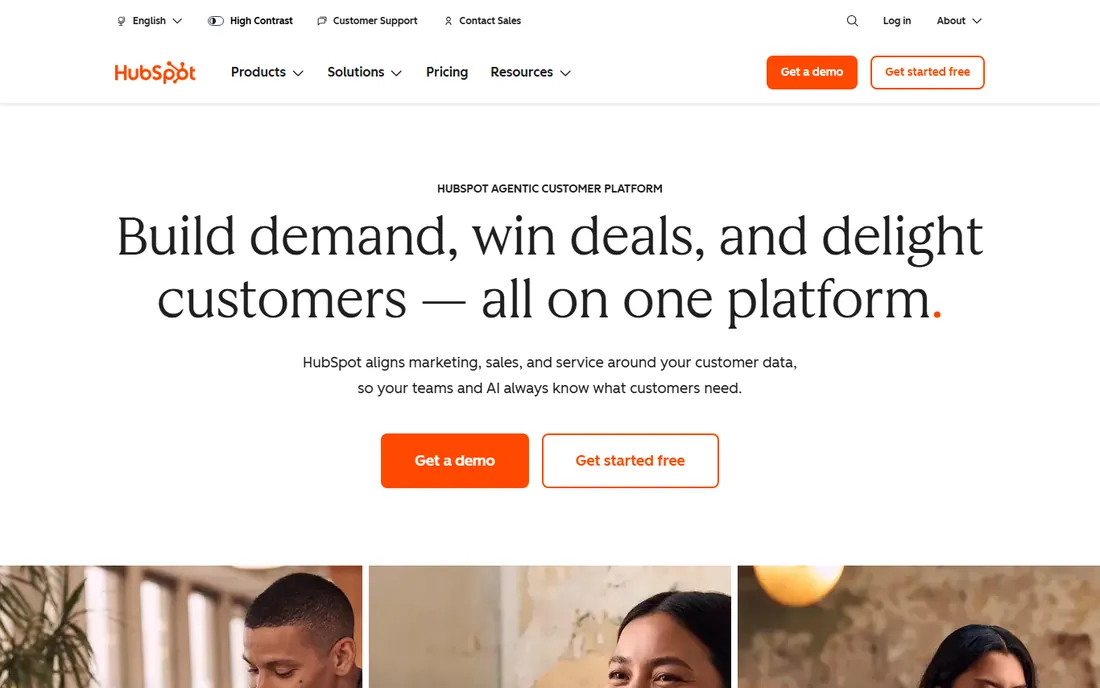
HubSpot is the marketing leader that healthcare practices keep trying to adopt, and with the right tier, it works. HIPAA eligibility requires Enterprise-level hubs with sensitive data features enabled, at around $150 per user per month for Sales Hub Enterprise or Service Hub Enterprise, plus onboarding fees that start at $3,500. Marketing Hub Enterprise runs about $3,600 per month with five seats.
Once on the right tier, practices get HubSpot's full strength: email workflows, landing pages, ad attribution, and pipeline management, all usable for patient acquisition campaigns with PHI handled under the BAA. The platform is easy enough that marketing staff adopt it without the training burden Salesforce imposes.
The critical warning is tier discipline. The free CRM and the Pro tiers are not HIPAA-eligible, and running patient data through them breaks compliance entirely. Every user who touches PHI needs the Enterprise seat. For practices spending seriously on patient acquisition, the math works. For a small clinic that just needs reminders, it is overkill.
What we like- Best-in-class marketing automation
- Easy onboarding
- Sensitive data features on Enterprise
Watch out for- HIPAA requires Enterprise tiers only
- Free and Pro plans cannot touch PHI
- Onboarding fees add up
Starting price$14 per user/month (HIPAA features on upper tiers)
Free planFree trial
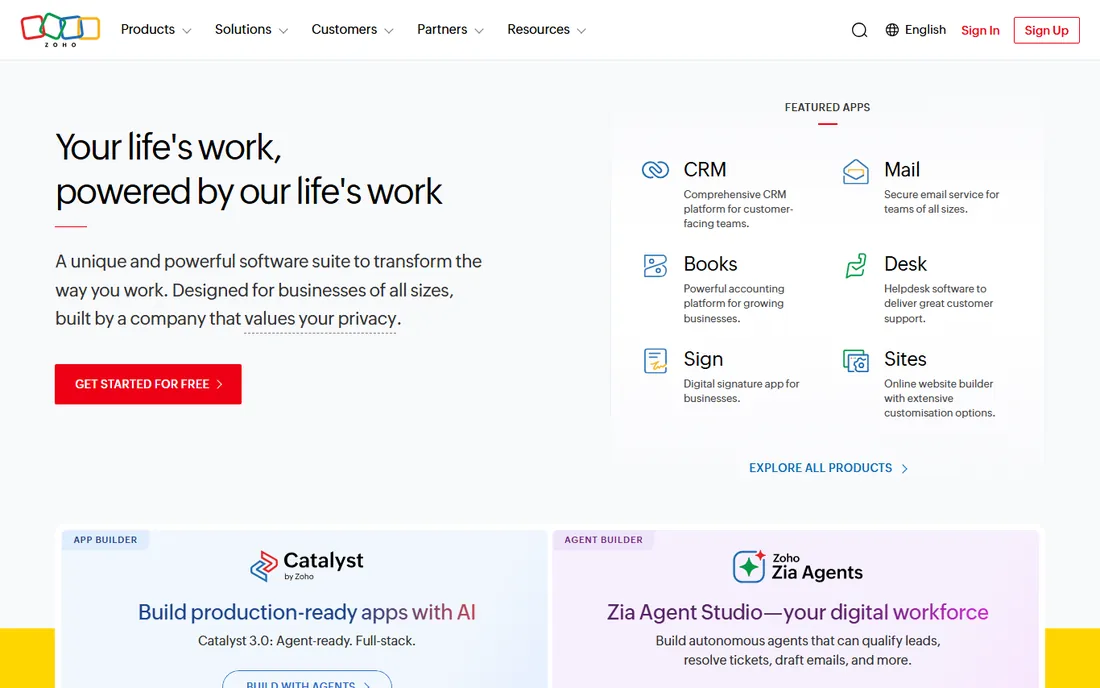
Zoho CRM is the value play in healthcare CRM. List pricing starts around $14 per user per month, and HIPAA compliance features are available on the upper-tier plans, with the HIPAA configuration allowing customization of PHI fields per module and 60-day audit logs. For a small clinic, that is the lowest-cost route to a compliant CRM by a wide margin.
The platform itself is genuinely capable: workflow automation, email integration, custom modules, and reporting that punches above the price. Multi-location practices can manage separate pipelines per site, and the customization depth suits clinics with unusual workflows.
The honest limitations are the guardrails. The HIPAA tier caps PHI fields per module, which forces careful data modeling, and the audit log retention is shorter than enterprise alternatives. Zoho also lacks the healthcare-specific reference customers that Salesforce and HubSpot can show. For practices under 50 staff with straightforward needs, those are acceptable trade-offs at this price.
What we like- Cheapest credible HIPAA path
- Highly customizable
- Generous feature set per dollar
Watch out for- HIPAA requires upper-tier plans with PHI field limits
- Smaller healthcare reference base
- Support tiers vary
Starting price$29 per user/month
Free planFree trial
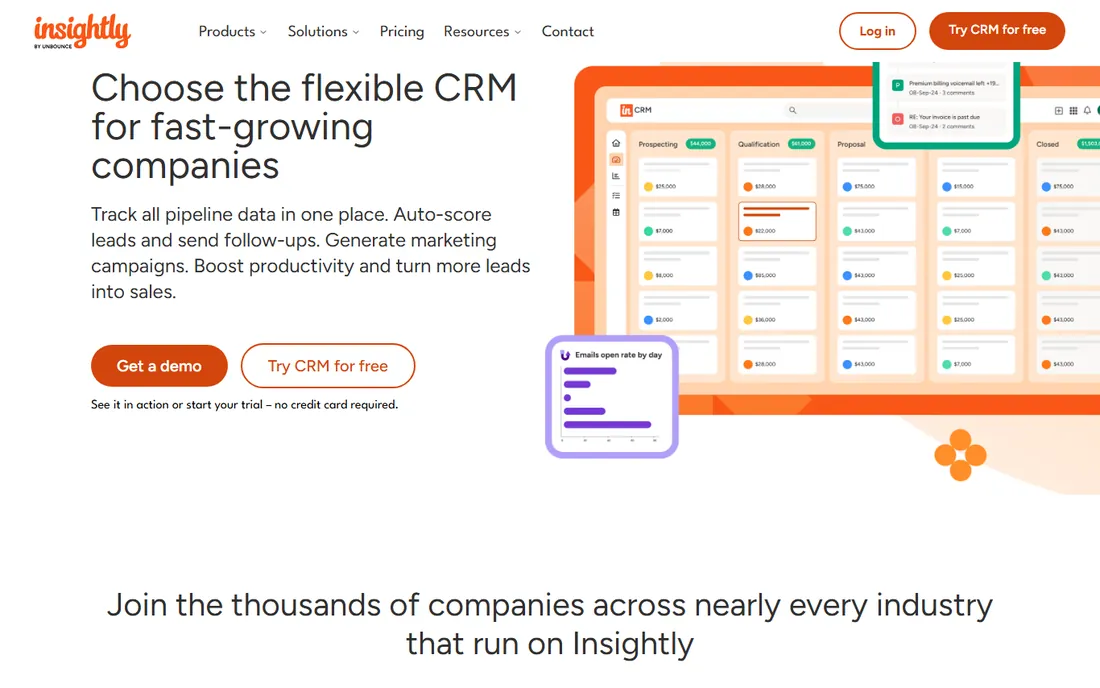
Insightly has carved out a real niche in healthcare for multi-location practices and specialty clinics that need genuine CRM capability without Salesforce complexity. Pricing runs $29 to $99 per user per month, and HIPAA compliance is included rather than locked behind the top tier, which simplifies both budgeting and compliance reviews.
The platform combines CRM with project management, which suits practices running complex patient journeys like orthodontics or elective surgery: consultation, treatment planning, procedure, and follow-up tracked as one workflow. Implementation is typically measured in weeks, and the interface does not require an administrator to babysit.
The trade-off is specialization. Insightly is a horizontal CRM with HIPAA compliance, not a healthcare platform, so there is no native EHR integration story and the marketing automation lags HubSpot. For operational patient management at a regional practice, it hits the sweet spot between capability and sanity.
What we like- HIPAA compliance included, not gated
- Implementation in weeks
- Solid project management built in
Watch out for- Less healthcare-specific than Salesforce
- Marketing automation is basic
- Smaller ecosystem
Starting price$97/month (Starter; HIPAA add-on extra)
Free planFree trial
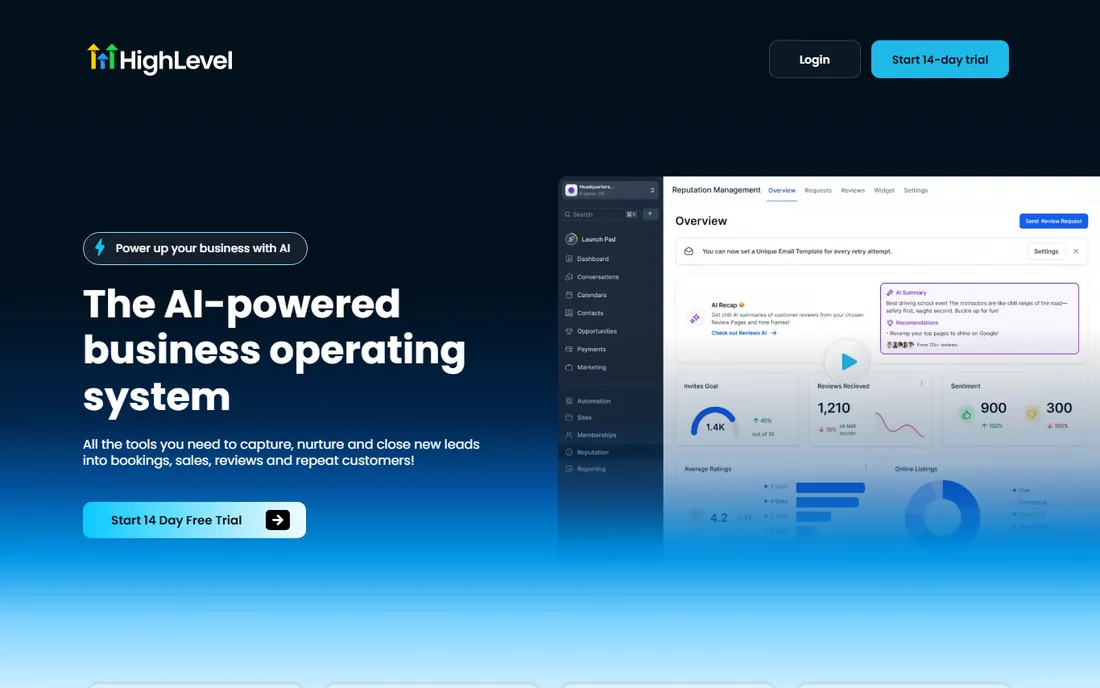
GoHighLevel is the all-in-one platform that has spread through telehealth, wellness, and cash-pay practices. One subscription covers the CRM, email and SMS marketing, funnel pages, appointment scheduling, and pipeline automation. The base plans start at $97 per month, with a HIPAA compliance add-on available for roughly another $97 per month.
That bundle is the appeal. A small practice can run its entire patient acquisition and communication stack from one login instead of stitching together a CRM, an email tool, a scheduler, and a review platform. The automation builder handles intake sequences, appointment reminders, and reactivation campaigns without manual work.
The honest caveats are the add-on model and the learning curve. HIPAA compliance is not included in the base price, so budget the add-on from the start, and the platform's breadth means new users face a busy interface. It is also less proven in traditional clinical settings than in telehealth and wellness. For the practices it suits, though, the value per dollar is hard to beat.
What we like- All-in-one marketing, CRM and scheduling
- HIPAA add-on available
- Popular with telehealth and wellness practices
Watch out for- HIPAA compliance costs extra on top of base
- Interface can overwhelm
- Support quality varies
Starting priceSee website
Free planFree trial
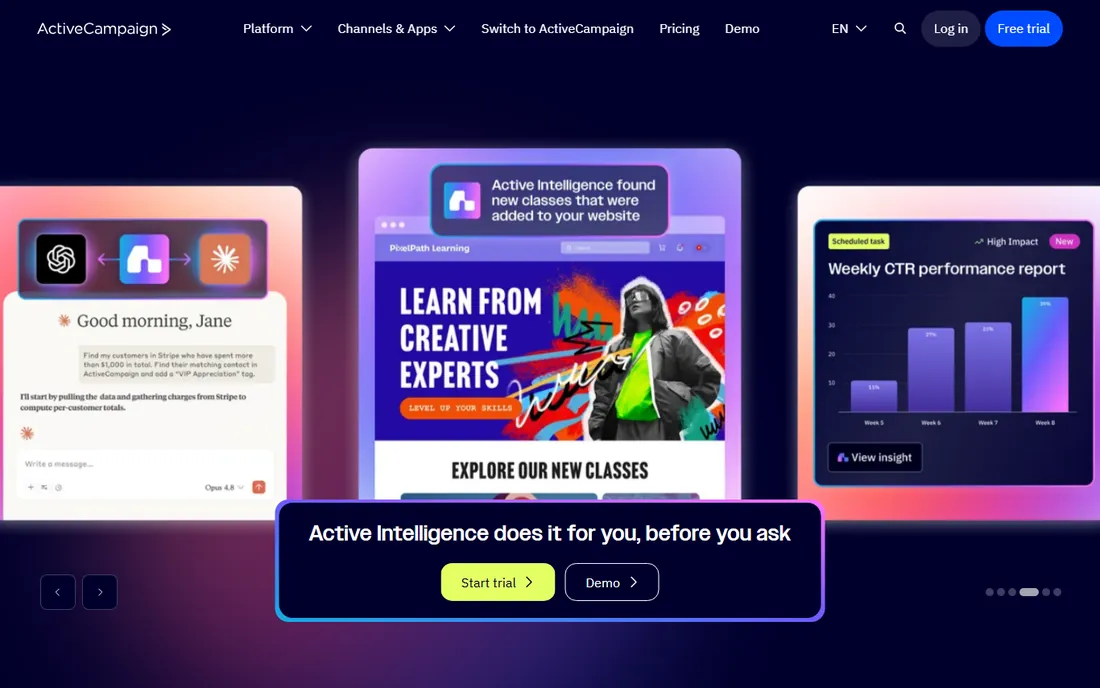
ActiveCampaign earns its place on automation alone. Its visual automation builder remains the benchmark for designing patient intake sequences, nurture campaigns, and follow-up workflows with branching logic that responds to patient behavior. HIPAA compliance is available on the higher-tier plans, around the Business tier and above.
For practices where the patient journey is the product, such as elective procedures, med spas, or specialty clinics with long consideration cycles, that automation depth translates directly into booked appointments. Email deliverability is consistently strong, which matters when reminders and confirmations carry revenue.
The weaknesses are pricing transparency and CRM depth. The vendor does not publish HIPAA-tier pricing clearly, so expect a sales conversation, and the contact management side is thinner than a dedicated CRM. It works best as the automation engine paired with clear processes, not as the system of record for complex clinical operations.
What we like- Best automation builder in its class
- HIPAA available on higher tiers
- Strong email deliverability
Watch out for- Pricing not published for HIPAA tiers
- Automation complexity can overwhelm
- CRM features lag pure CRMs
Starting priceSee website
Free planFree trial
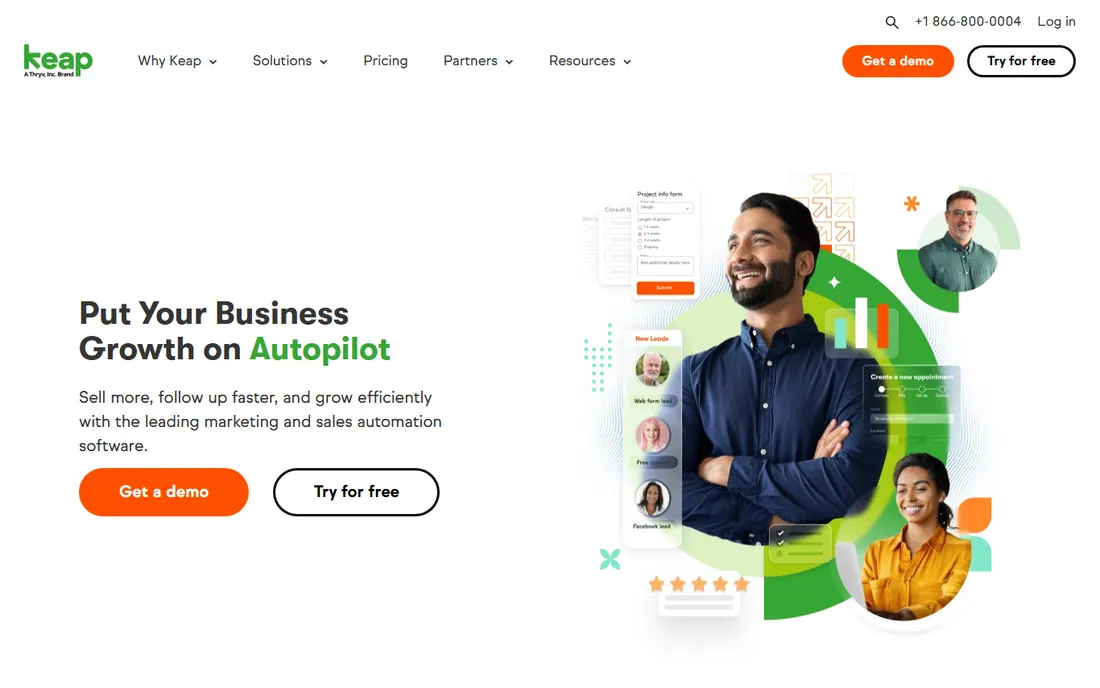
Keap, formerly Infusionsoft, is the small-business CRM that small healthcare practices actually finish implementing. It combines contact management, email marketing, appointment scheduling, and even payment collection in one system designed for owners rather than IT departments. HIPAA-compliant configurations are available on its business tiers.
The practical advantage is completion. Enterprise CRMs fail at small practices because nobody has time to configure them; Keap's guided setup and templates get a solo practitioner or small clinic operational quickly. The automation handles the repetitive work: new patient welcome sequences, appointment reminders, and reactivation campaigns.
The ceiling is real. Keap does not scale to multi-location operations or complex clinical workflows, and the healthcare-specific feature set is thin compared to Salesforce or even Insightly. It is the right choice for a practice with a handful of staff that needs marketing and organization more than it needs care coordination.
What we like- Built for small business simplicity
- Combines CRM, marketing and payments
- Approachable automation
Watch out for- Pricing requires a quote conversation
- Feature ceiling below mid-market tools
- Fewer healthcare-specific features
Starting priceSee website
Free planNo
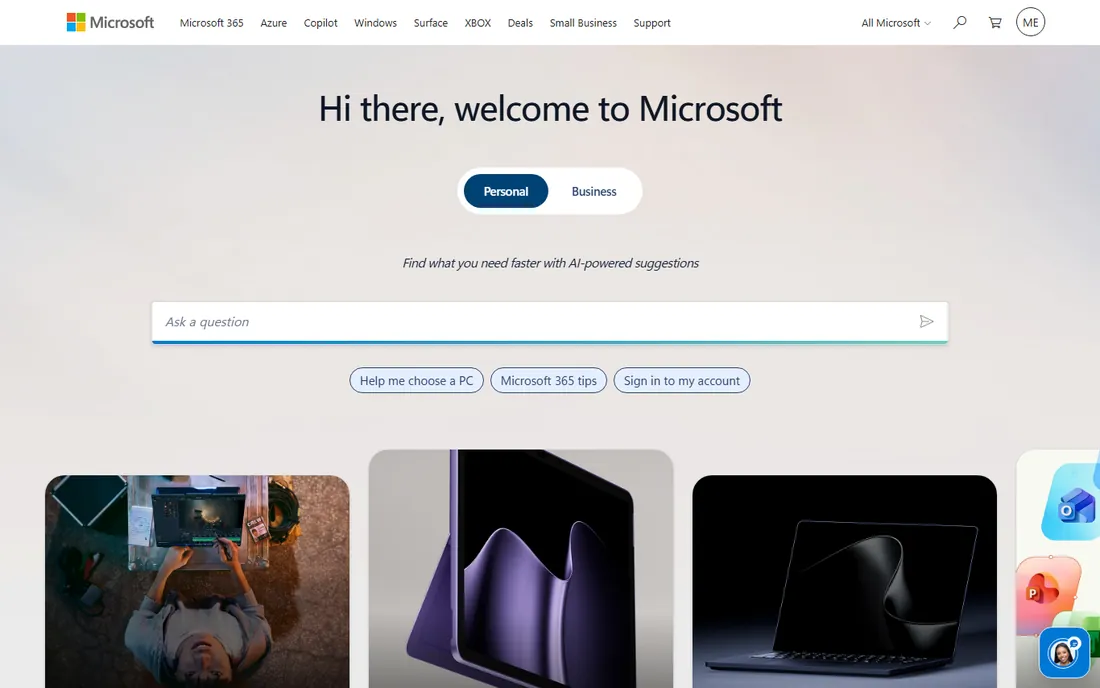
Microsoft Cloud for Healthcare is the choice for hospital systems already standardized on Microsoft. It unifies patient data across Dynamics 365, Azure Health Data Services, Teams, and Power Platform, with virtual care, care coordination, and analytics capabilities built on the same compliance foundation as the rest of Microsoft's cloud.
The integration story is the differentiator. If clinicians live in Teams, administrators run on Dynamics, and data sits in Azure, adding Microsoft's healthcare cloud extends the existing investment rather than introducing a parallel stack. Security and compliance inherit Microsoft's enterprise certifications and BAA framework.
The honest assessment mirrors Salesforce: this is enterprise infrastructure with enterprise pricing and implementation timelines. There are no public rates and no self-serve path. Organizations without a Microsoft commitment should not start one just for the healthcare cloud; organizations with one should evaluate it before looking elsewhere.
What we like- Native integration with Teams, Azure and Dynamics
- Unified patient data model
- Enterprise security pedigree
Watch out for- Enterprise pricing with no public rates
- Requires Microsoft ecosystem commitment
- Implementation is a project
Starting priceSee website
Free planFree trial
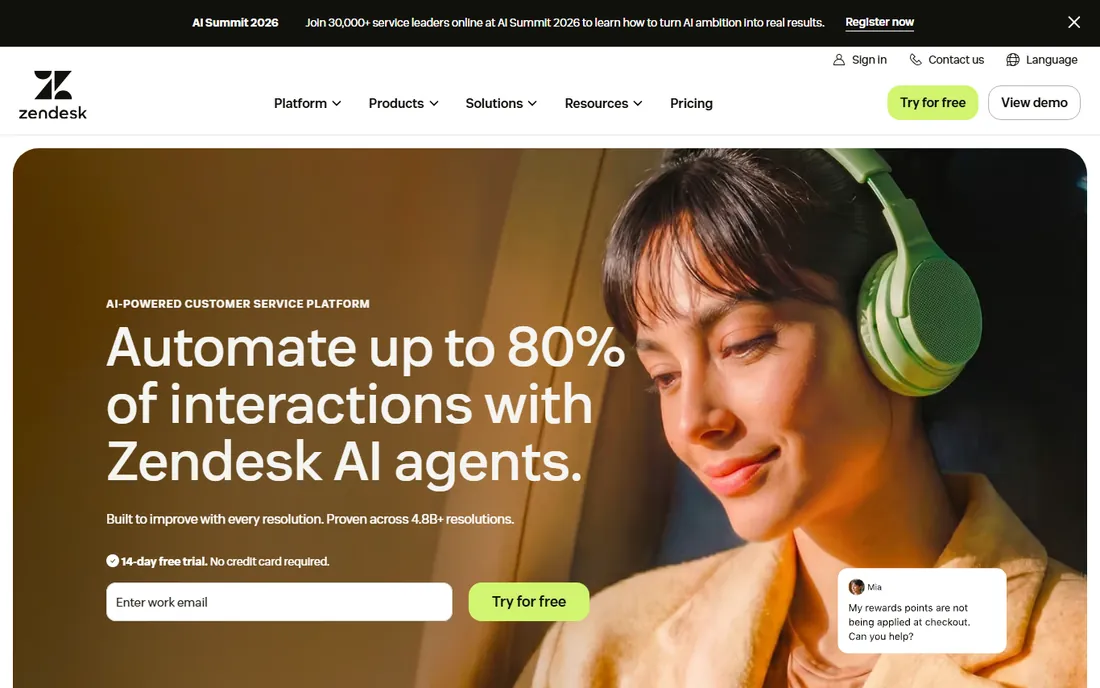
Zendesk approaches healthcare from the support side: phone, chat, email, and messaging unified in one agent workspace with automation and AI agents handling routine inquiries. HIPAA-eligible configurations with a BAA are available on the appropriate tiers, making it viable for patient communication operations.
For provider organizations running patient contact centers, scheduling lines, or billing support, Zendesk's ticketing, macros, and workforce management are more capable than anything a marketing CRM offers. The AI agents can resolve common questions like hours, directions, and preparation instructions without human involvement.
The limitation is scope. Zendesk manages conversations, not patient relationships; there is no care coordination, no marketing automation worth mentioning, and no EHR integration story. It belongs on the shortlist for patient communication operations, paired with a real CRM for everything else.
What we like- Best multi-channel support tooling
- HIPAA-eligible configurations
- Strong automation and AI agents
Watch out for- Built for support, not patient relationship management
- HIPAA tier pricing requires sales
- Per-agent costs add up
The BAA checklist: what to verify before you buy
First, get the BAA signed before any PHI enters the system. A vendor's marketing page claiming HIPAA compliance means nothing without the signed agreement, and some vendors only offer BAAs on specific tiers or with specific add-ons. Confirm the exact plan and get the BAA executed during procurement, not after go-live.
Second, verify encryption and access controls in writing. PHI should be encrypted in transit and at rest with AES-256 or equivalent, access should be role-based with unique user credentials, and automatic logoff should be configurable. Ask for the vendor's SOC 2 report and penetration test summary; serious vendors provide them under NDA.
Third, check audit logging and data controls. HIPAA requires the ability to track who accessed what PHI and when. Confirm the retention period for audit logs, whether you can export them, and how data deletion works when a patient requests it or a contract ends. Short log retention or no export capability is a red flag.
How to match the CRM to your organization size
Solo practitioners and clinics under 10 staff should optimize for simplicity and cost: Keap, GoHighLevel, or Zoho CRM on the appropriate tier. The compliance requirements are identical regardless of size, but the operational needs are not, and an enterprise platform will sit unused.
Regional practices and multi-location groups need real CRM capability with manageable complexity: Insightly, HubSpot on Enterprise, or ActiveCampaign for automation-led operations. This is the segment where the wrong choice hurts most, because the organization is big enough to need the tool and small enough to feel a failed implementation.
Hospital systems and large networks need care coordination, EHR integration, and population health: Salesforce Health Cloud or Microsoft Cloud for Healthcare. Budget for implementation at the same order of magnitude as licensing, staff the project properly, and plan for a multi-year rollout.
How we built this shortlist
We started with the platforms healthcare buyers actually evaluate: the enterprise care platforms, the marketing CRMs with HIPAA-eligible tiers, and the small-practice tools that dominate the lower end of the market. We reviewed current pricing pages, HIPAA compliance documentation, BAA terms, and public review summaries on G2, Capterra, and healthcare technology publications.
Prices reflect the tier that includes HIPAA features, not the vendor's cheapest plan, and vendors without published pricing are marked as See website. We did not run hands-on trials or review actual BAAs; this guide reflects documentation, published pricing, and aggregated user feedback. Confirm BAA availability and tier requirements directly with each vendor before purchasing, since compliance terms change.
Frequently asked questions
What makes a CRM HIPAA compliant?
A CRM becomes HIPAA-compliant through a combination of technical safeguards and legal agreements: encryption of protected health information, access controls, audit logging, and a signed Business Associate Agreement with the vendor. No government body certifies software as HIPAA compliant; compliance is a property of how the software is configured and used under a BAA.
Does the free version of HubSpot or Zoho work for patient data?
No. HubSpot's HIPAA eligibility requires Enterprise-tier hubs with sensitive data features, and Zoho's HIPAA features require upper-tier plans. Running protected health information through free or lower-tier plans violates HIPAA regardless of what the software can technically do. Always confirm the compliant tier before entering any patient data.
How much does a HIPAA compliant CRM cost?
Small-practice options start around $14 to $97 per user per month on compliant tiers, mid-market tools run $29 to $150 per user per month, and enterprise platforms like Salesforce Health Cloud start around $350 per user per month plus implementation costs of $50,000 or more. The compliant tier is usually not the cheapest tier, so budget from the HIPAA-eligible price.
What is a BAA and why does it matter?
A Business Associate Agreement is a contract required by HIPAA whenever a vendor handles protected health information on your behalf. It obligates the vendor to safeguard PHI and report breaches. Without a signed BAA, using a vendor for PHI is a HIPAA violation even if the software has every security feature available.
Can a regular CRM like Salesforce or HubSpot be used in healthcare?
Yes, with the right configuration and tier. Salesforce Health Cloud is purpose-built for healthcare, while standard Salesforce and HubSpot can be HIPAA-eligible on the appropriate enterprise tiers with a signed BAA. The key is never the brand name; it is the BAA, the tier, and the configuration. Generic tiers without these are not compliant.
Do I still need HIPAA compliance if I only store names and appointment times?
Names combined with health-related context, including appointment types, provider names, or treatment information, generally count as protected health information. If there is any doubt, treat the data as PHI and use a compliant setup. The penalties for getting this wrong far exceed the cost difference between tiers.
Sources we checked (10)
- https://www.salesforce.com/products/health-cloud/pricing/
- https://www.hubspot.com/pricing/sales/enterprise
- https://www.zoho.com/crm/pricing/
- https://www.insightly.com/pricing/
- https://www.gohighlevel.com/pricing/
- https://www.activecampaign.com/pricing/
- https://www.keap.com/pricing/
- https://www.microsoft.com/en-us/industry/health/microsoft-cloud-for-healthcare
- https://www.zendesk.com/pricing/
- https://webugol.com/blog/hipaa-compliant-crm/
Is your product missing or out of date?
We review this list regularly. Vendors can request a listing, send updated pricing or ask about featured placement.

Shihab Mia · Founder, Rankite
Shihab has spent more than a decade helping SaaS and e-commerce brands grow through search. He writes Rankite's software buying guides from pricing pages, documentation and public user reviews. More about Shihab.