How we make this list: we compare pricing pages, product documentation and public user reviews. Rankite is independent; if a vendor ever pays for a featured spot, that listing is clearly labeled Partner.
Key takeaways
- Fishbowl and Cin7 combine inventory management with warehouse features and publish real starting prices ($229 and $349 per month).
- ShipHero, Logiwa, Extensiv, Deposco, and Shipedge are built for ecommerce and 3PL fulfillment, and all are quote-based.
- Infoplus suits growing operations with seasonal spikes and flexible workflows.
- 3PLs that bill clients for storage and handling should shortlist Extensiv, which was built for that model.
- Budget for implementation, not just the subscription: onboarding and training are a real cost with every WMS.
Quick comparison
| Tool | Best for | Starting price | Free plan |
|---|
 Fishbowl Fishbowl | Manufacturers and QuickBooks users | $229 per month (Essentials, 2 users, billed annually) | No |
 Cin7 Cin7 | Multichannel sellers with complex inventory | $349 per month (billed annually) | Free trial |
 Logiwa Logiwa | High-volume 3PL and ecommerce fulfillment | See website | No |
 InfoPlus InfoPlus | Growing warehouses with seasonal spikes | See website | No |
 Extensiv Extensiv | 3PLs that need client billing | See website | No |
 ShipHero ShipHero | Ecommerce brands running their own warehouse | See website | No |
 Deposco Deposco | Fast-growing brands and 3PLs | See website | No |
 Shipedge Shipedge | Brands and 3PLs wanting OMS plus WMS | See website | No |
Is your product missing or out of date?
We review this list regularly. Vendors can request a listing, send updated pricing or ask about featured placement.
The best WMS software
Starting price$229 per month (Essentials, 2 users, billed annually)
Free planNo
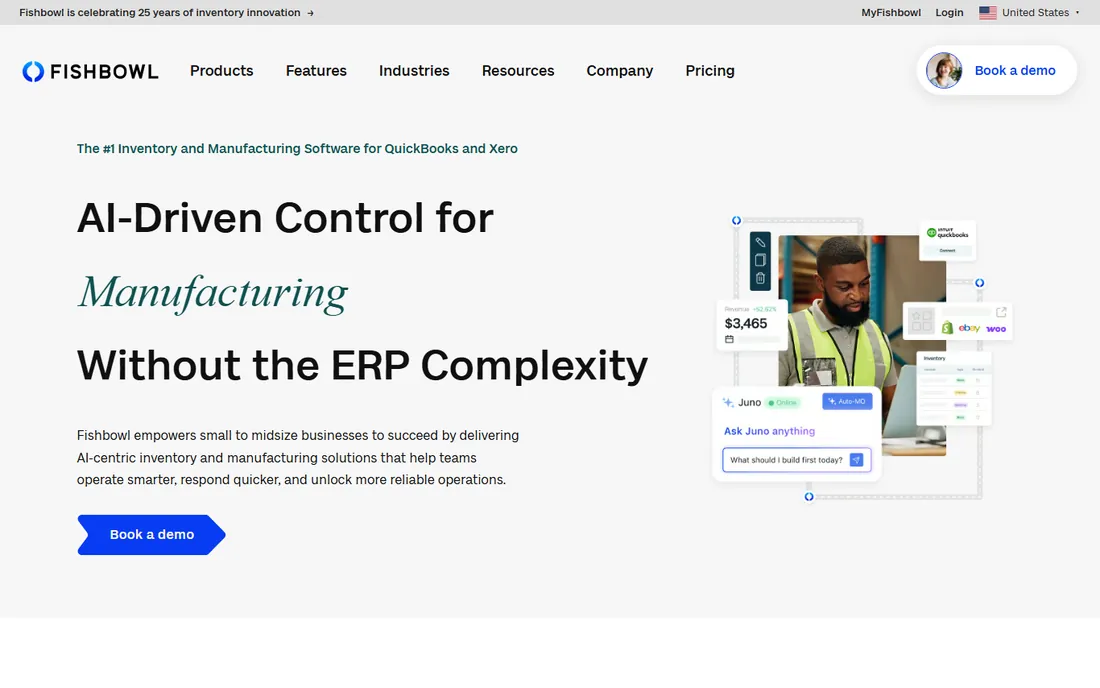
Fishbowl is the warehouse-adjacent pick for manufacturers and distributors already running QuickBooks. Inventory, manufacturing, and warehouse management live in one system, with accounting sync that keeps finance and the shop floor on the same numbers. Essentials starts at $229 per month for two users on annual billing, and Growth and Scale tiers add users as you expand.
The manufacturing depth is the differentiator. Bills of materials, work orders, and part tracking through assembly are built in, and the Fishbowl GO mobile app handles barcode receiving, picking, packing, and shipping on the floor. Real AI features now assist with replenishment, scheduling, and flagging at-risk orders.
The honest catch is that true warehouse management sits in Fishbowl Advanced Warehouse, starting around $595 per month, and an implementation package is required rather than optional. There is no free trial, only demos. For QuickBooks-based manufacturers, though, the integration value is hard to replace.
What we like- Deep QuickBooks and Xero integration
- Manufacturing features like BOMs and work orders
- AI-assisted replenishment and planning
Watch out for- No free trial
- Advanced warehouse features need the higher-priced Advanced tier
#2
Cin7
Best for: Multichannel sellers with complex inventory
Visit cin7.com
Starting price$349 per month (billed annually)
Free planFree trial
Cin7 is inventory management with real warehouse capability, built for sellers juggling multiple channels. It connects Amazon, Shopify, eBay, Walmart, and hundreds of other services, keeping stock accurate across every storefront from one dashboard. Pricing starts at $349 per month per the vendor, with a free trial available.
The B2B strength stands out. Built-in EDI lets wholesalers trade with major retailers without a separate EDI provider, and the B2B portal, point of sale, and 3PL automation round out a deep feature set. Advanced warehouse management arrives at the $1,199 Advanced tier for operations that need directed put-away and sophisticated picking.
The tradeoff is complexity and cost. Lower tiers are inventory management rather than true WMS, and reviewers note the learning curve. For multichannel sellers whose inventory has outgrown simpler tools, Cin7 is the natural step up.
What we like- 700+ integrations with marketplaces and 3PLs
- Built-in EDI for B2B selling
- Strong reporting and dashboards
Watch out for- Advanced warehouse management needs the $1,199 Advanced tier
- Learning curve for new teams
Starting priceSee website
Free planNo
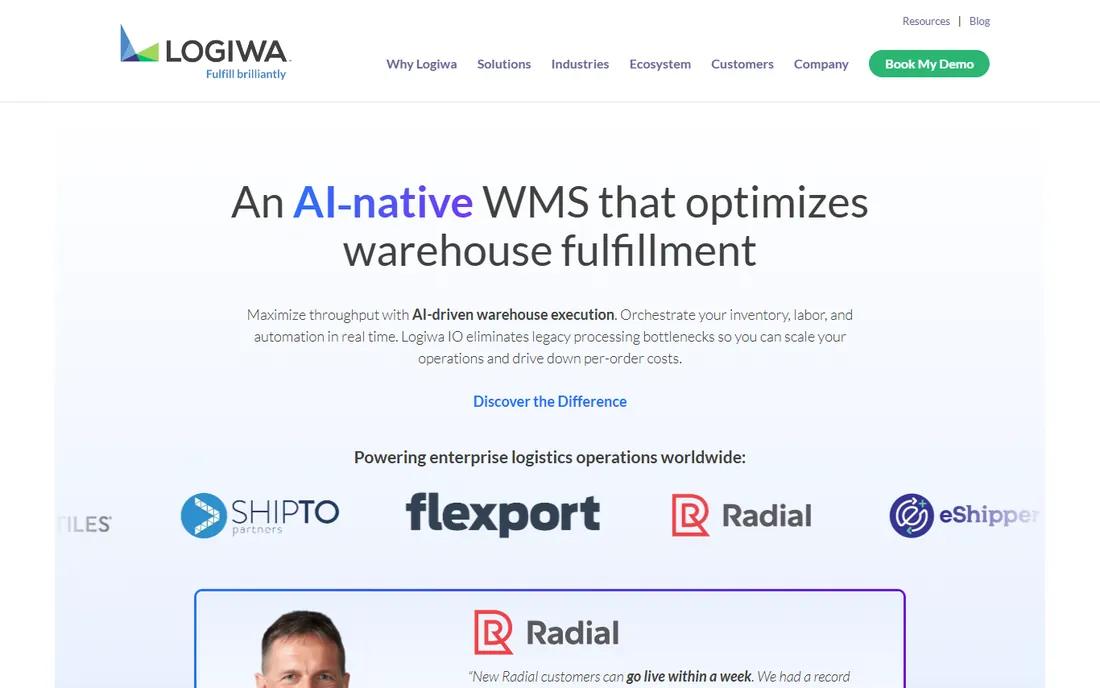
Logiwa IO is a cloud WMS aimed squarely at high-volume ecommerce fulfillment and 3PLs. Its pricing model is unusual and attractive: it charges based on fulfillment volume and complexity rather than user count, with unlimited users and standard integrations included. That structure favors warehouses with large teams and moderate order volumes.
The platform covers the full fulfillment flow with wave and batch picking, barcode-driven mobile workflows, and an AI-native architecture for labor planning and automation. Over 200 integrations connect marketplaces, carriers, and ERPs. The vendor positions it as an alternative to legacy systems that charge per seat and lock you into long implementations.
The honest catch is opacity. No pricing is published, so budgeting requires a sales conversation, and some users find the interface complex at first. For growing 3PLs and ecommerce brands, though, the volume-based model and modern architecture make it worth a demo.
What we like- Pricing based on order volume, not users
- Strong mobile and automation features
- 200+ integrations
Watch out for- No published pricing
- Interface can feel complex to new users
Starting priceSee website
Free planNo
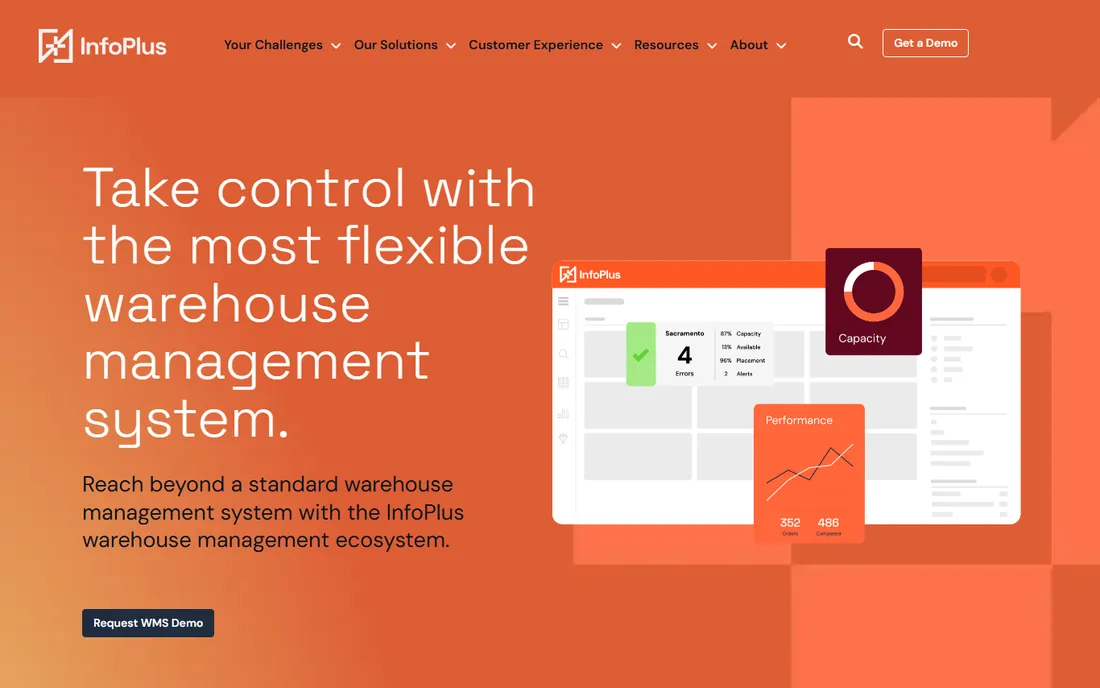
InfoPlus pitches itself as the most flexible WMS for growing businesses, and its customer base of over 6,500 businesses suggests the claim has substance. Wave picking, batch workflows, priority order sorting, and real-time dashboards handle day-to-day fulfillment, while customizable workflows adapt to unusual processes without heavy IT work.
Seasonal businesses get particular value. Warehouses that see two to three times their normal volume during holidays report that InfoPlus absorbs the surge, and built-in integrations with Shopify, QuickBooks, and major shipping carriers keep the tech stack simple. The vendor offers three months free for new customers who schedule a consultation.
The tradeoff is transparency. Pricing is not published, and reviewers note the interface can feel cluttered and the mobile app lacks desktop features. For fast-scaling SMBs and 3PLs that need flexibility more than polish, it is a strong candidate.
What we like- Flexible, customizable workflows
- Handles seasonal volume surges well
- Strong carrier integrations
Watch out for- No published pricing
- Mobile app lags the desktop experience
Starting priceSee website
Free planNo
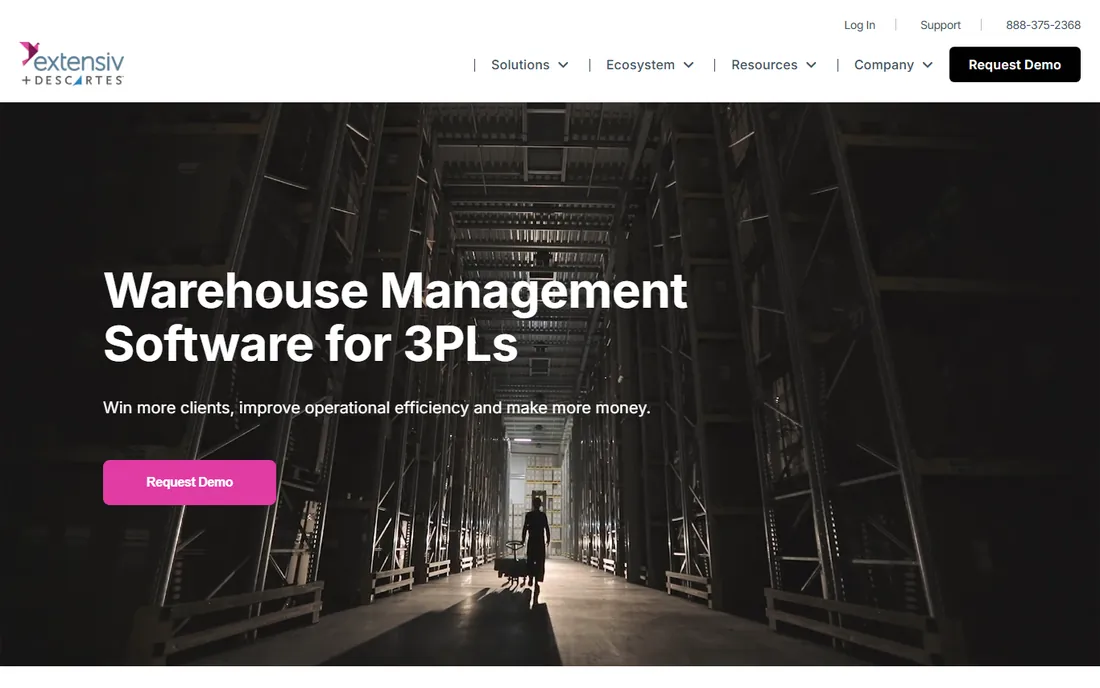
Extensiv, formerly 3PL Warehouse Manager, is the WMS built from the ground up for third-party logistics providers. Multi-client architecture keeps each customer's inventory separate, automated billing calculates storage, handling, and shipping charges per client, and customer-facing portals give clients self-serve visibility. Over 1,200 3PLs run on it.
The operational tools are genuinely 3PL-grade: SmartScan mobile workflows, labor analytics, and onboarding that can bring new users up to speed in an hour or two. Case studies cite major labor savings and packing accuracy improvements, and the broader Extensiv platform adds network and order management tools.
The catch is focus. This is a 3PL product; a single brand running its own warehouse pays for multi-client architecture it will never use. Pricing is quote-only, with entry-level figures around $599 per month reported by third parties. For 3PLs, it is the default shortlist entry.
What we like- Built for 3PLs with multi-client architecture
- Automated client billing
- SmartScan mobile workflows
Watch out for- Quote-only pricing
- Overkill for single-brand warehouses
Starting priceSee website
Free planNo
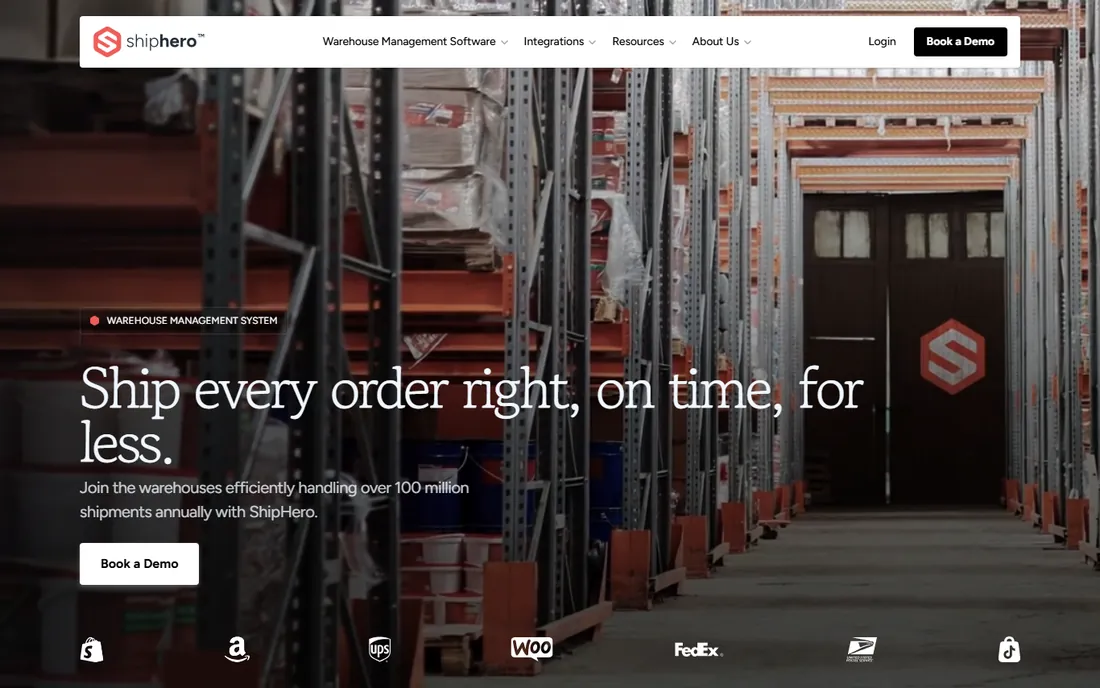
ShipHero is a warehouse management system built for ecommerce brands that fulfill their own orders. The platform emphasizes picking efficiency with AI-directed picking, mobile pick and pack, and pack-to-light stations that the vendor says can multiply throughput. Built-in rate shopping finds the cheapest carrier label for every order.
The product also bundles the tools around the warehouse: reporting from COGS to picker efficiency, returns handling, and integrations with Shopify, Amazon, WooCommerce, and major carriers. Warehouses on the platform ship over 100 million orders a year, so the system is proven at serious volume.
The honest catch is positioning. ShipHero targets operations with real scale, and pricing is quote-only, with third-party reports of entry points around $1,995 per month. Smaller brands may find simpler tools a better fit. For established ecommerce companies running their own fulfillment, the efficiency features justify a look.
What we like- AI picking and pack-to-light features
- Rate shopping across carriers
- Warehouses ship 100M+ orders annually on the platform
Watch out for- Quote-only pricing
- Geared toward higher-volume operations
Starting priceSee website
Free planNo
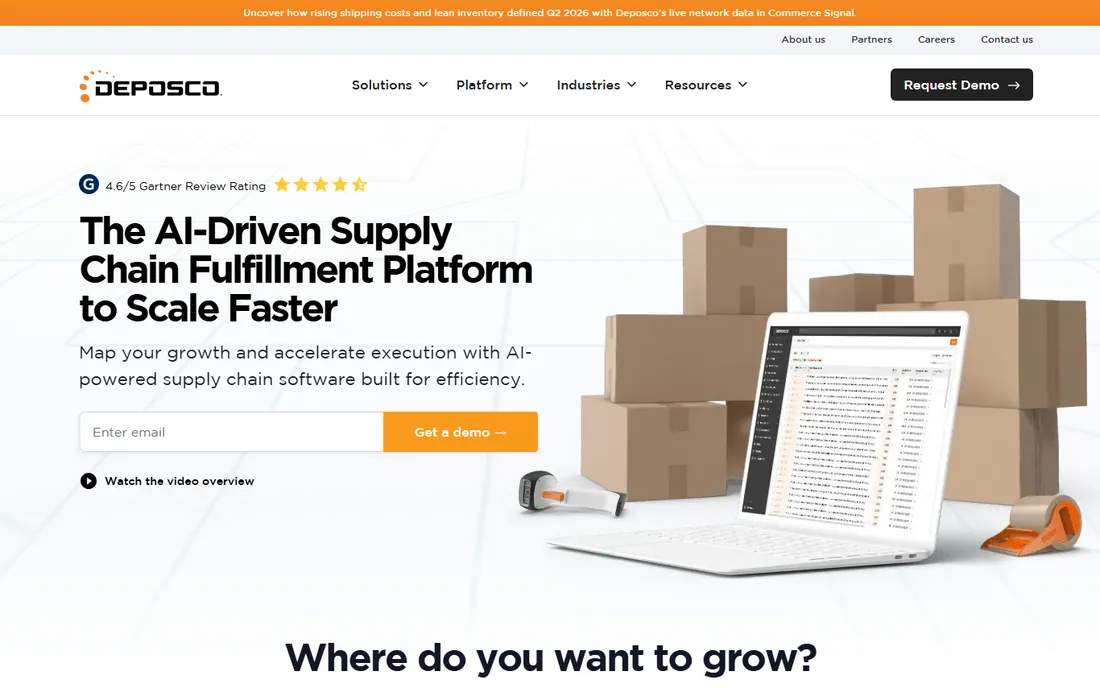
Deposco is a cloud WMS platform for growing ecommerce brands, retailers, and 3PLs, with over 3,000 customers and tens of millions of orders flowing through annually. Its headline claim is implementation speed: many customers go live in 90 days or less, which is fast for this category.
The platform covers warehouse operations, order management, and 3PL client portals with real-time visibility into inventory, orders, and SLA performance. AI-driven features optimize fulfillment, and 150+ pre-built integrations connect the rest of the tech stack. Reviewers praise the user-friendly interface and short training times for warehouse staff.
The tradeoff is entry point. Pricing is quote-only and the product targets the growing mid-market rather than small operations just leaving spreadsheets. If you are a brand or 3PL scaling toward serious volume and want a modern platform with fast onboarding, Deposco belongs on the shortlist.
What we like- Fast implementation, often under 90 days
- Strong 3PL client portal
- AI-driven fulfillment features
Watch out for- Quote-only pricing
- Aimed at growing mid-market, not micro-warehouses
Starting priceSee website
Free planNo
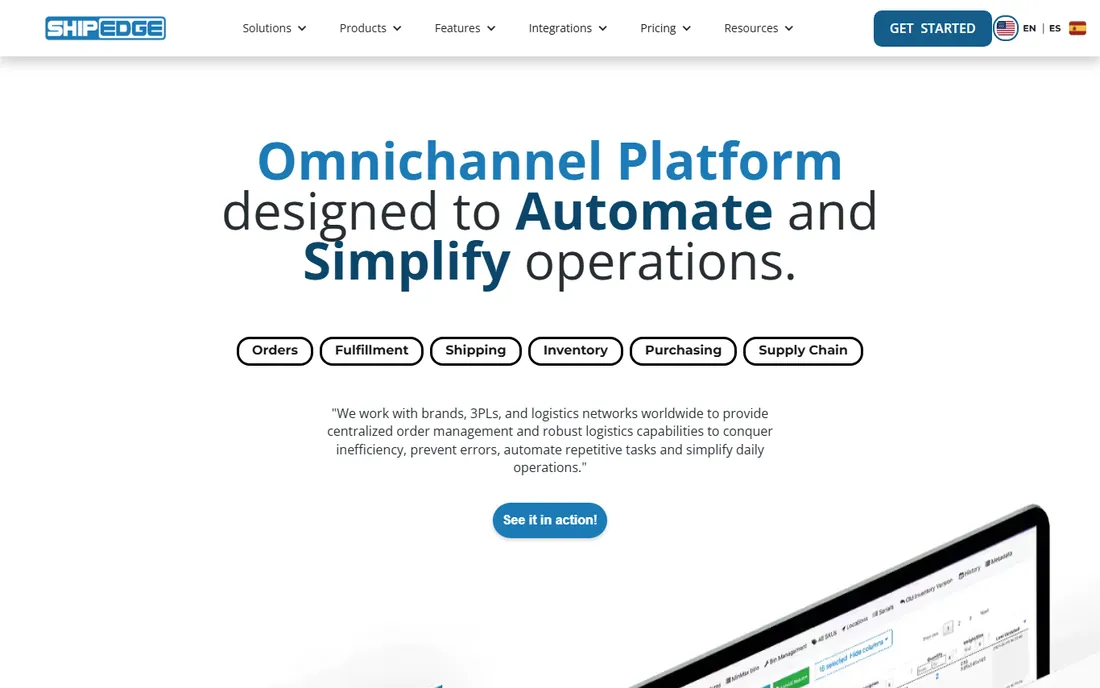
Shipedge combines order management, warehouse management, and shipping in a single modular platform. That breadth matters for brands and 3PLs that would otherwise stitch together three separate systems: orders flow in from marketplaces, the WMS directs warehouse work, and the embedded shipping engine prints the cheapest label.
The feature set is deep for the category: kitting and light manufacturing, reverse logistics and returns, a self-service rules engine for custom workflows, cartonization, and pre-negotiated carrier rates with discounts up to 74%. The mobile app keeps floor workers on the same system as the office.
The honest catch is scope. A platform this broad takes longer to learn than a focused WMS, and pricing is quote-only. For operations that need OMS and WMS together, though, Shipedge's single-platform approach can replace a lot of integration work.
What we like- Combined order management and WMS in one platform
- Embedded shipping engine with rate shopping
- Open API and rules engine
Watch out for- Quote-only pricing
- Breadth can mean a longer learning curve
How we chose
We focused on warehouse management systems that small and mid-size businesses can realistically evaluate and buy, spanning inventory-plus-WMS products and dedicated cloud WMS platforms. We checked vendor homepages for current positioning, read documentation for warehouse-specific features like wave picking and 3PL billing, and weighed public reviews from G2, Capterra, and Reddit. We excluded enterprise-only systems with no accessible pricing path and products whose brands were absorbed into other companies.
What to check before you buy a WMS
Map your actual workflows first. List how receiving, put-away, picking, packing, and shipping work today, including the exceptions. Then check that each candidate handles your real process, not just the demo script. A system that cannot do your picking method or your returns flow will cost more in workarounds than it saves.
Budget the implementation, not just the subscription. WMS vendors charge for onboarding, training, and data migration, and the internal labor of going live is real. Ask for the total first-year cost including implementation before you compare prices.
Check the integration list against your stack. Your WMS must talk to your accounting software, your sales channels, and your carriers. Native, maintained integrations beat custom API work every time, especially for small teams without developers.
Count the real price drivers. Some vendors charge per user, some per order, some per warehouse. Model your next two years of growth against each model, because the cheapest option today can become the most expensive one as you scale.
Inventory software vs a real WMS: what is the difference
Inventory management software tracks what you own: stock levels, locations, and costs across warehouses and channels. A WMS runs the warehouse itself: it tells workers where to put things, what to pick, and in what order, usually through barcode scanners and directed workflows.
Many small businesses start with inventory software like Fishbowl or Cin7 and add warehouse features as they grow. That works until the operation gets complex enough that workers need the system to direct their movements. The tipping point is usually headcount: when you cannot train every picker on every process by word of mouth, you need a WMS.
Some products straddle the line. Fishbowl Advanced Warehouse and Cin7 Advanced add genuine WMS features to inventory platforms. Dedicated WMS products like Logiwa, Extensiv, and ShipHero start from the warehouse floor and work outward. Pick based on where your pain is today, not where it might be in five years.
Frequently asked questions
How much does WMS software cost for a small warehouse?
Entry-level WMS pricing runs from a few hundred dollars per month. Fishbowl Essentials starts at $229 per month and Cin7 at $349 per month, while dedicated cloud WMS platforms like Logiwa, ShipHero, and Extensiv are quote-based and typically start higher. Always ask for the total first-year cost including implementation.
Do I need a WMS or is inventory software enough?
If your team is small and everyone knows the warehouse by heart, inventory software is usually enough. When mispicks rise, training new staff takes too long, or you cannot see inventory in real time, a WMS starts paying for itself. Most businesses cross that line somewhere between 5 and 20 warehouse employees.
What is the best WMS for a 3PL?
Extensiv is purpose-built for 3PLs with multi-client architecture and automated client billing. Logiwa, Deposco, ShipHero, and Shipedge also serve 3PLs well with client portals and volume-based workflows. Shortlist based on your client count, order volume, and whether you need billing automation.
How long does WMS implementation take?
It varies widely. Cloud WMS vendors like Deposco advertise go-lives under 90 days, while Fishbowl cites two to six weeks for its inventory products. Complex operations with integrations and custom workflows can take several months. Ask each vendor for a realistic timeline based on a warehouse like yours.
Can WMS software integrate with QuickBooks?
Yes. Fishbowl has the deepest QuickBooks integration of the tools here, and Cin7, InfoPlus, and most others connect to QuickBooks or Xero. Confirm whether the integration is two-way and real-time, and whether it handles landed costs and COGS the way your accountant needs.
Is cloud WMS better than on-premises?
For most small and mid-size warehouses, yes. Cloud WMS means no servers to maintain, automatic updates, and access from anywhere. On-premises systems still suit operations with strict data requirements or unreliable internet. Every tool on this list is cloud-based.
Sources we checked (10)
- https://fishbowlinventory.com/
- https://www.cin7.com/
- https://www.logiwa.com/
- https://infopluscommerce.com/
- https://www.extensiv.com/
- https://www.shiphero.com/
- https://www.deposco.com/
- https://www.shipedge.com/
- https://freightwaves.com/checkpoint/best-warehouse-management-companies/
- https://www.selecthub.com/warehouse-management-software/infoplus-vs-netsuite-wms/
Is your product missing or out of date?
We review this list regularly. Vendors can request a listing, send updated pricing or ask about featured placement.

Shihab Mia · Founder, Rankite
Shihab has spent more than a decade helping SaaS and e-commerce brands grow through search. He writes Rankite's software buying guides from pricing pages, documentation and public user reviews. More about Shihab.