How we make this list: we compare pricing pages, product documentation and public user reviews. Rankite is independent; if a vendor ever pays for a featured spot, that listing is clearly labeled Partner.
Key takeaways
- Ahrefs and Semrush have the largest keyword databases and the most mature tools, but both start at higher price points and are built for teams that live in SEO data daily.
- KWFinder, Ubersuggest, and Keyword Tool are the friendliest starting points for beginners, with genuinely useful free tiers that cover the basics of keyword research.
- Serpstat and SE Ranking deliver agency-grade keyword data at prices well below the market leaders, which makes them strong value picks for small agencies.
- SpyFu stands apart by revealing the exact keywords your competitors rank for and bid on, including years of historical ad data.
- Every tool on this list offers a free plan or free trial, so you can validate the data against your own rankings before committing to a subscription.
Quick comparison
| Tool | Best for | Starting price | Free plan |
|---|
 Ahrefs Ahrefs | deep keyword and backlink data | $29/month | Yes (Webmaster Tools) |
 Semrush Semrush | all-in-one SEO and PPC research | $139.95/month | Yes (limited free account) |
 KWFinder KWFinder | beginner-friendly long-tail research | $29.90/month (billed annually) | Yes (5 free lookups daily) |
 Ubersuggest Ubersuggest | budget all-in-one SEO toolkit | $29/month | Yes (limited free plan) |
 Serpstat Serpstat | full SEO suite on a smaller budget | $50/month (billed annually) | Yes (free account) |
 SE Ranking SE Ranking | agencies that want fair, flexible pricing | $103.20/month (billed annually) | Free trial (14 days) |
 SpyFu SpyFu | competitor keyword and ad intelligence | $29/month (billed annually) | Yes (limited free account) |
 Keyword Tool Keyword Tool | quick free keyword ideas from autocomplete | See website | Yes (free searches, no account) |
Is your product missing or out of date?
We review this list regularly. Vendors can request a listing, send updated pricing or ask about featured placement.
The best keyword search software
Starting price$29/month
Free planYes (Webmaster Tools)
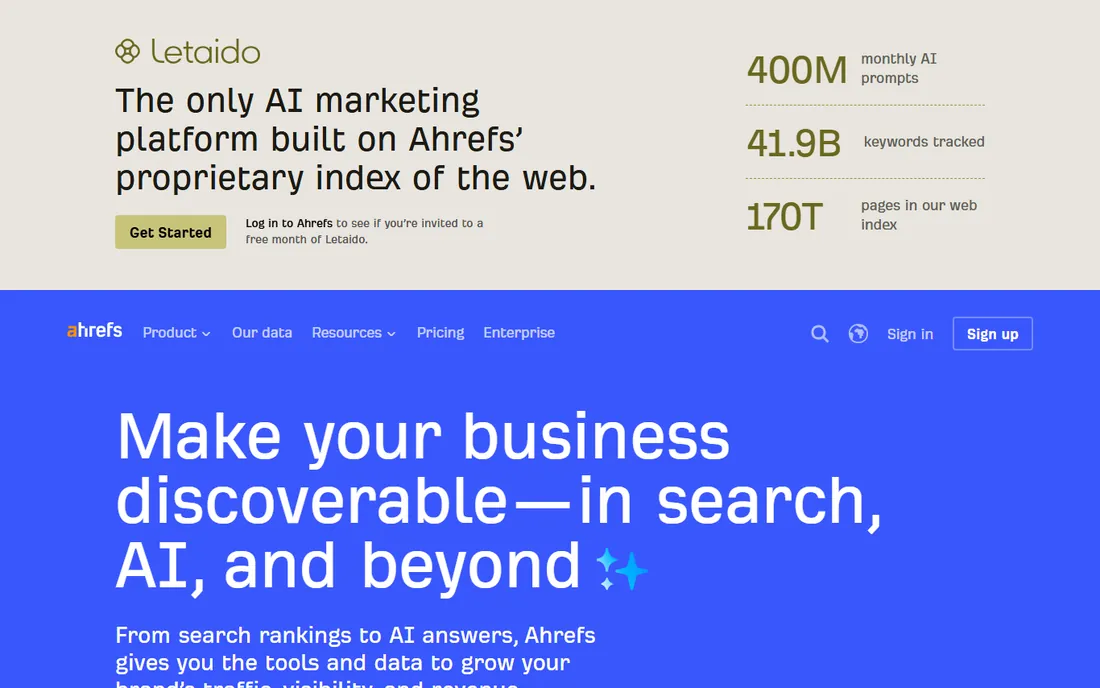
Ahrefs is the tool most SEO teams reach for first when keyword research has to be precise. Its Keyword Explorer draws on a database of 28.7 billion keywords filtered from 110 billion discovered, and it stands out by showing traffic potential rather than raw search volume, which tells you how much traffic the top-ranking page actually gets. The keyword difficulty score, parent topic clustering, and SERP overview make it easy to judge whether a keyword is worth targeting before you write a word.
The Starter plan at $29 per month is one of the cheapest entry points among the heavyweights, but the limits are designed for a single site owner rather than an agency. If you want competitor keyword research, rank tracking at scale, or API access, you will move up to pricier tiers quickly. On the plus side, Ahrefs Webmaster Tools is genuinely free for sites you own, giving you site audits, keyword data for your own pages, and backlink reports without a subscription. For Laura in Philadelphia, that free tier is a sensible way to sanity-check the data before spending anything.
What we like- Enormous keyword database with clickstream-backed volume data
- Keyword Explorer shows difficulty, traffic potential, and parent topics
- Free Ahrefs Webmaster Tools for your own sites
Watch out for- Starter plan limits are tight for agencies
- No free tier for competitor research
Starting price$139.95/month
Free planYes (limited free account)
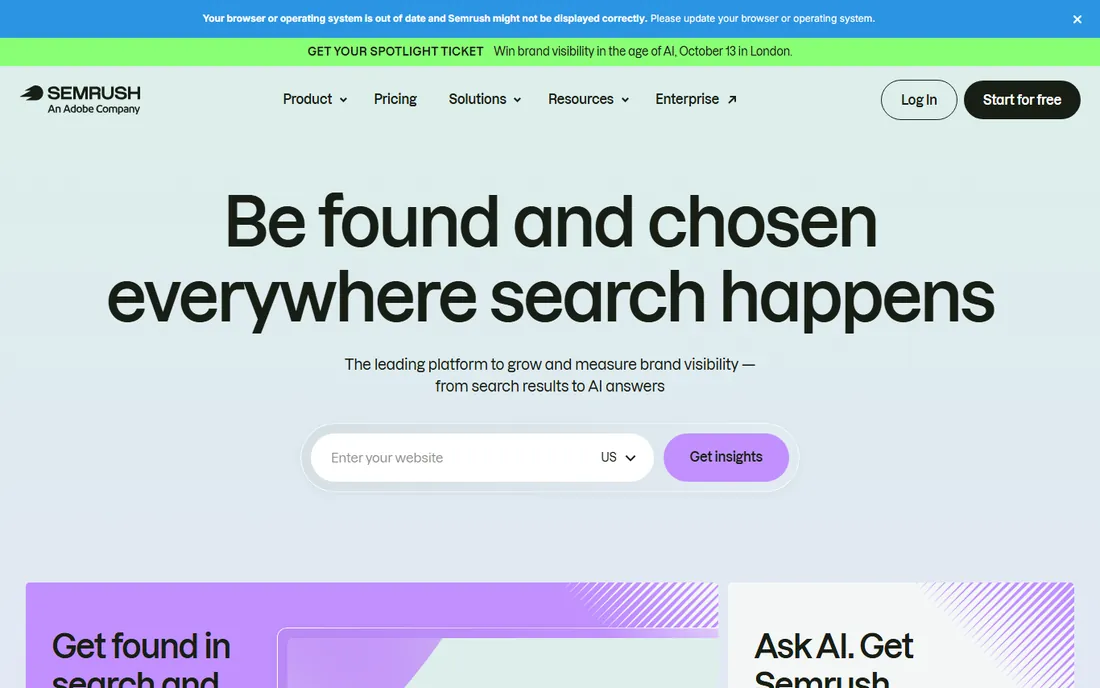
Semrush goes wider than keyword research alone, folding PPC data, content marketing tools, and social listening into one platform. Its Keyword Magic Tool pulls from a 28 billion keyword database, groups keywords by topic and intent, and ties each keyword to the questions people actually ask. Because keyword research sits alongside advertising research, you can see the commercial side of a keyword, what competitors bid on it and what their ads say, without switching tools.
One thing to know: Semrush was acquired by Adobe, with the deal completed in April 2026, and it now operates as an Adobe company. Plans and pricing continue as before. The Pro plan starts at $139.95 per month, which is a serious line item for a small business. The free account gives you a limited number of searches per day, enough to test the data quality on your core keywords. Semrush fits teams that want one subscription covering SEO, PPC, and content rather than the cheapest keyword-only option.
What we like- 28 billion keyword database with intent analysis
- Keyword research connects to PPC, content, and competitive research tools
- Free account includes limited daily searches
Watch out for- Pro plan is the priciest entry point on this list
- Interface can feel crowded for beginners
Starting price$29.90/month (billed annually)
Free planYes (5 free lookups daily)
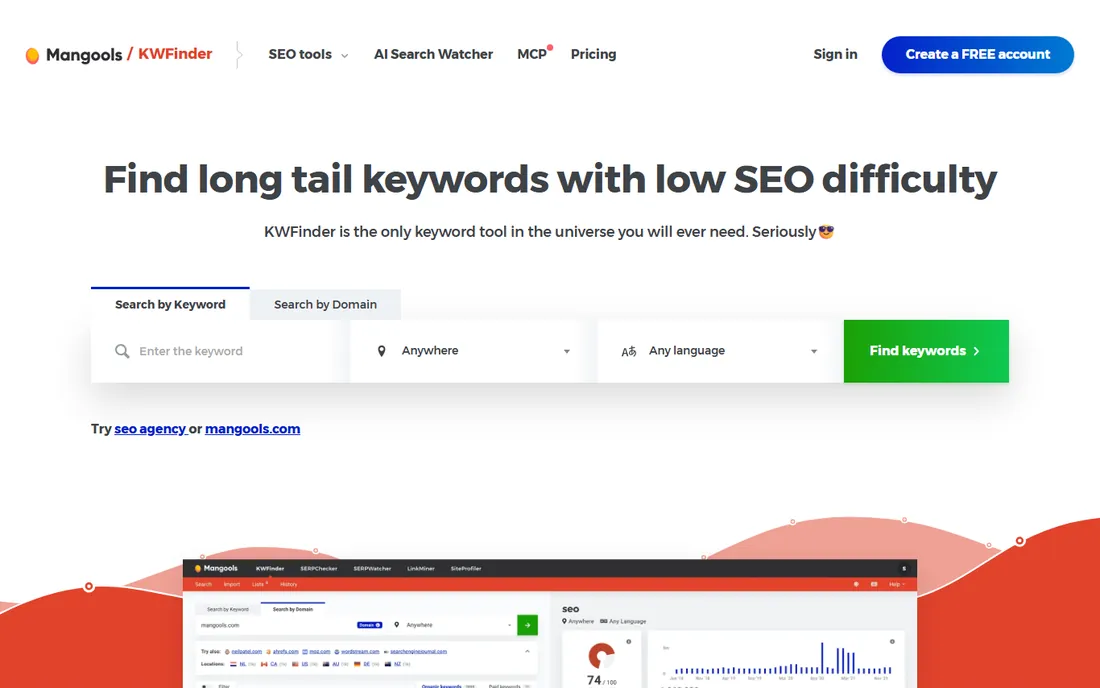
For newcomers, KWFinder is one of the gentlest introductions to keyword research. Built by Mangools, it focuses on doing one job well: finding long-tail keywords with low SEO difficulty and realistic search volume. The interface is uncluttered, the difficulty score is easy to interpret, and the SERP analysis shows you exactly which pages rank for a keyword and how strong they are. It draws on 2.5 billion related keywords and supports more than 65,000 locations for local research.
The free plan allows 5 lookups every 24 hours, which is enough for a small business owner researching a handful of service pages. The paid Basic plan is $29.90 per month when billed annually, and it adds the full Mangools suite, including rank tracking and backlink analysis. The honest catch is scale: KWFinder will not match the database depth of Ahrefs or Semrush, and power users running hundreds of keywords a week will feel the limits. But for straightforward keyword discovery at a fair price, it is hard to beat.
What we like- Clean, simple interface that beginners grasp quickly
- Accurate keyword difficulty scores for long-tail terms
- Free plan needs no credit card
Watch out for- Database is smaller than Ahrefs or Semrush
- Advanced users may outgrow it
Starting price$29/month
Free planYes (limited free plan)
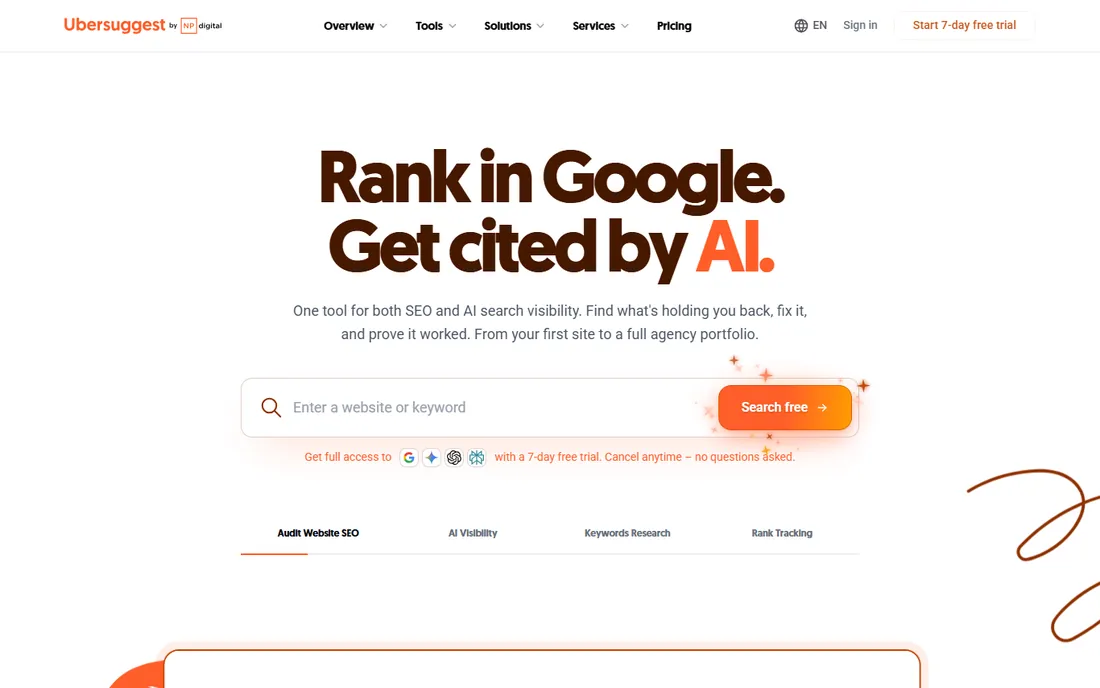
Ubersuggest, built by Neil Patel's team at NP Digital, is the budget pick for small teams that want an all-in-one toolkit without the enterprise price tag. The keyword research module covers volume, difficulty, CPC, and search intent from a 2.2 billion keyword database, with bulk analysis for thousands of keywords at once. Paid plans also include AI search visibility tracking, showing whether ChatGPT and Gemini recommend your brand for prompts in your category.
Plans start at $29 per month, with higher tiers adding more projects, tracked keywords, and users. A 7-day free trial gives full access, though it requires a credit card, and there is a limited free plan for light research plus a lifetime payment option for people who hate subscriptions. Ubersuggest is candid about one limitation: it does not offer white-label reporting, so agencies that need branded client deliverables should look elsewhere. For a small business doing its own SEO, though, the value per dollar is strong.
What we like- Keyword research plus site audit, rank tracking, and backlinks in one cheap plan
- AI search visibility tracking for ChatGPT and Gemini
- Lifetime deal option for one-time buyers
Watch out for- Pricing and plan limits change often, so verify before buying
- No white-label reporting for agencies
Starting price$50/month (billed annually)
Free planYes (free account)
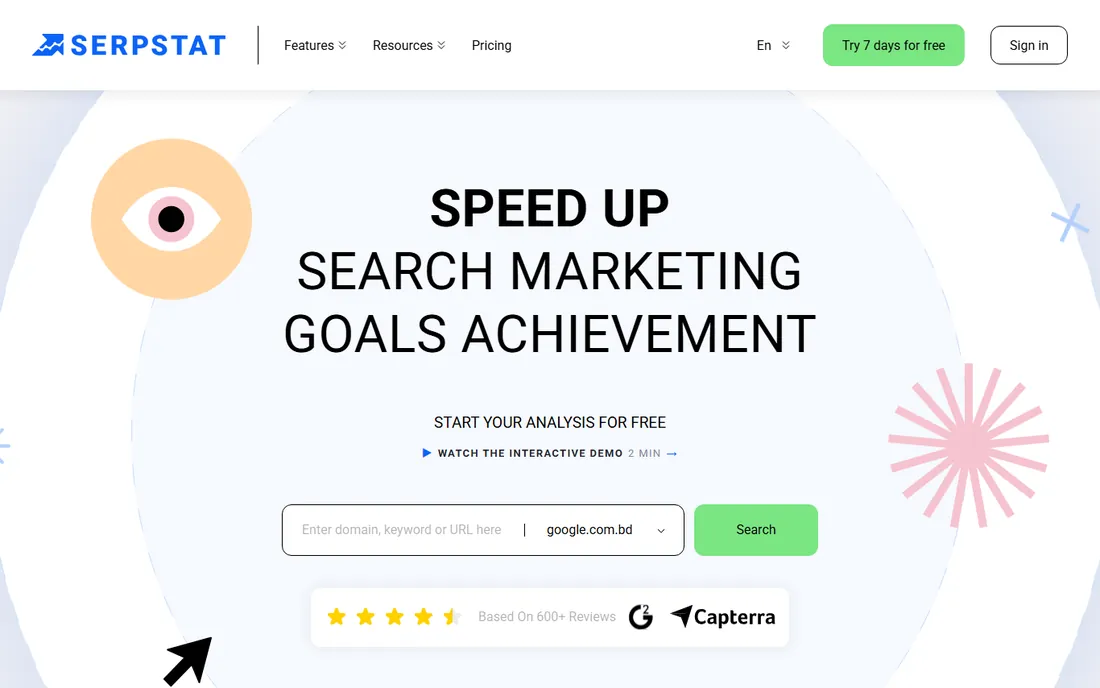
Serpstat quietly packs a lot of features into a price that undercuts the big two. The Ukrainian-built platform offers keyword research across 230 Google regions, with difficulty, volume, and CPC data, plus competitor keyword gap analysis that shows which terms rivals rank for and you do not. Keyword tools sit inside a full suite covering site audits, rank tracking, backlink analysis, and PPC research, so one subscription covers most of an SEO workflow.
The Individual plan is $69 per month billed monthly, or $50 per month when billed annually, and a free account covers light usage. Reviewers consistently praise the site audit and competitor analysis while noting that the backlink database is not as deep as Ahrefs'. If your keyword research centers on content planning and competitor gaps rather than link prospecting, Serpstat delivers the core data at roughly a third of the cost of the market leaders.
What we like- 8.62 billion keyword database across 230 countries
- Keyword research bundled with audit, rank tracking, and PPC research
- Free account for basic use
Watch out for- Backlink index is thinner than the market leaders
- Interface takes some learning
Starting price$103.20/month (billed annually)
Free planFree trial (14 days)
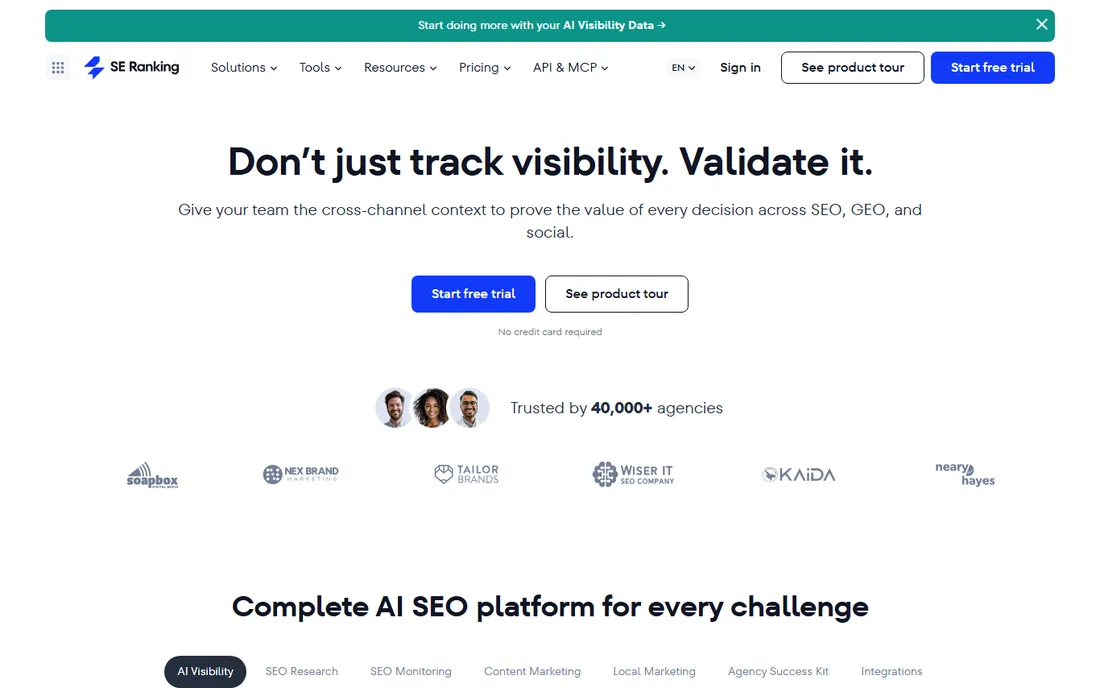
SE Ranking has built a loyal following among agencies by pairing fair pricing with solid data. Its keyword research tools draw on a 5.5 billion keyword database across 188 countries, with grouping, difficulty scoring, and search intent analysis. Recent updates add AI visibility tracking across major AI engines, and the platform leans into agency needs with white-label reports, client seats, and an Agency Pack add-on.
The Core plan starts at $103.20 per month when billed annually, and keyword research itself is unlimited, though tracked keywords and other limits scale with the plan. There is no permanent free plan, but the 14-day trial requires no credit card. SE Ranking suits teams that need dependable keyword data plus client-ready reporting, and who prefer predictable pricing over the premium tiers of Ahrefs and Semrush.
What we like- 5.5 billion keyword database with AI visibility tracking
- Pricing scales with usage and includes unlimited keyword research
- Strong white-label reporting for agencies
Watch out for- No free plan, only a 14-day trial
- Rank tracking costs scale with keyword count
Starting price$29/month (billed annually)
Free planYes (limited free account)
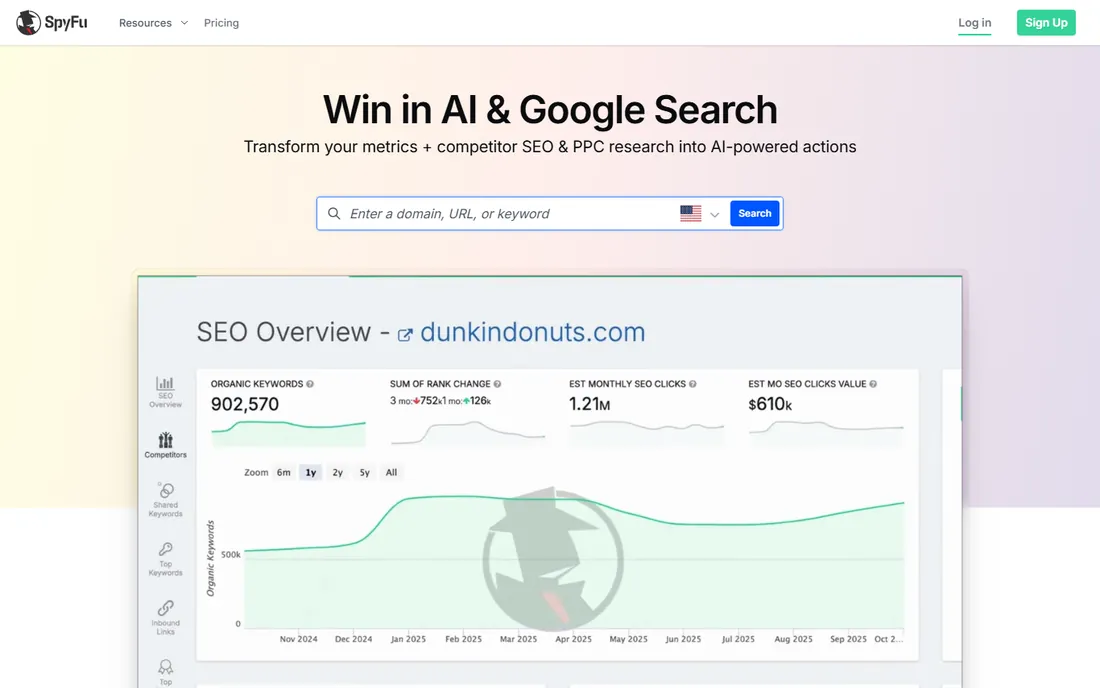
SpyFu earns its spot here by doing one thing exceptionally well: showing you the keywords your competitors rank for and buy. Enter any domain and you see its organic keywords, paid keywords, ad copy variations, and estimated budgets, stretching back years of historical data. The Kombat feature compares your domain against up to two competitors to surface shared keywords and the gaps where rivals win and you are absent. For keyword research driven by competitor intelligence rather than brainstorming, few tools are as direct.
The Basic plan is $39 per month billed monthly, or $29 per month when billed annually, and a limited free account lets you run searches before paying. The tradeoff is database size and polish: SpyFu will not match Ahrefs or Semrush on sheer keyword counts, and the interface shows its age. But if your strategy starts with "what is working for my competitors," SpyFu answers that question faster than anything else on this list.
What we like- Reveals every keyword competitors rank for and bid on, with years of ad history
- Kombat tool compares your keywords against rivals
- Affordable entry price
Watch out for- Keyword database is smaller than the giants
- Interface looks dated next to newer tools
Starting priceSee website
Free planYes (free searches, no account)
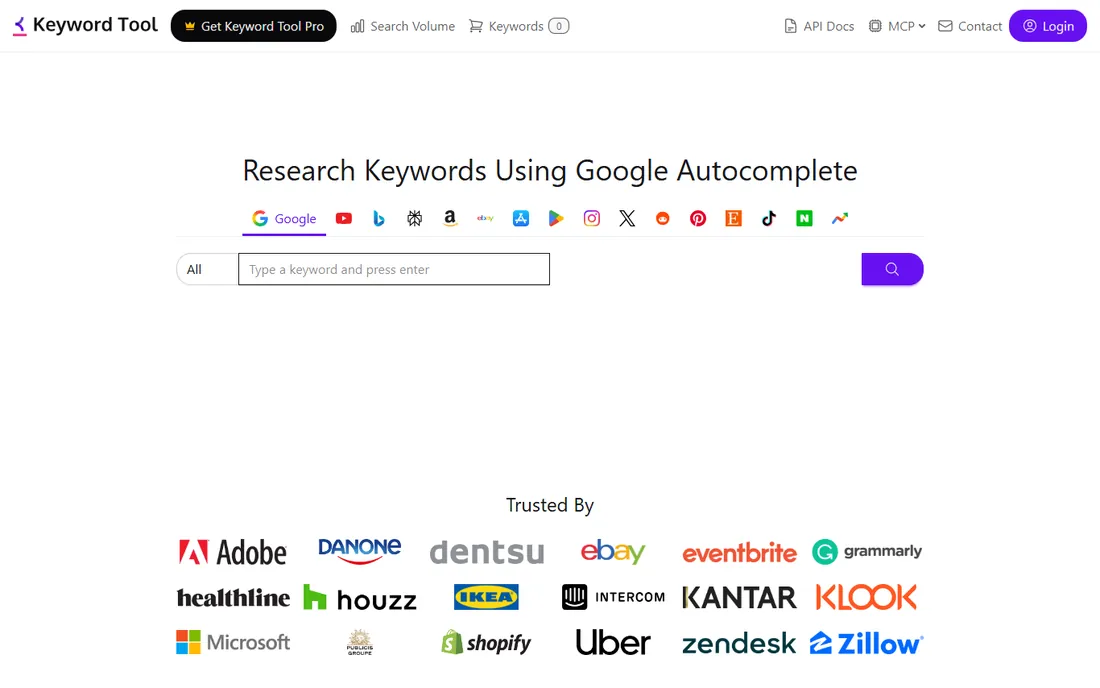
Keyword Tool takes the simplest possible approach to keyword research: it harvests autocomplete suggestions. Type a seed keyword and it generates up to 750 long-tail variations drawn from what people actually type into Google, YouTube, Bing, Amazon, Instagram, and eleven other platforms. It is free to use without an account, which makes it perfect for the earliest stage of research, brainstorming topics and seeing how real searchers phrase their questions.
The catch is that the free version shows suggestions without search volume, CPC, or difficulty scores. For those metrics you need Keyword Tool Pro, a paid upgrade that adds volume data, trends, bulk analysis, and API access. Keyword Tool will not replace a full research suite, but as a free starting point, or as a complement to a paid tool for uncovering long-tail phrasing, it earns its place.
What we like- Completely free keyword suggestions with no signup
- Pulls ideas from Google, YouTube, Amazon, and 13 other platforms
- Fast and simple for brainstorming
Watch out for- No search volume or difficulty data on the free version
- Paid Pro plan needed for real metrics
Start with the size and freshness of the keyword database. A bigger database means better coverage of long-tail and local terms, which is where small businesses actually win. Check whether volume data is modeled from clickstream data or pulled from a single source, and look for click-based metrics like traffic potential, which tell you more than raw monthly searches. If you run PPC campaigns, make sure the tool includes CPC and competition data rather than treating keywords as organic-only.
Match the tool to your workflow, not the other way around. If you manage one website and write your own content, a simple tool like KWFinder or Ubersuggest covers nearly everything you need. If you run an agency, prioritize multi-user seats, white-label reporting, and API access, which is where SE Ranking and Serpstat punch above their price. Anyone whose strategy leans on competitor analysis should weight tools like SpyFu and Semrush more heavily.
Finally, test before you pay. Every tool on this list offers a free plan or trial. Run the same ten keywords through two or three tools and compare the volume figures, difficulty scores, and suggestion lists. The numbers will differ, because every vendor models data differently. Pick the tool whose data best matches what you see in your own Search Console, because that is the reality your rankings have to live in.
How we chose
We started from the keyword research tools most often recommended in SEO communities and review sites, then verified each product was live and independently maintained. Pricing and plan details come from the vendors' own pricing pages, checked in October 2026, and feature descriptions come from official documentation and homepages. We also weighed public reviews on G2 and Capterra, plus practitioner discussions on Reddit, to understand how these tools perform for small and mid-size businesses rather than enterprise SEO teams. We did not test the tools hands-on; our comparison rests on documented features, current pricing, and the consensus of working SEOs.
Start with intent, not volume
The biggest mistake in keyword research is sorting by search volume and writing for the biggest number. A keyword with 10,000 monthly searches and informational intent will not sell your product if your page is a service page, and a keyword with 200 searches from buyers ready to purchase can be worth more than a viral how-to post. Before you open any tool on this list, write down what the searcher wants: to learn, to compare, or to buy.
Use the tools to validate that intent, not replace it. Check the current SERP for each target keyword. If the top results are all listicles and you sell software, the keyword is telling you what Google thinks searchers want. The best keyword search software makes this check fast, with SERP snapshots and intent labels built in, but the judgment call stays yours. Tools find the keywords. You decide which ones deserve your time.
Frequently asked questions
What is keyword search software?
Keyword search software, usually called a keyword research tool, shows you what people type into search engines and how hard it would be to rank for those terms. It typically reports monthly search volume, keyword difficulty, cost per click, and related keyword ideas, plus which pages currently rank. Businesses use it to plan content, prioritize SEO work, and find gaps competitors have missed.
Is there a good free keyword research tool?
Yes. Keyword Tool is free with no account and generates hundreds of autocomplete-based ideas. Ahrefs Webmaster Tools is free for websites you own and includes real keyword data for your pages. Ubersuggest, KWFinder, Serpstat, and SpyFu all offer limited free plans, and Google Keyword Planner is free with a Google Ads account, though its data is built for advertisers rather than SEO.
Ahrefs vs Semrush: which is better for keyword research?
Both have enormous databases and mature keyword tools, so the choice comes down to workflow. Ahrefs is often preferred for pure keyword and backlink analysis, with metrics like traffic potential that go beyond raw volume. Semrush is stronger if you also run PPC or want keyword research connected to content and competitive intelligence in one subscription. Both offer free limited access, so compare them on your own keywords.
How accurate is keyword search volume data?
Volume figures are estimates, not counts, and every vendor models them differently, which is why two tools can disagree on the same keyword. Treat volume as a relative signal for comparing keywords against each other rather than a promise of exact traffic. Cross-check a tool's numbers against your own Google Search Console data to learn which vendor's model runs closest to your reality.
Can a beginner do keyword research without paying?
Absolutely. Start with Keyword Tool or the free tiers of KWFinder and Ubersuggest to build a list of real search phrases around your topic. Check keyword difficulty scores and look at who currently ranks. When you outgrow the free limits or need deeper competitor data, that is the signal to pay for one of the tools on this list.
Do I need a paid plan if I only track a few keywords?
Probably not at first. Free plans from KWFinder, Serpstat, SpyFu, and Ubersuggest cover light research, and Ahrefs Webmaster Tools covers your own site for free. A paid plan becomes worth it when you need competitor keyword gaps, bulk analysis, rank tracking at scale, or API access, which are consistently paywalled features.
Sources we checked (14)
- https://ahrefs.com/
- https://ahrefs.com/pricing
- https://semrush.com/
- https://www.semrush.com/prices/
- https://mangools.com/kwfinder/
- https://ubersuggest.com/en
- https://ubersuggest.com/pricing
- https://serpstat.com/
- https://serpstat.com/pricing/
- https://seranking.com/
- https://seranking.com/pricing.html
- https://www.spyfu.com/
- https://www.spyfu.com/pricing
- https://keywordtool.io/
Is your product missing or out of date?
We review this list regularly. Vendors can request a listing, send updated pricing or ask about featured placement.

Shihab Mia · Founder, Rankite
Shihab has spent more than a decade helping SaaS and e-commerce brands grow through search. He writes Rankite's software buying guides from pricing pages, documentation and public user reviews. More about Shihab.