How we make this list: we compare pricing pages, product documentation and public user reviews. Rankite is independent; if a vendor ever pays for a featured spot, that listing is clearly labeled Partner.
Key takeaways
- Bright Data and Oxylabs lead on raw scale: the largest proxy networks and infrastructure for enterprise data operations.
- Zyte and Apify balance power with usability: a managed scraping API on one side, a marketplace of ready-made scrapers on the other.
- Diffbot structures the web into a knowledge graph, a fit for AI training data and entity enrichment rather than raw page pulls.
- ScraperAPI and ScrapingBee are the budget-friendly API options, with entry plans from $19 per month on publicly listed pricing.
- Nimble targets AI-era scraping with managed pipelines, though its pricing is quote-based and aimed at larger buyers.
Quick comparison
| Tool | Best for | Starting price | Free plan |
|---|
 Bright Data Bright Data | largest proxy network for enterprises | See website | No |
 Oxylabs Oxylabs | enterprise-grade proxies and web API | See website | No |
 Zyte Zyte | managed scraping API with scale | See website | Free trial |
 Apify Apify | marketplace of ready-made scrapers | Free plan $0 (includes $5 monthly credit); paid plans from $19 per month | Yes |
 Diffbot Diffbot | knowledge graph for AI data | See website | Yes |
 ScraperAPI ScraperAPI | simple API for rotating proxies | See website | Free trial |
 ScrapingBee ScrapingBee | budget API with JavaScript rendering | From $19 per month (Hobby, 75,000 credits) | Free trial |
 Nimble Nimble | managed pipelines for AI workloads | See website | Free trial |
Is your product missing or out of date?
We review this list regularly. Vendors can request a listing, send updated pricing or ask about featured placement.
Starting priceSee website
Free planNo
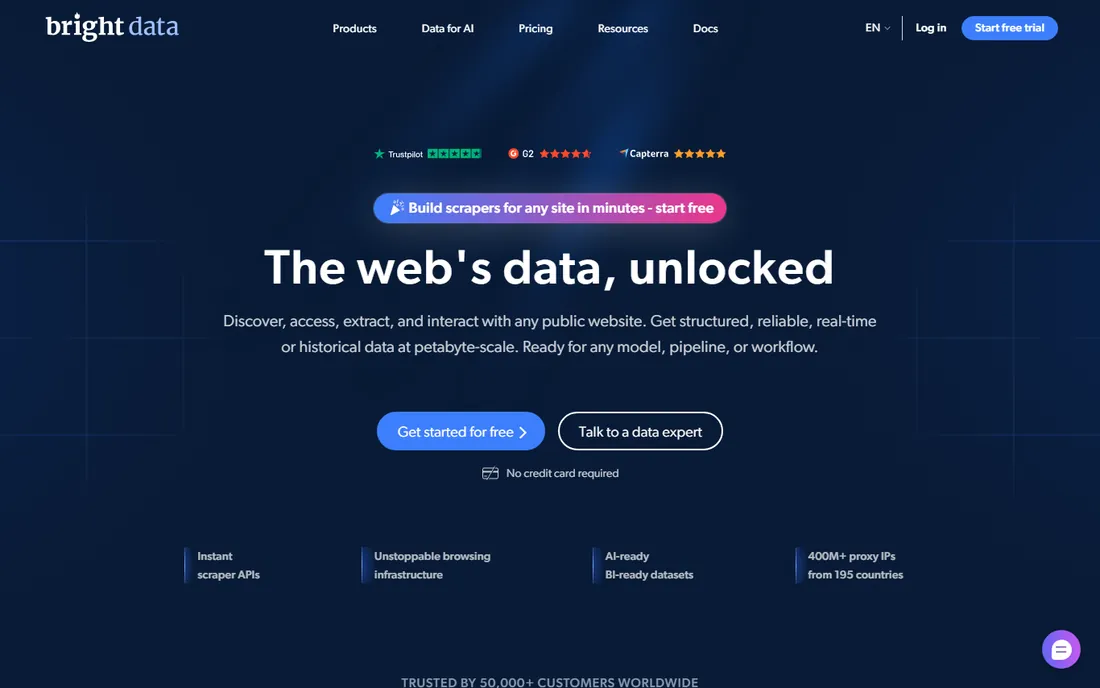
Bright Data is the infrastructure pick when scale is the requirement and failure is not an option. Its proxy network is among the largest in the industry, covering residential, datacenter, ISP, and mobile IPs across geographies, which is what keeps large crawls running when targets fight back. Beyond proxies, the platform offers scraping APIs and ready-made datasets for common use cases.
Everything is usage-based and quoted, with no public pricing to anchor a budget. The platform's breadth is also its learning curve: new teams should expect onboarding time before they use it well. Bright Data fits enterprises and data businesses where scraping is a core operation, not a side task.
What we like- Enormous proxy network across residential, datacenter, and mobile IPs
- Purpose-built datasets and scraping APIs
- Compliance-focused enterprise offering
Watch out for- Pricing is custom and sales-led
- Platform breadth takes time to learn
Starting priceSee website
Free planNo
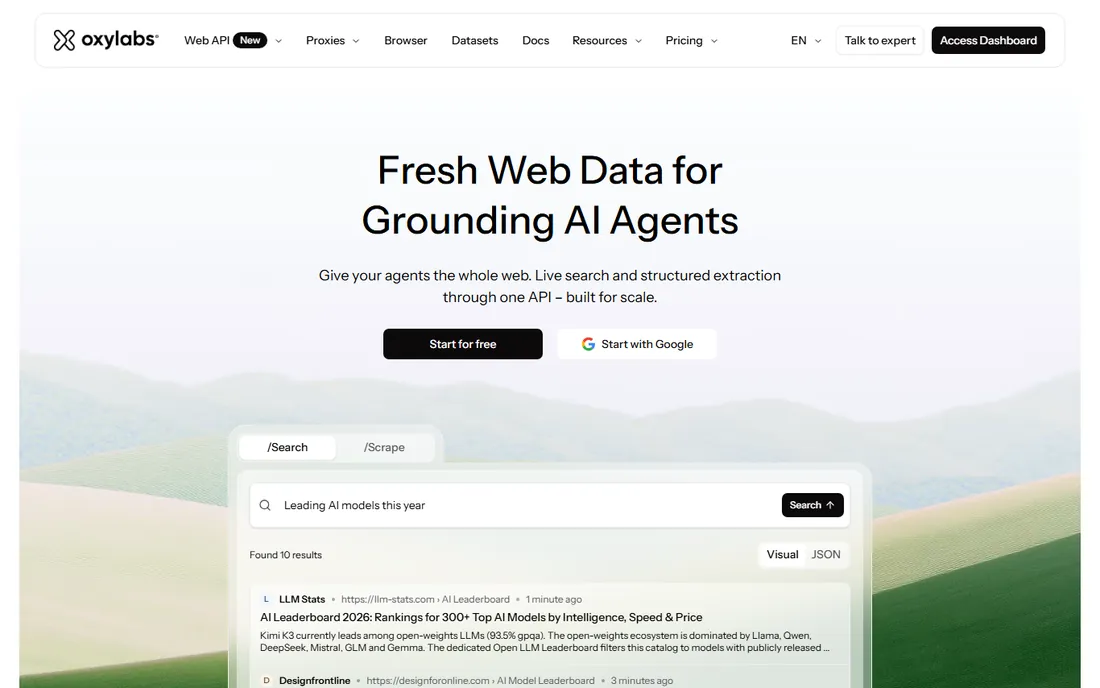
Oxylabs competes with Bright Data at the top of the proxy market and differentiates on quality and newer API products. Its proxy pool spans over 177 million IPs, and the Web API product brings search and data retrieval under one interface with outputs designed for AI agents. For teams feeding retrieval pipelines or training data workflows, that agent-ready positioning matters.
Pricing is custom and the product skews enterprise, so small teams may find the sales process heavier than the task warrants. Oxylabs is strongest for organizations that need dependable, compliant data infrastructure and have the volume to justify a conversation.
What we like- High-quality proxy infrastructure with 177M-plus IPs
- Web API unifies search and scraping
- Agent-ready outputs for AI workflows
Watch out for- Quote-based pricing
- Enterprise focus means less hand-holding for beginners
Starting priceSee website
Free planFree trial
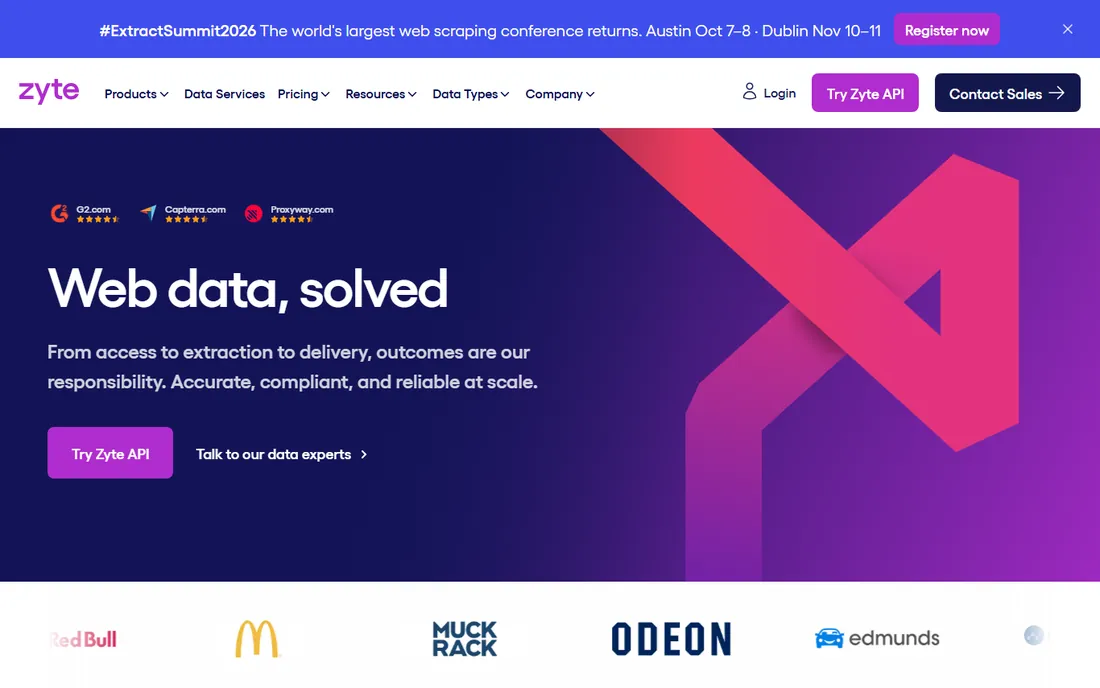
Zyte's pitch is simple: point its API at a URL and it picks the leanest access strategy that works, escalating to browsers and proxies only when the site demands it. You are billed on successful requests, which aligns cost with results instead of attempts. For teams that want scraping without managing infrastructure, the managed data delivery service goes further, with Zyte's team building and maintaining the collection.
A free trial is available, but we could not verify public pricing on the vendor's own site, so treat third-party figures as unconfirmed. Zyte also maintains Scrapy and Scrapy Cloud for teams that prefer to run their own crawlers. It fits engineering teams that want API simplicity with an escape hatch to full control.
What we like- One API handles easy to hard websites
- Success-based billing on the API
- Managed data delivery service for hands-off pipelines
Watch out for- Public pricing not verifiable on the vendor site
- Advanced features need technical setup
Starting priceFree plan $0 (includes $5 monthly credit); paid plans from $19 per month
Free planYes
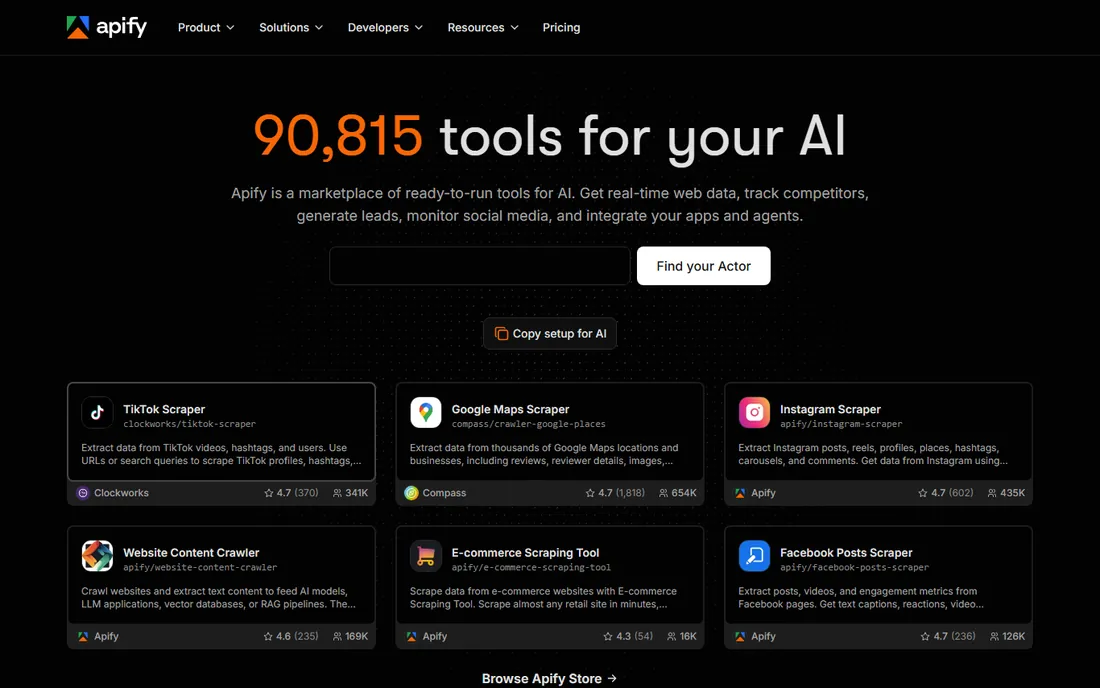
Apify's marketplace is its superpower: instead of building a scraper, you often find one already written, reviewed, and maintained by someone else. The platform runs these actors on its own infrastructure with proxies and browsers handled for you, and the free plan includes a $5 monthly credit that covers real testing. Paid plans start at $19 per month for Starter.
The honest caveat is variance. Community-built actors differ in quality and maintenance, so production pipelines deserve a vetting pass. At very large scale, per-use costs can exceed a dedicated proxy contract. Apify shines for teams that want to move fast and would rather configure than code.
What we like- Thousands of ready-made scrapers in the store
- Transparent usage-based pricing
- Generous free tier for testing
Watch out for- Quality varies across community actors
- Costs add up at very large scale
Starting priceSee website
Free planYes
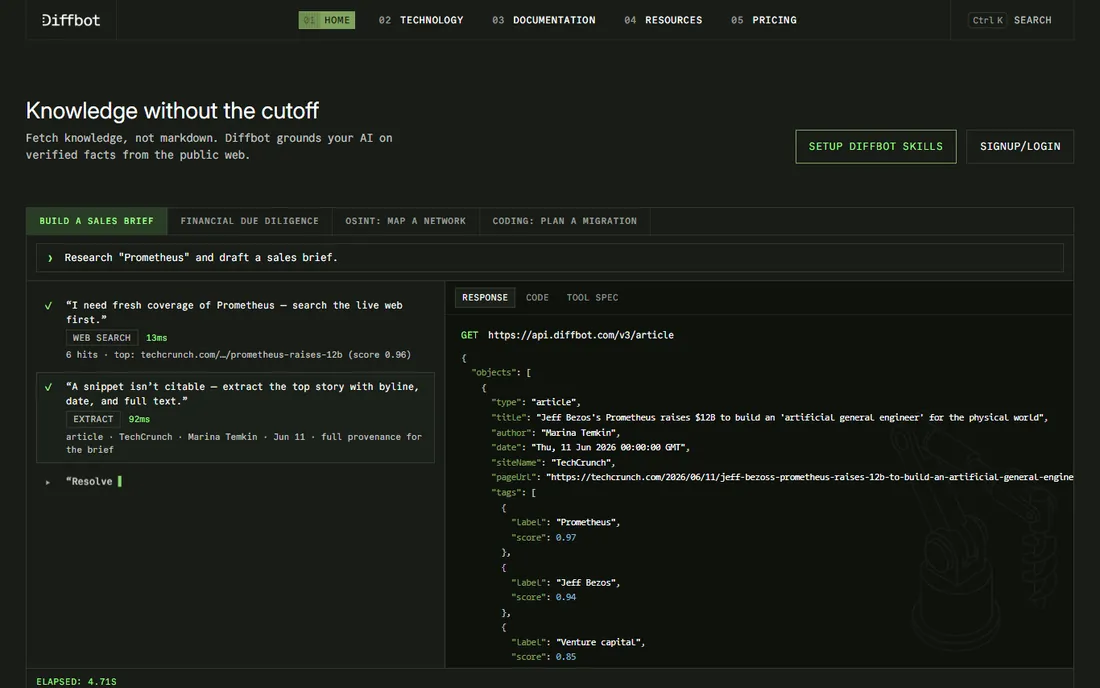
Diffbot does not think in pages; it thinks in entities. Its APIs extract structured data from URLs, crawl entire sites into datasets, and resolve facts against a knowledge graph of the public web. For AI training data, lead enrichment, and company intelligence, that structured output skips the parsing stage entirely.
A free tier exists for evaluation, while paid pricing is not published on the vendor's site. Diffbot is the wrong tool for pulling raw HTML at the lowest cost per page. It is the right tool when you need clean, structured facts about the world rather than a pile of markup.
What we like- Extracts structured facts, not just HTML
- Knowledge graph covers companies, people, and products
- Built for AI and enrichment workloads
Watch out for- Pricing not published on the vendor site
- Overkill for simple page scraping
Starting priceSee website
Free planFree trial
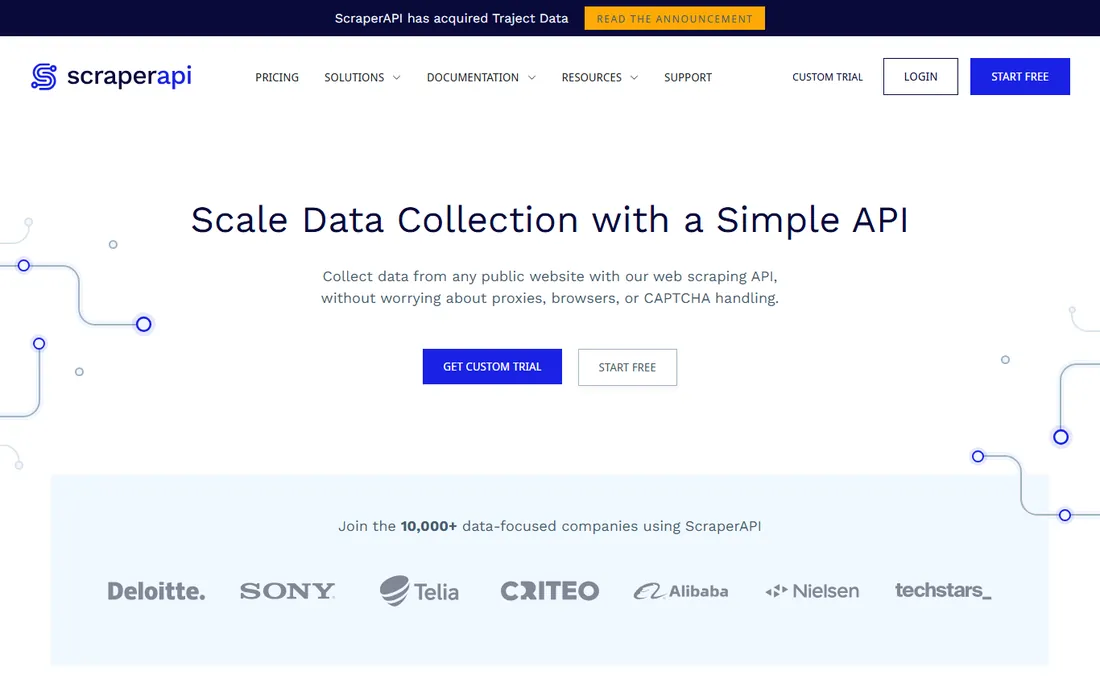
ScraperAPI sells simplicity: one API call, and it handles proxies, browsers, and CAPTCHAs behind the scenes. For developers who need scraped pages without becoming proxy engineers, that abstraction is worth paying for. The free trial includes 1,000 credits, enough to prove the concept on real targets.
We could not verify current pricing on the vendor's own site, so check it directly before budgeting; third-party comparisons cite a Hobby plan around $49 per month. The tradeoff for simplicity is control: teams with exotic requirements or extreme scale may outgrow the abstraction.
What we like- Dead-simple API with proxy rotation built in
- Handles CAPTCHAs and retries automatically
- Free trial with 1,000 credits
Watch out for- Pricing not verifiable on the vendor site
- Less control than running your own proxy pool
Starting priceFrom $19 per month (Hobby, 75,000 credits)
Free planFree trial
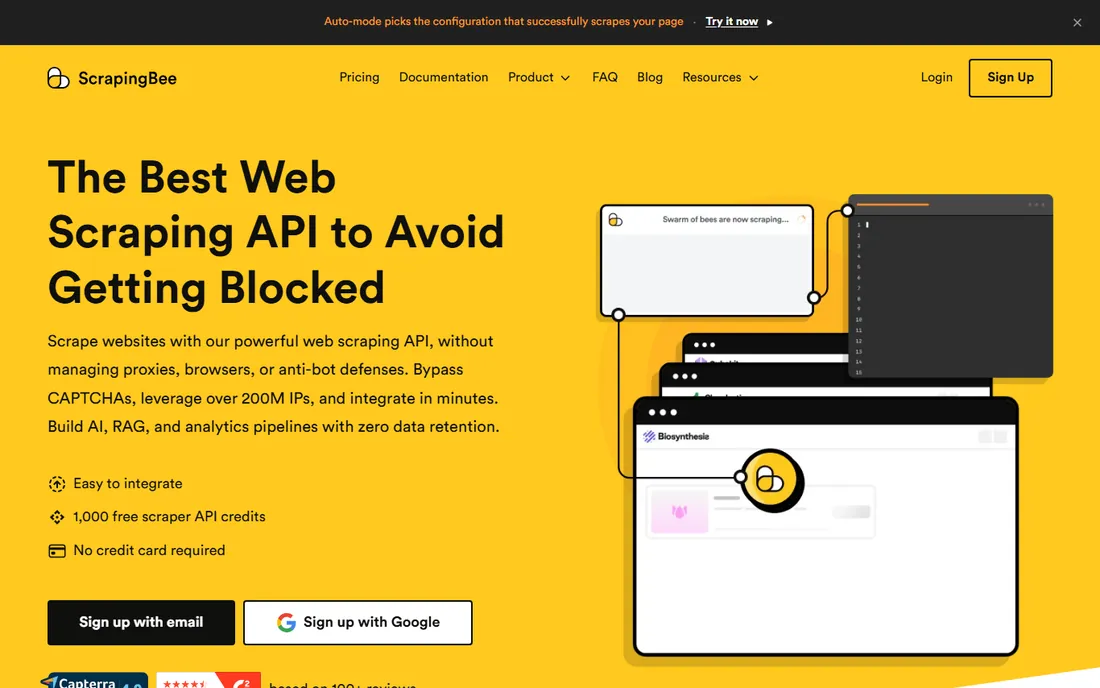
ScrapingBee is the value play in the scraping API market. The Hobby plan starts at $19 per month with 75,000 credits, JavaScript rendering is built in for dynamic sites, and a 1,000-credit free trial lets you test before paying. For startups and side projects that need reliable scraping without enterprise contracts, the math is attractive.
The vendor is smaller than Bright Data or Oxylabs, which matters if you need dedicated support or custom compliance terms. The credit model also rewards monitoring: heavy JavaScript rendering burns credits faster than simple requests. Used with awareness, ScrapingBee delivers serious capability per dollar.
What we like- Published pricing from $19 per month
- JavaScript rendering included
- Free trial with 1,000 credits
Watch out for- Smaller operation than the enterprise vendors
- Credit model needs monitoring at scale
Starting priceSee website
Free planFree trial
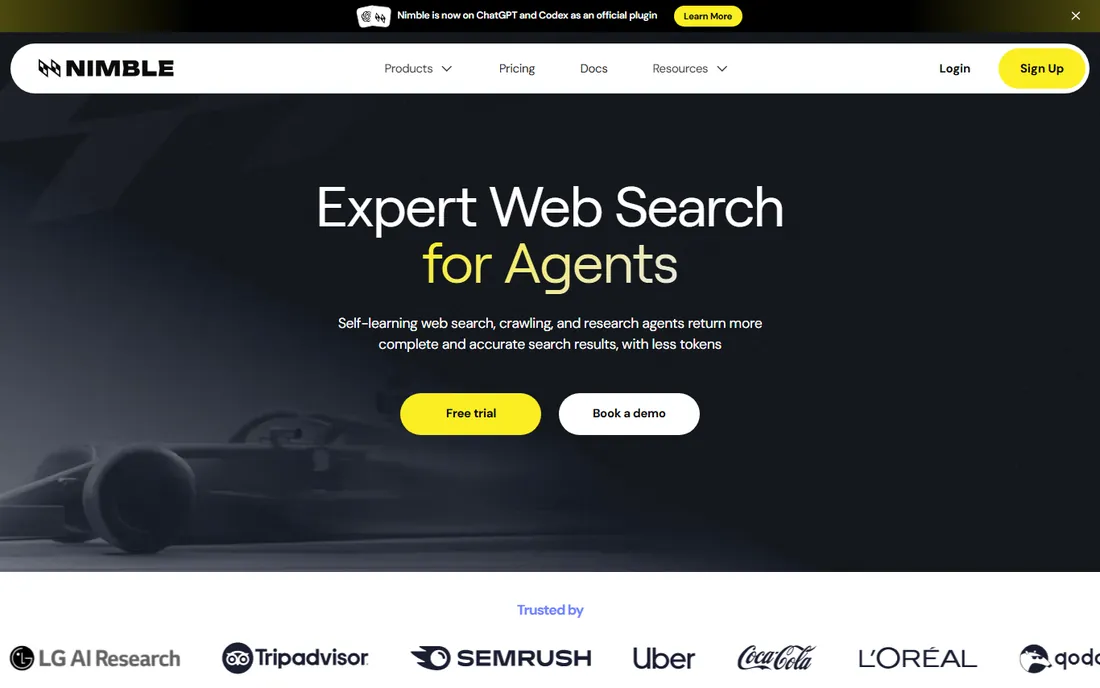
Nimble targets the AI era of web data: managed collection pipelines that deliver structured, ready-to-use datasets for training and retrieval workloads. The pitch is less about proxies per gigabyte and more about outcomes, with the vendor handling the messy parts of large-scale collection. A free trial is available for evaluation.
Pricing is quote-based, with managed tiers reported in the low thousands per month, so this is not a hobbyist tool. Nimble also has a thinner public track record than the established vendors here. It belongs on the list for AI teams that want data as a managed service rather than infrastructure to operate.
What we like- Managed data pipelines reduce engineering load
- Positioning around AI-ready structured data
- Free trial available
Watch out for- Pricing is quote-based and aimed at larger buyers
- Newer brand with thinner public track record
How we chose
We compared each tool's suitability for large-scale scraping using vendor documentation, pricing pages, and public reviews, focusing on proxy infrastructure, API design, data quality, and cost structure at volume. Prices shown come from the vendors' own published pages; where pricing was not published, we wrote See website. Several vendor homepages were unreachable from our research environment, and those URLs are flagged in our report. We did not run hands-on scraping tests.
Frequently asked questions
Is web scraping legal?
It depends on what you scrape and how. Publicly available data scraped respectfully is generally permissible in the US, but terms of service, copyrighted content, personal data, and aggressive crawling create real legal risk. The enterprise vendors on this list invest in compliance tooling for a reason. Get legal advice before scraping at scale, especially for personal or copyrighted data.
How much does large-scale web scraping cost?
Anywhere from $19 per month for a small API plan to tens of thousands per month for enterprise proxy and managed data contracts. The main cost drivers are request volume, JavaScript rendering, residential proxy usage, and whether you buy raw infrastructure or managed data. Model cost per million pages, not per month, to compare honestly.
What is the difference between a scraping API and a proxy network?
A proxy network gives you IP addresses to route your own scrapers through; you still write and maintain the crawling code. A scraping API handles everything, proxies, browsers, CAPTCHAs, retries, and returns the page or structured data. APIs cost more per request but remove engineering work. Heavy, long-term operations often combine both.
Do I need proxies for large datasets?
Yes, in practice. Websites rate-limit and block IPs that make thousands of requests, so large crawls need IP rotation across residential or datacenter pools. The proxy vendors and scraping APIs on this list exist precisely because managing that rotation yourself stops scaling around the time your dataset gets interesting.
How do I keep scraped data fresh?
Schedule recurring crawls, monitor for schema changes on target sites, and version your datasets so you can diff over time. Managed services like Zyte's data delivery and Nimble's pipelines handle refresh cadence for you. If you self-manage, build alerting for failed runs and changed page structures, because silent staleness is the most common failure.
What breaks at large scale, and how to avoid it
IP blocks and CAPTCHAs
At small volume, polite crawling with delays works. At large volume, targets notice. Rotate IPs across a real proxy pool, respect robots.txt and rate limits where it matters commercially, and use headless browsers only for pages that need JavaScript. The vendors with the largest networks, Bright Data and Oxylabs, exist for this exact problem.
Data quality at volume
A scraper that works on ten pages fails silently on ten thousand when layouts drift. Validate extracted fields on every run, sample output for human review, and alert on sudden drops in field completeness. Diffbot's structured extraction and managed pipelines reduce this burden by design; self-built scrapers need the monitoring built in.
Cost control
Scraping bills surprise people because costs compound: more pages times JavaScript rendering times residential proxies. Set budgets per project, monitor credit or request burn weekly, and prefer success-based billing where it is offered. The cheapest per-request price is not the cheapest pipeline if half the requests fail.
Sources we checked (10)
- https://oxylabs.io
- https://www.zyte.com
- https://www.g2.com/products/zyte/pricing
- https://apify.com
- https://use-apify.com/docs/what-is-apify/apify-free-plan
- https://diffbot.com/
- https://prospeo.io/s/diffbot-pricing-reviews-pros-and-cons
- https://github.com/ejkbvy0/scraperapi-zyte-comparison/blob/HEAD/README.md
- https://spider.cloud/blog/spider-alternative-to-scrapingbee/
- https://venturebeat.com/technology/the-era-of-human-web-search-is-over-nimble-launches-agentic-search-platform
Is your product missing or out of date?
We review this list regularly. Vendors can request a listing, send updated pricing or ask about featured placement.

Shihab Mia · Founder, Rankite
Shihab has spent more than a decade helping SaaS and e-commerce brands grow through search. He writes Rankite's software buying guides from pricing pages, documentation and public user reviews. More about Shihab.