How we make this list: we compare pricing pages, product documentation and public user reviews. Rankite is independent; if a vendor ever pays for a featured spot, that listing is clearly labeled Partner.
Key takeaways
- Bright Data and Oxylabs are the heavy lifters for large-scale product data collection, with dedicated retail parsers and the largest proxy networks, but both price above what small sellers need.
- Apify is the fastest path to a working scraper for non-developers, thanks to thousands of prebuilt retail scrapers you can schedule in minutes.
- Price2Spy is the only tool here built purely for price monitoring, with repricing and MAP tracking, though its pricing is quote-based.
- Datafiniti is worth a look if you need broad market product data, because buying a ready dataset beats building scrapers you do not need.
- Diffbot's automatic extraction survives site redesigns that break selector-based scrapers, which matters when you monitor retailers that change layouts often.
Quick comparison
| Tool | Best for | Starting price | Free plan |
|---|
 Bright Data Bright Data | enterprise-scale product data collection | See website | Free trial |
 Oxylabs Oxylabs | dedicated e-commerce scraping APIs | $30/month (Starter plan) | Free trial (welcome credits) |
 Apify Apify | ready-made scrapers you can schedule | See website | Free trial |
 Diffbot Diffbot | structured product extraction without selectors | $299/month (Startup plan) | Yes (10,000 credits per month) |
 ScraperAPI ScraperAPI | simple API-based price monitoring | See website | Free trial |
 Smartproxy Smartproxy | proxy infrastructure for DIY price monitoring | See website | Free trial |
 Price2Spy Price2Spy | dedicated price monitoring without building anything | See website | See website |
 Datafiniti Datafiniti | ready-made product and retail datasets | See website | Free trial |
Is your product missing or out of date?
We review this list regularly. Vendors can request a listing, send updated pricing or ask about featured placement.
Starting priceSee website
Free planFree trial
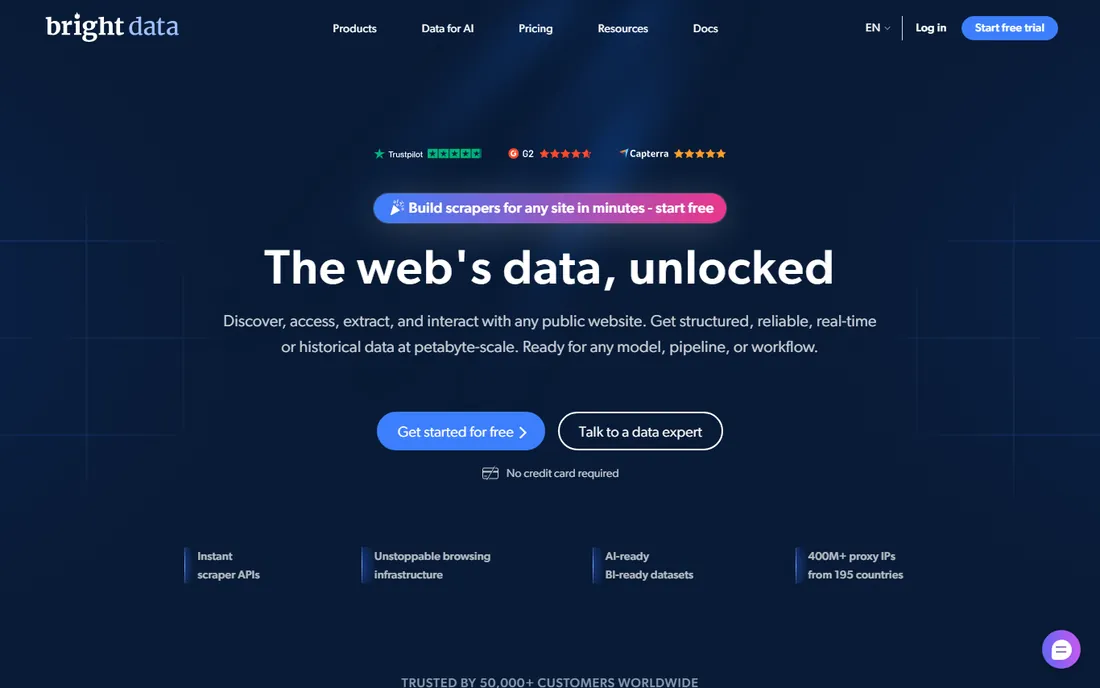
Bright Data runs one of the largest proxy networks in the world, and its scraping infrastructure is built to pull product listings, prices and availability from sites that block simpler tools. For an e-commerce team tracking thousands of SKUs across Amazon, Walmart and specialty retailers, its Web Scraper API and ready-made datasets handle the anti-bot work that would otherwise consume an engineering team.
The honest catch is cost and complexity. Bright Data prices its products on different units (records, requests, gigabytes), which makes forecasting a monthly bill a project in itself. Smaller sellers often do better starting with a simpler tool and moving up only when blocked pages prove the need. If your catalog is small, this is more power than you need.
What we like- Largest proxy network in the industry
- Purpose-built scraping APIs for product and pricing data
- Consistently high success rates on hard retail targets
Watch out for- Pricing is complex and hard to forecast
- Entry cost is high for smaller teams
Starting price$30/month (Starter plan)
Free planFree trial (welcome credits)
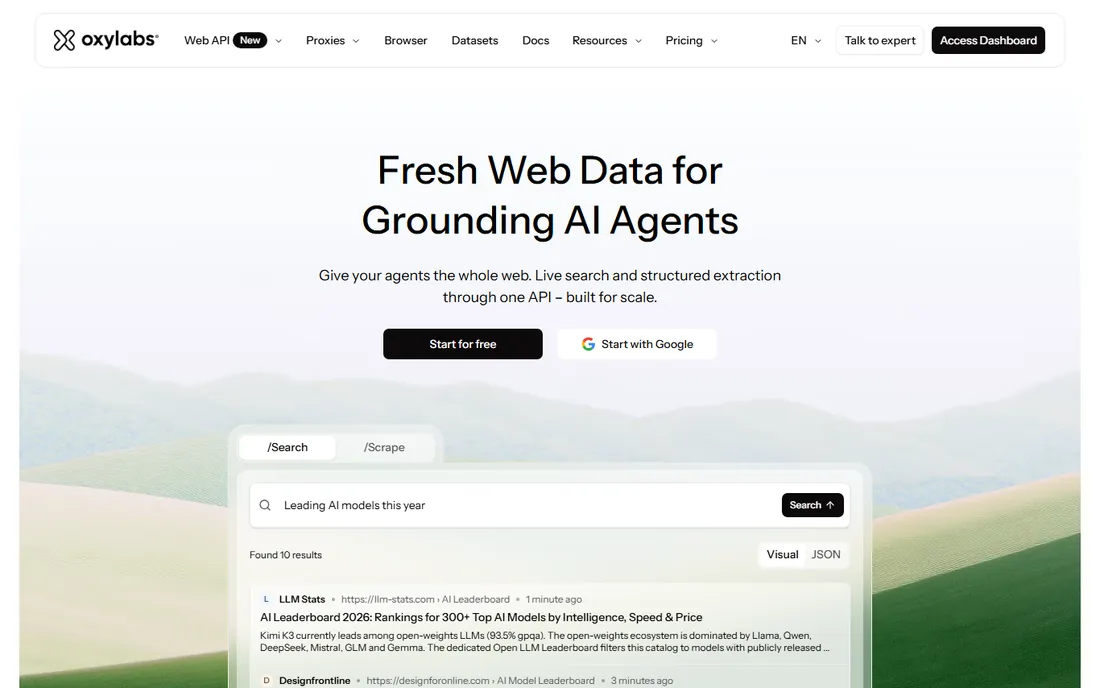
Oxylabs sells both proxies and a Web Scraper API with parsers built for product pages, which means you can request an Amazon or Google Shopping URL and get back structured fields instead of raw HTML. That design fits e-commerce teams that want clean product data without maintaining selector logic every time a retailer redesigns its layout.
Starter pricing begins at $30 per month, with usage metered per result depending on the target. The trade-off is that Oxylabs now sells many products under one subscription, and figuring out which API and which credit rate applies to your use case takes some study. Heavy users on the mid tiers generally report solid results, while light users should watch how quickly results-based billing adds up.
What we like- Product-specific parsers for major retailers
- AI Studio for prompt-based scraping
- Transparent per-result pricing on web APIs
Watch out for- Mixing products makes credit math confusing
- Support quality varies on the lowest plan
Starting priceSee website
Free planFree trial
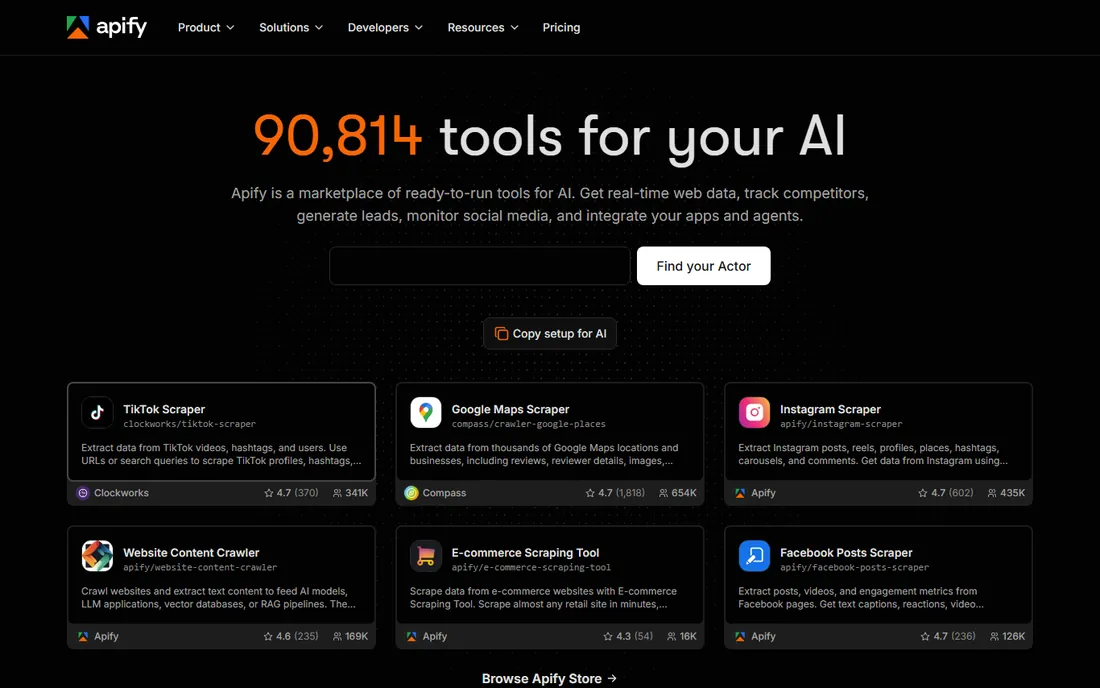
Apify's marketplace of prebuilt "Actors" is the practical shortcut for e-commerce teams. Instead of building a scraper, you find an existing Actor for Amazon products, Google Shopping or a specific retailer, plug in your search terms, and schedule it to run daily. Results land in a dataset you can export or push into your own systems through the API.
The catch is the two-layer billing. You pay for the Actor's usage plus Apify's platform compute, and costs scale with page volume. For moderate monitoring jobs the platform is affordable and fast to set up. Teams scraping millions of pages a month should model the cost before committing, because the convenience layer is priced into every run.
What we like- Thousands of prebuilt scrapers for retail sites
- Scheduling and proxy management built in
- Low-friction free credits to start
Watch out for- Platform usage billing stacks on top of scraper charges
- Custom scrapers still need developer skills
#4
Diffbot
Best for: structured product extraction without selectors
Visit diffbot.com
Starting price$299/month (Startup plan)
Free planYes (10,000 credits per month)
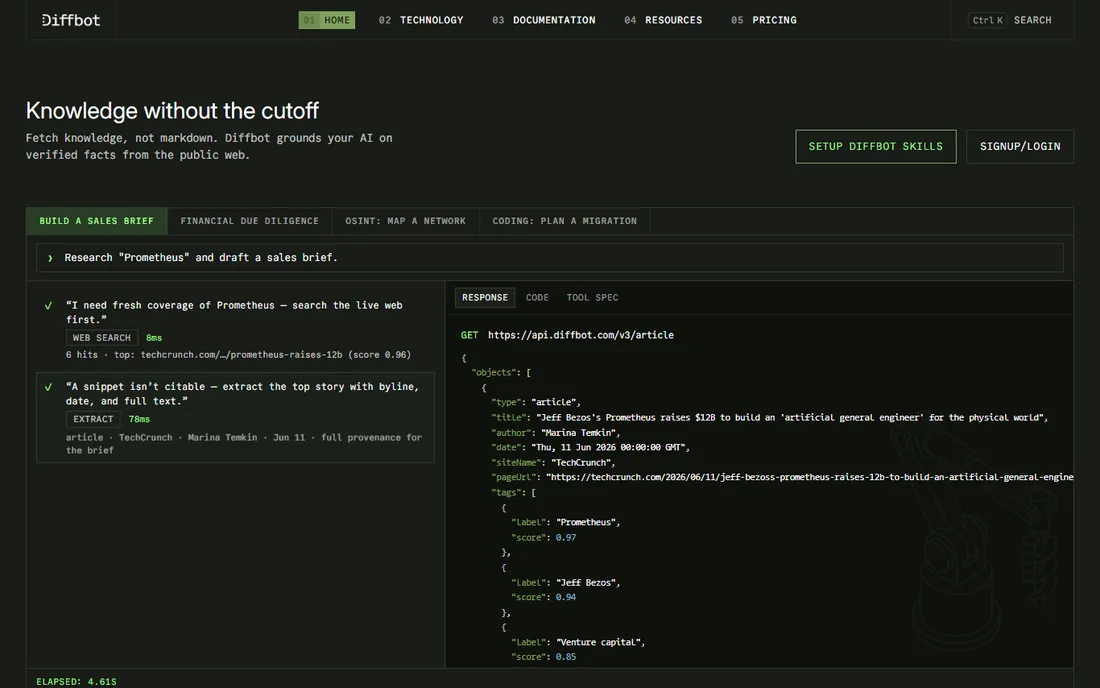
Diffbot takes a different approach from most scrapers. Instead of selectors you maintain, its Extract API reads a product page and returns structured fields like title, price, availability and images. When retailers redesign their templates, extraction keeps working, which fixes the exact failure mode that eats maintenance time in e-commerce monitoring.
Pricing starts at $299 per month for 250,000 credits, and each extracted page costs one credit. That makes the math simple but the entry price high. Diffbot fits brands and agencies that monitor enough products to justify the subscription and value the low-maintenance pitch. Small shops tracking a few dozen SKUs will find cheaper options elsewhere in this list.
What we like- Automatic extraction adapts to site redesigns
- Crawl API spiders whole retail sites
- Free tier is genuinely usable for testing
Watch out for- $299/month entry is steep for small sellers
- Credit consumption is hard to predict for new users
Starting priceSee website
Free planFree trial
ScraperAPI keeps the pitch simple: send a URL to one endpoint, get back the page, and never think about proxies or CAPTCHAs. For price monitoring on mainstream e-commerce sites, that simplicity is the whole point. Independent 2026 benchmarks show it hitting very high success rates on Amazon and Zillow, which are exactly the targets e-commerce teams care about.
The honest limit shows up on the hardest targets. Its average success rate drops against aggressive anti-bot systems, so teams monitoring heavily protected retailers may need a stronger platform. Its 2026 acquisition of Traject Data added structured product data APIs, which makes it a better e-commerce fit than its generalist reputation suggests.
What we like- One API endpoint with proxies and CAPTCHAs handled
- Strong results on Amazon and e-commerce targets
- Structured data endpoints added through the Traject acquisition
Watch out for- Success rates vary on the hardest anti-bot targets
- Advanced features trail enterprise platforms
Starting priceSee website
Free planFree trial
Smartproxy is a proxy provider first, not a monitoring app. You bring the scraping code (or a framework like Scrapy), and Smartproxy supplies residential IPs, rotation and a site unblocker that renders JavaScript-heavy retail pages. For e-commerce teams with developers, this is often the cheapest way to run large-scale price collection.
The catch is exactly that: it is infrastructure, not a finished product. There are no price-change alerts, no dashboards and no repricing rules. If you do not have engineering time, a managed tool like Price2Spy will get you live faster. If you do, Smartproxy gives you the raw capacity to scale without the markup of a managed platform.
What we like- Large residential proxy pool at competitive prices
- Site unblocker handles JavaScript-heavy retail pages
- Flexible usage-based options
Watch out for- You still need developers to build and maintain the scrapers
- No built-in monitoring dashboards or alerts
Starting priceSee website
Free planSee website
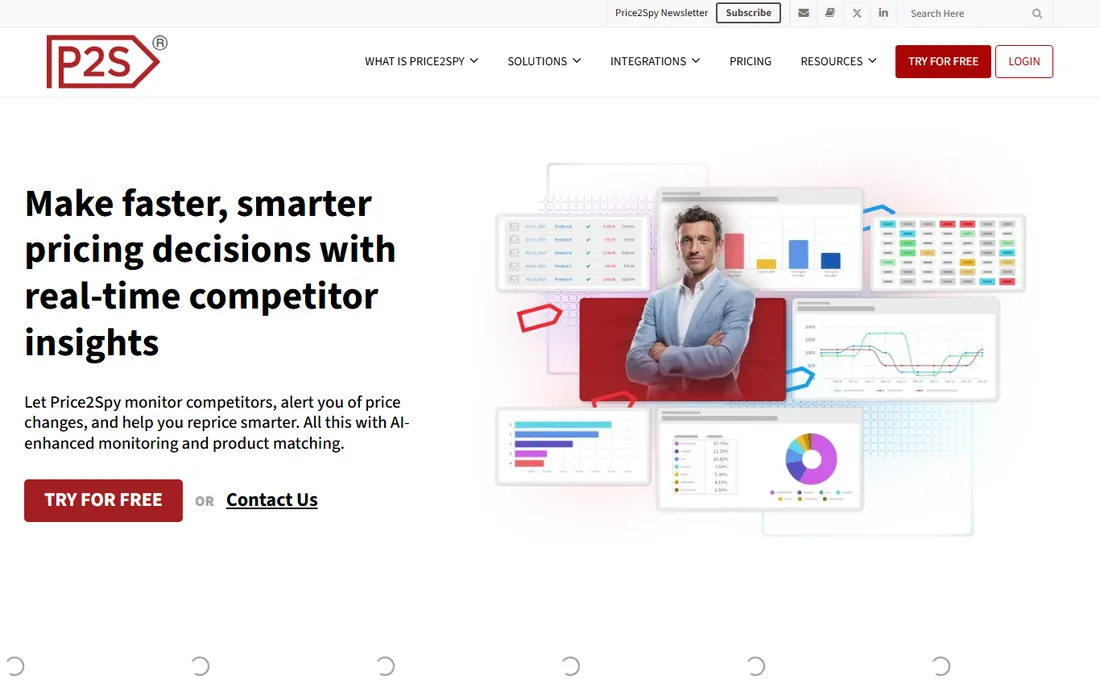
Price2Spy is not a general scraper. It exists for one job: watching competitor prices and turning changes into action. Its tiers cover price change alerts, historical reports, marketplace monitoring and MAP violation tracking, with a repricing module that adjusts your own prices by rules you define.
Because pricing is quote-based, you will need a sales conversation to get numbers, which slows down evaluation. It also takes real work to match your catalog against competitor products, though the company offers matching services. For brands and retailers where pricing decisions are the business, a purpose-built tool beats a generic scraper that only delivers raw data.
What we like- Built purely for price monitoring with repricing and MAP tracking
- Marketplace monitoring included
- Product matching service for large catalogs
Watch out for- Pricing is quote-based and opaque
- Onboarding takes real setup effort on messy catalogs
Starting priceSee website
Free planFree trial
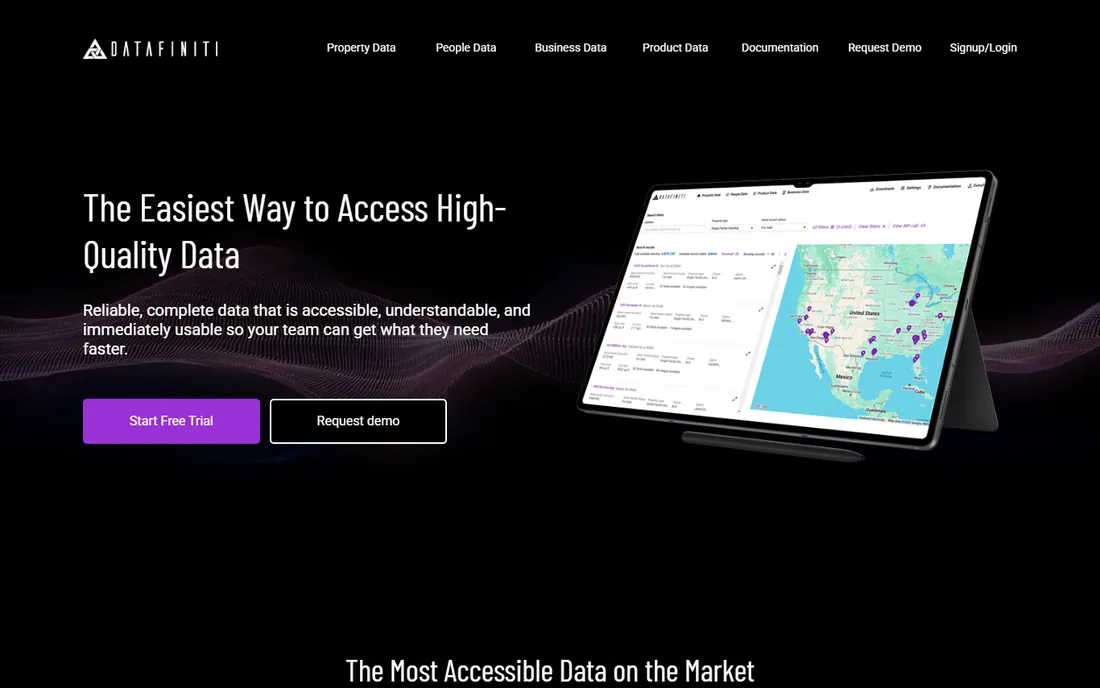
Datafiniti flips the model. Instead of scraping anything, you buy access to product data it has already collected: prices, reviews, seller info and availability across major retail categories. If your analysis needs broad market data rather than monitoring specific competitors, starting from a dataset skips weeks of scraper development.
The limit is coverage. Its database is strongest in mainstream retail, so sellers in niche categories or regional markets may not find their products represented. Pricing is quote-based, and the value depends entirely on how well its catalog overlaps with yours. Ask for a sample of your own SKUs before any paid commitment.
What we like- Tens of millions of product records ready to download
- No scrapers to build or maintain
- API and bulk delivery options
Watch out for- Coverage is strongest in core retail categories
- Less useful for niche or regional retailers
How we chose
We compared tools on their fit for e-commerce work specifically, not scraping in general. That meant checking each vendor's pricing page for current plans, reading documentation for retail-specific features like product parsers and price monitoring, and weighing public 2026 benchmark data on success rates for hard retail targets. We also read G2 and Capterra reviews for how teams actually use these tools, and favored vendors that serve small and mid-size US companies rather than only enterprise accounts.
What to look for before you buy
Start with your target list, because the sites you monitor decide the tool. Scraping a few dozen Shopify stores is a different job from pulling daily prices across Amazon, Walmart and Google Shopping, and anti-bot strength matters only if your targets are protected. Ask vendors for a trial run against your actual URLs before you sign anything.
Then look at how the tool bills. Per-result pricing favors small, frequent checks; per-record pricing favors bulk pulls; flat subscriptions favor predictable heavy use. Map one month of your real volume onto the pricing page and do the arithmetic. The cheapest headline rate often loses once credits, overages and platform fees are included.
Finally, think about what happens after the data arrives. A tool that dumps CSVs is fine if you have a data pipeline. If you do not, a managed monitoring app with alerts, dashboards and repricing rules will deliver value on day one instead of after an integration project.
These tools fall into three groups, and mixing them up is the most common buying mistake. Managed monitoring apps like Price2Spy watch specific competitors and alert you to changes. Scraping APIs and platforms like Bright Data, Oxylabs, Apify, Diffbot, ScraperAPI and Smartproxy collect data you define, and you decide what to do with it. Dataset providers like Datafiniti sell data that is already collected.
Choose the managed app when your job is reacting to competitor moves. Choose the scraping platform when your job is feeding data into your own systems, pricing models or dashboards. Choose the dataset when your job is market analysis across a broad category rather than tracking specific rivals. The wrong category wastes months: a dataset cannot alert you to a price drop, and a monitoring app cannot power your custom analytics.
Frequently asked questions
Do I need proxies to scrape e-commerce sites?
For small, occasional checks of a few product pages, usually not. For daily monitoring across many products or any work on Amazon, Walmart or Google Shopping, proxies are close to mandatory, because those sites rate-limit and block repeated requests from a single IP. Every tool in this list except Price2Spy and Datafiniti handles proxies for you.
Is scraping competitor prices legal?
Scraping publicly available pricing data is generally legal in the US, but the details depend on what you collect and how. Avoid personal data, respect robots.txt and terms of service, and keep request rates reasonable so you do not harm the target site. When in doubt, ask a lawyer before building a business process on scraped data.
How often should I check competitor prices?
Daily checks cover most retail categories. Fast-moving categories like consumer electronics benefit from checks several times a day, which managed tools like Price2Spy support natively. API-based tools let you set any schedule, but every run costs money, so match frequency to how often your competitors actually change prices.
Should I pick an API or a no-code scraper?
Pick an API if you have developers and want the data inside your own systems. Pick a no-code platform like Apify if a marketer or analyst will run the monitoring. Pick a managed app like Price2Spy if nobody on your team should be thinking about scraping at all.
What does e-commerce price monitoring cost per month?
It ranges widely. Light monitoring on a platform like Apify or a small Oxylabs plan can run tens of dollars a month. Managed monitoring for hundreds of SKUs typically runs into the low hundreds. Enterprise-scale collection across major retailers can reach thousands. Model your real volume on the vendor's pricing page before you budget.
Sources we checked (7)
- https://oxylabs.io/pricing
- https://diffbot.com/pricing/
- https://www.price2spy.com/pricing
- https://github.com/unnup2/web-scraping-comparison/blob/HEAD/README.md
- https://albato.com/blog/publications/best-no-code-web-scrapers-for-online-businesses
- https://omidsaffari.com/blog/best-web-scraping-tools
- https://blog.froxy.com/en/best-price-scraping-tools
Is your product missing or out of date?
We review this list regularly. Vendors can request a listing, send updated pricing or ask about featured placement.

Shihab Mia · Founder, Rankite
Shihab has spent more than a decade helping SaaS and e-commerce brands grow through search. He writes Rankite's software buying guides from pricing pages, documentation and public user reviews. More about Shihab.