How we make this list: we compare pricing pages, product documentation and public user reviews. Rankite is independent; if a vendor ever pays for a featured spot, that listing is clearly labeled Partner.
Key takeaways
- Fishbowl Inventory is the natural pick for QuickBooks-based manufacturers and distributors, starting at $229 per month billed annually.
- Cin7 Core suits multichannel sellers that need deep order and inventory management together, with the Standard plan at $349 per month.
- inFlow Inventory and Zoho Inventory are the most approachable for small teams; Zoho even offers a free plan for up to 50 orders a month.
- Katana gives manufacturers live production visibility from $299 per month, while SkuVault targets high-volume multichannel warehouses at $349 per month.
- ShipHero is the heavy-duty warehouse option for ecommerce brands running their own fulfillment, starting around $1,850 per month.
Quick comparison
| Tool | Best for | Starting price | Free plan |
|---|
 Fishbowl Inventory Fishbowl Inventory | QuickBooks-based manufacturers and distributors | $229/month (Essentials, billed annually) | No |
 Cin7 Core Cin7 Core | multichannel sellers needing order management depth | $349/month (Standard plan) | Free trial (14 days) |
 inFlow Inventory inFlow Inventory | small teams that want easy setup | $129/month (Entrepreneur, billed annually) | Free trial |
 Katana Katana | manufacturers needing live production visibility | From $299/month (Core plan) | No |
 Zoho Inventory Zoho Inventory | startups on a tight budget | Free (50 orders/month); Standard $29/month | Yes |
 Descartes Finale Inventory Descartes Finale Inventory | ecommerce sellers wanting barcode-driven accuracy | From $99/user/month | Free trial |
 SkuVault SkuVault | high-volume multichannel warehouses | From $349/month | No |
 ShipHero ShipHero | ecommerce brands running their own fulfillment | From $1,850/month (Brand WMS) | No |
Is your product missing or out of date?
We review this list regularly. Vendors can request a listing, send updated pricing or ask about featured placement.
The best warehouse inventory management software
Warehouse buyers fall into two camps that rarely buy the same product. The first runs a physical warehouse with pick crews, bins and barcode scanners, and needs directed putaway, wave picking and cycle counting to keep labor costs down. The second sells on Shopify, Amazon and a few other channels, and mostly needs stock levels synced everywhere so nothing oversells. Both are called inventory management, but the daily job is different.
The warehouse-first camp should look at Fishbowl, SkuVault, ShipHero and Finale Inventory, which are built around receiving, putaway and pick workflows. The multichannel camp fits Cin7 Core, inFlow and Zoho Inventory better, because those products treat order management and channel sync as the core job. Manufacturers with their own production floor add Katana to the mix for its live view of materials and finished goods.
This list covers all three angles with current pricing, so you can see what each tier actually buys. Watch for per-user fees, order-volume caps and add-on modules, because those move the real cost more than the headline monthly figure.
#1
Fishbowl Inventory
Best for: QuickBooks-based manufacturers and distributors
Visit fishbowl.com
Starting price$229/month (Essentials, billed annually)
Free planNo
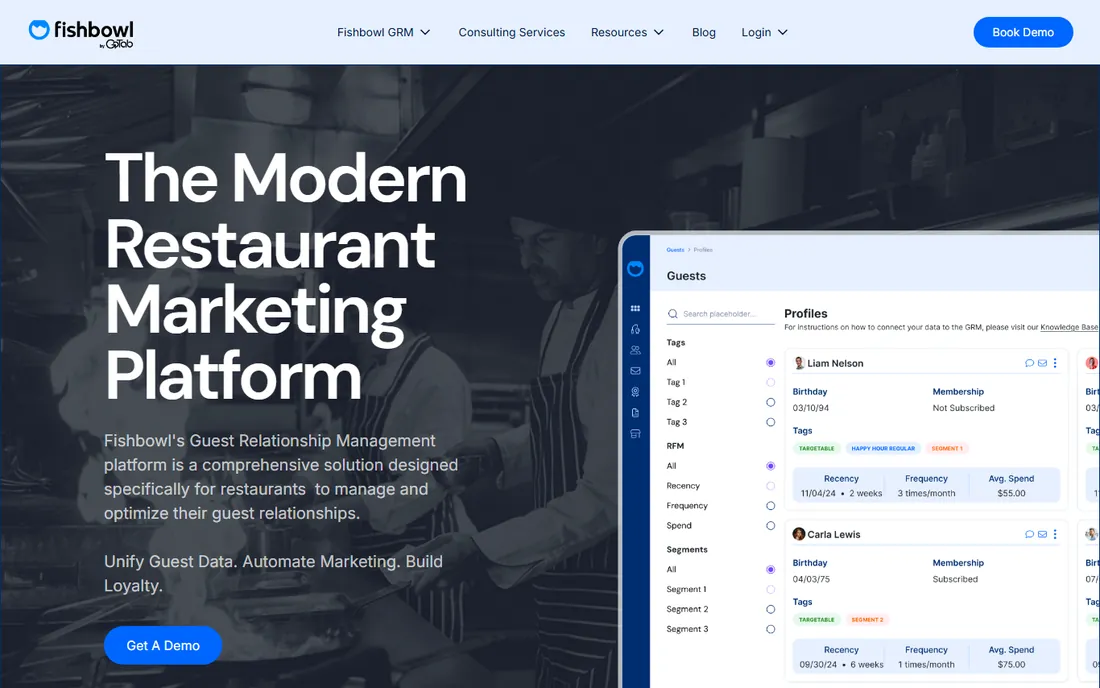
Fishbowl has been the default inventory add-on for QuickBooks shops for years, and the current subscription lineup keeps that positioning. Essentials starts at $229 per month billed annually for two users, with Growth at $429 and Scale at $729 as user counts and order volume rise. Fishbowl Advanced, starting at $595 per month for the warehouse edition, adds multi-warehouse support, EDI and 3PL workflows for bigger operations. Where Fishbowl wins is depth: materials planning, work orders, serial and lot tracking, and a mobile app for receiving and picking.
The catch is that Fishbowl shows its age. Reviewers consistently note the interface feels older than cloud-native rivals, and onboarding is a project rather than a signup, with implementation fees that surprise buyers who expected self-serve. It also leans hard on QuickBooks, which is a strength if that is your accounting system and a constraint if it is not. Buy Fishbowl when manufacturing or multi-warehouse depth matters more than modern polish.
What we like- Deep two-way sync with QuickBooks and Xero
- Strong manufacturing and warehouse features including cycle counting
- Barcode scanning and mobile picking
Watch out for- Dated interface compared with newer cloud tools
- Implementation and data migration can run $1,500 to $10,000 or more
#2
Cin7 Core
Best for: multichannel sellers needing order management depth
Visit cin7.com
Starting price$349/month (Standard plan)
Free planFree trial (14 days)
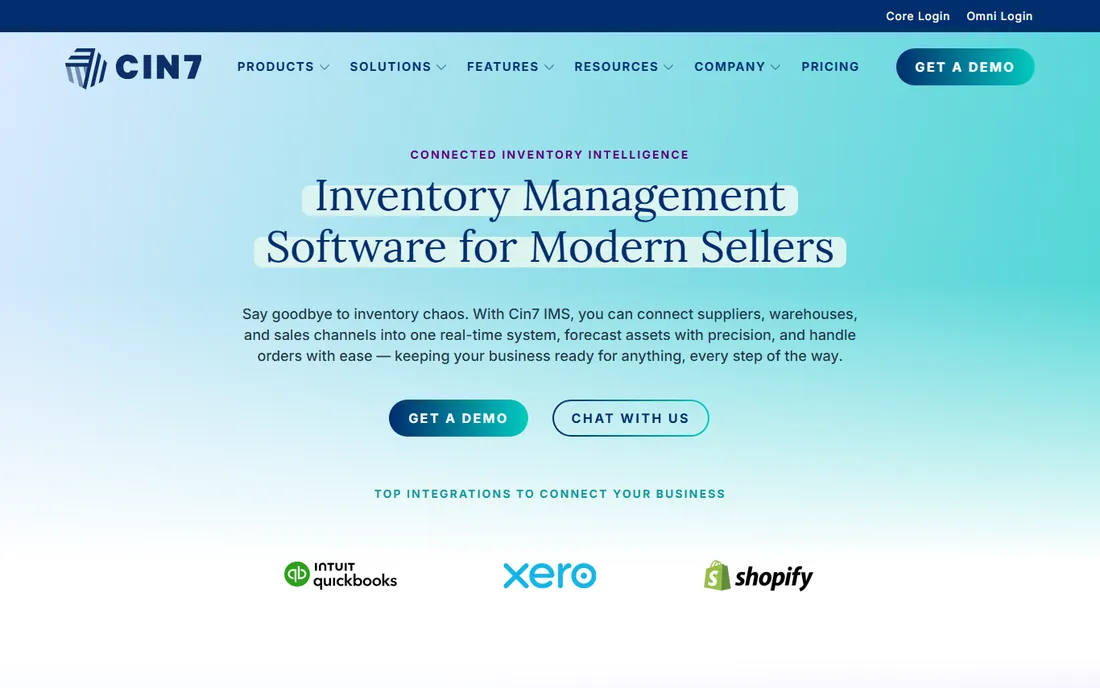
Cin7 Core, formerly DEAR Systems, is built for product businesses selling across several channels at once. The Standard plan at $349 per month covers five users and 6,000 sales orders a year, with Pro at $599 and Advanced at $1,199 for bigger volumes. It centralizes purchasing, sales orders, warehouse stock and production in one system, and the integration catalog is one of the widest in the category, covering Shopify, Amazon, Walmart, Xero, QuickBooks and hundreds more.
The pricing structure is the main thing to check before committing. The entry price buys real capability, but businesses that ship modest volumes pay for order-management depth they never use, and the per-order metering means a promotion spike can push you toward a higher tier. Cin7 also sells through demos and onboarding programs rather than self-serve signup, so expect a few weeks of rollout. It fits established multichannel sellers with an operations person who can own the system.
What we like- 700 plus integrations across channels, 3PLs and accounting
- Handles purchasing, BOMs, batch and expiry tracking
- Built-in EDI on the Omni tier
Watch out for- $349 monthly floor is steep for small shops
- Plan limits are measured in sales orders per year
Starting price$129/month (Entrepreneur, billed annually)
Free planFree trial
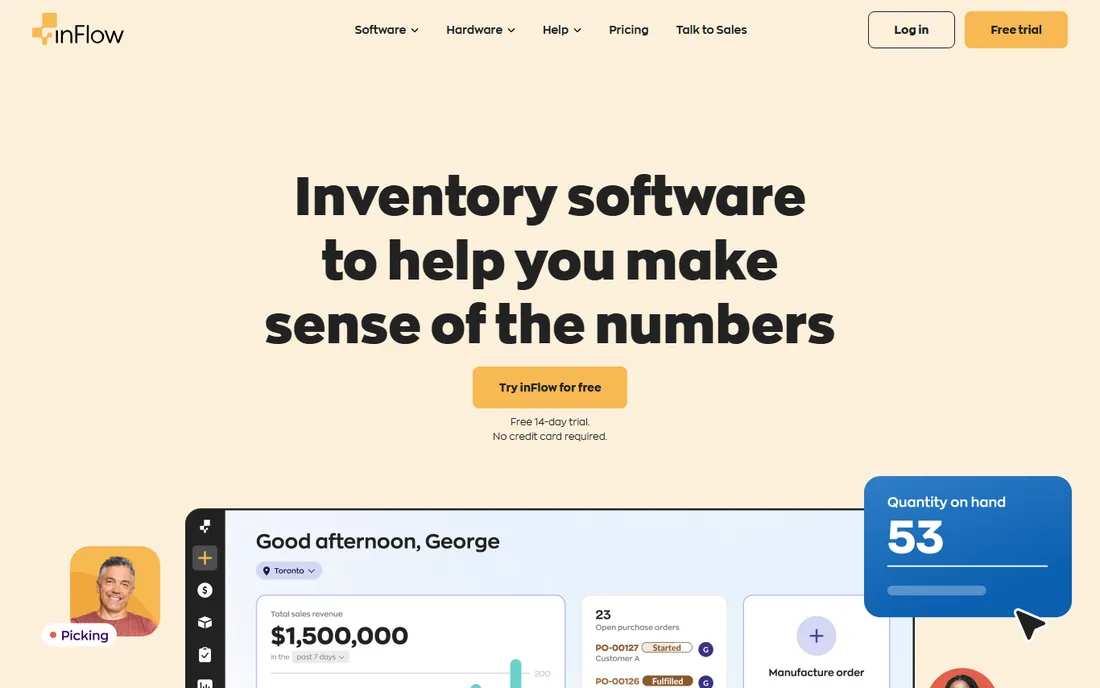
inFlow wins on approachability. The Entrepreneur plan at $129 per month billed annually covers two team members, one location and 100 sales orders a month, which is enough for a small operation getting its first real system in place. Small Business at $349 adds unlimited locations, 2,000 monthly orders and user access rights. The interface is clean, the mobile scanner app works well on the warehouse floor, and wholesale businesses like the built-in showroom for B2B ordering.
Watch the plan boundaries as you grow. Lower tiers cap integrations and order counts, and add-ons for bill of materials, API access and serial numbers each cost extra per month. A five-person team doing real volume lands on the $349 tier, which is no longer cheap relative to Zoho or Finale. inFlow is the right call when ease of use and fast setup matter more than squeezing every feature per dollar.
What we like- Genuinely easy to learn with guided setup
- Barcode scanning and Smart Scanner mobile app
- B2B showrooms for wholesale customers
Watch out for- Order and integration limits on lower plans
- Per-month cost rises quickly as team and volume grow
Starting priceFrom $299/month (Core plan)
Free planNo
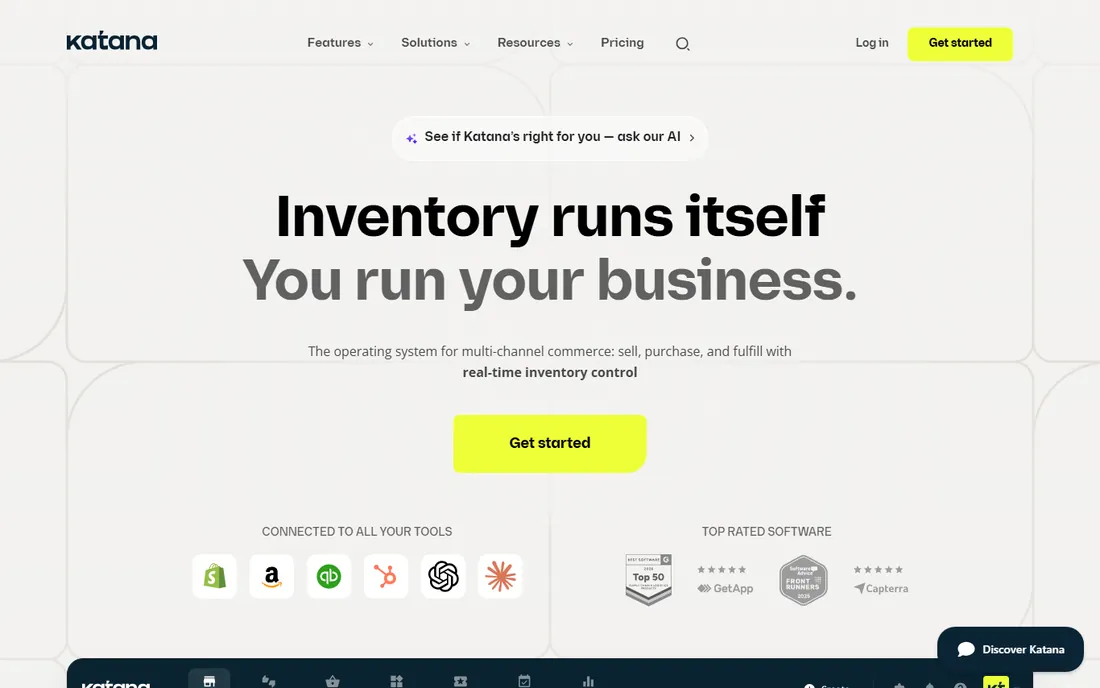
Katana is built for companies that make things. The Core plan starts at $299 per month and gives a live picture of raw materials, work in progress and finished stock, so production managers see shortages before they stop the line. Manufacturing management features, multi-level BOMs and batch traceability sit on top, and the ecommerce and accounting integrations keep sales and books in sync with what is actually on the shelf.
The pricing follows an add-on model, so the effective cost rises as you layer manufacturing features, extra locations and forecasting. Pure distributors and 3PLs will find Fishbowl or ShipHero more warehouse-oriented. But for a small manufacturer that has outgrown spreadsheets and wants production and inventory in one live view, Katana is one of the most focused options available.
What we like- Real-time view of materials, production and finished goods
- Multi-level bills of materials with batch tracking
- Unlimited users on plans
Watch out for- Advanced manufacturing features are add-ons
- Less depth for pure distribution or 3PL workflows
Starting priceFree (50 orders/month); Standard $29/month
Free planYes
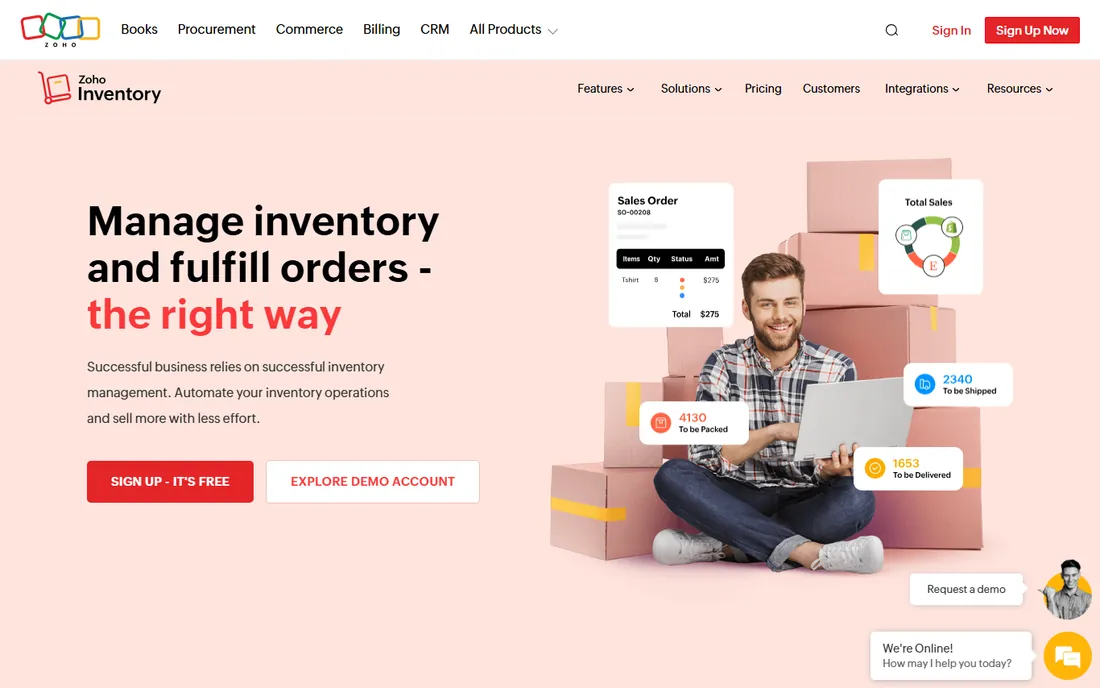
Zoho Inventory is the cheapest credible entry point in this category. The free plan covers 50 orders a month, and Standard at $29 per month raises that to 500 orders with three users and two warehouses. Pricing is per organization rather than per seat, so adding warehouse staff does not inflate the bill. For businesses already running Zoho Books or Zoho CRM, the native integration removes the connector tax that third-party tools charge for.
The order-cap pricing is the trade-off. Every growth milestone triggers an upgrade: 501 orders, a third warehouse, serial number tracking or multi-currency each push you up a tier. Zoho also lacks the warehouse-depth features of Fishbowl or SkuVault, such as directed putaway and wave picking. It is ideal for young ecommerce brands that need clean stock control and channel sync at minimal cost, and a natural stepping stone to something heavier later.
What we like- Genuinely free plan with no time limit
- Per-organization pricing instead of per-user
- Tight native sync with Zoho Books, CRM and other Zoho apps
Watch out for- Order caps on every plan force upgrades as volume grows
- Serial tracking and multi-currency sit on higher tiers
Starting priceFrom $99/user/month
Free planFree trial
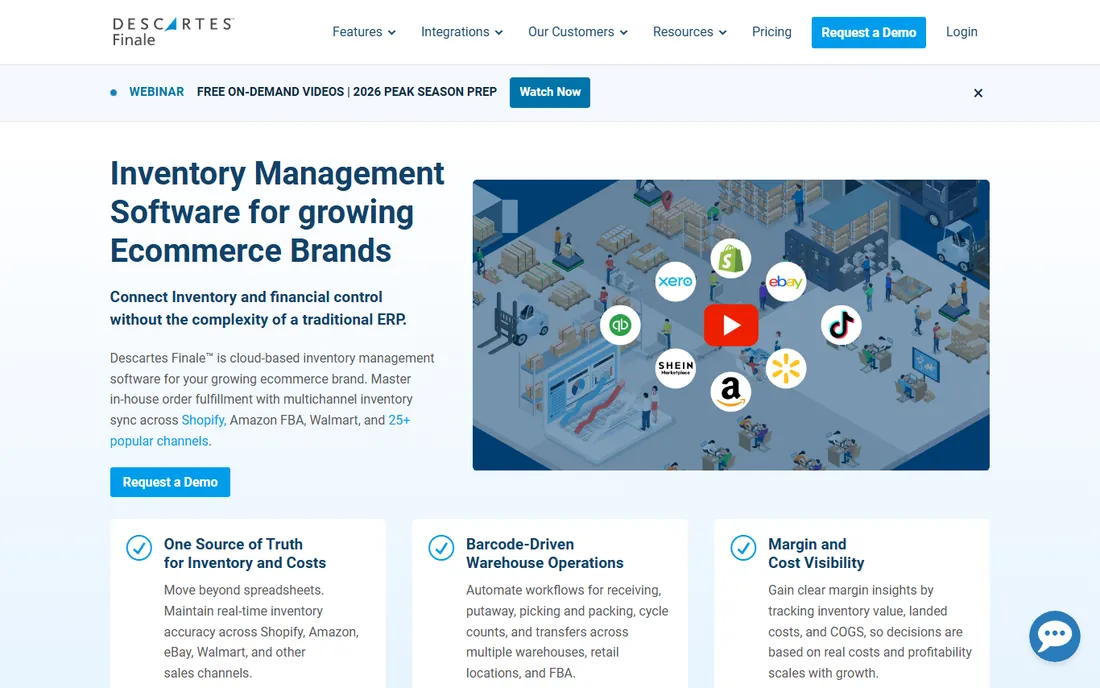
Finale Inventory, now part of Descartes, targets ecommerce sellers that need warehouse discipline without enterprise software. Barcode scanning, bin locations, lot and serial tracking, and purchase order management keep high-SKU catalogs accurate across Shopify, Amazon and other channels. Reviewers rate it highly for meeting small-business needs and for the quality of ongoing support.
Pricing is the part to pin down in a demo. Entry-level data points land around $99 per user per month, but the Essentials configuration with fuller features is reported closer to $499 per month, and costs rise as users are added. Compare it against inFlow and Cin7 at similar spend levels and check which feature set matches your pick and pack workflow. Finale suits sellers whose main pain is stock accuracy across many SKUs rather than manufacturing complexity.
What we like- Strong barcode scanning and bin-level tracking
- Good fit for high-SKU ecommerce catalogs
- Solid support reputation among small-business users
Watch out for- Pricing climbs with user count
- Essentials tier reportedly starts around $499 per month for fuller feature sets
Starting priceFrom $349/month
Free planNo
SkuVault, now part of Linnworks, is a warehouse-first system for ecommerce businesses doing real order volume. Plans start around $349 per month with a one-time setup fee near $350, and the pitch is unlimited SKUs, orders and warehouses rather than metered tiers. Interactive wave picking, quality control checkpoints, quantity buffers and location management are built for teams that measure pick accuracy and labor hours daily.
There is no trial, so evaluation runs through demos and reference calls, and the learning curve is real for staff new to structured warehouse workflows. Smaller sellers will find Zoho or inFlow simpler and cheaper. SkuVault earns its price when a warehouse team ships hundreds of orders a day across many channels and needs the operational controls that basic inventory tools lack.
What we like- Unlimited SKUs, orders and warehouses on plans
- Purpose-built warehouse workflows like wave picking and cycle counting
- Deep ecommerce channel integrations
Watch out for- No free trial, demos only
- Steeper learning curve for new warehouse staff
Starting priceFrom $1,850/month (Brand WMS)
Free planNo
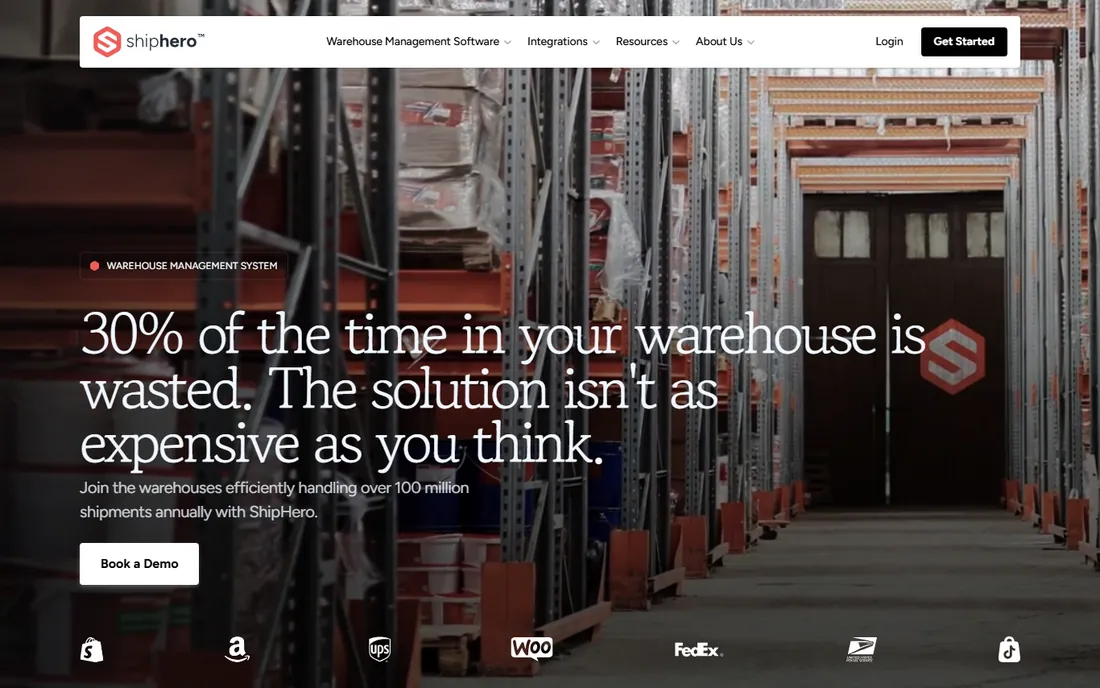
ShipHero is the upmarket anchor on this list. The Brand WMS tier is reported around $1,850 per month, with a 3PL edition near $1,995, positioning it well above general inventory software. What the money buys is a genuine warehouse management system: directed picking, pack verification, carrier rate shopping, returns handling and the operational reporting that high-volume fulfillment demands. It is widely used by larger Shopify brands and 3PLs that have outgrown inventory apps.
This is not a tool for a ten-person seller. The cost only makes sense when warehouse labor and shipping accuracy are material line items. If you are shipping a few dozen orders a day, the tools above deliver more value per dollar. Consider ShipHero when your own warehouse employs dedicated pick staff and mis-ships cost you real money.
What we like- Purpose-built WMS with strong pick, pack and ship optimization
- Serves a large share of high-volume Shopify brands
- 3PL edition available for logistics providers
Watch out for- Pricing is a major step up from inventory tools
- Quote-based for most configurations
How we put this ranking together
We started with each vendor's published pricing and plan pages, then cross-checked plan limits, user counts and add-on fees against independent pricing guides and reviewer data on G2, Capterra and TrustRadius. We favored products with transparent pricing and real warehouse workflows such as barcode scanning, bin management and cycle counting, and we weighted fit by operation type: physical warehouses, multichannel sellers and manufacturers each get appropriate picks. We did not run hands-on trials; the analysis rests on published plans, documented features and aggregated buyer feedback.
What to check before you buy
Map the software to your daily workflow before comparing prices. If your team picks and packs in a physical space, prioritize barcode scanning, bin locations, directed putaway and wave picking, and ask each vendor to walk through your receiving-to-shipping flow in a demo. If you sell across channels, check the integration list for every marketplace and 3PL you use, and confirm stock syncs in real time rather than on a schedule. Manufacturers should verify BOM depth, work order handling and lot or serial traceability.
Read the plan limits carefully. Per-user fees, sales-order caps and location limits are the three levers that raise the real cost, and several products here meter at least one of them. Ask about implementation: who does data migration, what it costs and how long onboarding takes, because a warehouse system that goes live wrong costs more than the subscription. Confirm scanner hardware compatibility, offline capability for the warehouse floor and how the system handles returns, since returns are where cheap tools usually break down.
The price tiers explained
Entry-level tools cluster under $150 a month: Zoho's free and $29 plans and inFlow's $129 tier cover small teams with straightforward needs. The mid-market runs $229 to $349 a month, where Fishbowl, Cin7 Core, Katana and SkuVault compete with deeper warehouse and manufacturing features. ShipHero sits in its own tier near $1,850 a month for brands running serious fulfillment operations. Watch for setup fees, per-user charges and paid add-ons for forecasting, EDI and API access, which can add 20 to 50 percent to the first-year cost.
Frequently asked questions
What is the difference between inventory management software and a WMS?
Inventory management software tracks stock levels, orders and purchasing across locations. A warehouse management system goes deeper into the physical operation: receiving, putaway rules, pick paths, packing verification and labor tracking. Small sellers usually need the former; dedicated warehouses with pick staff benefit from the latter, which is where ShipHero and SkuVault sit.
How much does warehouse inventory software cost?
Small teams pay $0 to $130 a month with Zoho's free plan or inFlow's entry tier. Mid-market warehouse tools run $229 to $349 a month. Full WMS platforms like ShipHero start near $1,850 a month. Add implementation, scanner hardware and paid modules, and first-year costs often run 20 to 50 percent above the subscription alone.
Do I need barcode scanners, or is the software enough?
The software works without scanners, but accuracy improves dramatically with them. Barcode scanning at receiving, putaway and picking catches the mis-picks that spreadsheets and manual entry miss. Budget $500 to $1,800 per device for warehouse-grade scanners, and confirm compatibility with your chosen software before buying hardware.
Can this software sync stock across Shopify, Amazon and other channels?
Yes, multichannel sync is a core feature of Cin7 Core, Zoho Inventory, inFlow, SkuVault and Finale Inventory. Check that each of your specific channels is supported natively rather than through a third-party connector, and ask whether sync is real-time or batched, since batched sync can still allow overselling during traffic spikes.
How long does implementation take?
Simple cloud tools like Zoho Inventory or inFlow can go live in days for a straightforward catalog. Mid-market systems like Fishbowl or Cin7 Core typically need two to six weeks including data migration and staff training. Full WMS deployments with scanner hardware and custom workflows can take two to three months, so plan the timeline around your slow season.
Sources we checked (12)
- https://softwarefinder.com/manufacturing-software/fishbowl
- https://resources.rework.com/tools/inventory-supply-chain/best-fishbowl-alternatives
- https://www.cin7.com/blog/best-inventory-management-software-solutions/
- https://inventoryquick.com/blog/cin7-alternative-small-business
- https://softwareconnect.com/reviews/inflow-inventory/
- https://www.spotsaas.com/product/inflow-inventory/pricing
- https://xorosoft.com/katana-vs-fishbowl/
- https://www.g2.com/products/zoho-inventory/pricing
- https://stockria.com/alternatives/zoho-inventory
- https://www.g2.com/compare/finale-inventory-vs-inflow-inventory
- https://www.itqlick.com/skuvault-software/pricing
- https://www.trustradius.com/compare-products/fishbowl-inventory-vs-shiphero
Is your product missing or out of date?
We review this list regularly. Vendors can request a listing, send updated pricing or ask about featured placement.

Shihab Mia · Founder, Rankite
Shihab has spent more than a decade helping SaaS and e-commerce brands grow through search. He writes Rankite's software buying guides from pricing pages, documentation and public user reviews. More about Shihab.