How we make this list: we compare pricing pages, product documentation and public user reviews. Rankite is independent; if a vendor ever pays for a featured spot, that listing is clearly labeled Partner.
Key takeaways
- Cin7 at $349 per month is the overall pick for multichannel product businesses, with 700+ integrations and built-in EDI.
- Zoho Inventory is the budget entry with a free plan and paid tiers from $29 per month, ideal for startups and small sellers.
- Katana at $179 per month is built for manufacturers, with bills of materials and shop-floor production planning.
- Fishbowl at $229 per month suits larger manufacturers and warehouses, especially those tied to QuickBooks.
- Unleashed at $399 per month and NetSuite by quote serve wholesalers and scaling companies with complex needs.
Quick comparison
| Tool | Best for | Starting price | Free plan |
|---|
 Cin7 Cin7 | Multichannel product businesses | $349/month (Core) | Free trial |
 Katana Katana | Small manufacturers | $179/month (Starter) | Free trial |
 Fishbowl Fishbowl | Large manufacturers and warehouses | $229/month (billed annually) | No |
 Zoho Inventory Zoho Inventory | Startups and small businesses | $29/month (free plan available) | Yes |
 inFlow inFlow | B2B and wholesale | $99/month (billed annually) | Free trial |
 Ordoro Ordoro | Multichannel ecommerce | $349/month (inventory app) | Free trial |
 Unleashed Unleashed | Wholesalers needing traceability | $399/month | No |
 NetSuite NetSuite | Mid-size to large companies | See website | No |
 Sortly Sortly | Simple visual inventory tracking | $49/month (free plan available) | Yes |
Is your product missing or out of date?
We review this list regularly. Vendors can request a listing, send updated pricing or ask about featured placement.
The best best cloud inventory management software
How many of the units your website says are in stock actually exist in the warehouse? That gap, between the numbers on screen and the reality on shelves, is what inventory management software closes. Overselling destroys customer trust, stockouts kill revenue, and manual counts eat staff hours every week.
The second question is how your products move. A multichannel ecommerce brand needs stock synced across Shopify, Amazon, and Walmart in real time. A manufacturer needs raw materials, bills of materials, and production scheduling. A wholesaler needs lot and serial traceability for regulated goods. The tools below cover those distinct jobs, because no single product does all three equally well.
Pricing runs from free to quote-only enterprise contracts. The right tier depends on sales channels, SKU count, and whether you make things or just sell them.
Starting price$349/month (Core)
Free planFree trial
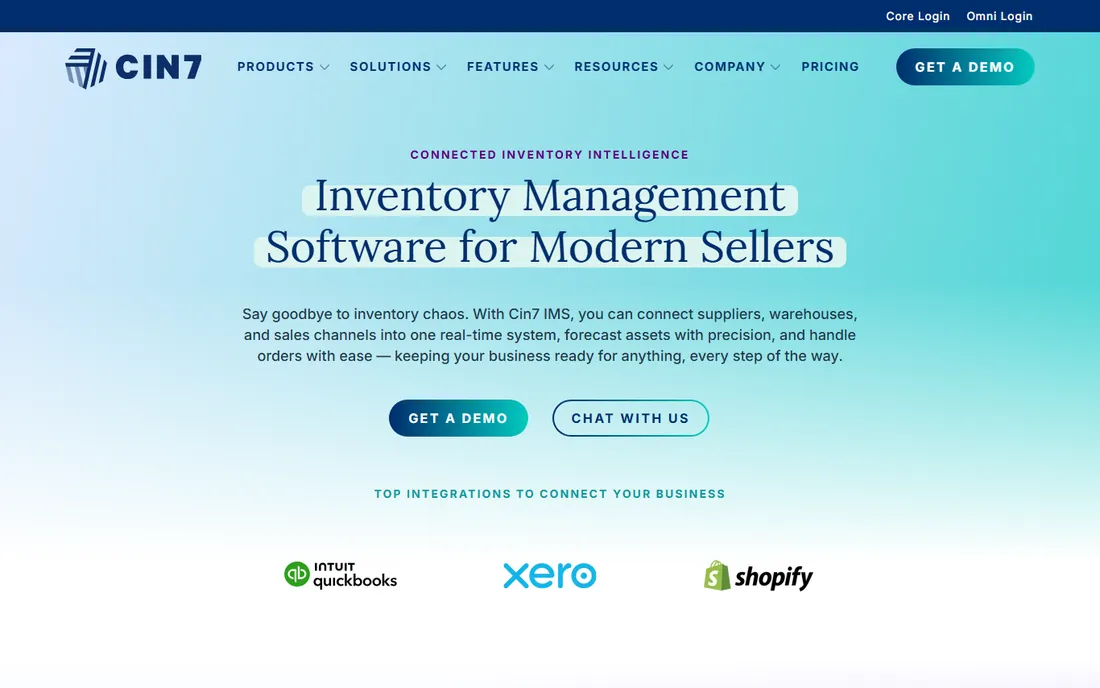
Cin7 is the overall pick for product businesses selling across multiple channels. The Core plan at $349 per month connects ecommerce platforms, marketplaces, POS systems, and 3PLs with inventory synced in real time, plus purchasing, warehousing, and B2B sales in one system. The Omni tier adds built-in EDI for selling to big-box retailers like Target and Costco.
The integration breadth is the differentiator: over 700 connections covering accounting, shipping, and sales channels. AI-driven demand forecasting helps answer the reorder question, and the platform scales from growing brands to substantial operations. A 14-day free trial covers the evaluation.
The honest trade-offs are price and complexity. At $349 per month entry, small sellers are priced out, and configuring multichannel workflows takes real effort. Forecasting costs extra as an add-on. Cin7 is the growth engine for businesses scaling across channels; it is more than a simple stock tracker needs.
What we like- 700+ integrations
- AI-driven demand forecasting
- Built-in EDI for big-box retail
Watch out for- $349 entry price excludes small sellers
- Configuration takes real effort
- Forecasting is an add-on
Starting price$179/month (Starter)
Free planFree trial
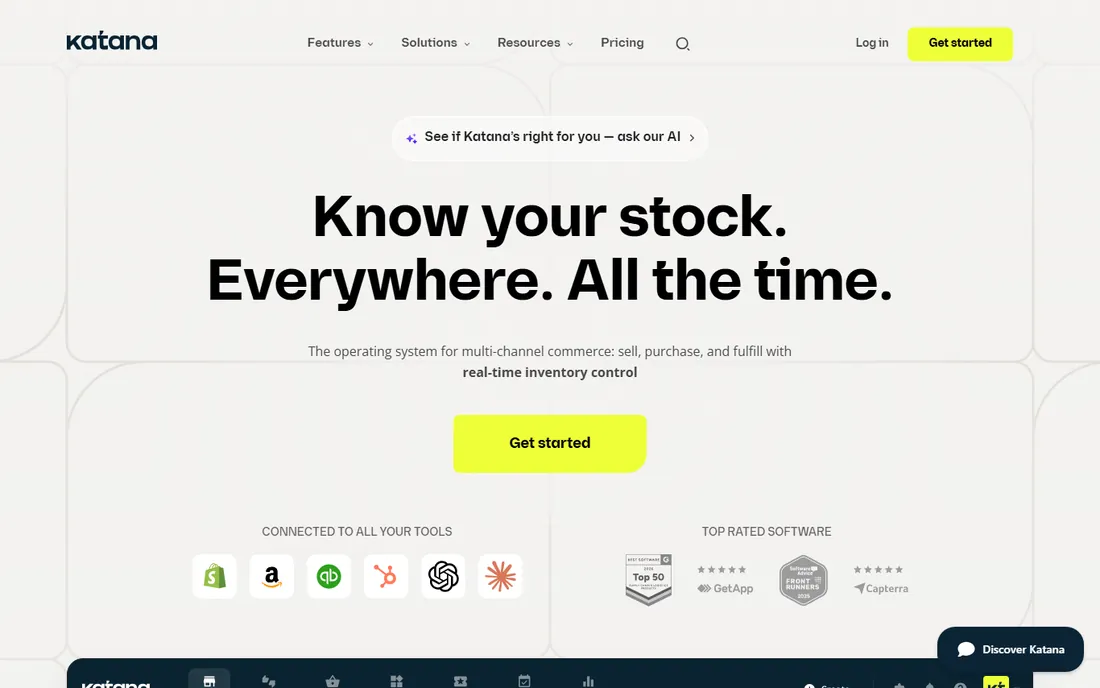
Katana is inventory software for businesses that make things. Bills of materials, raw material tracking, and production scheduling sit at the center, with a visual shop-floor interface that makers can run from tablets. Live inventory updates as materials become finished goods, which spreadsheet systems never manage.
The Starter plan at $179 per month covers the core manufacturing workflow, with Standard at $359 and Professional at $799 adding capacity. Integrations with Shopify and WooCommerce connect the production side to DTC sales. The interface is modern and approachable, a genuine contrast to traditional MRP systems.
The honest limitation is channel breadth. Katana prioritizes the production line over the sales channel, so multichannel sellers will find Cin7 deeper on that side. Demand forecasting is an add-on rather than native. For craftsman-at-scale operations, it is the right tool; for pure retailers, it is the wrong one.
What we like- Manufacturing-first with BOM tracking
- Visual shop-floor planning
- Modern interface
Watch out for- Sales channel depth lags Cin7
- Advanced planning costs more
- Best for makers, not pure retailers
Starting price$229/month (billed annually)
Free planNo
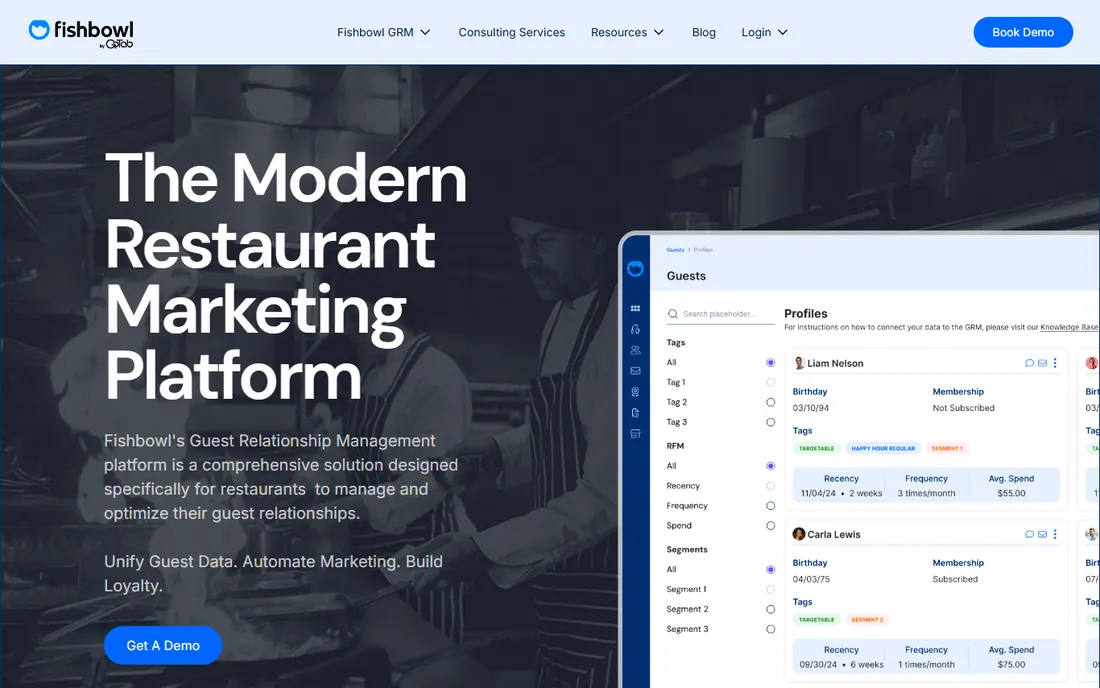
Fishbowl is the safe harbor for manufacturers and warehouses that need enterprise-grade control. Bills of materials, work orders, real-time assembly tracking, and advanced warehouse workflows with barcode-driven picking run deep. The QuickBooks integration, both Desktop and Online, is the tightest in the category.
Pricing starts at $229 per month billed annually, which positions it between the SMB tools and the enterprise ERPs. There is no free trial, only demos, which reflects the consultative sales approach. Support includes in-depth training, which the product's depth genuinely requires.
The honest weaknesses are age and agility. The interface feels traditional next to Katana, the cloud offering is still maturing compared to the desktop heritage, and implementation takes real time. For regulated industries needing strict lot and serial tracking, or warehouses where picking accuracy is everything, those trade-offs are acceptable.
What we like- Deep manufacturing and warehouse features
- Strong QuickBooks integration
- Real-time assembly tracking
Watch out for- Interface feels dated
- No free trial, demo only
- Implementation takes time
#4
Zoho Inventory
Best for: Startups and small businesses
Visit zoho.com
Starting price$29/month (free plan available)
Free planYes
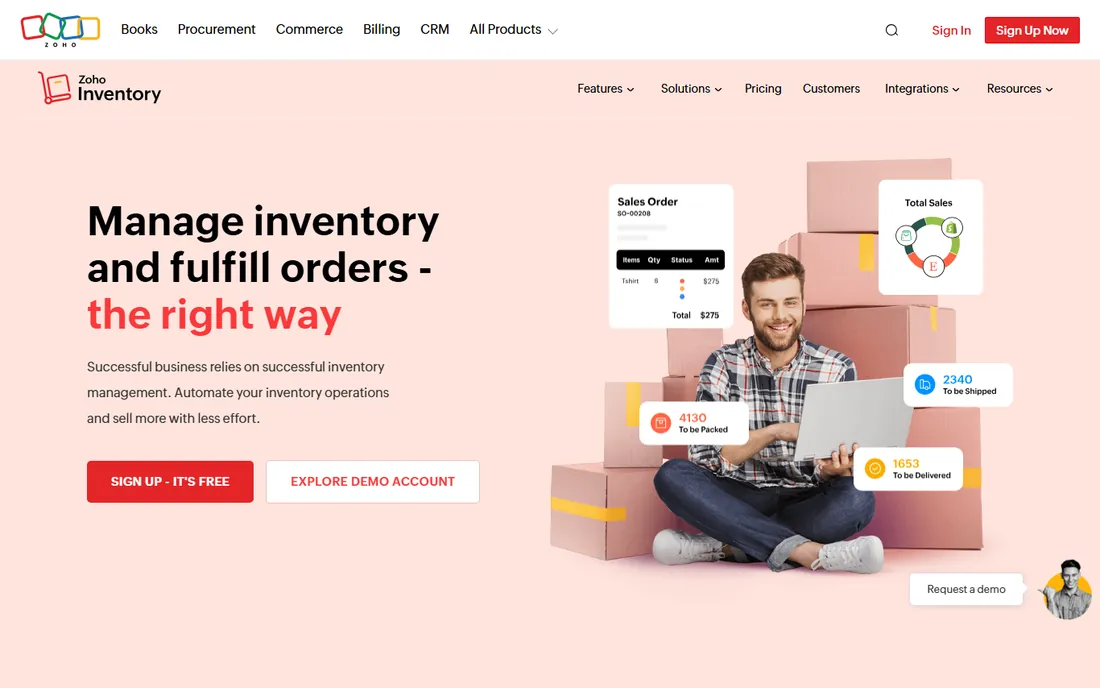
Zoho Inventory is the strongest general entry point for small businesses. A genuinely free plan covers the basics, and paid tiers start at $29 per month, scaling with orders, users, and warehouses. Batch and serial tracking, expiration monitoring, and marketplace sync come standard, which is generous at this price.
The natural audience is sellers already in the Zoho ecosystem, where the native sync with Zoho Books and Zoho CRM eliminates integration work. For everyone else, it remains a competent low-cost option with solid marketplace connections and shipping automation.
The honest ceiling is depth. Manufacturing support is limited to composite items rather than full MRP, and demand forecasting stops at basic reorder rules. Growing businesses eventually graduate to Cin7 or Katana. As the first real inventory system for a small seller, it is the sensible default.
What we like- Free plan for getting started
- Affordable paid tiers
- Strong within the Zoho ecosystem
Watch out for- Manufacturing features are light
- Demand forecasting is basic
- Advanced needs require higher tiers
Starting price$99/month (billed annually)
Free planFree trial
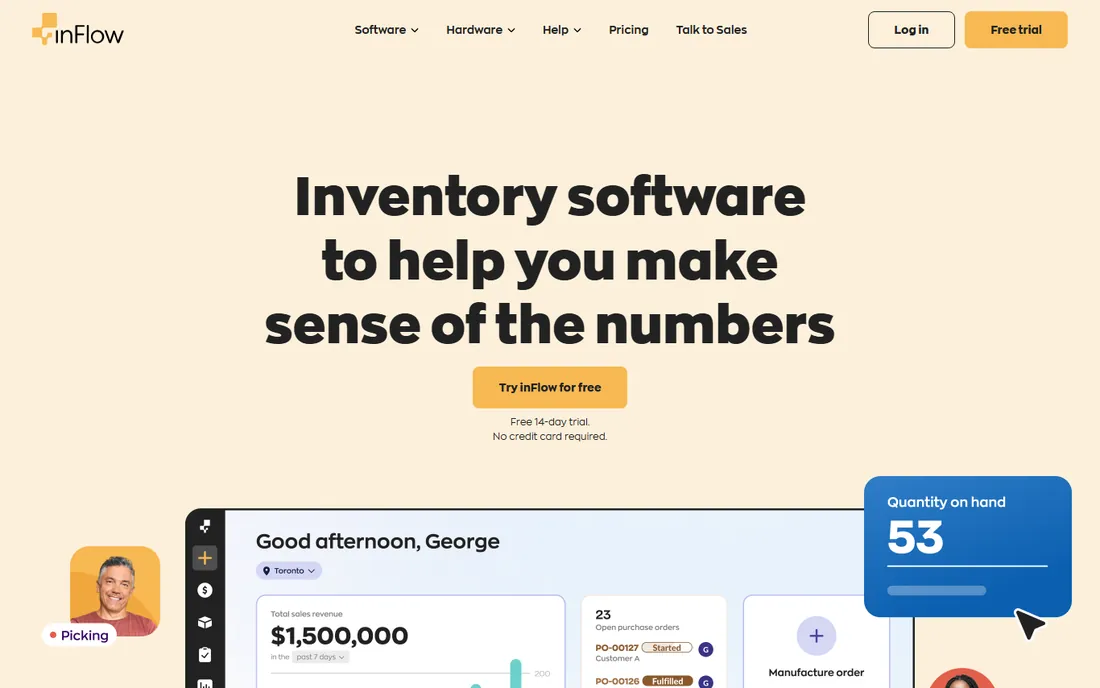
inFlow suits product businesses that need operational discipline: structured purchasing, order processing, stock control, and reporting without enterprise complexity. B2B showrooms let wholesale customers browse and order self-serve, and invoicing automation keeps the paperwork moving.
Pricing starts at $99 per month billed annually for two users, though the most popular small business plan runs $349 per month for five users with limited integrations. That positions inFlow above Zoho on price, which the ease of use and B2B features need to justify. A 14-day free trial covers the evaluation.
The honest comparison is value per dollar. At similar user counts, Zoho Inventory costs less and integrates more broadly, while inFlow wins on usability and wholesale-specific workflows. Businesses whose main problem is B2B order management will prefer inFlow; businesses optimizing for cost will prefer Zoho.
What we like- Strong B2B showrooms and invoicing
- Easy to use
- Good purchasing workflows
Watch out for- Pricier than Zoho at similar scale
- Limited integrations
- Popular plan costs $349 for 5 users
Starting price$349/month (inventory app)
Free planFree trial
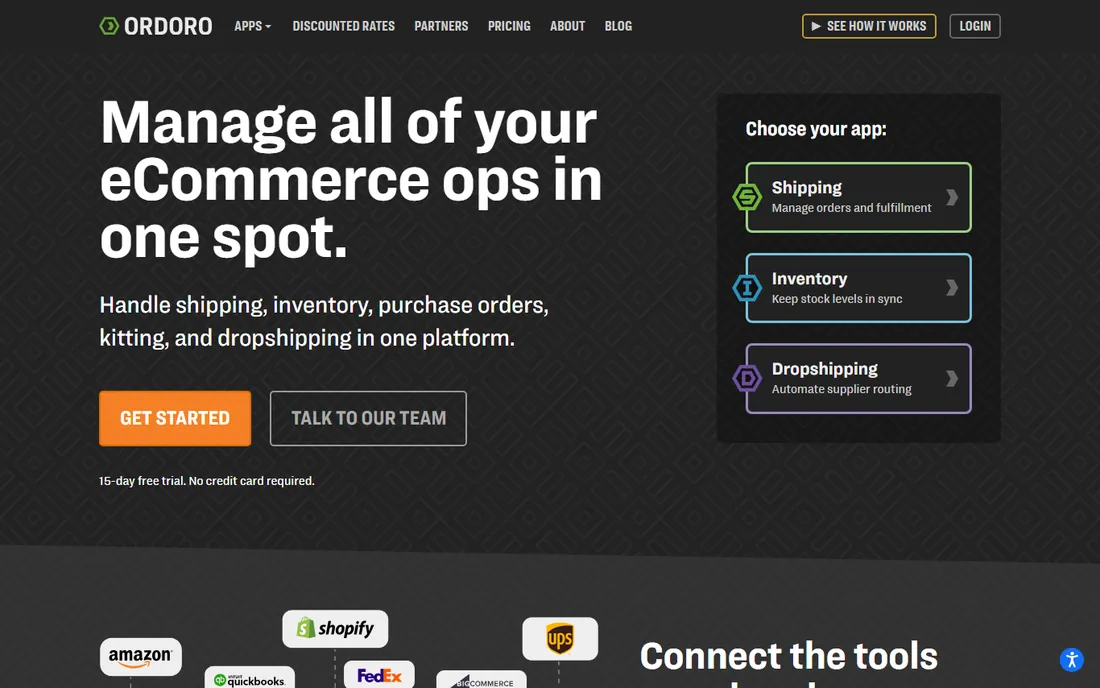
Ordoro is built for multichannel ecommerce sellers who ship a lot. Automated order forwarding routes orders to the right warehouse or dropshipper, shipping workflows print labels and manage carriers efficiently, and the inventory app at $349 per month adds forecasting and deeper stock control.
The shipping depth is the differentiator. Sellers processing hundreds of orders daily get automation that generic inventory tools do not provide, with carrier integrations and rules-based routing that cut fulfillment labor. A 15-day free trial lets sellers test with real order volume.
The honest fit is narrow. At $349 per month for the inventory tier, it costs as much as Cin7 while doing less on the manufacturing and B2B sides. Pure shippers get excellent value; businesses that manufacture or sell wholesale should compare Cin7 and Katana first.
What we like- Automated order forwarding
- Strong shipping workflows
- Forecasting included
Watch out for- $349 entry price
- Inventory app is the expensive tier
- Best for shippers, not makers
Starting price$399/month
Free planNo

Unleashed is the wholesaler's inventory system. Lot and serial number traceability runs through purchasing, warehousing, and sales, which matters for food, pharmaceutical, and regulated distribution. Assemblies and bills of materials cover light manufacturing, and the purchasing workflows handle the supplier side properly.
At $399 per month entry with no free trial, it positions above the SMB tools and expects buyers who know what traceability costs. The product does its specific job well: distributors that live and die by batch tracking get a system designed around that requirement rather than adapted to it.
The honest trade-offs are price and polish. Smaller wholesalers may find Zoho or inFlow sufficient at a fraction of the cost, and the interface lags the modern tools. For distributors where traceability is a regulatory requirement rather than a nice-to-have, Unleashed is purpose-built.
What we like- Lot and serial traceability
- Strong purchasing workflows
- Built for wholesale distribution
Watch out for- $399 entry price
- No free trial
- Interface less modern than competitors
Starting priceSee website
Free planNo
NetSuite is the inventory system for companies that have outgrown standalone tools. As a full cloud ERP, inventory management comes with financials, order management, demand planning, and warehouse management in one system, which eliminates the integration seams that plague multi-tool stacks.
The demand planning module and advanced automation suit complex operations: multi-subsidiary, multi-currency, multi-location businesses with serious compliance needs. Companies typically arrive at NetSuite when their standalone inventory tool can no longer keep up with the business.
Everything about buying NetSuite is enterprise: quote-only pricing, implementation measured in months, and ongoing administration needs. Businesses below the mid-market should not be here. For scaling companies hitting the ceiling of Cin7 or Fishbowl, it is the natural next step.
What we like- Full ERP with inventory native
- Demand planning module
- Scales to enterprise complexity
Watch out for- Quote-only pricing
- Long complex implementation
- Overkill below mid-market
Starting price$49/month (free plan available)
Free planYes
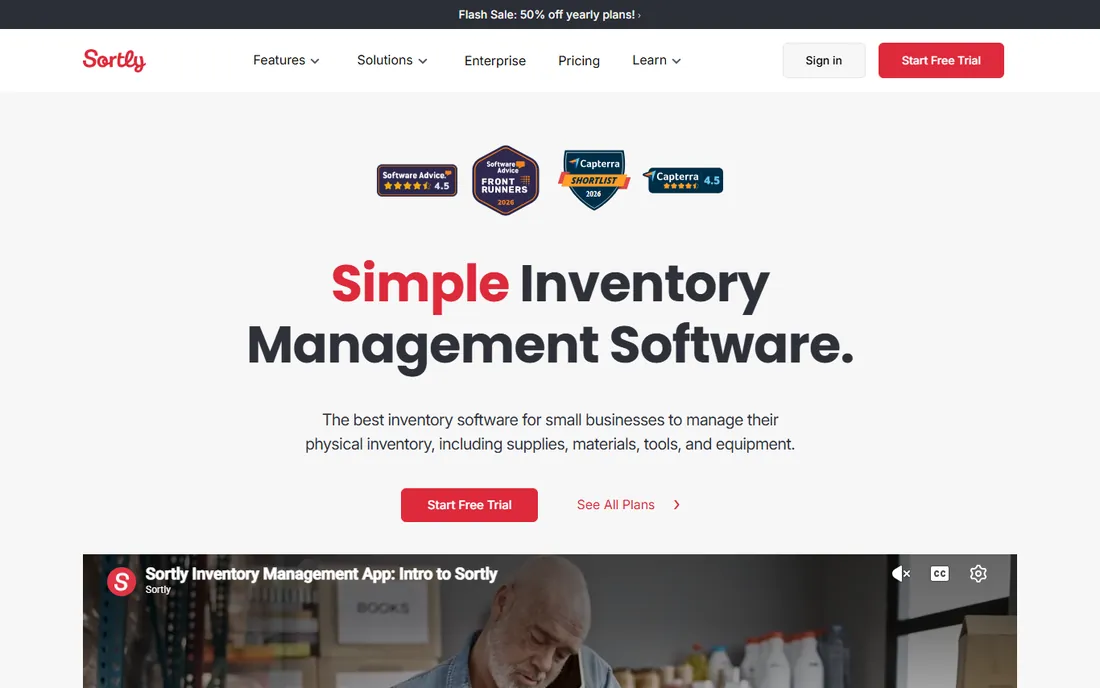
Sortly is inventory tracking for teams that value simplicity over depth. The visual, mobile-first interface lets staff photograph items, scan barcodes, and track quantities with almost no training. Reorder alerts flag low stock, and the free plan covers basic use.
The product fits small businesses, field teams, and asset tracking scenarios where ease of adoption matters more than advanced purchasing logic. Paid plans from $49 per month add users, items, and features in straightforward tiers, with a 14-day trial on paid plans.
The honest ceiling is low. Sortly does not do manufacturing, multichannel order management, or serious purchasing workflows. It is the right tool for tracking what you have; businesses that need to plan what to buy or make should look at the real inventory systems above.
What we like- Visual mobile-first tracking
- Easy adoption
- Reorder alerts
- Free plan available
Watch out for- Not a full inventory system
- No manufacturing
- Limited multichannel depth
Multichannel ecommerce sellers should weight Cin7 and Ordoro highest, because channel sync and shipping automation dominate their operations. Single-channel Shopify brands can start with Zoho Inventory or Katana and upgrade when channels multiply.
Manufacturers should weight Katana and Fishbowl highest, because bills of materials and production scheduling are non-negotiable. The choice between them is scale and style: Katana for modern small manufacturers, Fishbowl for larger operations with warehouse complexity.
Wholesalers and distributors should weight inFlow and Unleashed highest, because B2B ordering and lot traceability define their workflows. Regulated distribution needs Unleashed's traceability; general wholesale does fine on inFlow or Zoho.
Migration questions to ask before you switch
Ask how historical data migrates. Years of purchase orders, sales history, and stock adjustments inform forecasting and reporting, and losing that history resets the system's intelligence. Confirm what migrates, what does not, and who does the work.
Ask about the accounting integration specifically. Inventory valuation methods, cost of goods sold posting, and multi-location accounting all need to map correctly to your books. Run a test sync during the trial and reconcile the results before committing, because inventory-accounting mismatches are painful to unwind.
Ask about barcode and warehouse hardware compatibility. Scanners, label printers, and mobile devices need to work with the new system on day one. Verify your exact hardware against the vendor's compatibility list, and test the warehouse workflows physically during the trial.
How we ranked these nine
We started with the platforms that dominate cloud inventory shortlists: the multichannel leaders, the manufacturing specialists, the wholesale tools, and the budget entries. We reviewed current pricing pages, product documentation, and public review summaries on G2, Capterra, and ecommerce technology publications, with pricing verified against vendor-published figures as of October 2026.
Vendors that sell by quote are marked as See website rather than estimated. We did not run trial implementations; this guide reflects documentation, published pricing, and aggregated user feedback. Confirm tier features and integration coverage for your exact sales channels before purchasing.
Frequently asked questions
What is cloud inventory management software?
Cloud inventory management software tracks stock levels, orders, and product movements across locations and sales channels from a web-based system. Unlike spreadsheets or desktop tools, it syncs in real time, integrates with ecommerce and accounting platforms, and gives every team member the same accurate numbers.
How much does inventory management software cost?
Free plans cover basic tracking, SMB tools run $29 to $179 per month, mid-market platforms $229 to $399 per month, and enterprise ERPs are quote-only. Price usually scales with users, orders, or sales channels rather than a flat rate.
Do I need different software if I manufacture products?
Yes, usually. Manufacturers need bills of materials, raw material tracking, and production scheduling, which pure retail inventory tools lack. Katana and Fishbowl are built for manufacturing; Cin7 covers light manufacturing alongside multichannel selling. Retail-focused tools will frustrate a production operation.
Can inventory software sync across Shopify, Amazon, and Walmart?
The multichannel tools can: Cin7, Ordoro, and Zoho Inventory all sync stock across major sales channels in real time. Verify your exact channels and whether the sync is real-time or batched, since overselling during high-traffic periods depends on sync speed.
What is the difference between Cin7 Core and Cin7 Omni?
Cin7 Core is the inventory and order management platform for product businesses, while Cin7 Omni adds point of sale, advanced warehousing, and built-in EDI for retail distribution. Growing multichannel brands usually start on Core; businesses selling to big-box retailers or running physical stores need Omni.
How hard is it to switch inventory software?
The software switch is straightforward; the data migration is the work. Product catalogs, supplier records, purchase history, and stock counts rarely map cleanly between systems. Plan for a physical stock count during cutover, run both systems in parallel briefly, and schedule the switch during a slow period.
Sources we checked (10)
- https://www.cin7.com/pricing/
- https://www.katanamrp.com/pricing/
- https://www.fishbowl.com/pricing/
- https://www.zoho.com/inventory/pricing/
- https://www.inflowinventory.com/pricing/
- https://www.ordoro.com/pricing/
- https://www.unleashedsoftware.com/pricing/
- https://www.netsuite.com/pricing/
- https://www.sortly.com/pricing/
- https://www.cin7.com/blog/best-inventory-management-software-solutions/
Is your product missing or out of date?
We review this list regularly. Vendors can request a listing, send updated pricing or ask about featured placement.

Shihab Mia · Founder, Rankite
Shihab has spent more than a decade helping SaaS and e-commerce brands grow through search. He writes Rankite's software buying guides from pricing pages, documentation and public user reviews. More about Shihab.