How we make this list: we compare pricing pages, product documentation and public user reviews. Rankite is independent; if a vendor ever pays for a featured spot, that listing is clearly labeled Partner.
Key takeaways
- Zoho Inventory (free; paid from $29/month) is the best inventory software for small business on a budget, with a genuinely free plan and per-organization pricing.
- Cin7 Core ($349/month) is the strongest pick for multichannel sellers that need purchasing, manufacturing, and warehouse depth in one system.
- inFlow ($99/month billed annually) suits B2B and wholesale businesses with showrooms and invoicing built in.
- Sortly (free; paid from $49/month) is the simplest visual tracker for businesses that just need to know what is where.
Quick comparison
| Tool | Best for | Starting price | Free plan |
|---|
 Zoho Inventory Zoho Inventory | Small businesses watching every dollar | $0 (free, 50 orders/month); paid from $29 per month | Yes |
 Cin7 Cin7 | Multichannel sellers with real complexity | $349 per month (Core) | Free trial (14 days) |
 inFlow inFlow | B2B and wholesale operations | $99 per month (billed annually) | Free trial (14 days) |
 Katana Katana | Small manufacturers | $299 per month (Core) | Free trial |
 Fishbowl Fishbowl | Warehouse-heavy small manufacturers | $229 per month (Essentials, 2 users, billed annually) | Free trial |
 Ordoro Ordoro | Multichannel e-commerce sellers | $349 per month (inventory app) | Free trial (15 days) |
 Sortly Sortly | Simple visual inventory tracking | $0 (free); paid from $49 per month | Yes |
 Veeqo Veeqo | Amazon and marketplace sellers | Free shipping plan; inventory plans paid | Yes (free shipping plan) |
 Oracle NetSuite Oracle NetSuite | Small businesses growing into ERP | See website (custom quote) | No |
Is your product missing or out of date?
We review this list regularly. Vendors can request a listing, send updated pricing or ask about featured placement.
The best inventory management software small business
An online candle retailer in Oregon hit its third holiday season with a spreadsheet, two storage rooms, and a growing suspicion that the numbers were fiction. December brought oversells, emergency reorders, and a week of packing mistakes that cost more than the software would have. In January they moved to a proper inventory system, and the next December ran on reorder points and real stock counts. The business did not change. The guesswork left.
Inventory management software answers a simple question: what do we have, where is it, and what do we need to order. For small businesses the answer also has to be affordable and quick to learn, which rules out the enterprise systems and leaves a strong mid-market field. The nine tools below are what is the best software for inventory management at small-business scale in 2026.
Pricing reflects published plans as of October 2026.
#1
Zoho Inventory
Best for: Small businesses watching every dollar
Visit zoho.com
Starting price$0 (free, 50 orders/month); paid from $29 per month
Free planYes
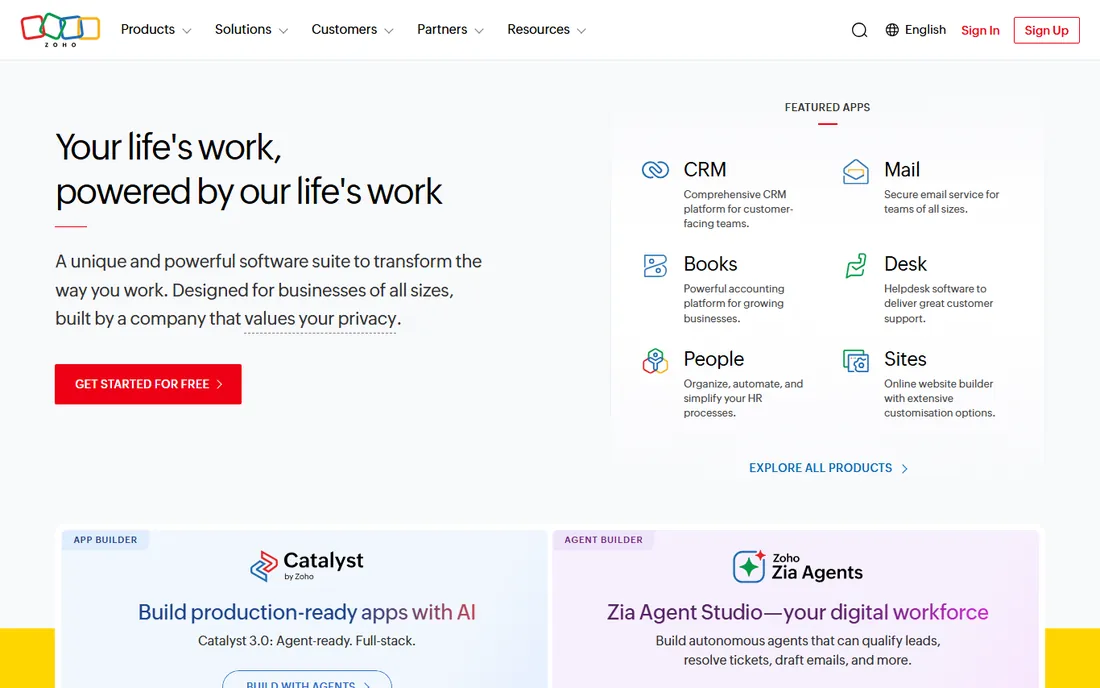
Zoho Inventory is the value benchmark for small business inventory. The free plan covers 50 orders a month with item tracking, barcoding, and vendor management, and the $29 Standard plan handles 500 orders. Per-organization pricing means adding team members costs nothing extra, which is rare. Zoho Books and CRM integrations make it a natural fit for businesses already in the Zoho world.
The order caps are the catch: every growth milestone triggers an upgrade, and serial tracking, multi-currency, and automation sit on higher tiers. For startups and small sellers it is the best place to begin. When monthly orders push past 1,500 consistently, the mid-market tools below start making sense.
What we like- Genuinely free plan with real features
- Per-organization pricing, not per-user
- Deep integration with Zoho Books and CRM
Watch out for- Order caps force upgrades as volume grows
- Advanced features gated behind higher tiers
- Some e-commerce integrations skew non-US
#2
Cin7
Best for: Multichannel sellers with real complexity
Visit cin7.com
Starting price$349 per month (Core)
Free planFree trial (14 days)
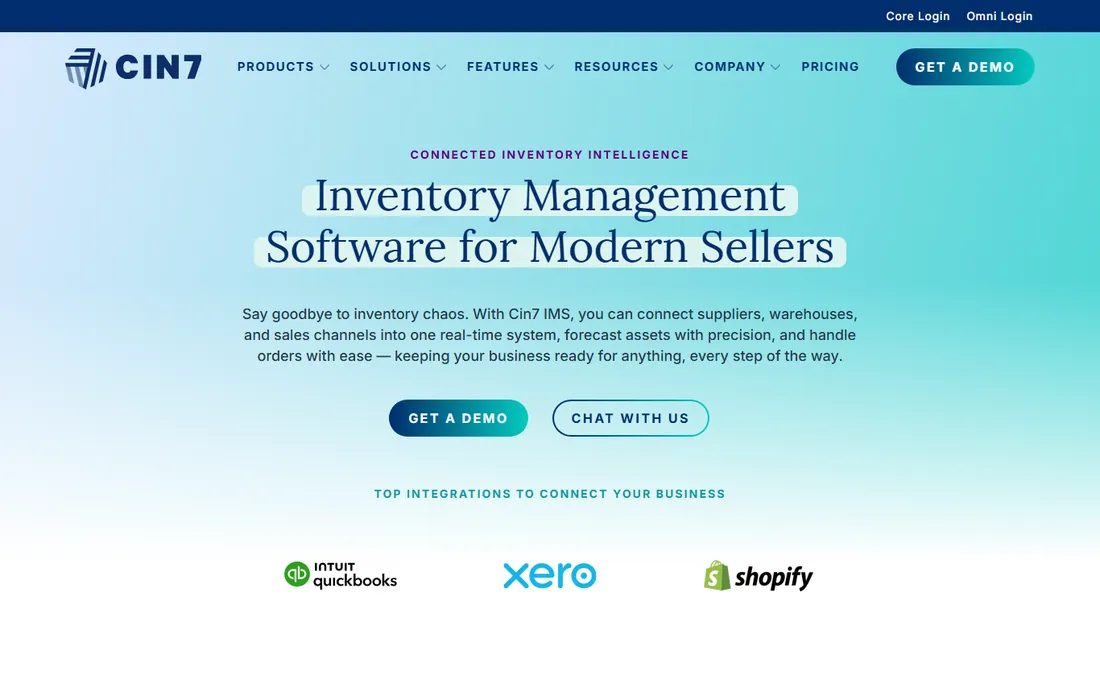
Cin7 Core is the step up when the business outgrows simple stock tracking: multi-location inventory, purchasing workflows, light manufacturing, and warehouse operations in one system with over 700 integrations. Multichannel sellers get one inventory truth across Shopify, Amazon, wholesale, and retail, with built-in EDI for retail compliance. The AI demand forecasting helps turn history into purchase plans.
The price is the filter. At $349 a month with no free tier, it is for businesses whose inventory complexity already costs them more than that in errors and stockouts. Small teams should not start here. But for the multichannel product business doing real volume, Cin7 is the most complete single system in this price range.
What we like- 700-plus integrations and built-in EDI
- Purchasing, manufacturing, and warehousing in one system
- AI-driven demand forecasting
Watch out for- $349 a month is steep for small teams
- The depth creates a real learning curve
- No free tier
Starting price$99 per month (billed annually)
Free planFree trial (14 days)
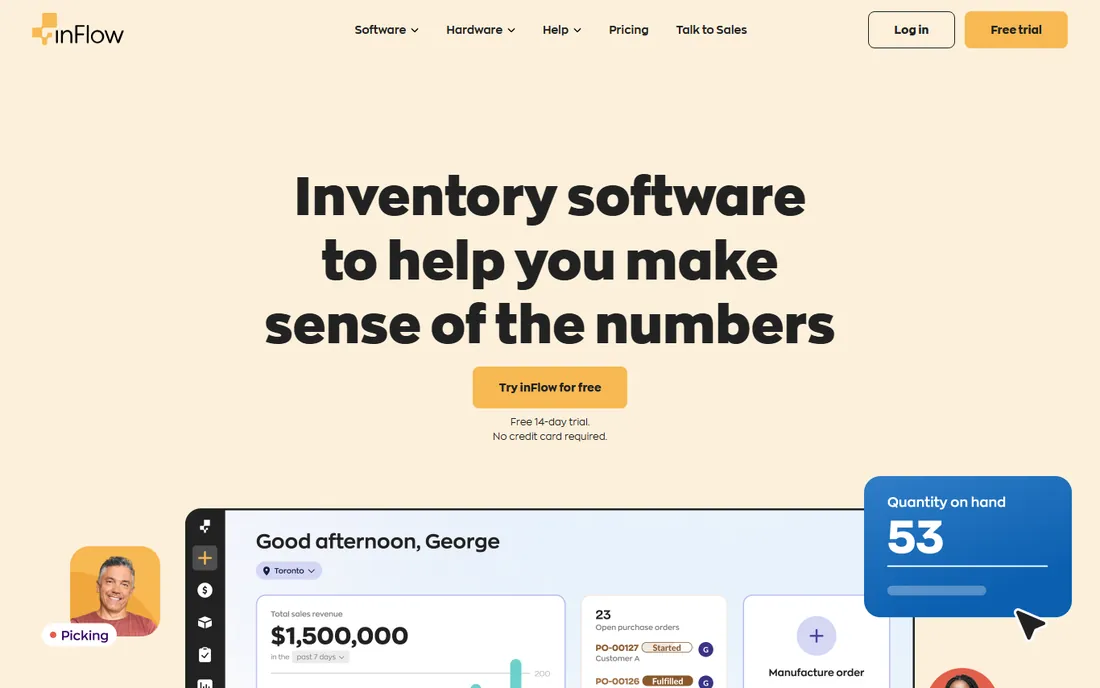
inFlow built its name on wholesale and B2B workflows: customer showrooms, invoicing automation, and order management alongside inventory tracking, at $99 a month billed annually. The mobile apps make barcode scanning practical for small warehouse teams, and the interface is approachable for staff who have never used inventory software. Distributors and wholesalers get purpose-built workflows the generic tools lack.
The e-commerce integrations are thinner than Cin7's or Ordoro's, and manufacturing support is light. inFlow is the pick when the business sells to other businesses: showrooms, terms invoicing, and distributor workflows. Consumer e-commerce sellers should weigh Ordoro or Cin7 instead.
What we like- B2B showrooms and invoicing built in
- Easy barcode scanning with mobile apps
- Approachable for non-technical teams
Watch out for- E-commerce depth trails Cin7 and Ordoro
- The $99 entry assumes annual billing
- Manufacturing features are light
Starting price$299 per month (Core)
Free planFree trial
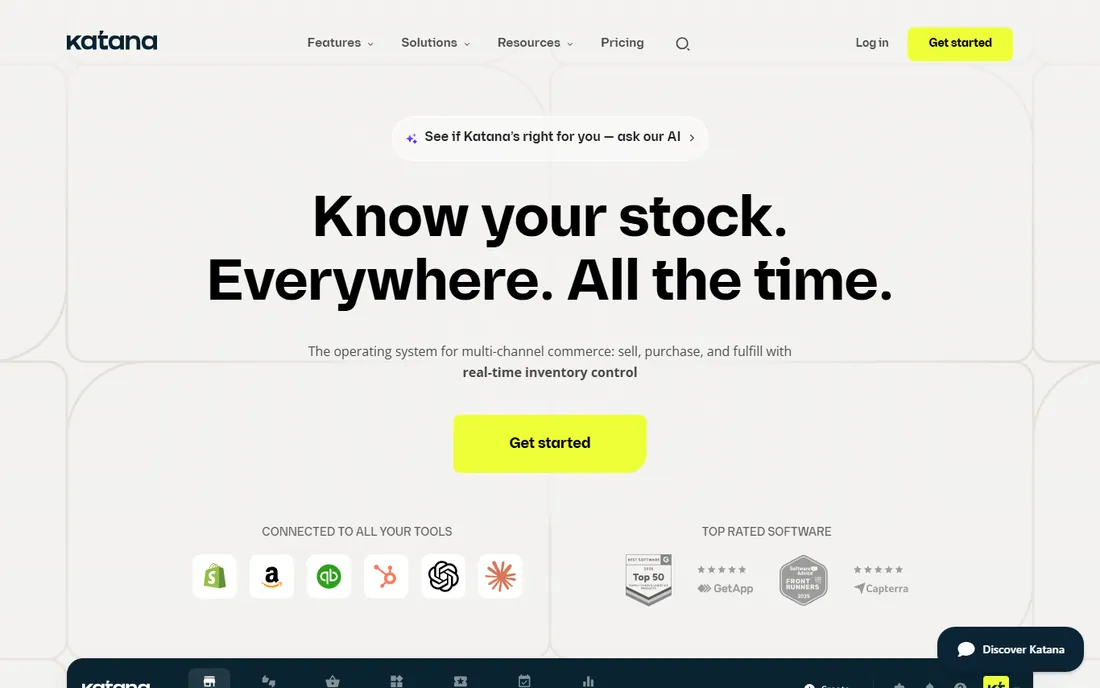
Katana answers what is the best software for inventory management when the business makes what it sells. Production scheduling, bills of materials, batch traceability, and stock levels share one visual system, with unlimited users on the $299 Core plan. The Shopify and QuickBooks integrations cover the commercial side, and makers get real-time visibility from raw material to finished goods.
The full manufacturing picture requires the $199-a-month Manufacturing Management add-on for multi-step routings. Pure resellers and dropshippers pay for production features they will never use. But for the small manufacturer, Katana replaces the spreadsheet-and-whiteboard production system with something that actually works.
What we like- Production and inventory in one visual system
- Unlimited users on Core
- Batch traceability and BOMs included
Watch out for- Manufacturing depth needs a $199/month add-on
- Overkill for pure resellers
- Limited fulfillment customization
Starting price$229 per month (Essentials, 2 users, billed annually)
Free planFree trial
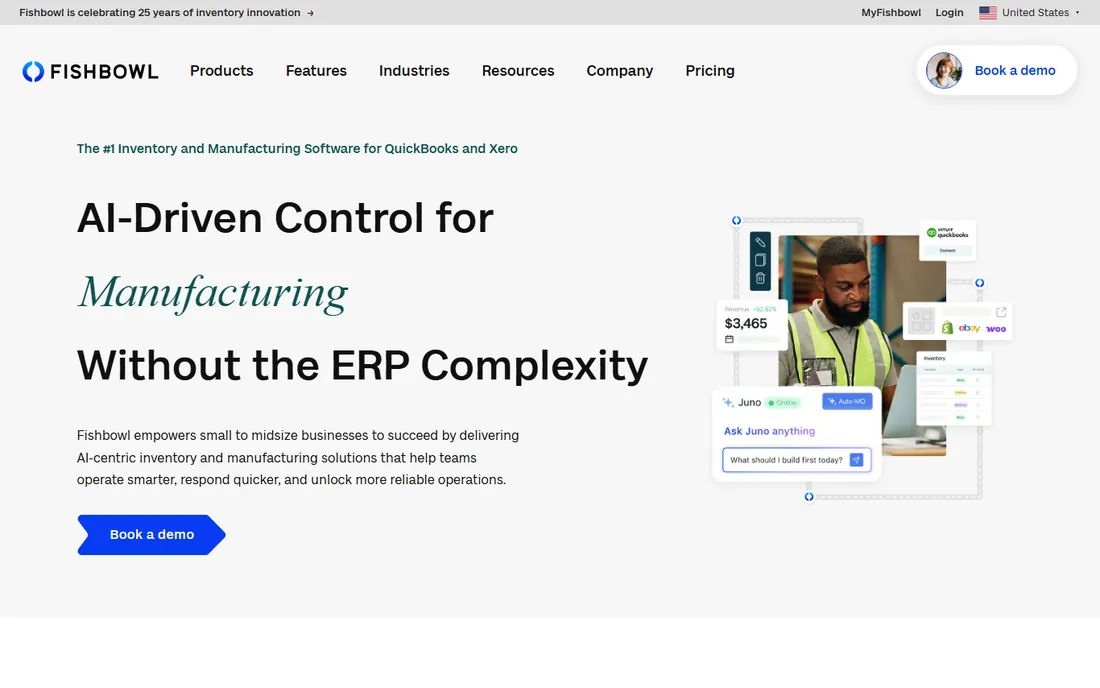
Fishbowl is the warehouse-centric option for SMBs: real receiving, putaway, picking, and shipping workflows at $229 a month, with the best QuickBooks integration available. Businesses with actual warehouses, forklifts, and pick tickets get WMS-grade capability at SMB pricing. The on-premise option suits companies with strict IT requirements.
Implementation runs longer than the sales process suggests, and the reports are basic with awkward exports. Manufacturing lives in the Advanced Manufacturing tier from $675 a month, so makers should price that tier. Fishbowl is the right pick when the warehouse operation itself is the complexity; simpler stockrooms should prefer Zoho or Sortly.
What we like- Best QuickBooks integration in the category
- Barcoding and pick tickets included
- On-premise or cloud deployment
Watch out for- Implementation takes longer than expected
- Reports are basic
- Manufacturing needs the $675/month tier
Starting price$349 per month (inventory app)
Free planFree trial (15 days)
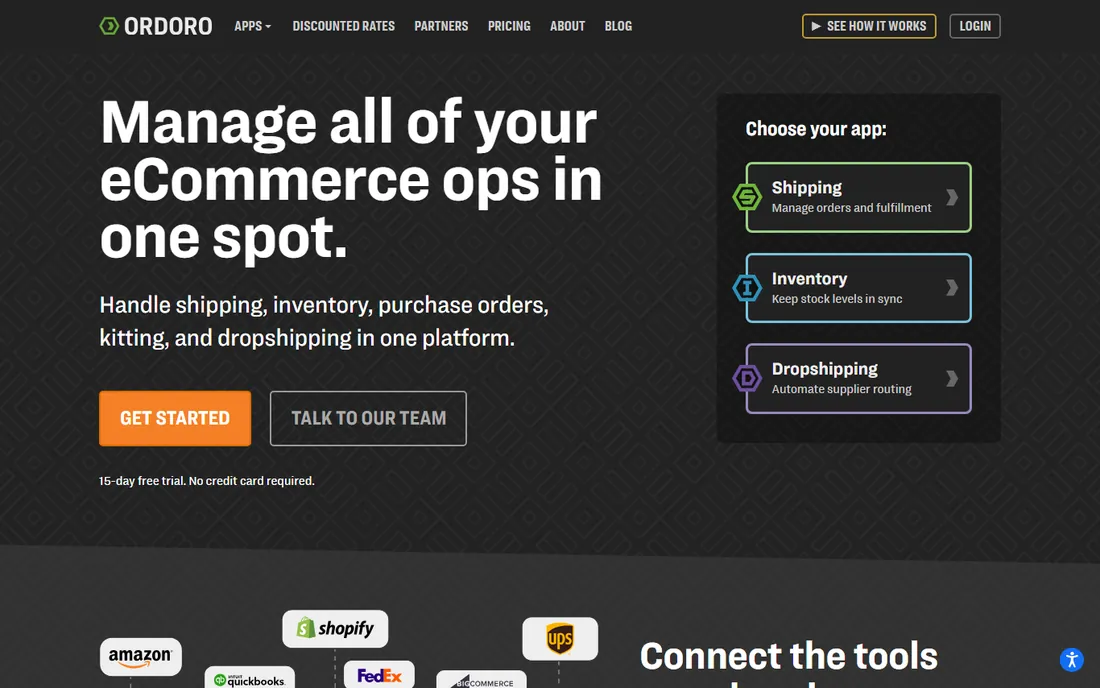
Ordoro serves the multichannel e-commerce seller: orders from every channel flow into one system, inventory syncs back out, and dropship orders forward to suppliers automatically. The forecasting tools are built for e-commerce rhythms rather than generic demand planning. Sellers on Shopify, Amazon, and eBay simultaneously get the unified operations they need.
At $349 a month for the inventory app, it is priced for established sellers, not beginners. Manufacturing and wholesale depth trail Cin7 and inFlow. Ordoro is the pick for the e-commerce seller whose problem is channel chaos; Zoho or Sortly suit the seller whose problem is simply knowing the stock count.
What we like- Automated order forwarding across channels
- Dropshipping management
- Forecasting built for e-commerce
Watch out for- $349 a month prices out small sellers
- The inventory app is one part of a larger platform
- Lighter on manufacturing
Starting price$0 (free); paid from $49 per month
Free planYes
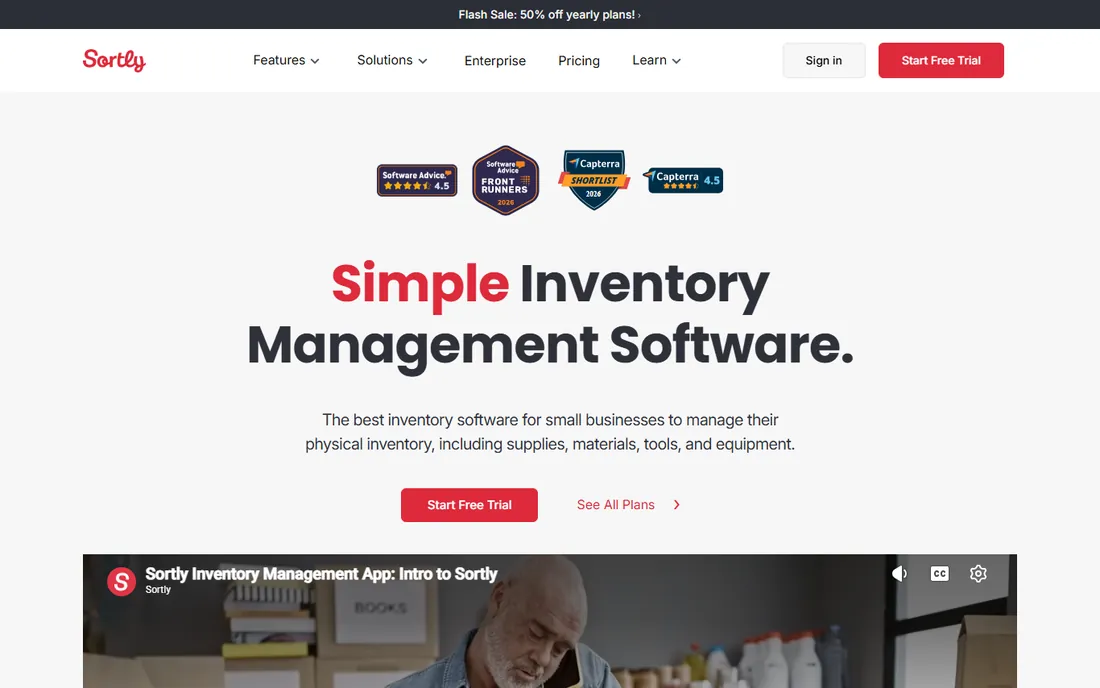
Sortly is inventory tracking for people who hate inventory software: visual, folder-based, photo-friendly, and learnable in an afternoon. The free plan covers the smallest operations, and $49 a month adds the features growing teams need. Reorder alerts and barcode scanning handle the basics, and the mobile app is genuinely good.
It is deliberately not a full system: order management, purchasing depth, and accounting integrations are thin. Businesses that need those should look at Zoho or inFlow. But for the contractor, retailer, or small operation that just needs to know what is where, Sortly is the fastest path from chaos to control.
What we like- Visual, folder-based tracking anyone can learn
- Free plan for the smallest teams
- Reorder alerts built in
Watch out for- Not a full order management system
- Limited accounting integrations
- Scaling businesses outgrow it
Starting priceFree shipping plan; inventory plans paid
Free planYes (free shipping plan)
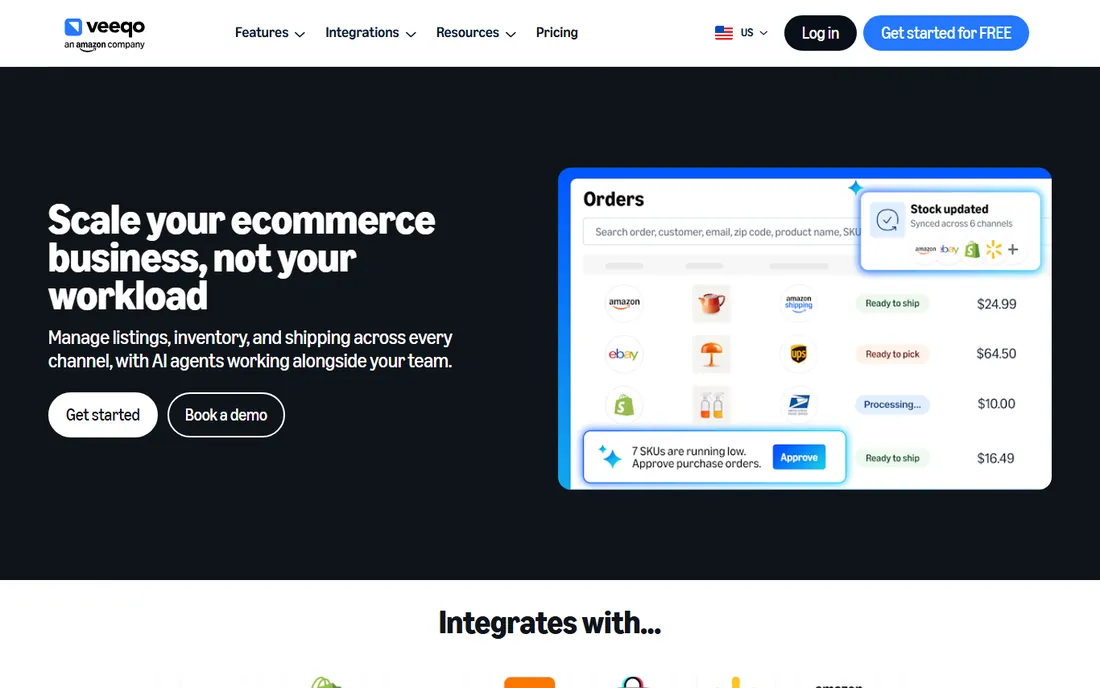
Veeqo, owned by Amazon, gives marketplace sellers free shipping tools: labels, carrier rates, and order management across channels at no cost. The paid inventory plans add stock sync, forecasting, and multichannel listing management. For sellers whose center of gravity is Amazon, the native integration is a genuine advantage.
The free plan covers shipping, not full inventory management; the inventory features that matter cost extra. And the Amazon-centric design means sellers diversifying away from marketplaces should weigh the alternatives. Veeqo is the pick for the marketplace seller; direct-to-consumer brands have better options above.
What we like- Free shipping and label management
- Amazon-owned with deep marketplace integration
- Multichannel order management
Watch out for- Full inventory features sit on paid plans
- Amazon-centric by design
- Smaller sellers may find it complex
Starting priceSee website (custom quote)
Free planNo
NetSuite belongs on this list as the destination, not the starting point. When inventory, financials, CRM, and e-commerce need one system, NetSuite's inventory management is the enterprise answer that grows with the company indefinitely. Multi-subsidiary operations, complex costing, and advanced automation are native rather than bolted on.
For a small business today, it is overkill: custom pricing, months of implementation, and capability far beyond the need. The practical role of NetSuite here is planning: if the five-year trajectory clearly leads to ERP, knowing the destination shapes the interim choice. Until then, the tools above deliver the actual job at a tenth of the cost.
What we like- Inventory inside a full ERP with financials
- Multi-subsidiary and multi-currency native
- Scales to enterprise
Watch out for- Custom pricing at ERP budgets
- Implementations measured in months
- Absurd overkill for simple stockrooms
How we compared these systems
We compared inventory management software that US small businesses actually deploy, identified through vendor pricing pages, small business publications, and reviews on G2, Capterra, and e-commerce forums. Every tool had to handle core inventory work, stock tracking, purchase orders, and reorder management, as a shipping product in 2026. Pricing reflects published plans checked in October 2026, including Cin7's current Core tier, Zoho Inventory's 2026 tiers, and inFlow's annual pricing. Where vendors use custom quotes, the tables say "See website". This is a research-based comparison, not hands-on testing.
What to check before you buy inventory software
Start with how you sell, because it splits this list cleanly. One store or website with simple stock: Zoho Inventory or Sortly. Multiple sales channels: Cin7 or Ordoro. Wholesale and B2B: inFlow. Manufacturing: Katana or Fishbowl. Amazon-centered: Veeqo. Buying the multichannel system for a single-channel business wastes money; buying the simple tracker for a multichannel business wastes time.
Then check the integration with your accounting system and sales channels. Inventory software that does not talk to QuickBooks, Xero, Shopify, or Amazon creates reconciliation work that defeats the purpose. Every tool here publishes its integration list; confirm your exact platforms and versions during the trial, and test the sync with real orders rather than trusting the marketing page.
Finally, count the true cost at your order volume. Zoho's order caps, Cin7's flat $349, and Fishbowl's per-user tiers behave very differently as volume grows. Model twelve months at your actual trajectory, including the upgrade you will need in month eight. The cheapest starting price often loses to the pricing model that fits your growth.
Free plans vs. paid: where the line is
The free plans from Zoho Inventory, Sortly, and Veeqo's shipping tier are genuinely useful, not bait: real stock tracking for businesses under roughly 50 orders a month. The line to paid usually appears in one of three places: order volume caps (Zoho), the need for purchase orders and automation (Sortly), or multichannel sync (Veeqo). The practical rule is to start free, measure when the limits bite, and upgrade to the cheapest paid tier that removes exactly those limits. Paying $349 a month for features the free plan nearly covered is the most common overspend in this category; so is clinging to the free plan six months past its limits.
Frequently asked questions
What is the best software for inventory management for a small business?
Zoho Inventory for budget teams (free; paid from $29/month), Cin7 Core for multichannel sellers ($349/month), and inFlow for wholesale ($99/month billed annually). The right answer depends on how you sell: match the tool to your sales channels first, then to your budget.
How much does inventory management software cost?
Small businesses typically pay $0 to $349 a month. Free plans cover up to about 50 orders monthly. The sweet spot for growing sellers is $29 to $99 a month on Zoho Inventory or inFlow. Multichannel operations pay $229 to $349 on Fishbowl, Cin7, or Ordoro.
Is there really free inventory management software?
Yes. Zoho Inventory's free plan covers 50 orders a month with real features, and Sortly's free tier handles simple visual tracking. Veeqo's free shipping plan covers labels and order management. The limits are real but honest; upgrade when volume or features outgrow them.
Do I need inventory software if I use QuickBooks?
QuickBooks Plus and Advanced include basic inventory tracking, which suffices for simple stockrooms. You need dedicated inventory software when you sell on multiple channels, manage warehouses, manufacture products, or need barcode-directed workflows. The test is whether stockouts and oversells cost more than the software.
What is the difference between inventory management and warehouse management software?
Inventory management tracks what you have and where it is. Warehouse management runs the physical operation: receiving, putaway routes, and picking. Small businesses start with inventory software and add WMS when warehouse labor and accuracy become the bottleneck, usually well past 100 orders a day.
How long does it take to set up inventory management software?
Zoho Inventory and Sortly go live in days. inFlow and Katana typically take one to three weeks including data import. Cin7 and Fishbowl run three to eight weeks with onboarding. The timeline that matters is data cleanup: accurate product records and starting counts decide the go-live more than the software does.
Sources we checked (8)
- https://www.cin7.com/blog/best-inventory-management-software-solutions/
- https://stockria.com/alternatives/zoho-inventory
- https://www.vndly.io/blog/zoho-inventory-alternative-2026
- https://www.business.org/finance/inventory-management/zoho-inventory-review/
- https://www.comparethecloud.net/articles/zoho-inventory-or-veeqo-free-tier-for-a-very-small-uk-retailer
- https://www.topadvisor.com:443/products/zoho-inventory/pricing
- https://www.g2.com/products/zoho-inventory/pricing
- https://www.business.org/finance/inventory-management/ordoro-vs-fishbowl/
Is your product missing or out of date?
We review this list regularly. Vendors can request a listing, send updated pricing or ask about featured placement.

Shihab Mia · Founder, Rankite
Shihab has spent more than a decade helping SaaS and e-commerce brands grow through search. He writes Rankite's software buying guides from pricing pages, documentation and public user reviews. More about Shihab.