How we make this list: we compare pricing pages, product documentation and public user reviews. Rankite is independent; if a vendor ever pays for a featured spot, that listing is clearly labeled Partner.
Key takeaways
- Milestone XProtect is the most widely deployed open-platform VMS, with 500,000+ customer sites and one of the broadest camera compatibility lists.
- Genetec Security Center unifies video, access control and ALPR in one interface for enterprise and government sites.
- Wisenet WAVE, Nx Witness and DW Spectrum offer modern, easy-to-manage options for mid-size deployments without enterprise overhead.
- Pricing is universally quote-based through integrators; budget for cameras, servers, storage and licensing per channel.
Quick comparison
Is your product missing or out of date?
We review this list regularly. Vendors can request a listing, send updated pricing or ask about featured placement.
The best VMS software
Starting priceSee website
Free planNo
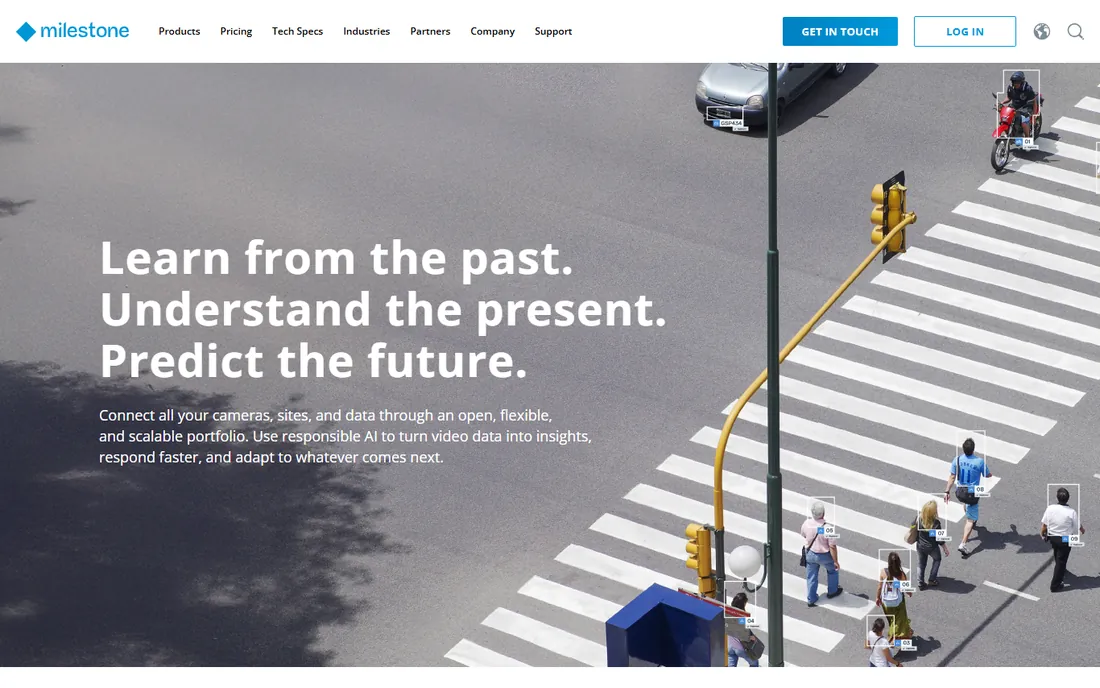
Milestone XProtect is the benchmark open-platform VMS. It has been in development since 1998, and its open architecture supports thousands of camera models and third-party integrations, from access control to video analytics. The Resorts World Las Vegas deployment runs roughly 5,800 cameras on XProtect, which gives a sense of the ceiling this platform handles.
In 2026 Milestone is a three-product portfolio: XProtect for on-premise VMS, BriefCam for video analytics, and Arcules for cloud VSaaS. That lets a company standardize on Milestone while running hybrid architectures. The honest catch is that XProtect is sold through partners with per-channel licensing, and getting a large deployment right requires an integrator who knows the platform.
What we like- Supports thousands of camera models
- Runs in 500,000+ customer sites
- BriefCam analytics and Arcules cloud extend the platform
Watch out for- Quote-based licensing can be complex
- Full deployments need experienced integrators

#2
Genetec Security Center
Best for: unifying video, access control and ALPR
Visit genetec.com
Starting priceSee website
Free planNo
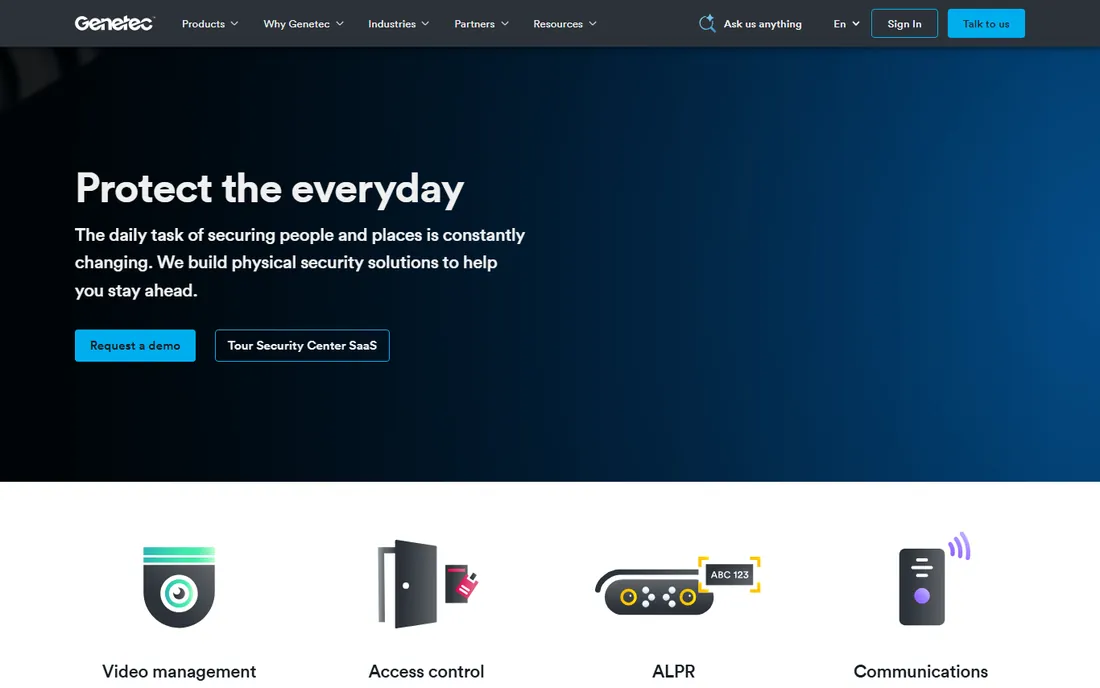
Genetec takes a different philosophy from Milestone: instead of video with integrations, Security Center is one platform where video surveillance, access control and automatic license plate recognition are natively unified. Operators work in a single interface with one user database, one set of permissions and one alarm workflow. That is why it shows up in airports, cities and large corporate campuses.
Genetec also invests heavily in cybersecurity posture and privacy features, which matters for public-sector buyers. The catch is scope and cost: Security Center is an enterprise platform with enterprise pricing, and smaller organizations with a few dozen cameras will pay for capability they never touch.
What we like- True unified platform for video, access control and license plate recognition
- Strong in government and enterprise
- Excellent federation for multi-site
Watch out for- Enterprise pricing
- Implementation demands skilled integrators

#3
Avigilon Unity Video
Best for: organizations wanting AI analytics built in
Visit avigilon.com
Starting priceSee website
Free planNo
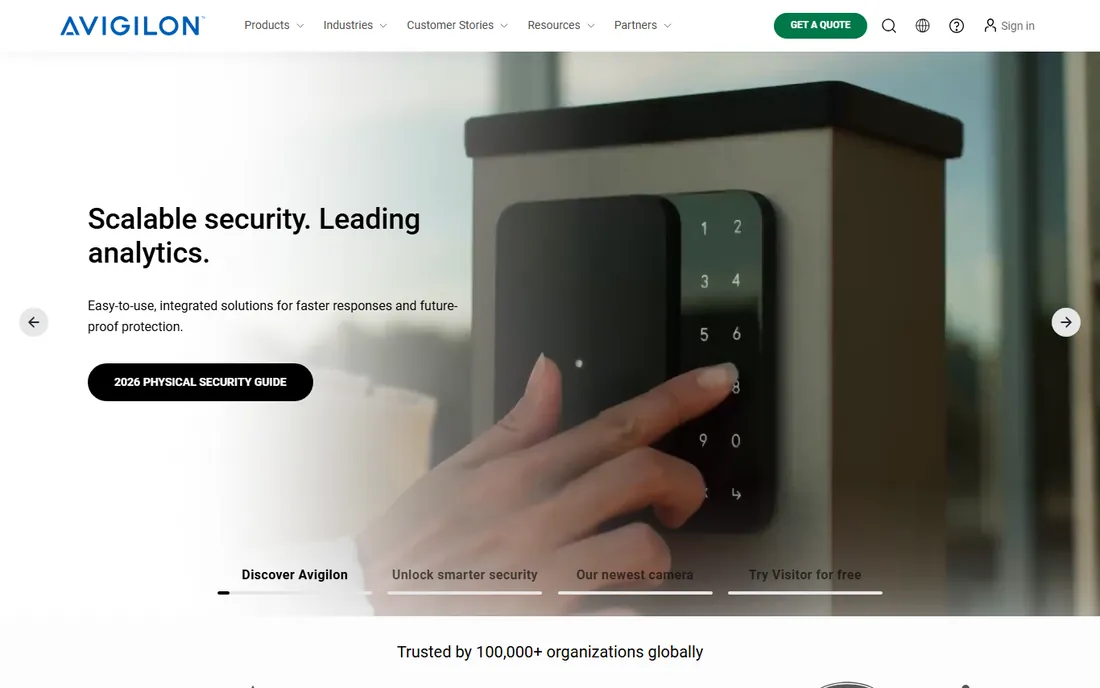
Avigilon (a Motorola Solutions company) builds its VMS around AI from the start. Unity Video includes appearance search, which finds a person or vehicle across cameras by description, plus unusual motion and activity detection. The analytics run at the camera edge on Avigilon hardware, keeping server load down and search speeds high.
The ecosystem story is strong: Unity Video pairs with Avigilon access control, and the Avigilon Alta cloud platform extends it for remote sites. The catch is ecosystem gravity. Avigilon supports third-party cameras, but the platform shines brightest with Avigilon cameras and analytics, so budget accordingly if you want the full experience.
What we like- AI video analytics and appearance search built into the VMS
- Unified with Avigilon access control
- Cloud-connected via Avigilon Alta
Watch out for- Works best inside the Avigilon ecosystem
- Pricing is quote-based

#4
Axis Camera Station
Best for: sites standardized on Axis cameras
Visit axis.com
Starting priceSee website
Free planNo
If every camera on your site is Axis, Axis Camera Station is the path of least resistance. It is purpose-built to exploit Axis camera features: edge analytics, Zipstream compression, corridor format, audio, and I/O events all work natively. Setup is straightforward, and the mobile app gives remote viewing without extra servers.
Axis sells through partners with straightforward licensing. The catch is obvious: this is an Axis-centric VMS. Mixed fleets of Hikvision, Dahua or Hanwha cameras will not fit well, and large multi-vendor estates should look at Milestone or Genetec instead.
What we like- Deep integration with Axis cameras and edge analytics
- Simple to deploy
- Scalable from single sites to larger installs
Watch out for- Third-party camera support is limited
- Designed around the Axis product line

#5
ExacqVision
Best for: schools, retail chains and mid-size sites
Visit exacq.com
Starting priceSee website
Free planNo
ExacqVision (part of Johnson Controls) has built its reputation on simplicity. The VMS installs quickly, the interface is approachable for non-technical staff, and the free client runs on Windows, Linux and Mac with a free mobile app. It supports thousands of IP cameras plus analog cameras through hybrid servers, which helps sites migrating off old coax systems.
Retail chains, school districts and healthcare facilities are the sweet spot: multi-site, dozens to hundreds of cameras, managed by lean IT teams. The catch is the ceiling. Very large or highly customized integrations (complex access control workflows, deep analytics) are Milestone and Genetec territory.
What we like- Genuinely easy to install and use
- Runs on Windows and Linux
- Free client software for desktop and mobile
Watch out for- Fewer advanced integrations than Milestone
- Enterprise scale has limits

#6
Wisenet WAVE
Best for: teams that want a modern, intuitive interface
Visit wavevms.com
Starting priceSee website
Free planNo
Wisenet WAVE, from Hanwha Vision, is the modern-looking VMS that installers recommend when the customer will actually operate the system themselves. The interface is genuinely intuitive: drag cameras onto layouts, scrub a smart timeline, and search motion events without training. Version 6.0 added LDAP integration, camera linking and temporary user accounts.
WAVE Sync lets users reach their system from any browser, and the platform runs on everything from Windows servers to ARM devices. The catch is ecosystem depth. The integration list is growing but does not match Milestone's thousands of supported devices, and the roadmap naturally favors Hanwha cameras.
What we like- Clean drag-and-drop interface
- Runs on Windows, Linux and ARM
- WAVE Sync enables remote access from a browser
Watch out for- Smaller integration ecosystem than Milestone
- Hanwha-centric roadmap
Starting priceSee website
Free planNo
Nx Witness from Network Optix is the developer's VMS. It is fast, lightweight, cross-platform, and ships with an open API, SDK and even an open-source client, so integrators build custom dashboards, AI integrations and vertical-market products on top of it. Digital Watchdog's DW Spectrum is actually built on this same technology, which says something about the engineering.
The platform supports thousands of third-party cameras and runs from single servers to large distributed systems. The catch is that Nx Witness rewards technical teams. If you have developers or a sharp integrator, it is a flexible and cost-effective platform; if you want turnkey simplicity, Exacq or WAVE will feel easier.
What we like- Open API and SDK for custom integrations
- Cross-platform server
- Lightweight and fast
- Strong third-party camera support
Watch out for- Needs technical skill to get the most from it
- Smaller channel partner network in the US
Starting priceSee website
Free planNo
Digital Watchdog pairs its DW Spectrum IPVMS with its own MEGApix cameras and Blackjack NVRs to offer one of the lowest total costs in the industry. The software itself is free to download; you pay per channel license, and the desktop, web and mobile clients cost nothing. DW Cloud adds remote system management and health monitoring.
For small businesses, houses of worship, and multi-site retail that want a complete system from one vendor, the DW stack is compelling. The catch is that the best value comes from buying the DW cameras and recorders together. Mixed-vendor fleets can run on Spectrum, but at that point you are paying DW prices without the bundle discount.
What we like- Low total cost of ownership
- Free desktop and mobile clients
- Bundles with DW cameras and NVRs
Watch out for- Best value inside the DW hardware ecosystem
- Fewer enterprise integrations
How we chose
We evaluated VMS platforms using vendor documentation, product specifications, integrator feedback on forums and review sites, camera compatibility lists, and deployment scale references. We weighted open-platform support, ease of management, hybrid cloud capabilities, analytics integration, and fit for US small and mid-size organizations. We did not perform hands-on testing; all assessments reflect publicly available information as of October 2026.
Sizing a VMS before you buy
Count cameras first, then think about everything around them. VMS licensing is per channel, so a 40-camera site costs roughly double a 20-camera site in licenses alone. But the bigger budget items are usually servers and storage: retention requirements (30 days? 90 days?) and resolution (4K vs 1080p) determine how much disk you buy, and that number surprises first-time buyers.
Open platform vs single vendor
Open-platform VMS (Milestone, Genetec, Nx Witness, ExacqVision) lets you mix camera brands and swap hardware later. Single-vendor stacks (Axis, Avigilon, DW) give tighter integration and simpler support at the cost of lock-in. If your cameras come from three different manufacturers already, open platform is the only sane choice.
Plan the network, not just the software
A VMS does not fix a bad network. Get a proper camera VLAN, PoE switching with headroom, and enough uplink bandwidth for the recording servers. Most failed VMS projects we hear about trace back to undersized infrastructure, not to the software itself.
The hybrid cloud question
Every vendor here now offers some cloud story: remote access, cloud backup, health monitoring, or full VSaaS. For most small and mid-size sites, a hybrid setup (on-premise recording plus cloud remote access and monitoring) is the sweet spot. It keeps footage local for performance and compliance while giving owners and integrators remote visibility. Full cloud recording makes sense for small camera counts or distributed sites, but check bandwidth and monthly costs before committing.
Frequently asked questions
What does VMS software do?
Video management software records, manages and displays video from IP cameras. Core functions include live viewing, recording and playback, camera configuration, user permissions, alarm management, video search and export, plus integrations with access control, analytics and other security systems.
How much does VMS software cost?
VMS is typically licensed per camera channel through integrators, with no public pricing. On top of licenses, budget for servers, storage, cameras and installation. Total project cost depends far more on camera count, resolution and retention time than on the software brand.
Can I mix camera brands with one VMS?
With open-platform VMS like Milestone XProtect, Genetec, ExacqVision, Nx Witness or Wisenet WAVE, yes. Single-vendor systems like Axis Camera Station work best with their own cameras. Check the vendor's supported device list before buying cameras.
Do I need a server, or can VMS run in the cloud?
Both work. Most VMS platforms record to on-premise servers or NVRs, with cloud options for remote access, monitoring and backup. Full cloud VSaaS (like Milestone Arcules) records entirely in the cloud and suits small or distributed camera counts.
What is the difference between a VMS and an NVR?
An NVR is hardware (a network video recorder); a VMS is software. Many NVRs run VMS software inside them. A VMS can run on standard servers, manage multiple NVRs, and scale far beyond what a single NVR appliance handles.
How long should I keep recorded video?
Common retention is 30 to 90 days, driven by industry practice, insurance requirements and regulations. Longer retention needs proportionally more storage, so decide the retention policy before sizing servers.
Sources we checked (8)
- https://www.milestonesys.com/
- https://www.genetec.com/
- https://www.avigilon.com/
- https://axis.com/
- https://exacq.com/
- https://wavevms.com/
- https://networkoptix.com/
- https://digital-watchdog.com/
Is your product missing or out of date?
We review this list regularly. Vendors can request a listing, send updated pricing or ask about featured placement.

Shihab Mia · Founder, Rankite
Shihab has spent more than a decade helping SaaS and e-commerce brands grow through search. He writes Rankite's software buying guides from pricing pages, documentation and public user reviews. More about Shihab.
 Milestone XProtect
 Nx Witness
 Digital Watchdog DW Spectrum