How we make this list: we compare pricing pages, product documentation and public user reviews. Rankite is independent; if a vendor ever pays for a featured spot, that listing is clearly labeled Partner.
Key takeaways
- Virtual events did not die when offices reopened. They settled into a permanent role: wider reach, lower cost, and better data than in-person alone.
- RingCentral Events, vFairs, and Bizzabo are the heavyweights for large conferences and expos with virtual trade-show floors.
- Whova and Airmeet are friendlier and cheaper for mid-size events where networking matters more than spectacle.
- ON24 and BigMarker lean toward webinars and demand generation, while Cvent covers the full event lifecycle including in-person.
- Pricing is almost entirely quote-based. Budget for the platform plus production help, because the software alone does not run the show.
Quick comparison
| Tool | Best for | Starting price | Free plan |
|---|
 RingCentral Events RingCentral Events | Large virtual and hybrid conferences | See website | Free trial |
 vFairs vFairs | Virtual expos and job fairs | See website | No |
 Whova Whova | Attendee-friendly mid-size events | See website | No |
 Bizzabo Bizzabo | B2B conferences and summits | See website | No |
 Cvent Cvent | Full event lifecycle management | See website | No |
 Airmeet Airmeet | Networking-focused virtual events | See website | Free trial |
 ON24 ON24 | Webinars and demand generation | See website | No |
 Swapcard Swapcard | Event networking and matchmaking | See website | No |
 BigMarker BigMarker | Webinars and virtual summits | See website | Free trial |
 Goldcast Goldcast | B2B video events for marketers | See website | No |
Is your product missing or out of date?
We review this list regularly. Vendors can request a listing, send updated pricing or ask about featured placement.
Starting priceSee website
Free planFree trial
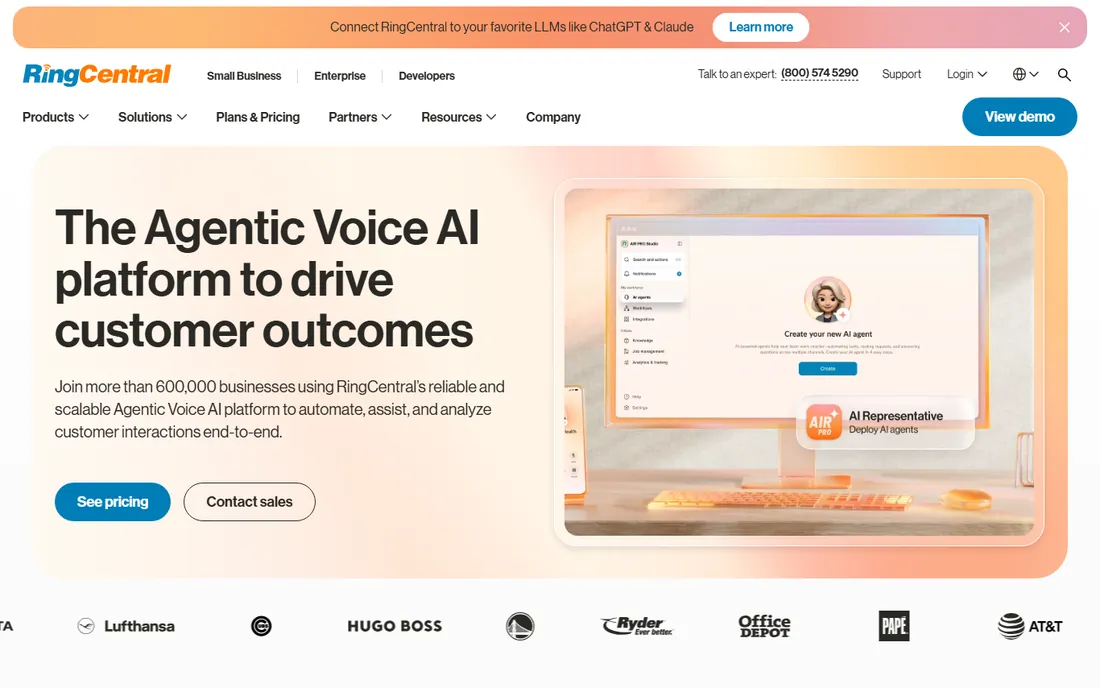
RingCentral Events is the former Hopin, acquired and rebranded by RingCentral, and it remains the best virtual event platform for sheer scale. Multi-stage conferences, virtual expo booths, roundtable networking, and backstage greenrooms all run in one environment. The registration, streaming, and engagement data feed into one dashboard, which is what large organizers actually need.
The cost reflects the ambition: plans are quoted, and add-ons accumulate. Running a flagship conference on it usually means hiring production support too. But if your event has thousands of attendees and sponsors expecting booth traffic, this is the platform built for that job.
What we like- Scales to tens of thousands of attendees
- Strong expo and networking areas
- Backed by RingCentral's infrastructure
Watch out for- Pricing is quote-based and adds up
- The admin backend has a learning curve
Starting priceSee website
Free planNo
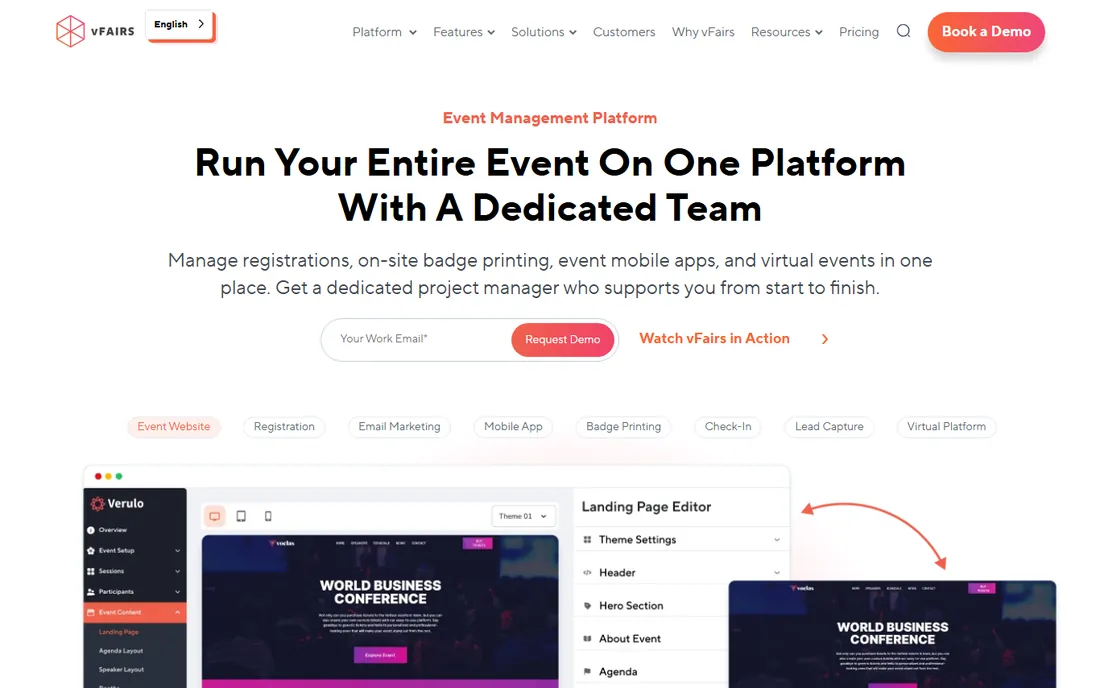
vFairs specializes in events that need a sense of place: virtual trade shows, job fairs, and open days where attendees wander between booths. The 3D animated environments look impressive in demos, and exhibitors get booths with chat, video calls, and document libraries. The company also offers fully managed events, where their team builds and runs the whole thing.
The 3D aesthetic is not for every audience; some B2B buyers find it less serious than a clean webinar-style platform. Pricing is quote-based with no free tier. But for expos and fairs where booth interaction is the point, vFairs is purpose-built in a way general platforms are not.
What we like- Excellent 3D virtual lobbies and booths
- Strong for career fairs and expos
- Full-service project management option
Watch out for- 3D environments can feel gimmicky for serious B2B
- No self-serve free tier
Starting priceSee website
Free planNo
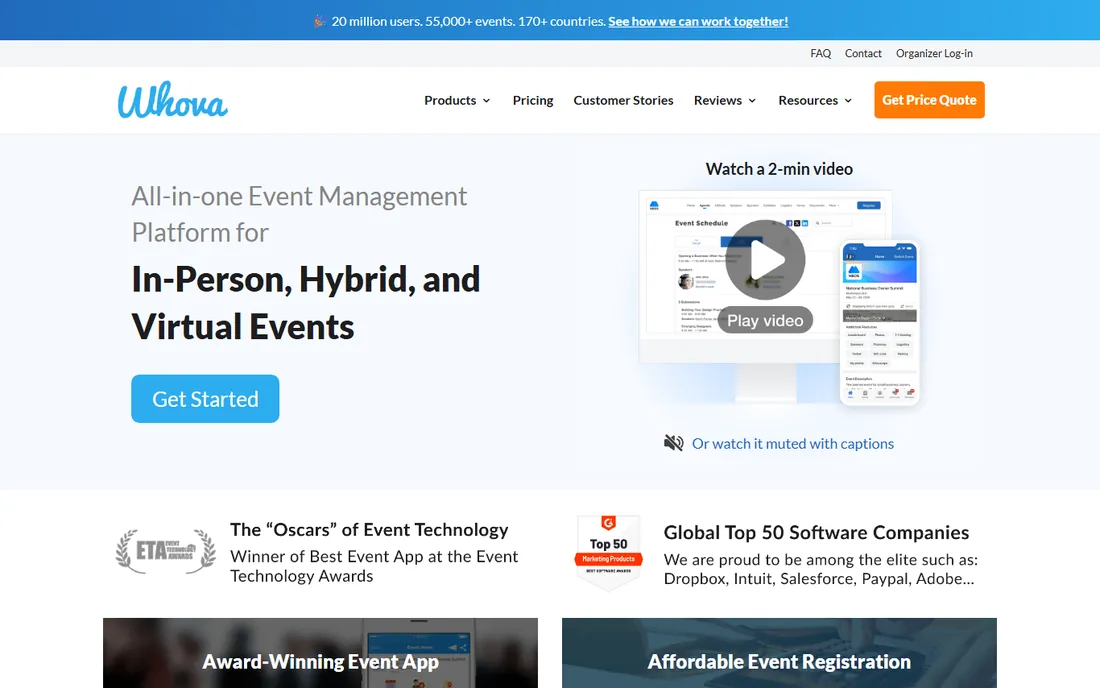
Whova wins on the attendee experience, which is rarer than it sounds. The app combines agendas, speaker profiles, community boards, and meet-up scheduling in a way people navigate without training. Organizers like the sponsor and exhibitor tools, live polling, and the surprisingly good networking features for mid-size events.
Customization is the tradeoff: your event will look like a Whova event. And while it handles large events, the sweet spot is hundreds to a few thousand attendees. Pricing is more accessible than the enterprise platforms, with quotes based on attendee count. For associations and corporate events where adoption matters, Whova is a strong pick.
What we like- Attendees actually enjoy using the app
- Strong agenda and networking features
- Affordable for mid-size events
Watch out for- Branding customization is limited
- Best for hundreds, not tens of thousands
Starting priceSee website
Free planNo
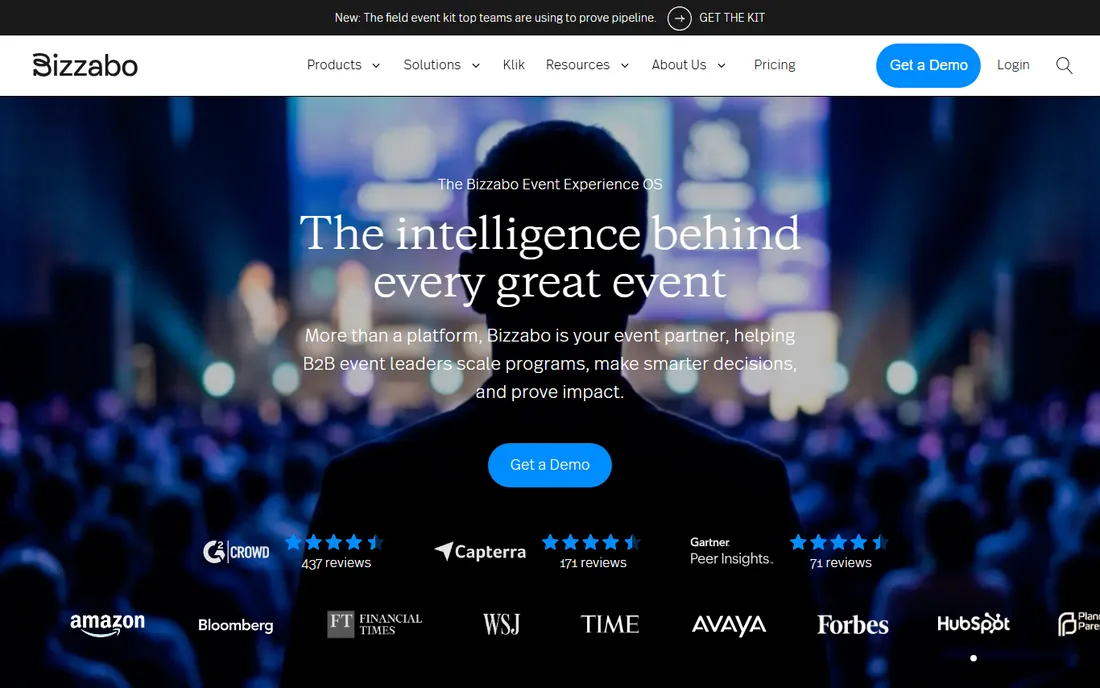
Bizzabo positions itself as an event operating system rather than just a virtual venue. Registration, event websites, mobile apps, and virtual sessions connect into one data model, so marketing can track a contact from first click to attended session to pipeline. The hybrid event support is genuinely good, with in-person and virtual audiences sharing agendas and networking.
This is enterprise software with enterprise pricing and onboarding. Small teams running a single webinar will find it heavy. But B2B marketing teams running a flagship summit, especially hybrid, get the registration-to-revenue tracking that justifies the cost.
What we like- Strong registration and ticketing
- Good analytics for proving ROI
- Handles hybrid well
Watch out for- Enterprise pricing
- Implementation needs planning
Starting priceSee website
Free planNo
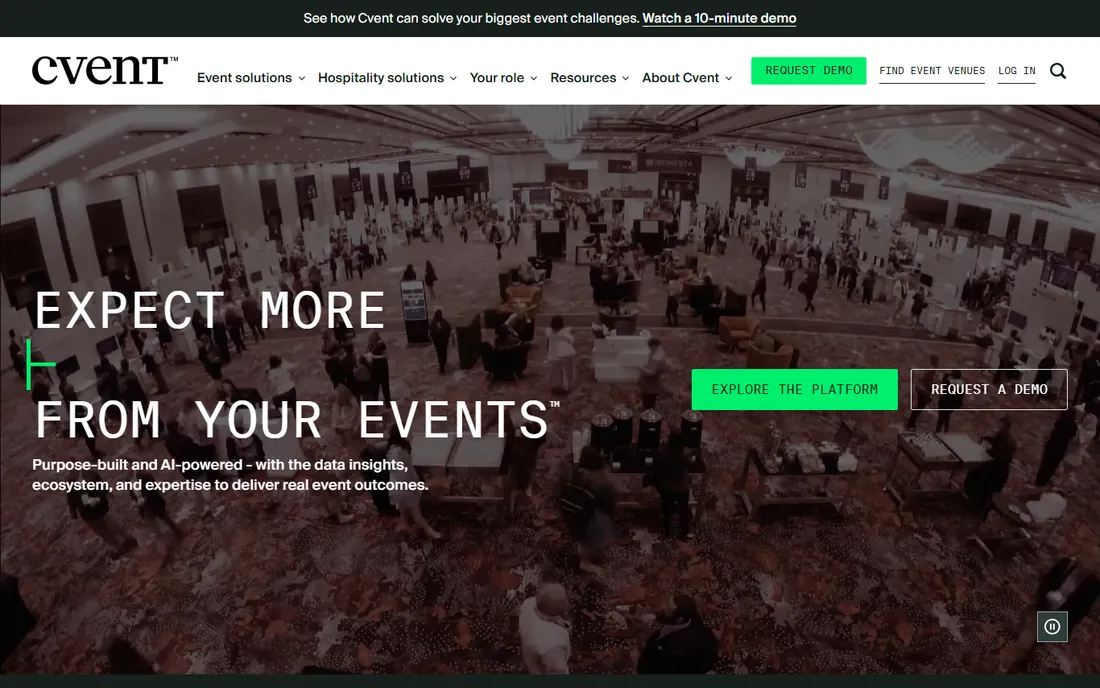
Cvent is the broadest event platform here. Venue sourcing, registration, on-site check-in, mobile apps, virtual sessions, and surveys all live in one system, which is why large enterprises and associations standardize on it. If your events are mostly in-person with a virtual component, Cvent's on-site depth is unmatched.
The breadth is also the weakness: the virtual event module competes with dedicated virtual platforms and does not always win on attendee experience. Pricing is quote-based and the contracts are serious commitments. Choose Cvent when you need one system for every event type, not when you need the best purely virtual experience.
What we like- Covers everything from sourcing venues to post-event surveys
- Huge feature depth
- Strong in-person tools
Watch out for- Expensive and complex
- The virtual side is one module among many
Starting priceSee website
Free planFree trial
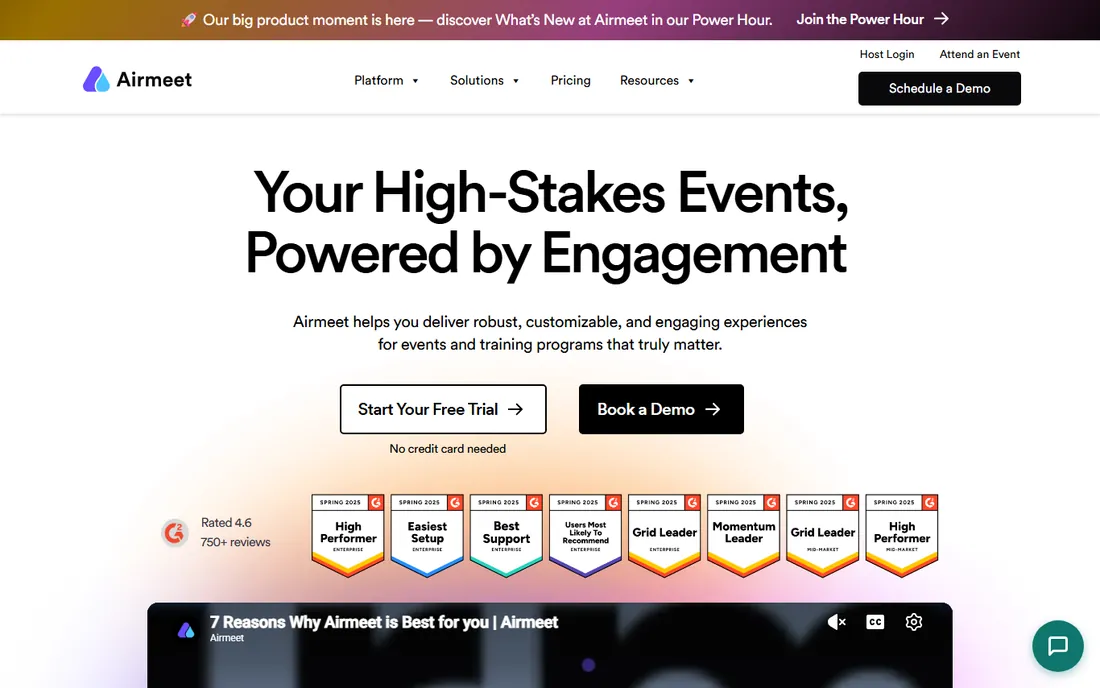
Airmeet's signature is the social lounge: attendees sit at virtual tables, join conversations freely, and move around like a real reception. For meetups, community events, and conferences where hallway conversations matter, this format beats grid-of-faces webinars. The platform is easy to run, with a free trial and straightforward pricing tiers.
It is not the choice for a 10,000-person expo with sponsor booths; the strength is intimacy, not spectacle. Customization is lighter than enterprise rivals. But as one of the best online events platforms for networking-first gatherings, Airmeet punches above its price.
What we like- Fluid tables-and-lounges networking format
- Easy for speakers and attendees
- Affordable plans
Watch out for- Less suited to massive expos
- Branding options are modest
Starting priceSee website
Free planNo
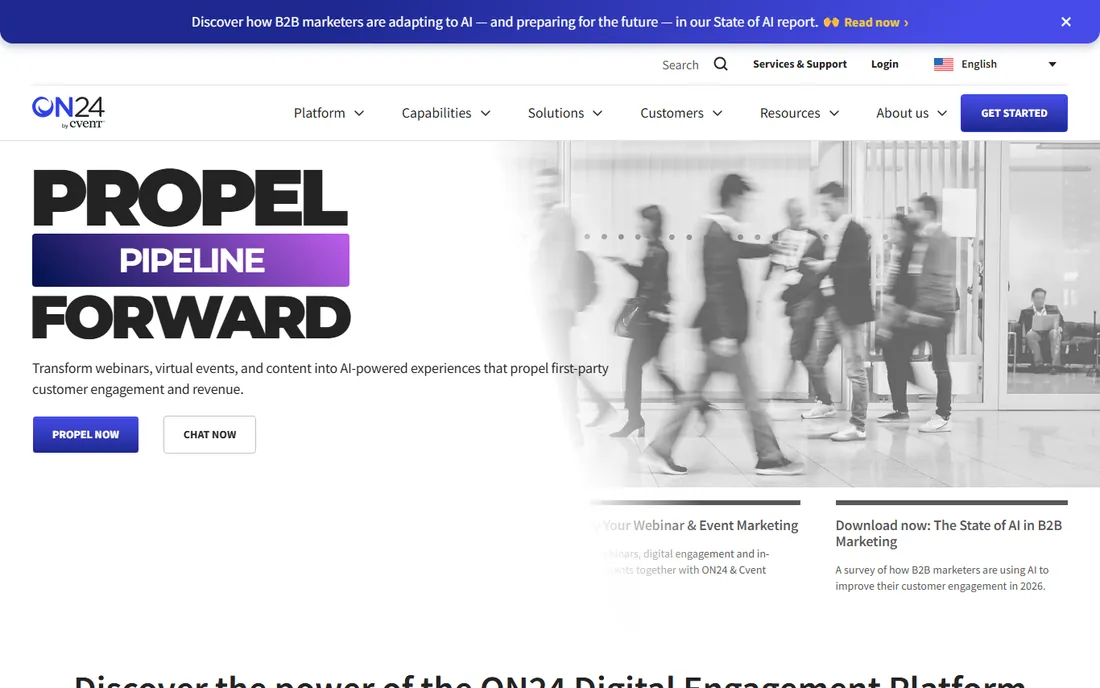
ON24 is built for marketers who live on pipeline. Webinars run with polls, Q&A, CTAs, and content hubs, and every interaction feeds engagement scores that sync to Marketo, HubSpot, or Salesforce. The analytics show exactly which content moved each account, which is why demand-gen teams swear by it.
It is not a virtual conference platform in the Hopin sense: no expo floors, no sprawling multi-track agendas. Pricing is enterprise and quoted. If your goal is a flagship virtual summit, look elsewhere. If your goal is webinars that generate measurable pipeline, ON24 is the specialist.
What we like- Best-in-class engagement analytics for marketers
- Strong integrations with MAPs and CRMs
- Reliable at scale
Watch out for- Webinar-centric, not a full conference platform
- Pricing is enterprise
Starting priceSee website
Free planNo
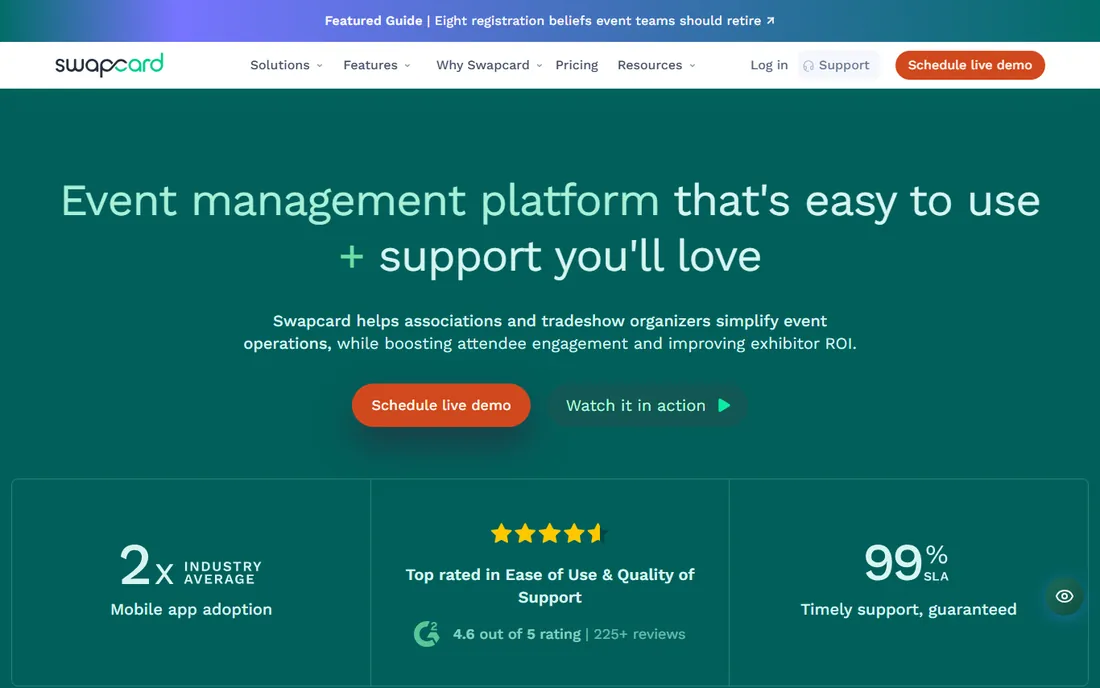
Swapcard's standout is matchmaking: AI suggests who each attendee should meet based on interests and goals, then facilitates the meetings. For trade shows and B2B events where deal-making is the point, this drives the networking ROI organizers promise sponsors. The mobile app is polished, and hybrid support is solid.
Session management and virtual stage features are competent rather than leading. Pricing is quote-based. But if your event's success metric is connections made rather than sessions watched, Swapcard's networking engine is the differentiator.
What we like- AI-powered matchmaking connects the right attendees
- Strong mobile app
- Good for hybrid and in-person too
Watch out for- The event content side is thinner
- Pricing requires a quote
Starting priceSee website
Free planFree trial
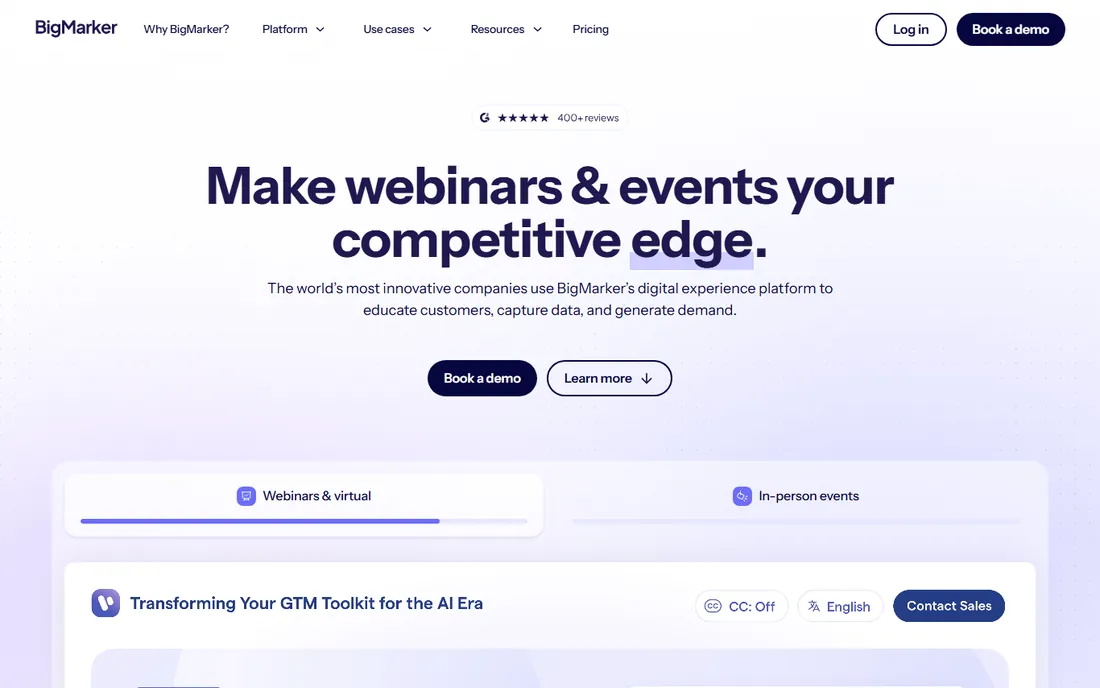
BigMarker is a workhorse for teams that run webinars weekly and summits quarterly. Browser-based attendance means no app installs, and the same platform handles live, on-demand, and evergreen content. Marketing integrations cover the usual CRMs and automation tools, and pricing undercuts the enterprise webinar platforms.
The interface shows its age, and highly produced multi-stage events may strain it. But for volume webinar programs and virtual summits on a budget, it is one of the most practical choices, with a free trial to prove it on your own content.
What we like- Runs webinars, summits, and courses in one place
- No downloads for attendees
- Reasonable pricing
Watch out for- Interface looks dated next to newer rivals
- Advanced production needs workarounds
Starting priceSee website
Free planNo
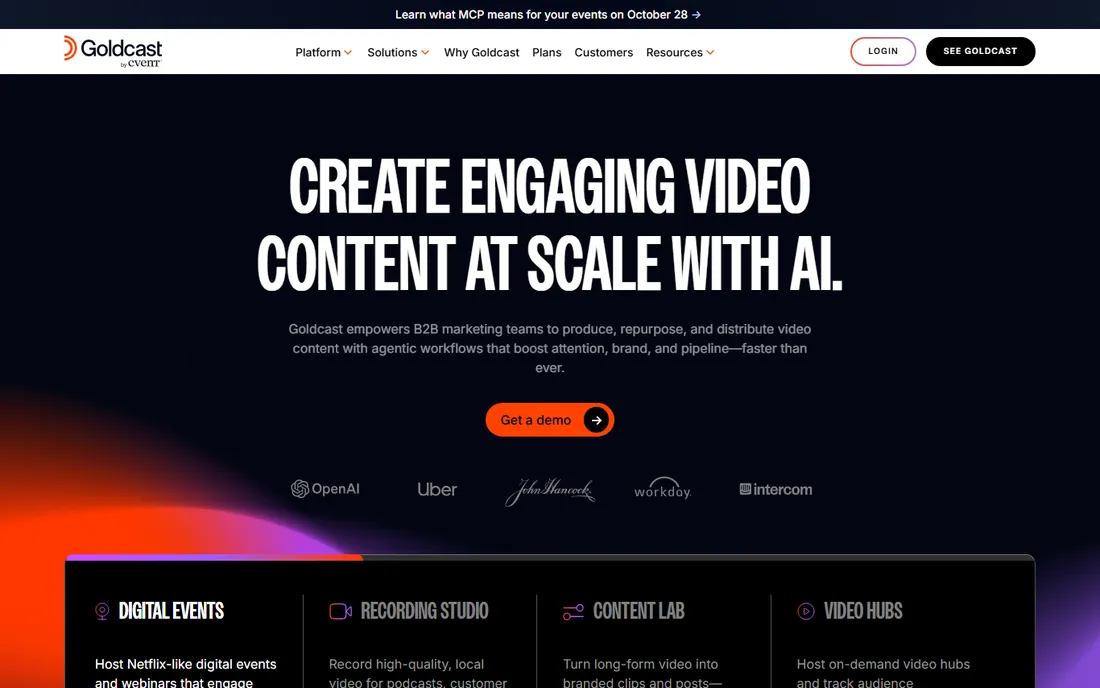
Goldcast targets B2B marketing teams that run events as a pipeline channel. Virtual summits, webinars, and video content hubs come with engagement data wired for revenue attribution, and the content lab repurposes recordings into clips and posts. The experience feels modern where some enterprise platforms feel corporate.
It is narrower than Cvent or RingCentral Events: this is a marketer's video event tool, not an association management system. The company is newer, so reference customers matter more in evaluation. For B2B teams where events must show pipeline impact, Goldcast speaks their language.
What we like- Built for pipeline-focused B2B marketers
- Strong repurposing tools for event content
- Clean modern experience
Watch out for- Narrower use case than full event platforms
- Newer vendor with a smaller track record
Pure virtual summits peaked years ago, but hybrid stuck around because it solves real problems. In-person delivers the hallway conversations and sponsor handshakes; virtual delivers reach, with remote attendees often outnumbering the room. The best hybrid event platform is not the one with the most features but the one that treats both audiences as first-class.
That means a few non-negotiables. Remote attendees need the same networking access, not a passive livestream. Content must be produced for camera, not just pointed at a stage. And the data must merge: one attendee record whether they showed up in person or online. RingCentral Events, Bizzabo, Cvent, and Swapcard handle this duality best. Whova and Airmeet do it well at smaller scales. Whatever you choose, budget for production; hybrid done badly is worse than either format done well.
Start with the event shape
A 200-person webinar series, a 5,000-person virtual expo, and a hybrid user conference are different products. Webinars point to ON24, BigMarker, or Goldcast. Expos point to vFairs or RingCentral Events. Networking-first gatherings point to Airmeet or Swapcard. Buying a conference platform for webinars wastes money every month.
Count the real attendees, then add headroom
Most pricing scales with registrants or attendees. Estimate honestly, then check overage terms, because viral events happen. Platforms with free trials (RingCentral Events, Airmeet, BigMarker) let you load-test the experience before committing.
Check the integrations that matter
The event is a marketing asset only if the data flows somewhere. Confirm native integrations with your CRM and marketing automation, and ask how engagement data maps to lead scores. ON24 and Bizzabo lead here; verify the rest against your specific stack.
Evaluate the attendee experience yourself
Register for a demo event on each finalist as an attendee. If joining is confusing, if the mobile app crashes, or if networking feels dead, your audience will feel it too. The prettiest admin dashboard in the world does not save a bad attendee experience.
How we chose
We reviewed vendor product pages, pricing pages, and documentation, plus public reviews on G2, Capterra, and TrustRadius and organizer discussions in event professional communities. We weighted real attendee experience and format fit over feature counts, noted which platforms are genuinely hybrid versus virtual-only, and flagged quote-based pricing throughout. We did no hands-on testing; for an event platform, a live demo with your actual agenda is the only evaluation that counts.
Frequently asked questions
What is the best virtual event platform for a large conference?
RingCentral Events, vFairs, and Bizzabo lead for large conferences, each with different strengths: RingCentral Events for scale and expo floors, vFairs for 3D expo environments, Bizzabo for B2B summits with strong registration and analytics. The right choice depends on whether sponsors, networking, or content is your priority.
How much does a virtual event platform cost?
Almost every platform here prices by quote, based on attendees, features, and support level. Small events on self-serve tiers can run hundreds per month; enterprise conferences run into five or six figures. Always budget for production support on top of the platform fee.
Can these platforms handle hybrid events?
Most can, with varying quality. RingCentral Events, Bizzabo, Cvent, and Swapcard have the strongest hybrid support, treating in-person and virtual attendees in one system. When evaluating, ask specifically how remote attendees network and whether the data merges into one attendee record.
Do attendees need to download software?
Usually not. Most modern platforms run in the browser, and several have optional mobile apps for a better on-the-go experience. Browser-based attendance (BigMarker, Airmeet, Goldcast) removes the biggest friction point for casual attendees.
What is the difference between a webinar platform and a virtual event platform?
Webinar platforms (ON24, BigMarker) focus on presentations to an audience, with marketing analytics. Virtual event platforms add multi-session agendas, networking areas, expo floors, and sponsor experiences. If your event has more than a stage and a chat box, you need the latter.
Sources we checked (10)
- https://www.ringcentral.com
- https://vfairs.com
- https://whova.com
- https://bizzabo.com
- https://www.cvent.com
- https://www.airmeet.com
- https://www.on24.com
- https://www.swapcard.com
- https://www.bigmarker.com
- https://goldcast.io
Is your product missing or out of date?
We review this list regularly. Vendors can request a listing, send updated pricing or ask about featured placement.

Shihab Mia · Founder, Rankite
Shihab has spent more than a decade helping SaaS and e-commerce brands grow through search. He writes Rankite's software buying guides from pricing pages, documentation and public user reviews. More about Shihab.