How we make this list: we compare pricing pages, product documentation and public user reviews. Rankite is independent; if a vendor ever pays for a featured spot, that listing is clearly labeled Partner.

Key takeaways
- Eventbrite brings built-in discovery at premium fees; cheaper alternatives win when you bring your own audience.
- Humanitix charges 5% plus $1.29 but directs profits to charity, which suits community and nonprofit events.
- TicketSpice and ThunderTix offer the most customization and transparent per-ticket pricing for independent organizers.
- Fee math decides everything: model the all-in cost per ticket at your price point before choosing.
Quick comparison
| Tool | Best for | Starting price | Free plan |
|---|
 Eventbrite Eventbrite | Discovery plus easy setup | 3.7% + $1.79/ticket | Free events free |
 Humanitix Humanitix | Charitable ticketing for good causes | 5% + $1.29/ticket | Free events free |
 TicketSpice TicketSpice | Customizable ticketing for independents | $0.99/ticket | Free events free |
 ThunderTix ThunderTix | Performing arts box offices | $1.00/ticket | No |
 Ticketleap Ticketleap | Simple ticketing for community events | $1 + 2%/ticket | Free events free |
 Universe Universe | Mid-size organizers in Ticketmaster's orbit | 2% + $0.79/ticket | Free events free |
 Tix Tix | Reserved seating specialists | See website | No |
 See Tickets See Tickets | Established entertainment ticketing | See website | No |
 TryBooking TryBooking | Low fees for community events | $0.50/ticket | Free events free |
 FreshTix FreshTix | Full-featured with branded checkout | $1.75/ticket | Free events free |
Is your product missing or out of date?
We review this list regularly. Vendors can request a listing, send updated pricing or ask about featured placement.
Starting price3.7% + $1.79/ticket
Free planFree events free
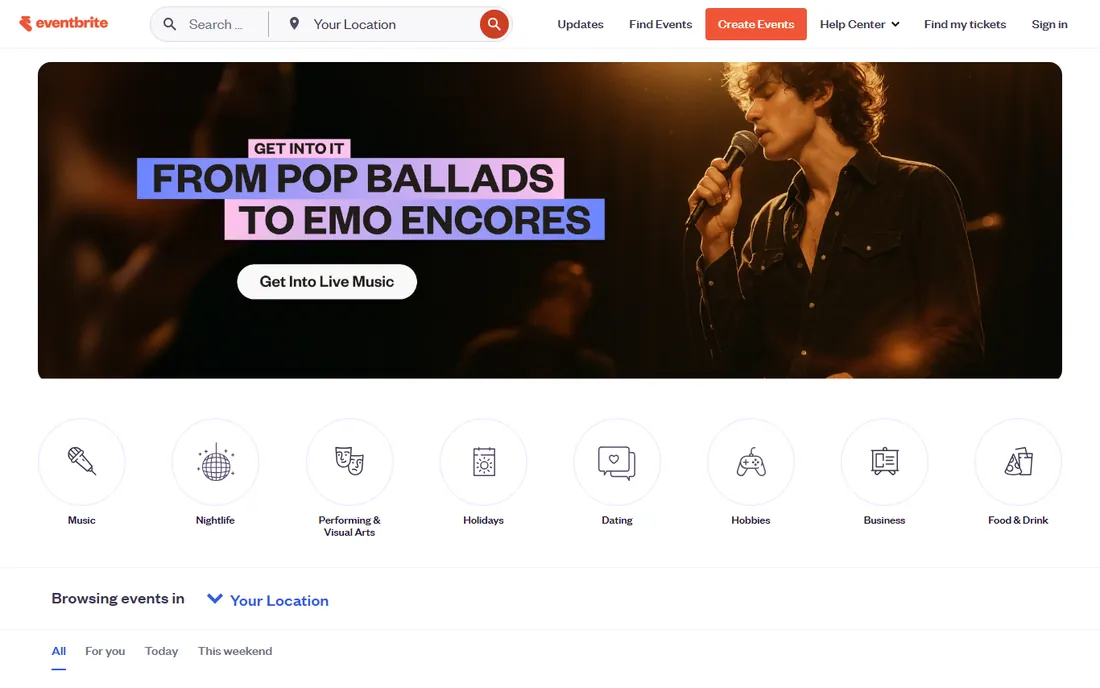
Eventbrite is the default because buyers browse it. The discovery marketplace puts events in front of people looking for things to do, which genuinely sells tickets organizers would not reach otherwise. Setup takes minutes, free events cost nothing, and the organizer tools cover the essentials.
The fees are the premium end: 3.7% plus $1.79 per paid ticket, with 2.9% processing on top. Customization is moderate, and attendee data policies favor the platform. Organizers with their own audiences usually do better on cheaper platforms. But when discovery matters, Eventbrite's marketplace justifies the premium.
What we like- Built-in event discovery drives sales
- Fastest setup
- Free for free events
Watch out for- Premium fees at 3.7% + $1.79 plus processing
- Customization is moderate
- Data ownership limits
Starting price5% + $1.29/ticket
Free planFree events free
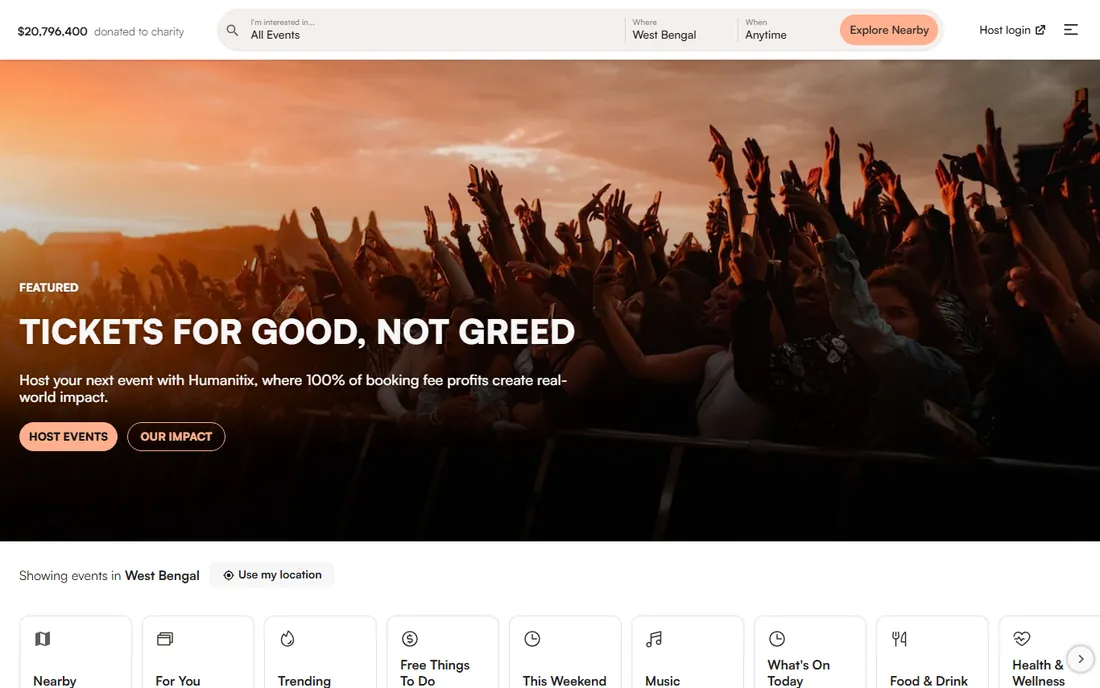
Humanitix is the nonprofit ticket platform: 100% of profits fund children's education charities, with discounted rates for registered nonprofits. For schools, charities and community events, the fee becomes a talking point rather than a grudge. Setup is simple and the platform handles the essentials well.
Fees at 5% plus $1.29 exceed budget competitors, and customization is lighter. But the charitable model changes the conversation with attendees and sponsors. When the event has a social-good angle, Humanitix's story is worth more than the fee difference.
What we like- Profits fund children's education charities
- Good for nonprofits
- Simple setup
Watch out for- Higher fees than budget options
- Less customization
- Smaller feature set
Starting price$0.99/ticket
Free planFree events free
TicketSpice, from Webconnex, gives independent organizers control: fully branded pages and checkout, unlimited ticket types, group logic and custom flows, at $0.99 per ticket plus processing. Organizers who find Eventbrite constraining get the flexibility to build exactly their ticketing experience.
There is no discovery marketplace; the audience is yours to bring. The brand is smaller. But for organizers with established audiences who want their brand, not a platform's, TicketSpice's customization at fair pricing is the independent's choice.
What we like- Deep customization and branding
- $0.99 per ticket pricing
- Unlimited ticket types
Watch out for- Less built-in discovery
- Needs your own marketing
- Smaller brand
Starting price$1.00/ticket
Free planNo
ThunderTix serves performing arts venues with real box office needs: reserved seating charts, season subscriptions, donor management and check-in built for theaters. Per-ticket pricing from $1.00 to $1.25 plus a plan fee is transparent, and the venue-specific features exceed general platforms.
The niche focus means less for general events. But theaters, performing arts centers and venues with reserved seating get purpose-built tools that generic ticketing cannot match.
What we like- Box office tools for theaters
- Reserved seating
- Transparent per-ticket pricing
Watch out for- Niche focus
- Plan fee on top
- Less suited to general events
Starting price$1 + 2%/ticket
Free planFree events free
Ticketleap keeps community ticketing simple: easy setup, mobile-friendly pages, social sharing, free for free events. Pricing at $1 plus 2% per ticket suits small budgets. Now part of Patron Technology, it has corporate backing.
Advanced features trail the bigger platforms. But for local and community events where simplicity and cost matter most, Ticketleap's straightforward approach works.
What we like- Simple setup
- Free for free events
- Affordable for small organizers
Watch out for- Fewer advanced features
- Smaller ecosystem
- Now part of Patron Technology
Starting price2% + $0.79/ticket
Free planFree events free

Universe, part of the Ticketmaster family, serves mid-size organizers with flexible ticketing, social integration and the backing of the industry's largest player. Pricing from 2% plus $0.79 offers reasonable rates with enterprise options.
The Ticketmaster connection is both asset and lock-in. Independent organizers may prefer neutral platforms. But for organizers comfortable in that ecosystem, Universe bridges community simplicity and enterprise scale.
What we like- Ticketmaster ecosystem backing
- Flexible ticket types
- Social integration
Watch out for- Ecosystem lock-in
- Pricing tiers confuse
- Less independent than rivals
Starting priceSee website
Free planNo
Tix built its name on reserved seating for venues and performing arts. The seat maps, season handling and box office tools serve established venues reliably. The track record is long.
The experience feels dated next to modern platforms, and marketing features are thinner. But venues with straightforward reserved-seating needs get proven reliability without platform frills.
What we like- Strong reserved seating
- Good for venues
- Long track record
Watch out for- Dated experience
- Less marketing focus
- Smaller innovation pace
Starting priceSee website
Free planNo
See Tickets is the established entertainment ticketing brand, strong with tours, festivals and attractions, particularly internationally. The industry relationships and infrastructure suit professional promoters.
It is less self-serve than the DIY platforms, with enterprise relationship dynamics. But for entertainment professionals in its markets, See Tickets' established operations deliver.
What we like- Established entertainment brand
- Good for tours and festivals
- International presence
Watch out for- Less self-serve
- Enterprise relationships
- Smaller US indie presence
Starting price$0.50/ticket
Free planFree events free

TryBooking's flat 50-cent ticket fee, dropping to 15 cents for cheap tickets, makes it among the cheapest options available. The Australian-born platform serves community events, fundraisers and schools with honest, simple pricing. No percentage games.
The US presence is smaller and advanced features fewer. But the fee math is unbeatable for low-priced tickets, which is exactly where fees hurt most proportionally.
What we like- Very low flat fees
- Simple and honest pricing
- Good for cheap tickets
Watch out for- Smaller US presence
- Fewer advanced features
- Basic branding
Starting price$1.75/ticket
Free planFree events free
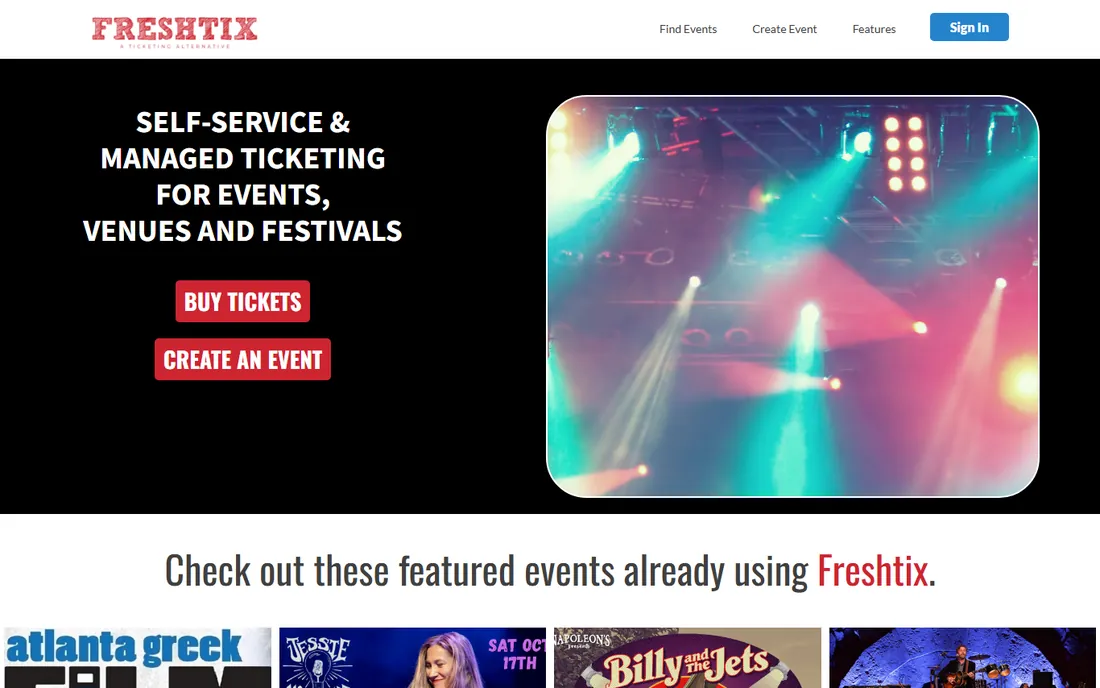
FreshTix offers the full ticketing toolkit: branded pages and checkout, POS tools, mobile scanning, seat maps and marketing features at $1.75 per ticket plus processing. Organizers wanting professional presentation without enterprise contracts get it.
The per-ticket fee exceeds budget options. But the feature completeness at a mid-range price suits organizers who want everything working without assembling pieces.
What we like- Branded pages and checkout
- POS and scanning
- Reserved seating tools
Watch out for- Higher per-ticket fee
- Smaller brand
- Seven-day support limits
How we chose
We covered general ticketing platforms, nonprofit options, venue specialists and budget tools, drawing on September 2026 fee comparisons. Each product was verified as currently offered. Pricing reflects published fee structures, which change; confirm before going live. We weighed fees, discovery, customization, payout terms and organizer fit. No vendor paid for placement and we claimed no hands-on testing.
The fee math that matters
Headline fees mislead. Eventbrite's 3.7% plus $1.79 plus 2.9% processing totals far more than the headline suggests. Always calculate the all-in cost per ticket at your actual price point, including who pays: organizer-absorbed versus buyer-paid fees change the economics completely.
Also check payout timing. Some platforms release funds as tickets sell; others hold until after the event. For cash-flow-sensitive organizers, payout timing matters as much as the fee percentage. And confirm free-event terms: most platforms are free for free events, which matters for fundraisers and community gatherings.
What to check before you choose
Decide who brings the audience. If you need discovery, Eventbrite's marketplace justifies its premium. If you bring your own audience through email and social, cheaper platforms keep more per ticket. This single question eliminates half the list.
Test the buyer checkout on a phone. Most ticket purchases happen on mobile, and checkout friction kills conversions. Buy a test ticket yourself. And verify the check-in experience: the scanner app's reliability on event day matters more than any dashboard feature.
Refunds, transfers and event-day operations
Ticket selling is the easy part; the hard part is everything around it. Refund policy should be decided before tickets go on sale, not when the first request arrives. Clear terms, published at checkout, prevent most disputes: full refunds until a date, transfers allowed, no refunds after. Whatever the policy, the platform must support it mechanically. Test the refund flow before launch, including partial refunds and fee handling.
Transfers and name changes generate constant support load. Decide the rules early: are tickets transferable, is there a fee, what is the deadline. Self-service transfer tools cut support tickets dramatically. For high-demand events, official resale or waitlist features beat the chaos of social media scalping. The platform's transfer capabilities should be evaluated as carefully as its checkout.
Event-day operations separate good platforms from bad. The scanner app must work offline or with poor connectivity, because venue wifi fails at the worst moment. Test scanning with a full device battery drain in mind: brightness, speed, and what happens when a ticket is scanned twice. Have a printed backup list for the door. These sound like details until the line stops moving.
Post-event, the data matters. Export attendee lists, analyze sales patterns by channel and ticket type, and survey attendees while the experience is fresh. The platforms with good analytics make this easy; the ones without it leave insights on the table. And reconcile payouts promptly against the platform's reports. Discrepancies are rare but easier to resolve immediately than months later. The event ends at teardown; the administration should end within a week.
Frequently asked questions
What is the cheapest ticket selling platform?
TryBooking's flat 50-cent fee is among the cheapest, especially for low-priced tickets. TicketSpice at $0.99 per ticket and Ticketleap offer strong value. Eventbrite is the most expensive of the mainstream options. Always calculate all-in costs including processing at your ticket price.
How much does Eventbrite charge?
Eventbrite charges 3.7% plus $1.79 per paid ticket, with 2.9% payment processing on top. Free events are free. The total cost per ticket is higher than the headline rate suggests once processing is included.
What is Humanitix and how is it different?
Humanitix is a nonprofit ticketing platform that directs 100% of its profits to children's education charities. Fees run 5% plus $1.29, with nonprofit discounts. It suits charity, school and community events where the social mission adds value.
Should I use Eventbrite or a cheaper alternative?
Use Eventbrite when you need its discovery marketplace to find buyers. Use cheaper alternatives like TicketSpice, TryBooking or Ticketleap when you bring your own audience. The discovery premium is only worth paying when discovery actually delivers sales.
When do I receive my ticket sales money?
Payout timing varies by platform: some release funds as tickets sell, others hold until after the event. Check the specific terms before committing, since payout timing affects cash flow for venue deposits and vendor payments.
Sources we checked (12)
- https://www.eventbrite.com
- https://humanitix.com
- https://www.ticketspice.com
- https://www.thundertix.com
- https://www.ticketleap.com
- https://www.universe.com
- https://www.tix.com
- https://www.seetickets.com
- https://www.trybooking.com
- https://www.freshtix.com
- https://www.freshtix.com/blog/the-battle-for-the-best-ticket-selling-platform
- https://www.eventbookings.com/blog/cheapest-event-ticketing-platforms-in-the-us/
Is your product missing or out of date?
We review this list regularly. Vendors can request a listing, send updated pricing or ask about featured placement.

Shihab Mia · Founder, Rankite
Shihab has spent more than a decade helping SaaS and e-commerce brands grow through search. He writes Rankite's software buying guides from pricing pages, documentation and public user reviews. More about Shihab.