How we make this list: we compare pricing pages, product documentation and public user reviews. Rankite is independent; if a vendor ever pays for a featured spot, that listing is clearly labeled Partner.
Key takeaways
- Oracle EPM, Anaplan, OneStream and Workday Adaptive Planning lead enterprise EPM, each with different architectural philosophies.
- OneStream's unified platform appeals to companies tired of stitching modules together.
- Pigment and Vena represent the modern challengers, with Pigment's flexibility and Vena's Excel-native approach.
- Planful, Prophix, Jedox and Board serve the mid-market and specific regional strengths.
Quick comparison
| Tool | Best for | Starting price | Free plan |
|---|
 Oracle EPM Oracle EPM | Enterprise planning on Oracle cloud | See website | Free trial |
 Anaplan Anaplan | Connected planning at scale | See website | No |
 OneStream OneStream | Unified EPM platform | See website | No |
 Workday Adaptive Planning Workday Adaptive Planning | Planning for Workday customers | See website | No |
 Pigment Pigment | Flexible modern planning | See website | Free trial |
 Vena Vena | Excel-native FP&A | See website | No |
 Planful Planful | Continuous planning for mid-market | See website | No |
 Prophix Prophix | Automated FP&A for mid-market | See website | No |
 Jedox Jedox | Integrated planning and reporting | See website | Free trial |
 Board Board | Integrated planning and analytics | See website | No |
Is your product missing or out of date?
We review this list regularly. Vendors can request a listing, send updated pricing or ask about featured placement.
Starting priceSee website
Free planFree trial
Oracle EPM, the cloud evolution of Hyperion, covers the full performance management spectrum: planning, budgeting, financial close, consolidation and reporting. Enterprises on Oracle's cloud get native integration, and the Hyperion heritage means decades of financial planning refinement. The depth is genuine.
Pricing, implementation and complexity are enterprise-grade, and the value compounds inside Oracle's ecosystem. But for large enterprises that plan, close and report on Oracle, the suite's completeness is the standard competitors are measured against.
What we like- Deep Hyperion heritage
- Full EPM suite
- Oracle cloud integration
Watch out for- Enterprise pricing and complexity
- Implementation is significant
- Needs Oracle commitment
Starting priceSee website
Free planNo
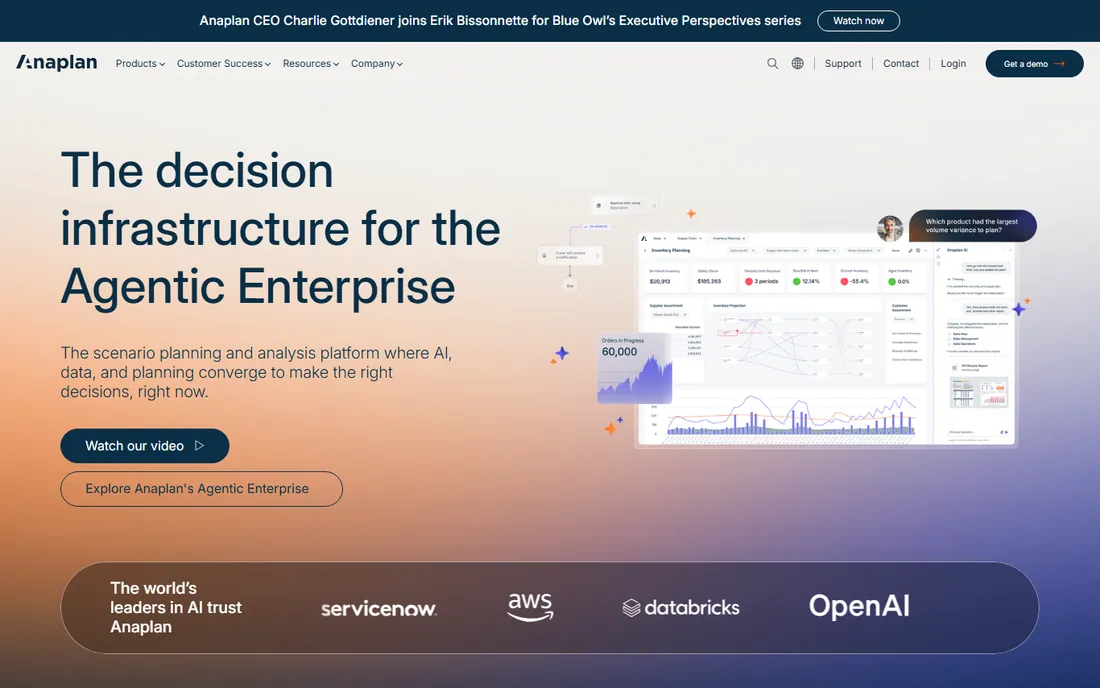
Anaplan pioneered connected planning: finance, sales, supply chain and HR planning in one connected model. The in-memory engine handles large models fast, and enterprises run company-wide planning on it. The connected vision, plans that stay synchronized across functions, is the differentiator.
Enterprise pricing and sales-led buying apply, and model building needs real expertise. But for organizations where disconnected departmental plans cause the problems, Anaplan's connected architecture addresses the root cause.
What we like- Connected planning across functions
- In-memory modeling speed
- Strong enterprise adoption
Watch out for- Enterprise pricing
- Model building needs expertise
- Sales-led buying
Starting priceSee website
Free planNo
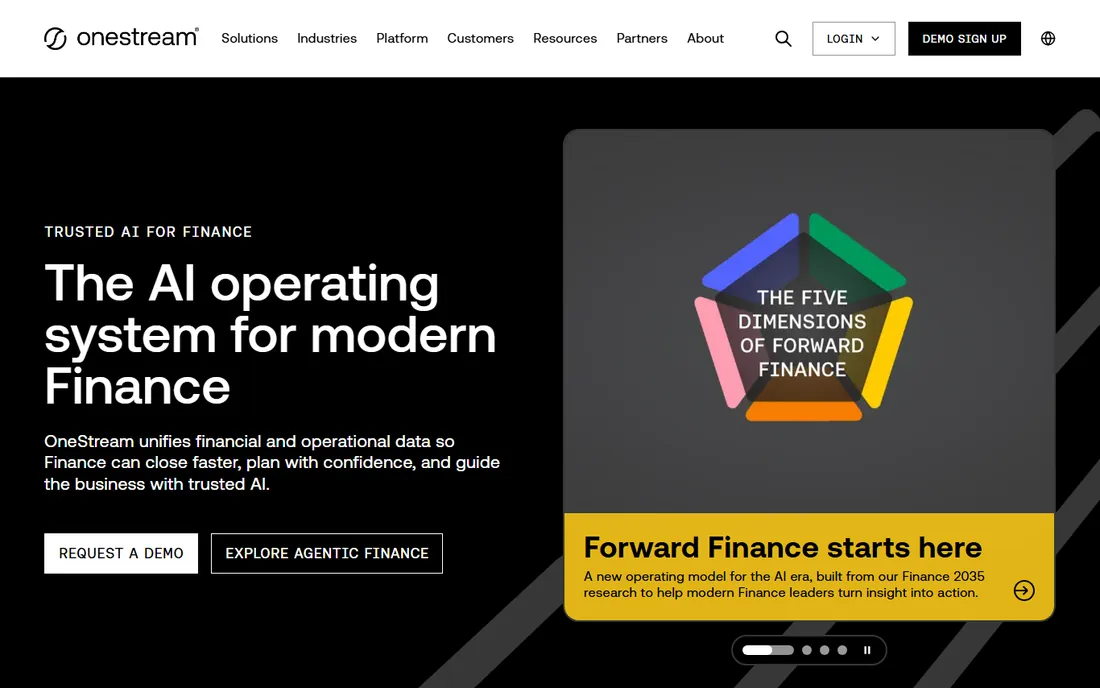
OneStream's pitch is unity: planning, financial close, consolidation and reporting on one platform instead of stitched-together modules. Customers report unusual loyalty, and the marketplace extends the platform. The unified data model eliminates reconciliation between planning and actuals systems.
Enterprise pricing and partner-led implementation apply. But for finance teams exhausted by integrating separate planning, close and reporting tools, OneStream's single-platform promise resonates strongly.
What we like- Single platform for planning, close and reporting
- Strong customer loyalty
- Extensible marketplace
Watch out for- Enterprise pricing
- Implementation needs partners
- Newer than Oracle/SAP
#4
Workday Adaptive Planning
Best for: Planning for Workday customers
Visit workday.com
Starting priceSee website
Free planNo
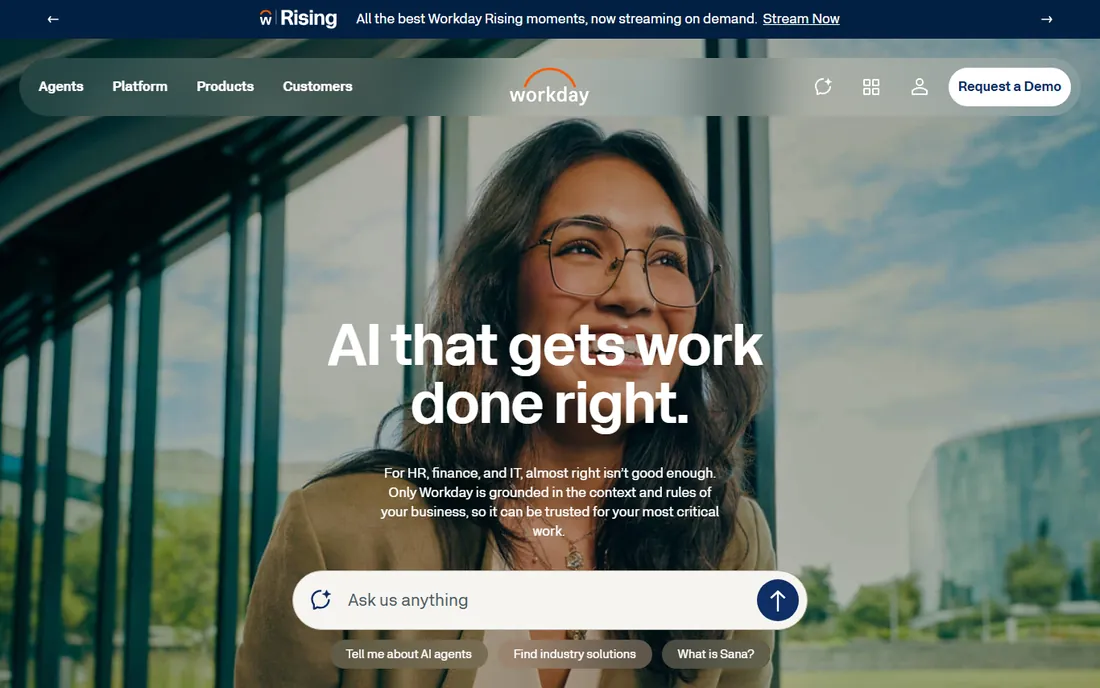
Workday Adaptive Planning gives Workday customers native financial and workforce planning. The usability is better than traditional EPM, and workforce planning benefits from the HCM data already in Workday. Finance teams on Workday get planning without another vendor.
The value concentrates inside the Workday ecosystem. Some specialized areas trail pure-play EPM depth. But Workday shops get capable planning with the integration and usability advantages of the platform they already run.
What we like- Native Workday integration
- Good usability
- Strong for workforce planning
Watch out for- Best inside Workday
- Enterprise pricing
- Depth trails specialists in some areas
Starting priceSee website
Free planFree trial
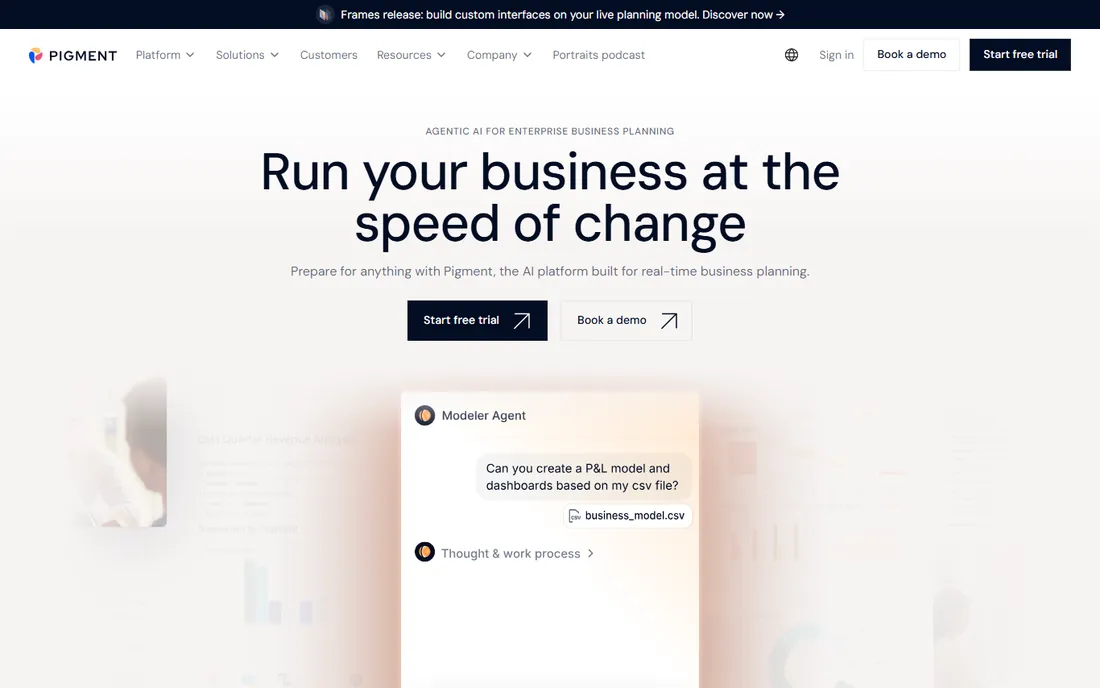
Pigment is the modern challenger: flexible planning models with a user experience that feels contemporary, not inherited. Finance teams frustrated with legacy EPM complexity get powerful modeling without the implementation archaeology. Growth and funding signal momentum.
The vendor is newer with enterprise depth still building and a smaller ecosystem. But for companies choosing EPM fresh, Pigment's modern architecture avoids the legacy compromises the incumbents carry.
What we like- Modern, flexible modeling
- Good UX
- Fast-growing challenger
Watch out for- Newer vendor
- Enterprise depth still building
- Ecosystem smaller
Starting priceSee website
Free planNo
Vena meets finance teams where they live: Excel. Planning, budgeting and reporting run through the familiar spreadsheet interface, backed by a controlled database. Adoption is fast because the learning curve is nearly zero for Excel users. The approach respects how finance actually works.
Excel is also the ceiling: the most advanced modeling eventually strains the metaphor. But for the vast middle of finance teams that think in spreadsheets, Vena's Excel-native design removes the adoption barrier that kills EPM projects.
What we like- Works inside Excel
- Fast adoption
- Good for Excel-centric finance teams
Watch out for- Excel dependency is also the limit
- Enterprise pricing
- Needs the Vena platform
Starting priceSee website
Free planNo
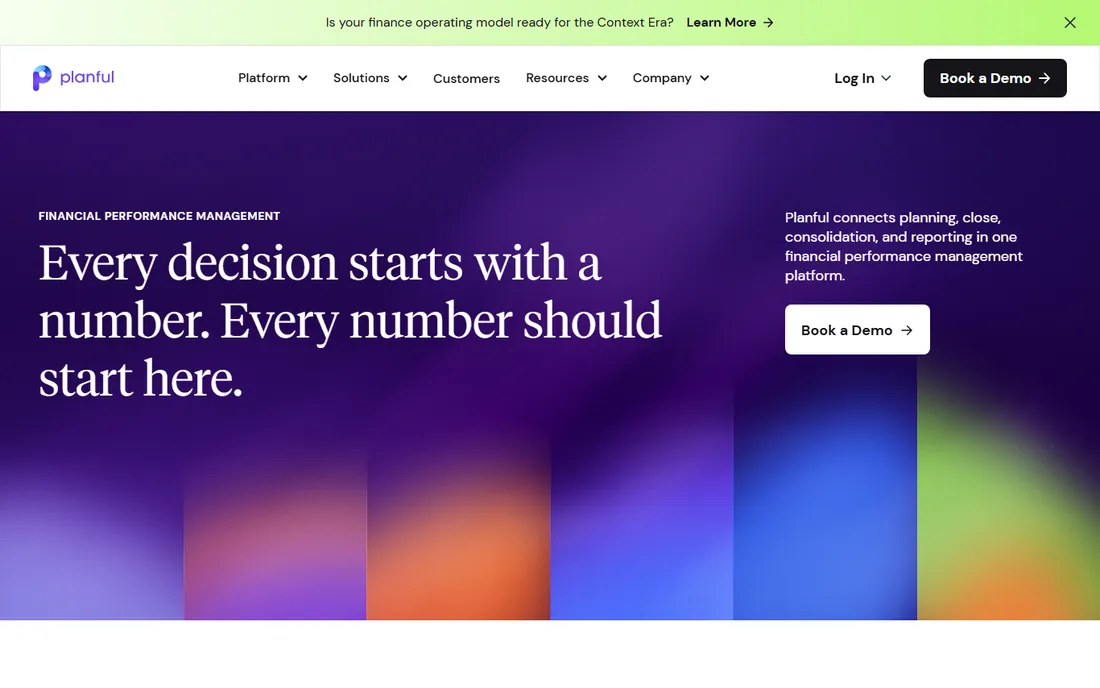
Planful champions continuous planning: rolling forecasts and agile budgeting instead of annual rituals. The mid-market focus means faster implementations and pricing that fits, with enough depth for serious FP&A. Companies outgrowing spreadsheets find a natural step up.
Enterprise depth trails the leaders, and the ecosystem is smaller. But for mid-market companies wanting modern planning without enterprise overhead, Planful's continuous approach matches how businesses actually operate now.
What we like- Continuous planning approach
- Good mid-market fit
- Faster implementation
Watch out for- Enterprise depth trails leaders
- Smaller ecosystem
- Brand awareness lower
Starting priceSee website
Free planNo
Prophix automates the FP&A grind: budgeting, forecasting, reporting and consolidation with workflow that reduces manual effort. Mid-market finance teams get enterprise-style automation at accessible scale. The virtual financial analyst features push toward self-service insight.
The mid-market focus is also the ceiling; the largest enterprises need more. But for companies where the finance team is small and the spreadsheet burden large, Prophix's automation delivers the most relief per dollar.
What we like- Strong automation of FP&A processes
- Good for mid-market
- Virtual financial analyst features
Watch out for- Mid-market ceiling
- Enterprise features trail
- Smaller brand
Starting priceSee website
Free planFree trial
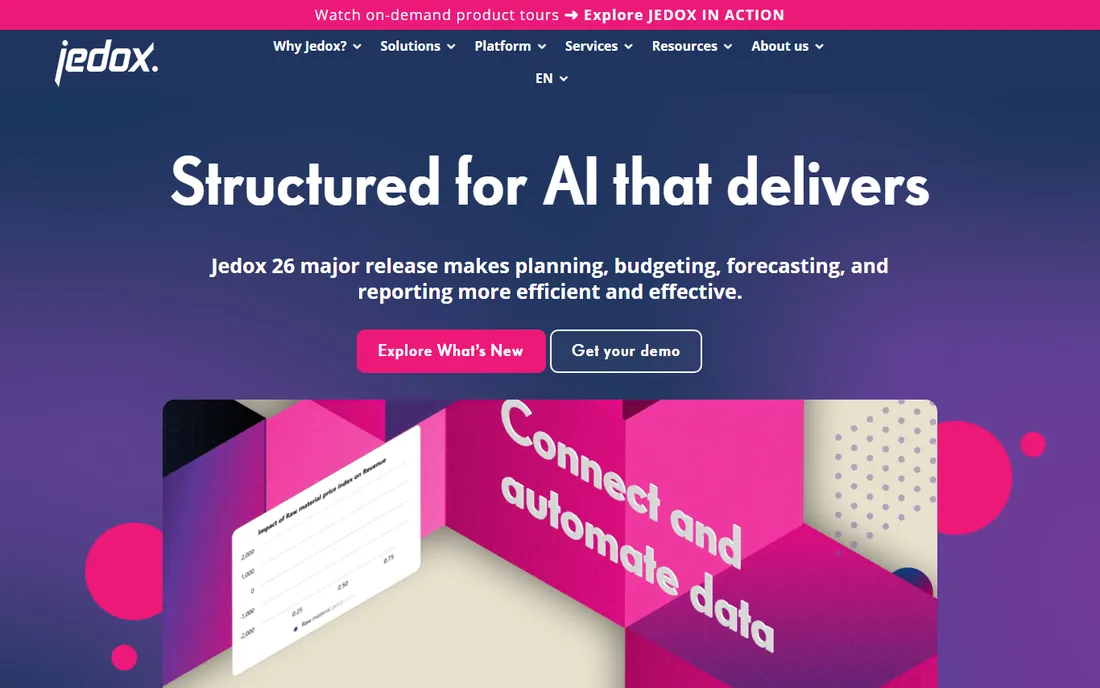
Jedox combines planning, budgeting, reporting and dashboards in one platform with Excel-like modeling that finance users grasp quickly. European adoption is strong, and the integrated approach covers the full performance management cycle without separate BI tools.
Brand awareness outside Europe is lower, and the ecosystem is smaller than the giants. But for companies wanting planning and reporting unified with familiar modeling, Jedox's integrated platform is compelling.
What we like- Integrated planning, reporting and dashboards
- Excel-like modeling
- Strong in Europe
Watch out for- Brand awareness lower outside Europe
- Enterprise features vary
- Ecosystem smaller
Starting priceSee website
Free planNo
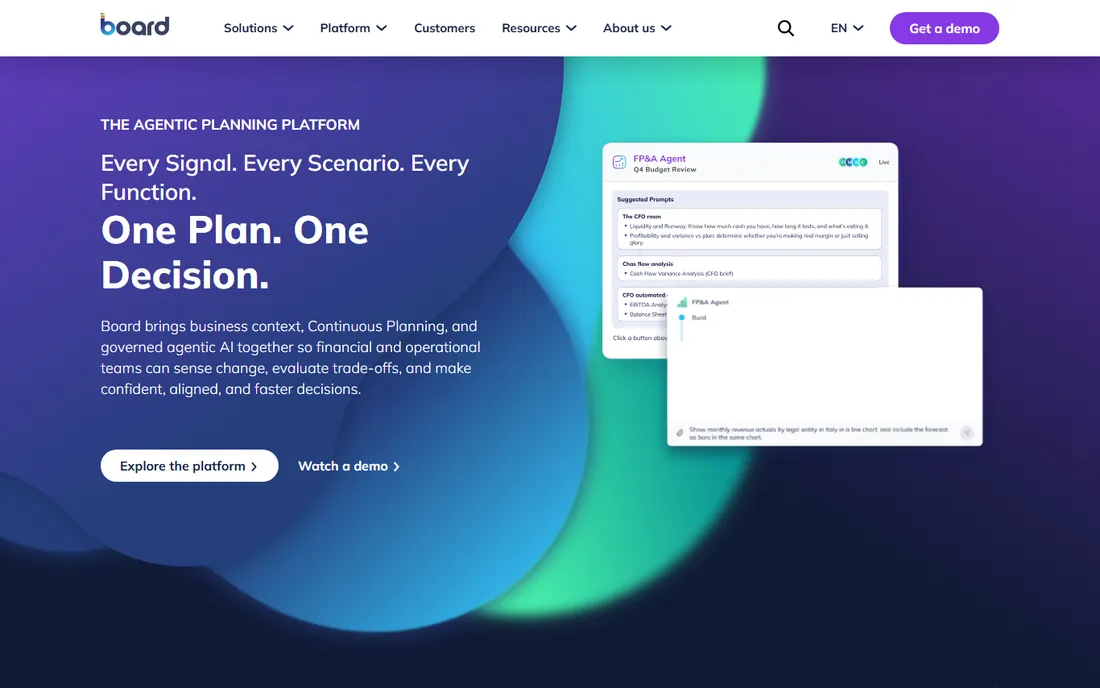
Board unifies planning, BI and predictive analytics: one platform for planning the numbers and analyzing them. The combination suits organizations where planning and analytics currently live in separate tools with separate truths. Decision-making improves when plans and analysis share data.
The between-categories positioning confuses some buyers, and the ecosystem is smaller than pure-play leaders. But for companies wanting planning and analytics converged, Board's unified vision eliminates the integration tax.
What we like- Planning plus BI and analytics unified
- Good for decision-making
- Flexible
Watch out for- Positioning between categories confuses
- Enterprise pricing
- Smaller ecosystem
How we chose
We covered enterprise EPM suites, connected planning, modern challengers and mid-market FP&A. Each product was verified as currently offered, noting Vena's move to vena.ai. Pricing is quote-based across this category, so we marked it honestly. We weighed planning depth, close and consolidation, usability, architecture and ecosystem fit. No vendor paid for placement and we claimed no hands-on testing.
Suite vs best-of-breed
The architectural choice shapes everything. Unified suites like OneStream and Oracle EPM put planning, close and reporting on one data model. Connected platforms like Anaplan link functional plans. Best-of-breed combines specialized tools.
Unified suites reduce reconciliation and integration work but demand platform commitment. Connected planning suits organizations where cross-functional alignment is the problem. Best-of-breed maximizes each function's capability at integration cost. Most large enterprises end up with a suite anchor plus specialized satellites; the question is which suite anchors.
What to check before you choose
Involve the actual planners, not just finance leadership. EPM fails when the people building budgets hate the tool. Usability with real models and real users predicts adoption better than feature checklists.
Plan the data integration honestly. EPM value depends on actuals, headcount and operational data flowing in. Map the sources, the owners and the effort before buying. And budget the implementation properly: licenses are the smaller cost next to the consulting and internal time that makes EPM work.
The annual budget vs rolling forecast debate
The deepest question in performance management is not which software but which planning philosophy. The traditional annual budget sets fixed targets for twelve months, then measures variance. It provides accountability and a clear baseline. It also becomes obsolete by March in volatile markets, encourages gaming the targets, and consumes enormous effort for a document that guides less and less.
Rolling forecasts take the opposite approach: always looking twelve to eighteen months ahead, updated quarterly or monthly. The forecast stays relevant because it never ages out. Planning becomes continuous rather than episodic. The trade-off is accountability: without fixed targets, holding people to commitments gets murkier, and the constant updating can feel like planning that never ends.
Most mature organizations now run both, separated by purpose. The budget becomes the commitment device: the numbers the business promises to deliver. The forecast becomes the management tool: the realistic view used for decisions. The software must support both without confusing them, which is why planning platforms distinguish targets from forecasts as separate concepts.
The practical advice is to evolve gradually. Companies cannot jump from spreadsheet annual budgets to driver-based rolling forecasts in one leap. Start by improving the annual process on the new platform, add quarterly reforecasting, then extend the horizon. Each step builds the data discipline and organizational muscle the next requires. The software enables the journey; the philosophy determines the destination. Choose the platform that supports where you are heading, not just where you are.
Frequently asked questions
What is enterprise performance management software?
Software for planning, budgeting, forecasting, financial consolidation and reporting. EPM helps organizations set targets, track performance against them and adjust. It replaces spreadsheet-based planning with controlled, collaborative processes.
What is the difference between EPM and FP&A software?
The terms overlap heavily. EPM traditionally covers the full cycle including close and consolidation; FP&A software focuses on planning and analysis. Many products do both. Mid-market tools often say FP&A; enterprise suites say EPM.
How much does EPM software cost?
Enterprise EPM is priced by quote, typically six figures annually for large deployments. Mid-market tools are more accessible. Implementation often exceeds first-year licenses. Always budget consulting and internal time alongside software.
Oracle EPM vs Anaplan vs OneStream: which is best?
Oracle EPM suits Oracle-centric enterprises wanting the full suite. Anaplan suits connected cross-functional planning. OneStream suits finance teams wanting planning, close and reporting unified. The best follows existing stack, planning philosophy and scale.
Can mid-market companies use EPM software?
Yes. Planful, Prophix, Vena and Pigment specifically serve the mid-market with faster implementations and accessible pricing. The key is matching platform scale to company scale; enterprise suites overwhelm smaller finance teams.
Sources we checked (10)
- https://www.oracle.com
- https://www.anaplan.com
- https://www.onestream.com
- https://www.workday.com
- https://www.pigment.com
- https://vena.ai
- https://planful.com
- https://www.prophix.com
- https://www.jedox.com/en/
- https://www.board.com
Is your product missing or out of date?
We review this list regularly. Vendors can request a listing, send updated pricing or ask about featured placement.

Shihab Mia · Founder, Rankite
Shihab has spent more than a decade helping SaaS and e-commerce brands grow through search. He writes Rankite's software buying guides from pricing pages, documentation and public user reviews. More about Shihab.