How we make this list: we compare pricing pages, product documentation and public user reviews. Rankite is independent; if a vendor ever pays for a featured spot, that listing is clearly labeled Partner.
Key takeaways
- GitHub Copilot is the easiest team-wide adoption at $10 per user monthly, while Cursor is the power user's choice at $20.
- v0, Bolt.new and Lovable serve prompt-to-app building for prototypes and non-developers, not professional codebases.
- Tabnine, now part of Tricentis, remains the privacy-conscious choice with local model options.
- Claude Code and Cline represent the agent wave: AI that works across files and terminals, not just autocomplete.
Quick comparison
| Tool | Best for | Starting price | Free plan |
|---|
 GitHub Copilot GitHub Copilot | Team-wide AI pair programming | $10/user/month | Yes |
 Cursor Cursor | AI-first IDE for professionals | $20/month | Yes |
 Replit Replit | Cloud workspace with built-in AI | $20/month | Yes |
 v0 v0 | UI generation for React apps | $30/month | Yes |
 Bolt.new Bolt.new | Rapid browser-based prototyping | $25/month | Yes |
 Lovable Lovable | App building for non-developers | $25/month | Yes |
 Tabnine Tabnine | Privacy-focused code completion | Free | Yes |
 Amazon Q Developer Amazon Q Developer | AWS-centric development | Free | Yes |
 Claude Code Claude Code | Terminal-native coding agent | See website | Yes |
 Cline Cline | Open-source VS Code coding agent | Free | Yes |
Is your product missing or out of date?
We review this list regularly. Vendors can request a listing, send updated pricing or ask about featured placement.
Starting price$10/user/month
Free planYes
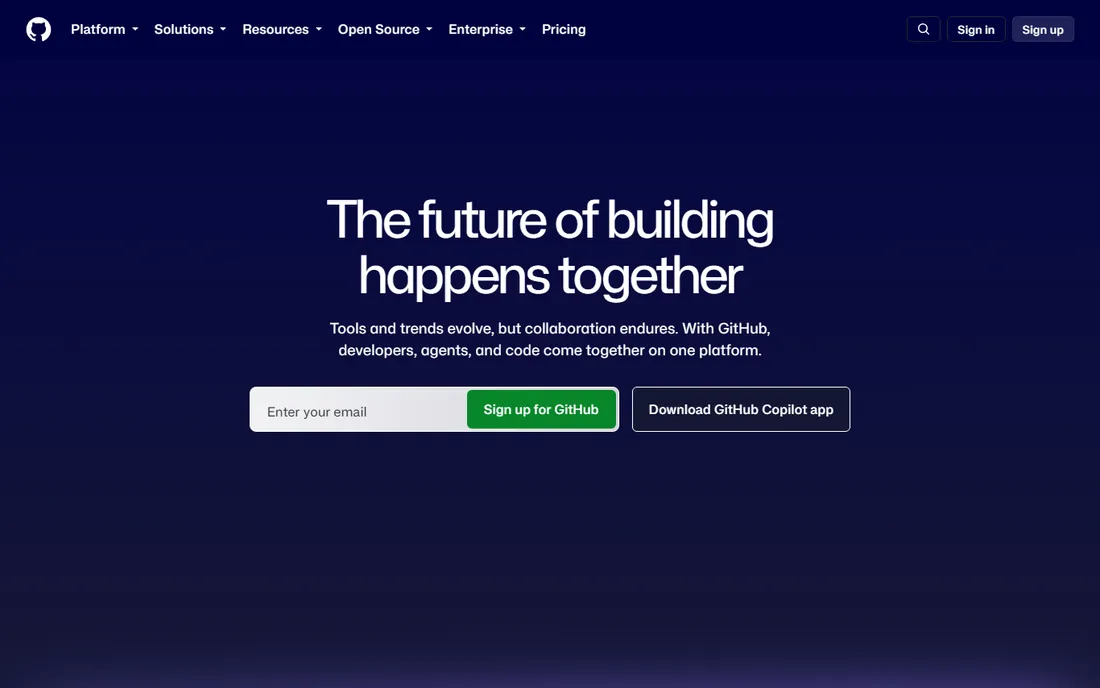
GitHub Copilot is the default AI coding assistant for teams: $10 per user monthly, inline completions in every major editor, and GitHub integration that makes rollout trivial. For organizations standardizing AI assistance, the combination of price, familiarity and admin controls is unbeatable. The free tier covers individuals with monthly limits.
Agent-mode features trail Cursor's depth, and every suggestion still needs human review. Enterprise plans cost more. But as the value play for team-wide adoption, Copilot's position is secure: it made AI pair programming normal.
What we like- Easiest org-wide adoption
- Excellent inline completions
- Deep GitHub integration
Watch out for- Agent features trail Cursor
- Suggestions need review
- Enterprise tier costs more
Starting price$20/month
Free planYes
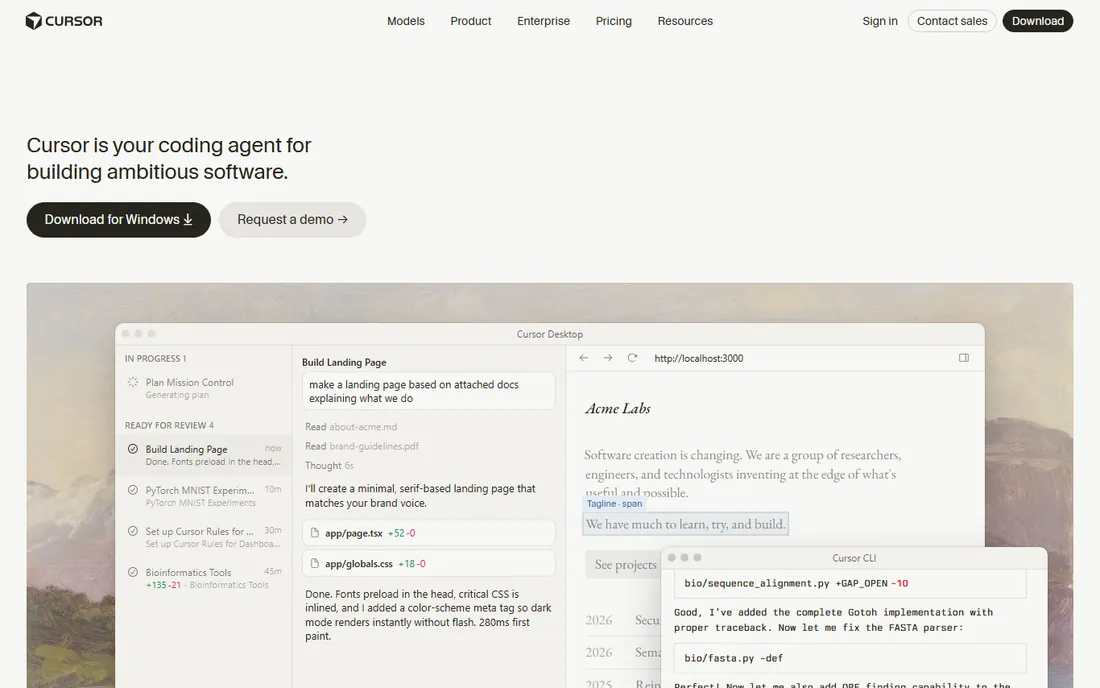
Cursor rebuilt the IDE around AI. Composer mode edits across files with full codebase awareness, the agent plans and executes complex refactors, and tab completion learns project conventions. Professional developers who write code all day consistently rate it the most productive AI environment.
It costs $20 monthly per developer, which adds up across teams. The full power needs learning; casual users get completions without the agentic depth. But for the daily craft of professional development, Cursor is the current benchmark.
What we like- Best agentic editing with codebase awareness
- Multi-file refactors
- Composer mode
Watch out for- $20 monthly per developer
- Learning curve for full power
- Fast-moving product
Starting price$20/month
Free planYes
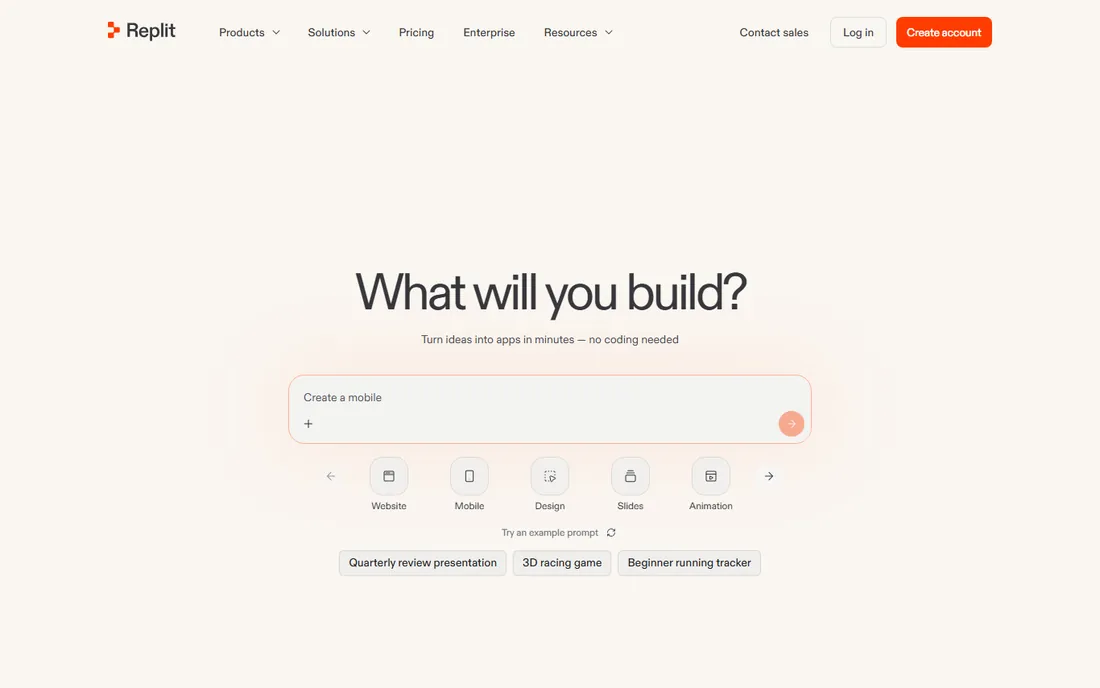
Replit removed local setup from development: code in the browser, with AI assistance and agents that build apps from prompts, and deploy instantly. Teams, students and prototypers get a complete environment without configuration. The free tier is genuinely useful.
It is cloud-only, which excludes offline work and some enterprise policies. Heavy usage costs scale. Large existing codebases fit less naturally than greenfield projects. But for fast building without infrastructure, Replit's integrated simplicity is unique.
What we like- Zero-setup cloud development
- AI agent builds apps from prompts
- Instant deployment
Watch out for- Cloud-only
- Costs scale with use
- Less suited to large existing codebases
Starting price$30/month
Free planYes
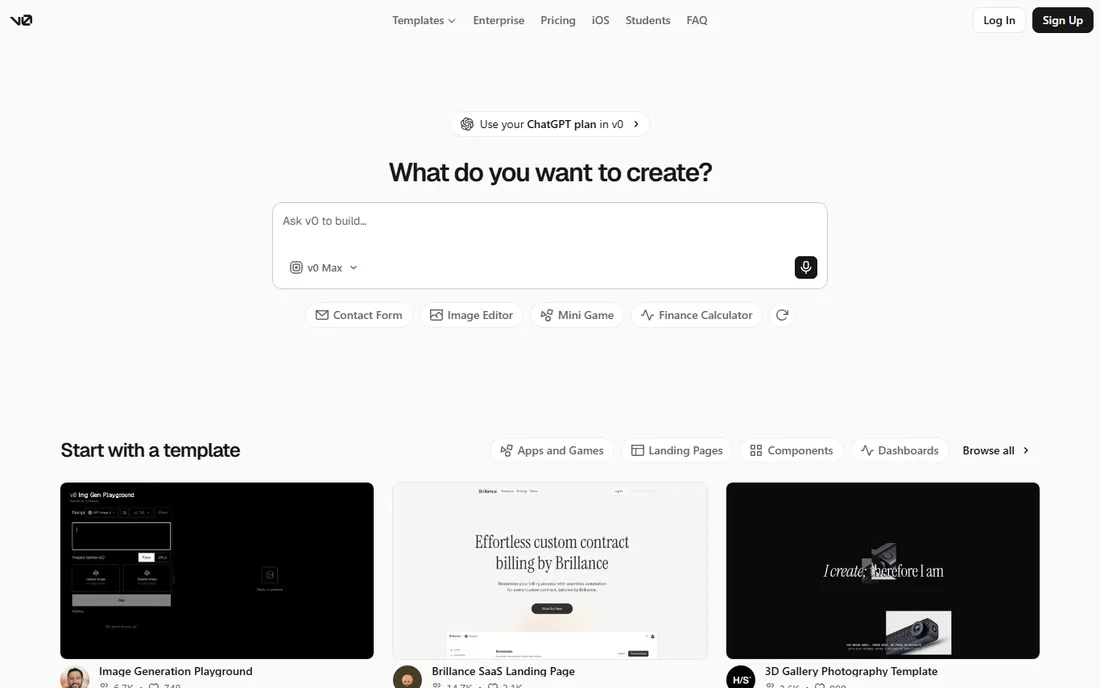
v0, from Vercel, generates user interfaces from prompts with remarkable quality for React and modern frameworks. Describe the screen, get working code, deploy to Vercel instantly. Designers and frontend developers use it to skip the blank-canvas phase.
It generates UI, not application logic; backends and complex state need developers. The $30 monthly price targets professionals. But for the specific job of turning ideas into real interfaces fast, v0 is the best in class.
What we like- Excellent React and UI generation
- Vercel deployment built in
- Framework flexibility
Watch out for- UI-focused, not full-stack logic
- $30 monthly
- Designs need developer finishing
Starting price$25/month
Free planYes
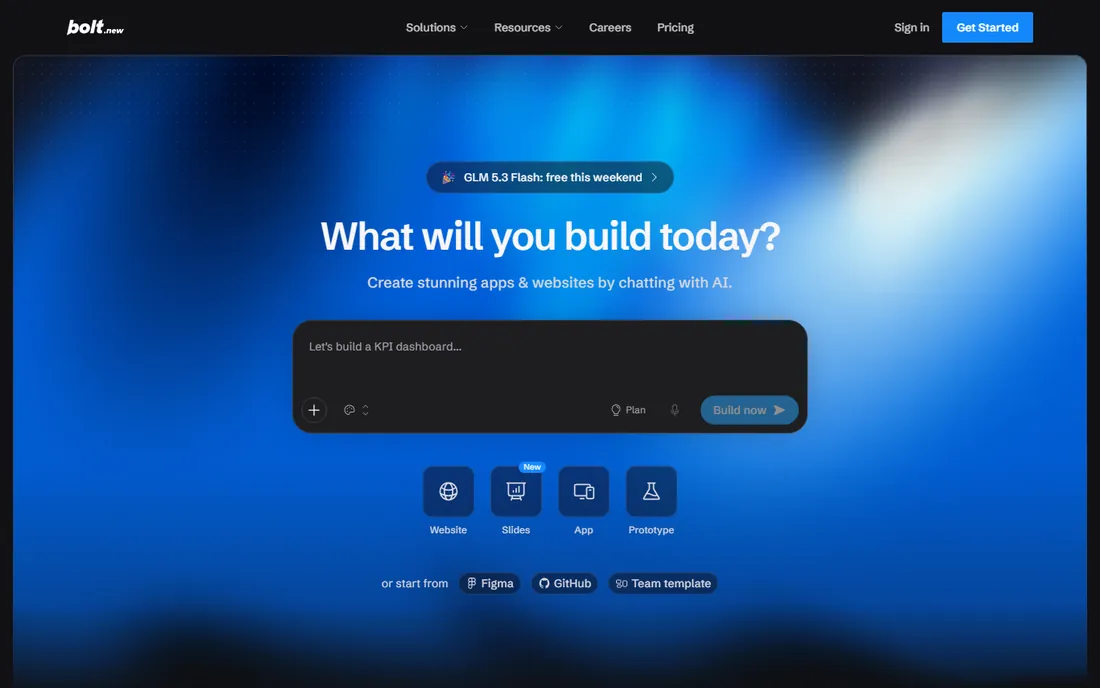
Bolt.new, from StackBlitz, turns prompts into working full-stack apps entirely in the browser: frontend, backend and deployment without local tools. Non-developers and developers alike prototype ideas in minutes. The free tier lets anyone try.
Prototypes are starting points, not production systems; serious apps need developer hardening. Token-based costs scale with use. But for validating ideas fast, Bolt.new's prompt-to-deployed-app loop is the quickest available.
What we like- Full-stack prototypes in the browser
- Instant preview and deploy
- Beginner friendly
Watch out for- Prototypes need hardening for production
- Token costs scale
- Less control than code
Starting price$25/month
Free planYes
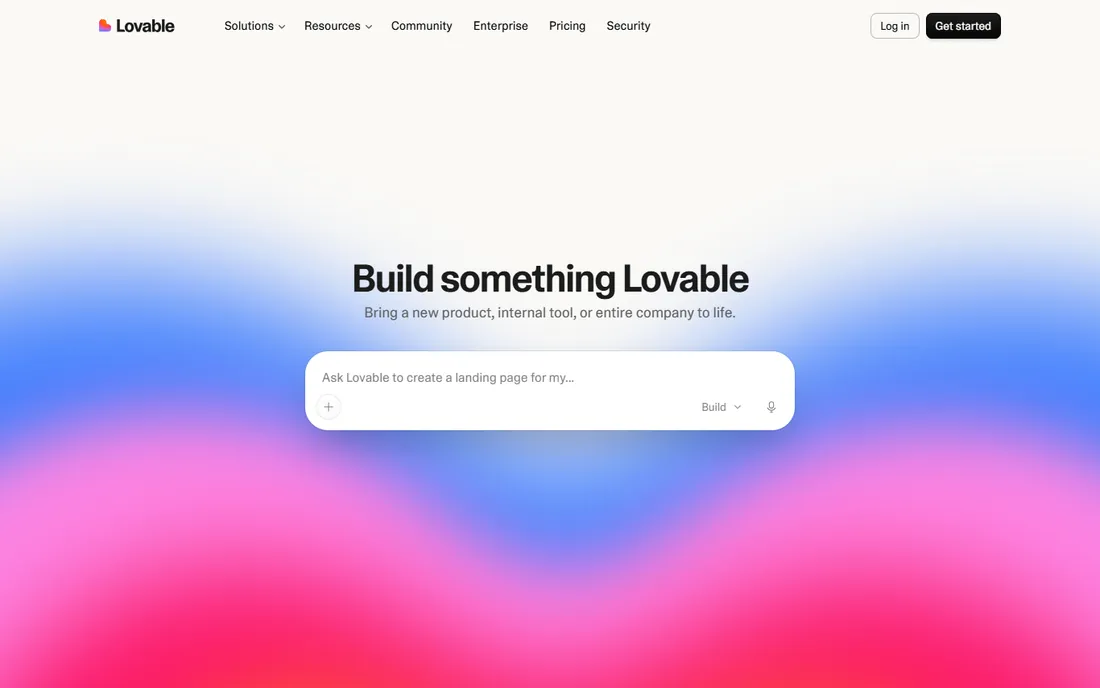
Lovable targets non-technical founders: describe the app, get a working product with backend and deployment. Code export means developers can take over later, which addresses the lock-in fear. For validating business ideas without engineers, it is the most accessible option.
Complex applications exceed what prompt-building handles well, and polished results need iteration. But the democratization is real: founders now test ideas that previously needed a technical co-founder.
What we like- Most accessible for non-technical founders
- Code export available
- Built-in deployment
Watch out for- Limited for complex apps
- $25 monthly
- Design polish needs iteration
Starting priceFree
Free planYes

Tabnine, now part of Tricentis, built its name on privacy: local models that never send code to the cloud, which matters for regulated industries and security-conscious teams. Enterprise compliance features and the Tricentis backing strengthen the business case.
Cloud-based competitors produce better completions from larger models. The acquisition raises the usual roadmap questions. But for organizations where code cannot leave the building, Tabnine's local-first approach remains the answer.
What we like- Local models keep code private
- Enterprise compliance story
- Now backed by Tricentis
Watch out for- Completions trail cloud giants
- Acquisition adds roadmap questions
- Agent features are newer
Starting priceFree
Free planYes

Amazon Q Developer understands AWS: infrastructure code, service APIs and cloud best practices come naturally. The free tier covers individuals, and AWS shops get assistance tuned to their stack. Agents handle multi-step development tasks.
Outside AWS the value thins, and general coding assistance trails Copilot and Cursor. But for the enormous AWS developer base, Q's cloud-specific knowledge makes it the natural companion.
What we like- Deep AWS knowledge
- Free tier for individuals
- Good for cloud infrastructure code
Watch out for- Best inside AWS
- General coding trails leaders
- Enterprise features need Pro
Starting priceSee website
Free planYes
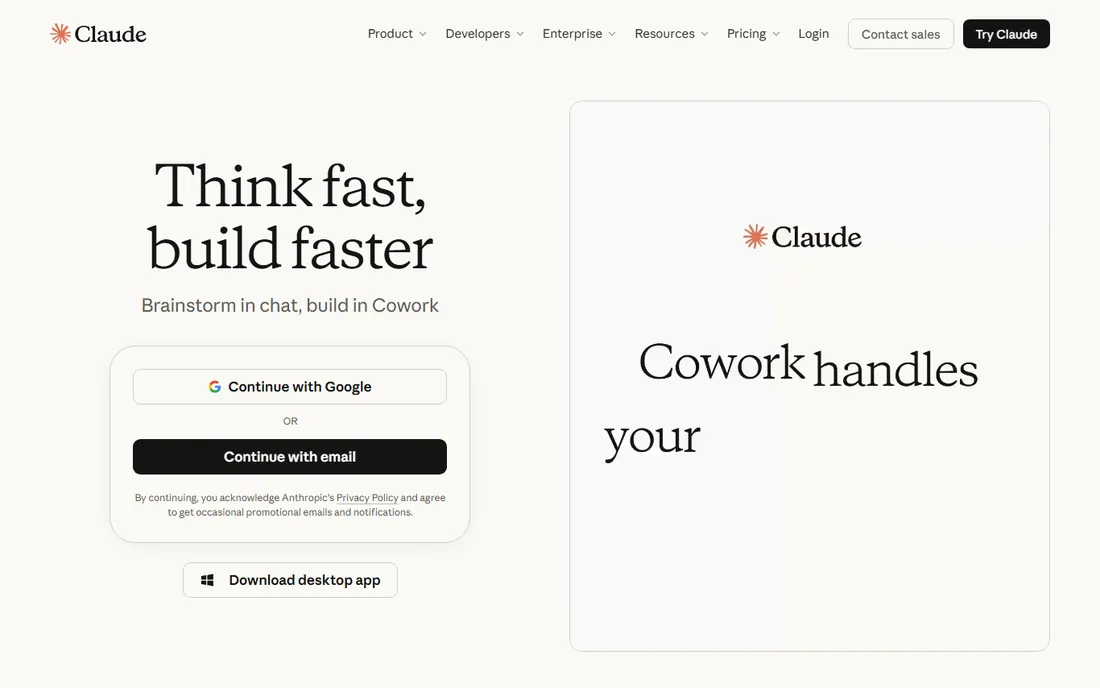
Claude Code, from Anthropic, is the terminal-native agent: it reads codebases, plans changes, edits across files and runs commands, all from the command line. Developers comfortable in terminals get an agent that handles genuinely complex tasks with strong reasoning.
The terminal-first design excludes developers who prefer GUIs. Costs are usage-based and vary with intensity. But for hard refactoring and repository-level work, Claude Code's agentic depth is the most capable available.
What we like- Powerful agentic terminal workflows
- Excellent at complex refactors
- Strong reasoning
Watch out for- Terminal-first excludes GUI lovers
- Usage-based costs vary
- Advanced skill needed
Starting priceFree
Free planYes
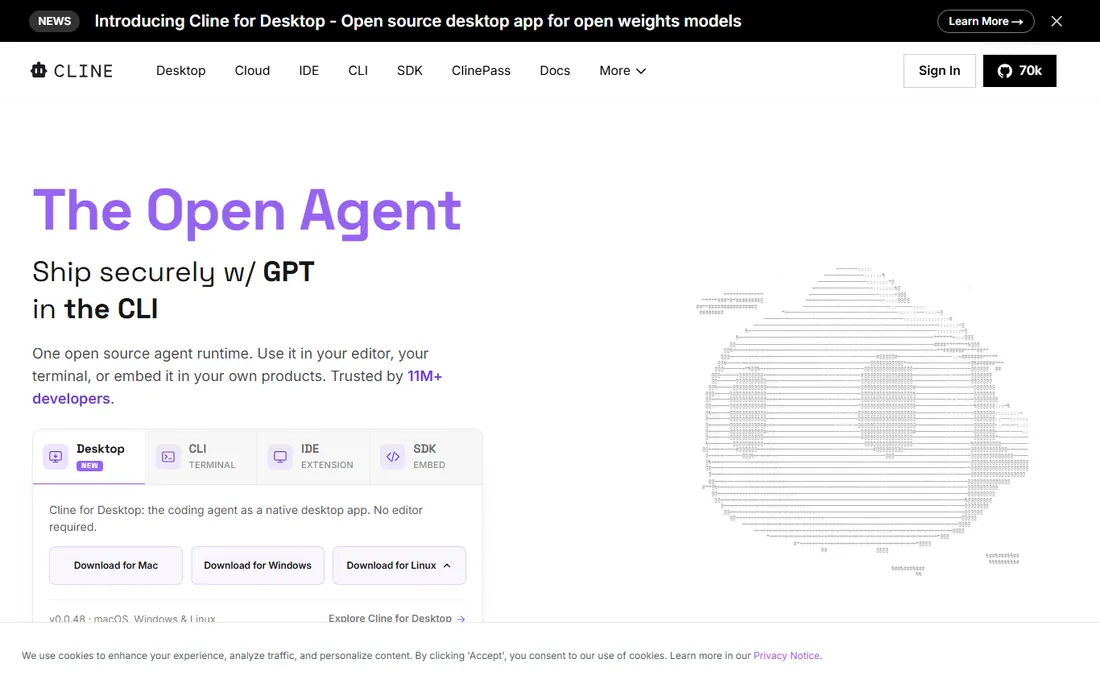
Cline brings agentic coding to VS Code as open source: plan, edit and execute with your choice of models via your own API keys. Developers who want agent capabilities without subscriptions or vendor lock-in get a capable, extensible tool.
You supply the model API keys, which means managing costs and keys yourself. Polish trails commercial products, and support is community-based. But for the open-source-minded, Cline's flexibility and transparency are the appeal.
What we like- Open source and extensible
- Works in VS Code
- Model-agnostic with your API keys
Watch out for- Needs your own model API keys
- Less polished than commercial tools
- Community support
How we chose
We covered AI IDEs, coding assistants, prompt-to-app builders and terminal agents, drawing on 2026 comparisons and practitioner consensus. Each product was verified as currently offered, noting Windsurf's absorption into Devin, which is why it was replaced here, and Tabnine's move to Tricentis. Pricing came from vendor pages and recent comparisons where published. No vendor paid for placement and we claimed no hands-on testing.
Assistant vs agent vs builder
These are different tools. Assistants like Copilot and Tabnine complete code inline as you type. Agents like Cursor, Claude Code and Cline plan and execute multi-step changes across files. Builders like v0, Bolt.new and Lovable generate apps from prompts for prototyping.
Most professional developers combine an assistant for speed with an agent for hard tasks. Builders serve prototyping and non-developers, not production codebases. Buying a builder for professional development, or an agent for simple completion, mismatches the tool to the job.
What to check before you choose
Evaluate on your own codebase, not demos. Agent quality varies enormously with repository size, language and conventions. Run a real two-week trial on actual work before committing a team.
Check the security and compliance story. Code sent to cloud models concerns regulated industries; Tabnine's local models and enterprise tiers address this. Verify data retention, training policies and SSO before rollout. And model the total cost: per-seat subscriptions plus any usage-based charges at your team's actual intensity.
Code review in the age of AI
AI assistance changes code review from optional to essential. When developers write every line by hand, they understand the code's intent. When AI generates it, the developer may approve code they only skimmed. The review process must adapt: reviewers should assume AI-generated code needs closer scrutiny, not less, particularly for security-sensitive areas like authentication, data access and input handling.
The prompt and context deserve review too, not just the output. A common failure is AI code that works for the demonstrated case but misses edge cases the developer would have considered. Reviewers should ask what the code does not handle: error paths, empty inputs, concurrency, performance at scale. AI is optimistic; reviewers must be skeptical.
Security scanning becomes mandatory rather than nice-to-have. AI models can reproduce vulnerable patterns from their training data, including outdated cryptography, injection-prone queries and insecure defaults. Automated scanners catch the known patterns; human reviewers catch the logic flaws. Neither alone suffices. Teams using AI coding tools without security scanning are accepting unknown risk.
Attribution and licensing need a policy. Some organizations require marking AI-generated code; others restrict AI use on certain codebases. Whatever the policy, make it explicit and trainable. And keep the human learning loop alive: developers who only review AI code gradually lose the ability to write it. Reserve some work for unassisted coding, especially for junior developers building fundamentals. The goal is developers amplified by AI, not developers dependent on it.
Frequently asked questions
What is the best AI coding assistant?
GitHub Copilot is the best value for team-wide adoption. Cursor is the best for professional daily use with agentic features. Claude Code leads terminal-native agents. The best depends on workflow: IDE, terminal or team rollout.
How much does GitHub Copilot cost?
GitHub Copilot costs $10 per user monthly for Pro and Business plans, with Enterprise at higher tiers. A free tier offers limited completions for individuals. Team adoption at $10 per seat is the value benchmark competitors are measured against.
What happened to Windsurf?
Windsurf, originally Codeium's AI IDE, was acquired by Cognition, the company behind Devin. The product is being folded into Cognition's offerings, with windsurf.com redirecting to Devin's desktop pages. Users should evaluate Devin's current lineup directly.
Can AI build a complete app?
Prompt-to-app builders like Lovable, Bolt.new and v0 produce working prototypes and simple apps. Production applications with real users still need developer hardening for security, scale and edge cases. AI accelerates building enormously; it does not remove engineering judgment.
Is AI-generated code safe to use?
AI-generated code needs review like any code. Security vulnerabilities, subtle bugs and licensing questions all require human judgment. Establish review practices, run security scanners, and never deploy AI-generated code without testing. The tools amplify developers; they do not replace them.
Sources we checked (12)
- https://github.com
- https://cursor.com
- https://replit.com
- https://v0.app
- https://bolt.new
- https://lovable.dev
- https://www.tricentis.com
- https://aws.amazon.com
- https://claude.com
- https://cline.bot
- https://www.marktechpost.com/2026/06/10/ai-coding-agents-development-platforms-2026/
- https://memeburn.com/best-vibe-coding-tools/
Is your product missing or out of date?
We review this list regularly. Vendors can request a listing, send updated pricing or ask about featured placement.

Shihab Mia · Founder, Rankite
Shihab has spent more than a decade helping SaaS and e-commerce brands grow through search. He writes Rankite's software buying guides from pricing pages, documentation and public user reviews. More about Shihab.