How we make this list: we compare pricing pages, product documentation and public user reviews. Rankite is independent; if a vendor ever pays for a featured spot, that listing is clearly labeled Partner.
Key takeaways
- "API management" is two products in one name: gateways that route and secure traffic, and full-lifecycle platforms with portals, analytics and monetization. Know which half you need before you compare.
- Kong and Tyk are the open-source gateway standards; Kong's managed Konnect Plus starts at $25 a month while the gateway itself is free to self-host.
- Zuplo is the simplest managed start: a free tier with 100K requests a month and a $25 Builder plan, edge-native with no infrastructure to run.
- AWS API Gateway and Azure API Management win when you are already on that cloud; both bill per million calls starting around $3.50.
- Google Apigee and MuleSoft are the enterprise full-lifecycle picks, with Apigee's pay-as-you-go starting at $365 a month per environment plus $20 per million calls.
Quick comparison
| Tool | Best for | Starting price | Free plan |
|---|
 Kong Kong | High-performance open-source gateway | $25/month (Konnect Plus serverless) | Yes (open source; 30-day Konnect trial) |
 Zuplo Zuplo | Simplest managed gateway | $25/month (Builder) | Yes |
 Tyk Tyk | Lightweight open-source gateway | See website (free open source) | Yes (open source) |
 AWS API Gateway AWS API Gateway | Serverless APIs on AWS | $3.50 per 1M REST API calls | Yes (12-month free tier) |
 Azure API Management Azure API Management | Azure-centric teams | ~$3.50 per 1M calls (Consumption tier) | Yes (1M free calls on Consumption) |
 Google Apigee Google Apigee | Enterprise API programs and monetization | $365/month per environment + $20 per 1M calls (pay-as-you-go) | No |
 WSO2 WSO2 | Pay-as-you-go full API platform | From $119/month (Pay-As-You-Go) | Free trial (30 days) |
 Gravitee Gravitee | Open-source full API platform | See website (free community edition) | Yes (community edition) |
 MuleSoft Anypoint Platform MuleSoft Anypoint Platform | Enterprise integration plus API management | See website (quote-based) | No |
Is your product missing or out of date?
We review this list regularly. Vendors can request a listing, send updated pricing or ask about featured placement.
API management is two different products wearing one name. A gateway routes traffic, enforces rate limits and handles authentication: the bouncer at the door. A full-lifecycle platform adds the developer portal, analytics, versioning and monetization: the whole venue operation. Most teams shopping this category need the bouncer, not the venue. The nine tools below cover both, with honest pricing on each.
Gateways: route, secure and scale your APIs
Starting price$25/month (Konnect Plus serverless)
Free planYes (open source; 30-day Konnect trial)
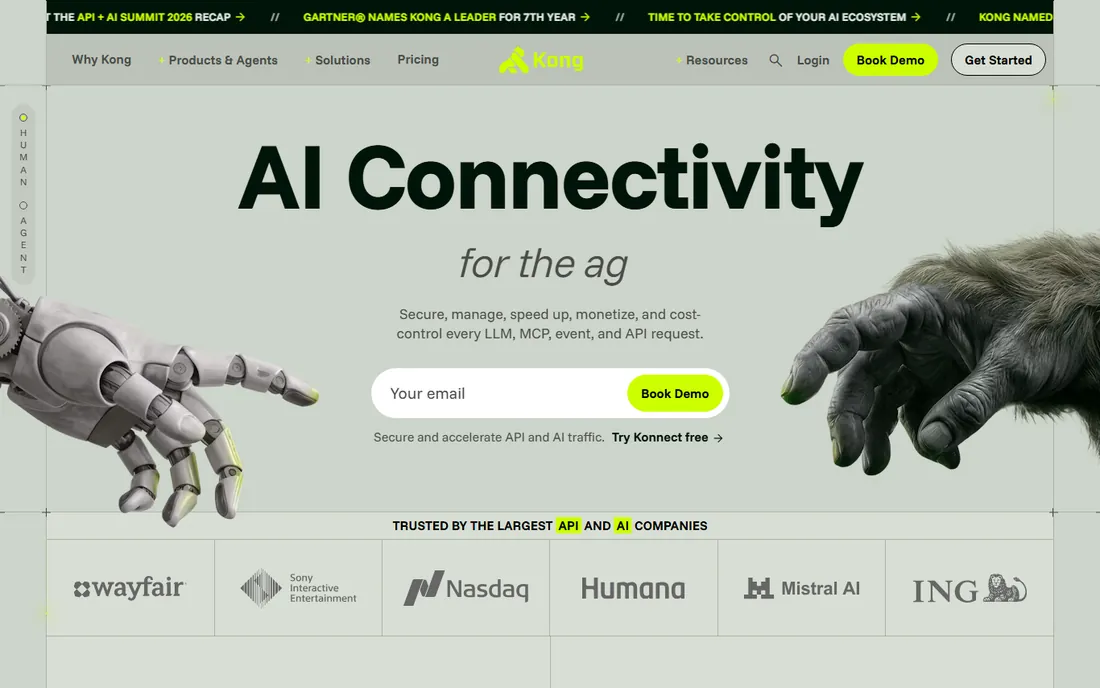
Kong Gateway is the default open-source answer for teams that run their own infrastructure. It is fast, extensible through a large plugin marketplace, and Kubernetes-native, which is why platform teams keep choosing it. The open-source gateway costs nothing but your own compute; the managed Konnect Plus control plane starts at $25 a month for serverless gateways, with hybrid and dedicated options at $200 and $500.
The trade-off is operational. You get power and flexibility; you also get a database to run and plugins to maintain. Teams with platform engineers thrive on Kong. Teams without them should look at Zuplo or the cloud-native gateways instead. Kong also ships AI gateway features, including MCP proxy support, for teams serving AI agents.
What we like- The most widely deployed open-source gateway, with a huge plugin ecosystem
- Kubernetes-native and built for serious throughput
- Konnect adds a managed control plane from $25 a month
Watch out for- Plugins are written in Lua, which narrows who can extend it
- Self-hosted operations (database, scaling) are on you
- Enterprise pricing is custom and annual
Starting price$25/month (Builder)
Free planYes
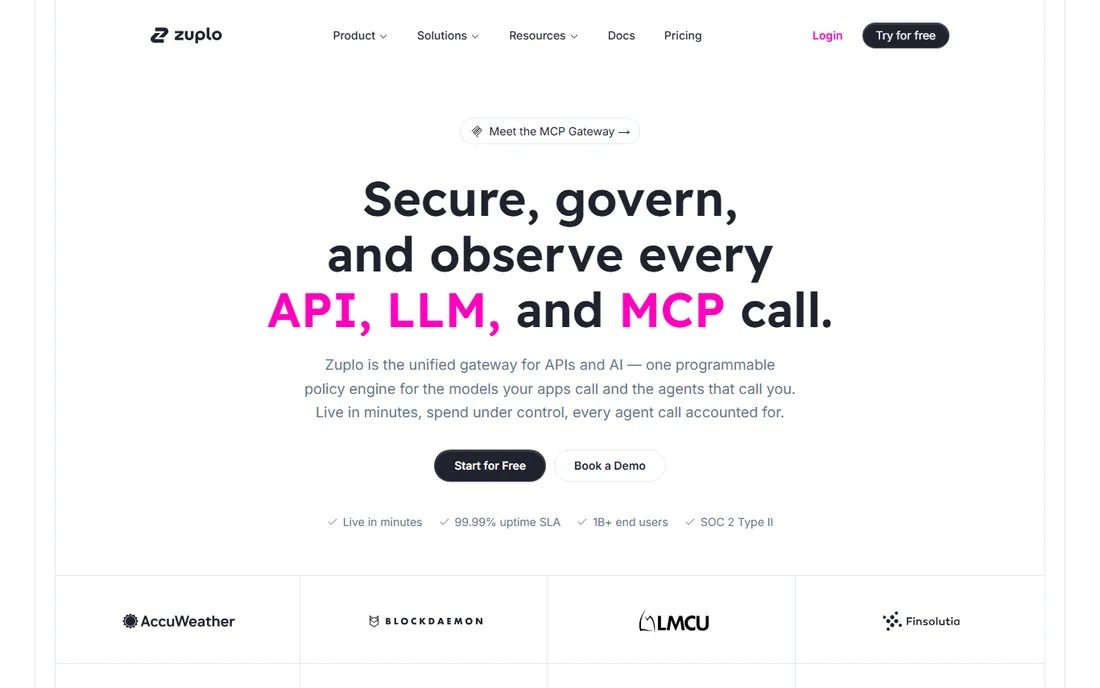
Zuplo is what you get when someone rebuilds an API gateway without the operational baggage. It deploys globally to hundreds of edge locations in seconds, configures in TypeScript instead of Lua or XML, and includes a developer portal, rate limiting, authentication and monetization on every plan. The free tier needs no credit card and no sales call.
The honest limitation is team scale. Builder at $25 a month is explicitly a solo plan; teams that need SSO, an SLA or more headroom move to Enterprise starting at $1,000 a month. For indie developers, startups and side projects shipping a production API, it is the fastest path. For enterprises, evaluate it against the cost of running Kong or a cloud gateway yourself.
What we like- Fully managed and edge-native with nothing to provision
- Generous free tier (100K requests a month)
- Programmable in TypeScript with GitOps workflows
- Developer portal and monetization included
Watch out for- Builder is a solo plan, teams need Enterprise from $1,000 a month
- Usage-based costs accumulate at high volumes
- Younger ecosystem than Kong or AWS
#3
Tyk
Best for: Lightweight open-source gateway
Visit tyk.io
Starting priceSee website (free open source)
Free planYes (open source)
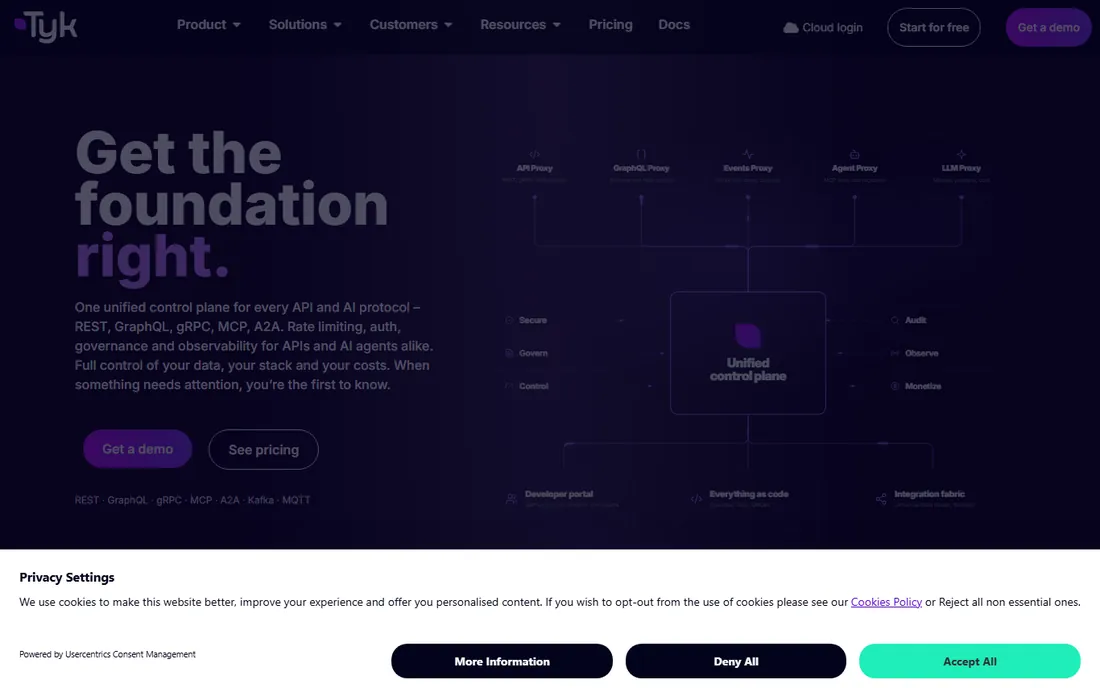
Tyk is the gateway for teams that like Kong's idea but not its weight. The open-source core is genuinely production-ready, supports GraphQL federation, and lets you write plugins in mainstream languages. It runs well in containers and Kubernetes without demanding much from your platform team.
The commercial side is quote-based, so budget planning needs a sales conversation. The ecosystem is smaller than Kong's, which means fewer ready-made plugins and community answers. Choose Tyk when you want an open-source gateway your developers can actually extend without learning Lua.
What we like- Production-ready open-source gateway with a smaller footprint than Kong
- GraphQL federation support
- Plugins in Go, Python and JavaScript instead of Lua
Watch out for- No published pricing for the managed cloud tiers
- Smaller plugin ecosystem than Kong
- Analytics and portal depth trail the full platforms
Starting price$3.50 per 1M REST API calls
Free planYes (12-month free tier)
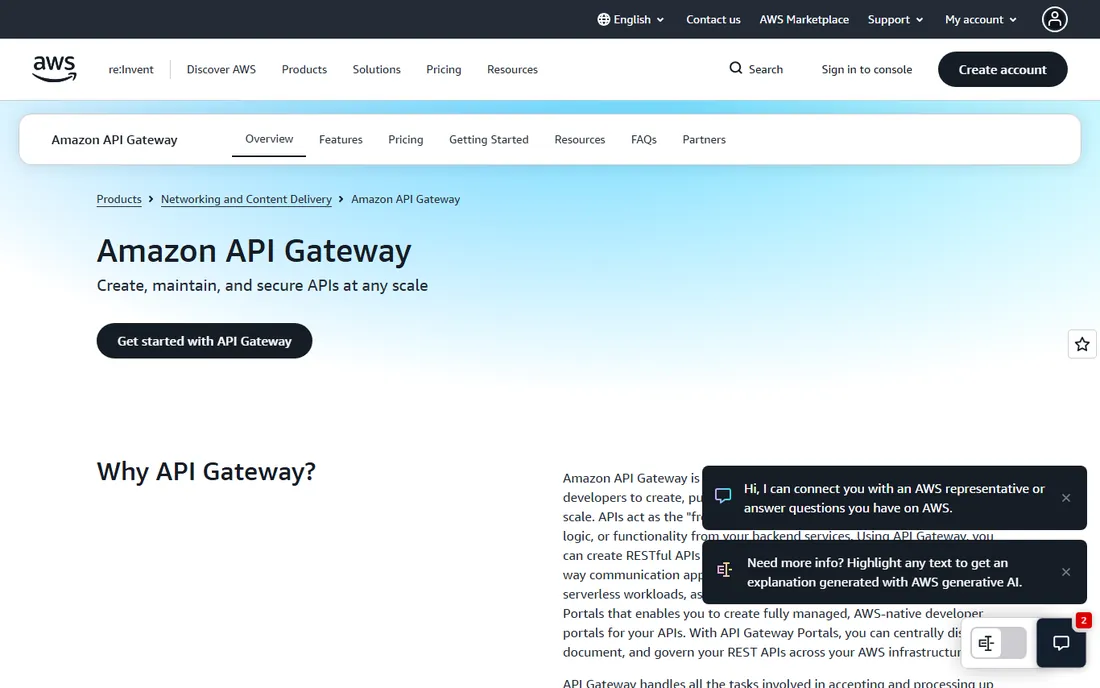
If your APIs run on Lambda and your team lives in AWS, this is the path of least resistance. API Gateway is fully managed: no instances, no patching, no scaling work. REST APIs cost about $3.50 per million requests for the first 333 million, with volume discounts below that, and HTTP APIs cost less. A 12-month free tier covers getting started.
What you do not get is a full API management platform. There is no native monetization, the developer portal is basic, and product analytics are thin. It is a gateway, not a venue. Teams that need the venue layer pair it with a portal product or move up to Apigee or MuleSoft.
What we like- Fully managed serverless with nothing to run
- Deep integration with Lambda, IAM and CloudWatch
- Pay-per-request pricing with a 12-month free tier
Watch out for- REST APIs cost $3.50 per million while HTTP APIs are cheaper, and the difference confuses buyers
- No built-in developer analytics or monetization
- AWS-only, obviously
Starting price~$3.50 per 1M calls (Consumption tier)
Free planYes (1M free calls on Consumption)
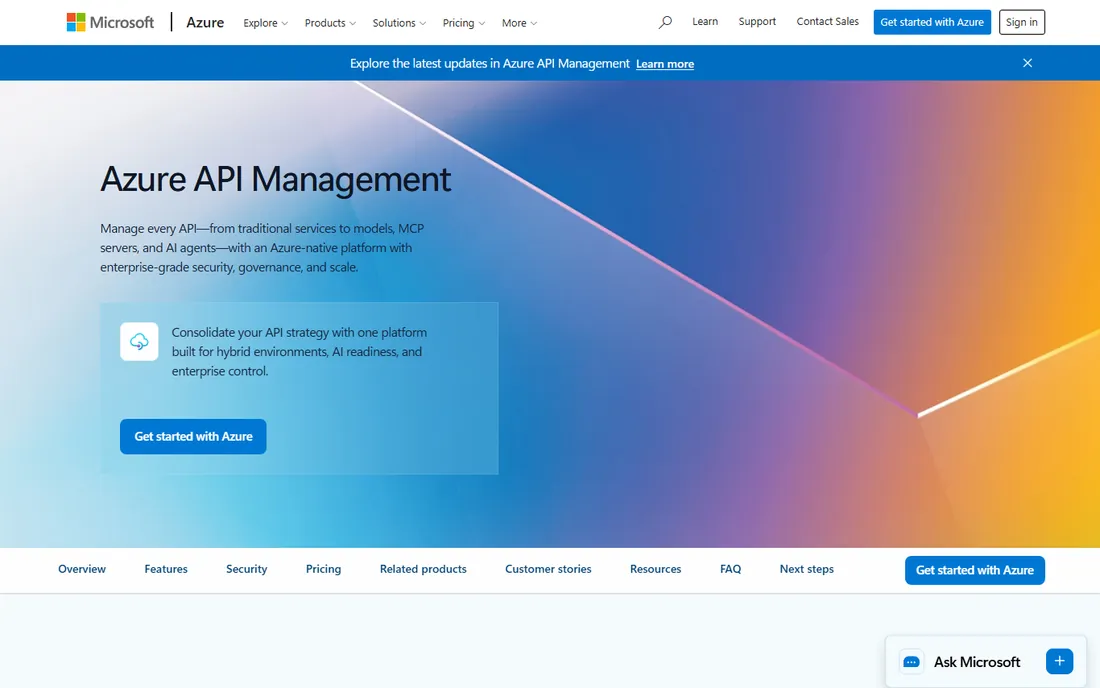
Azure API Management is the natural pick for Microsoft shops. The Consumption tier bills around $3.50 per million calls with the first million free, which makes small APIs nearly free. Higher tiers add VNets, multi-region deployment and self-hosted gateways for hybrid architectures, plus a built-in developer portal.
Watch the tier math. Each environment needs its own instance, so dev, staging and production multiply the bill, and Premium units run about $2,800 a month each. Microsoft also enforces hard resource limits per tier that can force upgrades as your API count grows. Model the full environment footprint before you commit, not just the production tier.
What we like- Deep integration with Azure AD and the Azure ecosystem
- Tiered plans from serverless Consumption to multi-region Premium
- Self-hosted gateway option for hybrid setups
Watch out for- Per-environment billing multiplies costs across dev, staging and production
- Tier upgrades get expensive fast (Premium around $2,800 a month per unit)
- New resource limits cap what each tier can hold
Starting price$365/month per environment + $20 per 1M calls (pay-as-you-go)
Free planNo
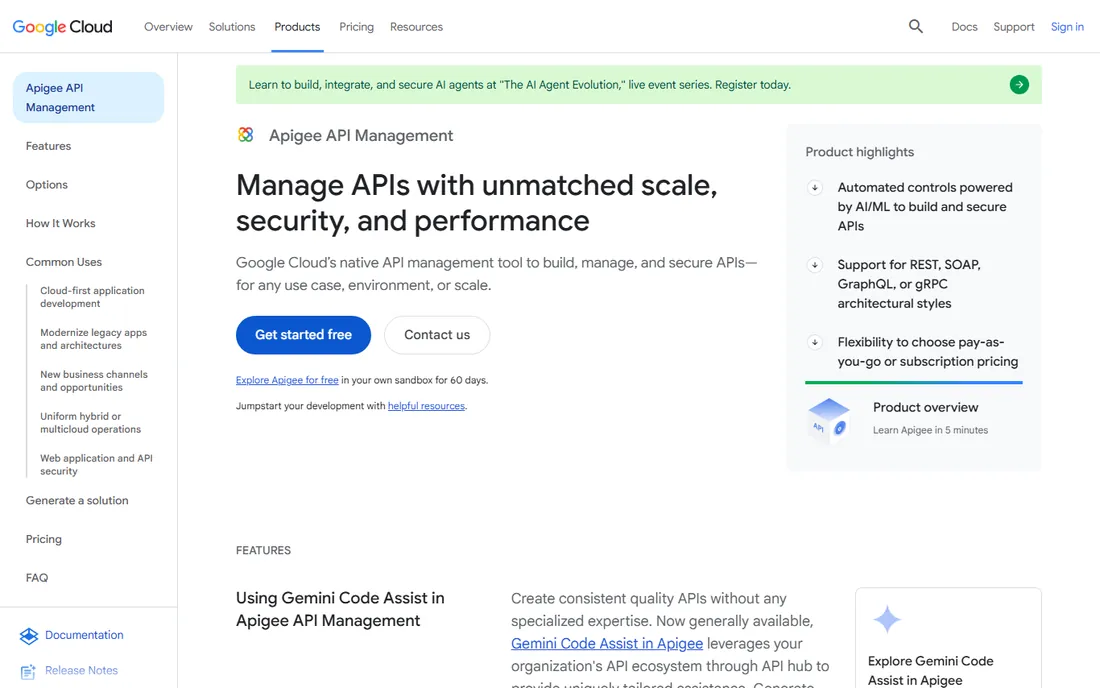
Apigee is the enterprise venue: API proxies, analytics dashboards, a developer portal and monetization with rate plans, all in one platform. Pay-as-you-go starts at $365 a month per base environment plus $20 per million calls, which makes the entry honest but not cheap; real deployments with multiple environments and serious traffic run into the thousands.
You buy Apigee when APIs are a business: partner ecosystems, public APIs with billing, or regulated industries needing the hybrid runtime. For internal microservices, it is overkill; Kong, Tyk or a cloud gateway does the job for a fraction of the cost. The analytics and monetization depth is the justification, so make sure you will actually use them.
What we like- Full-lifecycle platform with advanced analytics, developer portal and built-in monetization
- Strong security policy engine
- Hybrid deployment option for regulated industries
Watch out for- The priciest entry on this list once environments and call volume add up
- Complexity needs dedicated API platform staff
- Google Cloud-centric
Starting priceFrom $119/month (Pay-As-You-Go)
Free planFree trial (30 days)
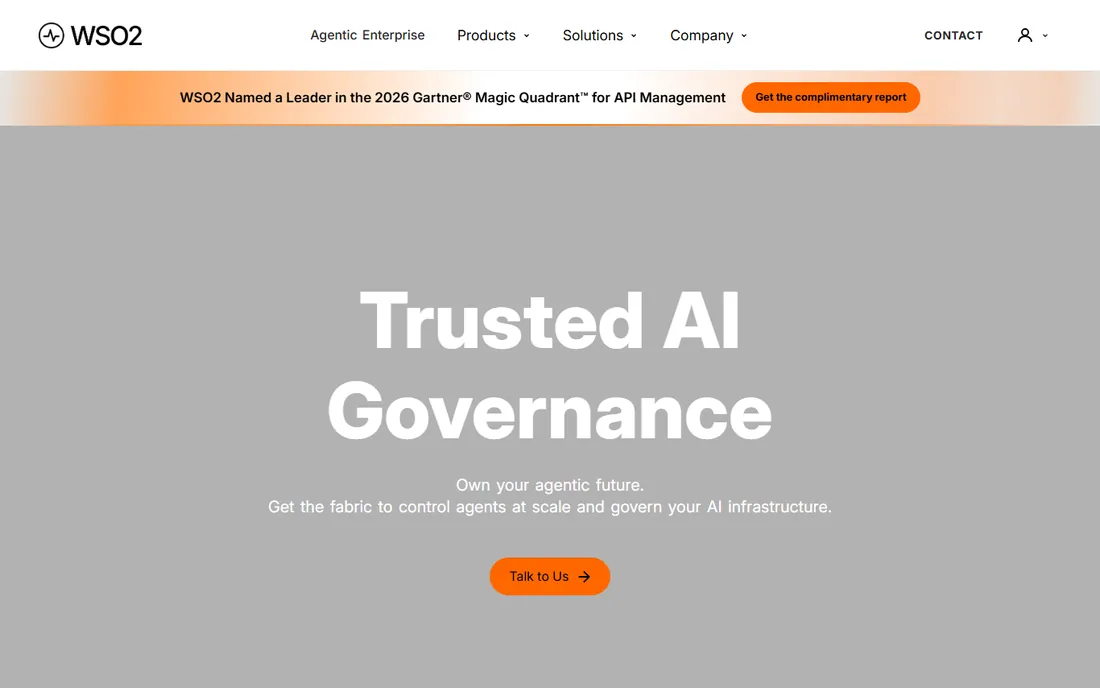
WSO2 rebuilt its pricing around usage: Pay-As-You-Go starts at $119 a month for up to 10 managed interfaces and 10 million gateway events, with a 30-day trial and no credit card. The platform covers the full lifecycle, gateway, developer portal, analytics, and notably also MCP servers and LLM proxies for AI workloads.
The catch is bill predictability. Metered events, analytics add-ons and portal fees stack on top of the base, so the pricing calculator deserves real attention before you sign. Reviewers also flag setup complexity. But for mid-size companies that want Apigee-class breadth without Apigee-class contracts, WSO2's published pricing is a genuine advantage.
What we like- Full API platform with transparent usage-based pricing from $119 a month
- Strong security (OAuth, JWT, API keys)
- Supports APIs, MCP servers and LLM proxies in one control plane
Watch out for- Usage-based components (metered events, portals, interfaces) make the real bill harder to predict
- Documentation and setup complexity draw reviewer complaints
- Enterprise tier is custom
Starting priceSee website (free community edition)
Free planYes (community edition)
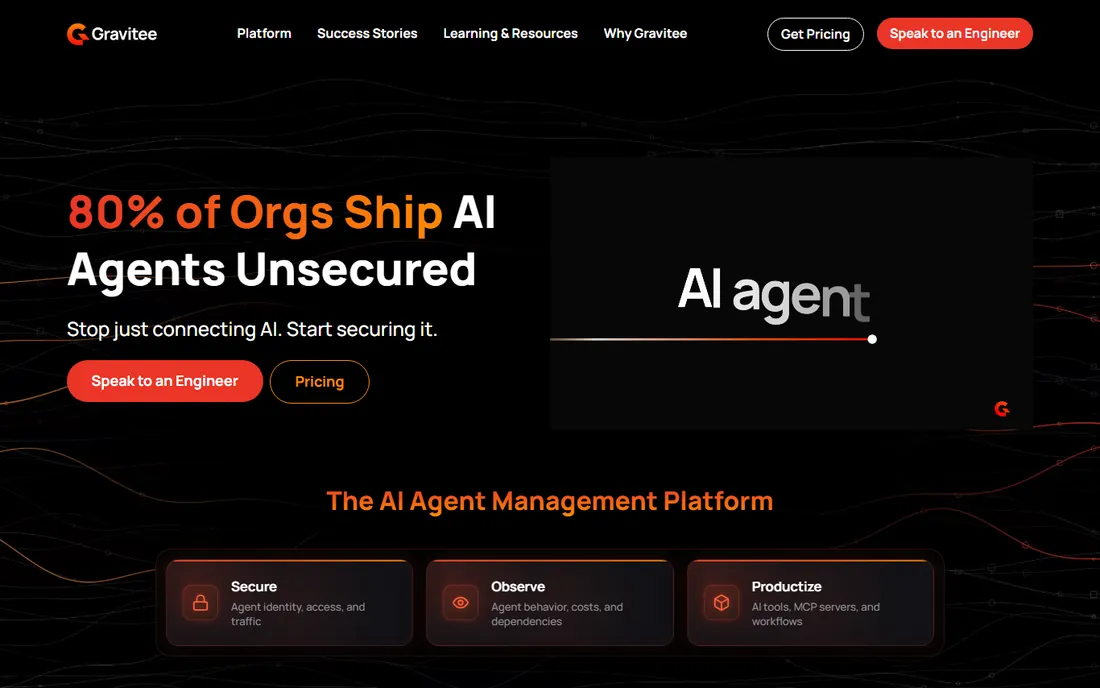
Gravitee is the open-source answer to Apigee: a complete API management platform with a gateway, developer portal, and a visual flow-based policy designer. The community edition is free and genuinely usable, which makes it the cheapest way to evaluate a full platform.
Commercial pricing is not published on Gravitee's site, so it shows "See website" here; third-party comparisons cite a $2,500-a-month entry tier with flat per-gateway pricing and unlimited calls. Confirm the current figure with sales. The flat per-gateway model is attractive if your call volumes are high, since per-call pricing punishes success.
What we like- Full open-source API management platform, not just a gateway
- Flat per-gateway pricing with unlimited calls on paid tiers
- Flow-based policy designer that non-specialists can use
Watch out for- No published pricing on the vendor site (third-party comparisons cite a $2,500/month entry tier)
- Enterprise features need a license
- Smaller community than Kong
#9
MuleSoft Anypoint Platform
Best for: Enterprise integration plus API management
Visit mulesoft.com
Starting priceSee website (quote-based)
Free planNo
MuleSoft is the platform you buy when the problem is integration, not just APIs. Anypoint pairs API management with connectors and integration flows for legacy systems, SaaS apps and data sources, which is why large enterprises standardize on it. The API lifecycle tooling is mature and governance is thorough.
It is also the heaviest lift on this list: quote-based pricing, long implementations and dedicated staffing. Teams that only need to publish and secure APIs should not pay the MuleSoft premium. Buy it when integration complexity is the actual problem and API management rides along.
What we like- Combines API management with deep integration and connectivity tooling
- Strong for enterprises unifying legacy systems and SaaS
- Mature governance and lifecycle features
Watch out for- Quote-based pricing with reported entry around $2,000 a month
- The heaviest platform here to implement and staff
- Overkill for teams that just need a gateway
Starting price$25/month (Konnect Plus serverless)
Free planYes (open source; 30-day Konnect trial)
Kong Gateway is the default open-source answer for teams that run their own infrastructure. It is fast, extensible through a large plugin marketplace, and Kubernetes-native, which is why platform teams keep choosing it. The open-source gateway costs nothing but your own compute; the managed Konnect Plus control plane starts at $25 a month for serverless gateways, with hybrid and dedicated options at $200 and $500.
The trade-off is operational. You get power and flexibility; you also get a database to run and plugins to maintain. Teams with platform engineers thrive on Kong. Teams without them should look at Zuplo or the cloud-native gateways instead. Kong also ships AI gateway features, including MCP proxy support, for teams serving AI agents.
What we like- The most widely deployed open-source gateway, with a huge plugin ecosystem
- Kubernetes-native and built for serious throughput
- Konnect adds a managed control plane from $25 a month
Watch out for- Plugins are written in Lua, which narrows who can extend it
- Self-hosted operations (database, scaling) are on you
- Enterprise pricing is custom and annual
Starting price$25/month (Builder)
Free planYes
Zuplo is what you get when someone rebuilds an API gateway without the operational baggage. It deploys globally to hundreds of edge locations in seconds, configures in TypeScript instead of Lua or XML, and includes a developer portal, rate limiting, authentication and monetization on every plan. The free tier needs no credit card and no sales call.
The honest limitation is team scale. Builder at $25 a month is explicitly a solo plan; teams that need SSO, an SLA or more headroom move to Enterprise starting at $1,000 a month. For indie developers, startups and side projects shipping a production API, it is the fastest path. For enterprises, evaluate it against the cost of running Kong or a cloud gateway yourself.
What we like- Fully managed and edge-native with nothing to provision
- Generous free tier (100K requests a month)
- Programmable in TypeScript with GitOps workflows
- Developer portal and monetization included
Watch out for- Builder is a solo plan, teams need Enterprise from $1,000 a month
- Usage-based costs accumulate at high volumes
- Younger ecosystem than Kong or AWS
#3
Tyk
Best for: Lightweight open-source gateway
Visit tyk.io
Starting priceSee website (free open source)
Free planYes (open source)
Tyk is the gateway for teams that like Kong's idea but not its weight. The open-source core is genuinely production-ready, supports GraphQL federation, and lets you write plugins in mainstream languages. It runs well in containers and Kubernetes without demanding much from your platform team.
The commercial side is quote-based, so budget planning needs a sales conversation. The ecosystem is smaller than Kong's, which means fewer ready-made plugins and community answers. Choose Tyk when you want an open-source gateway your developers can actually extend without learning Lua.
What we like- Production-ready open-source gateway with a smaller footprint than Kong
- GraphQL federation support
- Plugins in Go, Python and JavaScript instead of Lua
Watch out for- No published pricing for the managed cloud tiers
- Smaller plugin ecosystem than Kong
- Analytics and portal depth trail the full platforms
Starting price$3.50 per 1M REST API calls
Free planYes (12-month free tier)
If your APIs run on Lambda and your team lives in AWS, this is the path of least resistance. API Gateway is fully managed: no instances, no patching, no scaling work. REST APIs cost about $3.50 per million requests for the first 333 million, with volume discounts below that, and HTTP APIs cost less. A 12-month free tier covers getting started.
What you do not get is a full API management platform. There is no native monetization, the developer portal is basic, and product analytics are thin. It is a gateway, not a venue. Teams that need the venue layer pair it with a portal product or move up to Apigee or MuleSoft.
What we like- Fully managed serverless with nothing to run
- Deep integration with Lambda, IAM and CloudWatch
- Pay-per-request pricing with a 12-month free tier
Watch out for- REST APIs cost $3.50 per million while HTTP APIs are cheaper, and the difference confuses buyers
- No built-in developer analytics or monetization
- AWS-only, obviously
Starting price~$3.50 per 1M calls (Consumption tier)
Free planYes (1M free calls on Consumption)
Azure API Management is the natural pick for Microsoft shops. The Consumption tier bills around $3.50 per million calls with the first million free, which makes small APIs nearly free. Higher tiers add VNets, multi-region deployment and self-hosted gateways for hybrid architectures, plus a built-in developer portal.
Watch the tier math. Each environment needs its own instance, so dev, staging and production multiply the bill, and Premium units run about $2,800 a month each. Microsoft also enforces hard resource limits per tier that can force upgrades as your API count grows. Model the full environment footprint before you commit, not just the production tier.
What we like- Deep integration with Azure AD and the Azure ecosystem
- Tiered plans from serverless Consumption to multi-region Premium
- Self-hosted gateway option for hybrid setups
Watch out for- Per-environment billing multiplies costs across dev, staging and production
- Tier upgrades get expensive fast (Premium around $2,800 a month per unit)
- New resource limits cap what each tier can hold
Starting price$365/month per environment + $20 per 1M calls (pay-as-you-go)
Free planNo
Apigee is the enterprise venue: API proxies, analytics dashboards, a developer portal and monetization with rate plans, all in one platform. Pay-as-you-go starts at $365 a month per base environment plus $20 per million calls, which makes the entry honest but not cheap; real deployments with multiple environments and serious traffic run into the thousands.
You buy Apigee when APIs are a business: partner ecosystems, public APIs with billing, or regulated industries needing the hybrid runtime. For internal microservices, it is overkill; Kong, Tyk or a cloud gateway does the job for a fraction of the cost. The analytics and monetization depth is the justification, so make sure you will actually use them.
What we like- Full-lifecycle platform with advanced analytics, developer portal and built-in monetization
- Strong security policy engine
- Hybrid deployment option for regulated industries
Watch out for- The priciest entry on this list once environments and call volume add up
- Complexity needs dedicated API platform staff
- Google Cloud-centric
Starting priceFrom $119/month (Pay-As-You-Go)
Free planFree trial (30 days)
WSO2 rebuilt its pricing around usage: Pay-As-You-Go starts at $119 a month for up to 10 managed interfaces and 10 million gateway events, with a 30-day trial and no credit card. The platform covers the full lifecycle, gateway, developer portal, analytics, and notably also MCP servers and LLM proxies for AI workloads.
The catch is bill predictability. Metered events, analytics add-ons and portal fees stack on top of the base, so the pricing calculator deserves real attention before you sign. Reviewers also flag setup complexity. But for mid-size companies that want Apigee-class breadth without Apigee-class contracts, WSO2's published pricing is a genuine advantage.
What we like- Full API platform with transparent usage-based pricing from $119 a month
- Strong security (OAuth, JWT, API keys)
- Supports APIs, MCP servers and LLM proxies in one control plane
Watch out for- Usage-based components (metered events, portals, interfaces) make the real bill harder to predict
- Documentation and setup complexity draw reviewer complaints
- Enterprise tier is custom
Starting priceSee website (free community edition)
Free planYes (community edition)
Gravitee is the open-source answer to Apigee: a complete API management platform with a gateway, developer portal, and a visual flow-based policy designer. The community edition is free and genuinely usable, which makes it the cheapest way to evaluate a full platform.
Commercial pricing is not published on Gravitee's site, so it shows "See website" here; third-party comparisons cite a $2,500-a-month entry tier with flat per-gateway pricing and unlimited calls. Confirm the current figure with sales. The flat per-gateway model is attractive if your call volumes are high, since per-call pricing punishes success.
What we like- Full open-source API management platform, not just a gateway
- Flat per-gateway pricing with unlimited calls on paid tiers
- Flow-based policy designer that non-specialists can use
Watch out for- No published pricing on the vendor site (third-party comparisons cite a $2,500/month entry tier)
- Enterprise features need a license
- Smaller community than Kong
#9
MuleSoft Anypoint Platform
Best for: Enterprise integration plus API management
Visit mulesoft.com
Starting priceSee website (quote-based)
Free planNo
MuleSoft is the platform you buy when the problem is integration, not just APIs. Anypoint pairs API management with connectors and integration flows for legacy systems, SaaS apps and data sources, which is why large enterprises standardize on it. The API lifecycle tooling is mature and governance is thorough.
It is also the heaviest lift on this list: quote-based pricing, long implementations and dedicated staffing. Teams that only need to publish and secure APIs should not pay the MuleSoft premium. Buy it when integration complexity is the actual problem and API management rides along.
What we like- Combines API management with deep integration and connectivity tooling
- Strong for enterprises unifying legacy systems and SaaS
- Mature governance and lifecycle features
Watch out for- Quote-based pricing with reported entry around $2,000 a month
- The heaviest platform here to implement and staff
- Overkill for teams that just need a gateway
Ask what happens after the request is routed. If the answer is "nothing, our developers handle the rest," you need a gateway: Kong, Tyk, Zuplo, AWS API Gateway or Azure API Management. Gateways are cheaper, simpler and easier to staff. Most startups and mid-size companies land here and never need more.
If the answer involves partner onboarding, usage analytics, versioned developer portals or charging for API access, you need the full platform: Apigee, WSO2, Gravitee or MuleSoft. The portal and monetization features are the difference, and they cost real money and real staffing. Buying a full platform for internal microservices is the most common overspend in this category.
How we chose
We verified pricing against vendor pricing pages wherever they publish them, which is why six of the nine tools show real numbers and three show "See website." We compared on what decides API tooling purchases: gateway performance and throughput, security and policy depth, developer portal quality, analytics, deployment flexibility (cloud, self-hosted, hybrid), MCP and AI gateway support, and pricing model transparency. We read the October 2026 Scalar API platform survey, buyer reviews on G2 and Capterra, and engineering discussions on Reddit and GitHub for the recurring complaints: unpredictable bills, tier traps and operational overhead.
Per-call pricing (AWS, Azure Consumption, Apigee's call fees) scales with success: cheap at the start, expensive at scale, and traffic spikes cost real money. Flat subscription tiers (Zuplo Builder, Kong Konnect Plus, Gravitee's per-gateway model) are predictable but can strand you between tiers. Quote-based enterprise contracts (MuleSoft, Tyk Cloud, Apigee subscriptions) bundle everything and hide the unit economics. Estimate your monthly call volume first, then model each candidate at that volume plus 10x. The cheapest tool at 1 million calls a month is rarely the cheapest at 100 million.
Frequently asked questions
What is the best API management tool for startups?
Zuplo: a free tier with 100K requests a month and a $25 Builder plan, with nothing to operate. AWS API Gateway is the pick if you are already serverless on AWS, with a 12-month free tier and $3.50 per million REST calls.
What is the difference between an API gateway and API management?
A gateway routes and secures API traffic: rate limiting, authentication, request routing. API management is the full lifecycle around it: developer portals, analytics, versioning, documentation and monetization. Gateways are cheaper and simpler; full platforms suit partner ecosystems and public APIs.
Is Kong free?
Kong Gateway's open-source core is free to self-host. The managed Konnect control plane starts at $25 a month for serverless gateways, with a 30-day free trial. Enterprise features and support are quote-based.
How much does API management cost?
Published entry points range from free tiers (Zuplo, AWS's 12-month free tier, Kong and Tyk open source) through $25-a-month plans (Kong Konnect Plus, Zuplo Builder), $119 a month (WSO2 pay-as-you-go), and $365 a month per environment plus call fees (Apigee), up to quote-based enterprise contracts.
Do I need API management for internal microservices?
Usually a gateway is enough. Internal services need routing, authentication and rate limiting, which Kong, Tyk or a cloud gateway handles well. Full platforms with portals and monetization pay off when external developers or partners consume your APIs.
Sources we checked (11)
- https://konghq.com/pricing
- https://zuplo.com/pricing
- https://wso2.com/bijira/pricing
- https://aws.amazon.com/api-gateway/pricing/
- https://azure.microsoft.com/en-us/pricing/details/api-management/
- https://cloud.google.com/apigee/pricing
- https://www.gravitee.io
- https://tyk.io
- https://www.mulesoft.com/platform/api
- https://github.com/scalar/scalar/blob/HEAD/documentation/library/best-api-management-platforms-2026.md
- https://github.com/robakid/apimanagementtools/blob/HEAD/comparisons/api-gateways.md
Is your product missing or out of date?
We review this list regularly. Vendors can request a listing, send updated pricing or ask about featured placement.

Shihab Mia · Founder, Rankite
Shihab has spent more than a decade helping SaaS and e-commerce brands grow through search. He writes Rankite's software buying guides from pricing pages, documentation and public user reviews. More about Shihab.