How we make this list: we compare pricing pages, product documentation and public user reviews. Rankite is independent; if a vendor ever pays for a featured spot, that listing is clearly labeled Partner.
Key takeaways
- Web test automation splits into open-source frameworks (Playwright, Selenium, Cypress), low-code platforms (Katalon, Testim, Functionize, Leapwork, mabl) and specialized layers (Applitools for visual, BrowserStack for cloud grids).
- Playwright is the modern framework default; Selenium remains the enterprise standard.
- Low-code tools (mabl, Testim, Functionize) use AI to cut test maintenance, the biggest cost in test automation.
- Applitools solves visual testing; BrowserStack solves cross-browser infrastructure. Both complement frameworks rather than replacing them.
Quick comparison
| Tool | Best for | Starting price | Free plan |
|---|
 Playwright Playwright | modern framework testing | Free | Yes |
 Selenium Selenium | enterprise framework standard | Free | Yes |
 Cypress Cypress | JavaScript front-end testing | Free | Yes |
 Katalon Katalon | low-code test platform | See website | Yes |
 BrowserStack BrowserStack | cloud cross-browser grid | See website | Free trial |
 Applitools Applitools | visual AI testing | See website | Free tier |
 mabl mabl | AI low-code testing | See website | Free trial |
 Testim Testim | AI-stabilized test automation | See website | Free trial |
 Functionize Functionize | AI test creation | See website | No |
 Leapwork Leapwork | no-code visual testing | See website | No |
Is your product missing or out of date?
We review this list regularly. Vendors can request a listing, send updated pricing or ask about featured placement.
Starting priceFree
Free planYes
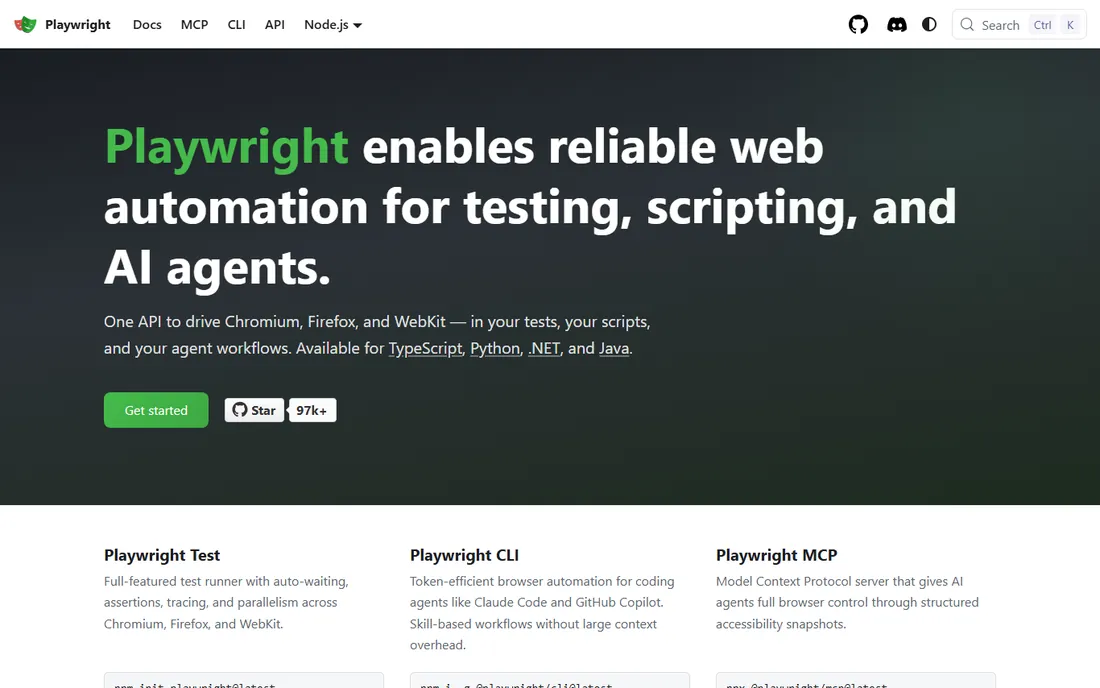
Playwright is the open-source framework most new web test automation projects choose: it drives Chromium, Firefox and WebKit with auto-waiting that eliminates the flakiness plaguing older frameworks, and the tracing, codegen and debugging tools are best in class.
The reliability advantage is decisive. Tests wait intelligently for elements, run in parallel across browsers and produce detailed traces on failure. Teams spend time testing instead of maintaining brittle selectors. Language support covers JavaScript, Python, Java, C# and .NET.
The honest requirement is engineering skill. This is a code framework for developers and SDETs, not a tool for manual testers. Organizations without automation engineers should look at the low-code options below. For engineering-led QA, Playwright is the current standard.
What we like- Reliable auto-waiting
- Multi-browser
- Excellent tooling
Watch out for- Code-only
- Needs developer skills
Starting priceFree
Free planYes
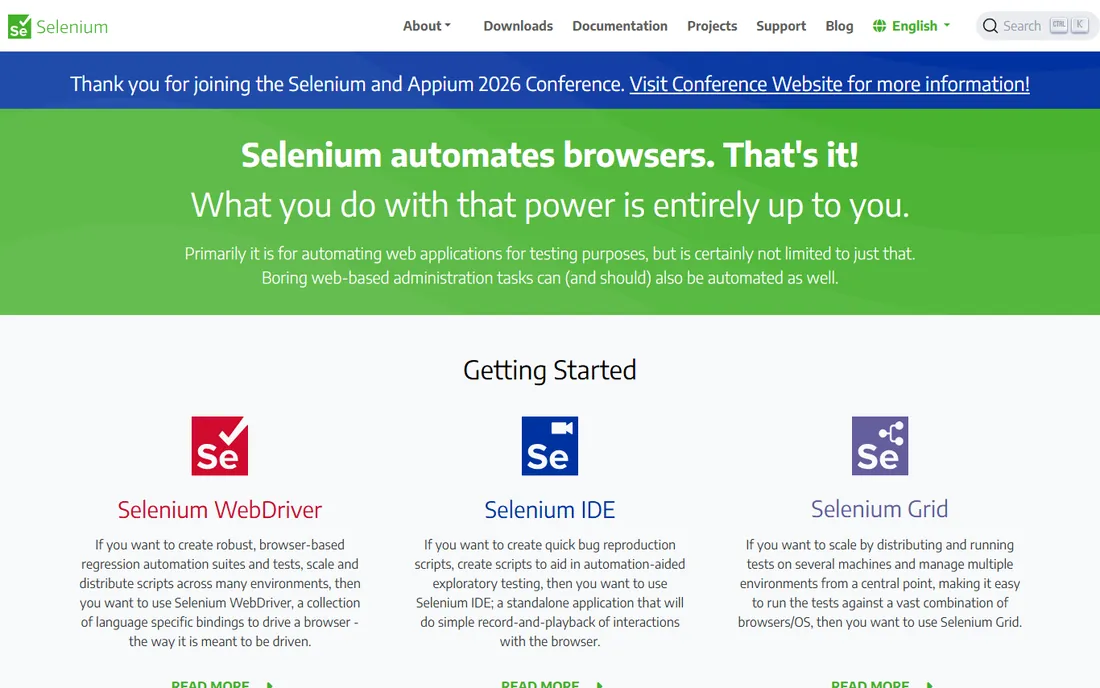
Selenium WebDriver remains the enterprise standard for web test automation: two decades of use, bindings for every major language and integration with every CI system. Enterprises with established automation programs and trained teams continue to rely on it.
The ecosystem is the moat. Grid infrastructure, cloud provider support, hiring availability and answers to every edge case reflect the installed base. Migration from working Selenium suites rarely justifies itself.
The honest comparison is with Playwright. New projects usually get more reliability per effort from Playwright's auto-waiting and modern architecture. But Selenium's universality keeps it the safe enterprise choice, especially where the team and infrastructure already exist.
What we like- The long-standing standard
- Every language
- Huge talent pool
Watch out for- More maintenance than Playwright
- Flakier out of the box
Starting priceFree
Free planYes
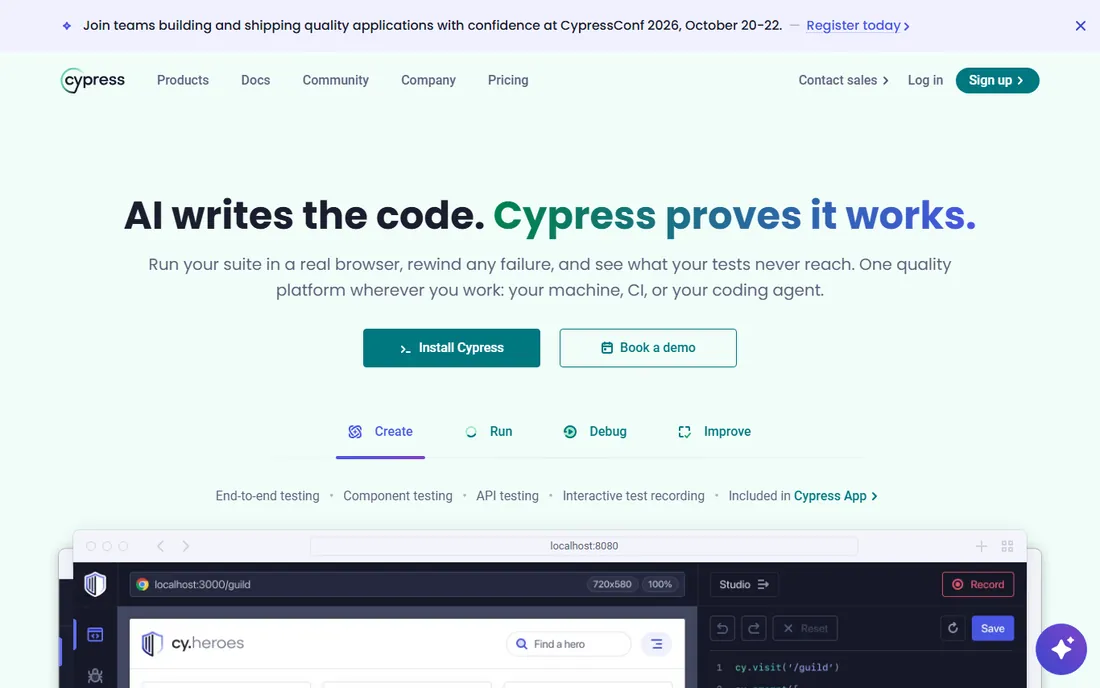
Cypress is the JavaScript testing framework developers love: tests run inside the browser with real-time reloading, step-by-step time travel and automatic videos and screenshots. Writing tests feels like development.
The experience advantage shows in adoption. Front-end teams actually write tests because the feedback loop is delightful, and the dashboard adds parallelization, flake detection and analytics for teams. Component testing extends it beyond end-to-end.
The honest limits are architectural: in-browser execution constrains multi-tab flows, cross-domain scenarios and non-JS stacks. For JavaScript teams testing their own apps, it is excellent. For general web automation across stacks, Playwright fits better.
What we like- Superb developer experience
- Time-travel debugging
- Fast feedback
Watch out for- JavaScript-only
- Architectural limits on multi-tab and domains
Starting priceSee website
Free planYes
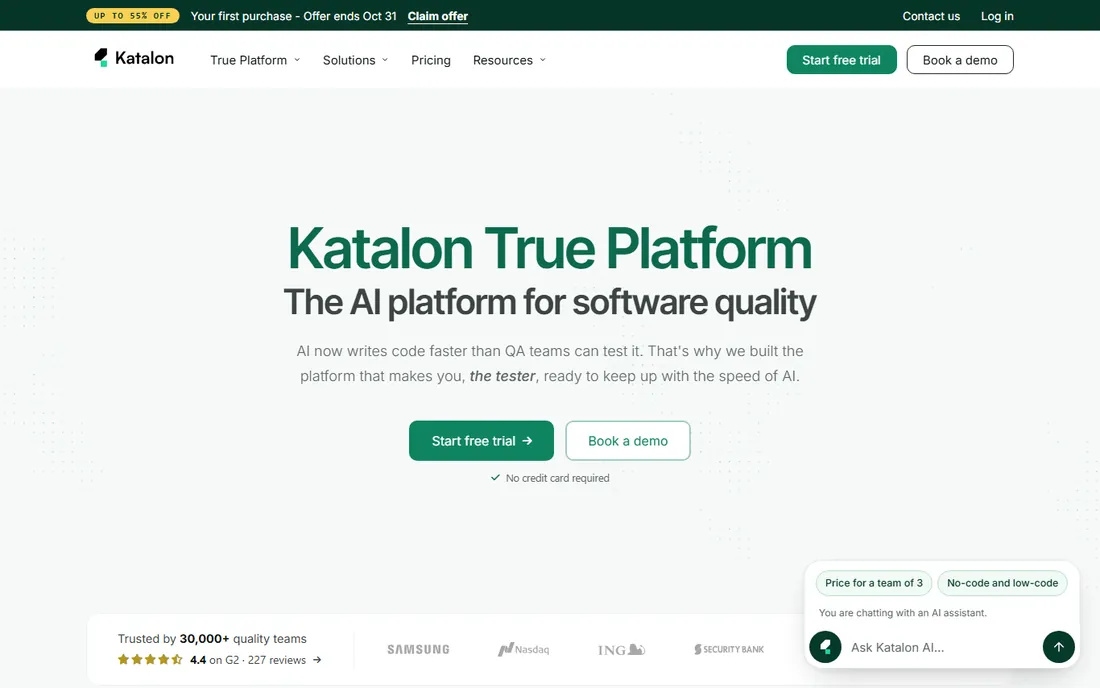
Katalon Studio is the low-code platform for QA teams that want automation without full-time developers: record-and-playback test creation, keyword-driven authoring and Groovy scripting for complexity, covering web, API, mobile and desktop.
The team fit is the pitch. Manual testers become automation contributors through recording and keywords, while engineers handle the hard parts in code. Built-in reporting, test management and CI integrations suit QA organizations that need process.
The trade-off is cost at scale and weight. Parallel execution and advanced features need paid tiers, and developer-heavy teams often prefer pure frameworks. For mixed QA teams building real automation coverage, it bridges the skill gap.
What we like- Low-code plus scripting
- Web, API, mobile
- Built-in reporting
Watch out for- Paid tiers for scale
- Heavier than frameworks
Starting priceSee website
Free planFree trial
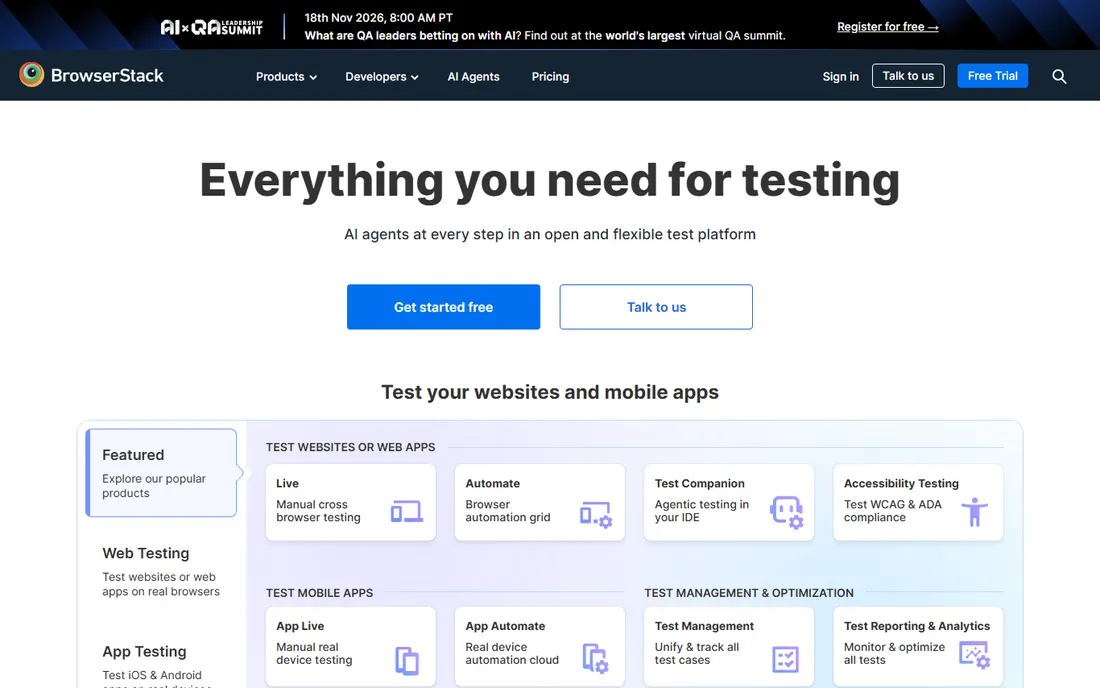
BrowserStack is the cloud testing infrastructure: run your Selenium, Playwright or Cypress suites across thousands of real browser and OS combinations without maintaining labs. It is the grid teams rent instead of building.
The coverage economics are unbeatable. No organization can maintain the device and browser matrix BrowserStack offers on demand. The debugging tools (videos, logs, network captures) and CI integrations make it the standard execution layer.
The honest framing is infrastructure, not automation. You still write tests in a framework; BrowserStack runs them everywhere. Budget it as the execution complement to your framework choice, and watch usage costs on large suites.
What we like- Real browsers and devices on demand
- No infrastructure
- Framework agnostic
Watch out for- Usage costs scale
- Not a test authoring tool
Starting priceSee website
Free planFree tier
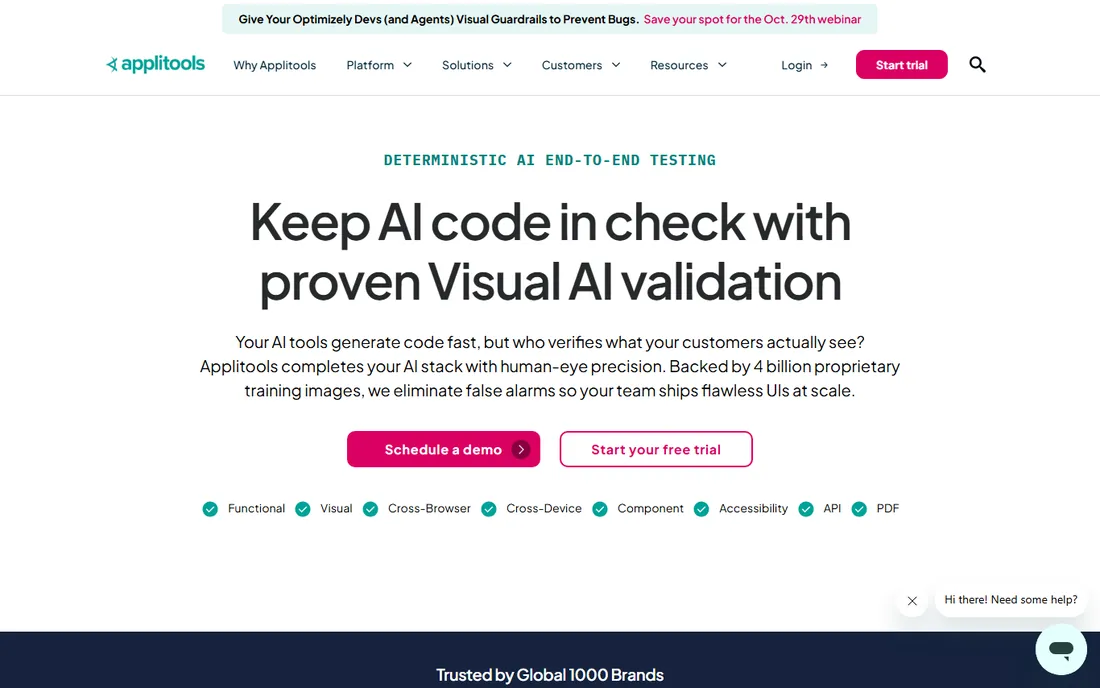
Applitools solves the problem frameworks ignore: visual correctness. Its Visual AI compares screenshots against baselines intelligently, catching layout breaks, styling regressions and rendering differences across browsers that functional assertions miss.
The AI comparison is the differentiator. Unlike pixel-diff tools that drown teams in false positives, the visual AI understands layout and tolerates acceptable rendering differences. Integrations with Selenium, Playwright, Cypress and the low-code tools add visual checkpoints to existing suites.
The honest addition is complexity and cost. It is another platform in the stack, priced on visual checkpoints. Teams with design-sensitive applications get the value; teams with purely functional concerns may not need it. For visual quality at scale, it is the standard.
What we like- AI visual validation
- Catches UI regressions
- Framework integrations
Watch out for- Another tool to manage
- Pricing per checkpoint
Starting priceSee website
Free planFree trial
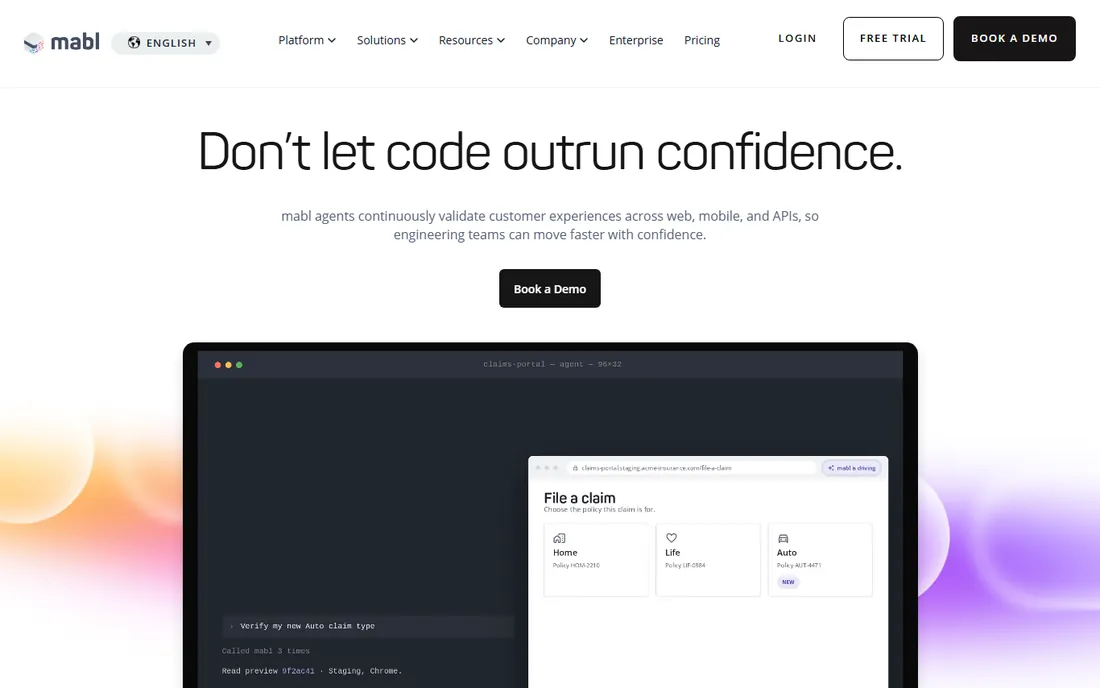
mabl is the AI-powered low-code test automation platform: create tests by training the tool on your application, and the machine learning adapts tests as the UI changes, attacking the maintenance burden that kills most automation efforts.
The maintenance story is the pitch. Self-healing tests, auto-generated assertions and intelligent waits keep suites green through UI changes that would break scripted tests. Agile teams get automation that keeps pace with development.
The trade-off is control and model. SaaS-only execution, less granular control than code frameworks and pricing that scales with usage. Teams wanting full code control choose Playwright. Teams wanting automation without the maintenance tax choose mabl.
What we like- AI reduces test maintenance
- Easy test creation
- Good for agile teams
Watch out for- SaaS-only
- Less control than code
Starting priceSee website
Free planFree trial
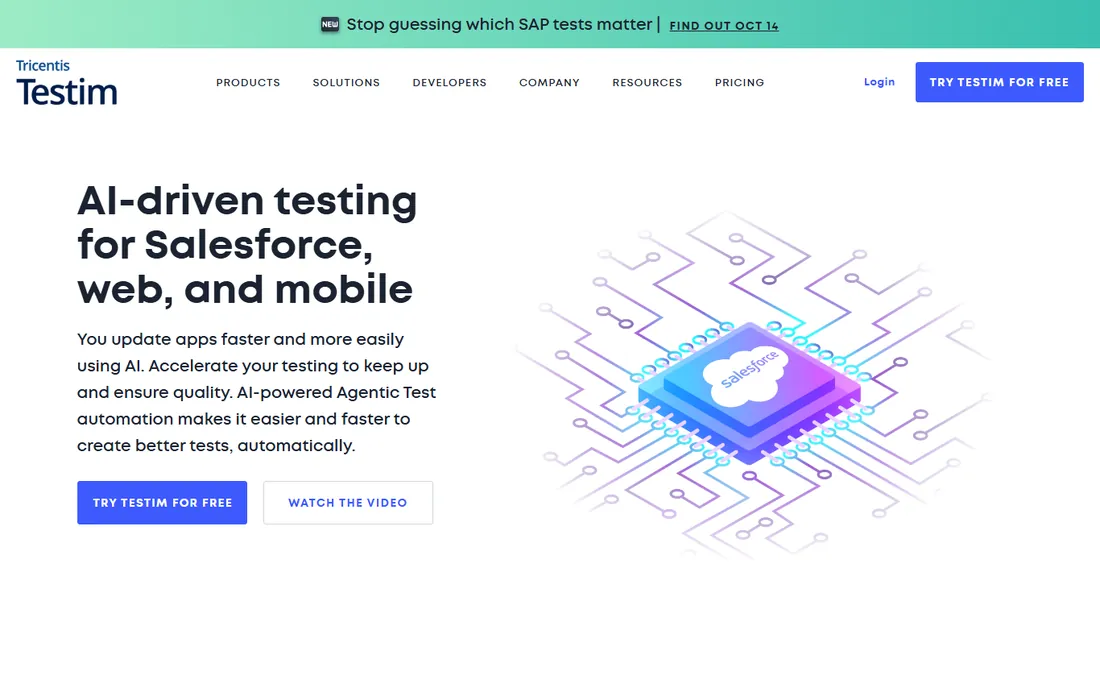
Testim, now part of Tricentis, uses AI to create stable web tests fast: record user flows, let the smart locators handle dynamic elements and maintain suites with minimal effort. It targets agile teams frustrated by brittle automation.
The stability AI is the core. Multiple locator strategies per element mean UI changes rarely break tests, which addresses the number one cost in test automation. Authoring is fast enough for sprint-paced development.
The honest context is the Tricentis ownership and pricing. Enterprise buyers get the portfolio story; smaller teams should verify the pricing model fits. For dynamic applications where locators constantly shift, the AI stabilization pays for itself.
What we like- AI stabilizes locators
- Fast authoring
- Good for dynamic apps
Watch out for- Tricentis ecosystem
- Pricing per test
Starting priceSee website
Free planNo
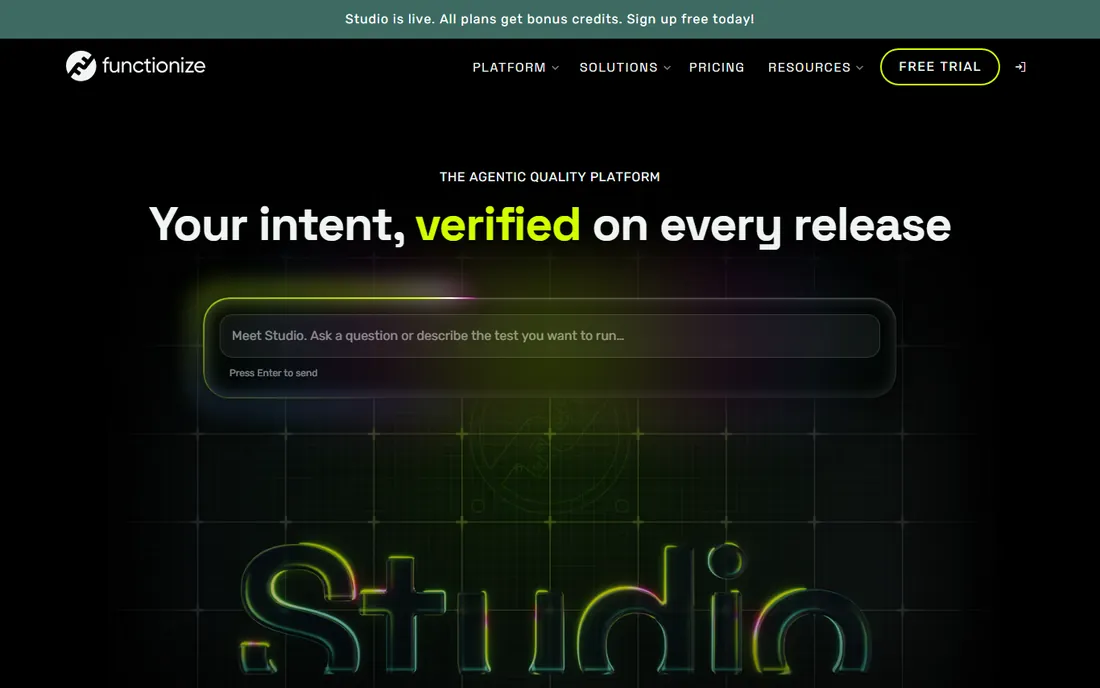
Functionize takes AI test automation furthest toward natural language: describe tests in plain English, let the AI build and maintain them and run at cloud scale. It aims to make test automation accessible to the whole team.
The NLP approach is the differentiator. Product managers and manual testers can express test intent without learning frameworks, while the AI handles execution and maintenance. The cloud architecture scales runs without infrastructure.
The honest caveats are maturity and access. No free tier means evaluation needs a sales conversation, and the vendor is newer than the established players. Teams bought into the AI vision should trial it against mabl and Testim.
What we like- Natural language test creation
- AI maintenance
- Enterprise features
Starting priceSee website
Free planNo
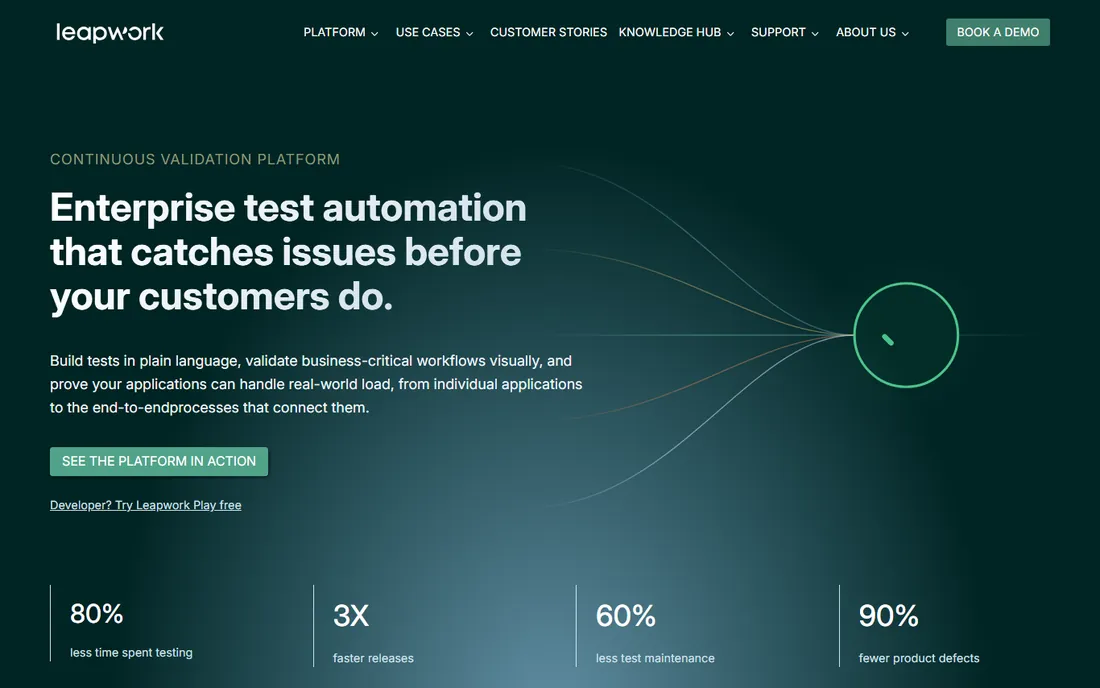
Leapwork is the no-code test automation platform built on visual flowcharts: assemble test cases from building blocks without writing code, and run them across web, desktop and virtual environments. It serves QA teams with no programming background.
The visual approach is the most accessible here. Testers think in flows, not code, and the flowchart representation communicates test logic to stakeholders. The reliability is solid for the no-code category.
The trade-off is the ceiling. Highly dynamic applications and complex logic stretch visual tools, and there is no free tier for evaluation. For the non-technical QA team that needs real automation, it is the approachable choice.
What we like- Truly no-code flowchart testing
- Good for non-developers
- Stable
Watch out for- No free tier
- Visual approach has limits
Framework vs. low-code: the maintenance equation
The dirty secret of test automation is maintenance: UI changes break tests, and fixing them consumes the QA budget. Code frameworks (Playwright, Selenium, Cypress) give maximum control with maximum maintenance responsibility. AI low-code tools (mabl, Testim, Functionize) trade some control for dramatically less maintenance.
The right choice depends on who maintains the suite and how fast the application changes. Stable applications with dedicated SDETs suit frameworks. Fast-changing applications with mixed QA teams suit AI low-code. Many organizations use both: frameworks for critical paths, low-code for breadth.
What to check before you buy
Start with the team's skills: developers, SDETs, manual testers or mixed. Second, assess the application's change rate; fast UI churn favors AI-maintenance tools. Third, define the browsers and devices that matter; the cloud grid decision follows.
Fourth, check CI integration with your pipeline; automation that does not run in CI rots. Fifth, trial with your real application, because demo apps always automate easily. Finally, model the total cost including maintenance effort, not just licenses; the cheapest tool with the highest maintenance loses.
How we chose
We compared vendor product pages, QA community sources and analyst coverage, then confirmed every homepage was live in October 2026. Where we could not verify a vendor-published price we say so. Nothing here reflects hands-on testing; assessments come from documentation, feature lists and public user feedback.
Frequently asked questions
Which test automation tool is best for beginners?
Low-code tools (mabl, Testim, Katalon) for non-developers; Playwright for developers learning test automation, thanks to excellent docs. Avoid starting with raw Selenium unless the team already knows it.
How do I reduce test maintenance?
Use stable locators, page object patterns and AI-maintenance tools. The biggest wins come from testing stable features, not from tooling alone. mabl, Testim and Functionize specifically target maintenance reduction.
Should we automate all our testing?
No. Automate repetitive regression, critical paths and data-driven cases. Exploratory testing, usability and one-off scenarios stay manual. The goal is efficiency, not coverage percentages.
What is visual testing?
Automated comparison of application screenshots against baselines to catch UI regressions. Applitools' Visual AI does this intelligently; basic pixel-diff tools create false-positive noise.
How much does test automation cost?
Open-source frameworks are free but need engineer time. Low-code platforms are quote-based, roughly scaling with usage. Cloud grids charge by parallel test time. The dominant cost is usually maintenance labor, which is why AI-maintenance tools exist.
Sources we checked (10)
- https://www.selenium.dev
- https://playwright.dev
- https://www.cypress.io
- https://www.katalon.com
- https://www.browserstack.com
- https://www.applitools.com
- https://www.mabl.com
- https://www.testim.io
- https://www.functionize.com
- https://leapwork.com
Is your product missing or out of date?
We review this list regularly. Vendors can request a listing, send updated pricing or ask about featured placement.

Shihab Mia · Founder, Rankite
Shihab has spent more than a decade helping SaaS and e-commerce brands grow through search. He writes Rankite's software buying guides from pricing pages, documentation and public user reviews. More about Shihab.