How we make this list: we compare pricing pages, product documentation and public user reviews. Rankite is independent; if a vendor ever pays for a featured spot, that listing is clearly labeled Partner.
Key takeaways
- Ticket platforms split into consumer marketplaces (Eventbrite, Ticketmaster) and organizer-first tools (Ticket Tailor, Ticketleap, ThunderTix, Eventzilla, Brown Paper Tickets).
- Eventbrite brings discovery; Ticket Tailor lets you keep the fees. The trade-off is audience versus margin.
- Fees decide the economics: compare per-ticket fees, payment processing and payout timing, not just the headline rate.
- Free events change the math: several platforms are free when tickets are free.
Quick comparison
| Tool | Best for | Starting price | Free plan |
|---|
 Eventbrite Eventbrite | discovery plus ticketing | See website | Free for free events |
 Ticketmaster Ticketmaster | large-scale events | See website | No |
 Ticketleap Ticketleap | simple affordable ticketing | See website | Free for free events |
 Brown Paper Tickets Brown Paper Tickets | low-fee ticketing | See website | Free for free events |
 Ticket Tailor Ticket Tailor | keep your ticket fees | See website | Free for free events |
 ThunderTix ThunderTix | venue and event ticketing | See website | No |
 Eventzilla Eventzilla | affordable event registration | See website | Free for free events |
Is your product missing or out of date?
We review this list regularly. Vendors can request a listing, send updated pricing or ask about featured placement.
Starting priceSee website
Free planFree for free events
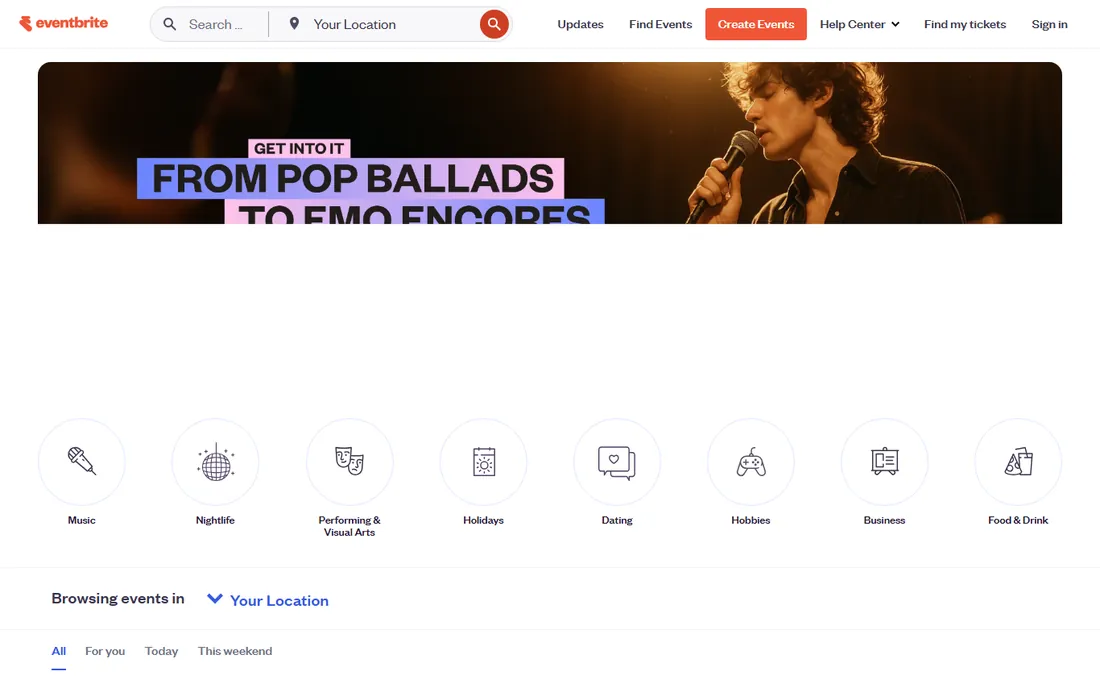
Eventbrite is the ticketing platform consumers know: list your event and tap into a marketplace where millions browse for things to do. The organizer tools cover ticketing, promotion, check-in and analytics in an interface anyone can use.
The discovery is the moat. Events get found by people browsing, not just your marketing, which matters enormously for public events. The brand trust converts browsers to buyers, and the mobile app handles tickets and check-in smoothly.
The honest costs are fees and control. Paid tickets carry service fees that add up, and your event lives on Eventbrite's platform with its branding. For free events, it costs nothing. For paid public events where discovery matters, the fees buy audience.
What we like- Massive consumer discovery
- Easy to use
- Trusted brand
Watch out for- Fees on paid tickets
- Less control over branding
Starting priceSee website
Free planNo
Ticketmaster is the ticketing giant for large venues, tours and major events: unmatched distribution, verified fan systems, dynamic pricing and the infrastructure for on-sales that crash lesser platforms. Big events need its scale.
The scale is the story. When 50,000 tickets go on sale in minutes, the platform must not fail, and the distribution reaches every potential buyer. The anti-scalping tools protect real fans better than alternatives.
The honest reputation is complicated. Fees are high and widely resented, and the company faces regulatory scrutiny. Small and mid-size events should not use it. For the arena and stadium tier, it remains the infrastructure.
What we like- The large-event standard
- Massive distribution
- Anti-fraud
Watch out for- High fees
- Controversial reputation
- Not for small events
Starting priceSee website
Free planFree for free events
Ticketleap is the straightforward ticketing platform for small to mid-size events: create an event page, sell tickets online and check attendees in, with pricing that undercuts the giants. Free events are free.
The simplicity suits independent organizers. No complex setup, no enterprise sales, just ticketing that works. The fees on paid tickets stay reasonable, which matters for community events and fundraisers.
The trade-off is depth. Large festivals, reserved seating complexity and advanced marketing need more. But for the straightforward paid event, the value is excellent.
What we like- Simple and affordable
- Easy setup
- Good for small events
Watch out for- Fewer advanced features
- Smaller brand
Starting priceSee website
Free planFree for free events
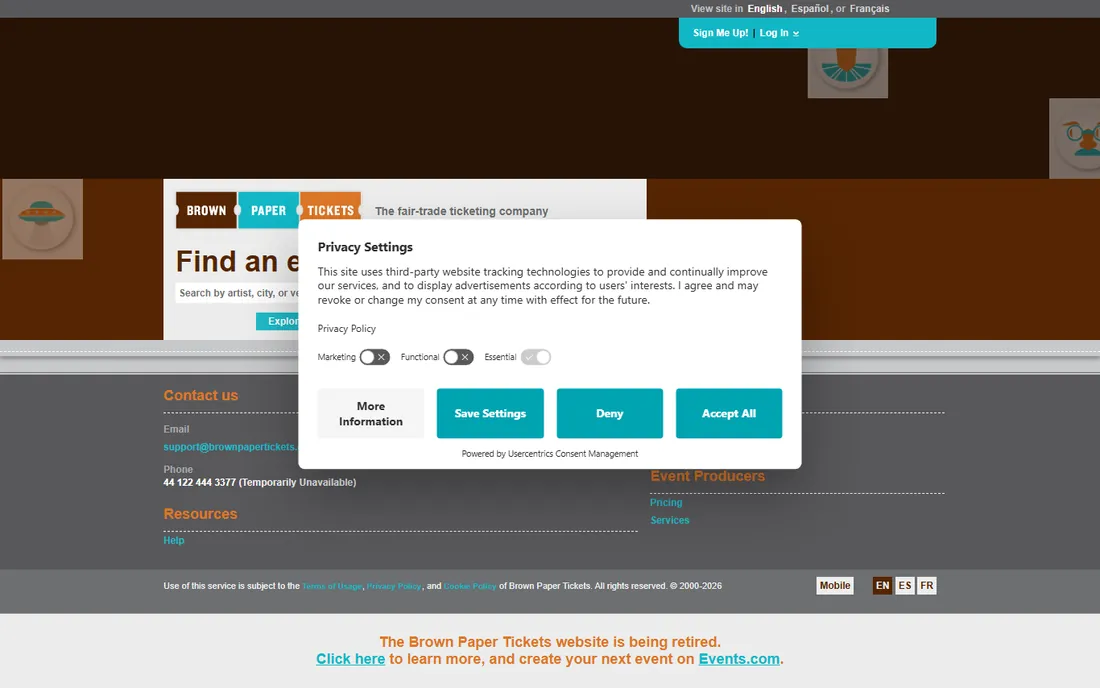
Brown Paper Tickets built its reputation on the lowest fees in ticketing and actual human customer service: a phone number answered by people who help organizers. Community events, nonprofits and small venues get affordable ticketing with support.
The fee story is the pitch. Where competitors take significant cuts, Brown Paper Tickets charges less, which matters enormously for low-margin community events. The 24/7 human support is genuinely unusual in the industry.
The honest limits are modernity. The interface is dated and the feature set trails Eventbrite. But for the organizer who values low fees and human help over slick design, it is the principled choice.
What we like- Very low fees
- Human customer service
- Free for free events
Watch out for- Dated interface
- Smaller feature set
Starting priceSee website
Free planFree for free events
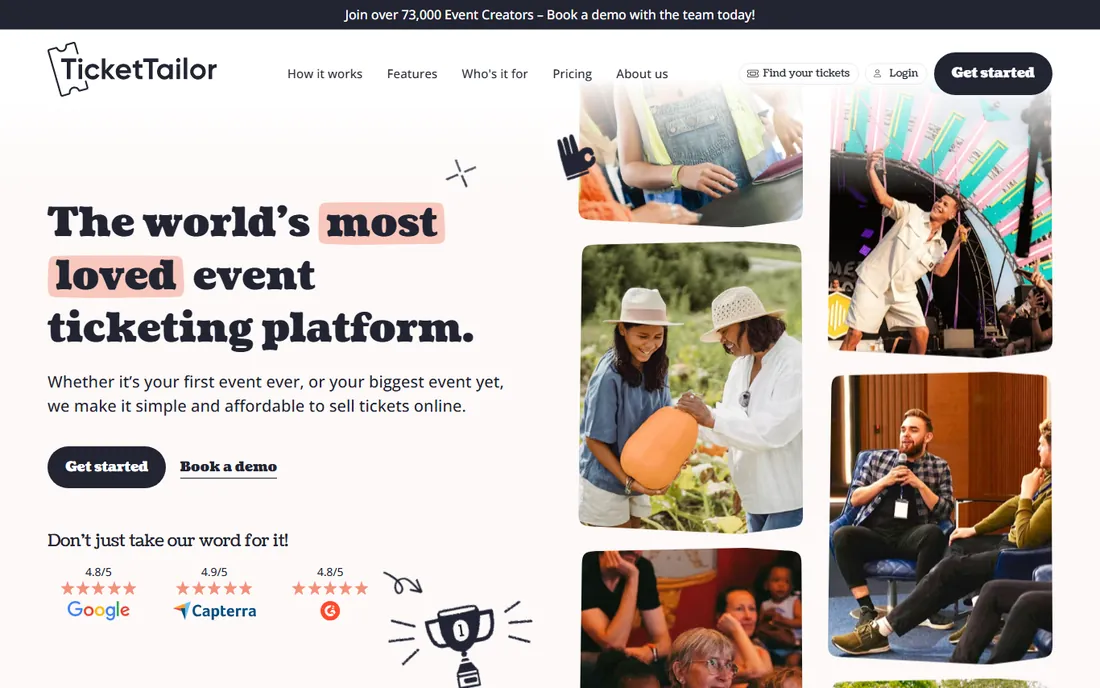
Ticket Tailor flips the ticketing economics: instead of per-ticket fees, pay a flat monthly subscription and keep 100 percent of ticket revenue (minus standard payment processing). Your event pages carry your branding, not the platform's.
The flat-fee model transforms the math for regular organizers. Venues and promoters running frequent events save enormously versus per-ticket fees. The white-label experience keeps the brand relationship with attendees.
The trade-off is discovery. There is no consumer marketplace; you bring the audience through your own marketing. For organizers with established audiences, the savings dominate. For events needing discovery, pair it with marketing or use Eventbrite.
What we like- No per-ticket fees on paid plans
- Your branding
- Affordable flat pricing
Watch out for- No consumer marketplace
- You drive the audience
Starting priceSee website
Free planNo
ThunderTix is the ticketing platform for venues and performing arts: reserved seating charts, season subscriptions, donations and memberships with flat-fee pricing. Theaters, music venues and arts organizations get the features they need.
The venue focus shows. Seating charts, subscriber management and fundraising tools reflect performing arts workflows that generic platforms handle poorly. The flat pricing suits venues with regular programming.
The honest limits are the audience and free tier. Smaller brand recognition and no free plan narrow the appeal. For the venue or arts organization, the specialized features justify it.
What we like- Flat pricing
- Good for venues
- Reserved seating
Watch out for- No free tier
- Smaller brand
Starting priceSee website
Free planFree for free events
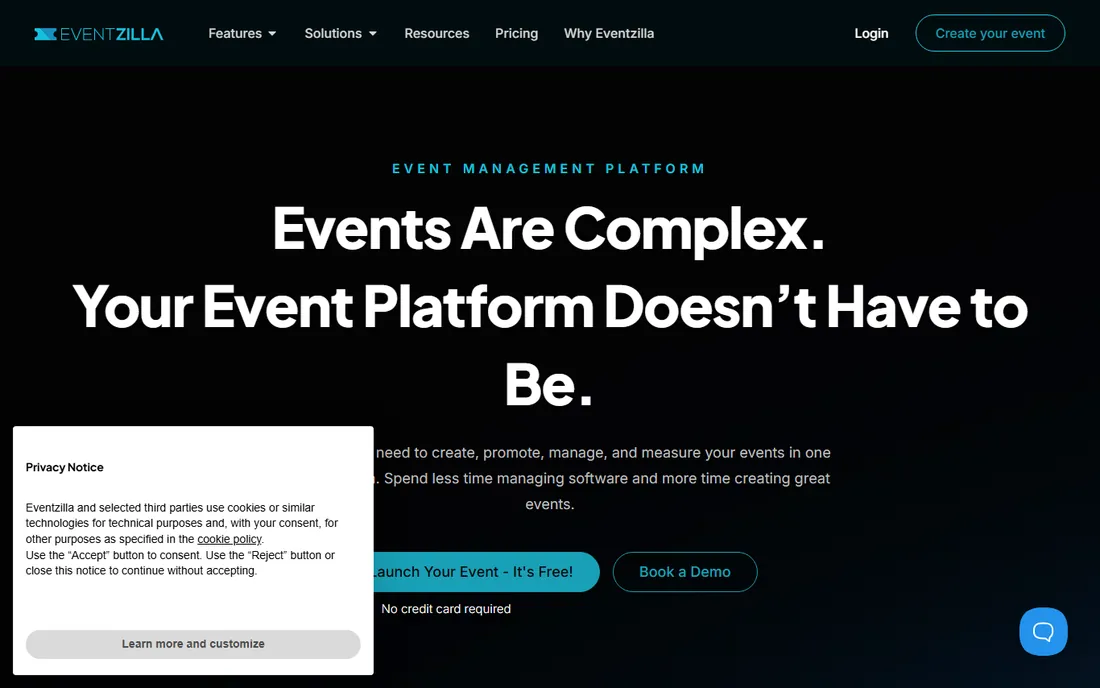
Eventzilla is the affordable event registration and ticketing platform: conferences, classes, fundraisers and meetups get online registration, payment processing and attendee management at low cost. Free events are free.
The value suits budget-conscious organizers. The registration features handle the complexity of multi-session events, and the pricing stays friendly. Nonprofits and community groups get professional ticketing affordably.
The trade-off is polish. The interface is functional and the consumer brand is small. For the organizer prioritizing cost over design, it delivers the essentials well.
What we like- Affordable
- Good for conferences
- Free for free events
Watch out for- Interface dated
- Less consumer brand
The fee reality: what tickets really cost
Ticket platform pricing has three parts: the platform fee (per ticket or flat subscription), payment processing (usually around 3 percent plus a fixed amount) and who pays (organizer absorbs or buyer pays). The headline rate never tells the whole story.
Compare total cost at your real volume and price point. A 3 percent platform fee on a $100 gala ticket is $3; on a $10 community ticket it is $0.30 plus processing. Flat-fee platforms (Ticket Tailor, ThunderTix) win for frequent organizers; per-ticket platforms win for occasional events. And free events are genuinely free on most platforms, so never pay for those.
What to check before you buy
Start with your event type and frequency: one gala a year versus weekly venue programming need different economics. Second, decide discovery versus margin; marketplaces bring audience at a fee cost. Third, verify the check-in and box office tools for your door reality.
Fourth, check payout timing; some platforms hold funds until after the event. Fifth, confirm the fee structure at your ticket prices, not the marketing examples. Finally, test the attendee purchase flow on mobile; most tickets are bought on phones.
How we chose
We compared vendor product pages, organizer reviews and event industry coverage, then confirmed every homepage was live in October 2026. Where we could not verify a vendor-published price we say so. Nothing here reflects hands-on testing; assessments come from documentation, feature lists and public user feedback.
Frequently asked questions
What is the cheapest way to sell tickets online?
For free events, most platforms charge nothing. For paid events, compare total fees at your volume: Ticket Tailor's flat pricing wins for frequent organizers, Brown Paper Tickets for low per-ticket fees, Eventbrite when discovery justifies the fee.
Should I use Eventbrite or my own website?
Eventbrite brings discovery and trust; your own site with Ticket Tailor keeps margin and branding. Many organizers do both: Eventbrite for public discovery events, white-label for their core audience.
How do ticket platform fees work?
Typically a per-ticket service fee plus payment processing, paid by the buyer or absorbed by the organizer. Flat-subscription platforms charge monthly instead. Always calculate the all-in cost per ticket at your prices.
When do I get paid?
It varies: some platforms pay out after the event, others on rolling schedules. Check the payout terms before committing, especially for cash-flow-sensitive events.
Can I sell tickets for free events?
Yes, and most platforms do not charge for free events. Use the free tier to test the platform before committing paid events to it.
What about refunds and cancellations?
Check each platform's refund workflow before you need it: who initiates refunds, how fast attendees get money back and whether fees are refundable. Clear refund policies reduce disputes, and the platform should make mass refunds manageable if an event cancels.
How do I prevent ticket fraud and scalping?
Use platforms with fraud detection, limit tickets per buyer, require attendee names on tickets and use mobile check-in with barcode validation. For high-demand events, verified fan systems and delayed ticket delivery cut scalping. No system is perfect, but these measures stop most abuse.
Should I offer early bird pricing?
Usually yes. Tiered pricing (early bird, regular, last minute) drives early sales that fund the event and create urgency. The platforms here all support multiple price tiers and discount codes. Set the tiers against your break-even point so early sales cover fixed costs.
How do I choose between a marketplace and a white-label platform?
Use marketplaces (Eventbrite, Ticketmaster) when you need discovery and audience reach, especially for public events. Use white-label platforms (Ticket Tailor, ThunderTix) when you have your own audience and want to keep margins and branding. Many successful organizers use both: marketplaces for acquisition, white-label for their loyal base.
What payment methods should I accept?
Credit and debit cards at minimum; add digital wallets (Apple Pay, Google Pay) for mobile buyers, who are the majority. Bank transfers suit B2B events. The platforms here handle standard payment processing; confirm the specific methods and payout currencies for your region before committing.
How far in advance should ticket sales open?
For most events, 6-12 weeks: enough time for marketing to work, close enough to feel urgent. Large festivals and conferences open 6-12 months ahead with early bird tiers. Track the sales curve from past events; if 80 percent of sales land in the final two weeks, open earlier and market harder upfront.
Do I need assigned seating software?
Only for venues where seat selection matters: theaters, galas and conferences with premium sections. General admission events do fine without it. If you need it, verify the seating chart builder handles your venue layout and that the checkout flow stays simple on mobile, where most buyers purchase their tickets online, often at the last minute before the event starts. Test the full purchase path yourself before going live.
Sources we checked (7)
- https://www.eventbrite.com
- https://www.ticketmaster.com
- https://www.ticketleap.com
- https://www.brownpapertickets.com
- https://www.tickettailor.com
- https://www.thundertix.com
- https://www.eventzilla.net
Is your product missing or out of date?
We review this list regularly. Vendors can request a listing, send updated pricing or ask about featured placement.

Shihab Mia · Founder, Rankite
Shihab has spent more than a decade helping SaaS and e-commerce brands grow through search. He writes Rankite's software buying guides from pricing pages, documentation and public user reviews. More about Shihab.