How we make this list: we compare pricing pages, product documentation and public user reviews. Rankite is independent; if a vendor ever pays for a featured spot, that listing is clearly labeled Partner.
Key takeaways
- Cvent is the enterprise standard for complex events, covering venue sourcing through on-site execution and analytics.
- Whova wins on attendee experience for its price, making it the value pick for associations and mid-size conferences.
- Zoom Events and RingCentral Events (formerly Hopin) serve organizations already invested in those ecosystems.
- vFairs, Airmeet, Swapcard and Bizzabo cover virtual and hybrid formats with different strengths in networking, expos and engagement.
Quick comparison
| Tool | Best for | Starting price | Free plan |
|---|
 Cvent Cvent | Enterprises running complex events | See website | No |
 Whova Whova | Associations and mid-size conferences | See website | No |
 Zoom Events Zoom Events | Virtual events for Zoom-centric organizations | See website | No |
 RingCentral Events RingCentral Events | Virtual and hybrid events with production value | See website | No |
 vFairs vFairs | Virtual expos, job fairs and trade shows | See website | No |
 Airmeet Airmeet | Engaging virtual summits and meetups | See website | No |
 Swapcard Swapcard | Events where networking is the product | See website | No |
 Bizzabo Bizzabo | B2B event marketing and management | See website | No |
Is your product missing or out of date?
We review this list regularly. Vendors can request a listing, send updated pricing or ask about featured placement.
Starting priceSee website
Free planNo
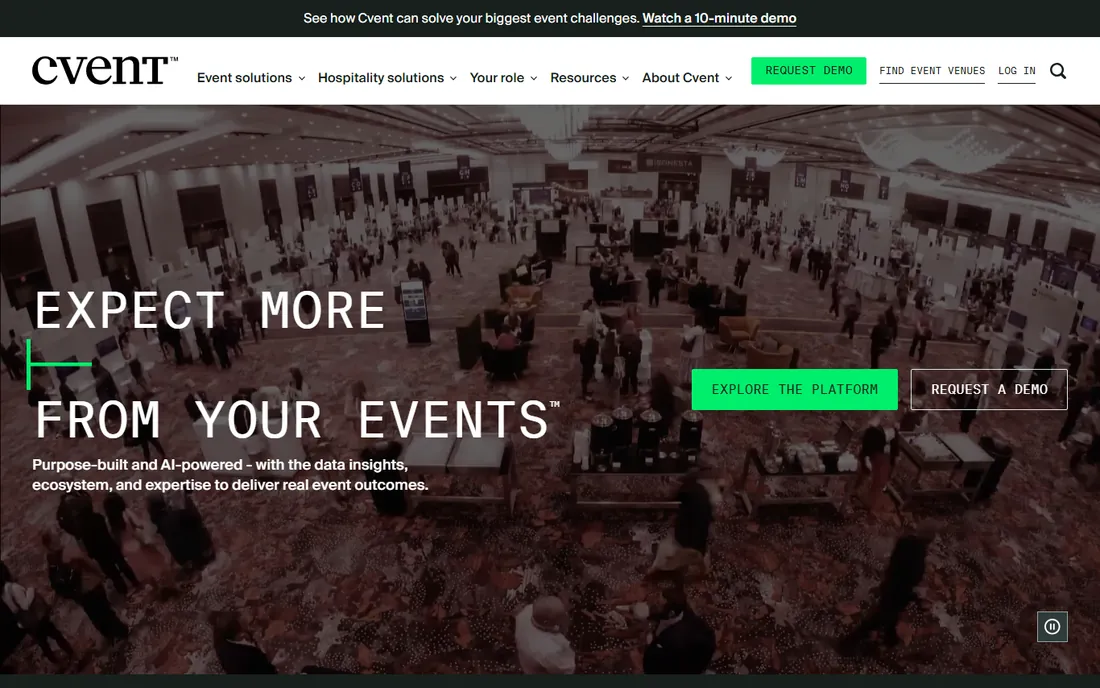
Cvent is the most complete event management platform in the market. Registration, event websites, mobile apps, on-site check-in, venue sourcing, attendee engagement and post-event analytics all live in one system, with integrations into the marketing and CRM tools enterprises already use. Large associations and corporations run their entire event portfolios on it.
The platform is priced for that scale, with quotes based on modules and event volume. A fifty-person workshop does not need Cvent. But for organizations running multiple large events a year, the consolidation, one vendor, one data model, one reporting layer, is worth the enterprise commitment.
What we like- End-to-end event management
- Venue sourcing
- Deep analytics and integrations
Watch out for- Enterprise pricing
- Complexity for simple events
Starting priceSee website
Free planNo
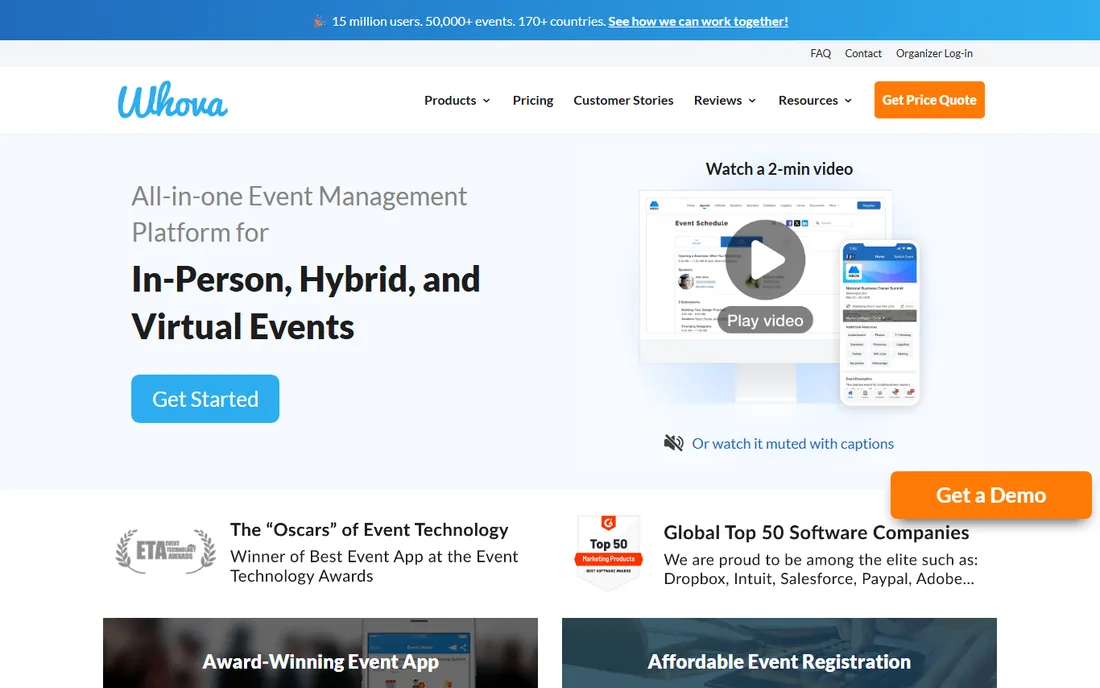
Whova built its reputation on the attendee experience. The mobile app handles agendas, networking, live polls, Q&A and sponsor engagement in a package attendees actually use, which is rarer than it sounds. Organizers get registration, ticketing, abstract management and analytics at pricing that associations can afford.
It is not Cvent: the largest, most complex multi-track productions will find limits. But for conferences from a few hundred to a few thousand attendees, Whova delivers the features that matter, especially attendee engagement, at a fraction of enterprise platform cost.
What we like- Excellent attendee app
- Strong networking features
- Reasonable pricing
Watch out for- Less depth for mega-events
- Customization has limits
#3
Zoom Events
Best for: Virtual events for Zoom-centric organizations
Visit zoom.com
Starting priceSee website
Free planNo
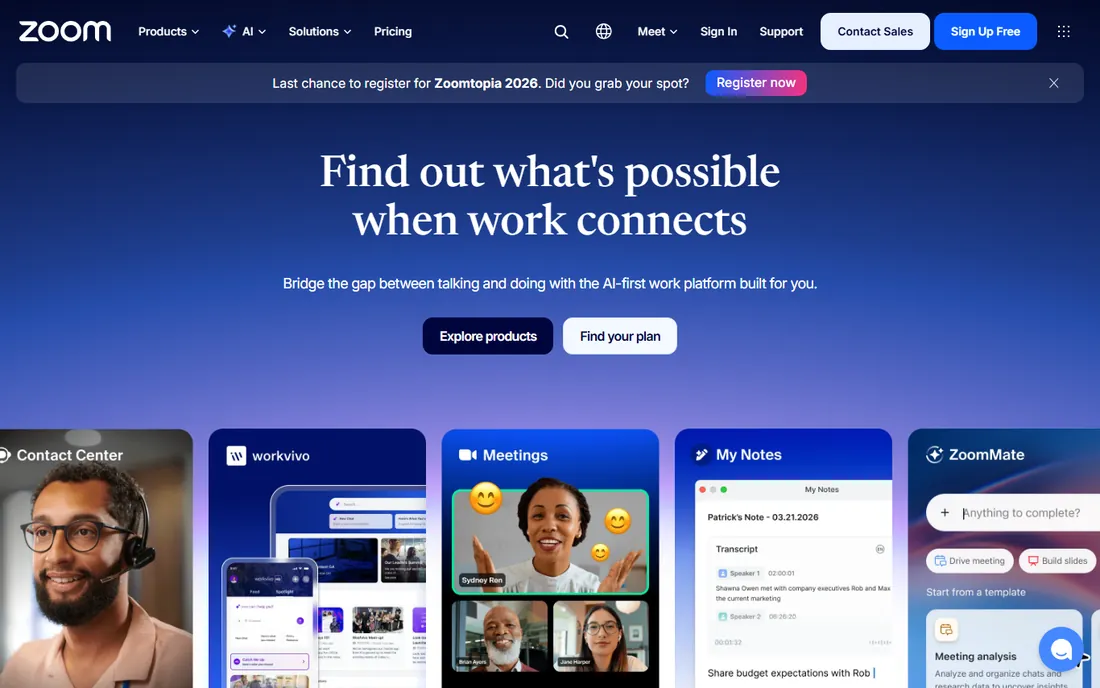
Zoom Events extends the meeting tool everyone knows into multi-session virtual events: registration pages, ticketing, lobbies, expo areas and analytics. For organizations already standardized on Zoom, the attendee experience needs zero explanation, which removes the biggest barrier to virtual event attendance.
It is an events layer on a meetings platform, not a full event management suite. Complex in-person logistics, venue sourcing and advanced sponsor management live elsewhere. But for virtual summits, town halls and webinars at scale, Zoom Events' familiarity is a genuine strategic advantage.
What we like- Familiar Zoom experience
- Registration and ticketing built in
- Easy for attendees
Watch out for- Less of a full event platform than Cvent or Bizzabo
- Networking features are basic
Starting priceSee website
Free planNo
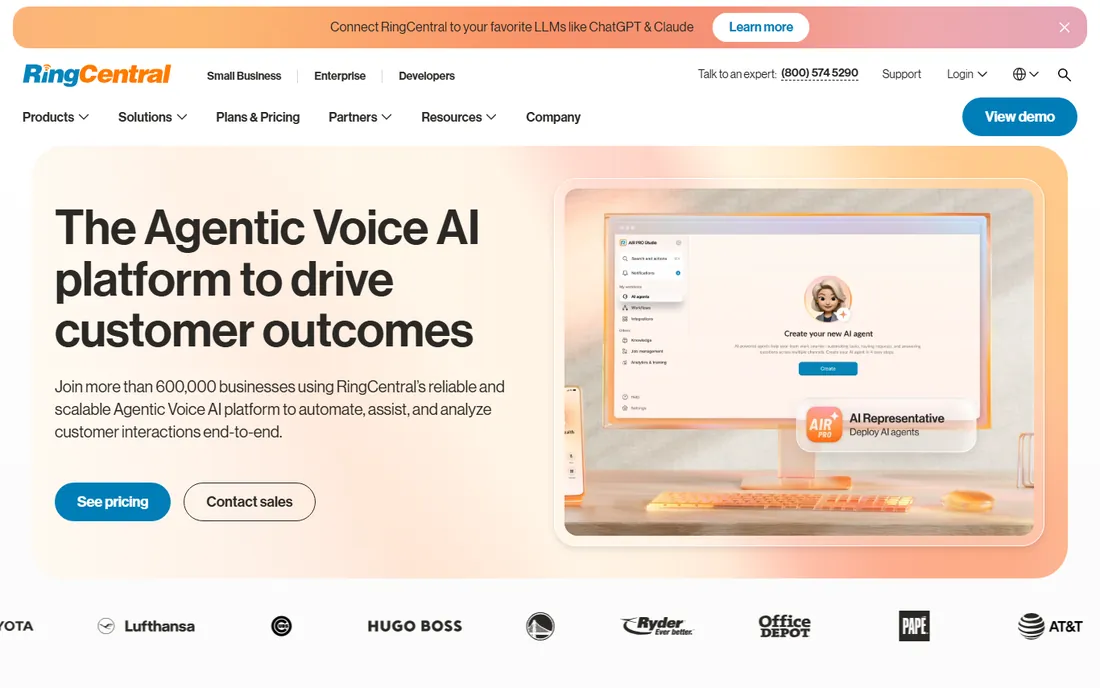
RingCentral Events, the former Hopin Events, was built for virtual events with real production value: main stages, breakout sessions, networking areas and virtual expos that feel like an event rather than a long webinar. The acquisition by RingCentral brought it into a broader communications portfolio.
The Hopin-to-RingCentral transition is still recent enough that some buyers do due diligence on the roadmap. Pricing is quoted. For organizations running flagship virtual or hybrid events where the attendee experience has to impress, the platform's production capabilities stand out.
What we like- Polished virtual stages
- Strong production tools
- Networking and expo areas
Watch out for- Pricing is quote-based
- Brand transition from Hopin still settling
Starting priceSee website
Free planNo
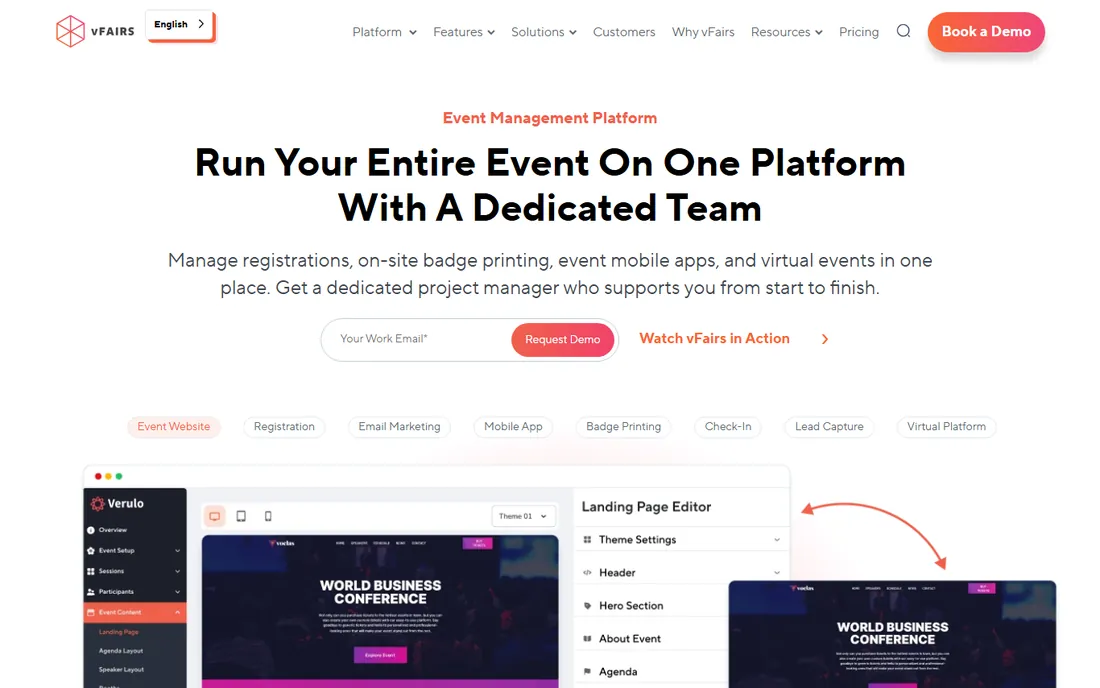
vFairs specializes in the virtual expo format: navigable 3D-ish environments with exhibitor booths, resource centers and networking lounges. Virtual job fairs and trade shows are its sweet spot, and the company provides project management support that smaller teams appreciate.
In-person event management is not the focus. Pricing is quoted per event. For organizations whose event is fundamentally an expo, whether for recruiting, education or trade, vFairs' purpose-built environments beat generic virtual meeting tools.
What we like- Strong virtual expo environments
- Good for recruiting events
- Project-managed delivery
Watch out for- Less suited to in-person conferences
- Quote-based pricing
Starting priceSee website
Free planNo
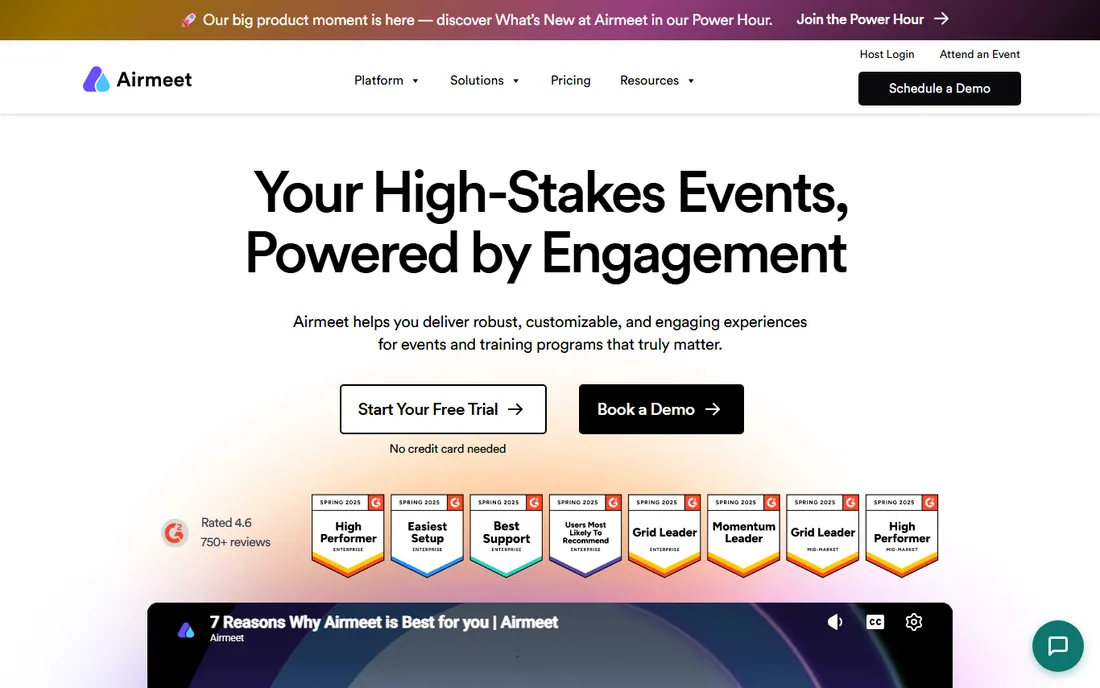
Airmeet's signature is the social lounge: a virtual space where attendees mingle at tables, mimicking the hallway conversations that make conferences valuable. Combined with stages, booths and speed networking, it produces virtual events that feel social rather than broadcast.
The company is smaller than Cvent or Zoom, so the integration catalog and enterprise feature depth reflect that. But for virtual summits, community meetups and recurring event series where engagement is the metric, Airmeet's format innovations make it a strong contender.
What we like- Social lounge networking
- Engaging attendee experience
- Good for recurring events
Watch out for- Smaller company
- Fewer enterprise integrations
Starting priceSee website
Free planNo
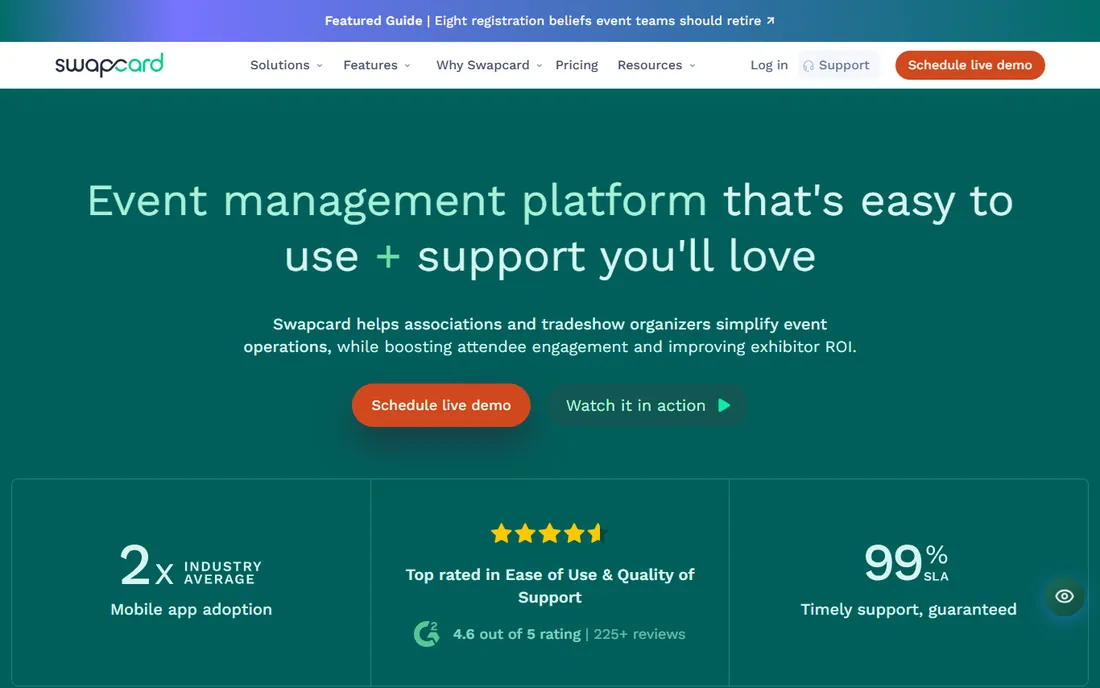
Swapcard leads with networking: AI matchmaking connects attendees with relevant people, meetings get scheduled in the app, and the analytics show organizers which connections actually happened. For trade shows and B2B events where the value is who you meet, that focus is exactly right.
Registration and ticketing are present but not the platform's deepest area; many customers pair it with a registration tool. Pricing is quoted. If your event's success is measured in meetings booked and connections made, Swapcard deserves the first demo slot.
What we like- AI-powered matchmaking
- Strong networking tools
- Good analytics
Watch out for- Quote-based pricing
- Less of a registration platform
Starting priceSee website
Free planNo
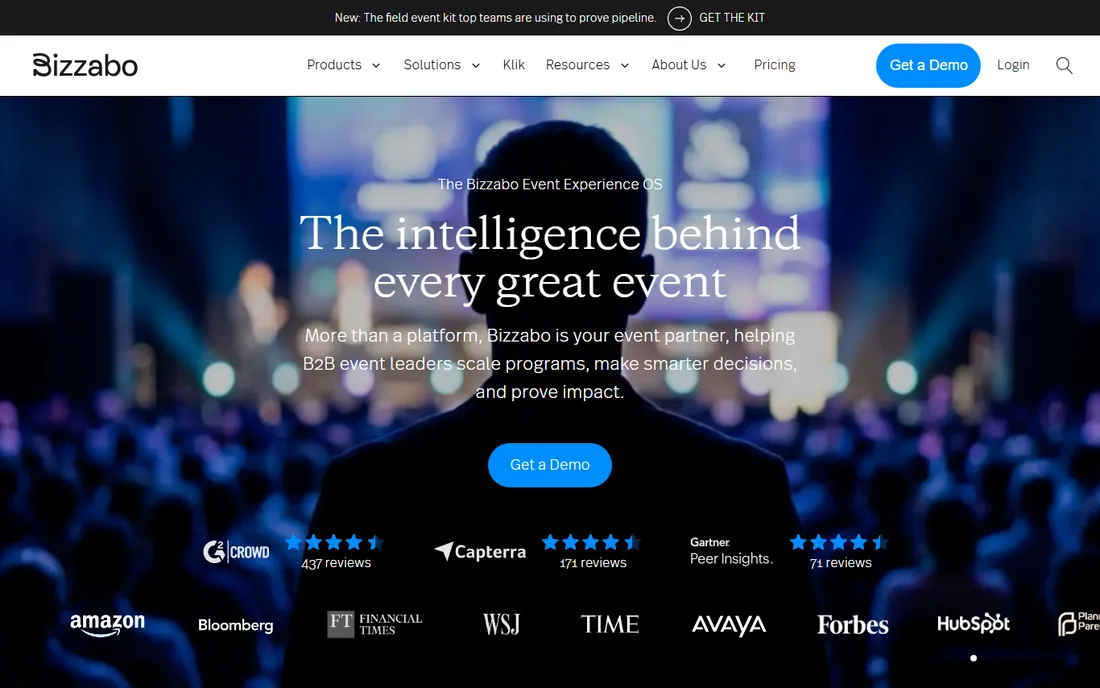
Bizzabo positions events as a marketing channel: event websites, email promotion, registration, the event experience and revenue attribution in one platform that talks to the marketing stack. B2B marketers get to prove event ROI in the same language as their other channels.
Pricing leans enterprise, and the in-person logistics depth does not match Cvent's. But for marketing-led organizations running conferences, summits and field events as pipeline drivers, Bizzabo's marketing-first design fits better than operations-first platforms.
What we like- Strong event marketing tools
- Good integrations
- Polished organizer experience
Watch out for- Enterprise-leaning pricing
- Less in-person depth than Cvent
How we chose
We looked for platforms that run conferences in 2026: registration, the event experience (virtual, hybrid or in-person), networking and analytics. We verified each product is actively offered, checked documentation and industry coverage, and selected tools covering the range from value picks to enterprise suites. Pure webinar tools and meeting apps were excluded unless they offer a real events product. Pricing is quote-based across most of the category.
Virtual, hybrid or in-person
The format decision shapes the platform choice. Pure virtual events need engaging stages, networking and expo areas: RingCentral Events, Airmeet and vFairs lead here. Hybrid events need the virtual experience to match the in-person one, which is harder than it sounds; Whova and Bizzabo handle hybrid well. In-person conferences need registration, on-site execution and mobile apps: Cvent dominates, with Whova as the value alternative.
Be honest about what you are actually running. A webinar series does not need a conference platform. A 200-person user conference does not need Cvent. Match the platform to the event's real complexity, and remember that attendee experience quality matters more than feature count in every format. When in doubt, run a small pilot event on the shortlisted platform before committing the flagship conference to it.
Proving the event was worth it
Every platform on this list offers analytics, but the metrics that matter are decided before the event, not after. Registration numbers, attendance rates, session engagement, meetings booked, sponsor interactions, pipeline influenced: pick the five that justify the budget and confirm the platform measures them natively.
The follow-up is where most events lose value. Check how each platform handles post-event surveys, content distribution and lead handoff to sales or membership teams. The best conference platform is the one whose data flows into the systems where the event's value is actually realized.
Frequently asked questions
What is a conference platform?
It is software for planning and running conferences and large events: registration and ticketing, event websites and apps, agenda management, virtual event delivery, attendee networking, sponsor management and post-event analytics. Some platforms cover the full lifecycle; others specialize in virtual events or specific formats.
How much do conference platforms cost?
Most are priced by quote based on attendee count, event count and modules. Expect annual contracts for the established platforms and per-event pricing from some virtual specialists. Always clarify what an attendee count tier includes: registered, attended or active.
Can one platform handle hybrid events?
Yes, and most now claim to. The quality varies enormously: the test is whether virtual attendees get a genuinely good experience or a livestream afterthought. Ask for a demo of the virtual attendee view specifically, and check how networking works between in-person and remote participants.
What is the difference between a conference platform and Zoom?
Zoom is a meetings tool; Zoom Events adds registration, ticketing and multi-session structure on top. Full conference platforms like Cvent add event marketing, venue sourcing, on-site execution and deeper analytics. The right choice depends on whether you are running meetings or running events.
How far in advance should we choose a platform?
For large conferences, six to nine months is typical: the platform shapes registration, the website and speaker management. Virtual events can move faster, often eight to twelve weeks. The constraint is usually content and promotion timelines, not software setup.
Do attendees need to install anything?
Most modern platforms run in the browser or offer optional mobile apps. Requiring downloads kills attendance, so check the attendee experience carefully. Whova, Zoom Events and the others on this list are all designed for low-friction attendee access.
How do sponsors get value from virtual events?
Through the same mechanics as in-person: branded booths, sponsored sessions, lead capture and scheduled meetings. The difference is measurement. Virtual platforms track booth visits, content downloads and meeting counts precisely, which actually makes sponsor ROI easier to prove than the badge-scan chaos of a physical expo floor.
Should we run our own platform or hire an event agency?
It depends on team capacity. The platforms on this list are designed for organizers to run themselves, and many mid-size conferences do exactly that. Agencies add value for large, complex productions where logistics, AV and on-site staffing exceed what the internal team can cover. A common middle path is running the platform in-house while outsourcing AV production for the flagship sessions.
Sources we checked (8)
- https://www.cvent.com
- https://whova.com
- https://www.zoom.com
- https://www.ringcentral.com
- https://www.vfairs.com
- https://www.airmeet.com
- https://www.swapcard.com
- https://www.bizzabo.com
Is your product missing or out of date?
We review this list regularly. Vendors can request a listing, send updated pricing or ask about featured placement.

Shihab Mia · Founder, Rankite
Shihab has spent more than a decade helping SaaS and e-commerce brands grow through search. He writes Rankite's software buying guides from pricing pages, documentation and public user reviews. More about Shihab.