How we make this list: we compare pricing pages, product documentation and public user reviews. Rankite is independent; if a vendor ever pays for a featured spot, that listing is clearly labeled Partner.
Key takeaways
- Square is the default for small retailers: free POS software with 2.6% plus 10 cents per in-person transaction and no monthly fee.
- Shopify POS is the pick for retailers selling online and in-store, with unified inventory across both channels.
- Lightspeed Retail serves larger and multi-location retailers with deeper inventory and reporting.
- Clover, Epos Now, talech, Rain POS and KORONA POS cover specific niches from hardware flexibility to specialty retail.
Quick comparison
| Tool | Best for | Starting price | Free plan |
|---|
 Square Square | Small retailers that want to start free | Free (2.6% + 10¢ per in-person transaction) | Yes |
 Shopify POS Shopify POS | Retailers selling online and in person | See website | No |
 Lightspeed Retail Lightspeed Retail | Growing and multi-location retailers | See website | No |
 Clover Clover | Retailers wanting hardware choice and apps | See website | No |
 Epos Now Epos Now | Small retailers wanting affordable all-in-one | See website | No |
 talech talech | Small retailers wanting a simple iPad POS | See website | No |
 Rain POS Rain POS | Specialty retailers like music and outdoor shops | See website | No |
 KORONA POS KORONA POS | Retailers with complex inventory and multi-location needs | See website | No |
Is your product missing or out of date?
We review this list regularly. Vendors can request a listing, send updated pricing or ask about featured placement.
The best retail point of sale software
Starting priceFree (2.6% + 10¢ per in-person transaction)
Free planYes
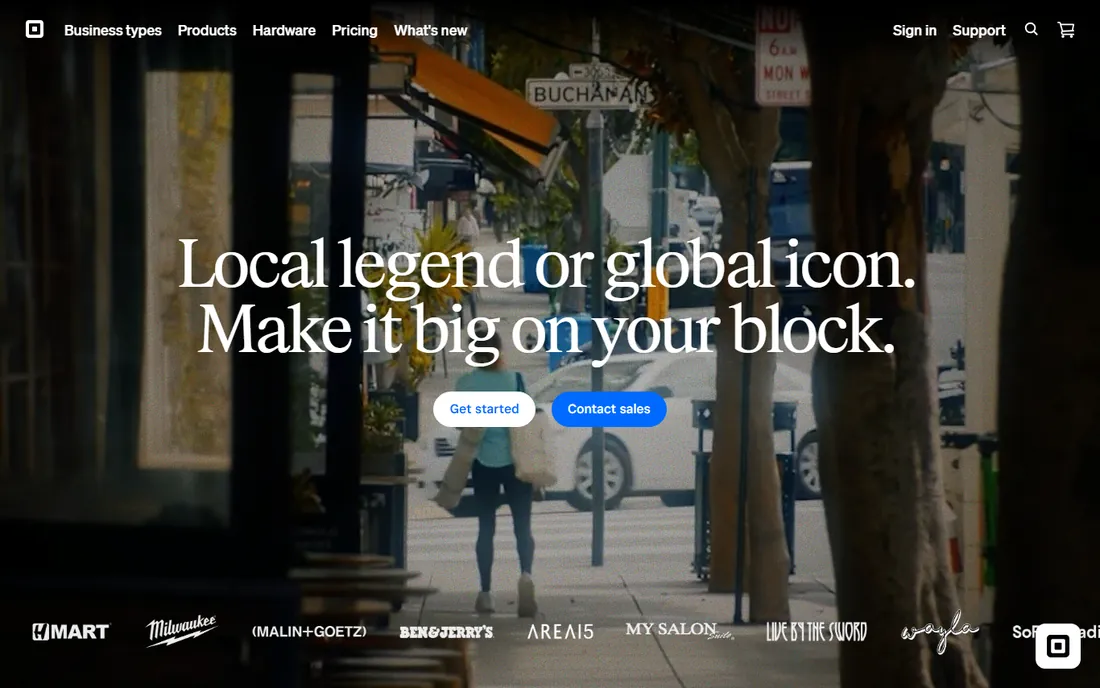
Square made the modern POS accessible: download the app, plug in the free reader and start selling, with inventory management, customer profiles and reporting included at no monthly cost. You pay only when you take payments: 2.6% plus 10 cents per in-person transaction. Paid tiers add advanced inventory, employee management and lower rates.
The flat rate is the catch at scale. High-volume retailers can do better with interchange-plus pricing elsewhere. There are also longstanding complaints about sudden account holds. But for new and small retailers, Square's zero-fixed-cost model removes every barrier to getting started professionally.
What we like- Free full POS software
- No monthly fee
- Huge ecosystem of hardware and add-ons
Watch out for- Flat processing rate gets expensive at volume
- Account stability complaints persist
Starting priceSee website
Free planNo

Shopify POS is the in-store extension of the ecommerce platform: one inventory, one customer database, one reporting system across the website and the physical store. A sale in-store deducts from the same stock the website sells. POS Lite comes with every Shopify plan; POS Pro adds smart inventory management, staff roles and advanced reporting per location.
The requirement is a paid Shopify subscription even for in-store-only use, which makes it pricier than Square for pure brick-and-mortar. But retailers with any online ambition get the industry's best omnichannel integration, and the app ecosystem extends the POS enormously.
What we like- Unified online and in-store inventory
- Excellent ecosystem
- POS Pro adds depth
Watch out for- Requires a Shopify subscription
- Hardware costs extra
Starting priceSee website
Free planNo
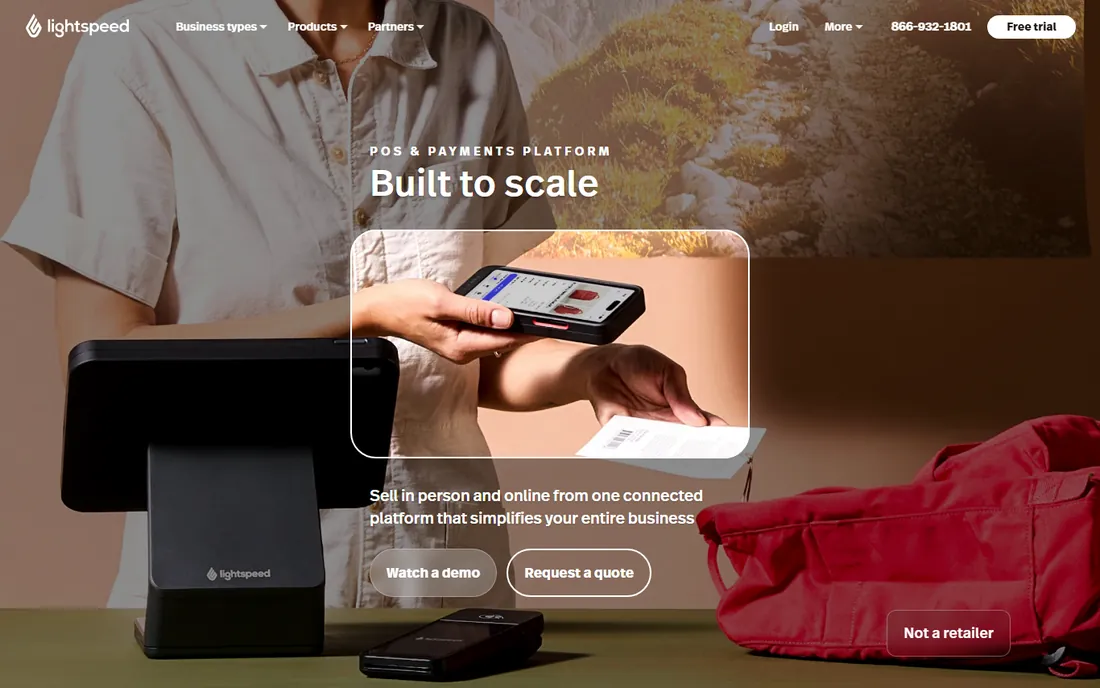
Lightspeed Retail is built for retailers with real inventory complexity: matrix products, purchase orders, vendor management, multi-location stock transfers and detailed reporting. Single shops use it, but it shines for chains and growing retailers where inventory accuracy decides profitability.
Pricing is quote-based and the platform is more than a tiny boutique needs. But retailers outgrowing Square's inventory tools consistently land on Lightspeed. The X-Series (formerly Vend) covers simpler needs within the same family.
What we like- Deep inventory management
- Strong multi-location support
- Good reporting
Watch out for- Quote-based pricing
- More system than a single small shop needs
Starting priceSee website
Free planNo
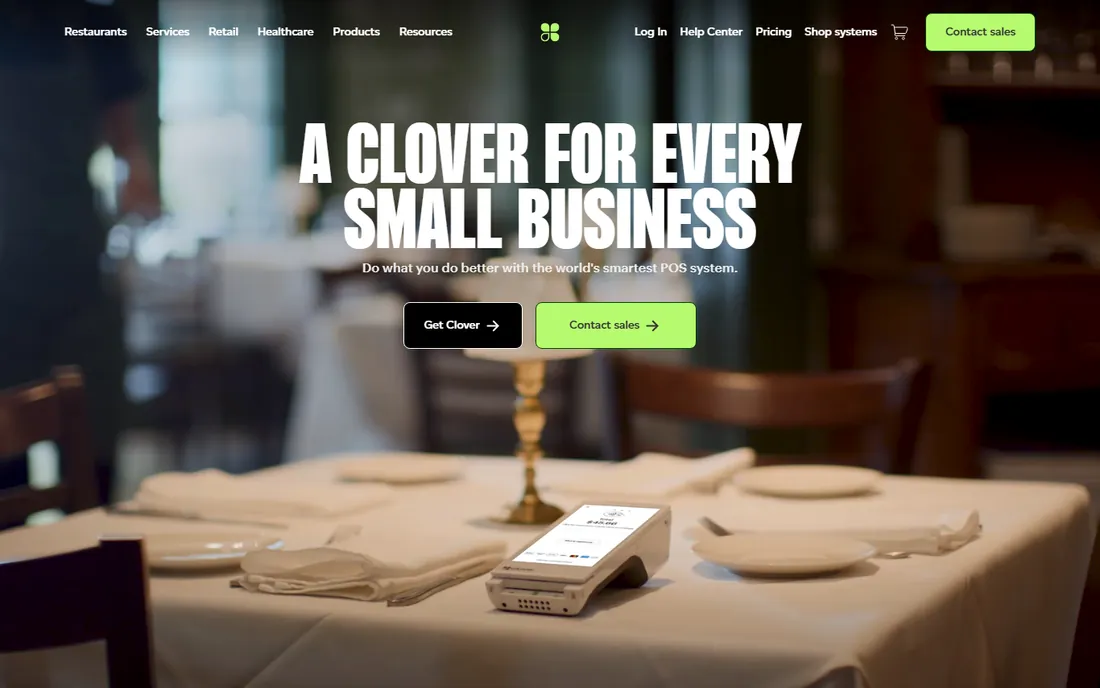
Clover's strength is the ecosystem: countertop stations, mobile devices, kitchen displays and a large app marketplace, sold through banks and ISOs that bundle processing. Retailers can assemble exactly the setup they need, from a single counter terminal to multi-register stores with loyalty and gift cards.
The reseller model is the complication. Pricing, processing rates and contract terms vary by provider, so comparison shopping is essential. Bought well, Clover is flexible and capable; bought carelessly, it is expensive. Get competing quotes before signing.
What we like- Wide hardware range
- Big app marketplace
- Flexible station setups
Watch out for- Pricing varies by reseller
- Processing rates need negotiation
Starting priceSee website
Free planNo
Epos Now sells the complete package: POS software with hardware bundles at accessible prices, aimed at small retailers and hospitality businesses that want one vendor for everything. Setup is quick, the interface is straightforward and the pricing conversations are refreshingly direct.
Advanced functionality comes through paid add-ons that accumulate. The third-party ecosystem is smaller than Square's or Shopify's. But for independent retailers who want to buy the till, the software and the support from one place, Epos Now's bundle simplicity works.
What we like- All-in-one hardware and software bundles
- Straightforward pricing
- Quick setup
Watch out for- Advanced features cost extra
- Smaller ecosystem than Square
Starting priceSee website
Free planNo
talech offers a clean, iPad-based POS for small retailers: sales, inventory basics, customer management and reporting in a system staff learn in an afternoon. It carved out a loyal small-business following with straightforward pricing and no-nonsense functionality.
Inventory depth does not match Lightspeed, and the company's acquisition history means buyers should confirm the current roadmap. But for the core job of ringing up sales reliably on familiar hardware, talech remains a solid, unpretentious choice.
What we like- Clean iPad-based system
- Easy to learn
- Reasonable pricing
Watch out for- Less depth than Lightspeed
- Now part of a larger payments company
#7
Rain POS
Best for: Specialty retailers like music and outdoor shops
Visit rainpos.com
Starting priceSee website
Free planNo
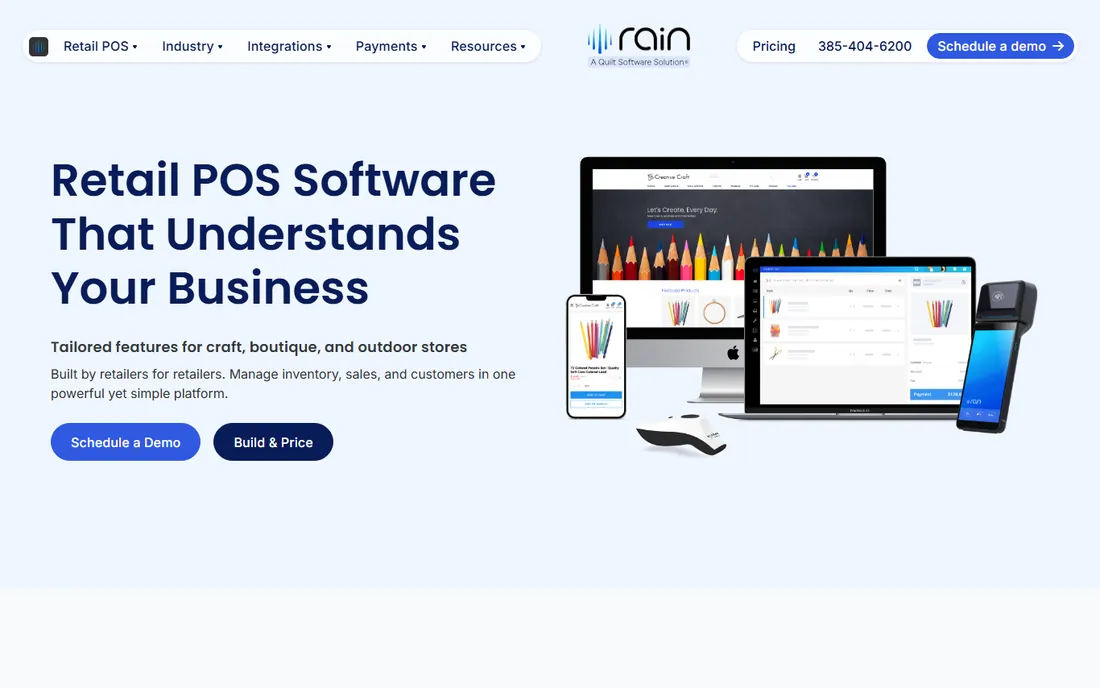
Rain POS serves specialty retail verticals, particularly music stores and outdoor retailers, with features shaped around their inventory: serialized products, repairs and rentals, lessons and classes, plus integrated websites. The vertical focus means the workflows match how these stores actually operate.
General retailers will find the specialization limiting. Pricing is quoted. But a guitar shop's needs differ fundamentally from a clothing boutique's, and Rain's willingness to build for the niche is exactly why its customers are loyal.
What we like- Built for specialty retail verticals
- Website integration
- Good support reputation
Watch out for- Niche focus
- Less suited to general retail
#8
KORONA POS
Best for: Retailers with complex inventory and multi-location needs
Visit koronapos.com
Starting priceSee website
Free planNo
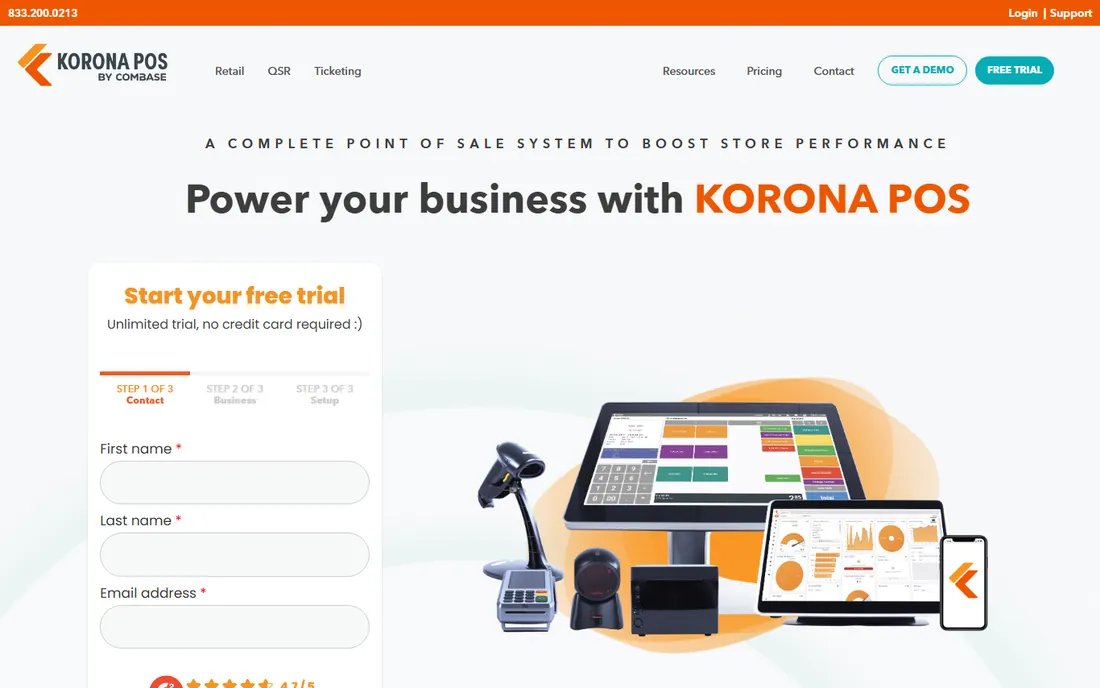
KORONA POS targets retailers whose inventory is genuinely complex: multi-location stock, varied product types, loss prevention needs. The cloud-based system offers strong inventory control without long-term contracts, and the pricing is positioned accessibly for what it delivers.
Brand recognition trails the bigger names, and the interface prioritizes function. But retailers who evaluate on capability rather than marketing find KORONA's depth competitive with systems costing much more, especially for multi-store operations.
What we like- Strong inventory and multi-location features
- Flexible pricing
- No long contracts
Watch out for- Less brand recognition
- Interface functional rather than flashy
How we chose
We focused on point of sale systems built for retail stores, verified as actively offered in 2026. We checked vendor sites and documentation, prioritizing the factors retailers actually decide on: software cost, processing rates, hardware, inventory depth and multi-location support. Restaurant-first systems were excluded except where they serve retail. Where pricing could not be confirmed on vendor materials, we used See website. Public reviews on G2, Capterra and Reddit helped us check real-world reliability.
The real cost of a POS
The software subscription is often the smallest line item. Model the full cost: monthly software fees, per-transaction processing rates at your volume and average ticket size, hardware purchases, and any required payment processing contracts. A free-software system at 2.6% plus 10 cents costs more than a $100-a-month system at interchange-plus once volume crosses a threshold you can calculate.
Run your numbers. Take last year's card volume and average transaction, apply each candidate's rate structure, and compare annual totals including software fees. The cheapest-feeling option is frequently not the cheapest. And watch contract terms: some providers lock processing rates and lease hardware in multi-year agreements that are expensive to exit.
Hardware decisions
The POS software decision usually drags a hardware decision with it. iPad-based systems (Square, talech, Shopify POS) keep upfront costs low and replacements easy. Proprietary terminals (Clover, Epos Now bundles) offer integrated durability at higher cost and vendor lock-in.
Buy for the store you have, not the chain you dream of. A single-location boutique does not need the terminal infrastructure of a twenty-store chain, and overspending on hardware is the most common POS regret. Confirm compatibility before buying: not every card reader works with every software, and payment processing certification matters.
Frequently asked questions
What is retail POS software?
It is the system that runs the checkout: processing sales and payments, tracking inventory, managing customers and reporting on performance. Modern retail POS is usually cloud-based software running on tablets or dedicated terminals, often bundled with payment processing.
How much does POS software cost?
Square's POS software is free with per-transaction processing fees (2.6% plus 10 cents in person). Most competitors charge monthly subscriptions plus processing, with enterprise and multi-location systems priced by quote. Always model software plus processing plus hardware together.
Can I use my existing card processor?
Sometimes. Some POS systems (Clover, Lightspeed) work with multiple processors; others (Square, Shopify POS with Shopify Payments) bundle processing. Bundled processing simplifies setup but removes your negotiating power. Ask about processor flexibility before committing.
Do I need special hardware?
Most modern systems run on iPads or Android tablets with a card reader, which keeps costs low. High-volume stores often prefer dedicated terminals for durability. Budget for the reader, a cash drawer, a receipt printer and a barcode scanner as the standard kit.
What is the difference between POS Lite and POS Pro (Shopify)?
POS Lite, included with every Shopify plan, covers basic in-store selling with unified inventory. POS Pro adds smart inventory management, advanced staff permissions, detailed reporting and multi-location features for a per-location fee. High-volume or multi-location retailers need Pro.
How do returns and exchanges work?
Every system on this list handles returns, but the workflows differ: receipt-required versus receipt-less returns, exchange handling, refund-to-original-payment rules and restocking. Test the returns flow during evaluation with your actual policy, since a bad returns experience loses customers faster than a slow checkout.
Should the POS include loyalty and marketing?
For most retailers, yes. The systems that bundle loyalty programs, gift cards, email marketing and customer profiles (Square, Lightspeed, Clover) turn transaction data into repeat business. A standalone POS that cannot identify returning customers leaves the most valuable retail asset, the customer relationship, unmanaged. Prioritize the CRM and loyalty features as highly as the checkout speed.
What about offline mode?
Internet outages should not stop sales. Most modern POS systems offer offline mode that queues transactions and syncs when the connection returns. Verify the limits: how long offline mode lasts, which payment types work offline and what happens to inventory counts. Test it by unplugging the router during the trial, not by reading the feature list.
Sources we checked (8)
- https://squareup.com/us/en/point-of-sale
- https://www.shopify.com/pos
- https://www.lightspeedhq.com/pos/retail/
- https://www.clover.com
- https://www.eposnow.com
- https://www.talech.com
- https://www.rainpos.com
- https://www.koronapos.com
Is your product missing or out of date?
We review this list regularly. Vendors can request a listing, send updated pricing or ask about featured placement.

Shihab Mia · Founder, Rankite
Shihab has spent more than a decade helping SaaS and e-commerce brands grow through search. He writes Rankite's software buying guides from pricing pages, documentation and public user reviews. More about Shihab.