How we make this list: we compare pricing pages, product documentation and public user reviews. Rankite is independent; if a vendor ever pays for a featured spot, that listing is clearly labeled Partner.
Key takeaways
- Oracle Transportation Management and Blue Yonder are the enterprise leaders for global shippers with complex multimodal networks.
- Descartes offers the broadest logistics network and trade compliance depth, now including the former MercuryGate platform.
- Manhattan Associates and E2open serve shippers that want transportation inside a larger supply chain suite.
- 3Gtms, Kuebix (Trimble) and Shipwell give mid-market shippers modern TMS capabilities without enterprise implementations.
Quick comparison
| Tool | Best for | Starting price | Free plan |
|---|
 Oracle Transportation Management Oracle Transportation Management | Global shippers with complex networks | See website | No |
 Blue Yonder Blue Yonder | Shippers wanting AI-driven transportation decisions | See website | No |
 Descartes Descartes | Shippers needing network connectivity and compliance | See website | No |
 Manhattan Associates Manhattan Associates | Shippers standardizing on Manhattan's suite | See website | No |
 E2open E2open | Shippers wanting transportation in a connected network | See website | No |
 3Gtms 3Gtms | Mid-market shippers wanting flexibility | See website | No |
 Kuebix (Trimble) Kuebix (Trimble) | Growing shippers wanting accessible TMS | See website | No |
 Shipwell Shipwell | Mid-size shippers wanting a modern platform | See website | No |
Is your product missing or out of date?
We review this list regularly. Vendors can request a listing, send updated pricing or ask about featured placement.
The best transport management software
#1
Oracle Transportation Management
Best for: Global shippers with complex networks
Visit oracle.com
Starting priceSee website
Free planNo
Oracle Transportation Management is the most functionally complete TMS in the market: planning, execution, freight payment, trade compliance and analytics across all modes and geographies. Global shippers with intricate networks, the kind with dozens of countries and hundreds of carriers, run on it because nothing else covers the same breadth.
The commitment is proportional: enterprise pricing, long implementations and real change management. Shippers with straightforward domestic truckload needs should look at the mid-market tools. But for global transportation complexity, Oracle TM is the benchmark.
What we like- Deepest functionality in the category
- Global trade and compliance
- Massive scalability
Watch out for- Enterprise pricing and implementation
- Complexity for simpler networks
Starting priceSee website
Free planNo
Blue Yonder, formerly JDA, positions transportation inside an AI-driven supply chain platform. The TMS uses machine learning for load planning, carrier selection and disruption response, learning from the shipper's own data. For companies already using Blue Yonder for planning or warehousing, the transportation module completes the picture.
This is enterprise software with enterprise pricing and implementation timelines. The AI capabilities are genuinely differentiating rather than marketing. Shippers whose transportation decisions involve enough complexity to benefit from optimization will find the investment justified.
What we like- Strong AI and machine learning capabilities
- End-to-end supply chain vision
- Proven at scale
Watch out for- Enterprise pricing
- The platform breadth takes time to absorb
Starting priceSee website
Free planNo
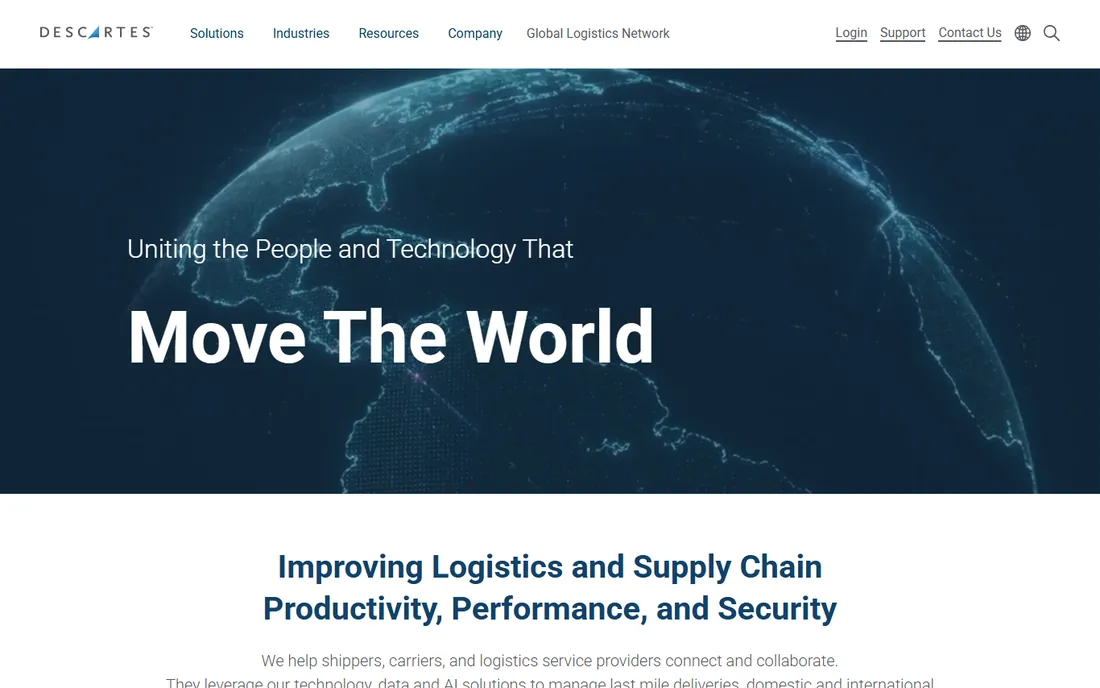
Descartes operates one of the world's largest logistics networks, connecting shippers, carriers and forwarders for messaging, tracking and documentation. The TMS portfolio, strengthened by the MercuryGate acquisition, covers planning through freight audit and payment, while the trade compliance and customs capabilities are the deepest in the category.
The portfolio is broad enough that buyers need guidance on which product fits. Pricing is quoted. But shippers whose freight crosses borders will find Descartes' combination of TMS and compliance unmatched: the customs paperwork and the transportation plan in one system.
What we like- Huge global logistics network
- Strong customs and compliance
- Includes MercuryGate TMS
Watch out for- Portfolio breadth can confuse buyers
- Quote-based pricing
#4
Manhattan Associates
Best for: Shippers standardizing on Manhattan's suite
Visit manh.com
Starting priceSee website
Free planNo

Manhattan's transportation management shines brightest inside its own suite: warehouse management, order management and transportation sharing one data model. Retailers and distributors with complex distribution networks get transportation decisions informed by inventory and order reality, not isolated freight logic.
Standalone, it competes well but the suite synergy is the argument. Pricing is enterprise-level. For companies already running Manhattan WMS, adding the TMS is the natural move; for others, the evaluation should weigh the full platform.
What we like- Unified with warehouse and order management
- Strong execution
- Proven in retail and distribution
Watch out for- Best value inside the Manhattan ecosystem
- Enterprise pricing
#5
E2open
Best for: Shippers wanting transportation in a connected network
Visit e2open.com
Starting priceSee website
Free planNo
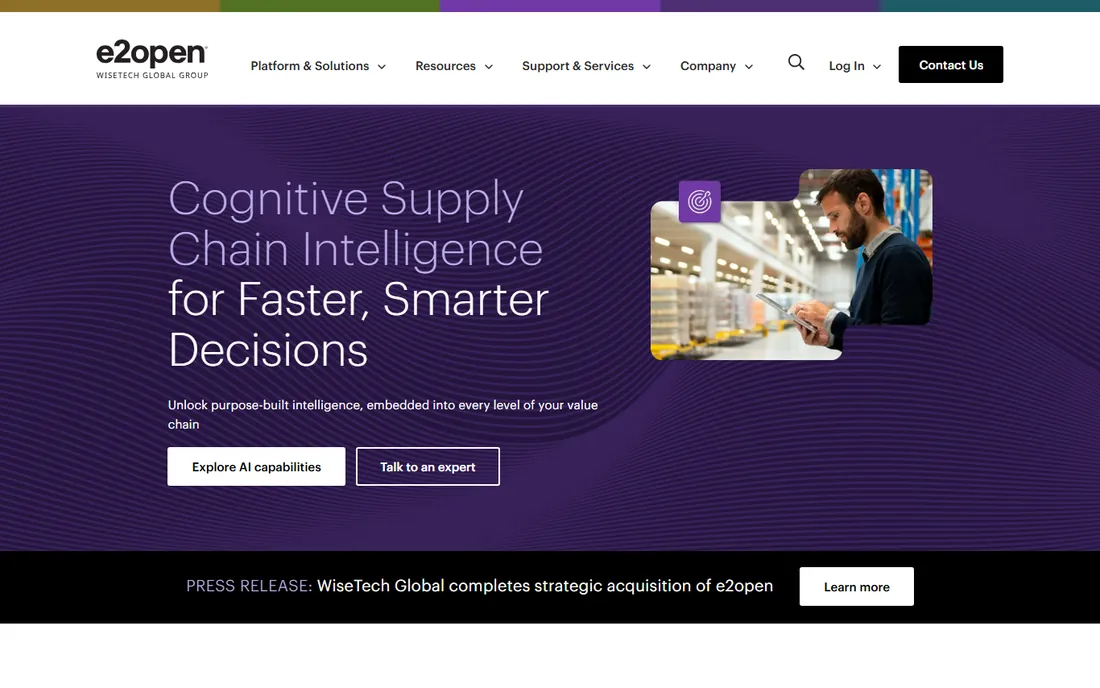
E2open takes a network approach: shippers, suppliers, carriers and logistics providers collaborating on one platform with multi-tier visibility. The TMS benefits from that connectivity, with transportation plans informed by upstream supply data. Companies with complex, multi-tier supply chains get visibility their competitors lack.
The enterprise focus means pricing and implementation to match. Smaller shippers should look elsewhere. But for manufacturers and brand owners managing intricate supply networks, E2open's connected model addresses problems point TMS tools cannot see.
What we like- Network-based approach
- Strong multi-tier visibility
- Good for complex supply chains
Watch out for- Enterprise focus
- Implementation is substantial
Starting priceSee website
Free planNo

3Gtms built its reputation on flexibility: a TMS that adapts to the shipper's processes rather than forcing the enterprise template. Rating, planning, execution, settlement and analytics cover the full TMS scope, with implementation timelines measured in months rather than years.
The vendor is smaller than the giants, and global trade depth is thinner. But mid-market shippers, including many 3PLs running shipper TMS instances, find 3Gtms delivers enterprise-grade functionality without the enterprise project. The value equation is the selling point.
What we like- Flexible and configurable
- Faster implementation than enterprise suites
- Good value
Watch out for- Smaller vendor
- Less global depth than Oracle or Blue Yonder
#7
Kuebix (Trimble)
Best for: Growing shippers wanting accessible TMS
Visit trimble.com
Starting priceSee website
Free planNo

Kuebix made TMS accessible to shippers that found the enterprise tools out of reach: modular, cloud-based transportation management with straightforward onboarding. Now part of Trimble, it benefits from the parent's transportation ecosystem and integrations.
Highly complex global networks will outgrow it. The roadmap follows Trimble's strategy. But for growing shippers moving off spreadsheets and load boards, Kuebix offers the fastest path to a real TMS with room to grow.
What we like- Easy to start
- Modular pricing
- Trimble backing and integrations
Watch out for- Less depth for complex global networks
- Roadmap follows Trimble
Starting priceSee website
Free planNo
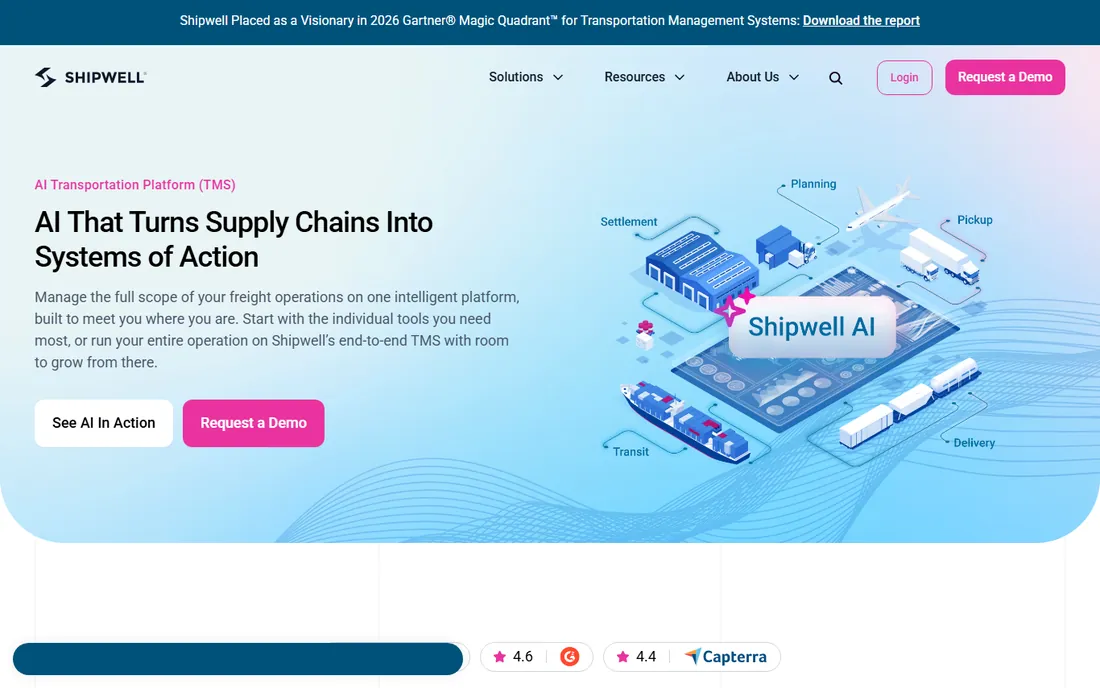
Shipwell is the modern mid-market TMS: cloud-native, quick to deploy, with automation handling rating, tendering, tracking and documentation. The interface reflects current design standards rather than decades of enterprise accretion, which shortens the learning curve for shipper teams.
The company is younger than the established players, so the reference list and the deepest enterprise features trail the leaders. But mid-size shippers that want modern software without a year-long implementation find Shipwell's balance of capability and speed compelling.
What we like- Modern interface
- Quick deployment
- Good automation
Watch out for- Younger company
- Less enterprise depth
How we chose
We focused on TMS products built for shippers, not freight brokers or carriers, verified as actively offered in 2026. We checked vendor documentation and industry coverage, accounting for recent consolidation (MercuryGate into Descartes, Kuebix into Trimble). Pricing is quote-based across the category, so we compared on network scope, mode coverage and audience fit. Broker TMS and last-mile delivery tools were excluded.
Shipper TMS versus broker TMS
The same acronym covers two different products. Shipper TMS (this list) helps companies moving their own freight plan, tender, track and pay for transportation. Broker TMS (covered in our freight broker guide) helps intermediaries match loads with carriers and manage the brokerage operation.
The confusion costs buyers time. A shipper evaluating a broker TMS will find carrier sales tools where they expected freight audit. A broker evaluating a shipper TMS will find shipper workflows where they expected load boards. Confirm which side of the market the vendor serves before the first demo.
What to evaluate in the demo
Make the vendor run your freight, not their demo freight. Bring a week of real shipments: the lanes, the modes, the accessorials, the problem carriers. Watch how rating, tendering and exception management handle your actual complexity. The gaps between their workflow and yours are the implementation project.
Check the freight audit and payment process carefully. The TMS earns its keep when it catches billing errors automatically: duplicate charges, wrong accessorials, rate mismatches. Ask for the audit rules engine demo specifically, and ask reference customers what percentage of freight spend the audit recovers.
Finally, evaluate the carrier onboarding experience. Your carriers will interact with the TMS through tendering, tracking updates and document uploads, and their adoption decides data quality. A system carriers hate produces the same phone-call chaos it was bought to eliminate. Ask vendors how they onboard carriers and what the typical compliance rate looks like after ninety days.
Frequently asked questions
What is transport management software?
It is software that helps shippers plan, execute and settle freight transportation: rating shipments, tendering loads to carriers, tracking in transit, auditing freight invoices and analyzing transportation spend. It covers truckload, LTL, intermodal, ocean, air and parcel depending on the product.
How much does a TMS cost?
Nearly all vendors price by quote based on freight volume, user count and modules. Enterprise platforms involve significant annual contracts plus implementation. Mid-market tools are more accessible but still quoted. Expect the sales process to include a freight volume analysis.
How is it different from a freight broker?
A TMS is software the shipper operates; a freight broker is a service provider that arranges transportation. Many shippers use both: the TMS to manage the transportation program, brokers for capacity in specific lanes. Some TMS vendors also offer managed services that blur the line.
Do we need a TMS or can we use spreadsheets?
Spreadsheets work until freight complexity exceeds them: multiple modes, dozens of carriers, hundreds of weekly shipments. The tipping point is usually when nobody can answer what a lane should cost or when freight invoice errors go uncaught. Most mid-size shippers cross it earlier than they expect.
Should we buy a TMS or outsource to a managed transportation provider?
It depends on internal capacity. A TMS gives you control and data ownership but needs staff to run it. A managed transportation provider operates the TMS for you, often on their own system, in exchange for a management fee. Many shippers start managed and bring the operation in-house as volume and expertise grow. Some vendors on this list offer both models, which keeps the option open.
How does a TMS connect to our ERP and warehouse systems?
Through integrations that sync orders, shipments, inventory and invoices. The ERP typically feeds orders to the TMS, the TMS executes the freight and returns costs and tracking, and the warehouse system coordinates loading. Confirm which integrations each vendor supports natively versus through middleware, and who maintains them when systems upgrade.
What is freight audit and payment?
It is the process of verifying carrier invoices against contracted rates and shipment records, then paying the correct amount. TMS platforms automate it with audit rules that flag discrepancies. Shippers typically recover a meaningful percentage of freight spend through audit, which often justifies the TMS alone.
How long does TMS implementation take?
Mid-market cloud platforms can go live in two to four months. Enterprise systems typically take six to twelve months including carrier onboarding, EDI setup and integration with ERP and warehouse systems. Carrier onboarding, not software configuration, usually sets the timeline.
Sources we checked (8)
- https://www.oracle.com/scm/logistics/transportation-management/
- https://blueyonder.com
- https://www.descartes.com
- https://www.manh.com
- https://www.e2open.com
- https://3gtms.com
- https://www.trimble.com
- https://www.shipwell.com
Is your product missing or out of date?
We review this list regularly. Vendors can request a listing, send updated pricing or ask about featured placement.

Shihab Mia · Founder, Rankite
Shihab has spent more than a decade helping SaaS and e-commerce brands grow through search. He writes Rankite's software buying guides from pricing pages, documentation and public user reviews. More about Shihab.