How we make this list: we compare pricing pages, product documentation and public user reviews. Rankite is independent; if a vendor ever pays for a featured spot, that listing is clearly labeled Partner.
Quick comparison
| Tool | Best for | Starting price | Free plan |
|---|
 Oracle Transportation Management Oracle Transportation Management | Large shippers with complex global freight networks, especially on Oracle ERP | See website (custom quote) | No (demo only) |
 Manhattan Active Transportation Management Manhattan Active Transportation Management | Large retailers, grocers and distributors already using Manhattan WMS | See website (custom quote) | No (demo only) |
 Infios TMS Infios TMS | Mid-market to enterprise shippers and 3PLs needing multi-modal control | See website (custom quote) | No (demo only) |
 Blue Yonder Transportation Management Blue Yonder Transportation Management | Large enterprises wanting AI-assisted planning tied to wider supply chain planning | See website (custom quote) | No (demo only) |
 Descartes (including 3G TMS) Descartes (including 3G TMS) | Shippers, brokers and 3PLs wanting a modular logistics platform from one vendor | See website (custom quote) | No (demo only) |
 Shipwell Shipwell | Small to mid-size shippers wanting a modern TMS without enterprise overhead | See website (custom quote) | No (demo only) |
 project44 (Movement) project44 (Movement) | Shippers and 3PLs needing real-time visibility across carriers and modes | See website (custom quote) | No (demo only) |
Is your product missing or out of date?
We review this list regularly. Vendors can request a listing, send updated pricing or ask about featured placement.
Key takeaways
- Nobody publishes TMS pricing: every vendor on this list is quote-only, so budget a sales cycle and get implementation costs in writing, not just the license.
- The first decision is visibility vs. execution: project44 tracks freight brilliantly but does not plan or tender it; you still need a TMS alongside it.
- Oracle and Manhattan suit large enterprises with complex networks; Infios TMS and Descartes fit the mid-market; Shipwell is the only realistic option for smaller shippers.
- Implementation is the real purchase: 90 days at best, multi-year programs at worst. The license fee is often the smallest line item.
The best TMS software
A transportation management system is the least impulse-buyable software in this entire listicle series. Nobody publishes a price. Demos take weeks to arrange. Implementation takes months, and the wrong choice takes years to undo. Yet the category matters enormously: freight is most companies' largest logistics cost, and the difference between a good TMS and spreadsheets is measured in real money every single week. These seven platforms cover the real market, from SMB-friendly to global enterprise, with honest guidance on what each one actually demands from you.
#1
Oracle Transportation Management
Best for: Large shippers with complex global freight networks, especially on Oracle ERP
Visit oracle.com
Starting priceSee website (custom quote)
Free planNo (demo only)
Oracle TM is the heavyweight for global freight. Multi-modal planning and optimization across lanes, modes and constraints is the deepest in the category, and for companies already on Oracle ERP the native integration removes an entire layer of middleware pain. Machine-learning ETA predictions and real-time visibility come standard at this tier.
Everything else is heavyweight too. Implementation takes months and needs experienced staff or systems integrators, and the learning curve is steep for teams outside the Oracle world. Pricing is quote-only and third-party figures are unreliable. This is a strategic platform purchase for large shippers, not a tool buy. If your network spans continents and modes, shortlist it. If you ship domestic truckload, it is far more system than you need.
What we like- Deep multi-modal planning and optimization for global networks
- Native integration with Oracle ERP and warehouse management
- Machine-learning ETA predictions and real-time visibility
Watch out for- Long, complex implementation requiring real resources
- Steep learning curve, especially outside the Oracle ecosystem
#2
Manhattan Active Transportation Management
Best for: Large retailers, grocers and distributors already using Manhattan WMS
Visit manh.com
Starting priceSee website (custom quote)
Free planNo (demo only)

Manhattan Active TM makes the most sense as part of the Manhattan suite. If your warehouses run Manhattan WMS, adding transportation management unifies execution from order to delivery in one cloud-native platform, with strong carrier management and freight audit built in. Continuous updates mean no version-upgrade projects.
Standalone, the case is harder. Pricing is premium and aimed squarely at large enterprises, and user feedback notes less flexibility for highly customized workflows than some rivals. Contracts run multi-year. For a Manhattan WMS shop, this is the natural extension. For anyone else, evaluate it against Oracle and Infios TMS on total cost and fit, because the suite advantage does not transfer.
What we like- Unified with Manhattan warehouse and order management
- Strong carrier management and freight audit
- Cloud-native architecture with continuous updates
Watch out for- Premium pricing aimed at large enterprises
- Less flexible for highly customized workflows
#3
Infios TMS
Best for: Mid-market to enterprise shippers and 3PLs needing multi-modal control
Visit infios.com
Starting priceSee website (custom quote)
Free planNo (demo only)
Infios TMS is the mid-market workhorse of transportation management, and the name is new: Infios acquired MercuryGate in 2024, retired the MercuryGate brand, and now sells the TMS under the Infios name (infios.com). The platform itself covers shippers, 3PLs and brokers across modes, with freight audit and claims management that finance teams appreciate and carrier connectivity that gets you tendering quickly. For companies too big for SMB tools and too pragmatic for Oracle-scale projects, it hits the sweet spot.
The buying process is the friction. Pricing is entirely quote-based with conflicting third-party figures, and implementation runs as a guided multi-month project. Get the full scope, timeline and cost in writing before signing; the license is only part of the commitment. For a mid-market shipper or 3PL that needs real multi-modal control, Infios TMS belongs on every shortlist.
What we like- Multi-modal TMS serving shippers, 3PLs and brokers
- Strong freight audit and claims management
- Large carrier network connectivity
Watch out for- Pricing opacity makes comparison shopping hard
- Rebrand from MercuryGate means older reviews reference the old name
#4
Blue Yonder Transportation Management
Best for: Large enterprises wanting AI-assisted planning tied to wider supply chain planning
Visit blueyonder.com
Starting priceSee website (custom quote)
Free planNo (demo only)
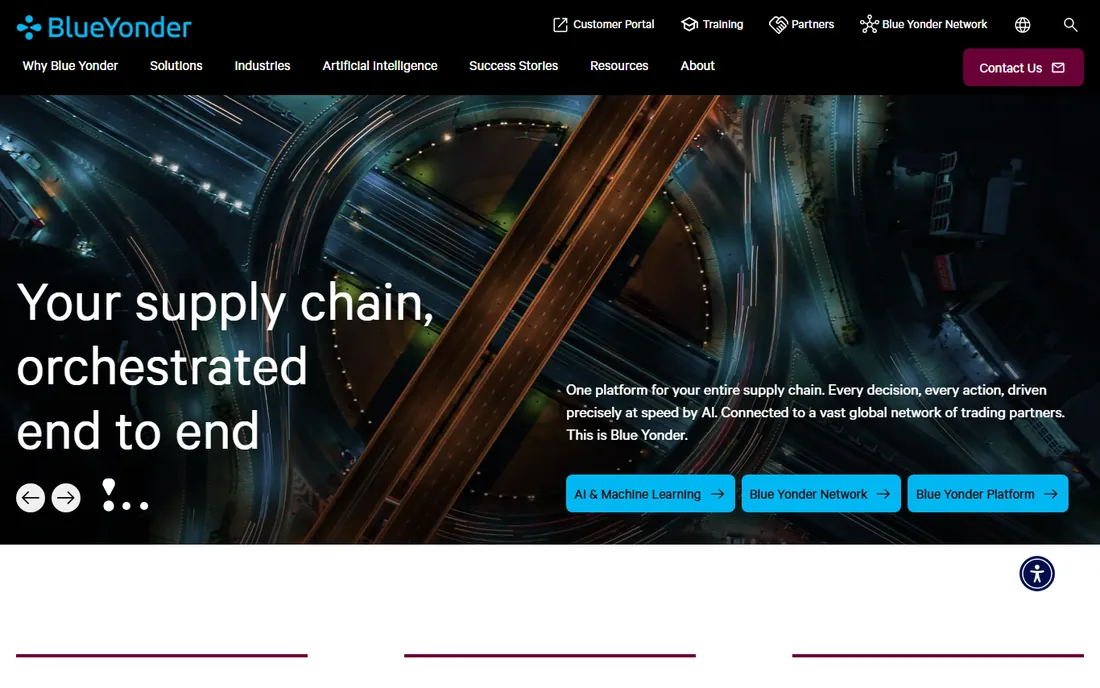
Blue Yonder's pitch is the connected supply chain: transportation planning informed by demand planning and inventory planning in one AI-assisted platform. For large retailers and manufacturers, that integration is the differentiator; freight decisions made with demand signals beat freight decisions made alone. The partner ecosystem extends visibility beyond your four walls.
It is unambiguously enterprise. Pricing excludes smaller shippers by design, implementation spans months with systems integrators, and contracts run multi-year. This is a platform decision made by supply chain leadership, not a tool chosen by a logistics manager. If your company plans supply chain and transportation together at scale, evaluate it. Otherwise the scope will overwhelm you.
What we like- AI-driven planning and optimization across the supply chain
- Strong retail and manufacturing footprint
- End-to-end visibility with partner ecosystem
Watch out for- Enterprise pricing excludes smaller shippers
- Implementation is long and needs ongoing support
#5
Descartes (including 3G TMS)
Best for: Shippers, brokers and 3PLs wanting a modular logistics platform from one vendor
Visit descartes.com
Starting priceSee website (custom quote)
Free planNo (demo only)
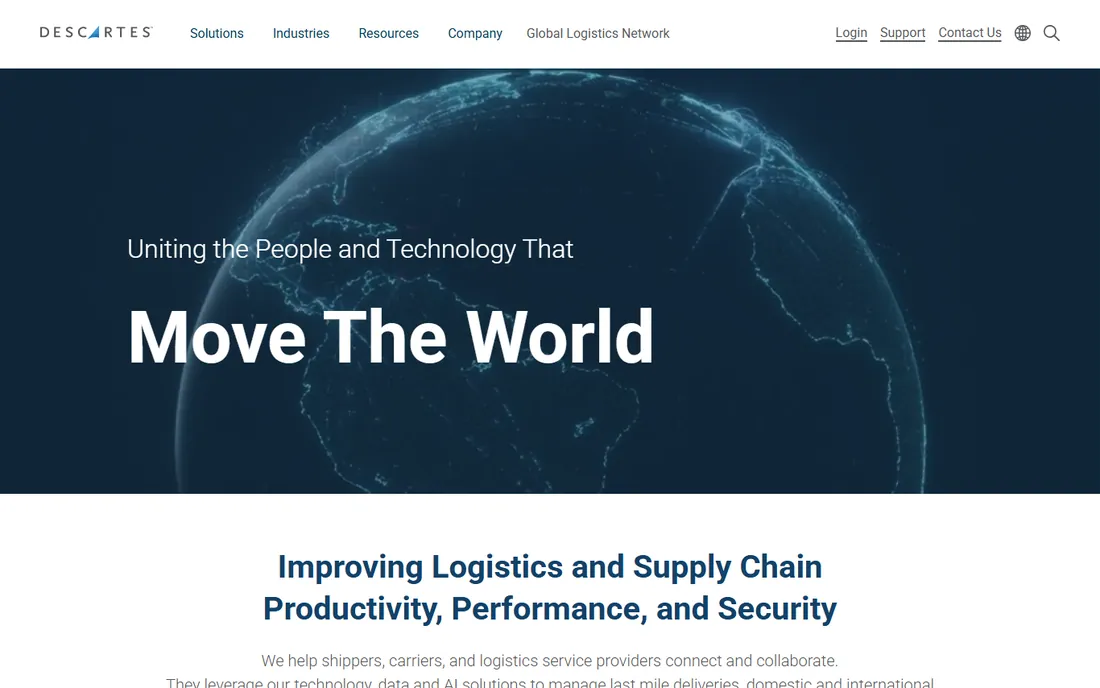
Descartes is less a product than a logistics portfolio. 3G TMS (formerly 3Gtms, now Descartes 3G) handles over-the-road planning with strong optimization, Pacejet covers parcel shipping, MacroPoint provides visibility, and the Global Logistics Network ties them together with carrier connectivity and customs. The modular approach means you buy what you need instead of a monolith.
The sprawl is the challenge. 3G, Pacejet and Aljex overlap, and selecting the right combination needs vendor guidance; go in expecting a consultative sales process. Pricing is quote-only across the board. For a shipper, broker or 3PL that wants one vendor across modes and functions, the network effect is real. Just make sure your contract names the specific products, not just "Descartes."
What we like- Broad portfolio: 3G TMS for over-the-road, Pacejet for parcel, MacroPoint for visibility
- Huge logistics network and carrier connectivity
- Modular products let you buy only what you need
Watch out for- Portfolio sprawl makes product selection confusing
- Quote-only pricing across the board
#6
Shipwell
Best for: Small to mid-size shippers wanting a modern TMS without enterprise overhead
Visit shipwell.com
Starting priceSee website (custom quote)
Free planNo (demo only)
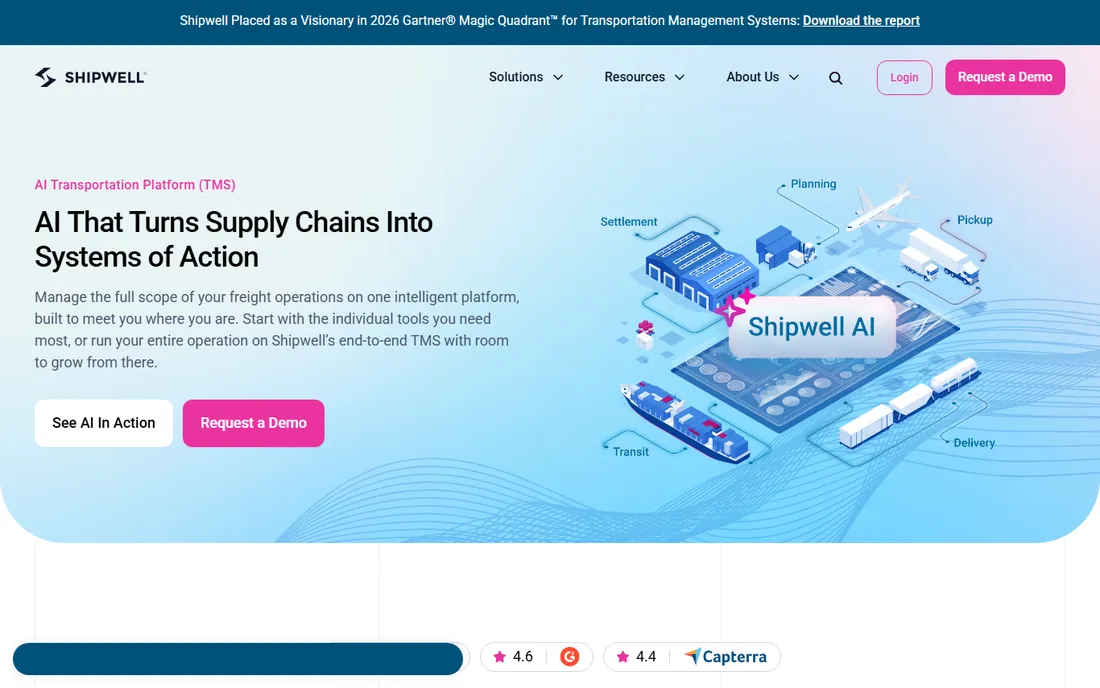
Shipwell is the only vendor on this list built for the smaller shipper. The interface is modern, quoting, booking, tracking and invoicing live in one clean workflow, and implementation is quicker than the tier-one suites. For a company graduating from spreadsheets and carrier portals, it is the accessible on-ramp to real TMS functionality.
Maturity is the trade. Tracking accuracy and support responsiveness get mixed user feedback, which matters when freight is moving and something goes wrong. Pricing is quote-based, so confirm it in writing. If you are an SMB shipper intimidated by the enterprise names above, Shipwell is your starting point. If you run a complex multi-modal network, its ceiling will find you quickly.
What we like- Modern, intuitive interface that teams learn quickly
- Centralized platform for quoting, booking, tracking and invoicing
- Good fit for SMB shippers versus enterprise-heavy rivals
Watch out for- Users report occasional tracking update delays
- Support responsiveness draws mixed reviews
#7
project44 (Movement)
Best for: Shippers and 3PLs needing real-time visibility across carriers and modes
Visit project44.com
Starting priceSee website (custom quote)
Free planNo (demo only)
project44 is the visibility leader, and the distinction matters: it tracks freight and predicts ETAs brilliantly, but it does not plan loads or tender freight. The API-first platform plugs into your existing TMS and ERP, extending them with real-time data rather than replacing them. For shippers whose customers demand tracking transparency, the network scale is unmatched.
Budget for two purchases, not one. project44 plus a TMS is the real stack, and enterprise pricing with long-term contracts applies to both. Carrier onboarding takes weeks. If your problem is "we cannot see our freight," this is the answer. If your problem is "we cannot plan our freight," start with the TMS vendors above and add visibility second.
What we like- Largest carrier visibility network with extensive shipment tracking
- Real-time multi-modal tracking with predictive ETAs
- API-first platform plugging into existing TMS and ERP
Watch out for- Visibility platform, not a full TMS
- You still need execution software
- Enterprise pricing with long-term contracts typical
Visibility is not a TMS: know what you are buying
The most expensive mistake in this category is buying visibility when you needed execution, or vice versa. A TMS (Oracle, Manhattan, Infios TMS, Descartes, Shipwell) plans, optimizes, tenders and settles freight: it decides what moves, how, and at what cost. A visibility platform (project44) watches freight move and predicts arrival: it tells you where things are and when they will land.
Most maturing operations need both, but the order matters. If you are still planning in spreadsheets, a TMS comes first; visibility on top of chaos just shows you the chaos in real time. If your TMS works but customers and planners are blind between tender and delivery, visibility is the gap. Vendors blur the line in marketing, so ask directly: does this product tender freight to carriers and settle invoices? A no means it is visibility, whatever the brochure says.
The implementation question nobody asks first
TMS vendors quote licenses; they underplay implementation, and implementation is the actual project. Ask these questions before you sign anything: who does the carrier onboarding, and how many carriers are included? How long is the realistic timeline for a shipper of our complexity, with references? What does data migration from our current system require? Who trains our team, and what does hypercare look like in the first 90 days?
The answers separate the vendors fast. Infios TMS's guided multi-month implementation is honest scoping. Oracle and Blue Yonder will talk in multi-month programs with integrators, which is honest at their scale. Any vendor that promises "go-live in weeks" for a multi-modal operation is selling, not scoping. Get the implementation plan, timeline and cost as a signed statement of work, not a slide. The license fee is often the smallest line item in year one.
How we chose
We started with the categories buyers actually search: TMS software, transportation management software, and freight management systems. For each candidate we reviewed the vendor's own product and pricing pages, checked plan structures against public reviews on G2 and Capterra and practitioner discussion on Reddit, and compared feature lists, modal coverage and company-size fit. Every vendor here is quote-only, so we wrote "See website" throughout rather than repeating unverified third-party estimates. The shortlist mixes tier-one suites with mid-market and SMB options, because a global shipper and a regional distributor are not buying the same thing.
Frequently asked questions
How much does TMS software cost?
Nobody publishes it, which tells you something. Third-party estimates range from around $1,000 a month for SMB-oriented tools to six and seven figures annually for tier-one enterprise suites, plus implementation that often exceeds the first year's license. Treat every public number as directional. The only real price is the one on your quote, with implementation scoped as a statement of work.
What is the difference between a TMS and a freight broker?
A TMS is software you operate: it plans, tenders and tracks your freight across your carrier network. A freight broker is a service that arranges freight for you, often using their own TMS. Shippers with consistent volume and logistics staff buy a TMS; shippers with sporadic or complex needs outsource to brokers or 3PLs. Many companies do both: TMS for core lanes, brokers for overflow.
How long does TMS implementation take?
Ninety days at the absolute best for a focused SMB deployment, typically 90 to 180 days for mid-market, and multi-month to multi-year programs for tier-one enterprise suites. Carrier onboarding is usually the long pole, not the software configuration. Any timeline that does not name carrier onboarding as a phase is not a real plan.
Do small shippers need a TMS?
If you are managing more than a handful of lanes in spreadsheets and carrier portals, probably yes: the quoting, tendering and invoice audit alone usually pay for an SMB-oriented tool. Shipwell is the realistic entry point on this list. Below that volume, a good freight broker plus basic tracking is cheaper than any software purchase.
Can a TMS handle parcel, LTL and truckload together?
The tier-one and mid-market platforms can: Oracle, Infios TMS and Descartes all cover multi-modal freight including parcel (Descartes via Pacejet). SMB-oriented tools are usually strongest in one mode. If you ship significant parcel volume alongside freight, confirm parcel rating, label generation and carrier integration specifically; "multi-modal" in marketing does not always include parcel done well.
Sources we checked (9)
- https://www.oracle.com/scm/transportation-management/
- https://www.manh.com/solutions/transportation-management
- https://infios.com/
- https://www.blueyonder.com/solutions/transportation-management
- https://www.descartes.com/solutions/transportation-management
- https://www.shipwell.com/pricing/
- https://www.project44.com/platform/movement/
- https://www.g2.com/categories/transportation-management
- https://www.capterra.com/transportation-management-software/
Is your product missing or out of date?
We review this list regularly. Vendors can request a listing, send updated pricing or ask about featured placement.

Shihab Mia · Founder, Rankite
Shihab has spent more than a decade helping SaaS and e-commerce brands grow through search. He writes Rankite's software buying guides from pricing pages, documentation and public user reviews. More about Shihab.