How we make this list: we compare pricing pages, product documentation and public user reviews. Rankite is independent; if a vendor ever pays for a featured spot, that listing is clearly labeled Partner.
Key takeaways
- Routific is the strongest pure route optimizer for small teams: a free tier covering 100 orders a month and AI planning that users rate highly on Capterra.
- Onfleet suits high-volume delivery operations but starts at $619 a month, so it makes sense only once you are running a few thousand tasks monthly.
- Shipday offers the most generous free tier in this list at 300 orders a month, which covers the full dispatch workflow for many local couriers.
- OptimoRoute gives the best per-driver value for route-heavy teams that want multi-day planning and driver analytics without enterprise budgets.
- Track-POD and Detrack are the proof-of-delivery specialists: Track-POD with customizable ePOD templates and Detrack with a simpler $29 per driver starting price.
Quick comparison
| Tool | Best for | Starting price | Free plan |
|---|
 Routific Routific | AI route optimization for small teams | $150/month (up to 1,000 orders) | Yes (up to 100 orders per month) |
 OptimoRoute OptimoRoute | multi-day route planning for route-heavy fleets | $35.10 per driver/month (billed annually) | No (30-day free trial) |
 Onfleet Onfleet | high-volume delivery operations | $619/month (Launch, 2,500 tasks) | No (14-day free trial) |
 Upper Upper | simple routing for small delivery teams | $40 per user/month (billed annually) | No (7-day free trial) |
 Track-POD Track-POD | proof-of-delivery focused logistics | $49 per driver/month (3-driver minimum) | No (7-day free trial) |
 Shipday Shipday | restaurants and on-demand local delivery | Free (up to 300 orders/month); Professional $39/month | Yes (300 orders per month) |
 Detrack Detrack | budget dispatch with POD and tracking | $29 per driver app/month | Free trial (14 days, no card) |
 Spoke Dispatch Spoke Dispatch | courier companies with multiple shipper clients | $125/month (unlimited drivers) | No (7-day free trial) |
 Zeo Route Planner Zeo Route Planner | solo drivers and small teams | Free; fleet plans from $24 per driver/month (billed annually) | Yes (Basic plan, up to 15 stops per route) |
 Route4Me Route4Me | complex multi-constraint routing | See website (custom quote) | No (free trial removed in 2026) |
Is your product missing or out of date?
We review this list regularly. Vendors can request a listing, send updated pricing or ask about featured placement.
The best routing software
Three shifts reshaped this market in 2026. First, Circuit, the popular free route planner many drivers knew, became Spoke Dispatch and pushed upmarket toward courier companies. Second, Route4Me stopped publishing its prices in January 2026 and moved to quote-only deals, which tells you where it sits now. Third, pure routing got cheaper while full dispatch platforms held their ground: Routific and Shipday both keep free tiers that cover real order volume.
Deloitte's 2026 outlook describes AI-powered routing moving from pilot projects to production systems, with dynamic rerouting that responds to live traffic and driver behavior. The analysts estimate the route optimization market at roughly $9.6 billion this year, growing fast toward the mid-2030s. For buyers, the practical effect is simple. Even mid-priced tools now include AI sequencing and live tracking that used to cost enterprise money.
The split that matters most is routing versus dispatch. Routific, OptimoRoute, Upper, and Zeo are route optimizers: they sequence your stops. Onfleet, Spoke, Shipday, Track-POD, and Detrack are delivery platforms: they handle dispatch, driver apps, customer notifications, and proof of delivery on top of routing. Pick the first group if routes are your whole problem. Pick the second if your real pain is the full operation.
Starting price$150/month (up to 1,000 orders)
Free planYes (up to 100 orders per month)
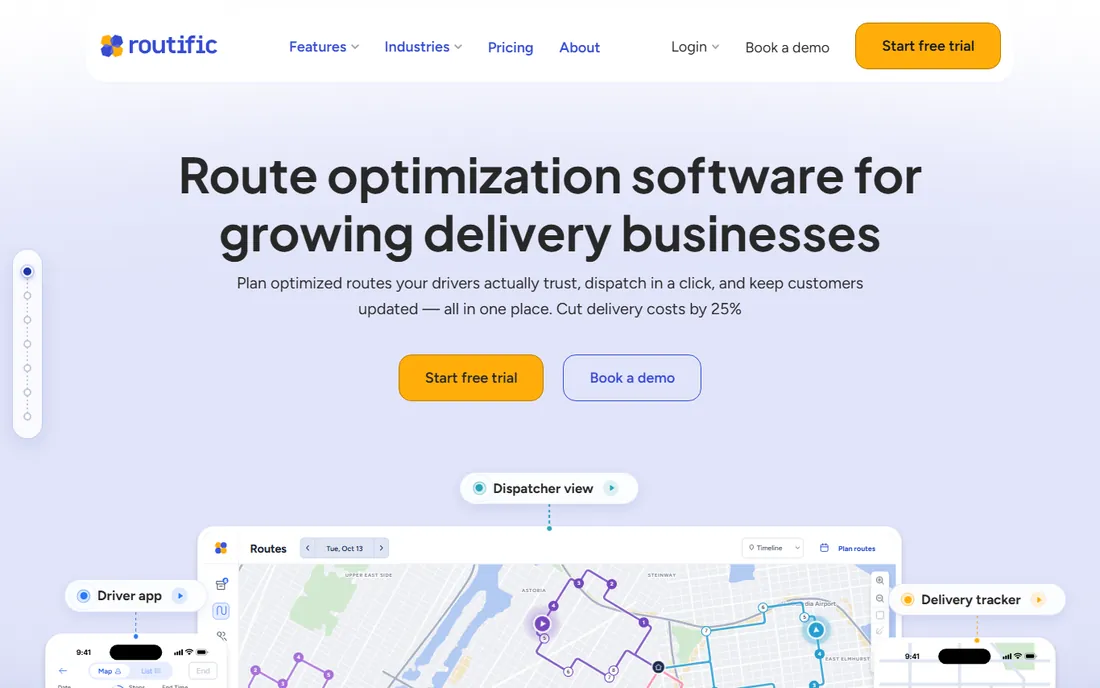
Routific is the cleanest answer when route quality is the problem and dispatch is not. It is a pure route optimizer: you load the day's stops, it sequences them with AI planning, and your drivers go. The free tier covers up to 100 orders a month, which lets a small team run on it for weeks before paying anything. Reviews on Capterra sit at 4.9 out of 5, unusually high in this category, and the recurring praise is for how quickly routes get built and how much backtracking disappears.
The usage-based pricing model is the honest catch. Since mid-2024, Routific charges for volume: free to 100 orders a month, $150 a month for up to 1,000 orders, then per-order fees that step down as volume grows. A team doing 3,000 orders a month lands around $450. That is competitive against per-driver tools at small scale and starts to lose at very high volume, where per-driver pricing flattens out.
What we like- Free tier covers real volume
- Strong user ratings for route quality
- Unlimited drivers and dispatchers on paid plans
Watch out for- No per-seat pricing means costs rise with order volume
- Fewer dispatch tools than full delivery platforms
Starting price$35.10 per driver/month (billed annually)
Free planNo (30-day free trial)
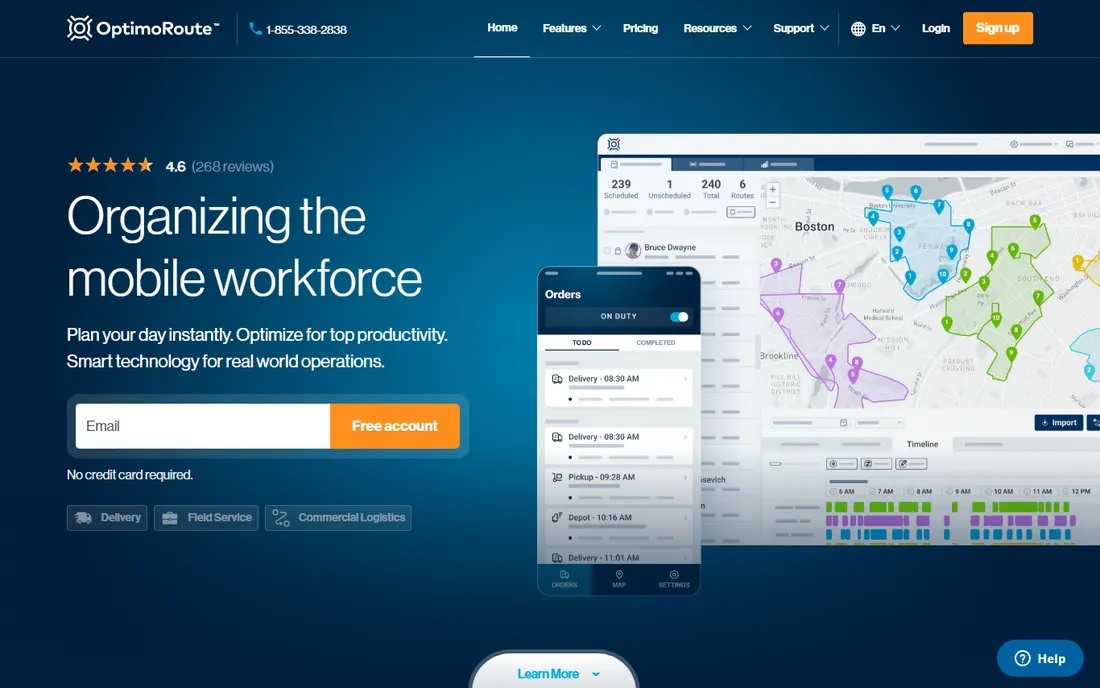
OptimoRoute targets teams whose week is routes, not orders. It supports multi-day planning, driver schedules that stretch across the week, and analytics on driver and route performance that the cheaper per-driver tools skip. The Lite plan at $35.10 per driver a month (annual billing) is one of the lowest per-seat entry points among serious optimizers. Paid monthly instead, the Lite and Pro plans run about $39 and $49 per driver.
The trade-off is the concurrent order caps: 700 on Lite, 1,000 on Pro. If your operation peaks above that, you either upgrade or look elsewhere. Customer notifications and live tracking are included on Pro, which is worth knowing because entry plans in this category often gate those. The 30-day trial is generous and no credit card is needed to start it.
What we like- Multi-day planning and delivery analytics
- 30-day trial without card games
- Month-to-month billing with no contract
Watch out for- No free tier for testing at scale
- Order caps of 700 to 1,000 per plan on Lite and Pro
Starting price$619/month (Launch, 2,500 tasks)
Free planNo (14-day free trial)
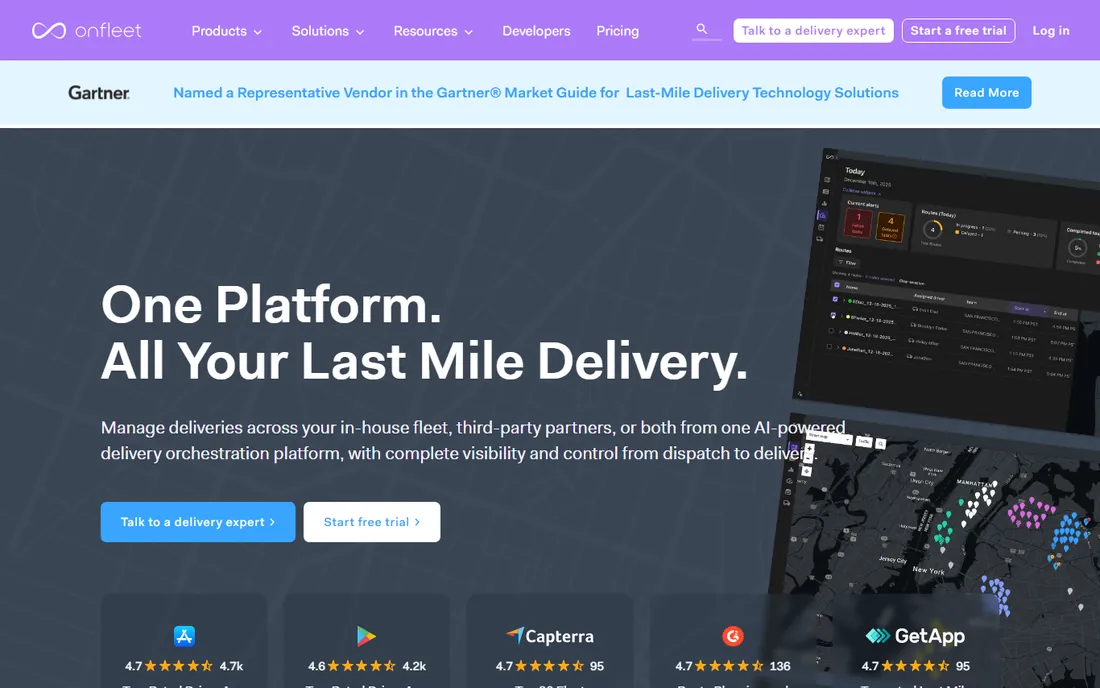
Onfleet is the premium choice in this list and the one most obviously built for scale. The Launch plan at $619 a month covers 2,500 tasks with auto-dispatch, GPS tracking, customer notifications, and proof of delivery. Scale at $1,349 and Enterprise at $3,099 push task limits to 5,000 and 10,000 plus. Overage fees apply beyond the cap, so forecast your volume before signing.
Two things push the real price higher. The Courier Suite, with the client portal, rate tables, invoicing, and driver pay, adds $299 a month. SMS and telephony are billed separately. Onfleet makes sense for operations running a few thousand tasks a month where the cost per task stays reasonable. Below that, Routific, OptimoRoute, or Shipday cover the same ground for far less money.
What we like- Full delivery platform with auto-dispatch and analytics
- Strong mobile app rated by thousands of users
- 14-day trial on any plan
Watch out for- Steep entry price for small businesses
- Courier features like the client portal cost extra
Starting price$40 per user/month (billed annually)
Free planNo (7-day free trial)
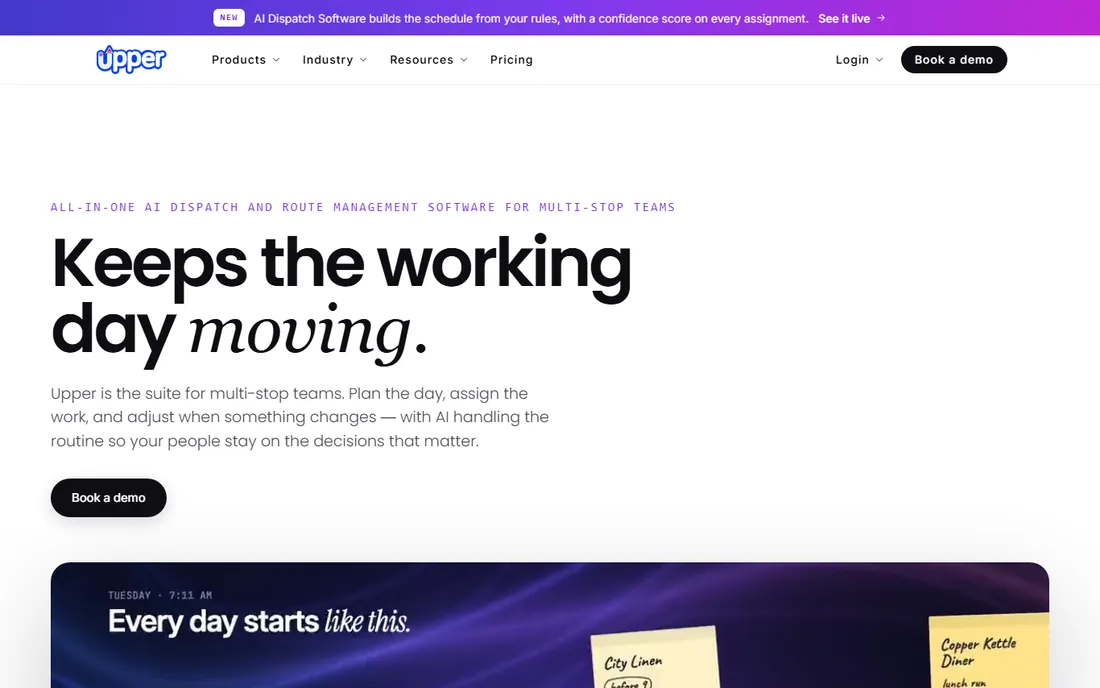
Upper keeps the pitch simple: per-user pricing, unlimited routes on every plan, and the core routing plus proof of delivery tools a small delivery team needs. The Starter plan at $40 per user a month (annual billing) is easy to forecast. Professional at $48 and Optimize at $71 add GPS, richer POD, and dispatch features. There are no per-order or per-task surcharges, which keeps costs predictable as volume grows.
The catch is that some reviewers find the plans confusing because key features land on different tiers. GPS and full proof of delivery require Professional, so price the middle plan, not the cheapest. The 7-day trial is short compared to the 14 to 30 days competitors offer. For a team of three to ten drivers doing local delivery, Upper is a clean fit once you pick the right tier.
What we like- Straightforward per-user pricing with unlimited routes
- Quick onboarding for small teams
- Proof of delivery and customer notifications included
Watch out for- Advanced features gated on higher plans
- Only a 7-day trial
Starting price$49 per driver/month (3-driver minimum)
Free planNo (7-day free trial)
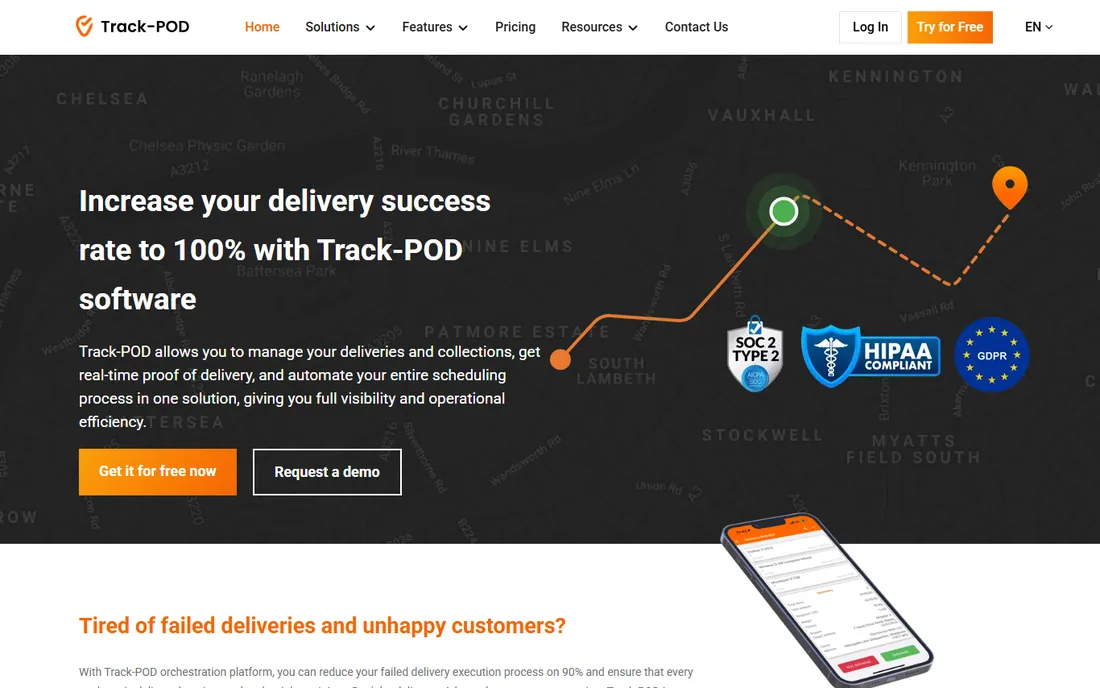
Track-POD leads with proof, not routing. Its electronic proof of delivery goes deep: signature capture, up to 10 photos per stop, customizable ePOD templates, PIN verification, offline capture, and partial delivery documentation. For B2B logistics teams where delivery evidence settles disputes, that depth is the selling point. Plans start at $49 per driver a month with a three-driver minimum, or per-task pricing from $285 a month for 1,500 tasks.
The weakness is the mirror image: routing is competent but not the star. Editing a live route overrides the whole route instead of allowing stop-level changes, and the dispatcher view is desktop only. If your day is multi-drop optimization with basic POD, Routific or OptimoRoute will route better. If your day is proving complex deliveries with evidence, Track-POD wins.
What we like- Deep proof-of-delivery customization with ePOD templates
- Per-driver or per-order pricing choice
- SOC 2 Type II certified
Watch out for- 3-driver minimum locks out solo drivers
- Routing depth is lighter than pure optimizers
Starting priceFree (up to 300 orders/month); Professional $39/month
Free planYes (300 orders per month)
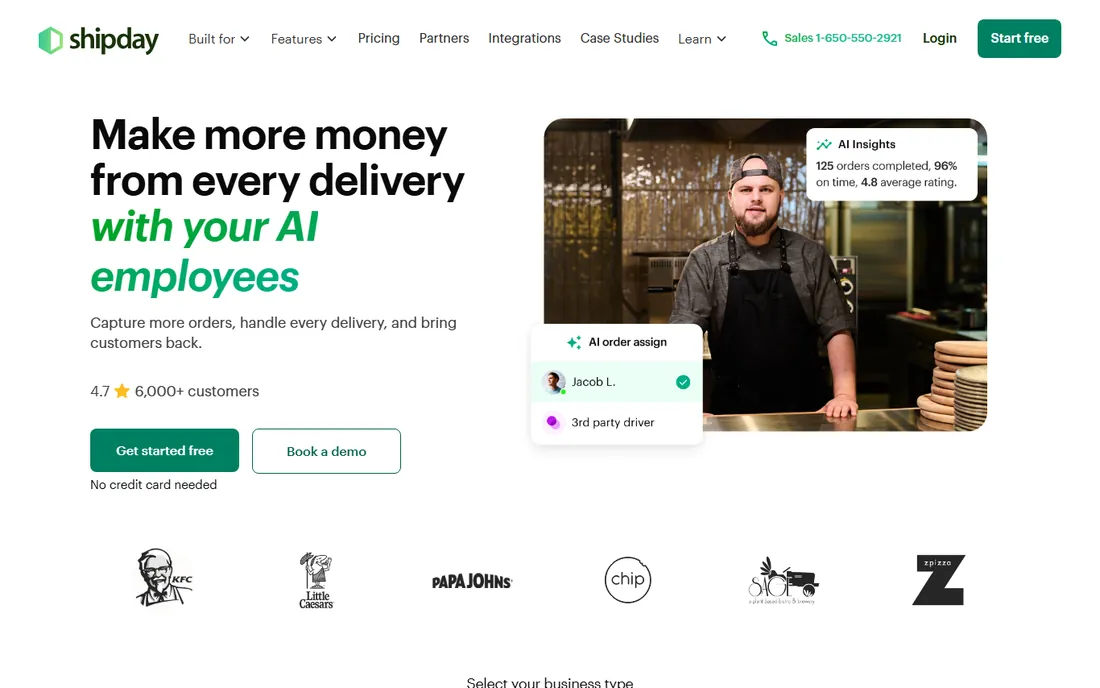
Shipday is the best deal in this roundup for local delivery businesses. The free Basic plan covers 300 orders a month with 10 driver accounts, real-time GPS tracking, photo and signature proof of delivery, and customer tracking links. That is a full dispatch operation at zero cost for a single-location restaurant or courier. Professional at $39 a month adds auto-dispatch, API access, and POS integrations.
Where it differs from the routing-first tools is in workflow. Shipday is built for on-demand delivery as orders arrive, not for pre-planning a week's worth of routes. It connects directly to Toast, Square, Lightspeed, Shopify, and WooCommerce, so orders flow into the dispatch queue without re-keying. Elite at $99 a month adds access to DoorDash Drive and Uber Direct for overflow orders. Restaurants and small couriers should start here before considering anything else.
What we like- Most generous free tier in this list
- Smartphone-first design for dispatchers
- Integrations with Toast, Square, and Shopify
Watch out for- Less suited to pre-planned multi-day B2B routing
- Paid plans required for auto-dispatch and API access
Starting price$29 per driver app/month
Free planFree trial (14 days, no card)
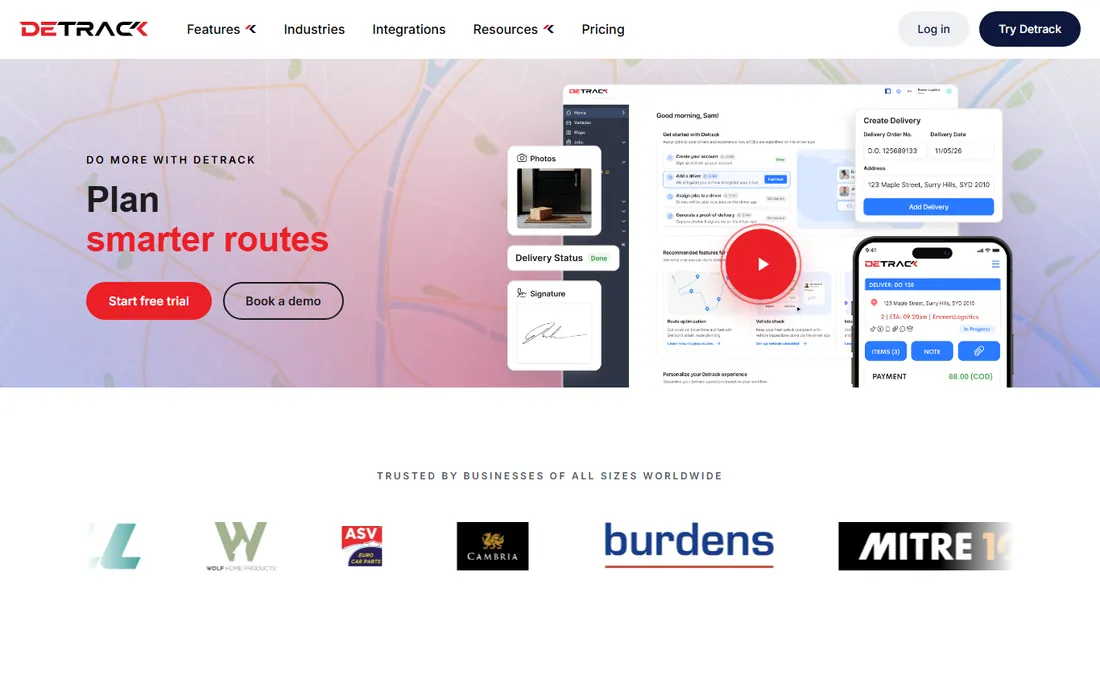
Detrack prices on a principle buyers should appreciate: you pay per driver app, not per user. Dispatchers, admins, and managers are unlimited and never appear on the bill. The Pro plan at $29 per driver a month covers proof of delivery, live tracking, customer notifications, and analytics. Advanced at $39 adds route optimization, recurring orders, vehicle safety checks, and rate cards.
That split is worth attention. If you need routing, budget for Advanced, not Pro. The platform holds a 4.8 out of 5 rating on SourceForge with reviewers praising its ease of use and support. Detrack suits small to mid-sized delivery teams that want dispatch plus tracking plus POD in one predictable per-driver bill, and it undercuts Track-POD and Onfleet meaningfully at modest scale.
What we like- Dispatchers and admins never count toward the bill
- Route optimization included at the $39 tier
- 24/7 support
Watch out for- Route optimization costs $10 more per driver than the base plan
- No free tier, only a trial
#8
Spoke Dispatch
Best for: courier companies with multiple shipper clients
Visit spoke.com
Starting price$125/month (unlimited drivers)
Free planNo (7-day free trial)
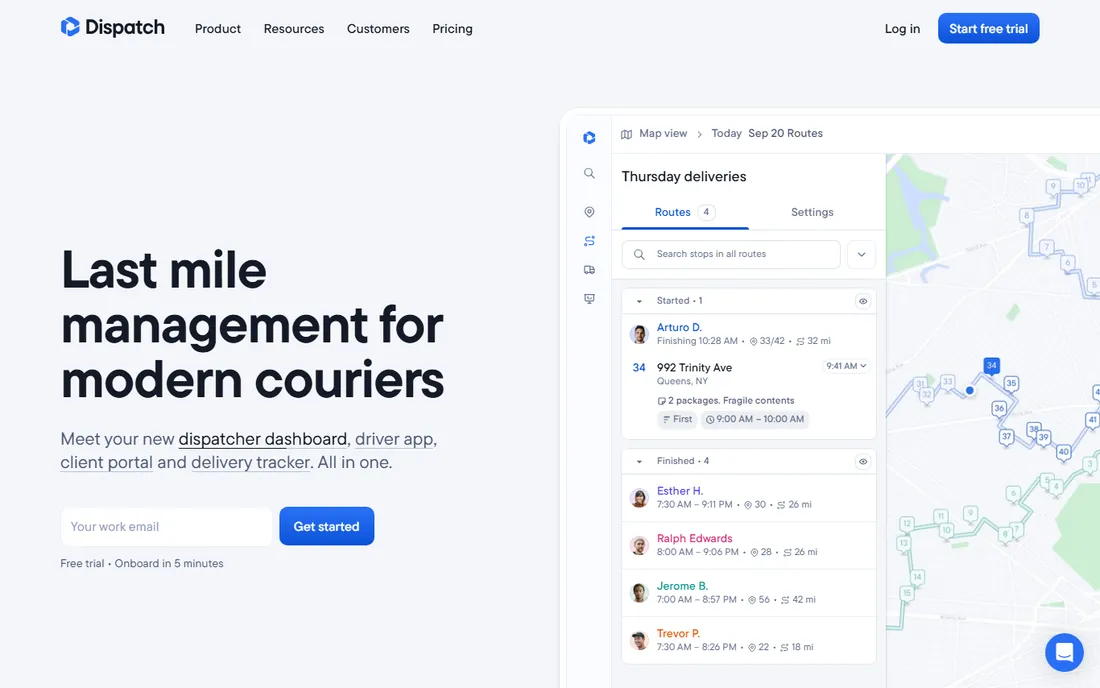
Spoke Dispatch is what Circuit for Teams became in 2026, and the rebrand signals a shift upmarket. It is built for courier companies running deliveries for multiple shipper clients, each with their own proof rules and tracking needs. Plans start at $125 a month with unlimited drivers, and pricing scales on stops rather than seats, which keeps team growth from inflating the bill. A 7-day free trial needs no credit card.
For solo drivers and tiny teams, the free Spoke Route Planner covers up to 10 stops per route, which preserves Circuit's old goodwill. The trade-off of the per-stop model is that high-volume couriers can watch costs climb; at roughly 2,000 stops a month the Premium tier runs around $200, and large volumes reach four figures. Multi-client couriers should compare this against Onfleet, weighing Spoke's courier-specific workflows against Onfleet's deeper automation.
What we like- Unlimited drivers on per-stop pricing
- Built for multi-client courier operations
- Live route editing and flexible POD
Watch out for- Per-stop pricing can climb with high volume
- Still new branding after the Circuit transition
Starting priceFree; fleet plans from $24 per driver/month (billed annually)
Free planYes (Basic plan, up to 15 stops per route)
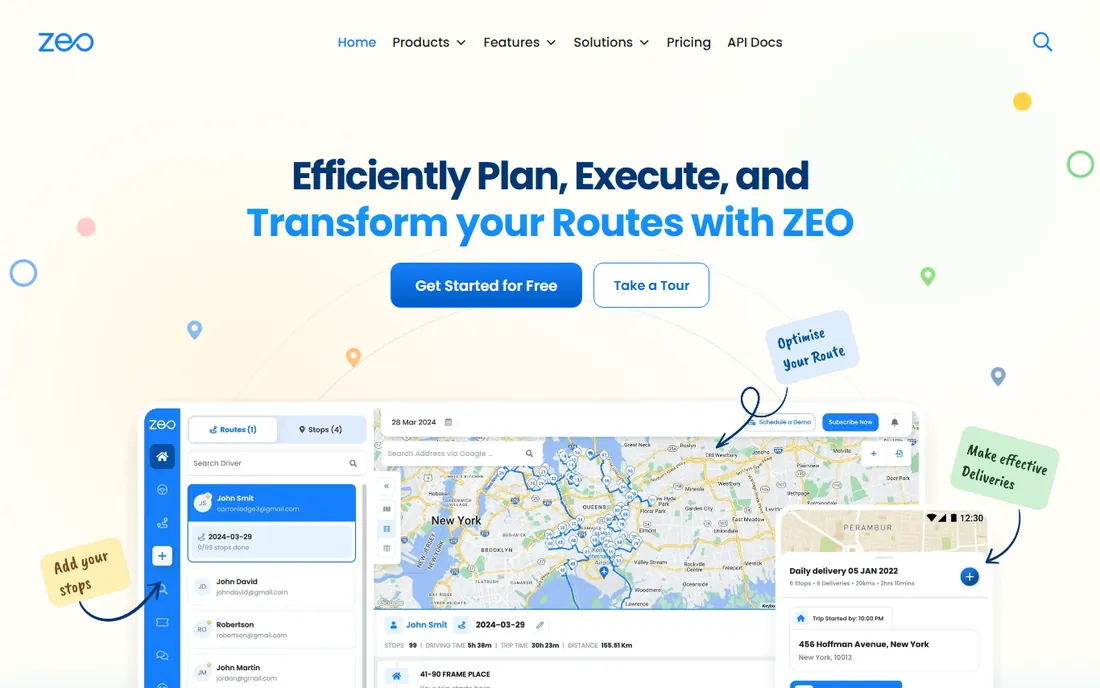
Zeo is the low-cost ladder into this category. The free Basic plan handles up to 15 stops per route with no credit card, which covers a solo driver's day. Paid solo plans run about $12.50 a month. Fleet plans start at $290 a year per driver, roughly $24 a month on annual billing, for route optimization; Route Management and Fleet Management tiers at roughly $40 and $49 a month add the dispatcher dashboard, driver app, and proof of delivery.
That tiering is the honest catch. The cheapest fleet plan allows only 3 routes a day with no driver app and no POD, so real delivery teams land on Route Management at $2,495 a year for five drivers. Still, for independent drivers and teams of two to five doing straightforward multi-stop routes, Zeo is hard to beat on price. It also claims support in 150 plus countries with 40 plus languages.
What we like- Free plan for solo drivers
- Seat-based fleet pricing from about $24 a month annual
- Integrates with Shopify and HubSpot
Watch out for- Fleet plans require quarterly or annual billing
- Cheaper tiers lack the driver app and proof of delivery
Starting priceSee website (custom quote)
Free planNo (free trial removed in 2026)
Route4Me remains the heavyweight for complicated routing problems: territories, multiple depots, time windows, vehicle constraints. It operates in 160 plus countries and offers an add-on marketplace that extends the platform well beyond basic route planning. For field service and logistics teams with genuinely complex constraints, few tools match its depth.
The 2026 changes are the story. Route4Me removed its public pricing in January 2026 and moved to custom quotes, and third-party coverage confirms the free trial was also removed this year. Reported pre-2026 pricing ran $80 to $120 per user a month depending on tier, but that is historical, not current. Expect an enterprise sales process now. Buyers who want a comparable constraint-heavy optimizer with transparent pricing should look at OptimoRoute or Upper first, and only engage Route4Me when the routing problem genuinely needs its depth.
What we like- Handles complex constraints like territories and time windows
- Large add-on marketplace
- Broad global coverage
Watch out for- No published pricing since January 2026
- No free tier and the trial was removed
How we built this list
We started from the vendor's own pricing pages, documentation, and current-year blog posts to verify every price and plan shown here. We cross-checked claims against public review sites including G2, Capterra, and SourceForge for ratings and reviewer feedback on route quality, dispatch depth, and support. We also read 2026 industry coverage from Deloitte, ClickPost, and Routific's own market research to track this year's shifts, including the Circuit rebrand, Route4Me's move to quote-only pricing, and Routific's usage-based model. We fit each tool to the team size and delivery model it serves best rather than ranking by feature count.
What to check before you buy
The first decision is pricing model, because it changes your bill as you grow. Per-driver tools like OptimoRoute, Track-POD, Detrack, Upper, and Zeo stay predictable as order volume rises but get expensive as you hire. Per-order or per-task tools like Routific, Onfleet, and Spoke get cheaper per stop at low volume and climb with volume. Map your next twelve months of both drivers and orders, then price the growth path, not the starting plan.
Free tiers versus trials
Routific, Shipday, and Zeo keep free tiers that run real operations. Onfleet, OptimoRoute, Upper, Track-POD, Detrack, Spoke, and Route4Me offer trials only, ranging from 7 to 30 days. Use a trial to test your hardest week, not an average one. Import real routes with your real stop density and time windows, because optimization quality varies most on complex days.
Contract length and billing terms
Several vendors in this list sell quarterly or annual billing for their best rates: Zeo's fleet plans are quarterly or annual only, and OptimoRoute and Upper discount annual commitments. Month-to-month options exist, but read the renewal terms. A tool that is $35 a driver month-to-month and $35.10 annual sounds identical until you multiply by driver turnover.
Integrations and data export
Ask three questions before signing. Does it connect to your order source, whether that is Shopify, a POS system, or an ERP, without custom development? Can you export your stop and delivery history if you leave? Are SMS and customer notifications included or billed separately, as Onfleet bills telephony apart? Integration gaps are the most common reason teams switch routing tools within a year.
Proof of delivery depth
If you deliver to businesses or regulated customers, POD detail matters more than route polish. Compare signature capture, photo limits, barcode scanning, custom ePOD templates, and how long delivery records are stored. Detrack keeps records for five years. Track-POD builds the most customizable POD templates. Basic route optimizers like Routific cover POD lightly by design.
Common pricing traps in routing software
The traps in this category are structural, not hidden fees. Task caps with overage charges can turn a flat monthly fee into a variable one: Onfleet charges per task beyond the plan limit, and Spoke's per-stop pricing behaves the same way at scale. Driver minimums, like Track-POD's three-driver floor, punish teams that are between sizes. Feature gating, like Upper requiring the Professional tier for GPS and POD, means the advertised starting price often is not the price you pay. And billing frequency changes the math: quarterly or annual commitments from Zeo and annual discounts from OptimoRoute look cheaper per month but lock in your driver count. Always price your team at its peak size, not its current one.
Frequently asked questions
What is routing software?
Routing software sequences your delivery stops into the fastest order, accounting for traffic, time windows, vehicle capacity, and driver shifts. Delivery platforms add dispatch, driver apps, customer notifications, and proof of delivery on top of the route engine. Route optimizers like Routific and OptimoRoute focus on the sequencing problem alone.
How much does routing software cost?
Prices in this list run from free to over $3,000 a month. Solo drivers pay $0 to $30 a month with Zeo, Shipday, or Routific's free tiers. Small teams pay $35 to $50 per driver a month with OptimoRoute, Upper, Detrack, or Track-POD. High-volume operations pay $619 a month and up with Onfleet, and enterprise teams with Route4Me work on custom quotes.
Which routing software has a free plan?
Routific offers a free tier up to 100 orders a month, Shipday covers 300 orders a month free, and Zeo has a free Basic plan up to 15 stops per route. Spoke offers a free route planner for solo drivers with a 10-stop limit. The rest provide trials of 7 to 30 days but no permanent free tier.
Is per-driver or per-order pricing better?
Per-driver pricing suits teams whose order volume is high relative to headcount, because the bill stays flat as orders grow. Per-order or per-task pricing suits small teams with modest volume, because you pay for what you deliver. At roughly 3,000 orders a month with ten drivers, the two models cost about the same; beyond that, per-driver pricing usually wins.
What happened to Circuit route planner?
Circuit rebranded to Spoke in 2026, and Circuit for Teams became Spoke Dispatch, aimed at courier companies. The free Spoke Route Planner for solo drivers continues the old Circuit free planner with a 10-stop-per-route limit. Existing Circuit for Teams customers moved to the Spoke Dispatch platform.
Why is Route4Me pricing no longer public?
Route4Me removed its published pricing in January 2026 and moved to custom quotes, ending its historical per-user tiers of roughly $80 to $120 a month. It also removed its free trial this year. The change signals an enterprise sales model, so budget for a quote process rather than self-service signup.
Sources we checked (13)
- https://routific.com/blog/route-optimization-tools
- https://www.optimoroute.com/pricing/
- https://www.onfleet.com/pricing
- https://www.upperinc.com
- https://www.track-pod.com
- https://www.shipday.com
- https://www.detrack.com/pricing/
- https://spoke.com/dispatch
- https://zeorouteplanner.com
- https://route4me.com
- https://www2.deloitte.com/us/en/insights/industry/transportation/logistics-market-outlook.html
- https://www.g2.com/products/zeo-route-planner/pricing
- https://sourceforge.net/software/product/Detrack/
Is your product missing or out of date?
We review this list regularly. Vendors can request a listing, send updated pricing or ask about featured placement.

Shihab Mia · Founder, Rankite
Shihab has spent more than a decade helping SaaS and e-commerce brands grow through search. He writes Rankite's software buying guides from pricing pages, documentation and public user reviews. More about Shihab.