How we make this list: we compare pricing pages, product documentation and public user reviews. Rankite is independent; if a vendor ever pays for a featured spot, that listing is clearly labeled Partner.
Key takeaways
- Fishbowl ($229/month Essentials, billed annually) is the most accessible real WMS for small and mid-size businesses, with QuickBooks integration as its standout.
- ShipHero ($499/month Startup) is the premium pick for high-volume e-commerce fulfillment, with AI picking optimization that pays off past a few hundred orders a day.
- Katana ($299/month Core) suits makers who need production and warehouse in one system, with unlimited users included.
- Oracle NetSuite, Manhattan Associates, and Blue Yonder are the enterprise tier: custom pricing, months-long implementations, and capability nothing else matches at scale.
Quick comparison
| Tool | Best for | Starting price | Free plan |
|---|
 Fishbowl Fishbowl | Small and mid-size businesses on QuickBooks | $229 per month (Essentials, 2 users, billed annually) | Free trial |
 ShipHero ShipHero | High-volume e-commerce fulfillment | $499 per month (Startup, 2 users) | No |
 Cin7 Cin7 | Multi-channel brands needing inventory plus warehouse | See website | No |
 Katana Katana | Manufacturers who also warehouse | $299 per month (Core) | Free trial |
 Logiwa Logiwa | Growing brands outgrowing basic inventory | See website | No |
 Extensiv 3PL Warehouse Manager Extensiv 3PL Warehouse Manager | Third-party logistics providers | See website (custom quote) | No |
 Oracle NetSuite WMS Oracle NetSuite WMS | Companies already running NetSuite ERP | See website (custom quote) | No |
 Manhattan Associates Manhattan Associates | Enterprise distribution and complex fulfillment | See website (custom quote) | No |
 Blue Yonder Blue Yonder | Supply chain-wide warehouse operations | See website (custom quote) | No |
Is your product missing or out of date?
We review this list regularly. Vendors can request a listing, send updated pricing or ask about featured placement.
The best warehouse management software
A skincare brand in California was shipping 800 orders a day from a 10,000-square-foot warehouse, and the operation ran on memory. The pickers knew where things were until they did not, stock counts drifted from reality every week, and the holiday rush required heroic overtime to compensate for chaos. They implemented a real warehouse management system over one quarter, and pick accuracy rose above 99 percent while overtime dropped by a third. The warehouse did not get bigger. It got legible.
A warehouse management system does for physical inventory what accounting software does for money: it creates a single source of truth. Receiving, putaway, picking, packing, shipping, and cycle counts all flow through one system, so the stock number on the screen matches the stock on the shelf. The nine tools below cover the realistic options for US businesses in 2026, from SMB-friendly platforms to enterprise systems.
Pricing reflects published plans as of October 2026.
Starting price$229 per month (Essentials, 2 users, billed annually)
Free planFree trial
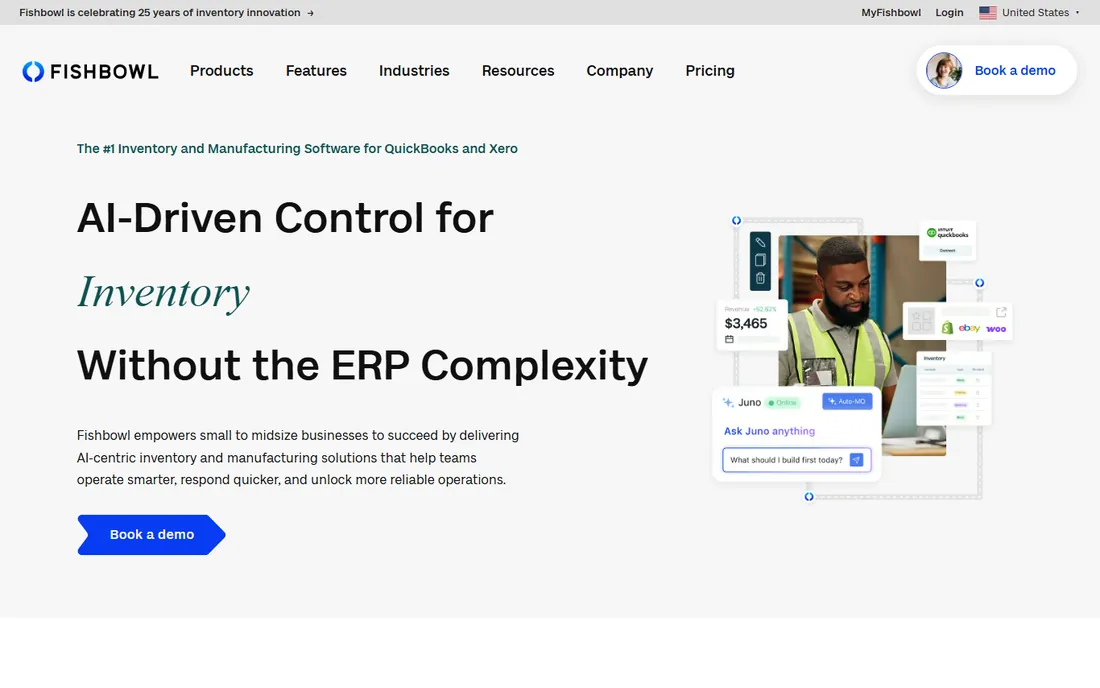
Fishbowl is the warehouse system most SMBs graduate to when spreadsheets break. The Essentials tier at $229 a month covers finished-goods inventory across locations with barcoding, automatic reorder points, and pick ticket workflows, and the QuickBooks integration is genuinely the best in class for accounting-heavy operations. The choice of on-premise or cloud deployment suits businesses with strong IT preferences.
The honest caveats come from users: implementation runs longer than the sales process suggests, the reporting is basic with awkward exporting, and customization costs extra. Manufacturing lives in the separate Advanced Manufacturing tier from $675 a month, so makers should price that, not the base tiers. For distribution and multi-site warehousing tied to QuickBooks, Fishbowl remains the value leader.
What we like- Best QuickBooks integration in the category
- Barcoding, pick tickets, and reorder points included
- On-premise or cloud deployment choice
Watch out for- Implementation takes longer than expected
- Reports feel basic and customizing costs extra
- None of the base tiers include manufacturing
Starting price$499 per month (Startup, 2 users)
Free planNo
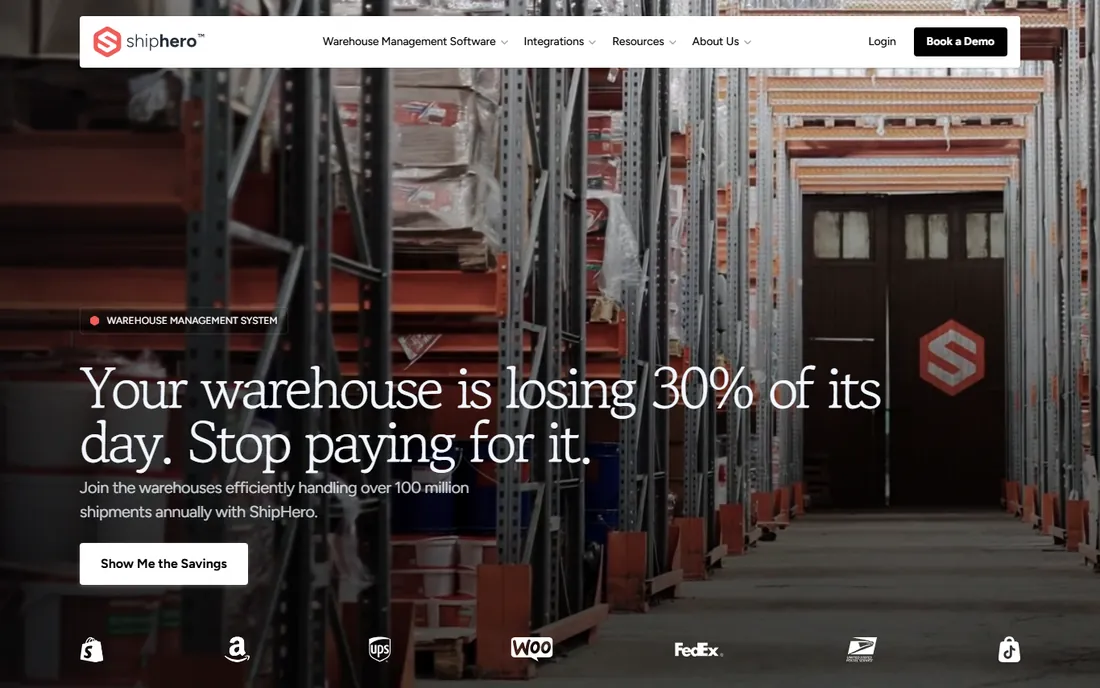
ShipHero is the premium cloud WMS for e-commerce fulfillment: mobile-driven picking and packing, batch order processing, and integrations with every major sales channel. Warehouses running it report significant speedups in order processing and fewer shipping errors. The Small Business plan at $799 a month with 5 users is where most growing brands land; Enterprise at $1,799 adds the AI picking optimization and multi-client features.
The price is the filter. At $499 a month to start, operations shipping fewer than 100 orders a day pay for capacity they cannot use. Users also report recurring bugs in the reporting modules that affect billing accuracy, and support quality drops during peak season, exactly when it matters most. ShipHero is worth it when speed and accuracy at volume are the business. Below that volume, it is premature.
What we like- Mobile-first picking built for speed
- AI path optimization on higher tiers
- Deep Shopify, Amazon, and Walmart integrations
Watch out for- Expensive for operations under 100 orders a day
- Reporting bugs affect billing accuracy
- Support strains during peak season
#3
Cin7
Best for: Multi-channel brands needing inventory plus warehouse
Visit cin7.com
Starting priceSee website
Free planNo
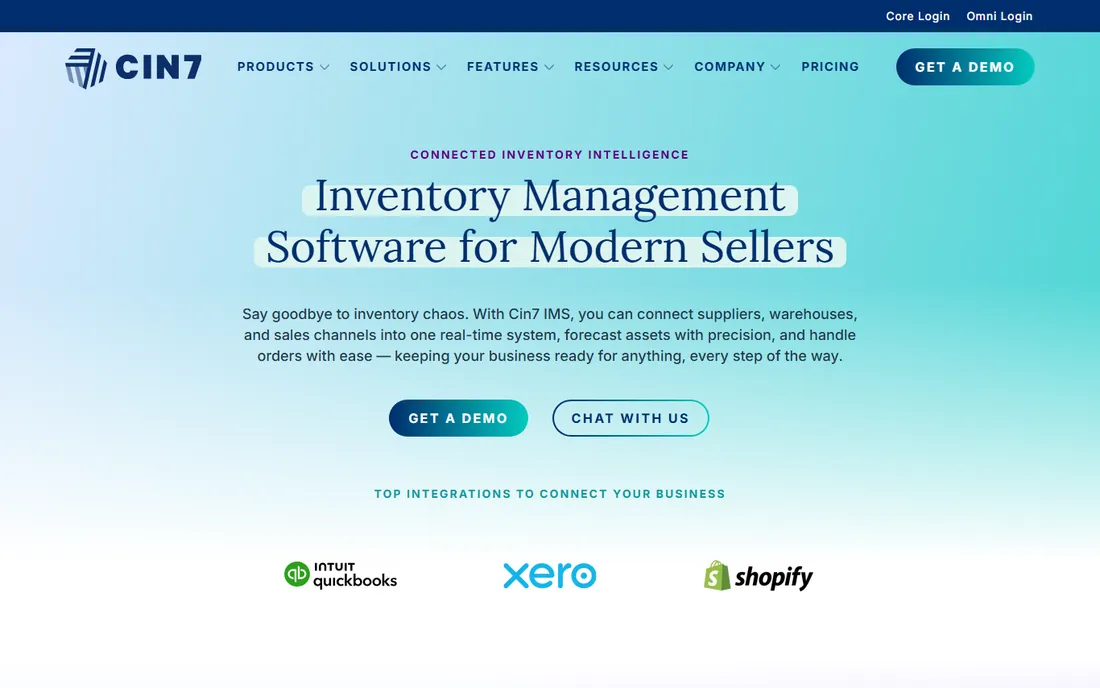
Cin7 covers the ground between inventory management and full WMS: multi-location stock visibility, order routing, pick-pack-ship workflows, and manufacturing support, with built-in EDI for retail compliance. Brands selling across Shopify, Amazon, wholesale, and retail get one inventory truth instead of four spreadsheets. The integration list is among the deepest in the category.
The breadth is also the burden. New users face a real learning curve, and the total cost including integrations and customization runs higher than the sticker suggests. Pricing is not published in a simple tier table. Cin7 suits the multi-channel brand with real operational complexity. Simpler operations should prefer Fishbowl or Katana.
What we like- Strong across manufacturing, warehousing, and distribution
- Built-in EDI and 200-plus integrations
- Real-time visibility across locations and channels
Watch out for- Pricing not published transparently
- The breadth creates a steep learning curve
- Total cost with integrations runs high
Starting price$299 per month (Core)
Free planFree trial
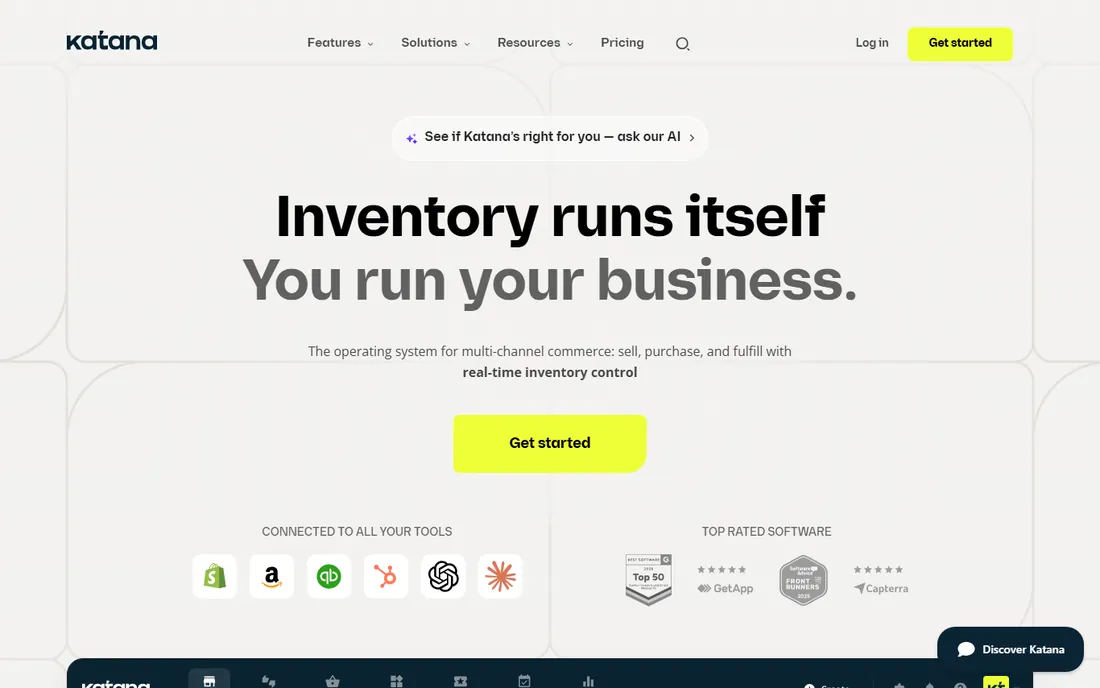
Katana is built for makers: production scheduling, shop floor control, multi-level BOMs, and batch traceability alongside inventory and warehouse basics. The Core plan at $299 a month includes unlimited users, which is unusual and valuable for growing teams. The visual interface makes production and stock levels legible at a glance, and Shopify and QuickBooks integrations cover the commercial side.
The pricing structure needs attention: the Core plan's manufacturing depth requires the $199-a-month Manufacturing Management add-on for multi-step routings and real cost insight. Complex B2B fulfillment needs can also stretch its customization limits. The rule is simple: pick Katana if you make things, pick Fishbowl if you mainly move and ship them.
What we like- Production and inventory in one visual system
- Unlimited users on Core
- Clean interface for real-time stock visibility
Watch out for- Manufacturing management is a $199/month add-on
- Limited customization for complex B2B fulfillment
- Occasional performance complaints
Starting priceSee website
Free planNo
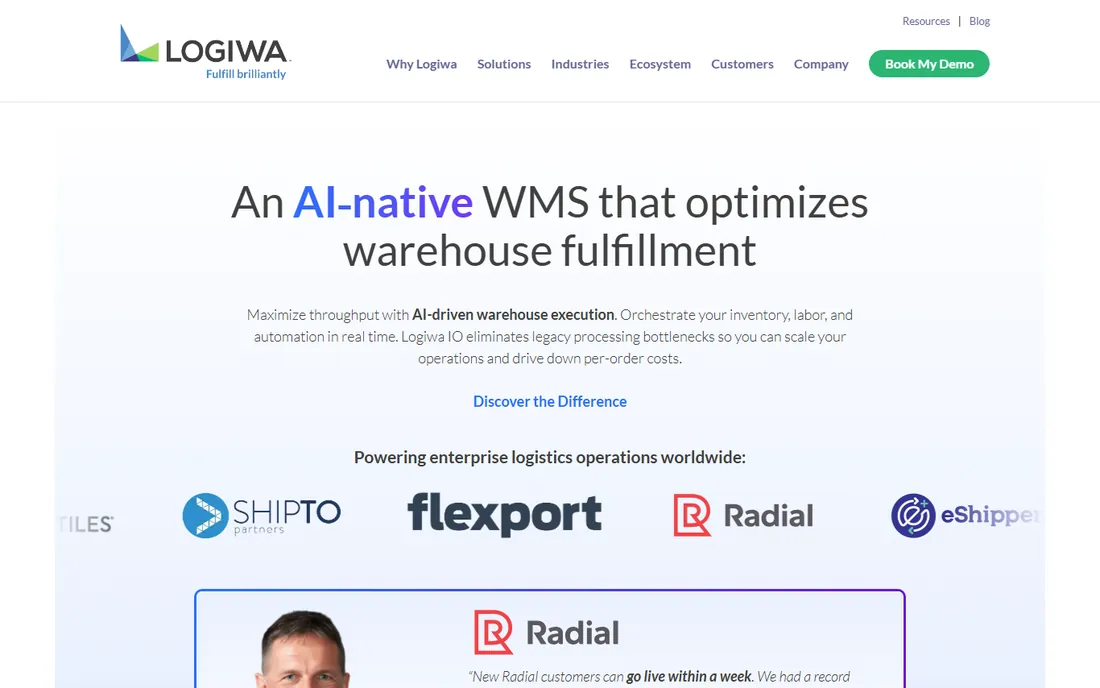
Logiwa occupies the middle ground between SMB tools and enterprise WMS: a cloud-native warehouse system with real picking, packing, and inventory optimization, built for brands scaling past what basic inventory tools handle. The e-commerce integrations are strong, and the interface is more modern than the legacy mid-market options.
Pricing runs through sales with no published tiers, which makes comparison shopping harder. It also lacks the depth of Manhattan or Blue Yonder for truly complex distribution. Logiwa is the right evaluation for the growing brand that has outgrown Fishbowl's simplicity but does not need enterprise complexity or enterprise sales cycles.
What we like- Cloud-native WMS with strong e-commerce integrations
- Good balance of capability and usability
- Built for scaling operations
Watch out for- Pricing not published
- The mid-market positioning means less depth than enterprise systems
- Smaller community than the leaders
#6
Extensiv 3PL Warehouse Manager
Best for: Third-party logistics providers
Visit extensiv.com
Starting priceSee website (custom quote)
Free planNo
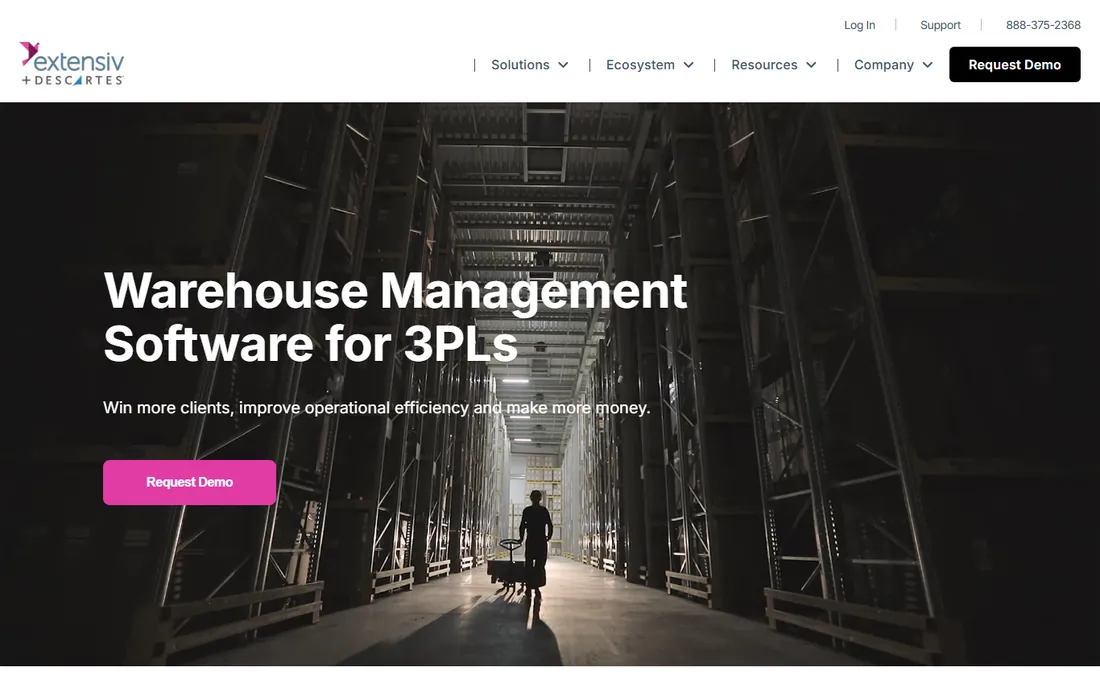
Extensiv's 3PL Warehouse Manager, formerly 3PL Central, is the standard WMS for third-party logistics providers: multi-client inventory separation, 3PL billing, and the e-commerce fulfillment workflows that 3PLs live on. The customer base of 3PLs is the largest in the category, which means the edge cases of multi-client warehousing are handled.
It is priced and sold as enterprise software, with custom quotes and real implementations. Single-brand warehouses should not be here; the 3PL-specific features are overhead for them. But for fulfillment providers and brands running 3PL operations, it is the category reference, and the evaluation is against it rather than around it.
What we like- Purpose-built for 3PL billing and multi-client management
- Strong small-parcel and e-commerce workflows
- Large 3PL customer base
Watch out for- Custom pricing with enterprise sales process
- The 3PL focus means less for single-brand warehouses
- Implementation is a project
Starting priceSee website (custom quote)
Free planNo
NetSuite's WMS makes sense for exactly one buyer: the company already running NetSuite ERP. Warehouse transactions post directly to the financials with no integration middleware, multi-subsidiary inventory works natively, and the whole operation runs on one data model. For NetSuite customers, adding the WMS module beats bolting on a third-party system.
For everyone else, it is irrelevant. The pricing is ERP-grade custom, implementations take months, and buying NetSuite for the warehouse alone is backwards. The decision here is really a NetSuite decision; the WMS module follows from it. Non-NetSuite companies should evaluate the standalone systems above.
What we like- Warehouse operations inside the ERP, no integration seams
- Strong for multi-subsidiary and multi-currency operations
- Proven at enterprise scale
Watch out for- Custom pricing that reflects ERP budgets
- Implementation measured in months
- Overkill without the NetSuite foundation
#8
Manhattan Associates
Best for: Enterprise distribution and complex fulfillment
Visit manh.com
Starting priceSee website (custom quote)
Free planNo

Manhattan Associates builds the warehouse systems that run the world's largest distribution networks. The depth is unmatched: advanced wave management, labor optimization, slotting algorithms, and automation integration at a level the mid-market tools do not attempt. When the operation involves millions of square feet and thousands of workers, this is the shortlist.
Everything about it is enterprise: custom pricing, implementations measured in quarters, and a platform that assumes dedicated WMS professionals on staff. Companies below that scale should not evaluate it; the mid-market tools deliver better value at a tenth of the cost and complexity. Manhattan is the answer when the warehouse is a strategic asset, not a cost center.
What we like- The deepest WMS functionality in the industry
- Proven in the largest distribution operations on earth
- Strong labor management and slotting
Watch out for- Enterprise pricing and multi-month implementations
- The complexity demands dedicated WMS expertise
- Absurd overkill below enterprise scale
Starting priceSee website (custom quote)
Free planNo
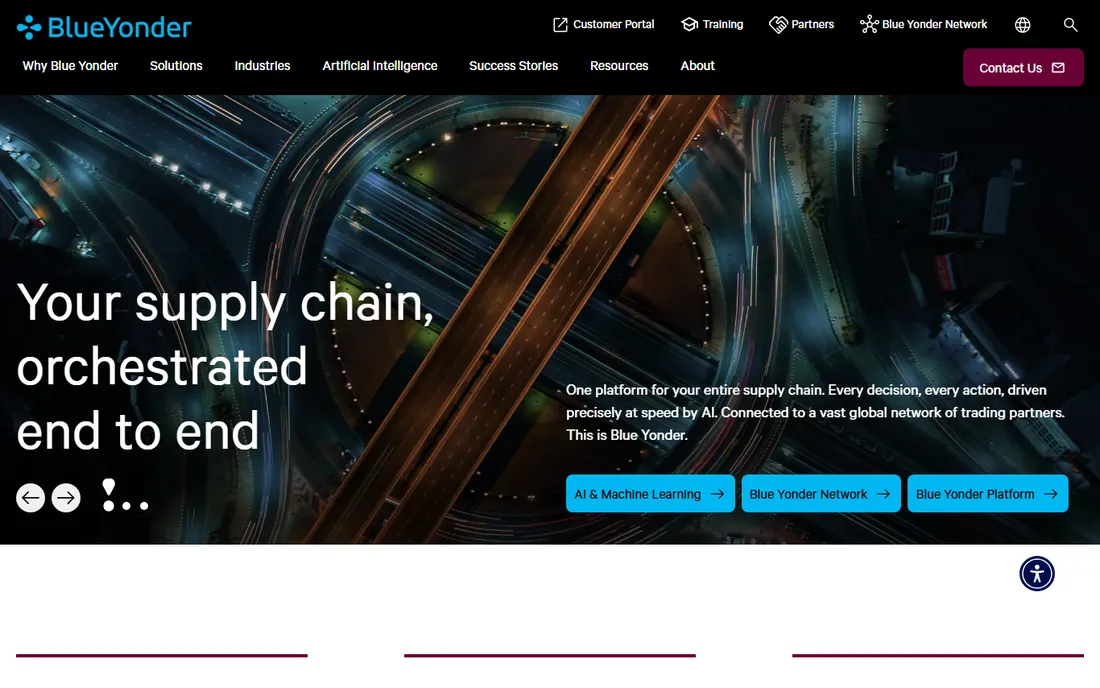
Blue Yonder, formerly JDA, offers warehouse management as part of a complete supply chain platform: planning, transportation, and warehousing in one architecture with AI woven through. Enterprises managing the whole supply chain get coordination that point WMS tools cannot provide, and the machine learning capabilities for demand forecasting and labor planning are genuinely advanced.
The trade-off is focus and cost. As a platform play, the WMS itself gets less dedicated attention than Manhattan's, and pricing and implementation are fully enterprise. It suits the global company optimizing the entire supply chain. Companies that just need an excellent warehouse should prefer the warehouse specialists.
What we like- Warehouse management inside a full supply chain platform
- Strong AI and machine learning for demand and labor
- Global enterprise footprint
Watch out for- Custom enterprise pricing
- The platform breadth means warehouse-specific focus is diluted
- Long implementations
How we ranked these systems
We compared warehouse management systems that US businesses actually deploy, identified through supply chain publications, vendor documentation, and reviews on G2, Capterra, and logistics forums. Every tool had to handle core WMS work, receiving, putaway, picking, packing, and shipping, as a shipping product in 2026. Pricing reflects published plans checked in October 2026, including Fishbowl's current tier structure and ShipHero's published plans. Where vendors use custom quotes, the tables say "See website". This is a research-based comparison, not hands-on testing.
What to check before you sign
Start with order volume and complexity, because they split this list cleanly. Under 100 orders a day with straightforward products: Fishbowl or Katana. Hundreds of orders a day with e-commerce complexity: ShipHero or Logiwa. Multi-client 3PL operations: Extensiv. Enterprise distribution: Manhattan, Blue Yonder, or NetSuite for NetSuite shops. Buying enterprise WMS for a 50-order day is the most expensive mistake in this category.
Then check the integration story with your actual systems. The WMS has to talk to the e-commerce platform, the ERP or accounting system, and the shipping carriers, and the quality of those integrations decides the implementation. Fishbowl's QuickBooks integration is its superpower; ShipHero's Shopify depth is its own. Ask each vendor for reference customers running your exact stack, and call them.
Finally, trial with your real SKUs and your real pickers. Warehouse software lives or dies on the handheld experience: if pickers find the mobile app confusing, accuracy drops no matter how good the back office is. Run a pilot in one zone with real orders before committing the whole facility. Every tool here offers a trial or demo; the ones worth buying survive contact with your actual warehouse.
The 3PL question
Every growing brand eventually faces the build-or-outsource warehouse decision, and it changes the software question entirely. Running your own warehouse means buying a WMS like the ones above. Outsourcing to a 3PL means the 3PL's software matters more than yours; your job becomes integration and visibility, not warehouse operations. The math turns on volume consistency and control: steady high volume favors in-house with a real WMS, while spiky or uncertain volume favors the 3PL's variable cost. Many brands do both, keeping core SKUs in-house and overflowing to a 3PL. Decide the operating model before the software, because the best WMS for a warehouse you do not operate is none at all.
Frequently asked questions
What is the difference between inventory management and warehouse management software?
Inventory management tracks what you have and where it is. Warehouse management runs the physical operation: receiving, putaway, picking paths, packing stations, and shipping. Small businesses often start with inventory software and add WMS when the warehouse operation itself becomes the bottleneck, usually around 100 orders a day.
How much does warehouse management software cost?
Small and mid-size operations pay $229 to $799 a month on Fishbowl, Katana, or ShipHero's lower tiers. Mid-market cloud WMS runs into the low thousands monthly. Enterprise systems use custom quotes that typically start in the tens of thousands annually plus implementation. Most established SMB warehouses land between $300 and $1,500 a month.
Do I need a WMS or will my ERP handle it?
Basic ERP inventory modules handle simple warehousing. You need a real WMS when picking accuracy, pick path optimization, barcode-directed workflows, or multi-zone operations matter. The test is whether warehouse errors and labor inefficiency cost more than the WMS subscription; past 100 daily orders, they usually do.
How long does WMS implementation take?
Fishbowl and Katana go live in weeks. ShipHero typically takes a few weeks with onboarding. Mid-market systems take one to three months. Enterprise platforms take three to nine months. The timeline that matters is not software configuration but process redesign and staff training; warehouses that skip that step get expensive shelfware.
Can WMS integrate with Shopify and QuickBooks?
Yes, and the quality varies by vendor. Fishbowl's QuickBooks integration is the best in the SMB tier. ShipHero, Cin7, and Katana all integrate deeply with Shopify and other e-commerce platforms. Confirm your exact versions and workflows during the trial, because "integrates with" covers a wide range of depth.
Should I use a 3PL instead of running my own warehouse?
It depends on volume and control needs. 3PLs convert fixed warehouse costs to variable per-order costs, which suits spiky or uncertain volume. In-house warehousing with a WMS gives control and usually lower per-order costs at steady high volume. Many brands hybridize. Model both at your actual order patterns before deciding.
Sources we checked (8)
- https://www.toolsforhumans.ai/ai-tools/shiphero
- https://www.trustradius.com/compare-products/fishbowl-inventory-vs-shiphero
- https://erpsoftwareblog.com/2026/01/best-warehouse-management-software/
- https://www.selecthub.com/warehouse-management-software/shiphero-vs-katana-mrp/
- https://www.selecthub.com/inventory-management-software/katana-mrp-vs-fishbowl-warehouse/
- https://resources.rework.com/tools/inventory-supply-chain/best-fishbowl-alternatives
- https://www.softwareworld.co/software/fishbowl-inventory-reviews/
- https://xorosoft.com/katana-vs-fishbowl/
Is your product missing or out of date?
We review this list regularly. Vendors can request a listing, send updated pricing or ask about featured placement.

Shihab Mia · Founder, Rankite
Shihab has spent more than a decade helping SaaS and e-commerce brands grow through search. He writes Rankite's software buying guides from pricing pages, documentation and public user reviews. More about Shihab.