How we make this list: we compare pricing pages, product documentation and public user reviews. Rankite is independent; if a vendor ever pays for a featured spot, that listing is clearly labeled Partner.
Key takeaways
- Mobile development splits into cross-platform frameworks (Flutter, React Native, .NET MAUI, Ionic), native toolchains (Xcode/Swift, Android Studio/Kotlin) and low-code platforms (OutSystems, Mendix).
- Flutter and React Native dominate cross-platform; the choice usually follows the team's existing skills (Dart vs. JavaScript).
- Native development still wins for performance-critical apps, platform-specific features and games (Unity for 3D).
- Apache Cordova is in maintenance mode; new projects should choose Capacitor or another modern option instead.
Quick comparison
| Tool | Best for | Starting price | Free plan |
|---|
 Flutter Flutter | cross-platform apps in Dart | Free | Yes |
 React Native React Native | cross-platform in JavaScript | Free | Yes |
 .NET MAUI .NET MAUI | cross-platform for .NET teams | Free | Yes |
 Ionic Ionic | web-tech hybrid apps | Free | Yes |
 Xcode Xcode | native iOS development | Free | Yes |
 Android Studio Android Studio | native Android development | Free | Yes |
 Apache Cordova Apache Cordova | legacy hybrid apps | Free | Yes |
 Unity Unity | mobile games | Free | Yes |
 OutSystems OutSystems | low-code enterprise apps | See website | Free trial |
 Mendix Mendix | low-code business apps | See website | Free tier |
Is your product missing or out of date?
We review this list regularly. Vendors can request a listing, send updated pricing or ask about featured placement.
The best mobile development software
Starting priceFree
Free planYes
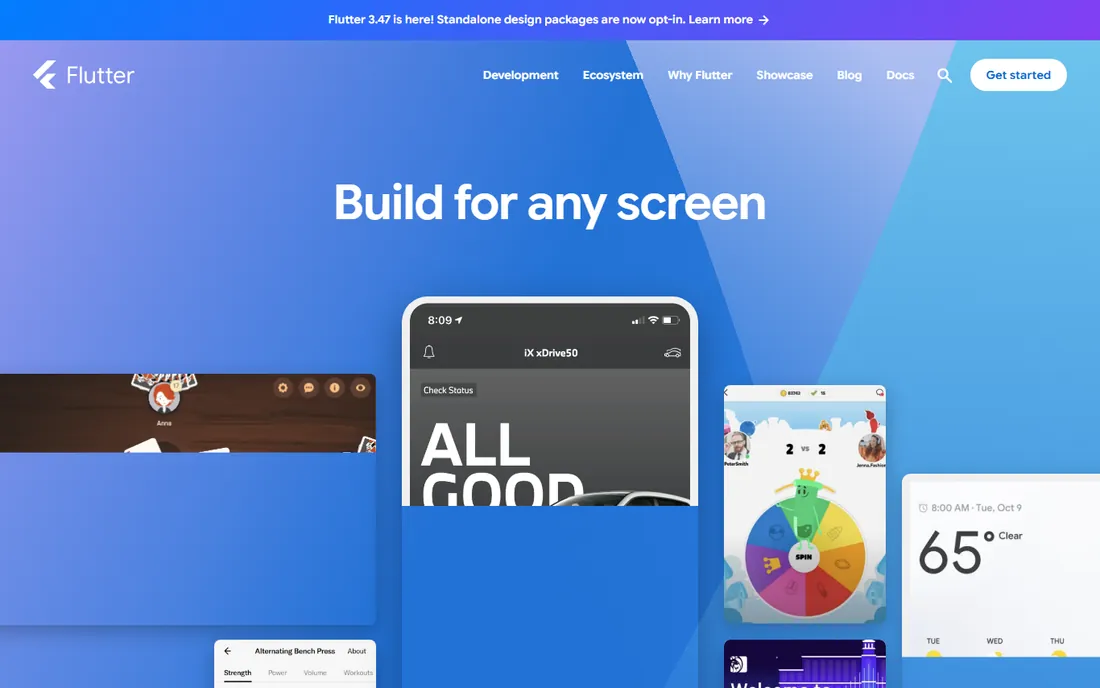
Flutter, Google's open-source UI toolkit, lets developers build natively compiled apps for iOS, Android, web and desktop from a single Dart codebase. The widget-based UI renders directly to the canvas, giving consistent design and near-native performance across platforms.
The productivity is the story. Hot reload shows changes instantly, the widget library covers Material and Cupertino design and the single codebase halves the maintenance of separate native apps. The ecosystem has matured with strong packages for every common need.
The honest trade-offs are Dart and size. Dart is a good language few developers know coming in, and Flutter apps are larger than native ones. Teams invested in JavaScript often prefer React Native. But for the new cross-platform project, Flutter's performance and productivity make it the default recommendation.
What we like- Single codebase for mobile, web and desktop
- Excellent performance
- Hot reload
Watch out for- Dart is a niche language
- App sizes are larger
Starting priceFree
Free planYes
React Native, Meta's open-source framework, builds cross-platform mobile apps with React and JavaScript, rendering to native components. Teams with web React experience become mobile productive fast, and the npm ecosystem brings every library imaginable.
The skill transfer is the killer feature. Organizations with React web teams extend to mobile without hiring native developers, sharing logic and sometimes UI between web and mobile. The community is enormous, so problems are solved and packages exist.
The honest limits are the native boundary. Complex animations, heavy computation and platform-specific features need native modules, and performance tuning is a real skill. The framework has matured past its early instability. For JavaScript organizations, it is the natural mobile choice.
What we like- JavaScript and React skills transfer
- Huge ecosystem
- Meta-backed
Watch out for- Native bridges for complex features
- Performance tuning needed
Starting priceFree
Free planYes
.NET MAUI is Microsoft's cross-platform framework for building native mobile and desktop apps with C# and XAML: one project targets Android, iOS, macOS and Windows. .NET teams extend their existing skills and code sharing to mobile.
The .NET integration is the value. Shared business logic with backend and web projects, Visual Studio tooling and the enterprise patterns .NET developers know. For organizations standardized on Microsoft technology, it is the coherent mobile story.
The trade-off is community size. The MAUI mobile community is smaller than Flutter's or React Native's, so third-party packages and answers are thinner. XAML has its own learning curve. But for the .NET shop, the alternative is hiring separate mobile teams, which costs far more.
What we like- C# and .NET skills transfer
- Single project for all platforms
- Visual Studio
Watch out for- Smaller mobile community
- XAML learning curve
Starting priceFree
Free planYes
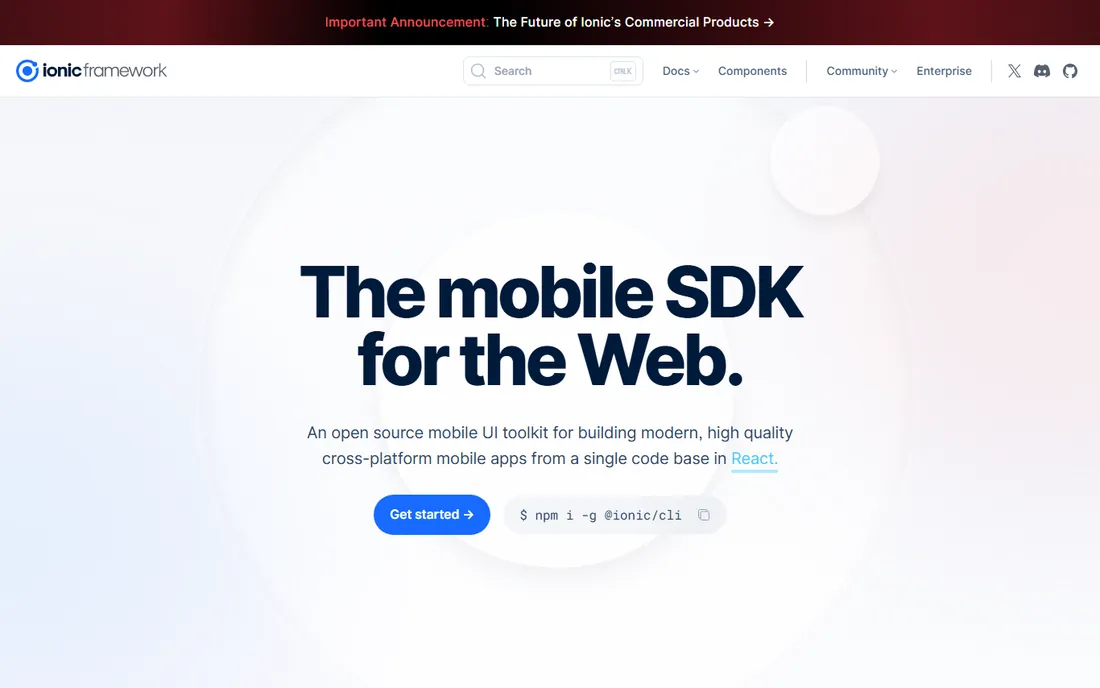
Ionic is the hybrid framework for building mobile apps with web technologies: HTML, CSS and JavaScript (with Angular, React or Vue) wrapped by Capacitor into native apps. Web teams ship to app stores without learning native development.
The web skill transfer is the pitch. Existing web apps become mobile apps with shared code, and the same codebase deploys as a progressive web app. For content apps, forms and business tools, the WebView performance is perfectly adequate.
The honest limit is the WebView. Graphics-intensive apps and complex animations feel less native than Flutter or React Native. Apache Cordova, Ionic's predecessor, is in maintenance mode; new projects should use Capacitor. For web teams building business apps, it remains productive.
What we like- Web skills build mobile apps
- Good for PWAs
- Capacitor modernizes it
Watch out for- WebView performance limits
- Less native feel
Starting priceFree
Free planYes
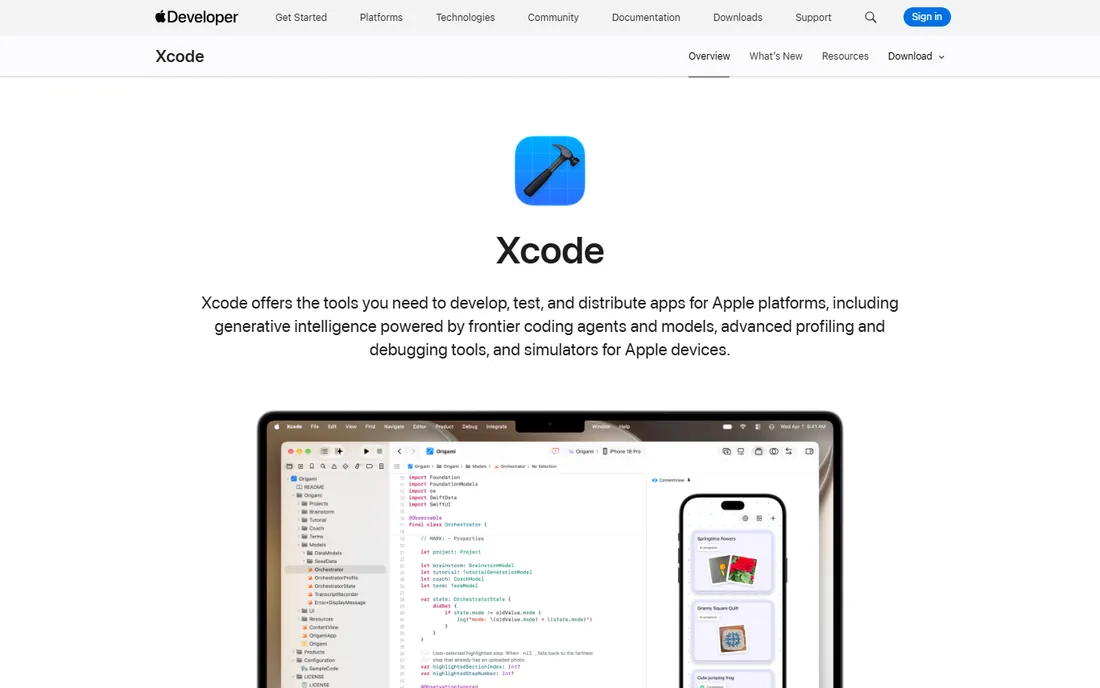
Xcode is Apple's integrated development environment for building iOS, macOS, watchOS and tvOS apps with Swift and SwiftUI. It is the only path to fully native Apple apps with day-one access to new platform features.
The native advantage is absolute on Apple platforms. Performance, system integration, new APIs and App Store compliance all favor native development. SwiftUI has modernized UI development significantly, and the tooling (simulators, instruments, TestFlight) is excellent.
The constraints are Apple's: a Mac is required, the output is Apple-only and the App Store rules apply. Organizations needing Android too must build twice or go cross-platform. For iOS-first products and Apple-ecosystem apps, there is no alternative.
What we like- The only way to build true native iOS
- SwiftUI is modern
- Best performance
Starting priceFree
Free planYes
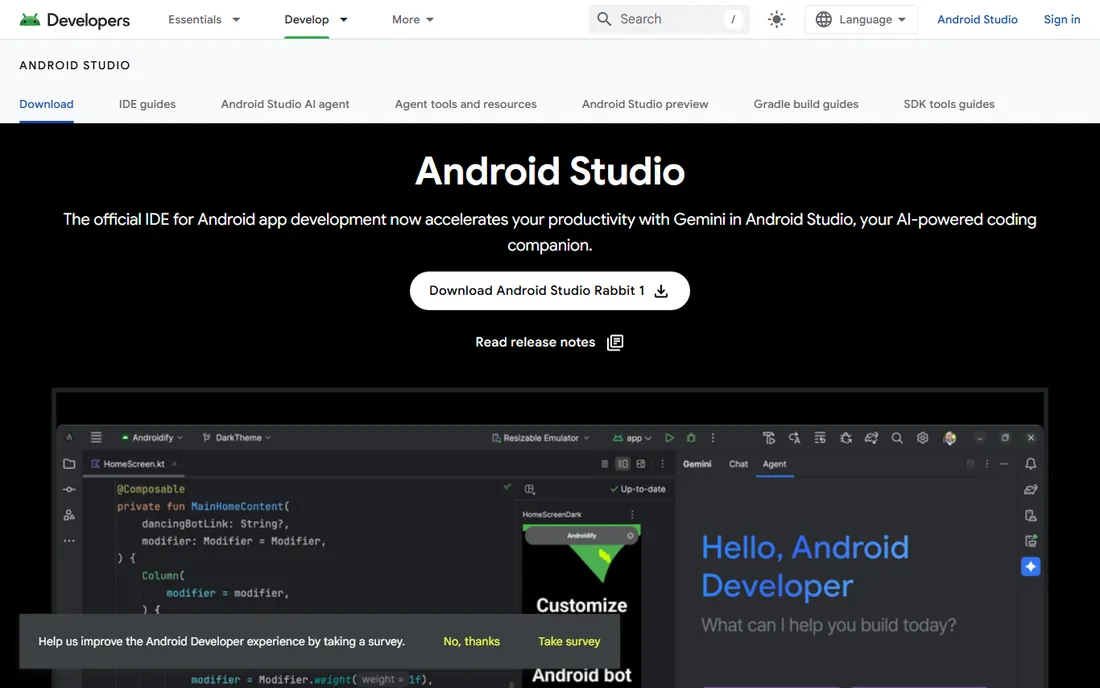
Android Studio is Google's official IDE for Android development with Kotlin (and Java): full platform API access, excellent emulators, profiling tools and Play Store integration. It is the native path for the world's largest mobile platform.
Kotlin is a genuine pleasure: concise, safe and modern, it makes Android development far more productive than the Java era. Jetpack Compose modernizes UI development. The tooling handles the fragmentation challenge with virtual devices spanning the ecosystem.
The honest reality is Android's fragmentation. Testing across devices and OS versions is real work that iOS developers avoid. Organizations needing iOS too face the two-codebase cost. For Android-first products and the deepest platform integration, it is essential.
What we like- The official Android IDE
- Kotlin is excellent
- Full platform access
Watch out for- Android only
- Device fragmentation testing burden
Starting priceFree
Free planYes
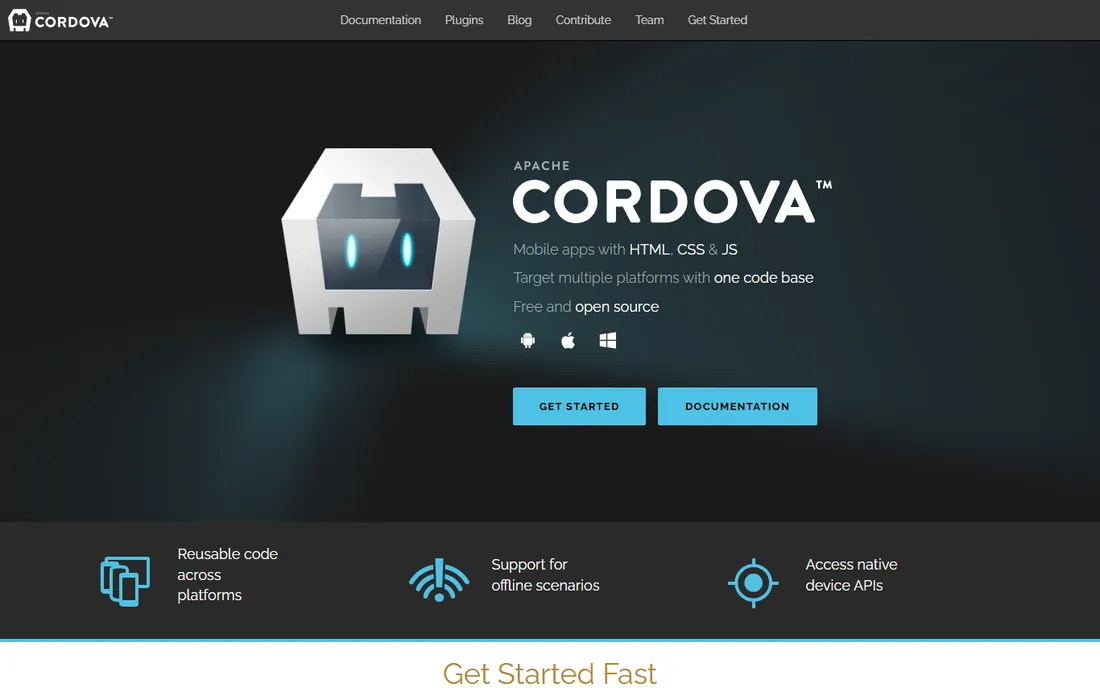
Apache Cordova is the veteran hybrid framework that pioneered web-tech mobile apps: wrap HTML/CSS/JS in a native container with plugin access to device features. Countless apps shipped on it over the years.
The honest status is maintenance mode. The project continues for existing apps but active development has moved to Capacitor, its spiritual successor. New projects should not choose Cordova; the ecosystem is frozen while the mobile world moves on.
We list it because existing Cordova apps need maintaining and teams evaluating options should understand the choices. If you are maintaining Cordova, plan the Capacitor migration. If you are starting fresh, choose from the frameworks above.
What we like- Mature and stable
- Huge plugin history
- Simple concept
Watch out for- In maintenance mode
- Not recommended for new projects
Starting priceFree
Free planYes
Unity is the game engine behind most mobile games: 2D and 3D development with C#, one-click deploy to iOS and Android and an asset store covering every need. For games, it is not just the best choice but the standard.
The game-specific tooling is unmatched: physics, animation, particle systems, multiplayer networking and monetization all built in. The talent pool is huge, and the cross-platform deploy covers consoles and PC too.
The honest caveats are scope and trust. Unity is for games and interactive 3D; business apps should look elsewhere. The pricing controversies damaged developer trust, though policies were revised. For mobile games, it remains the default engine.
What we like- The mobile game engine standard
- Massive asset store
- Cross-platform deploy
Watch out for- Overkill for non-game apps
- Pricing changes caused distrust
Starting priceSee website
Free planFree trial
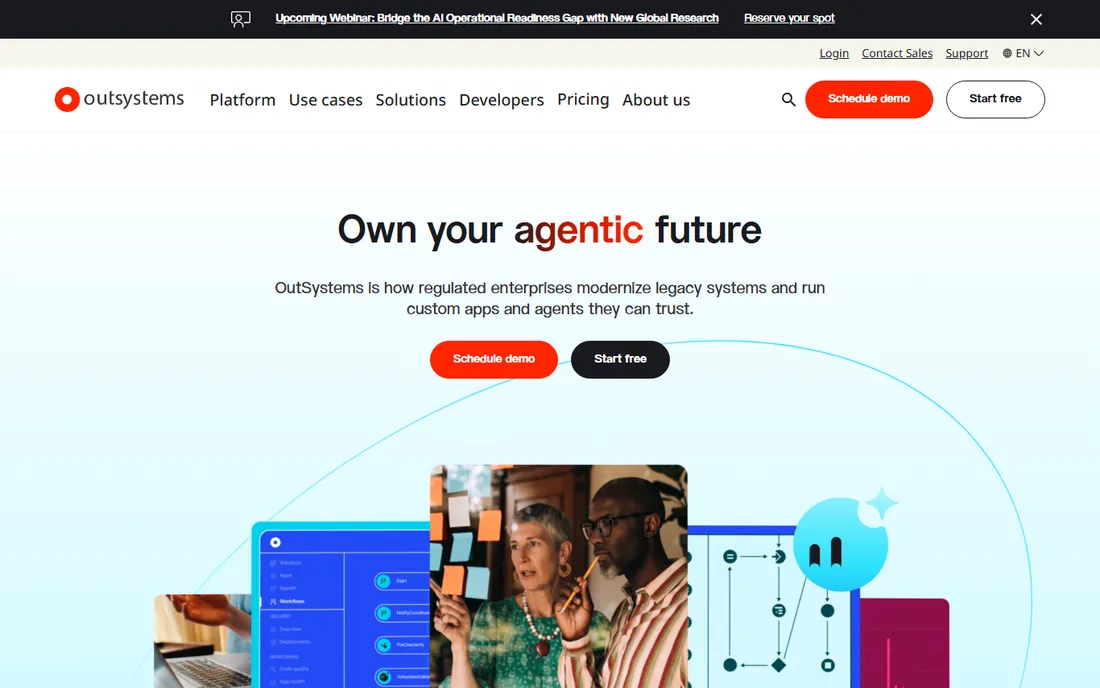
OutSystems is the low-code platform for building enterprise mobile and web apps visually: model data, design UI, define logic and deploy to iOS and Android from one platform. IT departments deliver business apps far faster than traditional development.
The enterprise low-code story is real. Governance, security, scalability and lifecycle management satisfy IT requirements that simpler no-code tools cannot. Professional developers extend the platform where visual development ends.
The trade-offs are price and lock-in. Licensing is enterprise, and apps live on the OutSystems platform. Organizations should evaluate Mendix alongside and confirm the long-term economics. For the enterprise standardizing on low-code, it is a leader.
What we like- Serious low-code for enterprise
- Fast delivery
- Governance built in
Watch out for- Enterprise pricing
- Platform lock-in
Starting priceSee website
Free planFree tier
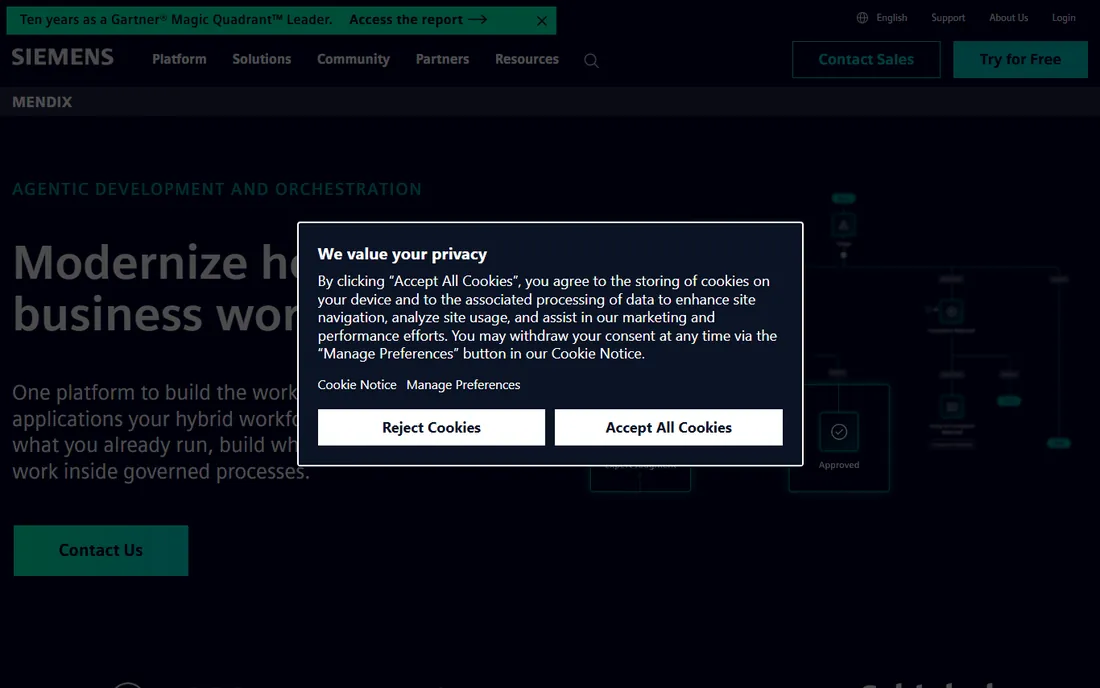
Mendix, part of Siemens, is the low-code platform competing head-to-head with OutSystems: visual development of mobile and web apps with enterprise governance, AI assistance and cloud deployment. The free tier lets teams start without procurement.
The Siemens backing and enterprise adoption give it credibility in industrial and large-enterprise contexts. The AI-assisted development and marketplace of components accelerate delivery. For organizations in the Siemens ecosystem, the fit is natural.
The honest assessment mirrors OutSystems: enterprise pricing at scale, platform commitment and the need to learn the platform's way. Evaluate both leaders against your specific requirements. For business apps built by mixed teams, low-code beats traditional development on speed.
What we like- Siemens-backed
- Strong enterprise adoption
- Free tier to start
Watch out for- Enterprise pricing at scale
- Learning the platform
Cross-platform (Flutter, React Native, MAUI) means one codebase for both platforms: faster development, shared maintenance, slightly compromised platform integration. Native (Xcode, Android Studio) means the best possible app on each platform at roughly double the cost.
The decision factors: budget and team (cross-platform usually wins), performance needs (games and intensive apps go native or Unity), platform-specific features (native wins on day-one APIs) and long-term maintenance (one codebase is cheaper to maintain).
Most business apps are well served by cross-platform. Most top-grossing consumer apps are native. The middle ground, React Native or Flutter with native modules for the hard parts, serves many products well. Decide based on the app's actual demands, not ideology.
What to check before you buy
Start with the team's skills: JavaScript teams choose React Native or Ionic, Dart learners choose Flutter, .NET shops choose MAUI. Second, define the app's demands: a forms app and a 3D game need different tools. Third, check the hiring market; popular frameworks are easier to staff.
Fourth, verify the specific native features you need are accessible (Bluetooth, AR, background processing). Fifth, for low-code, model the long-term platform costs, not just the build speed. Finally, prototype the riskiest feature first; framework demos always look easy.
How we chose
We compared vendor documentation, developer surveys and community sources, then confirmed every homepage was live in October 2026. Where we could not verify a vendor-published price we say so. Nothing here reflects hands-on testing; assessments come from documentation, feature lists and public developer feedback.
Frequently asked questions
Should I build native or cross-platform?
For most business apps, cross-platform (Flutter or React Native) delivers the best value. For performance-critical apps, games and deep platform integration, go native. Match the choice to the app's demands and the team's skills.
Flutter vs. React Native: which is better?
Flutter offers better performance and UI consistency; React Native offers JavaScript skill transfer and a bigger ecosystem. Teams with React experience usually choose React Native; new teams often choose Flutter. Both are excellent.
Is low-code suitable for serious apps?
For business apps with standard requirements, yes: OutSystems and Mendix deliver production enterprise apps. For consumer apps with custom UX and scale demands, traditional development usually wins.
What happened to Cordova?
Apache Cordova is in maintenance mode; active hybrid development moved to Capacitor. Existing Cordova apps keep working, but new projects should choose modern alternatives.
How much does mobile app development cost?
DIY with free frameworks costs time. Agencies charge from tens of thousands for simple apps to hundreds of thousands for complex ones. Low-code platforms charge enterprise subscriptions but cut build time dramatically.
Sources we checked (10)
- https://flutter.dev
- https://reactnative.dev
- https://dotnet.microsoft.com/apps/maui
- https://ionicframework.com
- https://developer.apple.com/xcode/
- https://developer.android.com/studio
- https://cordova.apache.org
- https://unity.com
- https://www.outsystems.com
- https://www.mendix.com
Is your product missing or out of date?
We review this list regularly. Vendors can request a listing, send updated pricing or ask about featured placement.

Shihab Mia · Founder, Rankite
Shihab has spent more than a decade helping SaaS and e-commerce brands grow through search. He writes Rankite's software buying guides from pricing pages, documentation and public user reviews. More about Shihab.