How we make this list: we compare pricing pages, product documentation and public user reviews. Rankite is independent; if a vendor ever pays for a featured spot, that listing is clearly labeled Partner.
Key takeaways
- Video analytics now runs on existing cameras in most cases, so hardware replacement is rarely required.
- BriefCam leads on forensic search (its video synopsis compresses hours of footage into minutes), while Spot AI and Vaidio target live operational alerts.
- Vaxtor is the specialist pick for license plate and vehicle recognition across parking, tolling and logistics.
- Enterprise video analytics is almost always quote-based pricing; budget for per-camera or per-location licensing plus implementation.
- US buyers should confirm NDAA compliance for any camera or software touching federal-adjacent work.
Quick comparison
| Tool | Best for | Starting price | Free plan |
|---|
 BriefCam BriefCam | fast forensic video search and investigation | See website | No |
 Vaidio Vaidio | enterprises adding AI to current camera infrastructure | See website | No |
 Vaxtor Vaxtor | license plate and vehicle recognition projects | See website | No |
 AllGoVision AllGoVision | open-platform deployments needing many analytic types | See website | No |
 Avigilon Avigilon | organizations standardizing on one video security vendor | See website | No |
 Genetec Genetec | unified security across video, access control and ALPR | See website | No |
 Spot AI Spot AI | multi-site businesses wanting AI operations help, not just security | See website | No |
Is your product missing or out of date?
We review this list regularly. Vendors can request a listing, send updated pricing or ask about featured placement.
The best video analytics software
Starting priceSee website
Free planNo
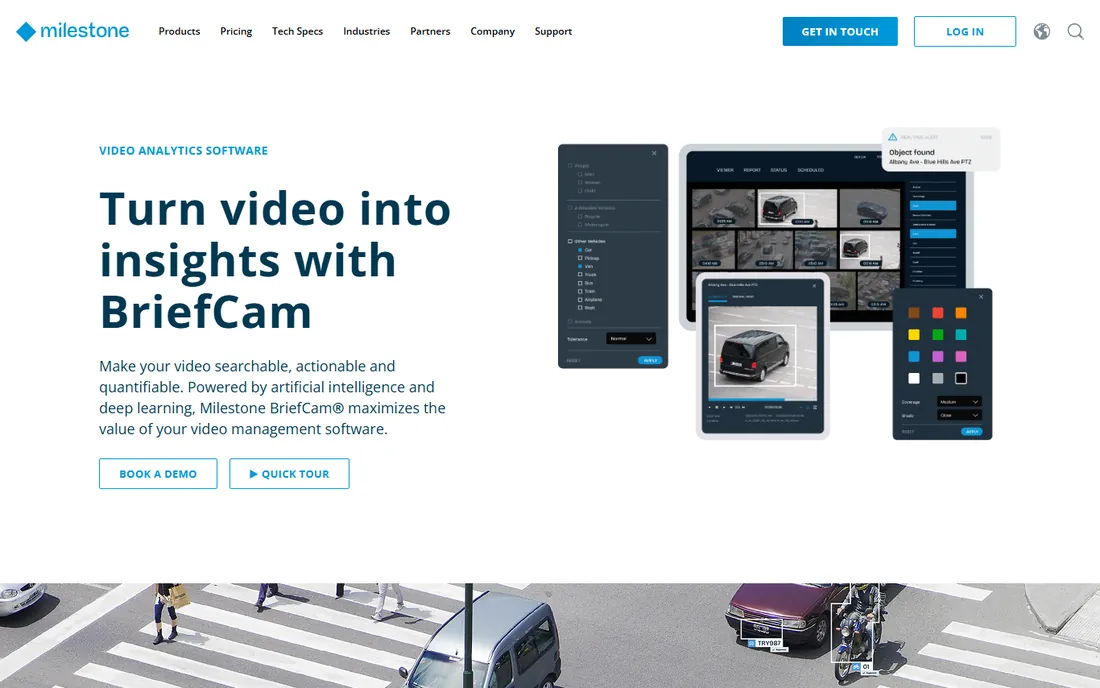
BriefCam made its name on one idea: reviewing surveillance footage should take minutes, not shifts. Its Video Synopsis technology layers events from hours of video into a single short clip, and its search lets investigators filter by clothing color, direction of travel, vehicle type and dozens of other attributes. Since becoming part of Milestone Systems, it slots naturally into XProtect deployments while still integrating with other VMS platforms.
Four editions cover the range from file-based investigation (BriefCam Investigator) to multi-site real-time alerting and dashboards (BriefCam Insights). Law enforcement teams use it to clear cases faster, and retail or transportation operators use it for people counting, dwell analysis and queue management. The honest catch is cost and complexity: this is enterprise software sold through partners, with pricing tied to channel count and modules, so small teams should get a scoped quote before committing.
What we like- Video Synopsis compresses hours of footage into minutes
- Deep filters for appearance, behavior and object class
- Tight integration with Milestone XProtect and other VMS platforms
Watch out for- Quote-only enterprise pricing
- Real-time alerting tiers cost more than review-only editions
#2
Vaidio
Best for: enterprises adding AI to current camera infrastructure
Visit ironyun.com
Starting priceSee website
Free planNo
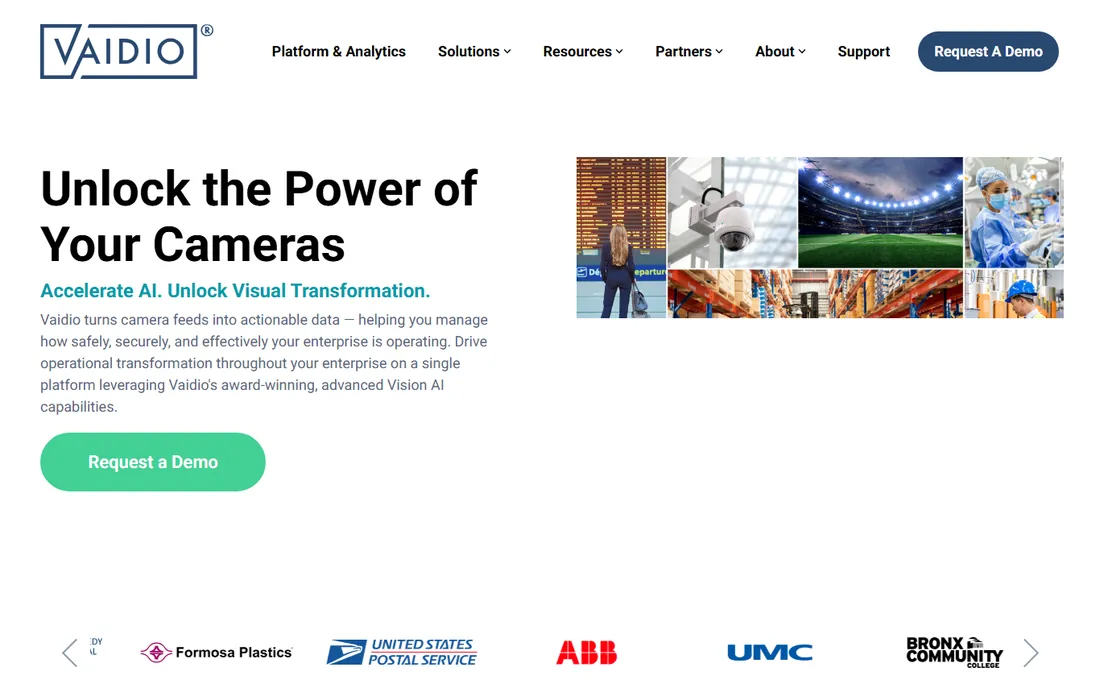
Vaidio is the new name for the platform long sold as IronYun, and the rebrand reflects a broader pitch: turn any camera feed into structured, searchable data for security, safety, compliance and business intelligence. The platform advertises 21 AI engines, real-time alerts and rapid search across large camera estates, with deployments in education, retail, healthcare and manufacturing.
What stands out is the emphasis on operational use beyond security, such as monitoring queues, enforcing PPE rules and generating compliance evidence. For a mid-size company with an existing camera fleet, Vaidio's no-rip-and-replace story is attractive. The catch is the usual one for this category: pricing is quote-based, implementation runs through partners, and you will want a pilot on your own cameras before signing.
What we like- 21 AI engines covering people, vehicles, objects and behavior
- Works with existing cameras with no hardware replacement
- Sub-two-second search across hundreds of cameras
Watch out for- Brand transition from IronYun may confuse buyers researching reviews
- Enterprise sales process with no public pricing
#3
Vaxtor
Best for: license plate and vehicle recognition projects
Visit vaxtor.com
Starting priceSee website
Free planNo
Vaxtor does one thing extremely well: reading plates. Its ALPR engine recognizes license plates in real time on fast-moving traffic, and add-on modules cover make, model and color identification, vehicle classification, dangerous-goods (ADR) plates and speed detection from a single camera. Use cases span parking management, tolling, access control, logistics yards and smart-city deployments.
The engine runs on Windows or Linux PCs, directly on camera (through partnerships with Axis, Hanwha and others) and on Android for mobile spot checks. For a business whose problem is vehicles at a gate, lot or loading dock, Vaxtor is the specialist that general analytics platforms get compared against. The limitation is scope: if you also need people behavior analytics, you will pair it with something else.
What we like- Recognition rates above 99% in independent trials
- Supports nearly 200 countries and multiple character sets
- Runs on PC, on camera edge or mobile
Watch out for- Focused on vehicles and OCR rather than general behavior analytics
- Integration work often needed for VMS back offices
Starting priceSee website
Free planNo
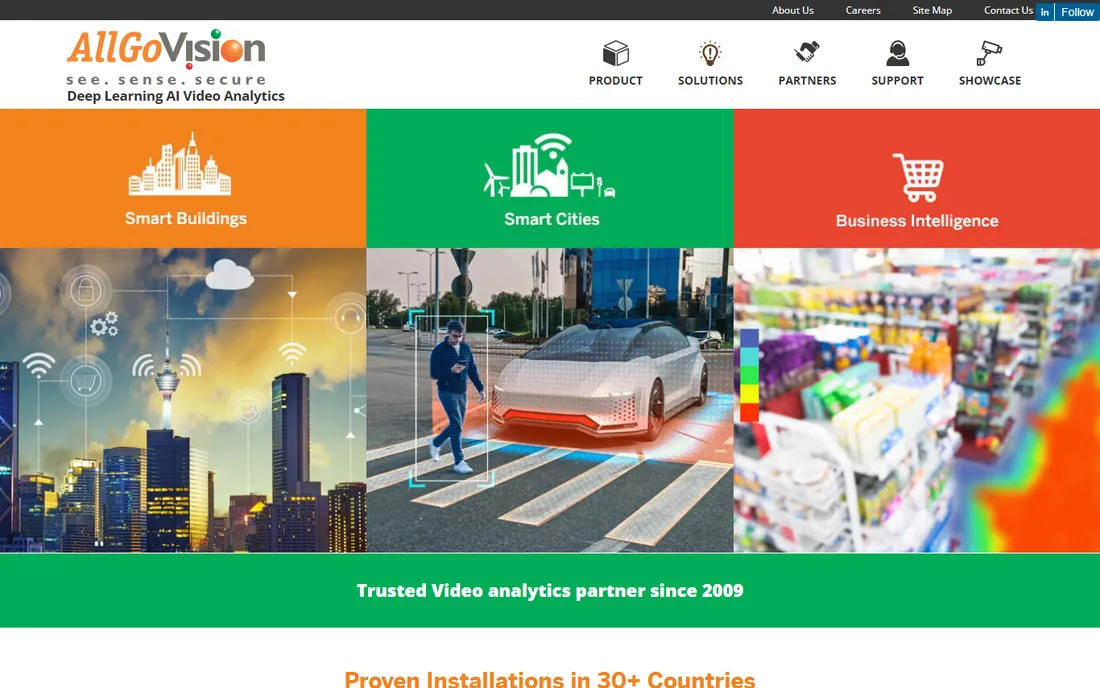
AllGoVision has been selling video analytics since 2009, and its catalog shows it: intrusion detection, people counting, queue management, traffic analytics, face recognition, license plate recognition and crowd management are all available as packages on one platform. It integrates with Milestone, Genetec, Honeywell and other VMS products, and it can also run standalone directly on camera feeds.
For integrators and mid-size enterprises that want one analytics vendor covering many scenarios, the breadth is the selling point. Pricing is per-channel and quote-based through partners. The honest catch is polish: the product's depth exceeds its marketing and UI refinement, so plan a thorough demo against your specific scenarios rather than buying on the feature list alone.
What we like- 50+ basic and advanced features in one platform
- Integrates with 10+ open-platform VMS products
- Runs on server, edge or cloud
Watch out for- India-headquartered with partner-led US delivery
- Interface and documentation feel dated next to newer rivals
#5
Avigilon
Best for: organizations standardizing on one video security vendor
Visit avigilon.com
Starting priceSee website
Free planNo
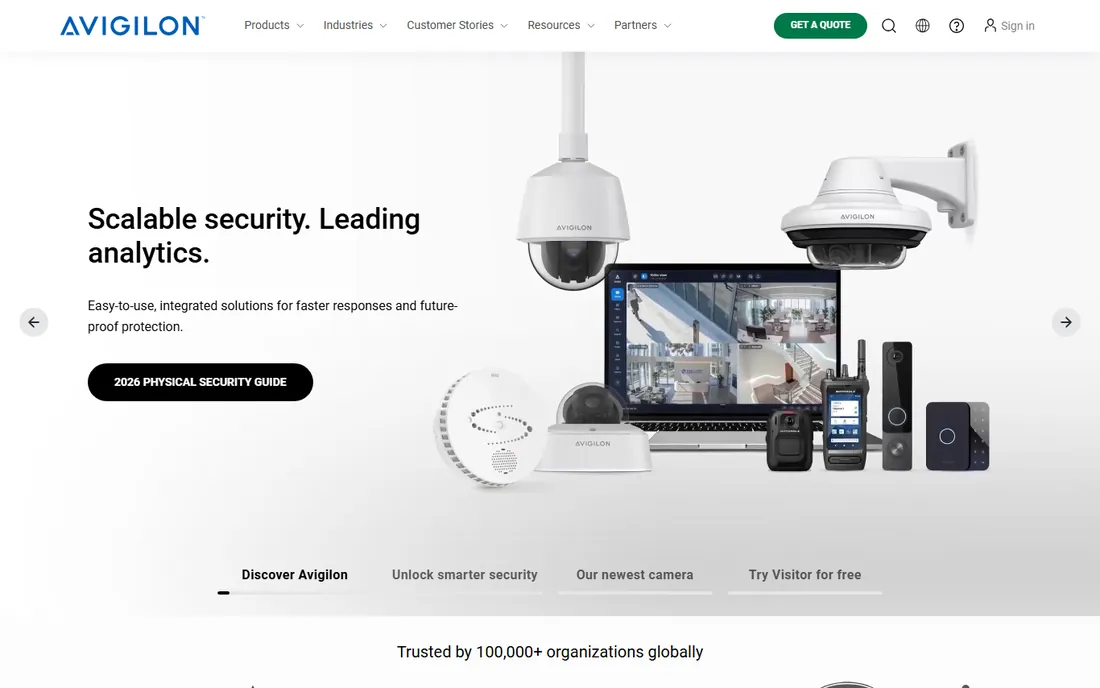
Avigilon, a Motorola Solutions company, sells the full stack: cameras, video management (Avigilon Unity), access control (now including the former Openpath cloud platform) and analytics built into the cameras themselves. Features like Appearance Search let operators find a person of interest across cameras in minutes, and self-learning analytics reduce false alarms without constant tuning.
For a business planning a new installation or a full refresh, buying cameras, software and access control from one vendor simplifies support and integration. More than 100,000 organizations use the platform globally. The catch is lock-in economics: Avigilon analytics shine brightest on Avigilon cameras, so companies with a large existing mixed fleet may get better value from a camera-agnostic analytics layer.
What we like- End-to-end portfolio of cameras, VMS, analytics and access control
- Strong AI features like Appearance Search
- Backed by Motorola Solutions
Watch out for- Best value when you buy into the Avigilon ecosystem
- Less flexible for mixed-vendor camera fleets
#6
Genetec
Best for: unified security across video, access control and ALPR
Visit genetec.com
Starting priceSee website
Free planNo
Genetec's Security Center is the reference platform for unified physical security: video surveillance, access control, automatic license plate recognition and intrusion detection managed from one interface. Independent analysts have repeatedly ranked it among the global VMS leaders, and its 2026 releases continue to push both the on-premises platform and the Security Center SaaS offering.
For a mid-size company with multiple sites, or one that needs video tied to door access and plate data, Genetec's unified approach beats stitching point products together. The platform's cybersecurity features are a genuine differentiator in an industry waking up to camera-network risk. The catch is scale: licensing, implementation and training reflect an enterprise product, so very small teams will find lighter options cheaper and faster to deploy.
What we like- Security Center unifies video, access, ALPR and intrusion in one interface
- Strong cybersecurity posture
- Large partner ecosystem
Watch out for- Enterprise-grade complexity and cost
- Overkill for single-site small businesses
#7
Spot AI
Best for: multi-site businesses wanting AI operations help, not just security
Visit spot.ai
Starting priceSee website
Free planNo
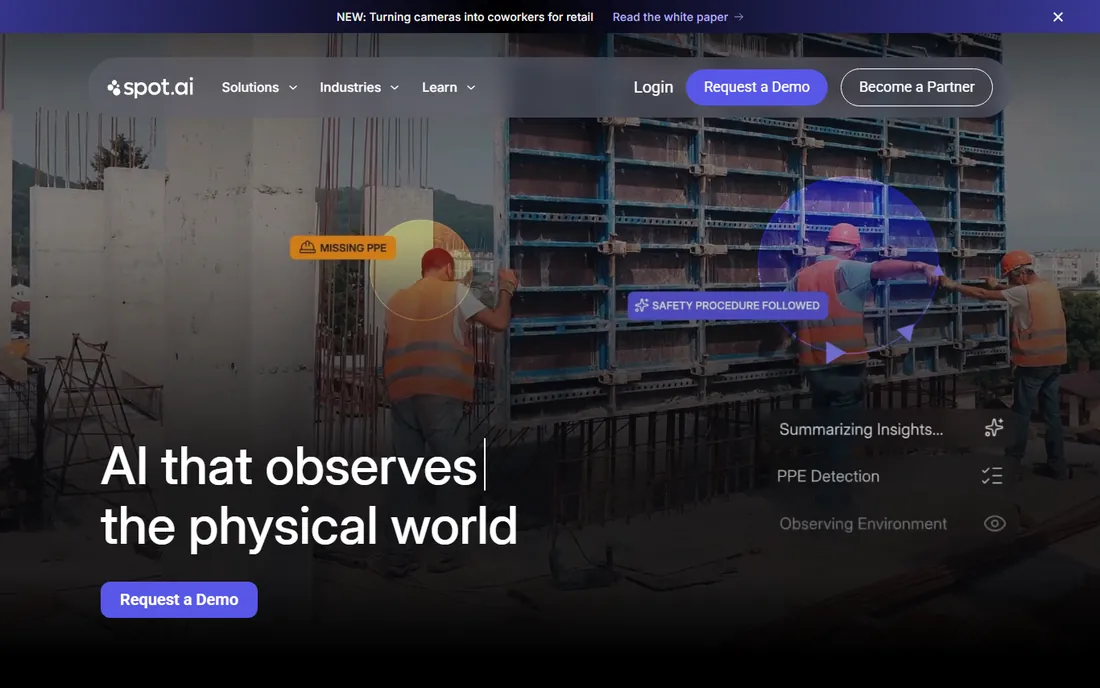
Spot AI represents the newest school of video analytics: AI agents that watch every camera around the clock, reason about what they see against your rules, and trigger actions like alerts, lights or workflow updates. Its Iris conversational agent lets managers ask questions in plain language instead of scrubbing footage. Deployment is deliberately simple: keep your existing ONVIF cameras, add the Intelligent Video Recorder on site, and manage everything from a cloud dashboard.
The pitch extends beyond security into operations: manufacturers use it for SOP compliance and changeover tracking, logistics firms for yard safety. Pricing is subscription-based per location with cameras bundled or bring-your-own options. The catch is maturity: founded in 2018, Spot AI has strong momentum but less installed-base history than BriefCam or Genetec, so reference customers in your industry matter.
What we like- Camera-agnostic with an on-site Intelligent Video Recorder
- AI agents handle security, safety and SOP compliance
- Conversational search (Iris) for plain-language queries
Watch out for- Subscription model adds up across many locations
- Newer vendor with less long-term track record than incumbents
How we chose
We compared platforms based on vendor documentation, pricing pages, product datasheets and public reviews on G2, Capterra and industry press. We weighted feature depth for real investigation and alerting workloads, integration breadth with common VMS platforms and camera brands, fit for small and mid-size US companies, and transparency around pricing and compliance (including NDAA status where stated). We did not perform hands-on testing; all assessments reflect publicly available product information as of October 2026.
What to ask before you sign a video analytics contract
Start with your cameras. List every camera model and your current VMS, then ask each vendor which of those work natively and what breaks. Camera-agnostic platforms (Spot AI, Vaidio, AllGoVision) keep your hardware; ecosystem vendors (Avigilon) reward standardization. Either path is fine, but the answer changes your budget by an order of magnitude.
Next, separate search from alerting. Forensic search (BriefCam's strength) solves investigations after the fact. Real-time alerting (Spot AI, Vaidio, Genetec) tries to prevent incidents. Many buyers need one more than the other; paying for both when you need one is the classic overspend.
Nail down the commercial terms
Ask whether licensing is per camera, per channel, per location or per analytic module, and what happens when you add cameras mid-contract. Confirm whether implementation, training and annual support are included or separate line items. For US buyers, confirm NDAA Section 889 compliance in writing if any federal funding touches the project, and ask where video and metadata are stored to satisfy your own privacy policies.
Pilot on your own footage
Every vendor demos well on their own video. Insist on a trial with your cameras, your lighting and your scenes: night footage, rain, crowded lobbies. Measure false-alert rates over at least two weeks before committing, because alert fatigue is the number one reason analytics projects fail.
Where the category is heading
The clear direction is analytics as a software layer, not a hardware purchase. Edge AI in cameras keeps improving, cloud dashboards keep getting simpler, and the newest vendors frame their products as AI coworkers rather than surveillance tools. For buyers, that means more choice and lower hardware costs, but also more homework: with software decoupled from cameras, the quality of the AI models and the honesty of the pilot matter more than the spec sheet.
Frequently asked questions
What is video analytics software?
Video analytics software applies AI to camera feeds to detect people, vehicles, objects and behaviors automatically. Instead of watching live video or scrubbing recordings manually, operators get alerts, searchable metadata and dashboards. Common uses include intrusion detection, people counting, license plate recognition and forensic investigation.
How much does video analytics software cost?
Most enterprise platforms are quote-based, with pricing tied to camera or channel count, analytic modules and deployment size. Expect per-camera or per-location subscriptions for cloud offerings and perpetual-plus-maintenance models for on-premises systems. Always get a scoped quote that includes implementation and support.
Can video analytics work with my existing cameras?
Often yes. Camera-agnostic platforms from vendors like Spot AI, Vaidio and AllGoVision work with standard ONVIF IP cameras, so no replacement is needed. Ecosystem vendors like Avigilon deliver the most when paired with their own cameras. Confirm compatibility for your exact models during the pilot.
What is the difference between VMS and video analytics?
A video management system (VMS) records, stores and displays camera footage. Video analytics is the AI layer that interprets that footage: detecting events, searching by attributes and generating alerts. Many VMS platforms now bundle basic analytics, while dedicated tools like BriefCam or Vaxtor add deeper capabilities.
Is video analytics legal for employee monitoring in the US?
Video surveillance in workplaces is generally legal in the US with proper notice, but rules vary by state, especially for audio recording and biometric features like face recognition. Illinois, Texas and several other states restrict biometric data collection. Consult legal counsel before enabling face recognition or audio analytics.
Do I need NDAA-compliant cameras?
NDAA Section 889 bans certain Chinese-made cameras and components in federal contracts and federally funded projects. If your project touches federal money or critical infrastructure, confirm compliance in writing from your vendor. For purely private commercial use it is not legally required, but many buyers now treat it as best practice.
Sources we checked (7)
- https://www.briefcam.com/
- https://www.ironyun.com
- https://vaxtor.com/
- https://www.allgovision.com
- https://www.avigilon.com/
- https://www.genetec.com/
- https://spot.ai/
Is your product missing or out of date?
We review this list regularly. Vendors can request a listing, send updated pricing or ask about featured placement.

Shihab Mia · Founder, Rankite
Shihab has spent more than a decade helping SaaS and e-commerce brands grow through search. He writes Rankite's software buying guides from pricing pages, documentation and public user reviews. More about Shihab.