How we make this list: we compare pricing pages, product documentation and public user reviews. Rankite is independent; if a vendor ever pays for a featured spot, that listing is clearly labeled Partner.
Key takeaways
- Most municipal utilities choose between a full CIS platform (billing, customer service and payments in one system) and a lighter billing layer that sits on top of an existing CIS.
- SilverBlaze and Muni-Link win praise for customer portals that actually cut call volume, while Starnik and Cogsdale are picked by utilities that need deep rate-table flexibility for water, electric and gas.
- None of these vendors publish pricing, so treat every quote as a negotiation and ask for the full implementation fee in writing before you sign.
- If prepaid metering or budget billing is your use case, PayGo is the specialist, not a general-purpose CIS.
Quick comparison
| Tool | Best for | Starting price | Free plan |
|---|
 SilverBlaze SilverBlaze | customer self-service portals | See website | No |
 Starnik Starnik | multi-service municipal CIS | See website | No |
 Muni-Link Muni-Link | small to mid-size municipal utilities | See website | No |
 Cogsdale Cogsdale | flexible rate structures and billing | See website | No |
 Harris Advanced Utility Harris Advanced Utility | large utilities with complex CIS needs | See website | No |
 MuniBilling MuniBilling | budget-conscious small utilities | See website | No |
 CUSI CUSI | all-in-one utility billing and payments | See website | No |
 InvoiceCloud InvoiceCloud | online payments and e-billing layer | See website | No |
 PayGo PayGo | prepaid and budget billing programs | See website | No |
Is your product missing or out of date?
We review this list regularly. Vendors can request a listing, send updated pricing or ask about featured placement.
The best utility billing software
Starting priceSee website
Free planNo
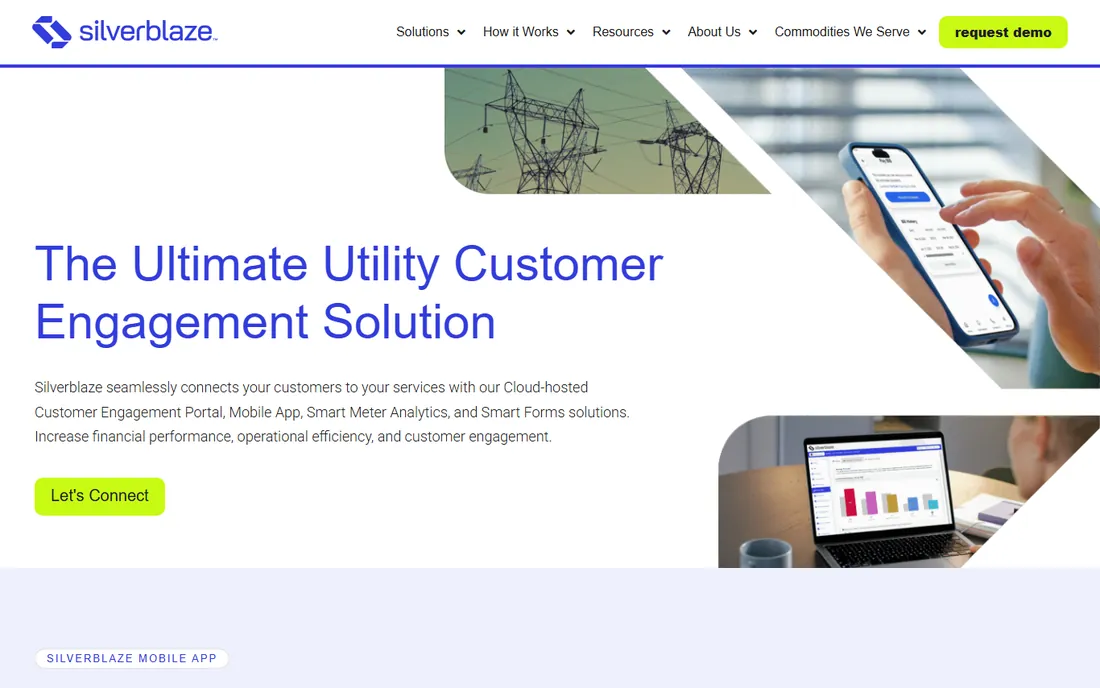
SilverBlaze is the name that comes up first when a utility likes its billing system but hates how many routine questions land on the front desk. Its core product is a customer portal and engagement layer that sits on top of your existing CIS, giving residents account access, usage charts, paperless billing, outage reporting and payment options. The portal is built to integrate with platforms like Oracle Utilities, Harris and others, so you do not have to rip out billing to get a modern customer experience.
The reason utilities pick SilverBlaze is the portal's configurability. You can brand it fully, turn modules on and off, and present usage data in ways that make sense to residential customers. Reviews from municipal users point to real drops in call center volume after launch, especially for billing questions and move-in requests. Implementation is a professional-services project rather than a self-serve signup, and the company has been in this niche since 1999, which shows in the depth of CIS integrations.
The honest catch is that SilverBlaze does not replace your billing system. If your underlying CIS is the problem, a prettier portal will not fix broken rates or meter data. Pricing is entirely quote-based, and total cost depends on which CIS you run, how many accounts you have and which modules you enable. Budget for both the license and the integration work, and get the integration timeline in writing before you commit.
What we like- Highly configurable customer portal
- Proven integrations with major CIS platforms
- Usage graphs and alerts that reduce call volume
Watch out for- Not a full billing system on its own
- Pricing is quote-based and opaque
Starting priceSee website
Free planNo
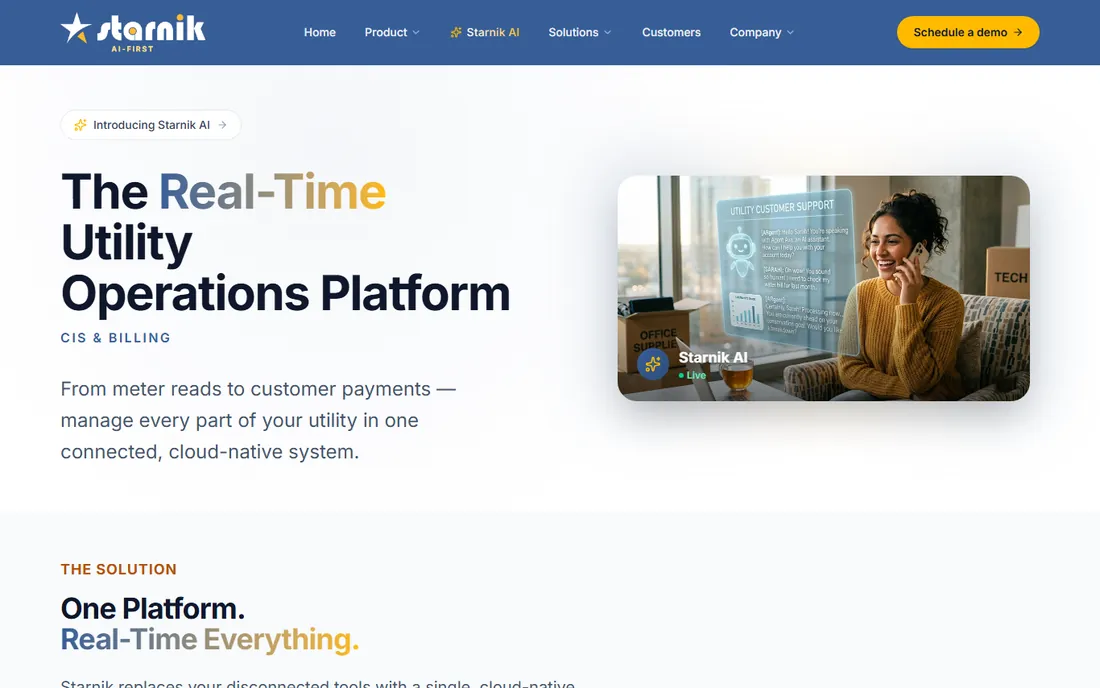
Starnik's UtilityTrakR is a complete customer information and billing system aimed at cities, municipalities, co-ops and special districts. It covers the whole meter-to-cash path: billing and invoicing, collections, cashiering, service orders, meter management and an online customer portal. One installation can handle metered and non-metered services together, which matters for small utilities that bill water, sewer, trash and electric on one statement.
The product's strength is breadth at a price point smaller utilities can defend to a city council. Rate tables are date-driven and handle prorated fees, penalties and deposits without workarounds. Field crews get mobile functions for service orders and meter work. The company has served this market since 2000, and its customer base skews toward the municipal and co-op segment rather than investor-owned giants.
The trade-off is polish. Some screens feel older than competing cloud products, and the feature set grows through configuration rather than slick defaults. Data migration from a legacy system is a real project, and you should ask for reference customers of similar size before signing. Starnik publishes no pricing, so expect a quote process that factors in account count and modules.
What we like- Full CIS with billing, collections and cashiering
- Supports water, gas, electric and trash
- Mobile field service functions
Watch out for- Interface shows its age in places
- Implementation takes months, not weeks
Starting priceSee website
Free planNo
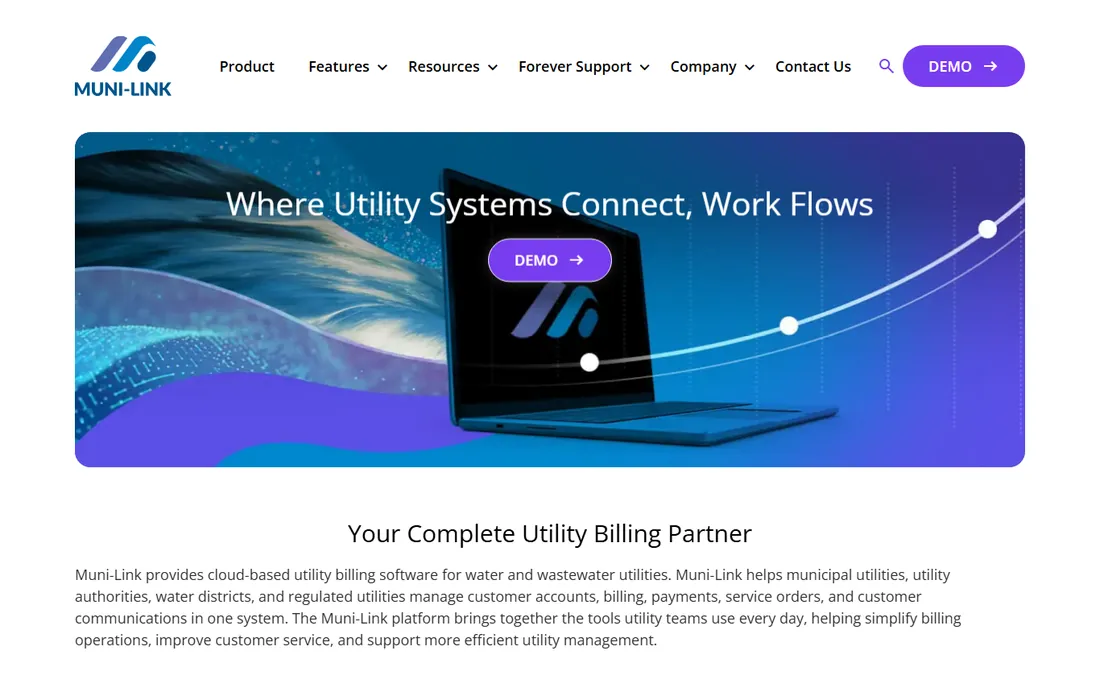
Muni-Link is built by Link Computer Corporation specifically for cities, townships, authorities and private utility firms that bill a few thousand to a few tens of thousands of accounts. It is cloud-based, so there is no server to maintain, and the package includes the customer portal, online payments, electronic billing and bill print coordination in one offering.
What makes it popular with smaller municipalities is that the whole thing is sized for a lean office staff. The workflow assumes one or two billing clerks, not a department. CASS certification is built in, which trims postage costs on mailed bills. Customers report that support answers with people who understand municipal billing rather than reading from a script.
The limitation is scale and complexity. A large multi-service utility with deregulated billing or complex commercial rates will outgrow it. Reporting covers the standard needs but is not the deep business-intelligence layer that platforms like Starnik or Harris provide. Like everything in this category, pricing is quote-based, so ask for the per-account pricing model up front.
What we like- Cloud-based with a clean customer portal
- Straightforward implementation for smaller teams
- CASS-certified address handling
Watch out for- Less suited to very large or multi-state utilities
- Advanced reporting is limited compared with enterprise CIS
Starting priceSee website
Free planNo
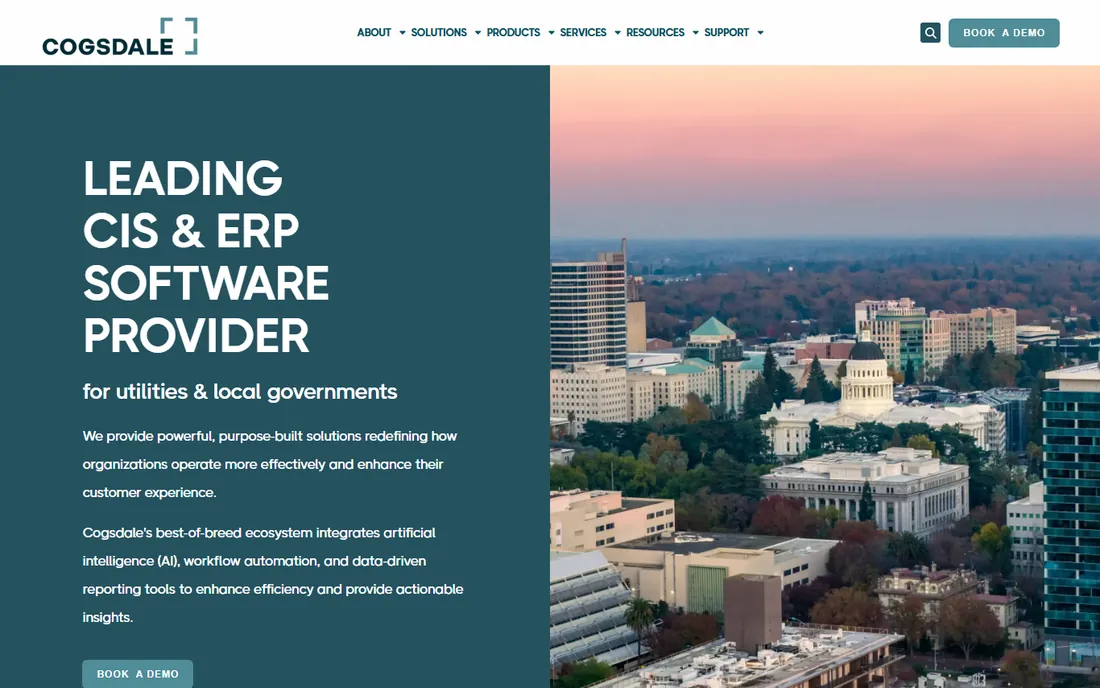
Cogsdale has sold customer service management and billing software to utilities since 1997, and its product reflects that history. It handles the full CIS scope: customer accounts, billing and invoicing, collections, service orders, meter management and payments across electric, gas, water, cable and trash. The standout is rate flexibility. If your utility has unusual rate structures, seasonal rates or complex commercial tariffs, Cogsdale's billing engine can usually model them without custom code.
The company is Canadian and serves utilities across North America. It integrates with Itron meter data systems and IVR platforms like Vocantas, which matters for utilities modernizing meter reading. Support and training options are extensive, including live online training and in-person sessions.
The honest drawback is that this depth comes with a learning curve. Staff training takes time, and the interface prioritizes function over looks. Smaller utilities sometimes find the product more than they need. Pricing is quote-based, and you should expect the quote to reflect modules, account volume and implementation services.
What we like- Deep rate and billing configuration
- Long track record with utilities
- Broad CIS feature set
Watch out for- Implementation and training demand real time
- User interface is functional rather than modern
Starting priceSee website
Free planNo
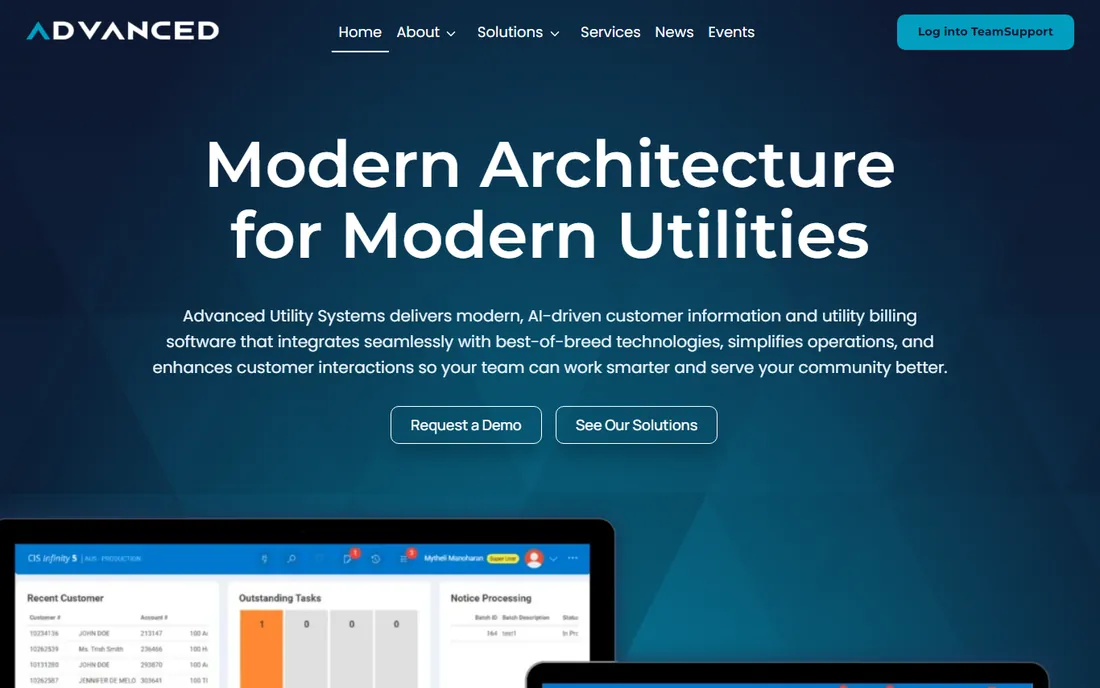
Harris Advanced Utility Systems is the utility CIS arm of Harris Computer, which has supplied financial and CIS software to local government since 1976. Its CIS Infinity platform is aimed at mid-size to large utilities that need a full enterprise customer information system: complex billing, credit and collections, work management integration and extensive reporting.
The case for Harris is stability and depth. Municipalities choosing a CIS expect it to last 15 to 20 years, and Harris's install base and corporate backing reduce the risk of the vendor disappearing or being acquired into irrelevance. The platform handles large account volumes and complicated rate scenarios that smaller products cannot.
The downside is everything that comes with enterprise software. Implementations are measured in many months, pricing runs to enterprise levels, and the product assumes dedicated IT and billing staff. A town with 5,000 accounts will get more value for less money from Muni-Link or MuniBilling. Get the implementation scope and timeline in a fixed contract, because enterprise CIS projects are where timelines slip.
What we like- Enterprise-grade CIS with deep utility functionality
- Part of Harris Computer with long-term stability
- Strong utility customer base
Watch out for- Enterprise pricing and long implementations
- Overkill for small municipalities
Starting priceSee website
Free planNo
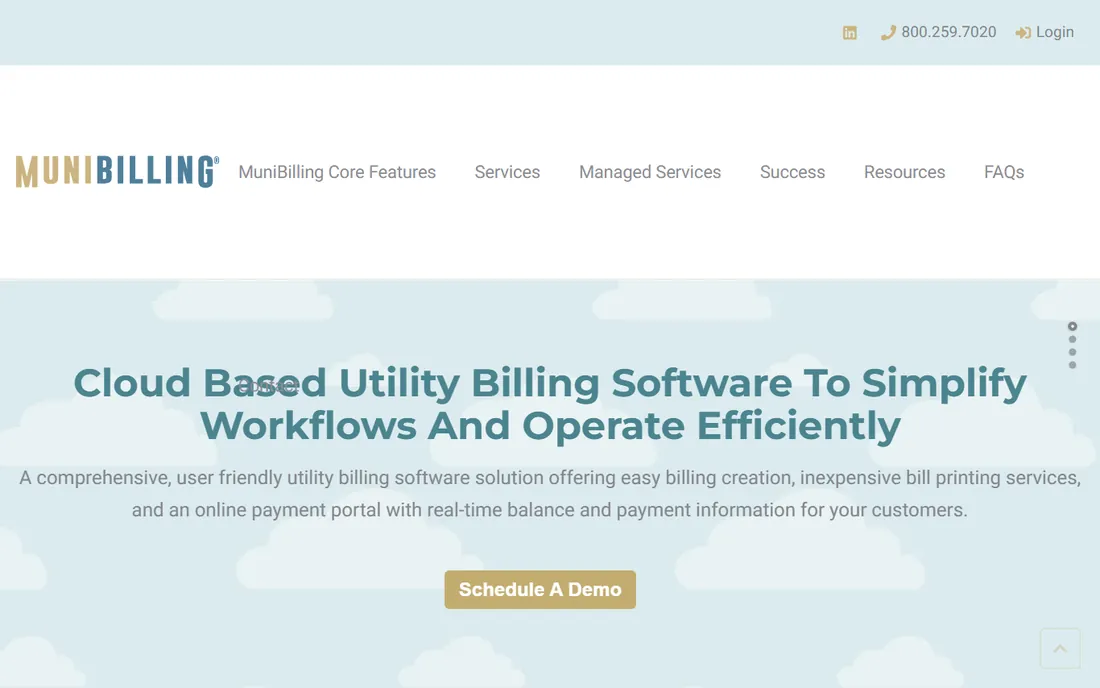
MuniBilling, from Crestline Software, targets the small end of the market: towns and districts that need correct, on-time bills and online payments without paying for an enterprise CIS. The product covers utility billing, customer accounts, online payment processing, electronic bills and a customer portal.
Its appeal is simplicity and cost. Implementation is far shorter than a full CIS project, and the product is sized for offices where billing is one person's job among several. For a small water district replacing spreadsheets or an aging desktop system, that is often exactly the right scope.
The limitation is ceiling. If you grow, add services or need sophisticated reporting, you may need to migrate later. The integration list is shorter than the big platforms, so check your meter reading and accounting tools against the supported list before you buy. Pricing is quote-based but positioned for small budgets.
What we like- Affordable entry point for small towns
- Covers core billing, payments and portal
- Quick to deploy
Watch out for- Feature set is narrower than full CIS platforms
- Limited advanced analytics
Starting priceSee website
Free planNo
CUSI's UtilityBilling platform has been around since 1980 and positions itself as a complete billing solution with bulk invoice generation, CRM, a customer portal and automated collection notices. It runs in any browser and integrates with QuickBooks Online and PayPal, which appeals to smaller private utilities that want billing and accounting to stay in sync.
The product's long history means it has handled many billing scenarios over the decades. For a private water company or a small municipal utility that wants one vendor for billing and payments, it covers the essentials.
The drawback is transparency. Even by this industry's opaque standards, public information on pricing and current feature depth is thin, so a demo and reference calls are essential. Verify that the specific modules you need, especially around meter data and rate tables, are current rather than legacy screens.
What we like- Combined billing and payment processing
- QuickBooks Online and PayPal integrations
- Usable from any browser
Watch out for- Pricing details scarce even for a quote-based market
- Feature depth varies by module
Starting priceSee website
Free planNo
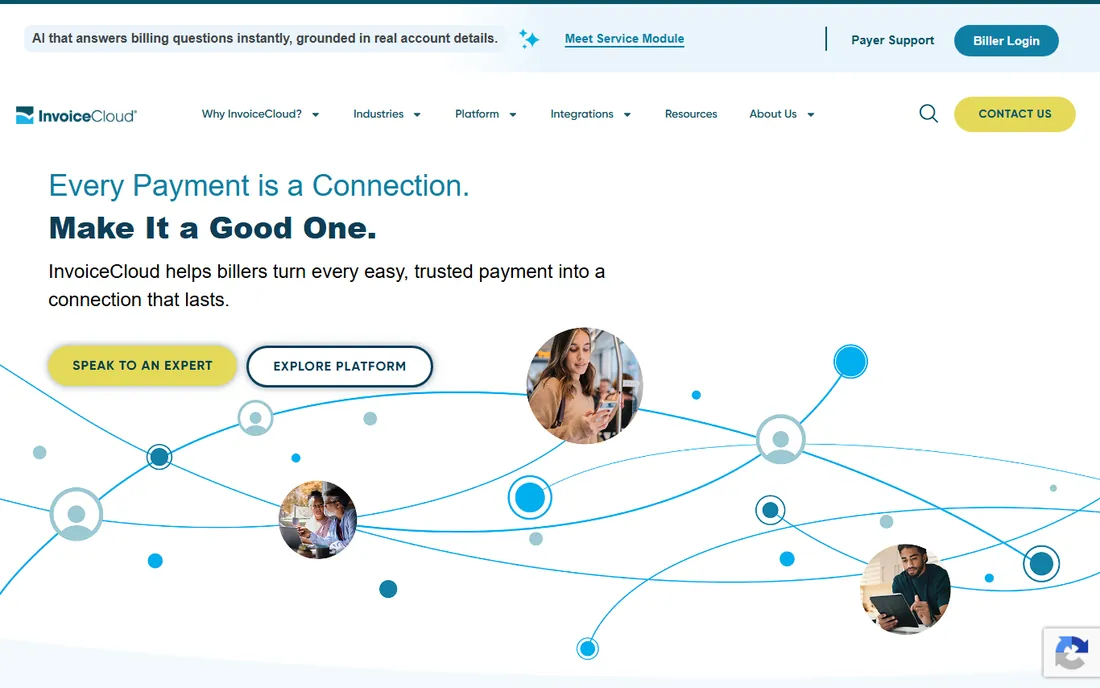
InvoiceCloud is not a billing system. It is the layer many municipalities put in front of their billing system to accept online payments, deliver electronic bills and send automated reminders. Founded in 2009, it has become one of the most widely used e-billing and payment platforms in the local government and utility space.
The reason to consider it is payment conversion. Residents pay through a branded portal with cards, ACH and digital wallets, and the platform handles the PCI compliance burden your office would otherwise carry. It integrates with many CIS products, so it can sit on top of whatever you already run.
The honest catch is scope. InvoiceCloud does not calculate your rates, manage meters or run collections. If your underlying billing is broken, this will not fix it. Price it as an add-on to your CIS budget, and confirm the integration with your specific billing system before signing.
What we like- Purpose-built electronic bill presentment and payment
- Broad payment options
- Widely adopted by municipalities
Watch out for- It is a payments layer, not a billing system
- You still need a CIS underneath
Starting priceSee website
Free planNo

PayGo is the specialist in prepaid utility service. Instead of billing after usage, customers pay in advance and draw down a balance, much like prepaid mobile plans. The platform supports the metering, payment and notification workflows that make prepaid work, including low-balance alerts that keep customers from being surprised.
Utilities adopt prepaid to reduce bad debt and collection costs, and PayGo has partnerships with AMI vendors like Tantalus to connect prepaid workflows to smart meters. For co-ops and municipal utilities with high collection costs, the economics can be compelling.
The limitation is obvious: this is a niche. If you need standard post-paid billing for a whole city, PayGo is not your CIS. Consider it as a program layered on top of your billing system for the customer segments where prepaid makes sense, and verify compatibility with your meter infrastructure first.
What we like- Specialist in prepaid metering workflows
- Helps utilities cut bad debt
- Consumer-friendly payment options
Watch out for- Narrow use case
- Not a general billing replacement
How we chose
We started from vendor pricing pages, product documentation and public review sites including Slashdot, SourceForge and Capterra, then filtered for products that actually serve utilities rather than generic invoicing tools. Every vendor listed here is an active company with a live homepage, confirmed in October 2026. We excluded general billing platforms that lack utility-specific features like rate tables, meter data handling and service orders. Pricing pages in this industry rarely publish numbers, so where no vendor-published price exists we say so instead of repeating third-party estimates. Nothing here reflects hands-on testing; the write-ups are built from documentation, feature lists and public customer reviews.
What to check before you sign a utility billing contract
Ask for the implementation fee as a fixed number, not a range. In utility billing, the software quote is often the smaller half of the total; data migration, rate-table configuration and staff training are where budgets break. Get three reference customers of similar account volume and call them. Ask specifically about the go-live timeline versus the promised timeline, and about how billing accuracy behaved in the first three cycles.
Confirm the integration list in writing. Your meter reading system, payment processor, IVR and general ledger all need to connect, and "we have an API" is not the same as a working integration with your specific versions. Ask whether the vendor or you own the data export format, because switching CIS platforms in ten years is painful enough without a data hostage situation. Finally, price the payment processing separately. Some vendors bundle it at rates far above market, and you may be able to negotiate or bring your own processor.
Common mistakes utilities make when buying billing software
The most common mistake is buying for the demo instead of for the rate tariff. Every product looks good billing a flat residential water rate. The pain shows up with your weird commercial tariffs, seasonal rates and penalty rules, so make the vendor build your actual rate structure in the demo using your real tariff sheets.
The second mistake is underestimating data cleanup. Decades of legacy data include duplicate accounts, dead meters and inconsistent rate codes. Budget staff time for cleanup before migration, not during. The third is skipping the portal question. If the product's customer portal is weak, your call volume will not drop, and the most visible part of the project will be judged a failure even if billing is perfect. Evaluate the portal as its own product, because residents will.
Frequently asked questions
How much does utility billing software cost?
Vendors in this space almost never publish pricing. Expect quote-based pricing tied to account volume, modules and implementation services. Small utilities often pay a few thousand dollars per year plus implementation, while enterprise CIS platforms run into six figures. Always ask for the full implementation fee in writing.
How long does implementation take?
Small cloud products like Muni-Link or MuniBilling can go live in weeks. Mid-size CIS platforms like Starnik or Cogsdale typically take three to six months. Enterprise platforms like Harris can take a year or more. Data migration and rate configuration drive the timeline more than the software itself.
Do we need to replace our CIS to get online payments?
No. Products like InvoiceCloud or a portal layer like SilverBlaze sit on top of your existing billing system and add online payments and e-billing without a full replacement. This is often the fastest win for a utility whose billing engine works but whose customer experience is dated.
What is the difference between a CIS and utility billing software?
A CIS (customer information system) is the full platform: billing, customer accounts, collections, service orders and often payments. Utility billing software can mean the whole CIS or just the billing module. When vendors use the terms loosely, ask exactly which functions are included in the quoted price.
Should a small town buy an enterprise CIS?
Usually not. A town with a few thousand accounts gets more value from a product sized for small utilities, with faster implementation and lower cost. Enterprise platforms make sense when you have complex rates, large volumes or dedicated billing IT staff.
Sources we checked (11)
- https://www.silverblaze.com
- https://www.starnik.com
- https://muni-link.com
- https://cogsdale.com
- https://www.advancedutility.com
- https://www.munibilling.com
- https://www.utilitybilling.com
- https://invoicecloud.net
- https://www.paygoutilities.com
- https://slashdot.org/software/comparison/UtilityBilling-vs-UtilityTrakR/
- https://slashdot.org/software/comparison/Avitar-Utility-Billing-vs-Muni-Link/
Is your product missing or out of date?
We review this list regularly. Vendors can request a listing, send updated pricing or ask about featured placement.

Shihab Mia · Founder, Rankite
Shihab has spent more than a decade helping SaaS and e-commerce brands grow through search. He writes Rankite's software buying guides from pricing pages, documentation and public user reviews. More about Shihab.