How we make this list: we compare pricing pages, product documentation and public user reviews. Ratings come from G2, Capterra or Trustpilot, with the date we checked them.
Key takeaways
- No vendor in this list publishes a self-serve price, so every purchase starts with a sales quote and a scoping call.
- Strata now owns both StrataJazz and Axiom, after Roper Technologies acquired Syntellis in 2023 and completed the integration in January 2025.
- Kaufman Hall is not listed separately here because its software division became Syntellis, and Vizient acquired its consulting business in August 2024.
- Press Ganey and NRC Health measure patient and workforce experience, while the other six focus more on financial and operational performance.
- Budget for implementation, data integration, and training on top of the subscription, since these are enterprise platforms with multi-year contracts.
Healthcare performance management software connects clinical, financial, and operational data so hospital leaders can track margin, quality, labor, and patient experience in one place. It answers questions such as which service lines lose money, where labor cost is rising, and which patient experience scores are falling. The best platforms combine cost accounting, budgeting and forecasting, benchmarking, and dashboards that managers can use without waiting for a monthly report pack. A multi-hospital system usually needs a governed data layer plus planning and decision support. For related buying decisions, see our guides to best EMR and EHR software and top data management software.
None of the eight vendors publishes a list price, so expect a quote based on bed count, facilities, data sources, and modules. Third-party reports put Health Catalyst Ignite from about 150,000 dollars per year, and MedeAnalytics implementations are typically reported at 200,000 to 500,000 dollars per year, but those figures are third-party reported and not vendor confirmed. A 2024 New York City Health and Hospitals agreement for Press Ganey care experience surveys was authorized for up to 12,380,433 dollars over a potential five-year term. Ask every vendor for the full first-year cost in writing, including implementation, data migration, integration, training, and support, before you sign.
The table below gives a short view of each tool, its best fit, its starting price, and whether a free plan exists. Read the full entries below before you shortlist, because the table cannot show implementation time or benchmark depth.
| Tool | Best for | Starting price | Free plan |
| Vizient | Large member health systems that want benchmarking, supply analytics, and advisory services together | Quote | No free plan |
| Strata Decision Technology | Health system finance teams that need cost accounting, decision support, and planning | Quote | No free plan |
| Syntellis Axiom | Enterprise planning, budgeting, and forecasting for hospitals and health systems | Quote | No free plan |
| Press Ganey | Patient experience, workforce experience, and safety culture measurement at scale | Quote | No free plan |
| NRC Health | Patient, consumer, and employee experience measurement with market insight | Quote | No free plan |
| Health Catalyst | Large health systems that need a governed analytics platform plus improvement services | Quote, Ignite reported from $150,000 per year (third-party reported) | No free plan |
| Arcadia | Value-based care organizations, ACOs, and health plans managing population risk | Quote | No free plan |
| MedeAnalytics | Payers and risk-bearing organizations that need financial and quality performance analytics | Quote (third-party reported typical $200,000 to $500,000 per year) | No free plan |
Hospitals should check data integration, benchmark depth, and ownership of the work before they choose a vendor. Ask how the platform connects to your EHR, ERP, cost accounting, and claims systems, how long the first data load takes, and who cleans the data when source systems disagree. Ask which peer groups feed the benchmarks and whether you can see your own data at the patient, encounter, and service line level. Check HIPAA and security controls, including HITRUST or SOC 2 evidence, role-based access, and audit logs. Our guide to best HIPAA compliance software covers compliance in more detail. Finally, ask for named reference clients of a similar size and a clear exit route for your data if you leave.
We picked tools that serve hospitals and health systems, cover at least two of quality, financial, and operational performance, and have a working official website that we opened on 12 November 2026. We opened syntellis.com, which now serves the Strata Decision Technology site after the integration. Prices were checked on vendor pricing pages on 12 November 2026, and no vendor in this list publishes a list price, so each entry is marked quote. Where a price figure appears, it is labelled third-party reported and linked in Sources. We did not list Kaufman Hall separately, because its software division became Syntellis in 2020 and Vizient acquired its consulting business in 2024, so MedeAnalytics takes that eighth place.
Last verified: 12 November 2026
Quick comparison
| Tool | Best for | Starting price | Free plan |
|---|
 Vizient | Large member health systems that want benchmarking, supply analytics, and advisory services in one relationship | Quote | No free plan |
 Strata Decision Technology | Health system finance teams that need cost accounting, decision support, contract analytics, and financial planning | Quote | No free plan |
 Syntellis Axiom | Enterprise planning, budgeting, forecasting, and reporting for hospitals, health systems, and higher education finance teams | Quote | No free plan |
 Press Ganey | Large health systems that need patient experience surveys, workforce engagement, and safety culture measurement at scale | Quote | No free plan |
 NRC Health | Hospitals and health systems that want patient and employee experience measurement plus consumer market insight | Quote | No free plan |
 Health Catalyst | Large health systems that need a governed data platform, analytics applications, and outcomes improvement services together | Quote, Ignite reported from $150,000 per year (third-party reported) | No free plan |
 Arcadia | Value-based care organizations, accountable care organizations, and health plans that manage population risk | Quote | No free plan |
 MedeAnalytics | Payers, health plans, and risk-bearing provider organizations that need financial, quality, and utilization performance analytics | Quote (third-party reported typical $200,000 to $500,000 per year) | No free plan |
Is your product missing or out of date?
We review this list regularly. Vendors can request a listing, send updated pricing or ask about featured placement.
#1
Vizient
Best for: Large member health systems that want benchmarking, supply analytics, and advisory services in one relationship
Visit vizientinc.com
Starting priceQuote
Free planNo free plan

Vizient describes itself as the largest member-owned healthcare performance improvement company in the United States, serving more than 65 percent of acute care providers and 97 percent of academic medical centers, according to its acquisition release for Kaufman Hall. Its homepage, opened on 12 November 2026, cites 390 billion dollars in supply and pharmacy spend data. The platform covers supply analytics, clinical expense analytics, workforce optimization, and quality benchmarking. Vizient works best when a health system wants benchmarking, group purchasing, and advisory help together, and it is a poor fit for a single hospital that only needs a planning tool.
What we like- Largest healthcare benchmarking dataset in the United States, according to Vizient
- Strong supply and pharmacy spend data
- Advisory services now include the former Kaufman Hall consulting team
Watch out for- Pricing and access are tied to membership and service contracts, so a small hospital cannot buy a single analytics module in the same way it buys a standard software subscription
#2
Strata Decision Technology
Best for: Health system finance teams that need cost accounting, decision support, contract analytics, and financial planning
Visit stratadecision.com
Starting priceQuote
Free planNo free plan
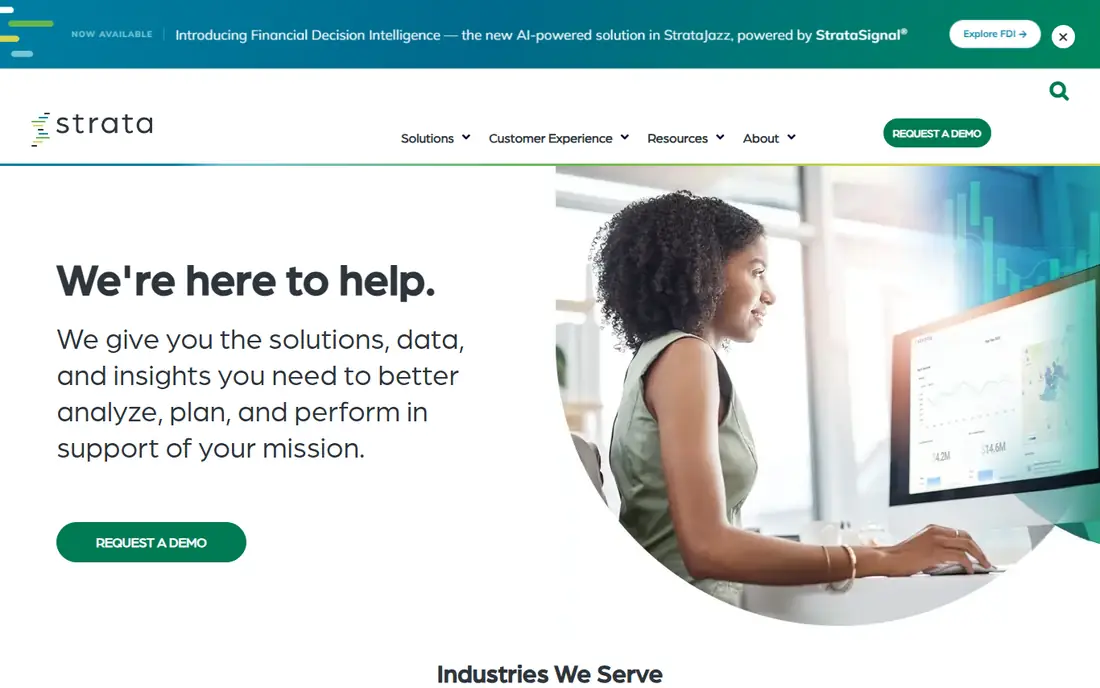
Strata Decision Technology sells StrataJazz, a cloud platform for financial planning, decision support, and performance management in healthcare. Its site, opened on 12 November 2026, lists decision support, cost accounting, contract analytics, strategic pricing, and budgeting and forecasting. Strata states that in January 2025 Roper Technologies formally completed integrating Syntellis into Strata, so Strata now offers StrataJazz and Axiom as two enterprise performance management platforms. Existing clients should ask which platform the vendor will support for new work and whether a future migration is planned. For finance-led buyers, StrataJazz remains the strongest entry point in this list for understanding true cost and margin by service line, payer, and physician.
What we like- StrataJazz decision support is widely used for service line and payer analysis
- Now offers both StrataJazz and Axiom after the Syntellis integration
- Strong healthcare cost accounting depth
Watch out for- Implementation is a long, services-led project, and the platform is built for finance teams with dedicated analysts rather than for casual users
#3
Syntellis Axiom
Best for: Enterprise planning, budgeting, forecasting, and reporting for hospitals, health systems, and higher education finance teams
Visit syntellis.com
Starting priceQuote
Free planNo free plan
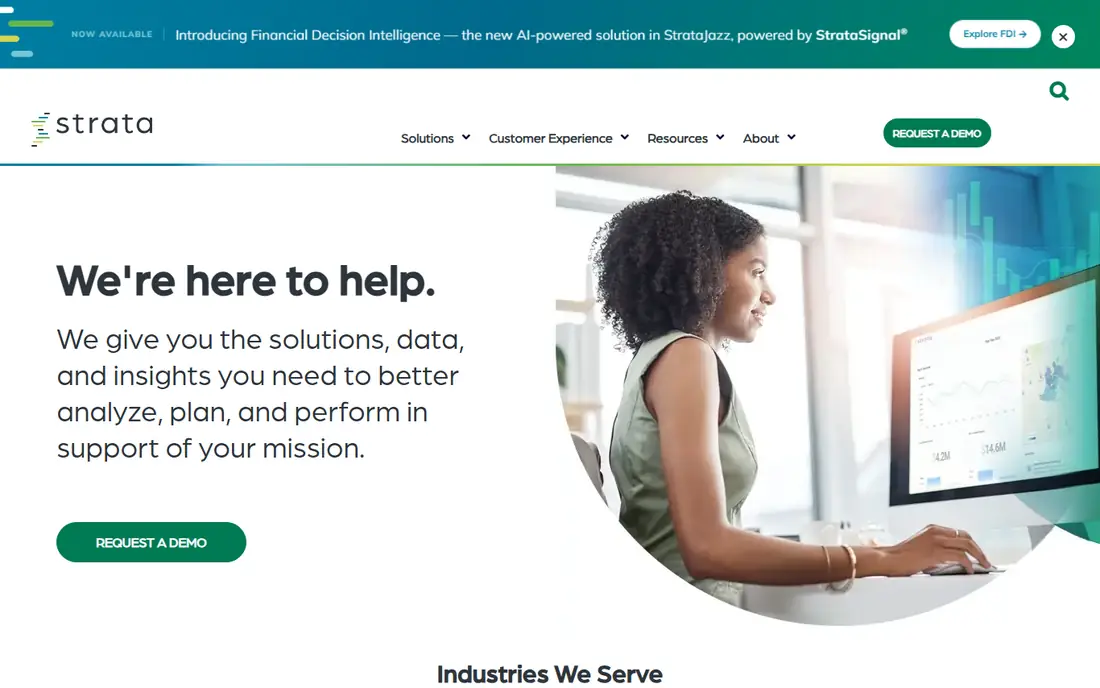
Syntellis Axiom is an enterprise performance management platform for budgeting, forecasting, planning, and reporting. It was formerly Kaufman Hall Software, which became Syntellis in 2020, and Roper Technologies acquired Syntellis in August 2023 for a net purchase price of 1.25 billion dollars, combining it with Strata. The syntellis.com homepage, opened on 12 November 2026, now serves the Strata Decision Technology site. Axiom still matters as a distinct product because its planning, cost, decision support, and clinical analytics modules differ from StrataJazz. Buyers who already run Axiom should ask Strata for a written roadmap, and new buyers should compare Axiom and StrataJazz side by side on the same use cases before they choose.
What we like- Mature enterprise planning and budgeting suite
- Axiom Comparative Analytics powers national hospital performance benchmarking
- Strong reporting and scenario modelling
Watch out for- The Syntellis brand is now folded into Strata, so buyers must confirm product roadmaps and support terms instead of assuming Axiom will stay a standalone company
#4
Press Ganey
Best for: Large health systems that need patient experience surveys, workforce engagement, and safety culture measurement at scale
Visit pressganey.com
Starting priceQuote
Free planNo free plan
Press Ganey runs an AI-powered human experience platform for healthcare providers and health plans, covering patient experience, workforce engagement, safety culture, and consumer experience. Its homepage, opened on 12 November 2026, states that 41,000 human-centric organizations choose Press Ganey. It is best known for patient experience surveys, including HCAHPS survey administration, and for benchmarking against peers. The main limit is that Press Ganey measures experience rather than running cost accounting or clinical data warehousing, so most health systems pair it with a financial analytics tool from this list. Our guide to best patient engagement platforms covers the engagement side in more detail.
What we like- Deep healthcare experience dataset and benchmarking
- Covers patient, workforce, consumer, and safety surveys in one platform
- Strong survey and analytics tooling
Watch out for- Enterprise contracts can run into millions of dollars over several years, and the breadth of the platform can require coordination across patient experience, human resources, and quality teams
#5
NRC Health
Best for: Hospitals and health systems that want patient and employee experience measurement plus consumer market insight
Visit nrchealth.com
Starting priceQuote
Free planNo free plan
NRC Health provides experience measurement and improvement tools for healthcare organizations, covering patient, employee, and consumer experience, plus market insight. Its homepage, opened on 12 November 2026, describes a platform with multi-channel feedback, conversational listening, AI-assisted search, and narrative coaching, plus nQuire Pro, which connects performance with patient feedback. NRC Health also offers rounding tools, highlighted in a KLAS report, and governance products through The Governance Institute. NRC Health fits best when the buyer wants to link patient feedback to improvement work at the unit level, including rounding, service recovery, and coaching, rather than only publishing survey scores.
What we like- Large healthcare consumer perception dataset, with more than 300 million patient experiences cited in third-party summaries
- Rounding and service recovery tools
- Governance and board assessment products
Watch out for- Experience measurement alone does not cover financial planning or cost accounting, so buyers still need a separate finance platform for margin work
#6
Health Catalyst
Best for: Large health systems that need a governed data platform, analytics applications, and outcomes improvement services together
Visit healthcatalyst.com
Starting priceQuote, Ignite reported from $150,000 per year (third-party reported)
Free planNo free plan
Health Catalyst sells a data and analytics platform, now built around Ignite, plus services that help health systems improve clinical, financial, and operational outcomes. Its homepage, opened on 12 November 2026, reports more than 2.8 billion dollars in client-validated outcomes, according to the vendor. Third-party reporting puts Ignite pricing from about 150,000 dollars, compared with about 1.5 million dollars for the legacy platform, and puts large health system subscriptions at 500,000 dollars or more per year, but Health Catalyst itself does not publish a list price. Health Catalyst suits a large system that can staff the platform and fund a multi-year programme. A smaller hospital should ask about Ignite Spark for community health systems.
What we like- Governed data platform with a large library of analytics applications
- Reports more than 1,100 healthcare organizations as clients and 390 documented case studies, according to the vendor
- Ignite platform lowers the entry point versus the legacy DOS platform
Watch out for- Enterprise subscriptions are reported at 500,000 dollars or more per year for large health systems, and implementations are long, services-led projects that need dedicated analytics staff
#7
Arcadia
Best for: Value-based care organizations, accountable care organizations, and health plans that manage population risk
Visit arcadia.io
Starting priceQuote
Free planNo free plan
Arcadia runs a cloud healthcare data platform that unifies EHR, claims, and social determinant data into one governed foundation for analytics and AI. Its homepage, opened on 12 November 2026, presents three solution families: Arcadia Ascent, provider and network intelligence through CareJourney, and real-world research insights. Arcadia reports more than 2,600 connected data sources and more than 170 million clinical patient records, according to third-party summaries of vendor material. That breadth is why risk-bearing organizations choose it, since value-based contracts need claims, clinical, and cost data together. Third-party reporting puts typical annual contracts from 250,000 to 1.5 million dollars, but Arcadia does not publish a list price.
What we like- Connects more than 2,600 data sources, according to the vendor and third-party summaries
- Strong risk stratification, care gap closure, and contract performance reporting
- HIPAA compliant platform with HITRUST and SOC 2 controls cited in vendor material
Watch out for- Data integration typically takes three to six months before analytics are production-ready, according to third-party reporting, and the platform is oversized for a fee-for-service hospital with no risk contracts
#8
MedeAnalytics
Best for: Payers, health plans, and risk-bearing provider organizations that need financial, quality, and utilization performance analytics
Visit medeanalytics.com
Starting priceQuote (third-party reported typical $200,000 to $500,000 per year)
Free planNo free plan
MedeAnalytics calls itself the Healthcare Performance Improvement Company and sells cross-domain enterprise analytics powered by its Health Fabric data platform. Its homepage, opened on 12 November 2026, focuses on reducing administrative cost, improving medical loss ratio, HEDIS and Stars performance, and increasing financial predictability for payers. The platform covers cost, utilization, quality and risk, network performance, enrollment, and social determinants of health, with AI-driven playbooks that prioritize opportunities by value. For hospitals, MedeAnalytics also offers revenue integrity, clinical documentation improvement, and physician performance analytics. Third-party reporting puts typical implementations at 200,000 to 500,000 dollars per year, but MedeAnalytics does not publish a list price. For related finance buying, see our guide to top 10 medical billing software.
What we like- Strong focus on cost, utilization, quality, and risk across lines of business
- AI-driven prioritization by return on investment
- Revenue integrity and physician performance modules for provider-side work
Watch out for- The current homepage focus is on payers and health plans, so a hospital-only buyer should confirm which provider modules are still sold and supported, and pricing is quote-only
Frequently asked questions
What is the best tool for healthcare performance management?
Strata Decision Technology is the best starting point for most large health systems because StrataJazz covers cost accounting, decision support, and financial planning, and Axiom adds enterprise planning under the same owner. Vizient is a stronger fit when benchmarking and advisory services matter as much as software. Health Catalyst and Arcadia suit organizations that need a governed data platform first.
How much does healthcare performance management software cost?
Expect a quote for every tool in this list, because none publishes a list price. Third-party reports put Health Catalyst Ignite from about 150,000 dollars per year and MedeAnalytics typically at 200,000 to 500,000 dollars per year, but those figures are not vendor confirmed. Ask for implementation, integration, training, and support costs in writing before you sign.
Do any of these tools offer a free plan?
No tool in this list offers a free plan for hospital use. All eight are enterprise platforms sold by quote, with implementation and multi-year contracts. Vendors may offer a demo or a pilot, but those are sales arrangements, not free plans. Ask what a pilot includes, how long it runs, and what happens to your data.
Is Kaufman Hall still a separate healthcare software product?
No, Kaufman Hall is not a separate software product in this list. Its software division separated in 2020 to become Syntellis, and Roper Technologies acquired Syntellis in 2023 and combined it with Strata. Vizient completed its acquisition of the remaining Kaufman Hall consulting business in August 2024. That is why this guide lists Axiom under Strata, lists Vizient separately, and uses MedeAnalytics for the eighth place.
How long does implementation usually take?
Implementation time depends on data readiness, the number of source systems, and the modules you buy. Arcadia data integration is typically reported at three to six months before analytics are production-ready. Strata, Health Catalyst, and Vizient projects are also services-led and can take several months to more than a year for a multi-hospital system. Ask each vendor for a phased plan and the point at which your first dashboards will be live.
Sources we checked (14)
- https://www.vizientinc.com/
- https://www.businesswire.com/news/home/20240731883840/en/
- https://www.stratadecision.com/taxonomy/term/41
- https://www.stratadecision.com/press-release/strata-syntellis-coming-together-accelerate-innovation-and-deliver-world-class
- https://www.syntellis.com/
- https://www.pressganey.com/
- https://hhinternet.blob.core.windows.net/uploads/2024/09/202409-mpa-it.pdf
- https://nrchealth.com/
- https://www.healthcatalyst.com/
- https://www.ainvest.com/news/health-catalyst-strategic-investor-engagement-implications-market-positioning-healthcare-data-analytics-sector-2508/
- https://arcadia.io/
- https://digitalhealth.folio3.com/blog/best-healthcare-analytics-software/
- https://medeanalytics.com/
- https://digitalhealth.folio3.com/blog/best-healthcare-analytics-software/
Is your product missing or out of date?
We review this list regularly. Vendors can request a listing, send updated pricing or ask about featured placement.

Shihab Mia · Founder, Rankite
Shihab has 5+ years in B2B and SaaS SEO. He writes Rankite's software buying guides from pricing pages, documentation and public user reviews. More about Shihab.